2027 How to Become a School Counselor in Utah

Co-Founder and Chief Data Scientist
Becoming a school counselor in Utah is a graduate-level career path with state licensing requirements, supervised school-based training, and ongoing renewal obligations. The decision matters because Utah schools continue to face student support needs tied to enrollment growth, college and career planning, student mental health, and counselor availability. With only 45% of schools meeting the recommended counselor-to-student ratio, qualified counselors can play a direct role in improving access to academic, social-emotional, and postsecondary guidance.
This guide explains the degree, fieldwork, licensure, renewal, salary, job outlook, and advancement options for people who want to work as school counselors in Utah. It is designed for future graduate students, career changers, licensed educators considering counseling, and current counselors comparing next-step credentials.
Quick Answer: How to Become a School Counselor in Utah
- You generally need a master’s degree in school counseling or a closely related counseling field from an accredited institution that satisfies Utah State Board of Education requirements.
- Utah’s school counselor shortage is significant: only 45% of schools meet the recommended counselor-to-student ratio.
- Most candidates complete supervised field experience, often a 600-hour internship, and must continue professional learning to keep their educator license active.
- Utah school counselors work under state-issued educator licensing through the Utah State Board of Education, typically moving toward a Professional Educator License for full practice in K-12 public schools.
- Required degree for Utah school counselors
- School counseling specializations in Utah
- Typical timeline for a Utah school counseling degree
- Utah school counselor certification and licensure
- Moving a Utah school counseling license to another state
- License renewal rules for Utah school counselors
- Alternative pathways into Utah school counseling
- Continuing education options for Utah school counselors
- Moving from school counseling to school psychology in Utah
- Additional LPC requirements in Utah
- Utah school counselor salary expectations
- Utah school counselor job outlook
- Career advancement options for Utah school counselorsKey InsightsReferences
What degree do I need to become a school counselor in Utah?
Utah school counseling is not usually an entry-level bachelor’s career. Candidates normally need graduate preparation that matches state educator licensing standards and includes counseling coursework, supervised practice, and school-based training.
- Graduate degree: Licensure requires completion of a master’s degree from a Utah-approved Educator Preparation Program or an out-of-state program accredited by CACREP or recognized by CHEA.
- Credit requirement: The program must include at least 60 semester hours of graduate study in counselor education or mental health counseling-related preparation.
- School fieldwork: Students complete 400 to 600 hours of supervised field experience in a K-12 setting, depending on prior teaching experience.
- Academic performance: Many programs expect a minimum overall GPA of 3.0 and require students to earn no grade lower than a B- in required courses.
- Admissions testing: Many Utah programs do not require the GRE, which can make application planning simpler for qualified applicants.
If your long-term goal includes broader counseling practice outside K-12 schools, compare the school counseling route with clinical counseling pathways. Research.com’s guide to the fast way to become a licensed counselor can help you understand how education and licensure choices differ across counseling careers.
| Program feature | Why it matters for Utah licensure | What to verify before enrolling |
| Accreditation or state approval | Your degree must meet Utah State Board of Education expectations for school counselor preparation. | Ask whether the program is a Utah-approved Educator Preparation Program or whether its out-of-state accreditation is accepted. |
| School counseling curriculum | Licensure depends on preparation for K-12 academic, career, and social-emotional counseling. | Review required courses, practicum expectations, and school placement support. |
| Internship access | Fieldwork is not optional; it is part of becoming eligible for the credential. | Confirm whether the school helps arrange approved K-12 placements in Utah. |
| Schedule format | Working adults may need evening, hybrid, or part-time options. | Check whether internship hours can be completed alongside employment. |
| Licensure exam preparation | Passing the required Praxis exam is part of the licensing process. | Ask about pass-rate support, exam preparation resources, and remediation options. |
Are there school counseling specializations in Utah?
Utah school counseling programs may not always label tracks as formal specializations, but many programs build focused training into electives, practica, internship experiences, and capstone work. The best concentration for you depends on the student population you want to serve and the type of school setting where you hope to work.
- K-12 school counseling: This broad preparation area covers academic planning, career development, social-emotional support, and school-based prevention across elementary, middle, and high school settings.
- College and career readiness: This focus is useful for counselors who want to help students with graduation planning, postsecondary options, admissions steps, career exploration, and transitions after high school.
- Multicultural and social justice counseling: This area develops skills for working with diverse families, advocating for equitable access, and responding to cultural, linguistic, and community differences.
- Crisis and trauma response: This preparation supports counselors who may be involved in risk assessment, grief support, crisis planning, and short-term intervention after traumatic events.
- Mental health and wellness promotion: This focus emphasizes prevention, early identification, referral coordination, and school-wide approaches to student well-being.
Students comparing counseling careers should be careful not to confuse school counseling with therapy licensure. A school counseling program prepares you for K-12 educational settings; clinical counseling or therapy paths may require different supervised hours, exams, and licensing board approval. If you are comparing these routes, Research.com’s guide to the fastest way to become a therapist can help clarify the distinction.
School counselors may come from varied academic backgrounds before graduate school, but professional practice in Utah schools requires meeting the state’s educator licensing rules. The chart below summarizes the educational levels found across the field.
How long does it take to complete a school counseling degree in Utah?
A Master of Education in School Counseling in Utah commonly takes two to three years. Full-time students may finish in about two years, often across six semesters that include summer study. Part-time students often need closer to three years, especially if they are working while completing graduate classes and field placements.
The timeline depends heavily on credit load, internship scheduling, and whether a candidate already has teaching experience. Programs commonly require between 51 and 60 credit hours and include a 600-hour internship in a Utah State Board of Education-approved K-12 setting. Because school placements follow academic calendars, students should plan early for practicum and internship requirements rather than treating them as final-semester tasks.
| Pathway | Typical pace | Best fit | Planning concern |
| Full-time master’s program | About two years | Students who can prioritize graduate study and fieldwork | Requires enough schedule flexibility for classes, practicum, and internship hours |
| Part-time master’s program | Around three years | Working professionals, parents, and career changers | Longer timeline may affect tuition planning and licensure timing |
| Alternative route with employment | Varies by pathway and requirements | Candidates hired under provisional or associate arrangements | Must coordinate coursework, supervision, exams, and district expectations |
What certification is required to work as a school counselor in Utah?
Utah public school counselors need an educator license issued through the Utah State Board of Education. The two main license categories are the Associate Educator License, often used for provisional status, and the Professional Educator License, which supports full independent work in K-12 public schools.
The licensing process generally includes the following steps:
- Submit the USBE application: Candidates apply through the state’s online system and provide transcripts, program completion evidence, and other required documentation.
- Pass the required Praxis exam: Candidates must pass the Praxis II: Professional School Counselor exam, test code 5421 or its successor.
- Complete background screening: Fingerprinting and a background check are required to support student safety and professional eligibility.
- Document supervised school experience: Candidates must show completion of supervised practicum or internship work in an approved school setting.
- Receive the appropriate license: After requirements are met, the state may issue an Associate Educator License or a Professional Educator License; the Professional Educator License is valid for five years and can be renewed with professional development.
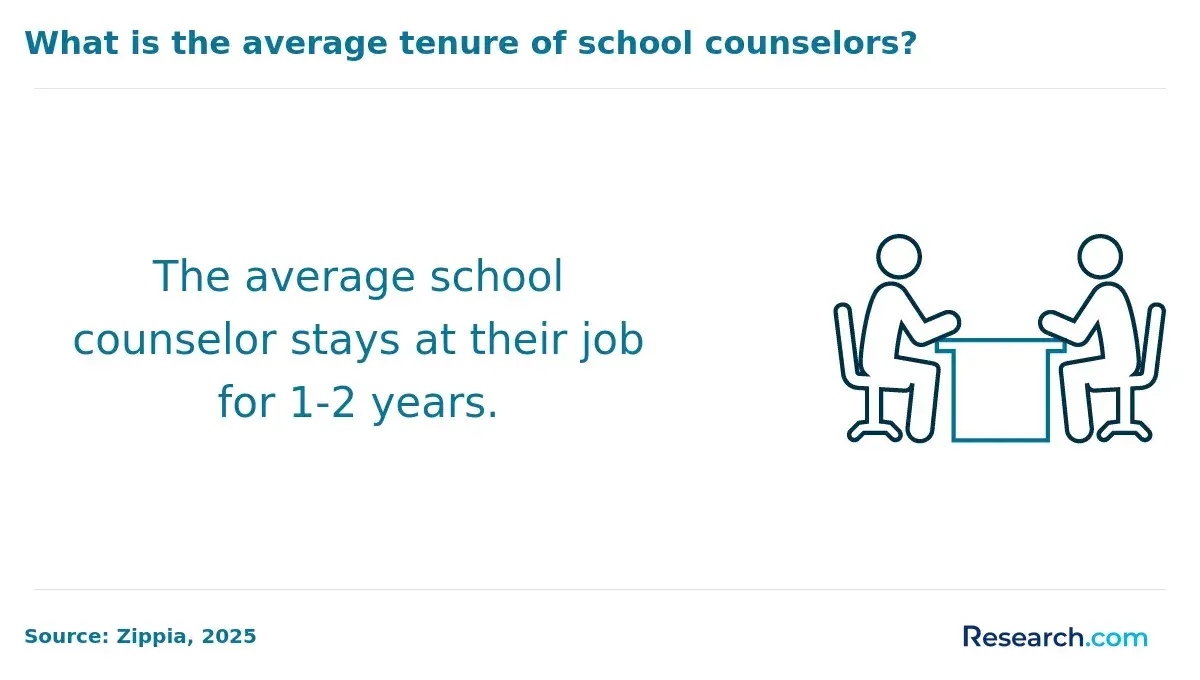
The chart below adds context on counselor tenure and career stability in the field.
Can I transfer my Utah school counseling license between states?
A Utah school counseling license does not automatically transfer to every other state. Instead, most states evaluate out-of-state school counselors through endorsement, reciprocity, or a comparable credential review process. Utah may accept out-of-state credentials under its own rules, but another state is not required to accept Utah licensure without additional review.
If you plan to move, expect the receiving state to ask for some or all of the following:
- An application for licensure by endorsement or reciprocity, along with proof of your Utah license.
- Official graduate transcripts showing completion of an appropriate master’s degree.
- A credential evaluation comparing Utah coursework and fieldwork with the new state’s standards.
- Additional coursework if the receiving state identifies gaps in preparation.
- A state-required exam, such as the Praxis School Counselor Exam or a jurisprudence assessment.
- Fingerprinting and an FBI background check, even if you were already cleared in Utah.
- Evidence of supervised professional experience, which may be measured in years or hours.
- A temporary, provisional, or conditional license while you complete missing requirements.
- State-specific training in areas such as child abuse reporting, local education law, or cultural competency.
Interstate moves can create delays and unexpected costs because each state sets its own educator licensing rules. One Utah-trained school counselor reported that the Utah program provided a strong foundation, but moving required extra coursework and a state-specific exam. The process was stressful, yet the additional requirements also expanded her professional skills.
The practical lesson is simple: if relocation is possible, check the target state’s rules before choosing a graduate program. Save syllabi, internship records, supervisor forms, exam scores, and license documents, because these materials can make endorsement review easier.
How often do Utah school counselors need to renew their credentials?
Utah school counselors with a Professional Educator License renew every five years. The license expires on June 30th of the fifth school year after it is issued, so counselors should track deadlines well before the final renewal window.
- Renewal cycle: Renewal is required every five years, with expiration on June 30th of the fifth year after issuance.
- Renewal window: Applications are accepted from January 1 through June 29 of the expiration year; early renewal is not permitted.
- Professional learning: Counselors complete approved professional learning activities and document the required clock hours, including verification by a licensed administrator when required.
- Online process: Renewal is completed through the Utah Schools Information Management System, where counselors submit the renewal form and supporting materials.
- Employment-based renewal: Counselors who have been continuously employed in Utah schools for the previous five years may qualify for automatic renewal without submitting a form or administrator signature.
- Background check: Many applicants must complete fingerprinting and an FBI background check, especially after employment gaps or a new move into Utah.
- Renewal fee: The renewal fee is set by the Utah State Board of Education and is paid online during renewal.
| Renewal item | What to do | Common mistake to avoid |
| Deadline tracking | Mark the June 30th expiration date and the January 1 opening date. | Waiting until late June and discovering missing documentation. |
| Professional learning | Keep certificates, transcripts, agendas, and administrator approvals in one file. | Assuming the district has retained all professional development records. |
| Background check | Confirm whether fingerprinting is required for your situation. | Overlooking screening requirements after a career break or relocation. |
| USIMS submission | Complete the online renewal process before the deadline. | Confusing district human resources requirements with state license renewal. |
What are the alternative pathways to become a school counselor in Utah?
Utah offers routes for candidates who did not begin in a traditional educator preparation program, but alternative pathways still require state approval, graduate-level preparation, supervised fieldwork, and testing. These options are most useful for career changers, educators moving into counseling, and professionals with youth services or mental health backgrounds.
- Alternate Pathway to Professional Educator License: Candidates with a bachelor’s degree may begin with an Associate Educator License, complete required pedagogy coursework, and fulfill supervised school-based fieldwork while employed.
- University-based alternative certification: Some Utah universities offer certification-focused or degree-linked routes that include counseling coursework, practicum, and internship requirements, sometimes within 12 months.
- Post-baccalaureate certificate or master’s route: Candidates from non-education backgrounds can complete graduate counseling courses, school placements, and required assessments such as the Praxis.
- Conditional or provisional licensure: Candidates with relevant experience in youth work, education, or mental health may be able to work while finishing required coursework and exams, depending on state and district approval.
Alternative licensure can shorten the transition for some candidates, but it is not a shortcut around competency requirements. If you already hold a counseling master’s degree or plan to pursue doctoral study later, compare the immediate licensing value of each option with longer-term goals such as supervision, leadership, or counselor education. Research.com’s resource on cheap online PhD in counseling degrees may be useful for professionals considering advanced academic progression after initial licensure.
What are the continuing education opportunities for school counselors in Utah?
Continuing education helps Utah school counselors maintain licensure, improve student support, and adapt to changing school needs. Useful options include district professional development, state-approved training, university courses, online seminars, counseling conferences, and specialized workshops in crisis response, college readiness, trauma-informed practice, ethics, and student mental health.
When choosing continuing education, prioritize training that strengthens your current role and supports future goals. A high school counselor may benefit from college and career readiness training, while an elementary counselor may focus more on family engagement, behavior support, and developmental counseling. Counselors comparing faster credential routes can also review Research.com’s guide to the fastest way to become a counselor in Utah.
How can school counselors transition to a school psychologist role in Utah?
School counseling and school psychology overlap in student support, but they are different credentials with different scopes. School counselors focus heavily on academic planning, career development, classroom guidance, individual student support, and referral coordination. School psychologists typically need additional preparation in assessment, evaluation, consultation, intervention, and special education-related services.
A Utah school counselor who wants to become a school psychologist should expect additional graduate training and credential review. Before enrolling, compare program requirements, field placements, assessment training, and state credential rules. Research.com’s guide on how to become a school psychologist in Utah explains that transition in more detail.
What are the additional requirements for LPC licensure in Utah?
Some school counselors later decide they want to provide counseling outside the K-12 school system, including private practice or community-based mental health work. In Utah, that generally requires meeting Licensed Professional Counselor requirements, which are separate from school counselor educator licensure.
Additional LPC steps may include specific approved coursework, supervised clinical hours, and a licensing examination. Requirements can differ depending on your graduate curriculum, so school counseling students who may want private practice later should ask programs whether their coursework aligns with clinical counseling licensure. For state-specific details, review Research.com’s overview of LPC licensure requirements in Utah.
What is the average salary of school counselors in Utah?
The median salary for school counselors in Utah is approximately $55,000 per year, which is lower than the national median for this occupation. Actual pay can vary widely by district, experience, education level, contract length, and whether the role is in a public, private, or charter school.
- Experience level: Counselors often earn more as they move up district salary schedules and build years of service.
- Education and credentials: Additional graduate credits, advanced degrees, and specialized credentials may influence salary placement in some districts.
- District and location: Urban, suburban, and rural districts may offer different compensation because of budgets, staffing needs, and local cost conditions.
- School type: Public schools often use structured salary schedules, while private and charter schools may handle compensation differently.
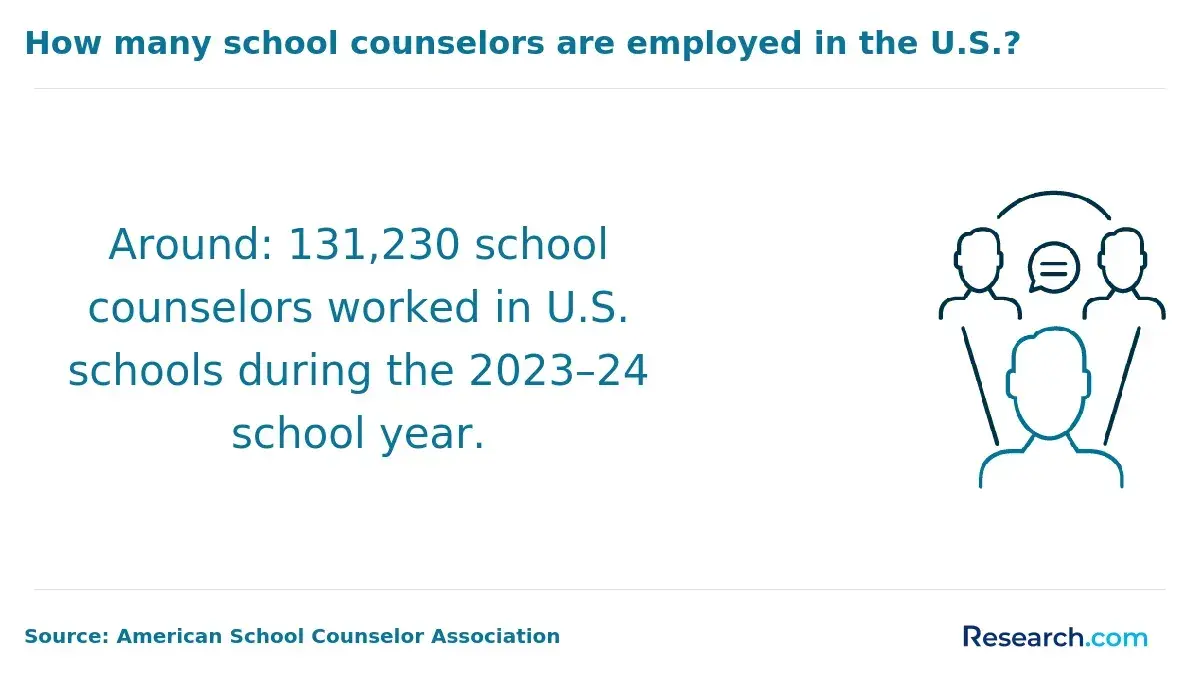
- Labor market pressure: The chart below notes that there were fewer than 200,000 school counselors in the U.S. in 2024, and demand for qualified candidates can affect hiring competition.
A Utah school counselor who trained locally described the first salary as modest compared with some nearby states, but said benefits, stability, and incremental raises made the role more sustainable over time. He also noted that additional certifications and experience helped improve his compensation.
The main takeaway is that salary should be evaluated alongside benefits, calendar structure, retirement options, district support, workload, and advancement opportunities. A higher starting salary is helpful, but it is not the only factor that determines long-term career value.
What is the job outlook for school counselors in Utah?
Utah’s outlook for school counselors is positive but not without trade-offs. Employment opportunities are projected to grow by 7.5% from 2022 to 2025, with another 4.3% increase expected afterward. Nationally, school and career counselor roles are projected to grow 4% from 2023 to 2033.
- Enrollment growth: More school-age students increase the need for counseling services in academic planning, graduation support, and student development.
- Student mental health needs: Schools increasingly rely on counselors for prevention, early identification, crisis response, and referral coordination.
- College and career readiness: Utah’s school counseling model emphasizes structured support for postsecondary and workforce planning.
- Salary and retention pressure: Utah’s average school counselor salary is $54,995, and the state ranks 50th in salary, which can affect recruitment and retention.
- National openings: About 29,100 openings occur nationally each year because of retirements, job changes, and workforce movement.
Future counselors should view the labor market in practical terms. Demand may be favorable, but job quality can differ by district. Ask about caseload size, counselor-to-student ratios, administrative duties, crisis protocols, supervision, salary schedule placement, and whether the role is focused on counseling or diluted by non-counseling assignments.
If cost is a major factor in choosing a graduate program, Research.com’s ranking of most affordable online colleges for counseling degree can help you compare lower-cost counseling education options while you verify Utah licensure fit.
What are the career advancement opportunities for school counselors in Utah?
Utah school counselors can advance by moving into leadership, specialization, administration, higher education, training, or related counseling roles. Advancement usually depends on experience, strong program outcomes, continuing education, and, in some roles, additional credentials.
- Lead or head school counselor: Experienced counselors may coordinate counseling services, support program planning, and mentor other counselors in larger schools or districts.
- District school counseling coordinator or supervisor: This role oversees counseling programs across multiple schools and may require administrative preparation, program evaluation skills, and district-level leadership experience.
- School administrator: Counselors interested in principal or assistant principal roles generally need additional leadership preparation and must pass the Utah School Leadership License exam.
- Postsecondary or academic advisor: Counselors can move into higher education advising, student success, admissions, or career services roles.
- College and career readiness specialist: This role focuses on graduation planning, workforce pathways, postsecondary transitions, and program assessment.
- Professional development facilitator: Experienced counselors may train colleagues in ethics, crisis response, college planning, counseling models, or student support systems.
- Adjunct faculty or instructor: Counselors with advanced degrees and substantial field experience may teach in counselor education or related programs.
Some counselors broaden their options through additional mental health training, marriage and family therapy coursework, or doctoral education. If you are exploring a related graduate credential, Research.com’s guide to the shortest MFT online program can help you compare time-to-completion considerations, though you should still confirm licensure alignment before enrolling.
According to the U.S. Bureau of Labor Statistics (2025), public education systems remain the primary employment setting for school and career counselors, with many professionals working in elementary, secondary, and higher education institutions.
Private education and related service settings employ a smaller portion of the profession. The chart below shows how employment is distributed across common counseling workplaces.
What do school counselors in Utah say about their career?
- My school counseling preparation at Weber State University helped me understand the real demands of working with students in Utah communities. Once I started in a local school, I saw how family involvement, community values, and student resilience shape the work every day. Supporting students through academic decisions and personal challenges has been deeply meaningful, and I value the stability and growth opportunities available in Utah public schools. - Jarvy
- Completing the counseling program at the University of Utah pushed me to grow both professionally and personally. In my school role, I have learned how culture, geography, and community expectations influence students’ lives. The work requires flexibility and creativity, but building trust with students and families makes it worthwhile. Utah’s professional development options have also helped me keep strengthening my skills. - Keisha
- Graduating from Utah State University’s counseling program helped me build a career that combines education, service, and student advocacy. Working in a local school showed me how important it is to understand the needs of students shaped by close-knit communities and Utah’s outdoor lifestyle. The role can be challenging, but helping young people move forward makes the work feel purposeful. - Minh
Common mistakes to avoid when becoming a school counselor in Utah
| Mistake | Why it can hurt your plans | Better approach |
| Choosing a program without checking licensure alignment | A counseling degree may not automatically qualify you for Utah school counselor licensing. | Ask the program directly whether graduates meet Utah State Board of Education requirements. |
| Focusing only on tuition | Lower tuition can be offset by travel, delayed fieldwork, extra courses, or poor placement support. | Compare total cost, internship support, pass-rate support, and time to completion. |
| Assuming online programs work everywhere | Online programs may not meet Utah’s school placement or educator licensing expectations. | Confirm Utah eligibility in writing before enrolling. |
| Waiting too long to plan internships | School calendars and placement availability can delay graduation. | Start discussing practicum and internship sites early in the program. |
| Ignoring reciprocity rules | A Utah license may not transfer cleanly to another state. | Review requirements in any state where you may later work. |
| Assuming salary outcomes are guaranteed | Pay differs by district, contract, experience, and credentials. | Review actual district salary schedules and ask how graduate credits are counted. |
Questions to ask before enrolling in a Utah school counseling program
- Is the program a Utah-approved Educator Preparation Program, or is it otherwise accepted for Utah school counselor licensure?
- Does the curriculum include at least 60 semester hours if required for my pathway?
- How are practicum and internship placements arranged, and are they in approved K-12 settings?
- Does the program prepare students for the Praxis II: Professional School Counselor exam?
- Can working students complete fieldwork without leaving their current jobs?
- What happens if I move to another state after graduation?
- How does the program support students seeking both school counselor licensure and possible LPC eligibility?
- What are the total costs, including tuition, fees, books, exams, fingerprinting, travel, and unpaid fieldwork time?
- What percentage of graduates obtain Utah school counseling positions after completion?
Related Articles for Nearby States
- 2027 How to Become a School Counselor in Nevada
- 2027 How to Become a School Counselor in Arizona
- 2027 How to Become a School Counselor in Idaho
- 2027 How to Become a School Counselor in Wyoming
- 2027 How to Become a School Counselor in Colorado
- 2027 How to Become a School Counselor in New Mexico
- 2027 How to Become a School Counselor in California
- 2027 How to Become a School Counselor in Montana
- 2027 How to Become a School Counselor in Oregon
- 2027 How to Become a School Counselor in Washington
References:
- Rocky Mountain University. (n.d.). Master of science in counseling. Rocky Mountain University. https://rm.edu/master-of-science-in-counseling/
- School Counselor Certification. (n.d.). Utah school counselor certification reciprocity. School Counselor Certification. https://www.schoolcounselorcertification.com/how-to-become-a-school-counselor/utah-school-counselor-certification-reciprocity/
- University of Tennessee at Martin. (n.d.). MSED: Counseling: School. University of Tennessee at Martin. https://www.utm.edu/academics/majors-and-programs/msed-counseling-school
- Utah State University. (n.d.). Overview | Master’s program | Psychology. Utah State University. https://cehs.usu.edu/psychology/masters/
- Utah State University. (n.d.). School counseling – MEd. Utah State University. https://www.usu.edu/degrees-majors/school-counseling_med
- Utah Valley University. (n.d.). Master of education in school counseling, M.Ed. | Utah Valley University academic catalog. Utah Valley University. https://catalog.uvu.edu/education/education-graduate-programs/school-counseling-med/
Key Insights
- Utah school counseling is a licensed graduate profession, not simply an education support role; plan for a master’s degree, fieldwork, testing, background checks, and renewal.
- The strongest program choice is one that clearly aligns with Utah State Board of Education requirements and provides reliable K-12 internship placement support.
- Most students should expect two to three years for the graduate degree, with the 600-hour internship often being the biggest scheduling factor.
- Utah’s need is real: only 45% of schools meet the recommended counselor-to-student ratio, and employment is projected to grow by 7.5% from 2022 to 2025, with another 4.3% growth anticipated afterward.
- Salary should be reviewed carefully. The median salary is approximately $55,000 per year, while Utah’s average school counselor salary is $54,995 and the state ranks 50th in salary.
- If you may move, prepare for reciprocity complexity. Keep detailed records of coursework, internship hours, exams, and licensure documents.
- School counseling, LPC licensure, and school psychology are related but separate paths. Choose your graduate program based on the credential you actually want.
Other Things to Know About Becoming A School Counselor in Utah
The Utah State Board of Education issues school counselor credentials through its educator licensing system. Applicants submit transcripts, verification of a school counseling program, and required background screening materials to satisfy Utah licensure rules before endorsement can be added.
To become a school counselor in Utah, you must pass the Praxis II School Counselor exam. This exam assesses your knowledge and skills necessary for effective school counseling and is administrated by the Educational Testing Service (ETS).