2027 Most Affordable CACREP Accredited Counseling Programs Online

Co-Founder and Chief Data Scientist
Not all counseling degrees offer the same outcomes, with some states requiring accreditation for licensure. Ideally, a student should enroll in a program recognized by the Council for Accreditation of Counseling and Related Educational Programs (CACREP), which ensures that a counseling degree is of high quality and can likely produce successful professionals. The group accredits more than 955 graduate and post-graduate programs across 463 institutions.
With this in mind, I prepared a guide on CACREP accredited counseling programs covering the typical cost, duration, and specializations of these degrees. Drawing from my experience as a seasoned career planner, I also evaluated many of the available degrees to create a list of the most affordable quality programs.
What are the benefits of getting CACREP accredited counseling programs?
- Graduating from a CACREP-accredited counseling program enables learners to become, among others, a mental health counselor, substance abuse counselor, school counselor, marriage and family therapist, or rehabilitation counselor.
- The average annual salary of a licensed professional counselor (LPC) is about $69,284.
- An online CACREP-accredited counseling program is often more affordable and features better flexibility than a traditional one.
What can I expect from CACREP accredited counseling programs?
Students enrolled in CACREP accredited counseling programs can expect a thorough and challenging educational journey. Here are some of the key aspects of these programs:
- Strong academic foundation: Students will build a strong grasp of counseling theories, ethical practices, and core principles.
- Practical experience: The program offers extensive hands-on opportunities, including internships, practicums, and supervised counseling sessions.
- Emphasis on diversity: Students will gain a deep understanding of cultural diversity and learn to work effectively with various populations.
- Licensure preparation: The curriculum is tailored to meet state licensure requirements, enhancing the likelihood of becoming a licensed counselor.
- Career support: Students will benefit from job placement assistance, resume guidance, and professional development resources.
Where can I work with a CACREP accredited counseling program?
Graduates of CACREP accredited counseling programs possess a strong foundation and skill set that opens doors to a variety of professional settings. Here are some of the offices they can practice:
- Mental Health Clinics: Providing therapy and counseling services to individuals, families, or groups.
- Schools: Working as school counselors to support students' academic, social, and emotional well-being.
- Rehabilitation Centers: Assisting individuals with disabilities to achieve their goals.
- Community Mental Health Agencies: Providing counseling and crisis intervention services.
- Private Practice: Building a private counseling practice.
- Military and Veterans Affairs: Offering mental health support to military personnel and veterans.
- Corporate Settings: Providing employee assistance programs or wellness initiatives.
- Correctional Facilities: Working with incarcerated individuals on rehabilitation and reintegration.
How much can I make with CACREP accredited counseling programs?
Licensed professional counselors, according to 2024 data from Indeed, take home an average annual salary of $69,284, considerably higher than what US counselor typically receives ($36,252). The amount varies from one specialization to another.
According to 2024 data from the United States Bureau of Labor Statistics (BLS), these are the median annual salaries of various counselor specializations:
- Genetic Counselors - $95,770
- School and Career Counselors and Advisors - $61,710
- Substance Abuse, Behavioral Disorder, and Mental Health Counselors - $53,710
- Counselors, All Other - $46,130
- Rehabilitation Counselors - $44,040
- Most Affordable CACREP Accredited Counseling Programs for 2027 List of Programs
- How long does it take to complete a CACREP accredited counseling program? How long does it take to complete a CACREP accredited counseling program?
- How does an online CACREP accredited counseling program compare to an on-campus program? How does an online CACREP accredited counseling program compare to an on-campus program?
- What is the average cost of CACREP accredited counseling programs? Program Cost
- What are the financial aid options for students enrolling in a CACREP accredited counseling program? Financial Aid Options
- What are the prerequisites for enrolling in a CACREP accredited counseling program? What are the prerequisites for enrolling in a CACREP accredited counseling program?
- What courses are typically in a CACREP accredited counseling program? What courses are typically in a CACREP accredited counseling program?
- What types of specializations are available in CACREP accredited counseling programs? What types of specializations are available in CACREP accredited counseling programs?
- How to Choose the Best CACREP Accredited Counseling Program How to Choose the Best CACREP Accredited Counseling Program
- The Role of CACREP Accreditation in Career Advancement The Role of CACREP Accreditation in Career Advancement
- How can I verify that my online counseling program is truly CACREP accredited? How can I verify that my online counseling program is truly CACREP accredited?
- How do CACREP-accredited counseling programs compare to ABA masters programs online? How do CACREP-accredited counseling programs compare to ABA masters programs online?
- What is the return on investment for CACREP accredited counseling programs? What is the return on investment for CACREP accredited counseling programs?
- The Role of Technology in Online School Counseling Programs The Role of Technology in Online School Counseling Programs
- How can ongoing mentorship and professional development enhance post-graduation success? How can ongoing mentorship and professional development enhance post-graduation success?
- What challenges do CACREP graduates face in transitioning to professional practice? What challenges do CACREP graduates face in transitioning to professional practice?
- What career paths are available for graduates of CACREP accredited counseling programs? Career Paths
- Can a PsyD degree online complement my CACREP-accredited counseling education? Can a PsyD degree online complement my CACREP-accredited counseling education?
- How can accelerated psychology programs enhance counseling practice? How can accelerated psychology programs enhance counseling practice?
- How much can you earn as a Christian counselor with a CACREP-accredited counseling degree? How much can you earn as a Christian counselor with a CACREP-accredited counseling degree?
- Is a Bachelor's Degree in Psychology Essential for Successfully Transitioning into CACREP Programs? Is a Bachelor's Degree in Psychology Essential for Successfully Transitioning into CACREP Programs?
- How can an online doctorate in psychology bolster evidence-based counseling practice? How can an online doctorate in psychology bolster evidence-based counseling practice?
- Are Online Psychology Degrees Respected in Professional Counseling? Are Online Psychology Degrees Respected in Professional Counseling?
Key Insights
- The best affordable CACREP program is not always the one with the lowest credit rate. Total cost, residency rules, clinical placement expenses, and state licensure fit matter just as much.
- Fort Hays State University lists the lowest published per-credit rate in this guide at $349.80 per credit, but in-state rates at public universities may also be highly competitive for residents.
- Most CACREP-accredited counseling master’s programs take about 2 to 3 years and require around 60 credits. After graduation, LPC candidates usually need 2,000 to 3,000 supervised hours.
- Online counseling programs can be convenient but are rarely “hands-off.” Expect live components, fieldwork, supervision, background checks, and possible campus visits.
- Licensure rules should drive your decision. Before applying, verify the exact program in CACREP’s directory and confirm that it satisfies your state board’s education requirements.
- Specialization determines your next step. Clinical mental health counseling, school counseling, rehabilitation counseling, addiction counseling, and marriage and family paths can lead to different credentials, employers, and supervised experience rules.
- Use rankings as a shortlist, not a final answer. The right program is the one that fits your budget, learning format, clinical training needs, and long-term counseling career plan.
Most Affordable CACREP Accredited Counseling Programs for 2027
Choosing a counseling master’s program is not just a tuition decision. If your goal is to become a licensed professional counselor, school counselor, rehabilitation counselor, or another counseling professional, you need a program that is affordable, academically sound, aligned with your state’s licensure rules, and realistic for your schedule. CACREP accreditation matters because it signals that a counseling program has been reviewed against profession-specific standards, but it should not be the only factor you use when comparing schools.
This guide is for prospective graduate students who want a lower-cost path into counseling without overlooking accreditation, supervised clinical training, specialization fit, online learning requirements, and long-term return on investment. You will find a ranked list of affordable CACREP-accredited counseling programs, a comparison of online and campus formats, admissions expectations, typical courses, career paths, job outlook data, cost considerations, and practical questions to ask before enrolling.
Quick Answer: What Is the Most Affordable CACREP-Accredited Counseling Program?
Among the programs reviewed here, Fort Hays State University lists one of the lowest published credit rates at $349.80 per credit. However, the “most affordable” option depends on more than the advertised tuition rate. Your total cost can change based on residency status, required credits, campus visits, residency fees, internship placement expenses, books, technology fees, travel, and whether the program meets licensure requirements in the state where you plan to practice.
A strong low-cost choice is usually a CACREP-accredited program that offers your intended specialization, provides clear licensure disclosures, supports practicum and internship placement, and has a total price you can finance without excessive debt.
How We Ranked These Counseling Programs
Affordable counseling programs still require a serious financial and time commitment, so this ranking does not look at tuition alone. We considered program cost, required credits, accreditation status, flexibility, specialization options, and available institutional information. Research.com reviewed information from sources such as the IPEDS database, the College Scorecard database, Peterson's Database, and the National Center for Education Statistics (NCES).
You can review the broader ranking framework on our methodology page. Students should still verify current tuition, fees, and licensure alignment directly with each school before applying.
| Rank | School and Program | Format or Structure | Published Cost | Credits Required | Best Fit |
| 1 | Lindsey Wilson College Master of Education in Counseling | Online, 8-week courses | $520 per credit hour | 60-61 | Students seeking online mental health counseling training with a substance abuse counseling certificate option |
| 2 | Fort Hays State University Master of Science in Counseling | Online coursework; weekend intensives for clinical mental health counseling | $349.80 per credit | 60 | Cost-focused students considering clinical mental health counseling or school counseling |
| 3 | North Carolina State University Clinical Mental Health Counseling | Online with field experiences; campus option available | $574.27 in-state; $1,728.33 out-of-state per credit | 60 | North Carolina students seeking preparation for clinical mental health counseling licensure |
| 4 | University of the Cumberlands Online Master's in Clinical Mental Health Counseling | Online | $449 per credit | 60 | Students who want a clinical mental health counseling program with practicum and internship training |
| 5 | Midwestern State University Clinical Mental Health | Online | $24,295 in-state; $31,195 out-of-state; $51,895 international | 60 | Students preparing for the National Counselor Examination and LPC Associate pathway |
| 6 | East Carolina University Counselor Education MS | Online | $283.12 in-state; $1,013.62 out-of-state per credit | 60 | Students comparing clinical mental health, school counseling, student affairs, or college counseling options |
| 7 | Bellevue University Clinical Mental Health Counseling Degree | Online with residencies | $660 per credit | 60 | Students who want substantial practicum, internship, and residency requirements built into the program |
| 8 | Winston-Salem State University Rehabilitation Counseling | Graduate counseling program with 700 clinical hours | $408.70 in-state; $993.95 out-of-state per credit | 63 | Students interested in rehabilitation counseling, disability services, vocational counseling, or related tracks |
| 9 | Freed-Hardeman University Master of Science in Clinical Mental Health Counseling | Graduate counseling program | $665 | 60 - 67 | Students who want clinical mental health counseling with elective flexibility |
| 10 | Grace College Master of Clinical Mental Health Counseling | Mostly online with annual seven-day residency | $39,000 total cost | 60 | Students seeking counseling training that integrates psychology, social sciences, and a biblical worldview |
1. Lindsey Wilson College Master of Education in Counseling
The Lindsey Wilson College Master of Education in Counseling is a 60-credit hour online program built around 8-week courses. Students can pursue the degree with a mental health counseling specialization and may also add a Certificate in Substance Abuse Counseling. The curriculum emphasizes clinical counseling skills, ethics, multicultural practice, and preparation for work in settings such as private practice, mental health centers, and human services agencies.
- Program length: 2 to 3 years
- Concentration: Mental Health Counseling
- Cost per credit hour: $520
- Required units to graduate: 60-61
- Accreditation: CACREP
2. Fort Hays State University Master of Science in Counseling
Fort Hays State University offers Master of Science options in Clinical Mental Health Counseling and School Counseling. The clinical mental health counseling option combines online learning with on-campus weekend intensives and is designed around Kansas licensure preparation. The school counseling pathway is offered fully online and is accessible nationwide, with a particular emphasis on Kansas students. At $349.80 per credit, this program is one of the lowest-cost options in this list.
- Program length: 2 to 3 years
- Concentrations:
- Clinical Mental Health Counseling
- School Counseling
- Cost per credit: $349.80
- Required units to graduate: 60
- Accreditation: CACREP
3. North Carolina State University Clinical Mental Health Counseling
The online Master of Education in Clinical Mental Health Counseling at NC State University is structured as a three-year program for students preparing to work in clinical mental health settings. The program covers counseling theory, applied practice, and multicultural diversity, while also incorporating internship experiences in community settings. Graduates are prepared for mental health counselor licensure in North Carolina. Students who prefer campus-based study can also review the on-campus option.
- Program length: 3 years
- Concentrations: None
- Cost per credit: $574.27 in-state; $1,728.33 out-of-state
- Required units to graduate: 60
- Accreditation: CACREP
4. University of the Cumberlands Online Master's in Clinical Mental Health Counseling
The University of the Cumberlands offers an online Master’s in Clinical Mental Health Counseling designed for students pursuing licensed professional counselor preparation. The 60-credit curriculum includes core counseling coursework, psychological assessment, multicultural counseling, treatment of mental disorders, practicum, and internship experiences. The program is a practical option for students who want an online format with applied clinical training.
- Program length: 2 to 3 years
- Concentrations: None
- Cost per credit: $449
- Required units to graduate: 60
- Accreditation: CACREP
5. Midwestern State University Clinical Mental Health
MSU offers a 60-hour online Clinical Mental Health curriculum intended to prepare students for the National Counselor Examination and application for a Licensed Professional Counselor Associate License. Estimated tuition ranges from $24,295 for Texas residents to $51,895 for non-U.S. residents, before additional expenses such as textbooks and supplies. The school also offers a clinical mental health program with school counseling.
- Program length: 2 to 3 years
- Concentration: School Counseling
- Total cost: $24,295 in-state; $31,195 out-of-state; $51,895 international
- Required units to graduate: 60
- Accreditation: CACREP
6. East Carolina University Counselor Education MS
The East Carolina University Counselor Education MS is an online program designed to develop professional counselor identity, ethical judgment, assessment skills, counseling techniques, and leadership capacity. Students may pursue clinical mental health counseling, school counseling, student affairs, or college counseling. The program combines coursework, experiential learning, internships, and elective flexibility so students can align the degree with their intended counseling setting.
- Program length: Confirm directly with the university
- Concentrations:
- Clinical Mental Health Counseling
- School Counseling or Student Affairs
- College Counseling
- Cost per credit: $283.12 in-state; $1,013.62 out-of-state
- Required units to graduate: 60
- Accreditation: CACREP
7. Bellevue University Clinical Mental Health Counseling Degree
Bellevue University offers a 60-credit Master of Science in Clinical Mental Health Counseling focused on preparation for mental health licensure. Students study assessment, diagnosis, treatment planning, ethics, and core counseling competencies. The program includes 100 practicum hours, 600 internship hours, and required residencies, which makes it important for applicants to plan for travel, time away from work, and clinical placement obligations.
- Program length: 2 to 3 years
- Concentrations: None
- Cost per credit: $660
- Required units to graduate: 60
- Accreditation: CACREP
8. Winston-Salem State University Rehabilitation Counseling
The Master of Science in Rehabilitation Counseling at Winston-Salem State University prepares students to support individuals with disabilities through vocational services, case management, job placement counseling, independent living support, and advocacy. The program requires 63 credit hours, 700 clinical hours, and completion of a research project or thesis. Students must maintain a 3.0 GPA and pass the Certified Rehabilitation Counselor exam to graduate.
- Program length: 2 to 3 years
- Concentrations:
- Rehabilitation Counseling
- Clinical Mental Health Counseling
- Deaf and Hard of Hearing
- Transition
- Vocational Evaluation
- Cost per credit: $408.70 in-state; $993.95 out-of-state
- Required units to graduate: 63
- Accreditation: CACREP
9. Freed-Hardeman University Master of Science in Clinical Mental Health Counseling
The Freed-Hardeman University Master of Science in Clinical Mental Health Counseling blends counseling theory, clinical practice, supervised field experience, and elective study. The program is designed to align with most state licensure requirements, but applicants should still confirm whether it satisfies the rules in the state where they plan to become licensed.
- Program length: 2 to 3 years
- Concentrations: None
- Published cost: $665; confirm billing basis with the university
- Required units to graduate: 60 - 67
- Accreditation: CACREP
10. Grace College Master of Clinical Mental Health Counseling
Grace College offers an online Master of Clinical Mental Health Counseling that combines psychology, social science, counseling training, and a biblical worldview. Most coursework is completed online, but students attend an annual seven-day residency at the Grace College campus in Winona Lake, Indiana. This format may appeal to students who want online flexibility while still participating in structured in-person clinical and community experiences.
- Program length: 2 to 3 years
- Concentrations: None
- Total cost: $39,000
- Required units to graduate: 60
- Accreditation: CACREP
What Graduates Often Value in CACREP-Accredited Counseling Programs
- Kevin: "My CACREP-accredited program gave me a structured foundation in counseling knowledge and clinical skill development. The combination of demanding coursework and supervised practice helped me feel more prepared to support clients with different needs."
- James: "The strongest part of my CACREP-accredited program was its focus on ethical decision-making and practical counseling skills. I left the program with a clearer understanding of professional standards and the expectations of clinical work."
- Steph: "Completing a CACREP-accredited counseling program required discipline, but the experience helped me connect theory, research, and applied counseling practice. The available electives and specialization options allowed me to shape my studies around my career goals, while the program’s emphasis on professional identity and advocacy helped me understand the broader role counselors play for clients and communities."
Key Findings for Prospective Counseling Students
- Low tuition does not automatically mean low total cost. Compare fees, residency travel, books, clinical placement expenses, and the number of credits required.
- CACREP accreditation is important, but licensure is state-specific. Always check your state counseling board’s requirements before enrolling.
- Most listed programs require about 60 credits. Winston-Salem State University requires 63 credits, while Freed-Hardeman University lists 60 - 67.
- Online programs can be flexible, but they are not always fully remote. Some require weekend intensives, annual residencies, practicum placements, or internships in approved sites.
- Specialization choice affects your career path. Clinical mental health counseling, school counseling, rehabilitation counseling, addiction counseling, and marriage and family counseling lead to different work settings and licensing considerations.
How Long Does It Take to Complete a CACREP Accredited Counseling Program?
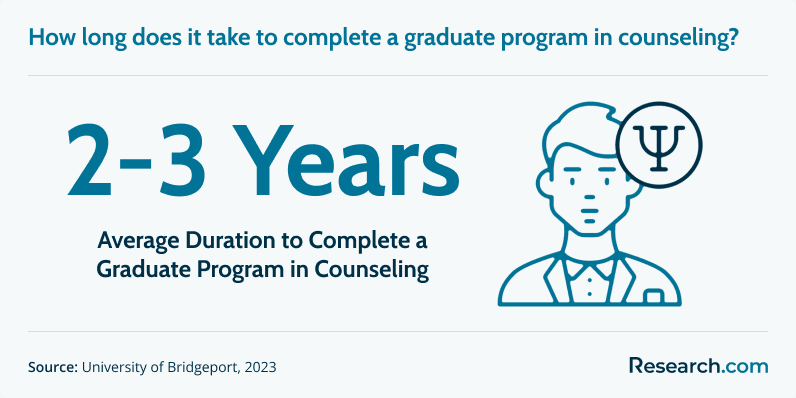
The minimum education level for many licensed professional counselor pathways is a master’s degree in counseling, and many CACREP-accredited counseling programs take about two to three years to complete. The exact timeline depends on whether you study full time or part time, how the school schedules courses, whether summer terms are available, and how quickly you complete practicum and internship requirements.
After the master’s degree, LPC candidates typically must complete 2,000 to 3,000 hours of supervised experience. Some professionals later pursue a doctorate in counseling, which may take about three to eight years, but a doctorate is not usually the fastest route into licensed counseling practice. For students focused on speed, the fastest way to become a licensed counselor is generally to complete a qualifying master’s degree, satisfy supervised experience rules, and pass required exams.
| Stage | Typical Requirement | Planning Tip |
| Graduate coursework | Often about 2 to 3 years | Ask whether the program allows part-time enrollment, summer courses, or accelerated sequencing. |
| Practicum and internship | Built into the degree | Confirm who secures placement sites and whether your local area has approved supervisors. |
| Postgraduate supervised experience | 2,000 to 3,000 hours for LPC candidates | Check your state board’s rules before choosing an out-of-state or online program. |
| Optional doctoral study | About three to eight years | Consider this only if it supports your goals in advanced clinical practice, leadership, teaching, or research. |
How Does an Online CACREP Accredited Counseling Program Compare to an On-Campus Program?
Online and campus-based counseling programs often cover similar counseling theories, ethics, assessment, multicultural practice, research, and supervised clinical requirements. The major differences are delivery format, scheduling, campus interaction, cost structure, and how clinical placement support works. Students comparing affordable online school counseling programs or the cheapest CACREP accredited programs online should look beyond convenience and ask whether the format supports their learning style and licensure plan.
| Factor | Online CACREP-Accredited Program | On-Campus CACREP-Accredited Program | Best Choice If... |
| Schedule | Often more flexible, with asynchronous or hybrid coursework | Usually follows set meeting times and campus schedules | Choose online if you need to continue working or manage family responsibilities. |
| Learning environment | Uses video meetings, online discussions, digital assignments, and learning management systems | Relies more heavily on face-to-face classroom interaction | Choose campus if you learn best through in-person discussion and immediate feedback. |
| Clinical training | May require students to locate or coordinate local practicum and internship sites | May have established relationships with nearby agencies and schools | Choose the format with stronger placement support in your intended location. |
| Networking | Virtual networking, online cohorts, webinars, and remote faculty access | Campus events, student organizations, and local professional connections | Choose campus if local networking is central to your job search. |
| Cost | May reduce commuting, relocation, and campus living expenses | May involve commuting, housing, parking, or relocation costs | Choose the option with the lowest total cost after all fees and travel are included. |
What Is the Average Cost of CACREP Accredited Counseling Programs?
According to 2024 data from the Education Data Initiative, the average annual cost of a master's degree in the United States ranges from $56,000 to $75,000. Several of the most affordable CACREP-accredited counseling programs listed here fall below that range, but students should compare full program cost rather than relying only on annual estimates. Similar cost questions also apply when reviewing the master's in psychology online cost.
The Education Data Initiative also reports the following average costs for different types of U.S. master’s degrees:
- Master's Degree: $59,684
- Master's Degree in Arts: $66,950
- Master's Degree in Science: $57,770
- Master's Degree in Education: $42,010
| Cost Item | Why It Matters | Question to Ask |
| Tuition per credit | This is the easiest number to compare, but it may not include mandatory fees. | Is the quoted rate the same for online, in-state, out-of-state, and international students? |
| Required credits | A lower credit rate can still be expensive if the program requires more credits. | How many credits are required for my specialization and licensure track? |
| Residency or intensive fees | Online students may still need to travel for campus sessions. | How many campus visits are required, and what expenses are not included in tuition? |
| Clinical placement expenses | Internship sites may involve background checks, liability insurance, commuting, and unpaid hours. | Does the school help secure placements near my home? |
| Licensure and exam costs | Graduation is not the same as licensure. | Which exams, applications, and supervised hours will I need after graduation? |
What Financial Aid Options Are Available for CACREP Accredited Counseling Students?
Students in CACREP-accredited counseling programs may use several funding sources, including federal student loans, scholarships, grants, graduate assistantships, employer tuition reimbursement, private loans, work-study options, institutional aid, and veterans benefits. The best mix depends on eligibility, enrollment status, employer policies, and the school’s aid resources.
A practical first step is to submit the FAFSA application, which determines access to federal aid options. Private loans can fill remaining gaps, but borrowers should compare interest rates, repayment terms, origination fees, and whether payments are deferred during school. Students with strict budgets may also compare broader lists of online masters under 10k to understand how low-cost graduate pricing works across fields.
What Are the Prerequisites for Enrolling in a CACREP Accredited Counseling Program?
Admissions requirements vary by school, but most campus and online schools for masters in counseling look for evidence that applicants can handle graduate-level counseling coursework and develop the interpersonal maturity required for clinical work. A bachelor’s degree is usually required, and many programs evaluate academic record, recommendations, goals, writing ability, relevant experience, and readiness for supervised client-facing practice.
- Bachelor's degree: Applicants generally need an undergraduate degree from an accredited institution. A counseling, psychology, or related major can help, but it is not always mandatory.
- Undergraduate GPA: A 3.0 minimum is commonly expected, although some programs review applicants holistically.
- Recommendation letters: Many schools request two to three letters from faculty, supervisors, or professionals who can assess the applicant’s academic ability and counseling potential.
- Personal statement: Applicants usually explain why they want to enter counseling, what population they hope to serve, and why the program is a good fit.
- Resume or curriculum vitae: Schools often ask for academic, professional, volunteer, and human services experience.
- Interview: Some programs use interviews to assess communication skills, professional judgment, and interpersonal readiness.
- Standardized test scores: GRE scores are optional in many programs, but some schools may still require them.
- Prerequisite courses: A program may require prior coursework in psychology, statistics, or related subjects.
- Background check: Because counseling students work with vulnerable populations, background checks may be required before clinical placement.
What Courses Are Typically Included in a CACREP Accredited Counseling Program?
A CACREP-accredited counseling curriculum usually combines counseling theory, applied skills, ethics, human development, assessment, research, multicultural practice, and supervised fieldwork. Some topics overlap with related fields, including cheap online master's programs in forensic psychology, but counseling programs focus more directly on therapeutic practice, professional identity, and licensure preparation.
- Counseling theories: Students examine major theoretical approaches, including psychodynamic, cognitive-behavioral, humanistic, and integrative models.
- Counseling techniques: Courses build practical helping skills such as active listening, empathy, interviewing, treatment planning, and intervention selection.
- Ethics and professional orientation: Students study confidentiality, boundaries, mandated reporting, professional roles, and legal responsibilities.
- Human growth and development: Coursework covers psychological, emotional, social, and developmental changes across the lifespan. Students interested in deeper developmental research can compare this with PhD development studies.
- Diagnosis and evaluation: Students learn assessment procedures and diagnostic frameworks used in mental health practice.
- Group counseling: Training covers group formation, group dynamics, facilitation skills, conflict management, and therapeutic group processes.
- Multicultural counseling: Courses focus on culturally responsive practice with clients from diverse social, cultural, economic, and identity backgrounds.
- Career counseling: Students learn career development theories and strategies for helping clients with education, employment, and career transitions.
- Research methods: Coursework introduces research design, data analysis, evidence-based practice, and critical evaluation of counseling literature.
- Practicum and internship: Students complete supervised field experiences that allow them to apply counseling skills in real service settings.
What Specializations Are Available in CACREP Accredited Counseling Programs?
Counseling specializations help students prepare for a specific client population, work setting, or licensure path. Before choosing a specialization, confirm whether it matches the role you want and whether the curriculum satisfies your state’s requirements.
| Specialization | Primary Focus | Common Work Settings |
| Clinical Mental Health Counseling | Assessment, diagnosis, treatment, and prevention of mental health disorders | Mental health agencies, hospitals, outpatient clinics, private practice |
| School Counseling | Academic, social, emotional, and career support for students | K-12 schools and educational organizations |
| College Counseling and Student Affairs | Student development, advising, wellness, and higher education support | Colleges, universities, student support offices |
| Marriage, Couple, and Family Counseling | Relationship dynamics, family systems, and couple or family interventions | Private practice, community agencies, family service organizations |
| Addiction Counseling | Substance use treatment, prevention, relapse support, and recovery planning | Rehabilitation centers, outpatient clinics, community programs |
| Rehabilitation Counseling | Support for individuals with disabilities seeking independence and employment | Vocational rehabilitation agencies, disability services, nonprofit organizations |
| Career Counseling | Career exploration, job search strategy, and professional development | Schools, universities, workforce centers, private consulting |
| Trauma Counseling | Care for clients affected by traumatic events | Clinics, crisis centers, hospitals, community organizations |
| Gerontological Counseling | Mental health support for older adults and families | Aging services, healthcare settings, community agencies |
| Military and Veteran Counseling | Support for active-duty service members, veterans, and families | Military programs, veterans organizations, clinics |
| Child and Adolescent Counseling | Mental health needs of children and teens | Schools, child welfare agencies, clinics, private practice |
Students interested in relationship and family systems should also review the steps involved in how to become a family counselor, because marriage and family therapy may involve different state requirements from professional counseling.
How to Choose the Best CACREP Accredited Counseling Program
CACREP accreditation is a strong starting point, but it does not automatically make a program the right fit. The best choice is the program that matches your licensure state, specialization, budget, schedule, clinical placement needs, and career goals. If you are comparing counseling with related therapy paths, you may also want to review the most affordable online MFT programs.
- Start with your state licensure board. Confirm required degree type, credit count, coursework, supervised hours, exams, and whether CACREP accreditation is required or preferred.
- Match the specialization to your intended role. A clinical mental health counseling program is not the same as school counseling, rehabilitation counseling, or marriage and family counseling.
- Calculate total cost. Include tuition, fees, travel, residencies, books, technology expenses, clinical placement costs, and lost work time.
- Evaluate field placement support. Ask whether the school places students, approves student-found sites, or expects students to manage the process independently.
- Review faculty and student support. Look for accessible advising, supervision preparation, career services, licensure guidance, and alumni connections.
- Check format requirements carefully. “Online” may still include campus visits, synchronous classes, or local internship requirements.
- Compare outcomes cautiously. Graduation, exam pass, placement, and salary information can be useful, but outcomes are not guaranteed.
Common Mistakes to Avoid When Choosing a Counseling Program
| Mistake | Why It Can Be Costly | Better Approach |
| Choosing the lowest tuition without checking fees | Mandatory fees, travel, and clinical costs can erase the savings. | Ask for a full estimated cost of attendance for the entire degree. |
| Assuming any CACREP program works in every state | Licensure rules differ by state, and some states have specific coursework or supervised hour requirements. | Get written confirmation from the program and verify with your state board. |
| Ignoring practicum and internship logistics | Clinical placement delays can slow graduation or licensure progress. | Ask how placements are approved and whether sites exist near you. |
| Relying only on rankings | A ranked program may not offer your specialization or match your schedule. | Use rankings as a starting point, then compare licensure fit, support, and total cost. |
| Assuming online means self-paced | Many online counseling programs include live classes, group work, and strict clinical timelines. | Review weekly time expectations, synchronous requirements, and residency obligations. |
| Overlooking transfer credit policies | Limited transfer acceptance can increase cost and time to graduation. | Ask how many graduate credits can transfer and which courses must be completed in residence. |
The Role of CACREP Accreditation in Career Advancement
CACREP accreditation can influence licensure eligibility, employer confidence, professional mobility, and access to certain counseling pathways. It is not a substitute for state licensure approval, but it can help students show that their program followed recognized counseling education standards.
Licensure and Certification Considerations
Students pursuing LPC, mental health counseling, school counseling, or related credentials should treat accreditation as one part of a larger licensure checklist. Some state boards require or prefer CACREP-accredited education, while others evaluate coursework, practicum, internship, and supervised experience more broadly. Before enrolling, compare the program’s curriculum against the requirements in the state where you plan to practice.
Employer Recognition
Employers may view CACREP-accredited education favorably because it indicates that the program has met field-specific training expectations. This can be helpful when applying to mental health agencies, schools, hospitals, rehabilitation settings, or counseling organizations, especially when employers want assurance that graduates have completed supervised clinical preparation.
Professional Development and Networking
CACREP-accredited programs often encourage participation in counseling associations, continuing education, supervision, and professional advocacy. These experiences can help graduates build a professional identity and stay current with ethical standards and practice expectations.
Career Mobility
A CACREP-accredited degree may make it easier to explain your educational background to employers and licensing boards, but it does not guarantee automatic license portability. Counselors planning to move states or work outside the United States should verify credential recognition in the target location before making enrollment decisions.
How Can I Verify That My Online Counseling Program Is Truly CACREP Accredited?
To verify accreditation, search the official CACREP program directory and confirm that the specific degree, specialization, delivery format, and campus or online location are listed. Do not rely only on marketing language on a school website. Also compare the program with your state licensing board’s education requirements, especially if you plan to enroll in an out-of-state online program. Students who want a broader comparison can review counseling degrees online accredited for additional context on legitimate online counseling options.
How Do CACREP-Accredited Counseling Programs Compare to ABA Masters Programs Online?
CACREP-accredited counseling programs and ABA masters programs online can both prepare students for helping professions, but they are built around different professional models. Counseling programs emphasize therapeutic relationships, mental health assessment, counseling theories, ethics, multicultural practice, and licensure-focused clinical training. ABA programs focus on behavior assessment, intervention planning, data-based behavior change, and preparation for behavior analysis roles. If compensation is part of your comparison, reviewing BCBA vs ABA salary can help you evaluate how the financial outlook differs between the two fields.
What Is the Return on Investment for CACREP Accredited Counseling Programs?
The ROI of a CACREP-accredited counseling program depends on tuition, fees, debt, time to graduation, licensure requirements, local job availability, work setting, and long-term career plans. A lower-cost program can improve ROI, but only if it leads to the credential you need. Conversely, a more expensive program may be reasonable if it offers strong placement support, the right specialization, and clear licensure alignment.
| ROI Factor | Why It Matters | How to Evaluate It |
| Total program cost | Debt affects early-career financial flexibility. | Compare the full cost of the degree, not only tuition per credit. |
| Licensure alignment | A degree that does not meet state rules can delay or limit employment. | Ask the program for state-by-state licensure disclosures. |
| Time to completion | Longer programs can increase opportunity cost. | Review course sequencing and fieldwork timelines. |
| Clinical placement support | Strong placement systems can reduce delays. | Ask how many students secure placements on time. |
| Career path | School counseling, clinical mental health counseling, rehabilitation counseling, and private practice have different earning patterns. | Compare local job postings and licensing requirements for your target role. |
The Role of Technology in Online School Counseling Programs
Technology shapes how online counseling students learn, practice, collaborate, and prepare for modern client service. Digital tools do not replace clinical supervision or fieldwork, but they can improve access and help students build skills for telehealth, online student support, data-informed decision-making, and remote collaboration.
Virtual Learning Platforms
Online counseling programs commonly use learning management systems such as Blackboard or Canvas to deliver recorded lectures, readings, assignments, discussion forums, and instructor feedback. Students should ask whether courses are asynchronous, synchronous, or a mix of both.
Telecounseling Preparation
Because counseling services may involve video sessions or digital client communication, some programs include training in telecounseling ethics, privacy, documentation, and technology use. This is especially relevant for students preparing for school, agency, or private practice environments that offer remote services.
Simulation and Role-Play Tools
Some programs use recorded role plays, video-based skill demonstrations, simulation activities, or virtual practice scenarios to help students develop counseling responses before entering field placements.
Data-Informed Counseling
School counselors and clinical counselors may need to track outcomes, document progress, and use data to guide interventions. Online programs can help students become comfortable with digital documentation tools and outcome-monitoring practices.
Accessibility and Professional Networking
Online programs can connect students with classmates, faculty, alumni, and guest speakers across regions. Webinars, virtual advising, online supervision preparation, and remote professional events can strengthen a student’s network when used intentionally.
Technology Skills for Counseling Careers
Graduates of affordable online school counseling programs may be better prepared for roles that require online student support systems, digital case notes, virtual group sessions, and remote collaboration with families, teachers, or healthcare providers.
How Can Ongoing Mentorship and Professional Development Improve Post-Graduation Success?
Graduation is only one milestone in a counseling career. New counselors still need supervision, licensure guidance, continuing education, ethical consultation, and support as they transition from student to practitioner. Programs with active alumni networks, mentorship opportunities, professional association involvement, and career coaching can help graduates navigate early-career challenges. Counselors seeking advanced clinical study later may compare affordable PsyD programs, but doctoral education should be tied to a clear professional goal.
What Challenges Do CACREP Graduates Face When Transitioning to Professional Practice?
CACREP graduates may be academically prepared but still face practical hurdles after graduation. Common challenges include understanding state licensure steps, finding approved supervisors, completing required post-degree hours, managing documentation, entering competitive job markets, and building confidence with real client caseloads. Students planning a clinical mental health pathway can use guides such as how to become a mental health counselor to connect academic preparation with the licensing and employment steps that follow.
What Career Paths Are Available for Graduates of CACREP Accredited Counseling Programs?
Graduates of CACREP-accredited counseling programs can pursue several counseling-related paths, depending on specialization, state licensure, supervised experience, and work setting. Some roles require additional credentials or specific state approval.
- Mental Health Counselor: Provides counseling services for individuals, groups, couples, or families in settings such as community mental health centers, hospitals, outpatient clinics, or private practice.
- School Counselor: Supports students with academic planning, social-emotional development, personal challenges, and college or career readiness in K-12 or higher education settings.
- Marriage and Family Therapist: Works with couples and families on relationship concerns, communication, and family systems issues. Students who already hold a related graduate degree may also explore post graduate MFT certificate programs.
- Substance Abuse Counselor: Helps clients address addiction, recovery, relapse prevention, and related behavioral health concerns in rehabilitation centers or outpatient programs.
- Career Counselor: Assists clients with career exploration, employment goals, job search strategies, and professional development.
- Rehabilitation Counselor: Supports individuals with disabilities in pursuing employment, independent living, and personal goals.
- Clinical Supervisor: Mentors counseling trainees or early-career professionals after meeting supervision qualifications.
- Grief Counselor: Helps clients process loss, bereavement, and major life transitions in hospice, hospital, agency, or private practice settings.
- Correctional Counselor: Works with incarcerated or justice-involved individuals on mental health, rehabilitation, and reentry needs.
- Military Counselor: Serves active-duty service members, veterans, and military families through military programs, clinics, or veterans organizations.
What Is the Job Market for Graduates with a CACREP Accredited Counseling Program?
BLS data shows that several counseling-related occupations are projected to grow faster than the national average of 3% from 2022 to 2032. Employment of substance abuse and mental health counselors is projected to grow by 18%, genetic counselors by 16%, marriage and family therapists by 15%, school counselors by 5%, and rehabilitation counselors by 2%.
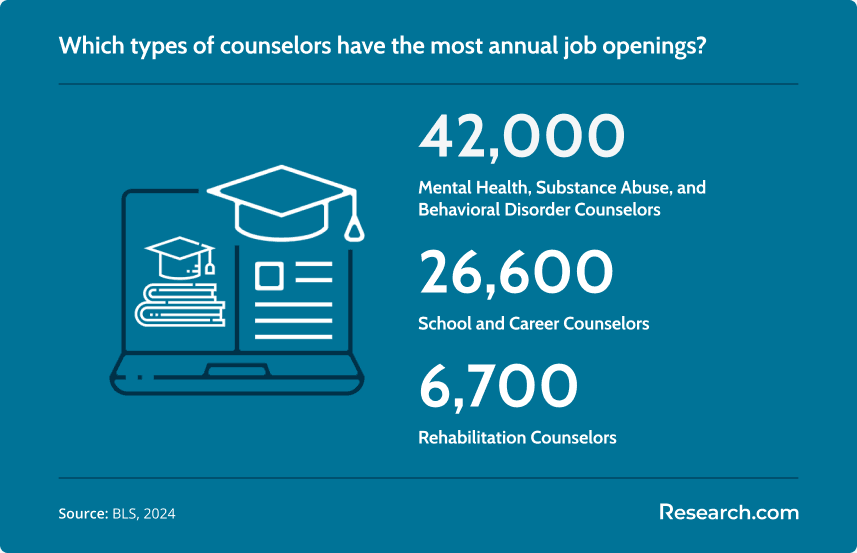
For the same period, BLS reports 42,000 annual job openings for mental health and substance abuse counselors, 26,600 for school and career counselors, 6,700 for rehabilitation counselors, 5,900 for marriage and family therapists, and 300 for genetic counselors. These figures point to meaningful demand in many counseling fields, but job availability, pay, and licensure expectations still vary by state, employer, and specialization.
Can a PsyD Degree Online Complement CACREP-Accredited Counseling Education?
A doctoral pathway may make sense for counselors who want advanced clinical training, leadership roles, teaching opportunities, assessment-focused work, or deeper applied research skills. A PsyD degree online can build on counseling preparation by emphasizing evidence-based assessment, intervention, supervision, and advanced practice. However, students should compare cost, licensure impact, internship requirements, and career goals before committing to doctoral study.
How Can Accelerated Psychology Programs Enhance Counseling Practice?
Accelerated psychology study may help counseling students or professionals strengthen their understanding of research methods, human behavior, assessment, and evidence-based interventions. This can be useful for counselors who want stronger interdisciplinary preparation without committing immediately to a longer degree path. Students exploring this option can compare a fast track psychology degree with counseling-specific graduate programs to determine which credential best supports their goals.
How Much Can You Earn as a Christian Counselor with a CACREP-Accredited Counseling Degree?
A CACREP-accredited counseling degree can support several faith-integrated counseling paths, including Christian counseling roles in private practice, faith-based organizations, community agencies, and church-affiliated counseling centers. Earnings vary by location, licensure status, employer type, years of experience, specialization, and whether the counselor is employed or self-employed. Students interested in this path should distinguish between pastoral counseling, faith-based counseling, and state-licensed professional counseling, because credential requirements can differ.
For a more focused discussion of this career path, review How much do Christian counselors make?.
Is a Bachelor's Degree in Psychology Essential for Successfully Transitioning into CACREP Programs?
A psychology bachelor’s degree can be helpful because it introduces human behavior, research methods, development, abnormal psychology, and social science writing. However, CACREP-accredited counseling programs do not always require applicants to hold a psychology major. Students from other academic backgrounds may need prerequisite or bridge coursework, especially if they have limited exposure to psychology or statistics. Cost-conscious students who want stronger preparation can compare the cheapest online bachelor's degree in psychology options before applying to graduate counseling programs.
How Can an Online Doctorate in Psychology Support Evidence-Based Counseling Practice?
An online doctorate in psychology can help experienced counselors strengthen research literacy, clinical reasoning, assessment knowledge, and evidence-based practice skills. This type of degree may be useful for professionals interested in teaching, consulting, leadership, program evaluation, or advanced clinical expertise. It is not automatically required for counseling licensure, so applicants should compare doctoral outcomes with their specific career goals. For program comparisons, review psychology PhD programs online.
Are Online Psychology Degrees Respected in Professional Counseling?
Online psychology and counseling degrees are evaluated most seriously when they come from accredited institutions, provide rigorous coursework, include qualified faculty, and meet professional or licensure expectations. Employers and licensing boards generally care less about whether coursework was online and more about accreditation, clinical training, supervised experience, and demonstrated competence. For a broader look at employer perception and degree legitimacy, see is it easy to find a job with an online psychology degree.
Questions to Ask Before Enrolling
- Is the specific program and specialization currently CACREP accredited?
- Does the curriculum meet licensure requirements in the state where I plan to practice?
- How many credits are required, and are there additional prerequisites?
- What is the total estimated cost, including fees, residencies, technology, books, and travel?
- Does the school help arrange practicum and internship placements?
- Are there in-person intensives, residencies, or synchronous class meetings?
- What support is available for licensure exams, supervision planning, and job search preparation?
- Can I complete the program part time if I need to work while enrolled?
- What happens if I move to another state during or after the program?
- Are scholarships, assistantships, employer partnerships, or veterans benefits available?
References
- BLS (2024, April 3). 21-1019 Counselors, All Other. BLS
- BLS (2024, April 17). Genetic Counselors. BLS
- BLS (2024, April 17). Marriage and Family Therapists. BLS
- BLS (2024, April 17). Rehabilitation Counselors. BLS
- BLS (2024, April 17). School and Career Counselors and Advisors. BLS
- BLS (2024, April 17). Substance Abuse, Behavioral Disorder, and Mental Health Counselors. BLS
- Hanson, M. (2024, February 27). Average Cost of a Master’s Degree. Education Data Initiative
- Indeed (2024, July 29). Counselor salary in United States. Indeed
- Indeed (2024, July 29). Licensed professional counselor salary in United States. Indeed
- University of Bridgeport (2023, May 8). How Long Does It Take to Complete a Master’s in Counseling? University of Bridgeport
- Zippia (2024, April 5). Licensed Professional Counselor Education Requirements. Zippia
Other Things You Should Know About CACREP Accredited Counseling Programs
Students usually need a reliable broadband connection, a webcam, a microphone, and a laptop or desktop that can run Zoom, LMS platforms, and video assignments. Many CACREP programs also require secure access for practicum paperwork and synchronous supervision sessions.
Students need a reliable computer and high-speed internet connection for online CACREP accredited counseling programs. Additionally, they should ensure compatibility with specific software platforms such as Zoom or Blackboard, as required by their chosen program. Programs might also recommend certain operating systems or browser versions.