2027 Is a Master's in Counseling Worth It?

Co-Founder and Chief Data Scientist
A master’s in counseling is usually the gateway credential for people who want to become licensed counselors, work directly with clients, and build a long-term career in mental health services. The decision is not simple: programs can cost $10,000 to $40,000 per year, licensure often takes additional supervised hours after graduation, and salaries vary by specialization, state, and work setting.
This guide is for prospective graduate students, career changers, psychology majors, social service professionals, and anyone comparing counseling with related mental health careers. You will learn what the degree can lead to, what it costs, how licensure works, which specializations fit different goals, what online students should check, and when another path may be a better choice.
Quick Answer: Is a Master’s in Counseling Worth It?
A master’s in counseling can be worth it if you want a client-facing mental health career and are prepared for graduate tuition, supervised clinical training, state licensure requirements, and emotionally demanding work. It is most useful for students pursuing roles such as licensed professional counselor, mental health counselor, school counselor, addiction counselor, or marriage and family therapist. It may be less suitable if your main goal is the highest possible salary, research-focused psychology work, or a fast career change without post-graduate supervision.
Key Facts to Know Before Applying
- Annual tuition for a master’s in counseling can differ substantially by school type and location. Many programs fall between $10,000 and $40,000 per year before fees, books, transportation, technology costs, and living expenses.
- Common graduate courses include Counseling Theories, Human Development, Ethics in Counseling, Multicultural Counseling, Group Therapy, and Research Methods, along with practicum and internship experiences.
- Students often select tracks such as clinical mental health counseling, school counseling, marriage and family therapy, substance abuse counseling, child and adolescent counseling, or career counseling.
- Full-time students often finish in 2 to 3 years, while part-time students may need 4 or more years depending on course load, clinical placement timing, and program format.
- After graduation, many states require 2,000–4,000 hours of supervised clinical work and a licensing exam before graduates can practice independently.
- Career paths and job outlook for counseling graduates
- Program requirements, coursework, and online study options
- Salary, cost, and return-on-investment considerations
- Licensure and certification requirements
- Counseling specializations and how to choose one
- Alternatives to a master’s in counseling
- Compensation trends in counseling
- Soft skills developed in counseling programs
- Why supervised training matters
- Challenges counselors should expect
- How to match a specialization to your goals
- How to judge whether a program is affordable
- Future trends affecting counseling careers
- Financing options for counseling graduate students
- Employer views of online psychology and counseling-related degrees
- Advanced degrees after a counseling master’s
- What to look for in an accredited counseling program
- How specialized certifications can support career growth
- Whether accelerated programs can shorten the pathGraduate perspectivesKey insights
The Value of a Master’s in Counseling
A master’s in counseling is valuable because it prepares students for professional roles that typically require graduate-level clinical training and state licensure. For many counseling roles, a bachelor’s degree alone is not enough to provide therapy independently or qualify for licensed professional counselor credentials.
The degree’s value depends on fit. It can offer stable, meaningful work for people who are committed to helping clients through mental health, relationship, academic, addiction, or life-transition concerns. However, it also requires a realistic understanding of tuition, unpaid or low-paid training hours, documentation work, emotional labor, and state-by-state licensing rules.
| Question | What it means for your decision |
| Do you want to provide counseling or therapy directly? | A counseling master’s is often the appropriate route for client-facing licensure. |
| Are you willing to complete supervised hours after graduation? | Licensure usually continues beyond the degree through 2,000–4,000 supervised hours. |
| Is salary your primary reason for enrolling? | Review earnings carefully because counseling can be rewarding, but pay varies widely by role and location. |
| Do you need flexibility while studying? | Online and hybrid programs may help, but you still need approved practicum and internship placements. |
| Does your intended license match the program curriculum? | Program accreditation and state licensure alignment are critical before enrollment. |
Career Opportunities and Job Outlook for Master’s in Counseling
A master’s in counseling can lead to roles across healthcare, schools, community agencies, private practice, nonprofit organizations, residential treatment centers, and telehealth platforms. Unlike unrelated graduate credentials such as an online public policy masters degree, counseling programs are built around direct helping skills, assessment, ethics, supervised practice, and preparation for human services or mental health licensure.
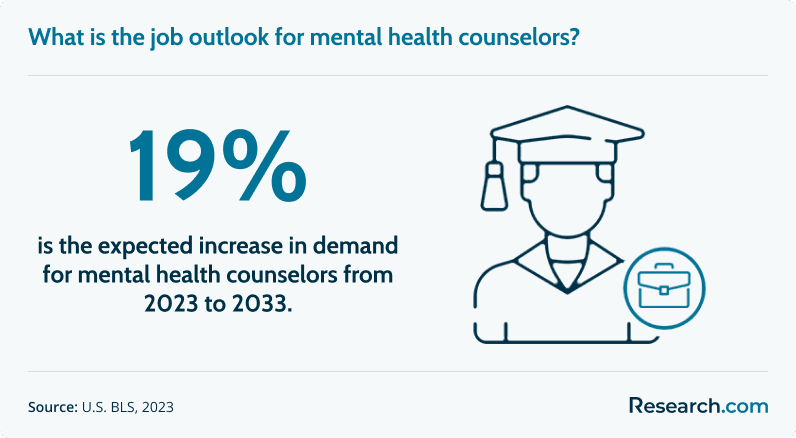
According to the U.S. Bureau of Labor Statistics, employment for substance abuse, behavioral disorder, and mental health counselors is projected to grow 19% from 2023 to 2033. The same source reports about 48,900 openings for licensed counselors each year, on average, over the decade.
| Career path | Typical focus | Best fit for students who want to |
| Clinical Mental Health Counselor | Support clients dealing with anxiety, depression, trauma, stress, grief, and related mental health concerns. | Work in therapy-focused settings such as clinics, agencies, telehealth, or private practice. |
| School Counselor | Help students with academic planning, emotional development, social challenges, and career readiness. | Work in K-12 or college environments and support student success. |
| Addiction Counselor | Assist clients dealing with substance use, behavioral addictions, relapse prevention, and recovery planning. | Work in treatment centers, community programs, hospitals, or recovery organizations. |
| Marriage and Family Therapist | Address relationship patterns, communication problems, family conflict, parenting issues, and couple dynamics. | Focus on systems, relationships, and family-centered interventions. |
| Career Counselor | Guide clients through career exploration, job transitions, resume preparation, and employment decision-making. | Combine counseling skills with workforce, education, and career development knowledge. |
Where demand may be strongest
- Underserved communities: Rural areas and regions with limited mental health access may have stronger demand for licensed providers.
- Integrated healthcare settings: Clinics and hospitals increasingly coordinate behavioral health with physical health services.
- Schools and colleges: Student mental health, academic planning, and crisis response remain important service areas.
- Telehealth organizations: Online counseling has expanded access and created remote work options, although licensure rules still apply by state.
- Career-aligned graduate comparisons: If you are comparing counseling with business, policy, or sustainability careers, consider how different degrees lead to different roles; for example, students asking what jobs can you get with an MBA in sustainability management online are usually looking at corporate responsibility, environmental consulting, or sustainable business roles rather than clinical client work.
Educational Requirements and Program Insights
Most counseling master’s programs are designed for students who already hold a bachelor’s degree and want the academic, ethical, and supervised practice preparation needed for professional counseling roles. Some students enter with psychology or social science backgrounds, while others come from education, healthcare, human services, or unrelated fields.
| Requirement | What to expect | Why it matters |
| Bachelor’s degree | Applicants usually need an accredited undergraduate degree. A psychology major is helpful but not always required. | Admissions committees want evidence that you can handle graduate work and understand the helping professions. |
| Prerequisite preparation | Some students strengthen their background through psychology, sociology, social work, or human development courses. Students still exploring undergraduate options may compare the easiest psychology degree online with more rigorous paths that prepare them for graduate study. | Foundational coursework can make counseling theories, assessment, and ethics easier to understand. |
| Core curriculum | Programs commonly include Counseling Theories, Human Development, Ethics in Counseling, Multicultural Counseling, Group Therapy, and Research Methods. | These courses build the conceptual and ethical base for supervised practice. |
| Practicum and internship | Students complete supervised client-contact experiences in approved settings. | Clinical training is essential for skill development and may be required for licensure eligibility. |
| Licensure alignment | Programs should match the academic requirements for the license you plan to pursue in your state. | A degree that does not meet state standards can delay or block licensure. |
Before choosing counseling, compare it with adjacent psychology pathways. If you are unsure whether you want clinical practice, research, assessment, or applied psychology work, reviewing whether is a master's degree in psychology right for you can help clarify the difference between counseling and broader psychology training.
Some students add practical administrative or healthcare-related skills through options such as a low-cost medical coding and billing online program, especially if they expect to work in clinics or private practice settings. Others who know they want to work with young clients may compare counseling programs with the most affordable masters in child psychology online.
Is online school effective for counseling degrees?
Online counseling programs can be effective when they are accredited, transparent about licensure preparation, and able to support supervised local placements. The key question is not simply is online school effective; it is whether the program provides qualified faculty, live skills practice, advising, clinical placement support, and coursework that satisfies your state board’s requirements.
| Online counseling program strength | Warning sign to avoid |
| Clearly identifies the states where its curriculum is designed to meet licensure requirements. | Uses vague language about licensure and tells students to “check later.” |
| Offers structured practicum and internship support. | Leaves students entirely responsible for finding approved placements without guidance. |
| Provides faculty interaction, skills labs, supervision, and feedback. | Relies mostly on self-paced reading with little observed counseling practice. |
| Publishes accreditation status and student outcome information. | Does not clearly state accreditation or graduate licensure outcomes. |
Salary and Financial Considerations
Salary is one of the biggest factors in deciding whether a master’s in counseling is financially worthwhile. In 2024, licensed counselors in the United States typically earn an average of $53,710 annually, though actual earnings depend on specialization, employer, region, years of experience, licensure level, and whether the counselor works in agency employment, schools, hospitals, telehealth, or private practice.
Related occupations can have different pay patterns and education requirements. The following figures provide context for comparing counseling with adjacent helping professions:
- Health Education Specialists: Median salaries often range around $62,860.
- School and Career Counselors and Advisors: These professionals earn an average salary of $61,710 and usually need a master’s degree.
- Marriage and Family Therapists: Experienced practitioners in high-demand areas can earn above $58,510.
- Psychologists: Earnings can be around $92,740, depending on location, role, and experience level.
- Social Workers: These professionals help people manage everyday challenges and earn around $58,380 on average.
When evaluating return on investment, do not compare tuition with salary alone. Include fees, unpaid internship time, exam costs, supervision expenses, licensing fees, lost wages if you study full time, and the time it takes to reach independent practice.
How to evaluate ROI before enrolling
| Cost or benefit | Questions to ask |
| Tuition and fees | What is the total program cost, not just the per-credit rate? |
| Clinical placement costs | Will you need to reduce work hours, commute, pay for background checks, or complete unpaid internship time? |
| Licensure pathway | How many supervised hours are required in your state after graduation, and are those hours paid? |
| Employment outcomes | Where do recent graduates work, and how many become licensed? |
| Debt management | Will expected entry-level earnings support your loan payments and living costs? |
| Long-term fit | Can you see yourself doing emotionally intensive client work for years? |
Licensure and Certification for Mental Health Counselors
Licensure is the formal state process that allows counselors to practice under protected professional titles and, in many cases, provide clinical services independently. Requirements differ by state, so students should verify rules with the licensing board in the state where they plan to work before choosing a program.
Typical path from student to licensed counselor
- Earn a bachelor’s degree. Your undergraduate major may vary, but psychology, sociology, social work, education, and human services can provide useful preparation.
- Complete an accredited master’s program. Many students compare program cost and quality, including options such as the cheapest masters in psychology online, but counseling licensure requires close attention to counseling-specific coursework and clinical requirements.
- Finish practicum and internship requirements. These supervised experiences occur during the degree and introduce students to real client work.
- Accumulate post-graduate supervised experience. Many states require 2,000 to 4,000 hours of supervised clinical work after graduation.
- Pass the required exam. Many states use the National Counselor Examination (NCE), administered by the National Board for Certified Counselors (NBCC), although requirements vary.
- Apply to the state board. Applications may require transcripts, supervision documentation, exam scores, background checks, fees, and ethical disclosures.
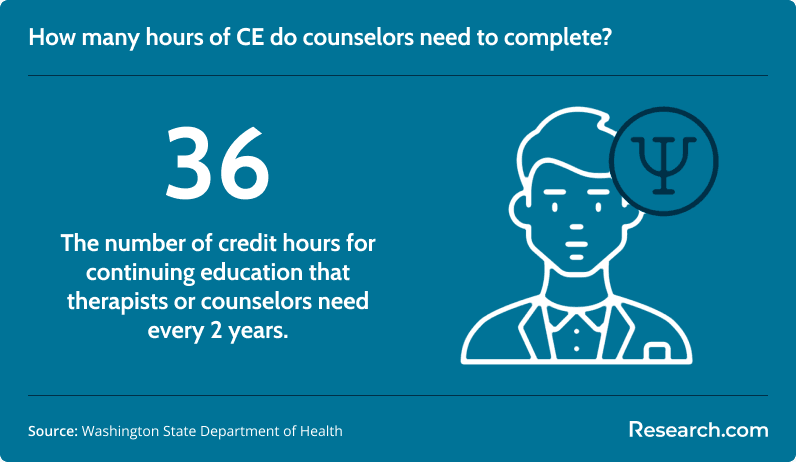
- Maintain the license. Continuing education is commonly required. For example, the Washington State Department of Health lists 36 hours of continuing education every two years for mental health counselor renewal.
Post-graduate supervised experience
After completing the master’s degree, graduates generally work under an approved supervisor before becoming independently licensed. These hours may be completed in clinics, hospitals, nonprofit organizations, private practices, schools, residential programs, or community agencies.
Licensure exams
The National Counselor Examination tests knowledge areas such as human development, counseling theories, ethical and legal standards, clinical assessment and diagnosis, and treatment planning. Some counseling specialties or states may require additional exams or documentation.
Common license titles
- Licensed Professional Counselor (LPC)
- Licensed Mental Health Counselor (LMHC)
- Licensed Clinical Professional Counselor (LCPC)
Certification
Certifications can help counselors demonstrate added competence in a specialty area, but they do not replace state licensure when a license is required for practice. Before paying for a certification, confirm whether employers in your target setting value it and whether it supports your client population or practice area.
Specializations in Counseling
Specialization affects your coursework, internship site, license pathway, client population, and job search. Choose based on the work you want to do every week, not only on the title that sounds most appealing.
| Specialization | Primary client focus | Good fit if you want to |
| Mental Health Counseling | Adults, adolescents, couples, or groups dealing with emotional and psychological concerns. | Provide therapy for anxiety, depression, trauma, stress, grief, and related conditions. |
| Marriage and Family Therapy | Couples, families, and relational systems. | Work on communication, conflict, parenting concerns, family transitions, and relationship patterns. |
| Substance Abuse Counseling | Clients dealing with addiction, recovery, relapse prevention, and co-occurring concerns. | Serve in treatment centers, community recovery programs, hospitals, or correctional settings. |
| School Counseling | K-12 or higher education students. | Support academic planning, emotional development, bullying prevention, crisis response, and career readiness. |
| Career Counseling | Students, adults, job seekers, and career changers. | Help clients assess interests, prepare resumes, make employment decisions, and navigate transitions. |
| Grief Counseling | Individuals and families coping with death, loss, illness, or major life change. | Provide support around bereavement, meaning-making, and coping skills. |
| Trauma Counseling | Clients affected by abuse, violence, accidents, disasters, or other traumatic experiences. | Use trauma-informed approaches to help clients manage symptoms and rebuild safety. |
| Rehabilitation Counseling | People with disabilities, injuries, or chronic conditions. | Support independence, employment goals, life skills, and community participation. |
| Child and Adolescent Counseling | Children, teenagers, and families. | Address behavioral, emotional, social, and family-related concerns. Some students also compare this path with social work options such as the best online MSW programs no GRE. |
Demand for mental health treatment has grown in recent years. In the U.S., the number of adults receiving mental health treatment or counseling was 40.2 million in 2019, about 41.4 million in 2020, 41.7 million in 2021, 55.8 million in 2022, and 59.2 million in 2023. These figures show why counseling access, workforce capacity, and specialization planning have become important issues for students entering the field.
Alternatives to a Master’s in Counseling
A counseling master’s is not the only way to work in mental health, human services, or client support. The best alternative depends on whether you want to provide therapy, manage cases, work in healthcare, conduct research, support families, or help people function in daily life.
| Alternative path | How it differs from counseling | When it may be a better fit |
| Master’s in Social Work (MSW) | Combines counseling, advocacy, case management, systems work, and community support. | You want flexibility across clinical, nonprofit, school, hospital, policy, or social service roles. |
| Psychiatric Nursing | Uses nursing training to support mental health treatment in medical settings. | You want a healthcare role that combines patient care, mental health, and medical systems. |
| Psychology Master’s or Doctorate | May focus more on assessment, research, clinical psychology, or specialized psychological practice. | You want research, testing, academia, or doctoral-level clinical training. |
| Human Services | Prepares students for support, advocacy, program coordination, and resource-navigation roles. | You want helping work but do not necessarily want clinical licensure. |
| Marriage and Family Therapy | Centers training on relationships, families, and systemic approaches. | You are specifically drawn to couples, family systems, and relational treatment. |
| Occupational Therapy | Helps people regain or improve daily functioning after illness, injury, disability, or developmental challenges. | You prefer functional rehabilitation and patient-centered healthcare over talk therapy. |
What Are the Emerging Trends in Counselor Salary and Compensation?
Counselor compensation is increasingly shaped by specialty, license level, practice setting, telehealth adoption, payer mix, and local demand. Counselors with advanced clinical skills, strong documentation habits, niche expertise, and the ability to work across in-person and remote formats may have more employment options than those with only general training. For a deeper salary breakdown, review Research.com’s guide to counselor salary.
What Essential Soft Skills Are Developed in Counseling Programs?
Counseling programs develop more than theory knowledge. Students practice active listening, reflective questioning, empathy, professional boundaries, ethical judgment, cultural humility, crisis response, and conflict de-escalation. These abilities are strengthened through role-play, supervised practice, case analysis, and feedback from faculty or site supervisors. Students drawn to relational work may also compare counseling with the best online marriage and family therapy programs.
How Important Are Hands-On Training Opportunities in Counseling Programs?
Hands-on training is central to counseling education because students must learn how to sit with clients, assess needs, respond ethically, document services, manage risk, and receive supervision. A program with weak practicum support can leave graduates underprepared, even if the coursework looks strong. Clinical placements also help students test different psychology career paths and decide whether they prefer schools, clinics, hospitals, telehealth, private practice, or community agencies.
Common Challenges of Counseling Careers
Counseling can be meaningful, but the work is not easy. Prospective students should understand the pressures of the profession before committing to graduate school.
Emotional strain and burnout risk
Counselors routinely support clients facing trauma, grief, depression, anxiety, addiction, family conflict, and crisis. Without strong supervision, boundaries, peer support, and self-care, counselors may experience compassion fatigue or secondary traumatic stress.
Large caseloads and documentation demands
Many counseling jobs involve back-to-back sessions, treatment planning, insurance documentation, progress notes, coordination with other providers, and compliance tasks. Students should expect that the profession includes paperwork as well as client interaction.
Crisis situations
Counselors may need to respond to suicidal ideation, self-harm risk, abuse concerns, severe trauma responses, or safety threats. Programs should teach risk assessment, mandated reporting, crisis planning, and consultation practices.
Ethical dilemmas and boundaries
Confidentiality, dual relationships, client safety, cultural differences, documentation, social media, and scope of practice can create difficult decisions. Ethical counseling requires consultation, supervision, and consistent attention to professional standards.
Financial pressure during training
Graduate students may face tuition costs while completing practicum or internship hours that limit paid work. New graduates may also need supervised experience before qualifying for independent licensure.
What Specialization Best Aligns With Your Career Goals?
The right specialization depends on your preferred clients, work setting, license requirements, and tolerance for certain types of clinical work. For example, students interested in recovery, relapse prevention, and behavioral health treatment may explore training designed for an addictions counsellor. Students interested in schools should verify school counselor certification rules, while those drawn to private practice should study licensure, insurance, and supervision requirements carefully.
| If your goal is... | Consider... | Ask before enrolling... |
| Private practice therapy | Clinical mental health counseling or marriage and family therapy | Does the program meet your state’s independent licensure requirements? |
| Working with students | School counseling | Does the curriculum satisfy state school counseling credential standards? |
| Addiction treatment | Substance abuse or behavioral health counseling | Does the program include addiction assessment, recovery models, and co-occurring disorder training? |
| Family and couples work | Marriage and family therapy | Are internships available with couples, families, and relational therapy supervision? |
| Child and adolescent services | Child, adolescent, school, or family-focused counseling | Will you get supervised experience with minors and families? |
How Can I Determine the Affordability of a Counseling Program?
Affordability is not just the advertised tuition rate. A lower-cost program can become expensive if it lacks placement support, delays graduation, or fails to meet licensure requirements. Start by comparing total cost, accreditation, clinical placement structure, graduation timeline, licensure exam preparation, and graduate employment outcomes. Students looking for lower-cost options can review affordable online master's in counseling programs.
| Affordability factor | Why it matters |
| Tuition per year | Programs often range from $10,000 to $40,000 per year, but tuition alone does not show the full cost. |
| Fees and materials | Technology fees, textbooks, assessment materials, and background checks can add to the bill. |
| Time to completion | A 2 to 3 year full-time program may cost less in living expenses than a longer part-time path, but part-time study may allow continued employment. |
| Clinical placement support | Strong placement assistance can prevent delays that extend tuition and graduation timelines. |
| Licensure match | A program that does not align with state rules can create additional coursework costs after graduation. |
| Financial aid and scholarships | Grants, scholarships, assistantships, employer support, and federal aid can reduce out-of-pocket costs. |
Future Trends in Counseling
The counseling profession is being shaped by technology, access gaps, trauma-informed care, cultural responsiveness, and changing client expectations. These trends do not remove the need for trained counselors; instead, they raise the importance of ethical judgment, data privacy, supervision, and evidence-informed practice.
- Telehealth: Remote counseling can improve access for some clients, but counselors must understand state licensure rules, emergency protocols, informed consent, and privacy expectations.
- AI-supported tools: Chatbots, mental health apps, scheduling tools, and digital worksheets may support care between sessions, but they do not replace licensed clinical judgment.
- Outcome tracking: More providers use assessments and progress measures to evaluate whether treatment is helping clients.
- Cybersecurity: Digital records and online sessions require secure platforms, careful documentation, and strict confidentiality practices.
- Culturally responsive practice: Counselors increasingly need training for work with LGBTQ+ clients, immigrant communities, trauma survivors, and underrepresented populations.
What Are the Best Financing Options for a Master’s in Counseling?
Students usually combine several financing strategies rather than relying on one source. Options may include institutional scholarships, need-based grants, federal student aid, state aid, employer tuition support, payment plans, assistantships, and part-time enrollment. Compare these options with the total cost of attendance and expected earnings after graduation. Students still weighing psychology-related programs may also compare counseling with the cheapest online schools for psychology.
Financing questions to ask schools
- What is the full cost of the degree from start to finish?
- Are scholarships available for counseling students specifically?
- Can students work while completing practicum and internship hours?
- Are assistantships, tuition discounts, or employer partnerships available?
- What percentage of students borrow, and what debt levels are typical?
- Does the program provide licensure exam preparation, or will that cost extra?
Are Online Psychology Degrees Valued by Employers?
Employers are more likely to respect online psychology or counseling-related degrees when the school is accredited, the curriculum is rigorous, and the graduate has relevant supervised experience. For counseling careers, the central issue is licensure preparation: an online format is not a problem if the program meets state requirements and provides meaningful clinical training. Students who want more detail can review whether can you get a job with an online psychology degree.
Here’s What Graduates Have to Say About Their Master’s in Counseling
Completing a counseling master’s gave me access to work I could not have pursued before. Sitting with clients during painful moments is challenging, but seeing people gain insight and stability makes the work deeply meaningful. — Joseph
My graduate training helped me serve people in my community who often struggle to find care. The program was demanding, but it gave me practical tools, ethical grounding, and a clearer sense of professional purpose. — Micaela
Counseling has allowed me to work in several settings, including schools, private practice, and online therapy. Each environment has different pressures, but the variety has made the career feel flexible and personally rewarding. — Jack
What Strategies Enhance Long-Term Success in Counseling?
Long-term counseling careers depend on skill growth, supervision, ethical practice, documentation quality, networking, and sustainable self-care. New counselors should seek mentors, join professional associations, pursue continuing education, monitor burnout risk, and develop a realistic plan for specialization or advancement. Research.com’s overview of counseling careers can help students compare roles and map next steps.
What Advanced Degrees Can Further Elevate Your Counseling Career?
Some counselors eventually pursue doctoral study for teaching, research, supervision, leadership, policy work, advanced clinical expertise, or academic roles. A doctorate is not required for many counseling jobs, but it may be useful for professionals who want to publish research, train future counselors, direct programs, or move into high-level clinical leadership. One possible route is an online psychology PhD, depending on career goals and admission fit.
What Defines a High-Quality, Accredited Counseling Program?
A strong counseling program should be accredited, clinically rigorous, transparent about outcomes, and aligned with licensure rules. Accreditation matters because it signals that the program has been evaluated against recognized educational standards. Students specifically looking for CACREP-aligned options can compare CACREP online counseling programs.
| Quality indicator | What to verify |
| Accreditation | Confirm institutional accreditation and any relevant counseling program accreditation. |
| Licensure disclosure | Check whether the program clearly states where it meets educational requirements for licensure. |
| Faculty qualifications | Look for licensed faculty with counseling, supervision, research, or field experience. |
| Clinical training | Review practicum and internship expectations, site approval processes, and supervisor standards. |
| Student support | Ask about advising, remediation support, career services, and licensure exam preparation. |
| Graduate outcomes | Request information on completion rates, licensure outcomes, employment settings, and alumni feedback. |
What Role Do Specialized Certifications Play in Counseling Success?
Specialized certifications can help counselors deepen expertise in areas such as addiction, trauma, behavioral analysis, grief, school services, or family work. They are most useful when they match your client population and are recognized by employers or referral sources. Counselors interested in behavioral analysis as a complementary skill may compare options such as cheap BCBA online programs, while remembering that certification requirements are separate from counseling licensure.
Can Accelerated Programs Expedite Your Counseling Career?
Accelerated programs can shorten classroom time, but they should not cut corners on clinical training, supervision, ethics, or licensure preparation. A faster program is only useful if it is accredited, academically sound, manageable with your schedule, and accepted by your state licensing board. Students considering condensed study formats can compare related accelerated psychology programs.
Common Mistakes to Avoid
| Mistake | Better approach |
| Choosing a program based only on tuition. | Compare total cost, accreditation, licensure alignment, placement support, and graduation timeline. |
| Assuming every online program leads to licensure everywhere. | Confirm state-specific licensure eligibility before enrolling. |
| Ignoring practicum and internship logistics. | Ask how placements are approved, supervised, and scheduled. |
| Expecting salary outcomes to be guaranteed. | Review local job postings, state wage data, specialization demand, and typical entry-level roles. |
| Choosing a specialization too early without field exposure. | Use coursework, volunteer work, informational interviews, and practicum settings to test your interests. |
| Overlooking emotional sustainability. | Build supervision, peer consultation, boundaries, and self-care into your career plan from the start. |
Key Insights
- A master’s in counseling is most worthwhile for students who want direct client work and understand that licensure continues after graduation through exams and supervised hours.
- Program fit matters more than format. Online, hybrid, and campus programs can all be viable if they are accredited, clinically rigorous, and aligned with state licensure requirements.
- Full-time students often complete the degree in 2 to 3 years, while part-time students may need 4 or more years.
- Costs can range from $10,000 to $40,000 per year, so students should calculate total attendance cost, clinical placement expenses, and expected debt before enrolling.
- Substance abuse, behavioral disorder, and mental health counselors earn an average of $53,710 per year, and employment in this area is projected to grow 19% from 2023 to 2033.
- Specialization should be chosen based on preferred client population, work setting, state licensing rules, and internship opportunities.
- Clinical training is not optional. Practicum, internship, and post-graduate supervision are central to becoming a competent and licensed counselor.
- Washington State lists 36 hours of continuing education every two years for mental health counselor renewal, illustrating why counselors must plan for ongoing professional education after licensure.
References:
- Statista. (2024). U.S. adults receiving mental health treatment or counseling from 2002 to 2023. https://www.statista.com/statistics/794027/mental-health-treatment-counseling-past-year-us-adults
- U.S. Bureau of Labor Statistics. (2023). Substance Abuse, Behavioral Disorder, and Mental Health Counselors occupational outlook. https://www.bls.gov/ooh/community-and-social-service/substance-abuse-behavioral-disorder-and-mental-health-counselors.htm
- Washington State Department of Health. (n.d.). Mental Health Counselor continuing education information. https://doh.wa.gov/licenses-permits-and-certificates/professions-new-renew-or-update/mental-health-counselor/continuing-education-information
Other Things You Should Know About Master’s in Counseling
For licensure, the most important program accreditor is the Council for Accreditation of Counseling and Related Educational Programs, or CACREP. Some states also review regional accreditation and state approval, but CACREP accreditation is the clearest marker for meeting licensed professional counselor education requirements.
Yes, a master's in counseling is often required for counseling licenses in 2027, such as Licensed Professional Counselor (LPC) or Licensed Marriage and Family Therapist (LMFT). Requirements may vary by state, but a graduate degree is typically essential.