2027 Licensed Master Social Worker (LMSW) vs Licensed Clinical Social Worker (LCSW)

Co-Founder and Chief Data Scientist
Choosing between an LMSW and an LCSW is really a decision about scope of practice, timeline, supervision, and long-term career flexibility. An LMSW can qualify you for many master’s-level social work roles, often in case management, community programs, schools, hospitals, and agencies. An LCSW usually requires more post-graduate clinical experience, but it can open the door to independent therapy, diagnosis, private practice, and clinical leadership roles.
The choice matters because about 22% of social workers in the U.S. report uncertainty about which license aligns with their career goals. The right path can affect how long you spend in training, how much you pay, what kind of supervision you need, where you can work, and how much you may earn. This guide, prepared by career planning experts with over 10 years of experience, explains how LMSW and LCSW pathways compare across job market demand, program length, cost, financial aid, careers, admissions, salaries, licensure, advancement, and work-life balance.
What are the benefits of getting an LMSW vs. LCSW?
- An LMSW allows you to work in case management, school social work, and community programs, while an LCSW qualifies you to provide clinical therapy, supervise other social workers, and work in private practice; both roles contribute to social good by supporting individuals and communities.
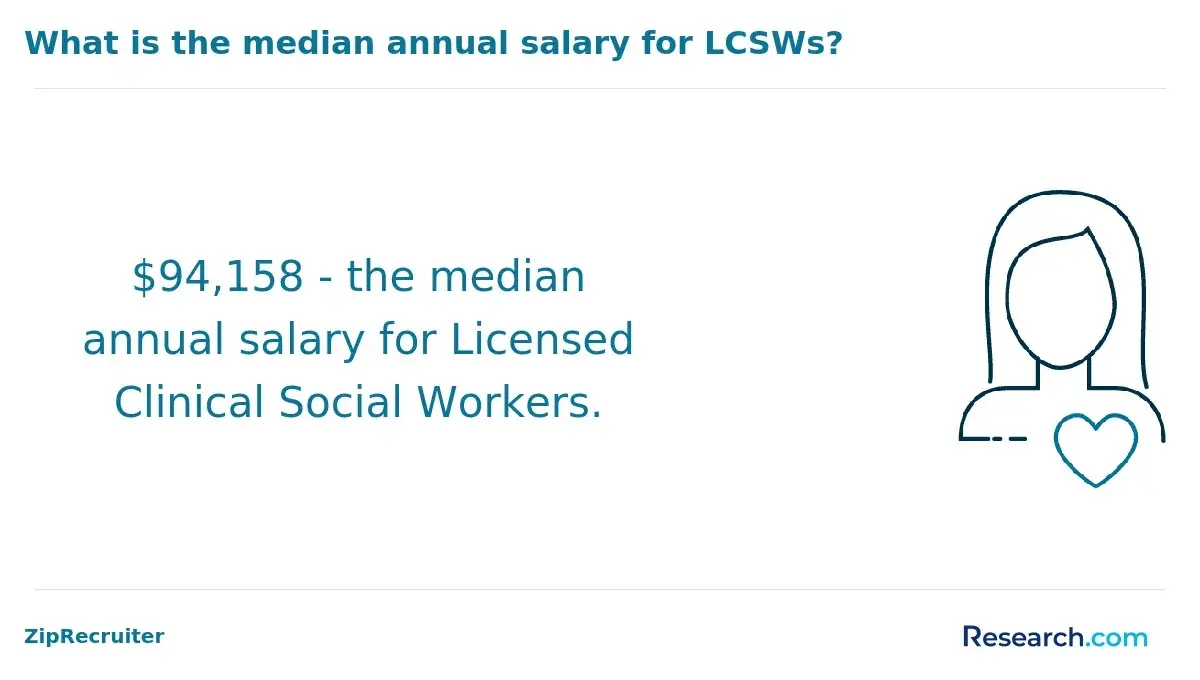
- The median annual wage for LMSWs is around $60,000, whereas LCSWs earn $75,000–$80,000, reflecting higher responsibility and clinical expertise.
- LMSW and LCSW programs often offer online coursework, making it easier for working professionals to balance study, internships, and supervision requirements.
What is the job market for graduates of an LMSW vs. LCSW program?
The job market is strong for both LMSW and LCSW graduates, but the two credentials lead to different levels of responsibility. LMSW graduates often qualify for master’s-level social work roles that involve assessment, case coordination, advocacy, crisis support, discharge planning, and supervised counseling. Common employers include schools, hospitals, child welfare agencies, government offices, nonprofits, and community-based social service organizations.
The demand for social workers is projected to grow 6% from 2024 to 2034, with about 74,000 openings annually due to growth and retirements. That demand benefits both license types, but LCSWs often have access to a wider set of clinical roles because they can provide therapy, diagnose mental health conditions where permitted by state law, and practice independently after meeting licensure requirements.
LCSWs are especially competitive in mental health clinics, hospitals, substance abuse treatment centers, integrated care settings, telehealth organizations, and private practice. Their clinical training can make them more attractive for roles that require psychotherapy, treatment planning, clinical documentation, and supervision of other practitioners.
For students weighing the long-term academic route, a research or leadership-focused doctoral path such as a PhD social work online may be relevant after gaining professional experience. However, a doctorate is not a substitute for state licensure if your goal is clinical practice.
- LMSW is often a good fit if: you want to enter the workforce sooner, work in agency or community settings, and build experience before deciding whether to pursue clinical licensure.
- LCSW is often a better fit if: you want independent clinical practice, therapy-focused work, private practice options, or clinical leadership roles.
- Both paths are valuable in underserved areas: regional shortages can increase demand for licensed social workers, especially those willing to work in high-need communities.
How long does it take to complete an LMSW vs. LCSW program?
The LMSW pathway is usually shorter because it centers on completing an MSW and passing the licensing exam. The LCSW pathway includes those same graduate education steps plus extensive supervised clinical experience before the clinical exam. State rules vary, so students should check their state licensing board before assuming a timeline.
Accelerated options may reduce the time needed to complete graduate coursework. For example, 1 year MSW programs online no BSW can help some students move into the LMSW pathway faster, depending on admission eligibility, course load, field placement requirements, and state licensing rules.
Time to complete an LMSW pathway
- MSW degree: About 2 years full-time.
- Licensing exam: Additional time is needed to prepare, apply, receive authorization, and pass the exam.
- Completion pattern: Most students complete their MSW within 80–90% of the expected timeframe.
Time to complete an LCSW pathway
- MSW degree: 2 years full-time.
- Supervised clinical hours: 3,000–4,000 hours, roughly 2 years.
- Licensing exam: Usually taken after required clinical hours are complete.
The LCSW route takes longer because supervised clinical practice is not optional; it is the core requirement that distinguishes clinical licensure from general master’s-level licensure. Part-time enrollment, delayed field placements, exam retakes, employer supervision availability, and state documentation rules can extend the timeline.
Online MSW programs can be convenient for working adults, but they require strong time management. Online programs may have slightly higher dropout rates due to less face-to-face support and self-discipline challenges. Students trying to shorten the academic portion of the pathway often compare options such as the fastest MSW program online, while still confirming that the program meets licensure and field placement requirements in their state.
What is the average cost of an LMSW vs. LCSW program?
The biggest cost for both pathways is usually the MSW degree. LMSW candidates typically pay for graduate tuition, fees, books, field placement-related expenses, and the licensing exam. LCSW candidates generally carry many of the same costs, plus expenses tied to post-graduate supervised clinical experience.
Typical LMSW costs
- MSW tuition: $30,000–$60,000, lower at public universities.
- Licensing exam: $200–$300.
- Other expenses: Books, transportation, field placement costs, application fees, background checks, and professional liability coverage where required.
- Student debt: Graduates often carry a median student loan debt of around $50,000.
Students comparing program formats may consider online MSW programs if they need flexibility or want to compare tuition across public, private, in-state, and out-of-state options.
Typical LCSW costs
- MSW tuition: $30,000–$60,000.
- Clinical experience expenses: Travel, training, documentation, continuing education, and possible supervision fees.
- Licensing exam: $200–$300.
The LCSW pathway can cost more overall because it takes longer and may require additional supervision-related expenses after graduation. The financial difference depends heavily on whether your employer provides paid clinical supervision, whether you can complete hours in a salaried role, and how quickly you meet state requirements.
Public versus private tuition can significantly change total cost. Debt can also influence career choices after graduation, including whether a graduate chooses nonprofit work, hospital employment, government service, private practice, or a higher-paying clinical setting. Many prospective students ask, “Is a MSW worth it” when comparing tuition, debt, expected salary, and the type of work they want to do.
Financial aid can reduce the upfront burden of an MSW, but students should plan early because aid sources differ by school, state, employer, and career setting. The most useful strategy is to compare total program cost after grants and scholarships, not just the advertised tuition rate.
Financial aid options for LMSW students
- Federal grants: Typically $5,000–$10,000 per year based on eligibility and need.
- Scholarships: Offered by universities, professional associations, community foundations, and private organizations.
- Federal loans: Available to many graduate students, but they require careful repayment planning due to higher-than-average default rates.
- Employer tuition reimbursement: Some employers partially or fully cover coursework, especially when the degree supports the employee’s current role.
Financial aid options for LCSW students
- Support for clinical experience costs: Scholarships, employer support, or paid clinical roles may help offset travel, supervision, training, and continuing education expenses.
- State programs: Loan forgiveness or repayment assistance may be available for work in underserved areas.
- Employer-paid supervision: This can be one of the most valuable forms of support for LCSW candidates because supervision fees can add up over time.
Over 70% of MSW students use some form of financial aid. Before enrolling, students should ask each program for a full cost estimate, field placement expectations, scholarship deadlines, and graduate assistantship options. Those pursuing LCSW licensure should also ask potential employers whether supervised clinical hours can be completed during paid work time and whether supervision is included as an employee benefit.
LMSW and LCSW graduates can both work in meaningful social work roles, but the LCSW credential usually supports more independent and clinical positions. The best choice depends on whether you want a broad social services role, a clinical therapy role, or a leadership path that combines administration and direct practice.
LMSW Career Paths
LMSW graduates commonly work in roles that connect clients with services, coordinate care, support families, advocate for vulnerable populations, and help agencies deliver programs. They may provide counseling or clinical services only within the limits set by their state and employer, often under supervision.
- Case manager: Coordinates services, referrals, care plans, and community resources.
- School social worker: Supports students and families, often in collaboration with teachers, counselors, and administrators.
- Hospital or medical social worker: Helps with discharge planning, patient advocacy, crisis support, and resource coordination.
- Child welfare or family services worker: Supports children, parents, and caregivers through assessment, safety planning, and service coordination.
- Program coordinator or policy analyst: Works on social service programs, community initiatives, grants, compliance, or policy implementation.
LCSW Career Paths
LCSWs can pursue broader clinical roles because they have completed supervised clinical experience and passed a clinical licensing exam. They may work independently as therapists, counselors, clinical supervisors, or private practice providers, depending on state rules. Understanding LCSW therapist salary can help students compare income expectations across locations and settings.
- Clinical social worker or therapist: Provides psychotherapy, treatment planning, and ongoing mental health support.
- Private practice owner: Manages client care, scheduling, billing, documentation, and business operations.
- Substance abuse or behavioral health clinician: Works with clients experiencing addiction, co-occurring disorders, or behavioral health needs.
- Clinical supervisor: Oversees less experienced clinicians or licensure candidates where permitted.
- Specialized practitioner: Focuses on areas such as child welfare, trauma, geriatric services, healthcare social work, or family therapy.
In practical terms, LMSW roles often emphasize systems navigation, advocacy, and supervised practice, while LCSW roles emphasize independent assessment, therapy, diagnosis where permitted, and clinical decision-making.
The academic starting point for both pathways is typically admission to an MSW program. The LMSW is usually the first master’s-level license students pursue after graduation, while the LCSW is generally a later clinical credential earned after supervised post-graduate practice. Because requirements vary by state and school, applicants should confirm both program admission standards and state licensing rules before enrolling.
Common Prerequisites
- Bachelor’s degree: Preferably in social work, psychology, or a related field; some programs accept other disciplines.
- GPA requirement: Average around 3.5, though this can vary by program.
- GRE scores: Required by some programs, but many have waived this in recent years.
- Field experience: Typically at least 200 hours of volunteer or work experience in a social services setting.
- Competitive acceptance: Top MSW programs often admit fewer than 30% of applicants.
How to strengthen your application
- Show relevant service experience: Admissions committees often value direct exposure to human services, advocacy, crisis work, education, healthcare, or community programs.
- Explain your license goal clearly: If you plan to pursue LCSW licensure, connect your goals to clinical training, supervised practice, and ethical client care.
- Choose references carefully: Strong recommendations from supervisors, faculty, or social service professionals can help demonstrate readiness for graduate study.
- Check field placement support: For online or hybrid programs, confirm how placements are arranged and whether the school can support placements in your location.
A strong social sciences background and relevant experience can improve admission chances, but the best program is not only the most selective one. Students should also evaluate accreditation, field education quality, licensure alignment, faculty expertise, affordability, and student support.
LCSWs generally have higher earning potential than LMSWs because they can qualify for independent clinical roles, private practice, and advanced behavioral health positions. However, salary is not determined by license alone. Location, employer type, specialty, years of experience, union status, caseload, and reimbursement model can all affect pay.
LMSW Salaries
LMSW graduates earn a median annual wage of about $56,000 in 2025. Pay varies by:
- State and region.
- Work setting, such as non-profits or schools.
- Years of experience.
- Whether the role is clinical, administrative, policy-focused, or case management-focused.
LMSW salaries may be lower in some nonprofit and community agency roles, but these jobs can provide valuable experience, strong supervision, and a path toward LCSW requirements if the work qualifies under state rules.
LCSW Salaries
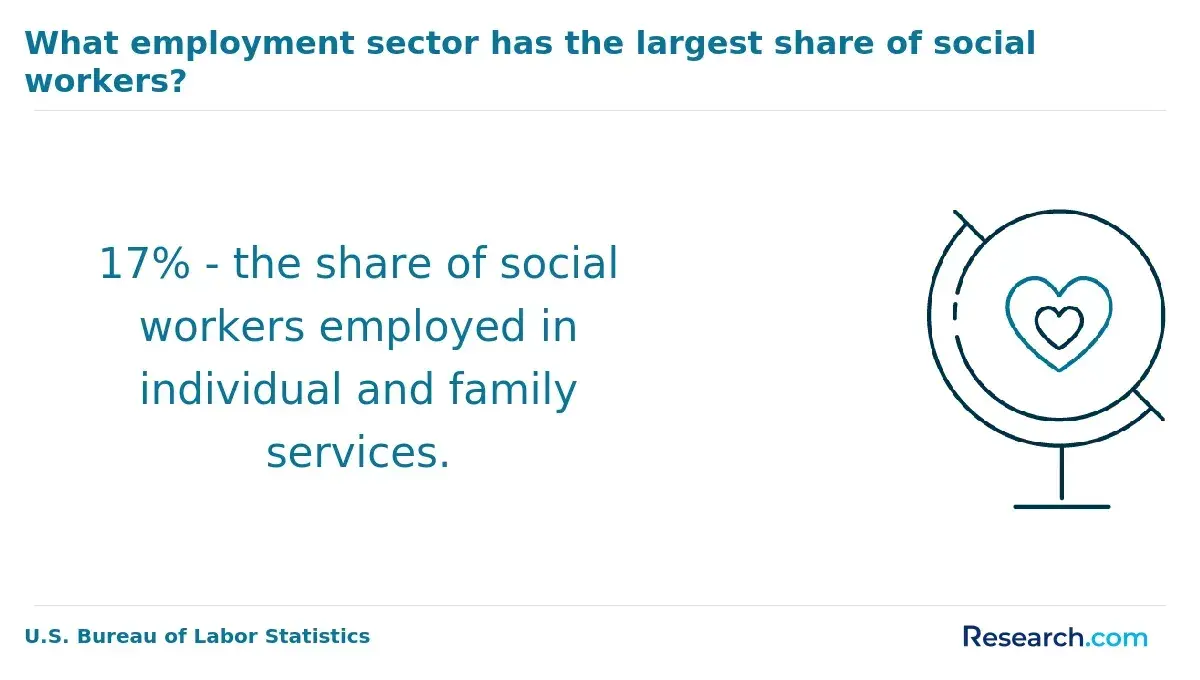
LCSWs have higher earning potential, with a median annual wage around $63,810. Factors affecting pay include:
- Clinical autonomy and specialization.
- Private practice or healthcare roles.
- Geographic location, with states like California and New York offering higher salaries.
- Experience with high-demand populations or settings, such as behavioral health, substance abuse, trauma, or medical social work.
The salary gap reflects the LCSW’s broader scope of practice and additional supervised clinical training. Students comparing the two paths should consider not only median pay, but also the time and cost required to reach clinical licensure.
Licensure requirements are state-specific, so candidates should treat any general pathway as a starting point rather than a final checklist. Most states require an accredited MSW, an application to the state board, an exam, fees, and ongoing continuing education. The major difference is that LCSW candidates must complete supervised clinical experience before qualifying for independent clinical licensure.
LMSW Licensure
To become an LMSW, candidates must:
- Complete a Master of Social Work (MSW) program.
- Apply through the state licensing board and submit required documentation.
- Pass the LMSW licensing exam covering human behavior, social work practice, and ethics.
- Pay exam fees ranging from $200 to $300.
- Meet state-specific continuing education requirements for renewal.
The LMSW can be an endpoint for social workers who want supervised master’s-level roles, or it can be a step toward LCSW licensure for those pursuing clinical practice.
LCSW Licensure
LCSW candidates must:
- Complete an MSW and meet all state education requirements.
- Complete 3,000–4,000 hours of supervised clinical experience, typically two years.
- Document supervision, clinical hours, and practice settings according to state rules.
- Pass the LCSW clinical exam, with a first-time pass rate around 76%.
- Fulfill state-mandated continuing education for license renewal.
Common mistakes include assuming that any social work job counts toward clinical hours, failing to use an approved supervisor, delaying documentation, or moving states without checking license portability rules. Candidates should confirm requirements before starting supervised work.
Both LMSWs and LCSWs can advance, but the advancement routes are different. LMSWs often move upward through agency leadership, program management, specialized service roles, and policy work. LCSWs can pursue those options as well, but they also qualify for more clinical leadership and independent practice opportunities.
LMSW Career Advancement
LMSWs can grow professionally by:
- Gaining hands-on experience in social work roles.
- Pursuing additional certifications.
- Transitioning into administrative or policy-focused positions.
- Developing expertise in areas such as child welfare, healthcare navigation, school services, housing, veterans services, or community mental health.
The main limitation is that LMSWs generally cannot provide independent clinical services or clinical supervision unless state rules allow it under specific conditions. For LMSWs who want therapy-focused autonomy, the next career step is often supervised clinical experience toward LCSW licensure.
LCSW Career Advancement
LCSWs have broader advancement options, including:
- Clinical supervision and leadership roles.
- Program management and private practice ownership.
- Pursuing doctoral degrees in social work or related fields.
- Specializing in clinical areas such as trauma, substance abuse, family therapy, geriatric care, healthcare, or child and adolescent mental health.
LCSWs often experience faster promotions due to their clinical autonomy and expanded scope of practice. They may also have more leverage when negotiating roles that involve supervision, therapy, quality assurance, program development, or integrated behavioral health services.
In short, LMSWs can build strong careers in structured settings, while LCSWs usually have greater flexibility, leadership potential, and independence.
What are the work-life balance and job satisfaction levels for LMSW vs LCSW?
Work-life balance depends less on the license title itself and more on the setting, caseload, supervision quality, documentation burden, and support from the employer. Both LMSWs and LCSWs can find fulfilling work, but both can also face burnout in high-demand environments.
LMSWs often work in structured settings such as schools, hospitals, government agencies, and nonprofits. These roles may offer more predictable hours, clearer supervision, and team-based support. The trade-off is that LMSWs may carry large caseloads, face strict documentation requirements, and have less control over clinical decisions or scheduling.
LCSWs often have more control over their schedules, especially in private practice or independent clinical roles. They may be able to choose client populations, set appointment hours, and shape their clinical approach. However, that autonomy can come with business responsibilities, billing, insurance paperwork, crisis management, and the pressure of maintaining a sustainable caseload.
- LMSW may offer better balance if: you prefer structured hours, team supervision, agency benefits, and a clearer separation between work and business responsibilities.
- LCSW may offer better balance if: you value autonomy, clinical independence, flexible scheduling, and the option to build a private practice.
- Both roles require burnout prevention: manageable caseloads, ethical boundaries, peer consultation, supervision, and realistic expectations are essential.
Surveys show that social workers generally report moderate to high job satisfaction, often because the work provides a strong sense of purpose and direct impact. The best license choice is the one that matches not only your career goals, but also the type of daily work environment you can sustain over time.
Other Things You Should Know about LMSW vs LCSW Programs
Most states require supervised clinical experience before LCSW licensure. A common standard is 3,000 hours over 2 or more years, with 100 to 150 supervision hours from a licensed clinical supervisor. LMSWs usually cannot count independent practice time toward this requirement.
In 2027, LMSWs and LCSWs need to complete specific continuing education credits. LMSWs typically require fewer credits, while LCSWs often need additional training in specialized areas such as clinical supervision or ethics, mandated by state licensing boards.
- Bureau of Labor Statistics. (n.d.). Social workers. U.S. Department of Labor. Retrieved October 27, 2025, from https://www.bls.gov/ooh/community-and-social-service/social-workers.htm
- California Board of Behavioral Sciences. (n.d.). Licensed clinical social worker experience chart. Retrieved October 27, 2025, from https://www.bbs.ca.gov/pdf/forms/lcs/lcs_exp_chart.pdf
- Department of Health, Florida. (n.d.). Licensed clinical social worker. Retrieved October 27, 2025, from https://floridasmentalhealthprofessions.gov/licensed-clinical-social-worker
- Denver University Graduate School of Social Work. (n.d.). MSW financial aid & cost. Retrieved October 27, 2025, from https://socialwork.du.edu/academics/master-social-work-programs/msw-financial-aid-cost
- Michigan Department of Licensing and Regulatory Affairs. (n.d.). Social work licensing guide. Retrieved October 27, 2025, from https://www.michigan.gov/-/media/Project/Websites/lara/bpl/Folder22/Social_Work.pdf
- National Association of Social Workers. (2022, August 23). New report provides insights into new social workers demographics, income, and job satisfaction. Retrieved October 27, 2025, from https://www.socialworkers.org/News/News-Releases/ID/2262/New-Report-Provides-Insights-into-New-Social-Workers-Demographics-Income-and-Job-Satisfaction
- North Carolina Social Work Certification and Licensure Board. (n.d.). Levels and eligibility requirements. Retrieved October 27, 2025, from https://www.ncswboard.gov/levels-and-eligibility-requirements
- New York State Education Department, Office of the Professions. (n.d.). Licensed clinical social worker license requirements. Retrieved October 27, 2025, from https://www.op.nysed.gov/professions/licensed-clinical-social-worker/license-requirements
- Social Work Exams. (n.d.). What is the difference between an LMSW and a LCSW in social work: Key differences in social work. Retrieved October 27, 2025, from https://socialworkexams.com/what-is-the-difference-between-an-lmsw-and-a-lcsw-in-social-work-key-differences-in-social-work
- Texas State Board of Social Worker Examiners. (n.d.). How to become an LMSW. Retrieved October 27, 2025, from https://bhec.texas.gov/texas-state-board-of-social-worker-examiners/applying-for-a-social-work-license/how-to-become-an-lmsw
- Virginia Commonwealth University Online. (n.d.). MSW, LMSW, and LCSW defined. Retrieved October 27, 2025, from https://onlinesocialwork.vcu.edu/blog/msw-lmsw-lcsw-defined