2027 Best Flexible Online MSW Programs for Busy Adults

Co-Founder and Chief Data Scientist
Choosing an online Master of Social Work is not just a question of convenience. For many adults, the real decision is whether they can earn an accredited MSW while keeping a job, supporting family, completing fieldwork, and preparing for licensure without relocating or taking on unnecessary debt.
The strongest flexible online MSW programs combine rigorous social work training with scheduling options that make graduate study realistic for working adults. That usually means CSWE accreditation, part-time pathways, asynchronous or evening coursework, local field placement support, clear licensure preparation, and advising that understands adult learners.
This guide explains what to look for in a flexible online MSW program, how to compare admissions requirements, curriculum, field placement expectations, accreditation, cost, completion time, and career outcomes. It is designed for career changers, BSW graduates considering advanced standing, human services professionals seeking advancement, and adults who need a practical route into clinical, community, healthcare, school, policy, or administrative social work roles.
Key Things You Should Know
- Flexible online MSW programs in 2026 increasingly offer part-time options and asynchronous coursework, making them accessible to busy adults balancing work and family commitments.
- Accredited programs emphasize field placement flexibility and virtual internships to accommodate diverse schedules while meeting Council on Social Work Education standards.
- Job growth for social workers is projected at 12% through 2032, supporting strong demand for online MSW graduates prioritizing adaptable learning formats and immediate career advancement.
What are the best flexible online MSW programs?
The best flexible online MSW programs for working adults are accredited programs that let students complete rigorous graduate training without forcing a full-time campus schedule. Flexibility should not mean a lighter curriculum. It should mean a better fit for adult learners through part-time enrollment, asynchronous courses, evening or weekend options, strong advising, and field placement support near the student’s community.
Programs commonly recognized for flexibility and strong faculty support include Columbia University School of Social Work, University of Southern California Suzanne Dworak-Peck School of Social Work, and University of Denver Graduate School of Social Work. These schools are often considered by students who want a reputable MSW pathway with online or hybrid delivery options and access to experienced social work faculty.
When comparing flexible online MSW programs, prioritize the features that affect whether you can actually finish the degree:
- Accreditation: The program should meet the accreditation expectations needed for licensure and employer recognition.
- Schedule design: Look for asynchronous coursework, evening sessions, weekend options, or part-time pacing if you work full time.
- Advanced standing: Accelerated pathways can shorten completion to about 18 months for students holding BSW degrees.
- Online specialization access: Strong programs may offer specializations in clinical social work, policy, or administration fully available online.
- Field placement support: The school should help students secure local field placements to fulfill practicum requirements without the need to relocate.
- Student services: Advising, technology support, library access, career counseling, and licensure guidance matter more when you are not on campus.
The value of flexible MSW education is also tied to labor market demand. According to the U.S. Bureau of Labor Statistics, social worker employment is expected to increase by 13% from 2022 to 2032, with roughly 93,000 new positions added. A flexible MSW can help adults prepare for this market while continuing to meet current work and family responsibilities.
Students who may eventually pursue doctoral study should also think beyond the MSW. Reviewing Simmons University DSW cost reports can help compare the affordability of later doctoral education.
What makes an online MSW program flexible for adults?
An online MSW program is flexible for adults when its design reduces avoidable scheduling barriers without weakening academic quality, fieldwork standards, or licensure preparation. The most useful programs recognize that many students are employed, caregiving, changing careers, or returning to school after years away from formal education.
Scheduling options that matter
Asynchronous coursework is one of the clearest signs of flexibility because students can watch lectures, complete discussions, and submit assignments around work shifts or family obligations. Synchronous classes can still work well, especially when they are scheduled in the evening or on weekends, but they require more predictable availability.
The best online MSW programs with part-time options also allow students to extend their studies instead of taking a heavy course load every term. This can be important for adults who cannot afford to reduce work hours or who need a steadier academic pace.
Field placement flexibility
Field education is often the hardest part of an MSW to manage. Even online students must complete supervised practicum requirements. Flexible programs help by offering multiple practicum locations, helping students identify agencies near home, and coordinating supervision schedules that may include evenings or weekends when available.
Students should ask direct questions before enrolling: Who finds the placement? How far might I need to travel? Can I complete fieldwork at my current workplace if duties are different and supervision requirements are met? What happens if a placement falls through?
Policies that support adult learners
Credit transfer policies can reduce time to completion for students with eligible graduate credits or prior coursework. Some programs also recognize the needs of licensed social workers or experienced human services professionals, although fieldwork and accreditation requirements still apply.
Remote student support is another major factor. Adults studying online need reliable access to academic advising, digital library resources, writing support, technical assistance, disability services, and career guidance without being required to visit campus.
Cost flexibility
Financial accessibility can make or break the decision. Installment payment plans, scholarships for working adults, employer tuition benefits, and federal financial aid options can make an accredited MSW more manageable. Students should compare total program cost, not only tuition per credit.
Flexible programs can also produce meaningful career benefits. Graduates from such flexible online MSW programs report notable career benefits; for instance, Wyoming MSW graduates saw a median salary increase of 45% within a year, reaching $68,000, according to the University of Wyoming Career Services Report, 2025.
For students seeking a lower-cost route that still balances flexibility and quality, resources on the cheapest MSW programs can help identify cost-effective paths to advanced social work credentials.
How do you choose the right online MSW program?
To choose the right online MSW program, start with licensure eligibility and field placement fit, then compare schedule, specialization, cost, and student support. A program can be highly ranked or well known and still be a poor match if it does not support your state’s licensure path, your preferred career area, or your availability for practicum hours.
Use a decision checklist
- Confirm accreditation first. Accreditation by the Council on Social Work Education (CSWE) is critical for licensure eligibility and employer recognition.
- Match the curriculum to your goal. Choose a program with concentrations aligned with your career plans, such as clinical practice, policy, or community organizing.
- Evaluate field placement support. In 2025, 78% of online MSW graduates secured placements within 50 miles of home, reducing relocation costs significantly. Ask each school how it supports local placements and what your responsibilities will be.
- Compare schedule formats. Asynchronous classes help busy adults, while synchronous classes may provide more live interaction. Hybrid requirements may be useful but can add travel obligations.
- Review outcomes. Graduation rates, alumni employment statistics, licensure exam preparation, and career services can help you judge whether the program supports completion and employment.
- Calculate the full cost. Compare tuition, scholarships, payment plans, employer reimbursement options, and hidden fees such as technology fees, background checks, transportation, and field placement costs.
Common mistakes to avoid
Do not choose a program based only on convenience or tuition. A very flexible schedule is not enough if the program does not meet licensure expectations in your state. Likewise, a low advertised tuition can become less affordable if fees, travel, or delayed completion add costs.
Also avoid assuming that “online” means fully self-paced. Many MSW programs still have deadlines, live sessions, group projects, and strict fieldwork requirements. Ask for a sample course schedule and field education timeline before committing.
Strong student support services in academic advising, career counseling, and technical assistance can improve persistence, especially for adults balancing school with employment and family responsibilities. If compensation is part of your decision, reviewing what state pays social workers the most can help you evaluate geographic and career options.
Online MSW students should look for programs accredited by the Council on Social Work Education (CSWE). CSWE is the key accrediting body for social work education in the United States and is the standard most state licensing boards and employers use when evaluating MSW degrees.
Without CSWE accreditation, graduates may struggle with licensure or certification, because employers and state boards typically require degrees from CSWE-accredited programs to ensure consistent educational standards nationwide. This matters whether the program is online, hybrid, or campus-based.
What accreditation reviews
Regional accreditation standards for flexible online MSW degrees require formal approval of curriculum, faculty qualifications, and fieldwork components. CSWE standards also focus on whether students receive the professional preparation needed for competent social work practice.
Programs may be fully online, hybrid, or campus-based, but must meet CSWE criteria. Online delivery does not remove fieldwork expectations. Students still need supervised practicum experience that aligns with program and licensing requirements.
Why state licensing rules still matter
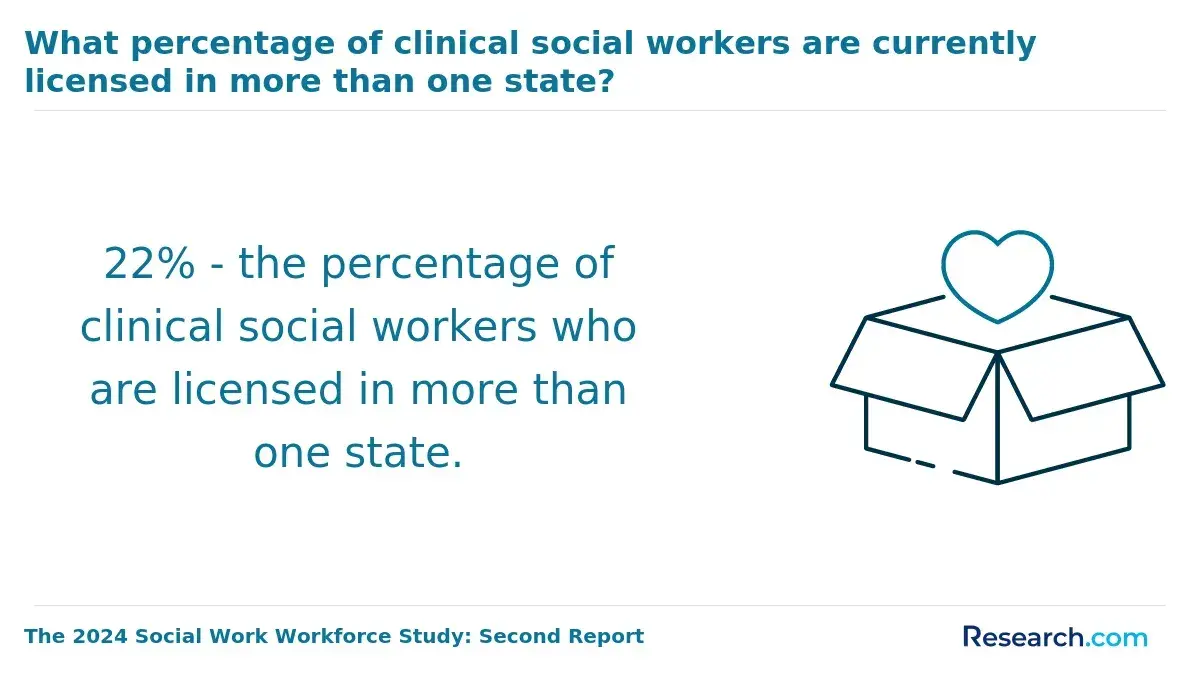
CSWE accreditation is essential, but it is not the only factor. Some states impose extra conditions tied to licensure eligibility, such as specific coursework, supervised clinical hours after graduation, or exam requirements. Students should verify both program accreditation and state-specific licensing rules before enrolling, especially if they may move to another state after graduation.
Affordability can also influence program choice. For example, Western New Mexico's MSW tuition averaged $12,500 total, demonstrating affordability alongside a five-year ROI of 285%, according to the Institute for College Access & Success. For many working adults, the strongest choice is an accredited program that also keeps debt manageable.
Before applying, take these steps:
- Confirm program CSWE accreditation through the CSWE directory.
- Verify that the delivery format, including fully online, part-time, or evening options, fits your schedule.
- Check field placement policies because internships remain a licensure requirement.
- Research your state licensing board for approved programs and additional criteria.
- Ask whether the program provides licensure advising for the state where you plan to practice.
For readers still deciding whether the profession is the right fit, resources such as should I study social work can help weigh education requirements, career outcomes, and long-term goals.
Typical admission requirements for online MSW programs include a bachelor’s degree from an accredited school, academic transcripts, recommendations, a personal statement, and a resume. Many programs accept applicants without a Bachelor of Social Work, but students with a BSW may qualify for advanced standing if they meet the school’s criteria.
Most programs expect a minimum undergraduate GPA around 3.0, though some accept lower GPAs when the applicant’s overall profile is strong. Relevant work, volunteer service, leadership experience, and a clear commitment to social work can strengthen an application.
Common application materials
- Official academic transcripts: Schools review prior coursework, grades, degree completion, and academic readiness.
- Two or three letters of recommendation: These usually come from academic or professional sources who can speak to the applicant’s judgment, communication skills, reliability, and service orientation.
- Personal statement: This should explain motivation for social work, career goals, relevant experience, and readiness for graduate-level fieldwork.
- Resume: Applicants should highlight employment, internships, volunteer work, advocacy, counseling, case management, nonprofit service, or other human services experience.
- GRE scores: Some programs require them, but many waive the requirement for experienced applicants or do not require them at all.
- Background checks and immunization records: These are often required because field placements may involve schools, hospitals, clinics, or agencies serving vulnerable populations.
How BSW and non-BSW applicants differ
Applicants with a recent accredited BSW may be considered for accelerated or advanced standing tracks. Applicants from unrelated majors can still be strong candidates, but they may need a traditional MSW pathway that includes foundational social work coursework before advanced practice classes.
Some programs offer accelerated tracks, with graduates earning a median starting salary of $62,400-18% higher than traditional MSW completers (National Association of Social Workers Workforce Study, 2025). Applicants considering accelerated study should be realistic about workload, field placement demands, and whether the compressed timeline fits their life.
A strong application should show more than interest in helping people. It should demonstrate ethical awareness, emotional maturity, cultural humility, communication ability, and a practical understanding of what social workers do in real agencies and communities.
An online MSW curriculum covers the theory, policy knowledge, research skills, ethics, and supervised practice needed for professional social work. Although courses are delivered online, the academic expectations are similar to campus-based MSW programs, especially in accredited programs.
Core MSW coursework
Most curricula include human behavior and the social environment, social welfare policy, research methods, social work ethics, diversity and social justice, assessment, intervention, and practice with individuals, families, groups, organizations, and communities.
Students learn how social systems affect client well-being and how to advocate for people facing poverty, discrimination, illness, trauma, disability, family instability, or other barriers. The curriculum also helps students connect direct practice with broader policy and community change.
Clinical and community practice
Clinical and community practice are major parts of many MSW programs. Coursework may address assessment, treatment planning, counseling techniques, crisis intervention, trauma-informed care, and work with specific populations. Students often explore fields such as child and family welfare, mental health, aging, and substance abuse.
Students who want clinical licensure should pay close attention to whether the curriculum supports the coursework expectations in the state where they plan to practice. Those interested in macro practice should look for policy, administration, program evaluation, and community organizing options.
Field education
Supervised field placements are a central part of the MSW experience. Students apply classroom learning in settings such as hospitals, schools, nonprofits, government agencies, behavioral health programs, and community organizations. These internships help students build professional judgment, documentation skills, client engagement skills, and ethical decision-making.
Flexible MSW programs often offer electives and specializations in areas such as healthcare, school social work, policy leadership, clinical practice, or community practice. This allows working adults to tailor their degree toward a specific career path while maintaining a manageable academic schedule.
According to the NASW 2025 Compensation and Benefits Survey, MSW holders in community practice roles-such as those aligned with Portland State-report a 92% job satisfaction rate. That finding highlights the importance of choosing a curriculum that fits the work environment and population you hope to serve.
Prospective students should review course lists, field placement requirements, specialization options, and licensure alignment before applying. A good curriculum should offer both broad professional preparation and enough focus to support the student’s intended career direction.
Online MSW programs generally take 2 to 3 years of full-time study, although part-time and asynchronous formats can extend completion to 5 or 6 years. The timeline depends on whether the student enters a traditional or advanced standing pathway, how many credits are required, and how quickly field placements can be completed.
Typical completion timelines
- Full-time traditional MSW: Often completed in 24 to 30 months.
- Part-time MSW: Designed for working adults and may take longer, depending on course load.
- Advanced standing MSW: Available to eligible BSW graduates and often shorter than a traditional pathway.
- Extended asynchronous programs: May allow students to spread coursework over several years, often within a school’s maximum time limit.
Many programs use asynchronous courses, allowing students to access materials on their own schedules without live attendance. According to the Council on Social Work Education Online Learning Impact Report (2025), 62% of fully asynchronous MSW students maintained full-time employment without income loss, compared to 41% in synchronous formats. For working adults, this difference can be significant.
What can lengthen the program
Asynchronous study may reduce schedule pressure, but it can also extend the total time to graduation if students take fewer courses each term. Field placement availability can also affect the timeline, especially for students in rural areas, students with nontraditional work schedules, or students seeking specialized placements.
Hybrid or synchronous formats may help some students move through a structured program more quickly, but they offer less scheduling flexibility. Schools typically impose a 5 to 6 year cap for degree completion to ensure courses remain current and licensure requirements are met.
Prospective students should ask an advisor to map out the full sequence of courses and field placements before enrolling. The best timeline is not always the fastest one. It is the one you can complete without jeopardizing work stability, family obligations, academic performance, or field placement quality.
The cost of top online MSW programs varies widely. Tuition typically ranges between $15,000 and $45,000 for the full degree. Public universities generally offer lower-cost options, especially for in-state students, usually around $15,000 to $25,000. Private schools and specialized programs can cost over $40,000.
Because tuition models differ, students should compare total degree cost rather than relying only on per-credit prices. Some schools charge by credit hour, while others use modular or course-based pricing. Modular or credit-hour pricing can help students pay as they progress, which may be useful for adults who are working while enrolled.
Costs to include in your budget
- Tuition: The largest expense and the easiest figure to compare across schools.
- Technology fees: Online programs may charge additional fees for platforms, systems, or digital resources.
- Field placement costs: Background checks, immunizations, transportation, and required documentation can add to expenses.
- Books and materials: Digital resources may reduce costs, but students should still budget for required texts and tools.
- Lost income or reduced hours: Fieldwork may require weekday availability, which can affect earnings for some students.
Tuition examples include:
- University A charges about $600 per credit hour, totaling roughly $30,000 for 50 credits.
- University B's modular MSW costs around $1,200 per course, with a total near $18,000.
- Additional fees for technology or clinical placements can add $1,000 to $2,000.
Financial aid and return on investment
Financial aid, scholarships, employer tuition reimbursement, and payment plans can reduce out-of-pocket costs. Students who work in public service settings should also ask about repayment and forgiveness options that may apply to their situation, while confirming details through official aid and loan sources.
Program format can also affect cost. Part-time enrollment may be easier to manage month to month but can extend the period of fees and school-related expenses. Accelerated options may reduce time in school but can make it harder to keep working full time.
Investing in modular MSW programs can produce strong returns for some graduates. LSU modular MSW graduates earned a 22% salary premium in healthcare social work positions, with average earnings around $82,000 annually, according to the Healthcare Cost and Utilization Project. Students should still compare outcomes by specialization, region, licensure status, and debt level before deciding how much to borrow.
An MSW degree can lead to careers in clinical practice, healthcare, schools, child welfare, substance abuse treatment, community organizations, policy, and social service leadership. The right path depends on whether you want to work directly with clients, manage programs, influence policy, or combine several roles over time.
Common MSW career paths
- Clinical social worker: Provides therapy, counseling, assessment, and treatment planning for individuals, families, or groups. Many clinical roles require licensure as a licensed clinical social worker (LCSW) for independent practice.
- School social worker: Supports students facing emotional, behavioral, family, attendance, housing, or social challenges and often works with teachers, families, and community agencies.
- Healthcare social worker: Helps patients and families navigate illness, discharge planning, care coordination, insurance issues, grief, and community resources.
- Substance abuse counselor: Works with people experiencing addiction and supports treatment, relapse prevention, recovery planning, and family education.
- Child welfare social worker: Focuses on child safety, family preservation, foster care, adoption, and intervention services for vulnerable children and families.
- Program coordinator or agency director: Manages services, staff, budgets, compliance, and program improvement in nonprofits, public agencies, or community organizations.
- Policy analyst: Uses social work knowledge to evaluate programs, influence legislation, and advocate for systems-level change.
Specialized sectors such as gerontology, veterans' services, and forensic social work provide additional opportunities and may require focused coursework, field placements, certifications, or post-graduate experience.
Students interested in clinical work should understand that earning the MSW is usually only one step. Independent clinical practice commonly requires post-graduate supervised hours, a licensing exam, and compliance with state-specific rules. Students aiming for school social work, healthcare, or public agency roles should also check whether their state or employer requires additional credentials.
Program format may influence preparation. Notably, blended MSW programs showed a 25% higher licensure exam pass rate (89%) compared to fully asynchronous formats, according to the Association of Social Work Boards Annual Statistical Report, 2025. Students should consider whether they learn best through fully online study, live interaction, hybrid practice experiences, or a blend of formats.
When choosing a career direction, evaluate preferred client populations, work settings, emotional demands, licensure requirements, and advancement opportunities. The MSW is versatile, but the most successful path is usually the one aligned with both professional goals and personal capacity.
What is the job outlook and salary for MSW graduates?
The job outlook for MSW graduates is strong, especially in healthcare, mental health, child welfare, aging services, and substance abuse treatment. Employment for social workers with a master's degree (MSW) is expected to grow 12% from 2024 to 2034, much faster than the average growth across all occupations. This increase is driven by rising healthcare demands, an aging population, and greater awareness of mental health.
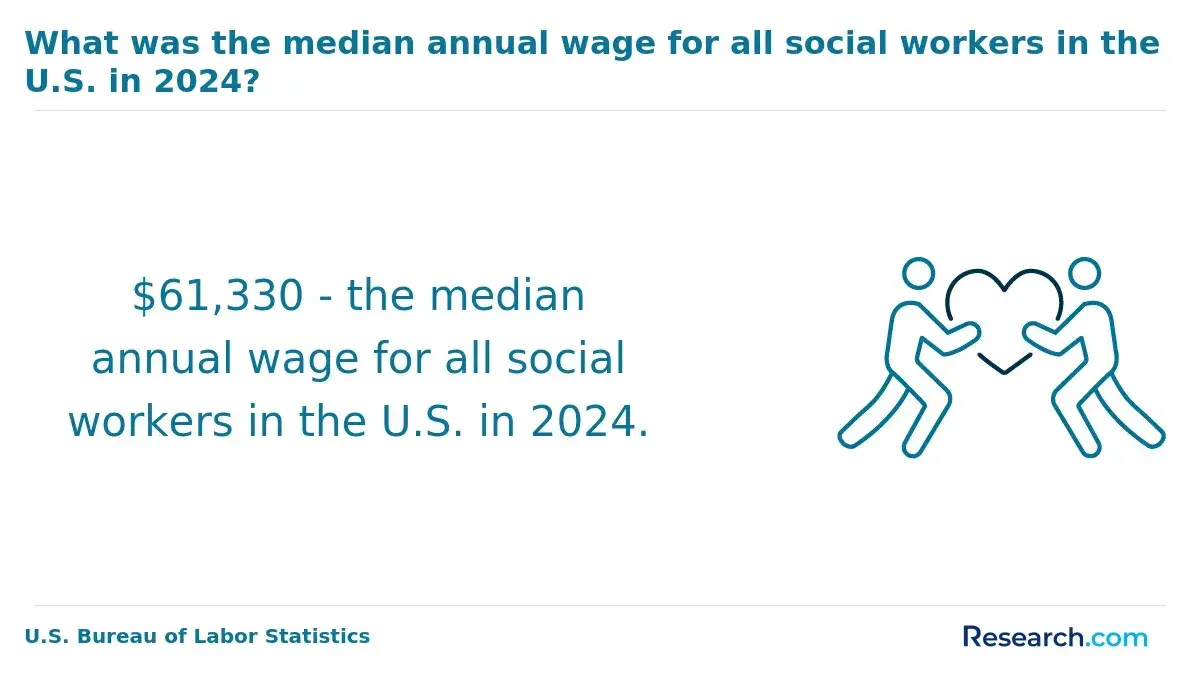
Median annual salaries for MSW graduates hover around $65,000, but pay varies by specialization, licensure, employer type, experience, and location. Medical and substance abuse social workers earn near $75,000, while school social workers generally make closer to $50,000.
Factors that affect salary
- Licensure: Licensed clinical social workers often qualify for roles with more autonomy and higher earning potential.
- Specialization: Healthcare, behavioral health, and substance abuse treatment may offer different compensation than school or community-based roles.
- Location: Salaries and demand vary by state, metropolitan area, rural need, and cost of living.
- Employer: Hospitals, government agencies, schools, nonprofits, private practices, and managed care organizations may pay differently.
- Experience: Supervisory, administrative, and specialized clinical roles typically require experience beyond graduation.
Flexibility and career advancement opportunities are important advantages of the field. Licensed clinical social workers (LCSWs) with an MSW often move into private practice, administration, specialized counseling, or leadership roles with higher pay and autonomy. Key growth sectors include healthcare, child welfare, and substance abuse treatment.
Online MSW programs with tuition under $300 per credit in 2025 have shown an average 3-year post-graduation return on investment of 210%, according to the Georgetown University Center on Education and the Workforce. This suggests that lower-cost online study can offer competitive career value for students who choose accredited programs, complete licensure steps, and enter strong employment sectors.
Graduates should plan their career path early. The best salary outcomes often come from matching specialization, field placement, licensure strategy, and regional demand rather than choosing a program based only on convenience.
Other Things You Should Know About Social Work
Field placement hours are completed through an approved practicum site, usually near the student’s home, with a school-assigned field instructor and agency supervisor. CSWE-accredited programs commonly require about 900 to 1,200 supervised hours, even for part-time students, and may place them in two separate field education experiences.
Yes, accredited online MSW programs require field placements or internships as part of their curriculum. These hands-on experiences are essential for developing practical skills and meeting licensure criteria. Programs often help students secure placements in local agencies that align with their career focus.
Most flexible online MSW programs can be completed in two to three years, depending on part-time or full-time enrollment. Programs offer various pacing options, allowing students to adjust their course load around personal and professional commitments.
- Best Affordable Master's Degree In Social Work https://www.psychology.org/social-work/best-affordable-masters-programs/
- Accepted to Multiple MSW Programs? Here’s How to Choose the Right One https://www.mswhelper.com/blog/how-to-decide-on-an-msw-program
- Benefits of a Part-Time MSW Program https://socialworklicensemap.com/social-work-resources/part-time-msw-benefits/
- Most Affordable MSW Programs in California - CaliforniaSocialWorkEDU https://www.californiasocialworkedu.org/most-affordable-msw-programs-in-california/
- Online Master’s in Social Work Programs https://onlinecounselingprograms.com/online-counseling-degrees/cswe-accredited-online-msw-programs/
- Online MSW Programs No GRE Required - MasterofSocialWork.com https://www.masterofsocialwork.com/faqs/gre-requirements-online-msw-programs
- Online MSW Programs Guide: Accredited & Affordable - AU https://online.aurora.edu/program-resources/choosing-best-msw-degree/
- Online Master’s in Social Work (MSW): Find the Right Program https://www.onlinemastersdegrees.org/best-programs/social-work-msw/
- Social Work Salaries https://www.socialworkers.org/careers/career-center/kickstart-your-job-hunt/social-work-salaries
- The Best Online Master's in Social Work (MSW) Programs https://www.onlinecolleges.net/rankings/best-online-masters-social-work-degree-programs/