2027 What to Know Before Applying to an Advanced Standing MSW Program

Co-Founder and Chief Data Scientist
The first question for anyone considering an advanced standing MSW is simple but important: does your undergraduate degree qualify you for the accelerated track? In most cases, advanced standing is designed for applicants who already earned a Bachelor of Social Work from a CSWE-accredited program. Applicants with unrelated undergraduate degrees usually need the traditional MSW pathway, even if they have strong human services experience.
This guide explains how advanced standing MSW programs work, who qualifies, what schools typically require, how long the degree takes, what it costs, and how to compare programs without overlooking accreditation, field placement, licensure, or financial aid. It is written for prospective MSW students who want a clear, practical way to decide whether the advanced standing route fits their background and career goals.
Key Things You Should Know
- Advanced standing MSW programs typically require a Bachelor of Social Work (BSW) from a CSWE-accredited institution, allowing students to complete the degree in about one year instead of two.
- Admission is highly competitive, with 2025 data showing acceptance rates around 25%, reflecting rising demand for accelerated graduate social work education.
- Graduates must complete field placements and meet state licensure requirements; understanding these ensures professional readiness and faster entry into the social work workforce.
What is an advanced standing MSW program?
An advanced standing MSW program is an accelerated Master of Social Work pathway for students who already completed a Bachelor of Social Work from an accredited institution. Instead of repeating foundational social work content covered in a BSW program, eligible students move directly into advanced graduate coursework and field education. This is why many advanced standing students can finish in about one year, compared with the traditional two years.
The main advantage is efficiency. Students may save time and tuition because the program recognizes prior undergraduate social work coursework and field experience. The trade-off is intensity: advanced standing students usually have fewer transition courses, a compressed schedule, and limited room to explore electives before choosing a specialization or practice focus.
Admission is not automatic, even for BSW graduates. Programs commonly require a CSWE-accredited BSW, a competitive GPA, often 3.0 or higher, and evidence that the applicant is ready for graduate-level practice. Schools may also review prerequisite coursework in areas such as human behavior and research methods, field evaluations, letters of recommendation, and the applicant’s professional goals.
Competition can be meaningful because the eligible applicant pool is large. Data from the Council on Social Work Education reveal that 243 accredited BSW programs awarded 18,419 degrees, representing 35% of all baccalaureate social work degrees nationwide. A strong application should therefore show more than basic eligibility; it should demonstrate academic readiness, ethical judgment, field competence, and a clear reason for pursuing advanced practice.
Before applying, review each program’s policies on field placements, specialization options, comprehensive exams, transfer credit, and course sequencing. If you are planning a longer-term academic or leadership path after the MSW, you may also want to compare future options such as a DSW degree online.
Who qualifies for advanced standing MSW admission?
Advanced standing MSW admission is typically limited to applicants who hold a Bachelor of Social Work from a Council on Social Work Education-accredited program. The reason is straightforward: the accelerated track assumes the student has already completed the generalist social work curriculum and supervised field education that a traditional MSW program would otherwise provide in the first year.
Applicants with unrelated bachelor’s degrees, such as psychology, sociology, criminal justice, education, or human services, generally do not qualify for advanced standing. Relevant work experience may strengthen a traditional MSW application, but it usually does not replace a CSWE-accredited BSW for advanced standing eligibility.
Common eligibility factors
- Accredited BSW degree: Most programs require a BSW from a CSWE-accredited program.
- Recency of degree: Many schools prefer or require that the BSW was completed within five years, although some may consider older degrees when the applicant has continuous social work practice or related employment.
- Academic performance: Programs often expect a minimum GPA of around 3.0, especially in social work courses.
- Field education record: Schools may review practicum hours, field evaluations, and evidence of professional readiness.
- Recommendations: Letters from social work faculty, field instructors, or supervisors can help verify the applicant’s preparation.
- Professional statement: The statement should connect the applicant’s BSW training, practice experience, and MSW goals.
International BSW degree holders may need to provide additional documentation to verify equivalency. Applicants whose BSW is not CSWE-accredited should ask each school whether they are eligible for advanced standing or must apply to the regular MSW track.
Timing also matters. According to the Council on Social Work Education's survey, 68% of CSWE-accredited programs prioritize advanced standing applications filed by March for fall admissions, with acceptance rates dropping significantly for late submissions. Applying early gives schools more time to evaluate transcripts, field records, and financial aid eligibility.
If cost is a major factor, compare accredited options carefully rather than choosing on tuition alone. Resources on cheap MSW programs can help you identify lower-cost pathways while still checking accreditation, licensure alignment, and field placement support.
What are CSWE accreditation requirements for MSW programs?
CSWE accreditation is one of the most important checks when choosing an MSW program. The Council on Social Work Education sets educational standards that help ensure MSW graduates are prepared for ethical, competent social work practice. For advanced standing students, accreditation is especially important because the accelerated curriculum depends on prior completion of a CSWE-accredited BSW foundation.
CSWE-accredited MSW programs must connect classroom learning with supervised field education. They are expected to prepare students across core areas of social work practice, including ethics, human behavior, social policy, research, diversity, and professional practice with individuals, families, groups, organizations, and communities. Advanced standing tracks then build on that foundation through more specialized graduate coursework and field placements.
Programs may offer different concentrations, such as clinical practice, macro practice, community leadership, child welfare, healthcare, or mental health. Accreditation does not mean every program has the same focus. It means the program has been reviewed against CSWE standards, which is often essential for licensure eligibility and employer recognition.
What applicants should verify
- Whether the MSW program is currently CSWE-accredited.
- Whether the advanced standing track is available to students with your BSW background.
- Whether your BSW program meets the school’s accreditation and recency rules.
- Whether the curriculum and field placement options support your intended licensure or career path.
- Whether online, hybrid, or campus-based formats have the same accreditation status and field expectations.
Do not assume an accelerated program is acceptable for licensure simply because it is convenient or online. Confirm accreditation directly with the school and review your state’s licensing rules before enrolling. Students who need a flexible format can explore options such as a fast social work degree online, but accreditation and field placement quality should remain the deciding factors.
Advanced standing MSW programs typically take 12 to 18 months to complete. This is shorter than the traditional two-year MSW because eligible students have already completed BSW-level coursework and field education. The exact timeline depends on the school’s calendar, credit requirements, field placement structure, and whether the student enrolls full time or part time.
Some programs advertise one-year completion, but that usually requires full-time study and careful availability for classes and fieldwork. For students who work full time, care for family members, or need a specific field placement schedule, a part-time advanced standing format may be more realistic even if it takes longer.
Factors that affect completion time
- Enrollment status: Full-time students finish faster, while part-time students spread coursework and field hours across a longer period.
- Academic calendar: Programs using semesters, quarters, summer sessions, or intensive terms may sequence courses differently.
- Field placement availability: A delayed or limited placement can extend the timeline, especially for students in rural areas or specialized practice areas.
- Specialization requirements: Clinical, healthcare, school social work, and macro practice tracks may have different course and practicum expectations.
- Transfer and waiver policies: Advanced standing usually waives foundational courses, but policies vary by program.
Field performance can also influence admission and readiness. According to the 2025 Field Education Outcomes Study by the National Association of Deans and Directors of Schools of Social Work, exemplary BSW practicum evaluations correlate with an 82% acceptance rate into advanced standing MSW programs, compared to 41% for satisfactory evaluations. Strong field evaluations show that an applicant is prepared for the pace and responsibility of graduate-level practice.
Before enrolling, ask how field placements are arranged, whether evening or weekend placements are available, and how early students must secure placement approval. If you are still deciding whether this path fits your goals, reviewing questions such as should I study social work can help you weigh time, cost, licensure, and career fit together.
An advanced standing MSW curriculum skips most foundation-level content and moves students into advanced social work practice. The goal is not to repeat the BSW; it is to deepen practice skills, sharpen ethical decision-making, and prepare students for specialized roles in clinical, community, policy, healthcare, school, or nonprofit settings.
Common coursework includes advanced clinical practice, policy analysis, research methods, human behavior theory, cultural competence, ethics, and leadership. Depending on the program, students may also study mental health, child welfare, healthcare social work, substance use, trauma-informed care, gerontology, family practice, or community and organizational change.
Typical curriculum areas
- Advanced practice methods: Assessment, intervention planning, case management, group work, family practice, or community practice.
- Clinical or macro specialization: Students may focus on therapy-oriented practice, agency leadership, advocacy, program design, or policy work.
- Research and evaluation: Coursework often covers evidence-based practice, applied research, outcome measurement, and program evaluation.
- Policy and advocacy: Students examine how laws, funding systems, and institutions affect clients and communities.
- Ethics and equity: Programs emphasize professional standards, cultural responsiveness, anti-oppressive practice, and service to diverse populations.
- Advanced field placement: Students complete supervised practice that matches their concentration and career goals.
The field placement is often the most consequential part of the curriculum. A strong placement can help students build licensure hours, gain references, clarify a specialization, and connect with future employers. A weak fit can make an accelerated program harder, so applicants should ask how placements are selected and how much support the school provides.
Recommendations also matter during the application process. Applicants who submit three supervisor recommendation letters have shown significantly higher acceptance rates according to CSWE 2025 metrics. The strongest letters usually come from people who can describe the applicant’s field judgment, reliability, communication skills, ethical awareness, and readiness for advanced practice.
Admission requirements for advanced standing MSW programs usually start with a Bachelor of Social Work from a Council on Social Work Education-accredited program. Schools use this requirement to confirm that applicants have already completed generalist social work coursework and field education. Without that foundation, most applicants are directed to the traditional MSW track.
Most programs also expect a minimum undergraduate GPA of 3.0, although more selective schools may set higher standards or review social work major GPA separately. Relevant professional experience, strong field evaluations, and sustained work in social service settings can make an application more competitive, but they typically support rather than replace the academic requirements.
Common application materials
- Official transcripts: Schools review degree completion, accreditation, grades, prerequisites, and recency of coursework.
- Field education documentation: Some programs request practicum evaluations or confirmation of field hours.
- Letters of recommendation: Faculty, field instructors, and supervisors can speak to academic ability and professional readiness.
- Personal statement or essays: Applicants should explain their goals, experience, values, and fit with the program.
- Resume: A clear resume should highlight internships, paid social work roles, volunteer service, research, advocacy, and leadership.
- Interview: Some schools use interviews to assess communication skills, self-awareness, ethics, and fit.
- GRE scores: Some programs may ask for them, although many programs are now eliminating the GRE requirement.
The personal statement deserves careful attention. Studies have shown a 56% increase in admission success when applicants submit top-ranked essays highlighting themes of anti-oppressive practice and systemic inequality. A strong essay should avoid vague claims about wanting to help people and instead show how the applicant understands social work values, power, policy, ethics, and client-centered practice.
Applicants should create a requirement checklist for each school rather than assuming all advanced standing programs ask for the same materials. Pay close attention to deadlines, transcript rules, recommendation formats, essay prompts, and whether the program requires recent BSW coursework. Missing or mismatched documentation can delay review even when the applicant is otherwise qualified.
Advanced standing MSW programs generally have an average net tuition of about $28,450 after financial aid is considered. According to the CSWE 2025 Financial Aid in Social Work Education Report, 76% of students in these programs receive scholarships averaging $12,100, which can substantially reduce the amount students pay out of pocket.
Costs vary by institution, residency status, delivery format, and credit requirements. Public universities often charge lower in-state tuition, while private schools may have higher published tuition but different scholarship packages. Some programs bill by credit hour; for example, a 30-credit program charging $1,200 per credit would have a gross tuition near $36,000 before aid.
Costs to include in your budget
- Tuition: Compare total program cost, not only the per-credit rate.
- University fees: Technology, student services, online learning, graduation, or placement fees can add to the total.
- Books and course materials: Advanced practice and research courses may require specialized texts or software.
- Field placement expenses: Transportation, background checks, immunizations, liability insurance, and required trainings may be separate costs.
- Lost work time: Field placements can limit paid work hours, especially in full-time programs.
- Living costs: Relocation, commuting, childcare, and housing can outweigh tuition differences between programs.
Net cost is more useful than sticker price. Ask each school for a clear financial aid estimate, scholarship timeline, assistantship options, and whether advanced standing students qualify for the same aid as regular MSW students. Also check employer tuition assistance, federal loans, state grants, and social work-specific scholarships early, because deadlines may come before admission decisions.
Part-time enrollment can make payments easier to manage, but it may also extend the time before graduation and licensure progress. Full-time study may shorten the path but reduce income during the program. The best financial choice depends on tuition, aid, work flexibility, field placement demands, and how quickly you need to move into MSW-level employment.
An advanced standing MSW can lead to many of the same careers as a traditional MSW because the final degree is the same. The difference is the timeline: qualified students may reach graduation sooner, which can help them enter MSW-level roles or begin post-graduate licensure requirements earlier.
Common career paths include clinical social work, school social work, healthcare social work, child welfare, mental health services, substance use treatment, community practice, nonprofit leadership, policy advocacy, program evaluation, and social service administration. The right path depends on the student’s specialization, field placement, state licensure rules, and preferred population or practice setting.
Common roles for MSW graduates
- Clinical social workers: Provide counseling, assessment, treatment planning, crisis support, and mental health services, subject to state licensure requirements.
- School social workers: Support students facing behavioral, family, attendance, mental health, or community-related barriers.
- Healthcare social workers: Help patients and families navigate illness, discharge planning, care coordination, grief, and resource access.
- Child welfare and family services professionals: Work with children, parents, courts, agencies, and community systems to support safety and stability.
- Administration and policy specialists: Manage programs, evaluate services, write grants, advocate for policy change, and lead agencies.
- Researchers and program evaluators: Use data and social work knowledge to assess outcomes and improve services.
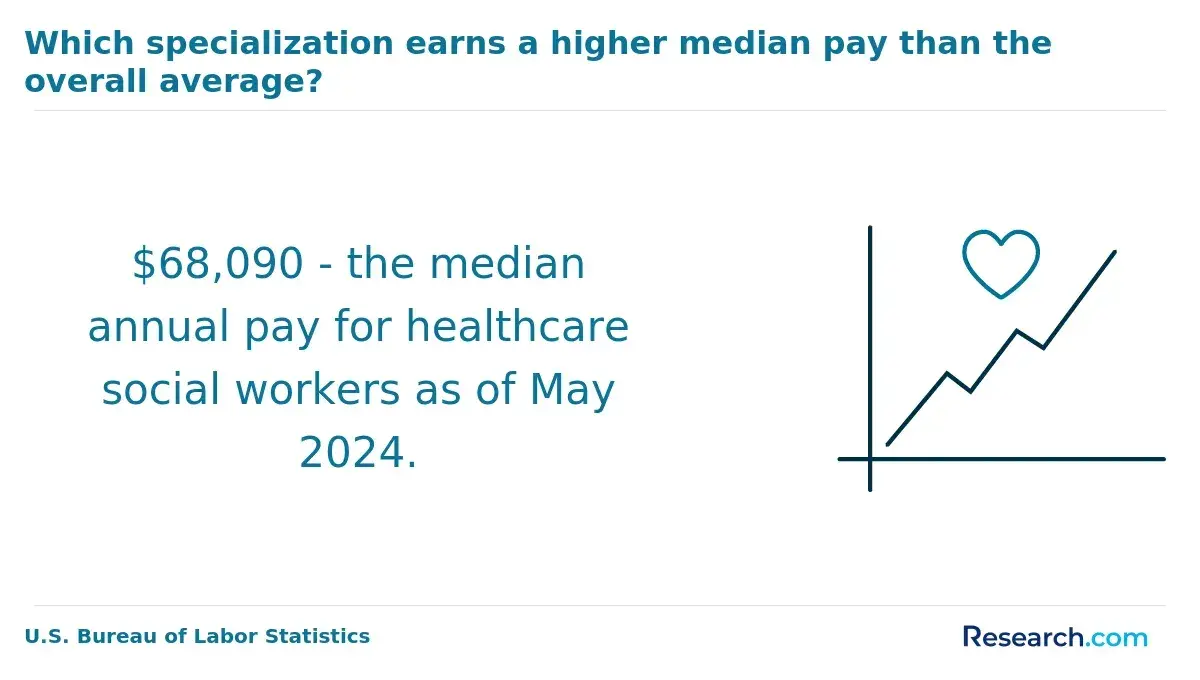
Employment outcomes highlight the value of the credential. Graduates enjoy a 92% employment rate within six months of graduation, with median starting salaries around $68,000. This corresponds to an impressive 245% return on investment over five years, underscoring strong market demand and financial rewards.
Licensure is especially important for clinical roles. State requirements vary, so students should check the rules where they plan to practice before choosing a program or field placement. In many cases, graduates must complete supervised post-MSW experience and pass the required licensing exam before practicing independently or using clinical titles.
Students can improve career outcomes by choosing field placements aligned with their goals, building relationships with supervisors, joining professional associations, and selecting electives that support a clear practice area such as gerontology, substance abuse, trauma, healthcare, child welfare, or policy analysis.
Employer Confidence in Online vs. In-Person Degree Skills, Global 2024

The salary outlook for MSW graduates depends heavily on licensure, specialization, employer type, geography, and experience. Advanced standing does not create a different degree, but it can shorten the time to graduation for eligible students. That shorter timeline may help graduates start MSW-level employment and licensure steps sooner.
Graduates from advanced standing MSW programs have a notable edge, with 78% passing the ASWB clinical exam on their first try in 2025, 14% higher than traditional MSW graduates. This achievement speeds up licensure as an LCSW by about 10 months, allowing access to higher-paying clinical roles sooner, as reported in the Association of Social Work Boards' 2025 Exam Pass Rates Report.
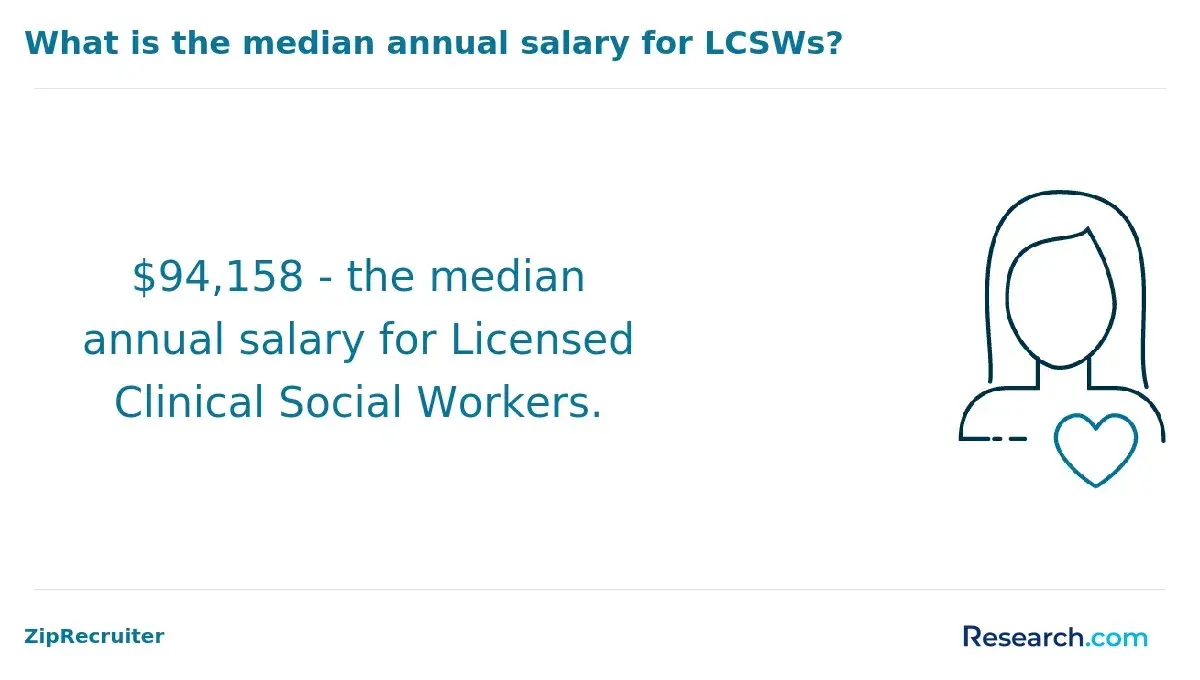
Licensed clinical social workers often earn more than non-licensed MSW holders, particularly in outpatient mental health, healthcare, and private practice settings. Entry-level salaries generally fall between $50,000 and $65,000 annually, while licensed clinicians may earn $65,000 to $85,000 or more depending on the region and employer.
Salary potential is usually stronger when graduates combine licensure with in-demand experience. Examples include trauma treatment, substance use services, integrated healthcare, crisis intervention, school-based services, gerontology, and program leadership. Metropolitan areas and specialized fields such as trauma or substance abuse treatment often offer higher wages, but cost of living and caseload expectations should be considered before comparing offers.
How MSW graduates can strengthen earnings potential
- Choose a program that aligns with the licensure requirements in the state where you plan to practice.
- Use field placement strategically to gain experience in a high-demand setting.
- Prepare early for the ASWB exam if clinical licensure is your goal.
- Track supervised hours and documentation carefully after graduation.
- Build specialized skills through electives, certificates, supervision, or continuing education.
- Compare total compensation, including benefits, supervision support, loan repayment options, and schedule flexibility.
The strongest salary outcomes usually come from a combination of accredited education, licensure progress, relevant specialization, and well-documented practice experience.
How to choose the best advanced standing MSW program?
The best advanced standing MSW program is the one that matches your eligibility, licensure goals, budget, schedule, and preferred area of practice. Start with accreditation, then evaluate field placement quality, curriculum fit, cost, support services, and graduate outcomes. A convenient format is not enough if the program does not support your state licensing path or career goals.
CSWE accreditation should be non-negotiable for most students because it affects licensure eligibility and employer recognition. You should also confirm that your BSW transcript meets the school’s advanced standing rules. According to the CSWE 2025 Rejection Analysis Brief, 15% of advanced standing applicants were rejected due to BSW transcripts older than six years, despite meeting other criteria.
Questions to ask before applying
- Accreditation: Is the MSW program CSWE-accredited, and does the advanced standing track fall under that accreditation?
- Eligibility: Does the school accept your BSW based on accreditation status, graduation date, GPA, and field education record?
- Licensure alignment: Does the curriculum meet education requirements in the state where you plan to practice?
- Field placement support: Does the school place students, approve student-identified placements, or require students to find their own sites?
- Format: Are courses online, hybrid, evening, weekend, or campus-based, and how does that affect fieldwork?
- Specialization: Does the program offer the clinical, macro, healthcare, school, child welfare, or policy focus you need?
- Cost: What is the net cost after scholarships, grants, employer support, and loans?
- Outcomes: What are the program’s licensure exam pass rates, employment outcomes, field partnerships, and alumni network like?
Be cautious with programs that are vague about field placements, state licensure alignment, or total cost. Also ask how the program supports students in an accelerated format, especially if you will be working while enrolled. Advanced standing can save time, but only if the schedule, supervision, and academic expectations are realistic.
Use the following priorities when comparing programs:
- Verify CSWE accreditation for recognition and licensure
- Maintain updated BSW transcripts to avoid rejection
- Assess specialization and flexibility in curriculum
- Evaluate online versus in-person delivery and field placement quality
- Compare tuition and financial aid offerings
- Research alumni outcomes and licensure success
Other Things You Should Know About Social Work
Advanced standing MSW programs typically require a Bachelor of Social Work (BSW) from a program accredited by the Council on Social Work Education (CSWE). Applicants with degrees in other fields generally do not qualify for advanced standing and must apply to the traditional MSW track instead.
Yes, field placements are an essential component of all MSW programs, including advanced standing tracks. While students may have some prior experience, they are still required to complete supervised fieldwork hours to meet educational and licensure requirements.
Most advanced standing MSW programs require a Bachelor of Social Work from a CSWE-accredited program, plus at least 400 to 500 hours of supervised field education completed during the BSW. Some programs also require a minimum GPA, often 3.0, and recent graduation from the BSW program.
- Social Work Salaries - How Much Do Social Workers Make? https://www.onlinemswprograms.com/careers/social-worker-salaries/
- Best Online Master's Programs For Social Work 2025 https://www.psychology.org/social-work/best-masters-programs/
- Advanced Standing Master's in Social Work Programs | MSW Guide https://www.mswguide.org/schools/advanced-standing/
- CSWE Accreditation Requirements and Standards https://lumivero.com/resources/blog/cswe-accreditation/
- Advanced Standing MSW Programs: Bring About Change in Your Community https://careerkarma.com/blog/advanced-standing-msw-programs/
- Admission Requirements and Available Intakes https://www.uwindsor.ca/msw/401/admission-requirements
- Social Work Salaries https://www.socialworkers.org/careers/career-center/kickstart-your-job-hunt/social-work-salaries
- What CSWE Accreditation Tells You About an MSW Program https://www.chamberlain.edu/blog/what-is-cswe-accreditation-and-what-are-its-benefits
- Social Worker Salary and Jobs in Social Work https://teach.com/online-ed/social-work-degrees/online-masters-social-work/salary-and-career-outlook/
- MSW Career Outlook https://www.kysu.edu/academics/college-as/school-of-social-work/careers/msw-career-outlook.php