2027 How to Become a Special Education Teacher in Las Vegas, NV: Education Requirements & Certification

Co-Founder and Chief Data Scientist
Becoming a special education teacher in Las Vegas is not only a career choice; it is a licensure decision, a training investment, and a long-term commitment to students who need legally protected, individualized learning support. Before enrolling in a program or applying for a school district role, you need to understand Nevada’s certification rules, the cost of different pathways, the local hiring market, and the realities of working in high-need classrooms.
This guide is for career changers, undergraduate students, current educators, and paraprofessionals who want to teach special education in Las Vegas, Nevada. It explains the coursework and testing requirements, compares traditional and alternative routes, reviews salary and demand information, and highlights practical steps for choosing the right pathway.
Use this article to make a more informed decision before you spend money on a preparation program, apply for licensure, or commit to a role in special education.
Quick Answer: Becoming a Special Education Teacher in Las Vegas, NV
- To teach special education in Las Vegas, you generally need a bachelor’s degree, Nevada licensure, approved special education coursework, required exams, supervised field experience, and a completed application through the Nevada Department of Education.
- Las Vegas has ongoing need for qualified special education teachers because schools must provide individualized services, inclusive instruction, and legally compliant support for students with disabilities.
- Reported special education teacher salaries in Las Vegas range from $56,700 to $71,459 on average, with experienced or specialized educators potentially reaching $106,000 depending on credentials, role, and employer.
- Nevada license renewal requires continuing professional learning every five years: 90 clock hours, 6 semester credits, or a combination for licenses issued on or after September 16, 2024; or 15 hours per year, 75 total, for licenses issued before that date.
- The fastest route is not always the best route. Compare cost, accreditation, Nevada approval, exam support, field placement quality, and whether the program leads to the exact endorsement you need.
- Coursework requirements for special education certification in Las Vegas
- Steps to get certified to teach special education in Las Vegas
- Cost of becoming certified as a special education teacher
- Timeline for special education teacher training
- Average salary for special education teachers in Las Vegas
- Demand for special education teachers in Las Vegas
- Most affordable pathway to a special education credential
- How advanced certifications can strengthen special education practice
- How mental health counseling connects with special education
- Becoming a special education teacher without a teaching degree
- Maintaining your Nevada special education certification
- Common challenges in Las Vegas special education classrooms
- School districts and employers hiring special education teachers
What are the coursework requirements for special education certification in Las Vegas, NV?
Special education certification in Las Vegas requires more than a general interest in helping students. Candidates must complete formal preparation that covers disability law, instructional design, assessment, classroom management, behavior support, and supervised teaching practice. In Nevada, this training is usually completed through a state-approved educator preparation program.
The core academic requirement is a bachelor’s degree plus approved education coursework. Candidates who did not major in education may need 30 credits in approved education areas, including topics such as educational psychology, special education foundations, behavior management, instructional methods, curriculum planning, and strategies for adapting lessons to individual student needs.
| Requirement area | What it usually includes | Why it matters in special education |
| Degree foundation | Bachelor’s degree from an eligible institution, plus required education coursework when needed | Establishes the academic baseline for Nevada teacher licensure |
| Special education methods | Instructional strategies, accommodations, modifications, and individualized lesson planning | Prepares teachers to serve students with different disability categories and learning profiles |
| Behavior and classroom management | Positive behavior supports, classroom routines, intervention planning, and de-escalation strategies | Helps teachers create structured environments where students can access instruction |
| Field experience | Student teaching, practicum, or internship placement through an approved program | Connects coursework to real classroom responsibilities before full licensure |
| Specialized endorsements | Additional preparation in areas such as autism, emotional and behavioral disorders, or assistive technology | Can improve readiness for specialized roles and higher-need assignments |
Local options may include approved preparation through institutions such as UNLV, Nevada State College, or the College of Southern Nevada. These programs typically combine coursework with school-based experience, which is important because special education teachers must collaborate with general education teachers, families, school psychologists, therapists, and administrators.
Graduate-level certificates and master’s programs may also support additional endorsements. These are most useful for licensed teachers who want to expand their scope of practice or for candidates seeking deeper expertise in areas such as autism support, emotional and behavioral disorders, assistive technology, or evidence-based intervention.
Professional organizations and advocacy groups, including the Nevada Disability Advocacy & Law Center and the Nevada Council for Exceptional Children, can also help future teachers understand disability rights, family advocacy, and current issues in special education practice.
A Las Vegas educator described the training experience this way: “Managing coursework while completing student teaching demanded serious discipline. The hardest part was learning how to adjust instruction and behavior supports for students with very different needs. My practicum placement made the theory real, and support from instructors and classmates helped me finish a challenging final semester.”
How do you get certified to teach special education in Las Vegas, NV?
To teach special education in Las Vegas public schools, you must meet Nevada Department of Education requirements. The exact path depends on your background: you may enter through a traditional teacher preparation program, a post-baccalaureate option, an Alternative Route to Licensure, or an added endorsement if you already hold a Nevada teaching license.
If you are still deciding whether this field fits your goals, start by reviewing what special education careers involve, including the legal, instructional, and collaborative responsibilities of the role.
- Earn a bachelor’s degree. Nevada requires a degree from a regionally accredited institution. Candidates whose degree is outside education may need 30 semester credits in approved education coursework.
- Complete an approved preparation pathway. Your program should align with Nevada requirements for special education licensure or endorsement. Do not assume that every online education program automatically qualifies.
- Finish required special education coursework. Coursework generally includes special education teaching methods, educational psychology, classroom management, multicultural education, assessment, and instructional adaptation.
- Complete supervised field experience. Student teaching, internship, or practicum experience helps demonstrate readiness to work with students who have individualized education programs.
- Pass required Praxis exams. Nevada uses Praxis exams to evaluate teaching knowledge and special education content knowledge. Official study guides and practice exams can help reduce the risk of retesting delays.
- Submit your licensure application. Applicants submit transcripts, documentation, background check materials, and fees through the Nevada Department of Education system. The application fee is listed as $180 in the certification process described here.
- Use local support before problems arise. The Clark County School District’s Professional Learning Education Department may provide licensure exam preparation, and UNLV may offer advising and Praxis review sessions.
Already licensed in another Nevada teaching area? You may qualify for the Interim Route to Certification, which allows licensed teachers to work in special education while completing endorsement requirements within three years. This route can make sense for educators who already understand school systems but need formal special education preparation.
| Candidate background | Likely pathway | Best fit |
| No bachelor’s degree yet | Bachelor’s degree with approved teacher preparation | Students starting college or changing majors early |
| Bachelor’s degree in another field | Alternative Route to Licensure or post-baccalaureate preparation | Career changers who need a faster route into teaching |
| Current licensed teacher | Interim Route to Certification or added endorsement coursework | Educators moving from general education into special education |
| Licensed teacher seeking specialization | Graduate certificate, master’s program, or endorsement coursework | Teachers targeting autism, behavioral support, assistive technology, or leadership roles |
Before enrolling, ask the program directly: Does this pathway meet Nevada special education licensure or endorsement requirements? Will the program arrange field experience in or near Las Vegas? What Praxis support is included? What happens if you do not pass an exam on the first attempt?
The table or visual below provides additional context on common disability categories served in special education settings.
How much does it cost to get certified as a special education teacher in Las Vegas, NV?
The cost to become certified depends heavily on your starting point. A career changer with a bachelor’s degree may spend less through an alternative route than a student completing a full undergraduate program. A licensed teacher adding an endorsement may spend less than both. The cheapest option, however, is only a good choice if it is approved for Nevada licensure and provides enough support to help you finish.
| Cost item | Amount stated | What to confirm before paying |
| Teachers of Tomorrow | $4,795 total, plus a $95 enrollment fee | Payment schedule, hiring conditions, mentoring, and Nevada approval |
| iteach Nevada | $4,949 total, including a $99 enrollment fee and $99 monthly payments applied toward the balance | Course pacing, field requirements, and support during employment |
| UNLV graduate coursework | $299.50 per credit during summer term; approximately $8,985 in tuition for a 30-credit program | Total fees beyond tuition, endorsement fit, and schedule flexibility |
| Praxis exams | $90–$150 per test, plus a $5 Nevada-specific surcharge per exam | Which exams are required and whether retesting may increase cost |
| State licensure fees | $200 initial application, $170 renewal, and $70 per additional endorsement | Current fee schedule and documentation requirements before submission |
| Other expenses | Textbooks, background checks, and unpaid student teaching placements may apply | Out-of-pocket costs that are not included in advertised tuition |
When comparing programs, do not look only at tuition. A low-cost program can become expensive if it delays licensure, lacks exam preparation, does not place you in a qualifying field experience, or fails to match Nevada endorsement requirements.
Students who need flexible scheduling may want to compare the best online education degree programs, but they should verify Nevada licensure alignment before enrolling. Online delivery is convenient; state approval is what determines whether the program helps you become licensed.
How long does it take to complete special education teacher training in Las Vegas, NV?
Most candidates should plan for a training timeline of 18 months to 2 years when completing a traditional route that includes degree work, required coursework, field experience, and certification exams. Your timeline may be shorter or longer depending on prior credits, employment status, exam readiness, and endorsement requirements.
Alternative Route to Licensure programs can allow candidates to begin teaching while completing required coursework. These programs often take about two years to finish. For example, Teachers of Tomorrow offers online, self-paced training with classroom readiness preparation that can be completed in as little as 4–6 weeks, with certification taking roughly two years.
For licensed educators who need an added endorsement rather than a first license, graduate certificate programs may be faster. UNLV graduate certificate options requiring 15 credit hours can often be completed in 1–2 semesters full-time, making them more suitable for teachers who already meet general licensure requirements.
| Pathway | Typical time stated | Who it works best for |
| Traditional bachelor’s or master’s route | 18 months to 2 years for many candidates following the described path | Candidates seeking structured preparation with supervised teaching |
| Alternative Route to Licensure | Often about two years | Career changers who already have a bachelor’s degree and want to work while completing requirements |
| Teachers of Tomorrow classroom readiness training | As little as 4–6 weeks for the initial training component; roughly two years to certification | Candidates who need a flexible, online, self-paced route |
| UNLV graduate certificate | 15 credit hours; often 1–2 semesters full-time | Licensed teachers or candidates adding a focused endorsement |
To avoid delays, request a transcript review early, map out required Praxis exams, ask whether your field placement is guaranteed, and confirm whether part-time study changes your completion date. Candidates exploring flexible preparation can review options for how to get a teaching degree online, then compare each program against Nevada’s actual licensure rules.
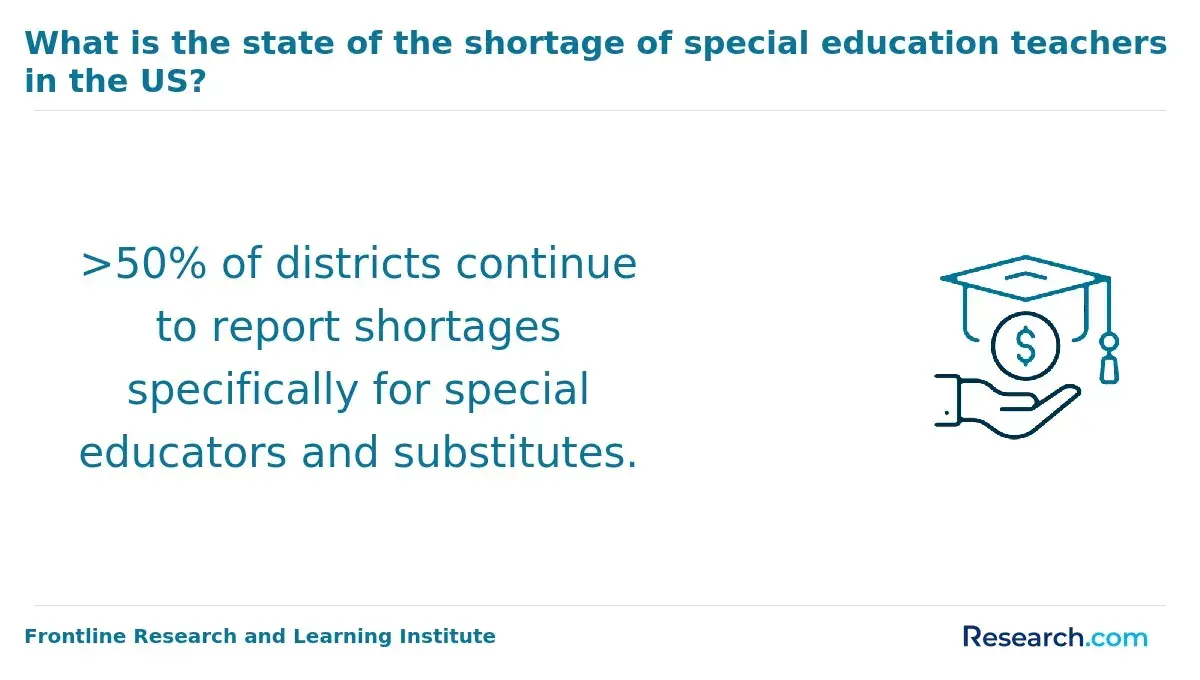
The image below highlights the national shortage of special education teachers and shows why preparation pipelines remain important.
What is the average salary for special education teachers in Las Vegas, NV?
Special education teacher salaries in Las Vegas vary by employer, grade level, years of experience, contract placement, endorsements, and whether the role includes specialized responsibilities. Reported averages place many salaries between $56,700 and $71,459, while higher-paying roles may reach $106,000 for experienced educators or those in specialized or leadership positions.
| Salary measure | Amount stated | How to interpret it |
| General reported average range | $56,700 to $70,300 | Broad range across recent salary sources for the region |
| Clark County School District average | $71,459 | District-specific figure that may reflect contract placement and workforce mix |
| Nevada statewide average | About $62,217 | Useful comparison point, but local pay may differ by district and assignment |
| Starting salary | Around $60,066 | Approximate entry point; final placement can depend on credentials and employer rules |
| Elementary or middle school roles | $51,370 to $65,000 | Range may reflect grade level, experience, and assigned duties |
| Private sector or charter-related roles | $58,000 to $59,000 at organizations such as Connections Academy | May differ from district salary schedules and benefit structures |
| Upper salary potential | Up to $106,000 | More likely with experience, advanced credentials, specialized roles, or leadership responsibilities |
| Hourly and monthly equivalents | $27 to $35 hourly; about $4,700 to $5,800 monthly | Useful for budgeting, though contract structure can affect pay timing |
Salary should not be evaluated in isolation. Compare benefits, contract length, caseload expectations, planning time, support staff, mentoring, tuition reimbursement, and advancement opportunities. A slightly higher salary may not offset an unsustainable caseload or weak administrative support.
Educators who want to improve long-term earning potential often consider graduate study, additional endorsements, or administrative pathways. If you are weighing graduate education, read more about whether a Master of Arts in Teaching is worth it before assuming that any master’s degree will automatically produce a salary increase.
Are special education teachers in demand in Las Vegas, NV?
Yes. Las Vegas continues to need qualified special education teachers because schools must identify, serve, and support students with disabilities while meeting federal and state requirements for individualized education. Demand is shaped by student enrollment, inclusive education practices, staffing shortages, and the need for teachers who can provide specialized instruction.
Several factors keep special education hiring active in the region:
- Ongoing vacancies: Special education remains one of the more difficult teaching areas to staff because the role requires both general teaching skill and specialized disability-related expertise.
- Inclusive education models: As more students receive services in general education settings, schools need teachers who can collaborate across classrooms and support accommodations.
- Legal service requirements: Students with individualized education programs must receive required services, which makes qualified staffing essential.
- Population and district growth: Las Vegas-area schools serve a large and diverse student population, creating consistent need across grade levels and settings.
- Value of endorsements: Additional preparation in autism, emotional and behavioral disorders, or behavior intervention can improve competitiveness for specialized positions.
Demand does not mean every applicant will be hired automatically. Schools still evaluate licensure status, classroom readiness, communication skills, behavior management ability, and experience working with students who have diverse learning needs.
If you want to plan beyond the classroom, compare the career options available with a bachelor’s in special education. This can help you understand pathways into intervention, coordination, leadership, advocacy, and related education roles.
The table below provides broader context on IDEA funding recipient states and the scale of special education services.
What is the most affordable pathway to a special education teaching credential in Las Vegas, NV?
The lowest-cost pathway is usually the one that matches your current education level with the fewest additional credits required. For a person who already has a bachelor’s degree, an Alternative Route to Licensure may cost less than completing another full degree. For a licensed teacher, an added endorsement or graduate certificate may be more efficient. For someone without a bachelor’s degree, a traditional undergraduate route may still be necessary.
Affordability should include tuition, fees, exam costs, lost income during student teaching, background checks, books, and the risk of paying for coursework that does not lead to Nevada licensure. A program that looks inexpensive upfront can cost more if you need extra classes later.
| If you are... | Most practical lower-cost route to compare | Main caution |
| A career changer with a bachelor’s degree | Alternative Route to Licensure | Confirm special education endorsement alignment and field support |
| A licensed teacher in another subject | Interim Route to Certification or endorsement coursework | Make sure requirements can be completed within the required timeframe |
| A student without a bachelor’s degree | Bachelor’s degree with approved teacher preparation | Compare total degree cost, transfer credit, and student teaching expectations |
| A working adult who needs flexibility | Approved online or hybrid preparation | Do not enroll until the program verifies Nevada licensure eligibility |
To reduce costs, ask about transfer credits, employer tuition support, district partnerships, scholarships, payment plans, and whether exam preparation is included. For a more cost-focused comparison, review the guide to the cheapest way to become a teacher in Las Vegas.
How can advanced certifications elevate special education practice in Las Vegas, NV?
Advanced credentials can help special education teachers move from basic compliance to more specialized, evidence-based practice. They may also support roles involving behavior intervention, instructional coaching, program coordination, or collaboration with multidisciplinary teams.
One example is behavior analysis. Teachers who pursue additional preparation connected to Board Certified Behavior Analyst work can strengthen their understanding of behavior assessment, intervention planning, data collection, and progress monitoring. If that path interests you, review the BCBA certification requirements in Las Vegas before choosing a graduate program or supervised experience option.
Advanced certifications are most useful when they align with your students’ needs and your career goals. A teacher working with students who need intensive behavioral support may benefit from behavior-focused credentials. A teacher supporting students with communication or access needs may find assistive technology training more relevant. A teacher seeking leadership may prioritize program administration, coaching, or special education law.
How does mental health counseling complement special education practices in Las Vegas, NV?
Special education and mental health counseling are separate professional areas, but they often intersect in schools. Many students who receive special education services also need support with emotional regulation, behavior, anxiety, trauma-related responses, peer relationships, or executive functioning. Teachers are not substitutes for licensed counselors, but they do benefit from understanding how mental health affects learning.
When special education teachers collaborate effectively with counselors, psychologists, social workers, and families, intervention plans can become more consistent and responsive. This teamwork can improve behavior support, reduce misunderstandings, and help students access instruction more successfully.
Teachers who are interested in related student-support careers can learn more about how to become a mental health counselor in Las Vegas. This is especially useful for professionals deciding whether they want to remain in classroom instruction or move into counseling-focused work.
Can you become a special education teacher in Las Vegas, NV without a teaching degree?
You generally cannot become a fully licensed special education teacher in Las Vegas without a bachelor’s degree. However, your bachelor’s degree does not always have to be in education. Nevada’s Alternative Route to Licensure allows eligible candidates with a bachelor’s degree in another field to complete teacher preparation while moving toward certification.
This route is often attractive to career changers, paraprofessionals, and professionals with experience in psychology, human services, childcare, tutoring, behavior support, or related fields. It can shorten the transition into teaching, but it does not remove the need for coursework, exams, supervised experience, background checks, or licensure approval.
Licensed Nevada teachers in another subject may be able to use the Interim Route to Certification to move into special education while completing endorsement requirements. Post-baccalaureate programs at local universities can also help candidates transition into the profession without completing a second undergraduate degree.
Before choosing this path, ask three questions: Do I already meet the bachelor’s degree requirement? Is the program approved for Nevada special education licensure? Can I manage full-time teaching while completing coursework and exams?
How do you maintain your special education certification in Las Vegas, NV?
Maintaining a Nevada special education license requires timely renewal, continuing professional learning, documentation, fingerprint submission, and application through the Nevada Department of Education’s OPAL portal. Renewal requirements depend on when the license was issued.
| Renewal item | Requirement stated | Practical advice |
| Continuing education for licenses issued on or after September 16, 2024 | 90 clock hours, 6 semester credits, or a combination within five years | Track hours every semester instead of waiting until the renewal year |
| Continuing education for licenses issued before September 16, 2024 | 15 hours per year, 75 total | Keep annual records so you can document compliance quickly |
| Retiree exemption | Retired educators with at least 15 years of Nevada teaching may request exemption with proof of service | Confirm eligibility before assuming the exemption applies |
| Documentation | Certificates, transcripts, or employer-verified records | Store digital copies as soon as each activity is completed |
| Submission method | NDE’s OPAL portal | Start early in case transcripts, fingerprints, or records need correction |
| Fingerprints | Two fingerprint cards | Check formatting and submission instructions before mailing or uploading related materials |
| Renewal fee | Paid through the NDE online system | Verify current fee requirements before submitting |
Professional development may be available through the NDE’s Southern Office in Las Vegas, Clark County School District training programs, Teaching Channel with Learners Edge, and Happy Teacher Professional Development. Choose learning activities that strengthen real classroom practice, such as behavior intervention, IEP compliance, assistive technology, reading intervention, collaboration, and culturally responsive instruction.
What are the most common challenges faced by special education teachers in Las Vegas, NV?
Special education teaching in Las Vegas can be meaningful, but candidates should understand the workload before entering the field. The role involves instruction, legal documentation, family communication, service coordination, behavior support, and collaboration with multiple professionals.
- Staffing shortages: A shortage of qualified special education teachers can leave schools with unfilled roles. In Clark County School District, nearly a quarter of these positions have been reported vacant.
- Large caseloads: When staffing is thin, teachers may support more students, making it harder to provide individualized instruction and maintain consistent progress monitoring.
- Resource constraints: Limited instructional materials, support staff, or planning time can make it more difficult to deliver the services outlined in students’ IEPs.
- Burnout risk: Heavy workloads, emotional demands, and isolation can affect teacher well-being, especially for new educators without strong mentoring.
- Collaboration barriers: Special education teachers must coordinate with general education teachers, administrators, families, and service providers, but schedules and communication gaps can make collaboration difficult.
- Administrative workload: IEP documentation, compliance deadlines, data tracking, and meeting preparation can reduce time available for lesson planning and direct instruction.
| Common mistake | Why it causes problems | Better approach |
| Choosing a program without confirming Nevada approval | You may complete coursework that does not lead to the license or endorsement you need | Ask the program and Nevada Department of Education how the pathway maps to licensure |
| Looking only at tuition | Exam fees, background checks, books, unpaid fieldwork, and delays can raise total cost | Build a full budget before enrolling |
| Underestimating the Praxis exams | Failed attempts can delay licensure and employment | Use official study guides, practice exams, and local review resources early |
| Ignoring caseload and support questions during job interviews | A job offer may look good but come with limited planning time or weak support | Ask about mentoring, support staff, IEP systems, and administrator availability |
| Assuming demand guarantees an easy job | Schools still evaluate readiness, licensure, classroom management, and communication skills | Build practical experience through practicum, substitute work, tutoring, or paraprofessional roles |
New teachers can protect their long-term success by seeking mentors, joining professional networks, documenting communication carefully, learning time-management systems, and asking for help before workload issues become unmanageable.
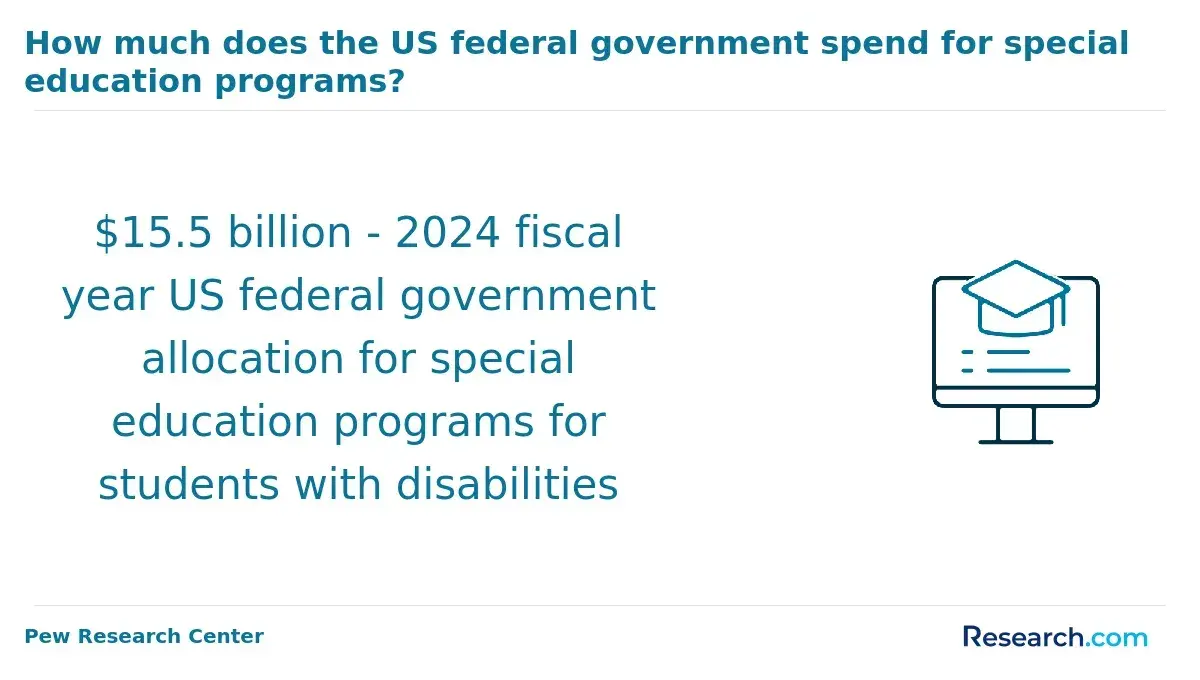
The image below shows how federal spending on special education programs supports services, staffing, and student needs.
Which school districts in Las Vegas, NV are hiring special education teachers?
Special education hiring in Las Vegas is concentrated in large public school systems, charter and independent schools, and education service organizations that partner with districts. Openings can appear across elementary, middle, and high school settings, as well as specialized programs and therapeutic service environments.
- Clark County School District: CCSD is the fifth-largest district in the nation and regularly posts special education openings across grade levels. Applicants generally need a bachelor’s degree and must be certified or eligible for Nevada licensure.
- Point Quest Group Therapeutic Services: This organization works with districts to provide specialized instructional and therapeutic support. Candidates are described as needing a bachelor’s degree, at least one year of experience, and eligibility for state certification. Listed incentives include a $2,500 signing bonus and access to ongoing training.
- Charter and independent schools: Las Vegas charter networks and private schools may hire special education teachers who meet licensure standards and can support students with disabilities in mission-specific school models.
When evaluating employers, compare more than salary. Ask about caseload size, paraprofessional support, planning time, IEP software, mentoring for new teachers, administrator responsiveness, professional development, safety procedures, and how inclusion is implemented in practice.
| Question to ask before accepting a role | Why it matters |
| What is the expected caseload for this position? | Caseload affects service quality, documentation time, and burnout risk |
| Will I have paraprofessional or related-service support? | Support staff can make individualized instruction and behavior plans more manageable |
| How are IEP meetings scheduled and supported? | Strong systems reduce compliance stress and improve family communication |
| What mentoring is available for new special education teachers? | Mentorship can improve retention and classroom confidence |
| How does the school implement inclusion? | The answer reveals whether collaboration with general education teachers is realistic |
What do special education teachers in Las Vegas, NV have to say about their careers?
- My certification experience at the University of Nevada, Las Vegas helped me prepare for classrooms that move quickly and require constant adjustment. Teaching special education in Las Vegas means working with students from many backgrounds and adapting lessons in real time. The focus on inclusion and equity in local schools continues to push me to improve. I left my program with practical teaching tools and a clearer sense of why this work matters. –Monica
- Studying at Nevada State College helped me become the kind of teacher who looks beyond the classroom for support. In Las Vegas, I often connect students with resources from libraries, community groups, and cultural organizations. The diversity of the city has made me more creative and more intentional in how I build relationships with learners. This path has strengthened both my confidence and my commitment to special education. –Terry
- The College of Southern Nevada gave me a strong starting point for moving into special education. Las Vegas classrooms keep you learning because every student and every day brings something different. Local school support helped me focus on student growth while building my own communication, leadership, and problem-solving skills. The work is demanding, but it has also been one of the most meaningful parts of my professional life. –Isabella
Key Insights
- Las Vegas candidates usually need a bachelor’s degree, Nevada-approved preparation, special education coursework, required Praxis exams, field experience, and a completed licensure application.
- Alternative Route to Licensure can work well for career changers, but it still requires formal coursework, testing, supervised practice, and state approval.
- Program cost varies widely. Compare total cost, not just tuition, including Praxis fees, state licensure fees, books, background checks, and possible unpaid student teaching time.
- Reported Las Vegas special education salaries commonly fall between $56,700 and $71,459 on average, with higher earnings possible for experienced teachers, specialized roles, or leadership tracks.
- Demand is strong, but the work can be challenging. Caseloads, documentation, behavior support, and collaboration expectations should be part of your job search decision.
- The best pathway is the one that matches your current education level, leads to the correct Nevada endorsement, fits your schedule, and provides enough support to help you complete licensure.
Related Articles for Nearby States
- 2027 How to Become a Special Education Teacher in California: Requirements & Certification
- 2027 How to Become a Special Education Teacher in Oregon: Requirements & Certification
- 2027 How to Become a Special Education Teacher in Idaho: Requirements & Certification
- 2027 How to Become a Special Education Teacher in Arizona: Requirements & Certification
- 2027 How to Become a Special Education Teacher in Utah: Requirements & Certification
- 2027 How to Become a Special Education Teacher in Washington: Requirements & Certification
- 2027 How to Become a Special Education Teacher in Montana: Requirements & Certification
- 2027 How to Become a Special Education Teacher in Wyoming: Requirements & Certification
- 2027 How to Become a Special Education Teacher in Colorado: Requirements & Certification
- 2027 How to Become a Special Education Teacher in New Mexico: Requirements & Certification
References:
- Bureau of Labor Statistics. (2025). Special education teachers [Occupational Outlook Handbook]. U.S. Department of Labor. Retrieved July 1, 2025, from https://www.bls.gov/ooh/education-training-and-library/special-education-teachers.htm#tab-7
- National Center for Education Statistics. (2025). The 2024–25 teacher follow‑up (TFS) and principal follow‑up (PFS). U.S. Department of Education. Retrieved July 1, 2025, from https://nces.ed.gov/surveys/ntps/participants_2024.asp
- Frontline Education. (2025, March). K‑12 Lens: A survey report from Frontline Education (White paper). Retrieved July 1, 2025, from https://www.frontlineeducation.com/wp-content/uploads/2025/03/k12-lens-white-paper-2025.pdf
- National Council on Teacher Quality. (2025). Research & insights: Special education. Retrieved July 1, 2025, from https://www.nctq.org/research-insights/?policy-area_tax%5B%5D=special-education&sort=date
- National Center for Education Statistics. (2024, May). Indicator: Students with disabilities [Condition of Education]. U.S. Department of Education. Retrieved July 1, 2025, from https://nces.ed.gov/programs/coe/indicator/cgg/students-with-disabilities
- Pendharkar, E. (2023, July). The Number of Students in Special Education Has Doubled in the Past 45 Years. Education Week. Retrieved July 1, 2025, from https://www.edweek.org/teaching-learning/the-number-of-students-in-special-education-has-doubled-in-the-past-45-years/2023/07
Other Things You Should Know About Being a Special Education Teacher in Las Vegas, NV
The Nevada Department of Education issues the license for special education teachers in Las Vegas. Candidates apply through the state’s Educator Licensure office and must meet Nevada’s content, degree, and student teaching requirements before approval.
In 2027, special education teachers in Las Vegas must complete 15 hours of continuing education annually to maintain certification. This must include courses focused on special education best practices, legal compliance, and innovations in teaching methods, as mandated by the Nevada Department of Education.
In 2027, to pivot to special education teaching in Las Vegas with a degree in a different field, you need to complete an alternative licensure program approved by the Nevada Department of Education. This involves coursework in special education and supervised teaching experiences to meet licensure requirements.