
2027 How to Become a Kindergarten Teacher in Arizona

Co-Founder and Chief Data Scientist
Becoming a kindergarten teacher in Arizona is a certification-driven career decision: you need the right degree, supervised classroom experience, state exams, fingerprint clearance, and a realistic understanding of pay, workload, and hiring conditions. The role matters because kindergarten is where many children build their first formal foundations in literacy, numeracy, classroom routines, social skills, and confidence as learners.
This guide is for future teachers, career changers, substitute teachers, paraeducators, and education students who want a practical roadmap to kindergarten teaching in Arizona. You will learn what credentials are required, how long the process can take, what skills schools value, how salaries compare, where to gain experience, and how to choose a pathway that fits your budget and timeline.
Key Insights
- Arizona kindergarten teaching is a licensed profession, so your first decision should be whether your degree or credential program meets Arizona Department of Education requirements.
- The standard route includes a bachelor’s degree with at least 120 credit hours, AEPA exams, a fingerprint clearance card, and at least 12 weeks of supervised student teaching.
- Pay varies by district and experience. The average kindergarten teacher salary in Arizona is near $51,200, with entry-level roles around $44,200 and experienced educators often exceeding $56,800.
- Hands-on experience matters. Substitute teaching, paraeducator work, volunteering, and residencies can help you build classroom confidence before taking full responsibility for a kindergarten class.
- Do not choose a program based only on speed or tuition. Check accreditation, Arizona certification alignment, student teaching support, exam preparation, total cost, and placement assistance.
- Kindergarten teaching can be rewarding, but candidates should prepare for workload pressures, classroom diversity, documentation demands, and the emotional intensity of working with young children.
- Long-term advancement is possible through endorsements, graduate study, instructional coaching, curriculum leadership, elementary teaching, special education, or administration.
Quick answer: How do you become a kindergarten teacher in Arizona?
To become a kindergarten teacher in Arizona, you generally need a bachelor’s degree in early childhood education or elementary education from an accredited institution, at least 120 credit hours, a supervised student teaching placement, passing scores on required AEPA exams, a fingerprint clearance card, and certification through the Arizona Department of Education. Many candidates complete a traditional four-year degree, while those who already hold a bachelor’s degree may consider alternative or accelerated certification options.
Essential facts before you choose this path
- A bachelor’s degree in early childhood education or a related elementary education route usually includes 120 credits and is the standard academic foundation for certification.
- Arizona institutions graduate 1,000+ future educators annually, but schools still need qualified kindergarten teachers in many communities.
- Student teaching is a core requirement, with a minimum 12 weeks of supervised classroom practice in a kindergarten setting.
- Arizona candidates must pass required AEPA exams, including reading, math, and essential skills components for licensure.
- A fingerprint clearance card and background check through the Arizona Department of Education process are required before entering the classroom as a certified teacher.
- Entry into the field often begins with an average starting salary of around $40,000, while Arizona has 3,500+ kindergarten professionals already working with young learners.
- Kindergarten roles are expected to grow by 12% through 2025, supported by rising enrollment and increased state investment.
Article roadmap
- Required qualifications for Arizona kindergarten teachers
- Skills that help kindergarten teachers succeed
- Kindergarten teacher salary in Arizona
- Daily responsibilities in an Arizona kindergarten classroom
- Ways to gain kindergarten teaching experience
- Arizona job outlook for kindergarten teachers
- Supporting kindergarten students with special needs
- Preschool vs. kindergarten teaching pathways in Arizona
- Most cost-effective credential options
- Common challenges in Arizona kindergarten teaching
- Career advancement options
- Using substitute teaching to build your career
- Continuing education and certificate renewal
- Moving from public to private school teaching
- How to find kindergarten teaching jobs in Arizona
- Useful resources for Arizona kindergarten teachers
- Typical timeline to begin teaching kindergarten
What qualifications are required to become a kindergarten teacher in Arizona?
Arizona kindergarten teachers need both academic preparation and state authorization. The core pathway is designed to confirm that candidates understand child development, early literacy, classroom management, assessment, and the legal responsibilities of working with young children.
The usual requirement is a bachelor’s degree in early childhood education or elementary education from an accredited institution. The degree should include at least 120 credit hours and coursework aligned with early learning, curriculum design, assessment, family engagement, and supervised teaching practice.
Candidates must also pass the AEPA Fundamental Skills and Professional Knowledge subtests, which measure essential academic and pedagogical preparation. Before a candidate can teach, Arizona also requires a fingerprint clearance card and a background check through the Arizona Department of Public Safety.
| Requirement | What it means for candidates | Why it matters |
| Bachelor’s degree | Complete an accredited early childhood education or elementary education program with at least 120 credit hours. | Shows academic preparation for kindergarten instruction and child development. |
| Student teaching | Complete at least 12 weeks of supervised teaching in a kindergarten classroom. | Gives candidates monitored practice before leading a class independently. |
| AEPA exams | Pass required exams, including the Fundamental Skills and Professional Knowledge subtests. | Confirms readiness in core academic and teaching competencies. |
| Fingerprint clearance | Secure a fingerprint clearance card and complete the required background check. | Meets child safety requirements for working in Arizona schools. |
| Certification application | Submit transcripts and a $65 fee through the AZ Online certification portal. | Allows the Arizona Department of Education to review and issue credentials. |
After the academic, testing, and clearance steps are complete, candidates submit official transcripts and a $65 fee through the AZ Online certification portal. Programs such as Teach for America–Arizona and Arizona Teaching Fellows can provide mentorship, while AZAEYC workshops in Phoenix and Tucson offer professional development focused on early childhood classrooms.
If you already hold a teaching credential and want to deepen your preparation, reviewing affordable online master’s degrees in teaching can help you compare graduate options without assuming additional debt is automatically worth it.
What skills matter most for Arizona kindergarten teachers?
Kindergarten teaching requires more than patience and lesson plans. Arizona teachers must help five- and six-year-olds adjust to school routines, build early academic skills, work through big emotions, and learn alongside classmates with different language, developmental, and family backgrounds.
| Skill area | How it appears in kindergarten | Why Arizona schools value it |
| Clear communication | Giving short directions, modeling expectations, and using age-appropriate language. | Young learners need structure, repetition, and encouragement to stay engaged. |
| Family partnership | Sharing progress updates, holding conferences, and communicating through newsletters or digital tools. | Consistent home-school communication helps children build routines and confidence. |
| Knowledge of early learning standards | Turning literacy, math, science, and social-emotional goals into hands-on lessons. | Teachers must align play-based activities with Arizona’s Early Learning Standards. |
| Inclusive classroom management | Using routines, visual cues, behavior supports, and collaboration with specialists. | Kindergarten classrooms often include English learners and students with IEPs. |
| Cultural awareness | Choosing materials, examples, and communication strategies that reflect students’ communities. | Arizona classrooms serve families with varied languages, cultures, and experiences. |
| Digital literacy | Using interactive tools, educational apps, and classroom technology with purpose. | Technology should support learning goals rather than distract from developmentally appropriate instruction. |
| Reflective practice | Reviewing student progress, adjusting lessons, and learning from colleagues. | Strong teachers keep improving instead of relying on one fixed classroom approach. |
Communication and relationship-building
Kindergarten students respond best when expectations are simple, consistent, and warm. Teachers also need strong communication with families because many parents and guardians are navigating formal schooling for the first time.
Understanding early learning standards
Arizona’s Early Learning Standards help teachers plan developmentally appropriate lessons in literacy, math, science, movement, and social-emotional growth. The strongest teachers translate standards into activities children can touch, talk about, build, draw, sing, and practice.
Inclusive classroom management
Classroom management in kindergarten is not just discipline. It includes predictable routines, visual schedules, transitions, calm-down strategies, and collaboration with specialists so students with different needs can participate safely and meaningfully.
Cultural competence and bilingual strategies
Basic Spanish language awareness and culturally responsive communication can help Arizona teachers build trust with families. Teachers do not need to be fluent in every home language, but they should know how to use translation support, bilingual aides, and inclusive materials.
Digital literacy and classroom technology
Technology can support early learning when it is used intentionally. Interactive whiteboards, audio tools, learning apps, and digital portfolios should reinforce instruction, not replace conversation, play, movement, and teacher modeling.
Collaboration and continuous improvement
Kindergarten teachers rarely work in isolation. They meet with grade-level teams, special educators, reading specialists, administrators, and families to interpret student needs and adjust instruction.
How much do kindergarten teachers earn in Arizona?
The average kindergarten teacher salary in Arizona is near $51,200 per year. Entry-level positions are around $44,200, while experienced educators often earn more than $56,800.
| Salary point | Amount stated | What to consider |
| Entry-level pay | Around $44,200 | New teachers may earn less while completing induction, building experience, or entering lower-funded districts. |
| Average salary | Near $51,200 | This figure gives a general benchmark, but district pay schedules vary. |
| Experienced teacher pay | Often exceeds $56,800 | Higher pay may depend on years of service, credentials, district salary schedules, or additional duties. |
| Median salary cited for Arizona roles | Around $56,000 | Median figures can differ from averages depending on source, year, and methodology. |
Compared with the U.S. average of about $61,340, Arizona’s mean of $51,200 is 17% lower. Nearby and regional comparisons also show variation: California is cited at $72,000, while New Mexico is cited at $48,000. These differences can reflect state funding, cost of living, district pay structures, bargaining conditions, and teacher experience levels.
Some educators increase annual income through summer school, after-school programs, mentoring, coaching, or stipend-eligible responsibilities. Teachers planning long-term advancement should understand the differences among types of education degrees before paying for additional credentials.
What does a kindergarten teacher in Arizona do each day?
Arizona kindergarten teachers combine instruction, supervision, assessment, family communication, and collaboration. The work is highly interactive: teachers lead lessons, manage routines, observe development, document progress, and respond to student needs throughout the day.
Instruction and assessment
- Plan daily lessons aligned with Arizona’s Early Learning Standards in literacy, math, social-emotional learning, and other foundational areas.
- Use informal checks, observations, classwork, and formal assessments to monitor progress and adjust instruction.
- Administer AZELLA assessments to track English language development at the beginning and end of the year.
- Apply Response to Intervention (RTI) strategies when students show signs of academic or developmental difficulty.
Classroom routines and inclusive support
- Create a safe and predictable classroom for English learners, students with disabilities, and children adjusting to school expectations.
- Coordinate with special education teachers, paraprofessionals, and reading specialists to carry out IEPs and RTI plans.
- Maintain records for attendance, behavior, learning progress, and required documentation.
- Follow Arizona class size expectations, which are typically no more than 20 students per kindergarten class.
Family and community communication
- Keep families informed through conferences, newsletters, daily notes, learning platforms, or school-approved digital tools.
- Work with bilingual aides or translators when families need language support.
- Use multilingual and culturally responsive outreach so families understand classroom expectations and student progress.
Professional collaboration and safety responsibilities
- Join grade-level planning meetings to align curriculum and share strategies.
- Guide classroom aides, volunteers, and support staff when they work with students.
- Complete professional development, including six hours annually focused on literacy under the Arizona Reading Plan.
- Maintain first aid, CPR, and trauma-informed practice preparation when required by the school or district.
How can you gain kindergarten teaching experience in Arizona?
Experience helps candidates confirm whether kindergarten is the right fit before they commit to a full-time teaching role. It also gives future teachers stronger examples for interviews, better classroom management instincts, and more familiarity with Arizona school expectations.
| Experience option | Typical requirement or structure | Best for |
| Student teaching placement | Usually 12 to 16 weeks of full-time supervised teaching through an ADE-approved program. | Degree-seeking candidates who need formal certification experience. |
| Substitute teaching | Requires 60 semester hours and an ADE Substitute Authorization; can include kindergarten classrooms for up to 90 days per school year. | Candidates who want paid exposure to different schools before applying full time. |
| Paraeducator role | Often involves a short certificate or assessment, especially in Title I or special education settings. | Future teachers who want daily practice supporting instruction and behavior management. |
| Volunteer or community program | May involve assisting in Head Start, Early Head Start, Quality First programs, or nonprofit preschools. | Students and career changers who need early exposure before entering a certification program. |
| Residency or apprenticeship | May include a paid year under mentor supervision while completing certification coursework. | Candidates who want structured coaching and income while preparing for certification. |
Student teaching placements
ADE-approved bachelor’s or master’s programs, including programs at Arizona State University and Northern Arizona University, place candidates in supervised classrooms. These placements usually run 12 to 16 weeks and allow candidates to practice lesson planning, assessment, classroom routines, and family communication under mentor guidance.
Substitute teaching
Substitute teaching can help candidates test different grade levels, school cultures, and classroom management styles. With 60 semester hours and an ADE Substitute Authorization, candidates can gain kindergarten experience for up to 90 days per school year.
Paraeducator roles
Paraeducators often work closely with certified teachers in Title I, early childhood, or special education classrooms. These roles can pay $14–$17 per hour and provide daily experience with small-group instruction, behavior supports, and differentiated learning.
Volunteer and community programs
Head Start centers, Quality First early-learning programs, nonprofit preschools, and community child development programs can give aspiring teachers exposure to young learners before they begin certification coursework.
Residencies and apprenticeships
Some districts and regional partnerships, such as the Maricopa County Regional Teacher Education Consortium, provide paid residency models. Candidates teach under supervision for an academic year, receive mentorship, and may earn a stipend while completing required coursework. Long-term leaders who later move beyond classroom teaching may eventually compare advanced credentials such as an online doctorate in educational administration.
What is the job outlook for kindergarten teachers in Arizona?
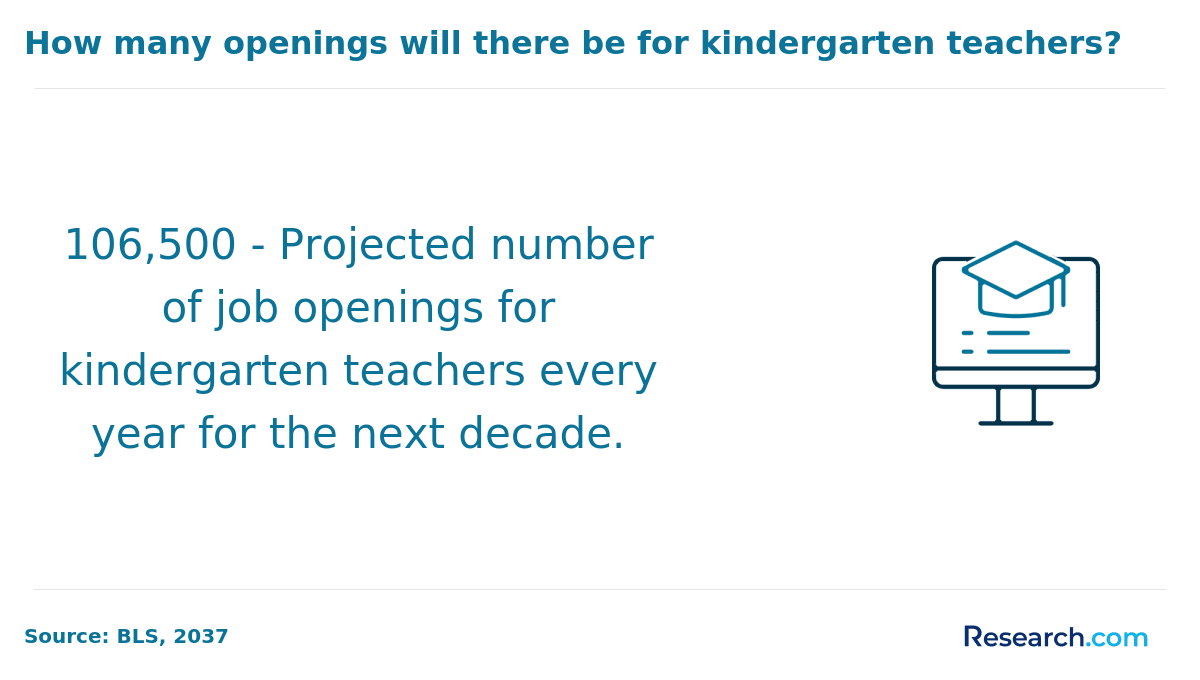
Arizona’s kindergarten teacher workforce is projected to grow by 6% from 2022 to 2032, above the 4% national rise, with 2,000 positions added. Hiring is supported by suburban enrollment growth, literacy investments, and efforts to reduce student–teacher ratios in fast-growing districts.
Retirements among experienced educators are also expected to create openings. Candidates with bilingual skills, English learner preparation, or endorsements related to early literacy may be especially useful in districts serving diverse student populations.
Kindergarten sits between preschool’s 3% growth and special education’s 9% surge. For candidates deciding among early education roles, kindergarten can offer a balance of early childhood development work and elementary school structure.
How can kindergarten teachers support students with special needs?
Kindergarten teachers support students with special needs by combining structured routines, differentiated instruction, behavior supports, and collaboration with specialists. Practical strategies include visual schedules, sensory breaks, small-group reteaching, adapted materials, peer modeling, and close communication with families.
Teachers should understand each student’s IEP or intervention plan and avoid assuming one approach works for every child. Collaboration with special educators, speech-language professionals, occupational therapists, school psychologists, and paraprofessionals helps general education teachers provide consistent support. Educators who want deeper preparation can review the steps for special education certification in Arizona.
How are preschool and kindergarten teaching pathways different in Arizona?
Preschool and kindergarten teaching overlap in child development, play-based learning, and family communication, but they are not identical career paths. Kindergarten teachers generally work within the elementary school system and must meet certification expectations tied to early elementary instruction, assessment, and state-aligned standards.
Preschool pathways tend to focus more heavily on developmental foundations, early care environments, creative play, and pre-academic readiness. If you are deciding between the two, compare the instructional setting, credential requirements, age group, and long-term career goals. A separate guide to preschool teacher qualifications in Arizona can help clarify which route fits your interests.
What is the most affordable way to earn an Arizona teaching credential?
The most cost-effective route depends on your current education level. A first-time college student may compare in-state bachelor’s programs, transfer pathways, scholarships, and community college credits. A career changer who already has a bachelor’s degree may find an alternative or accelerated certification option more efficient than starting a second full degree.
Do not choose a program based only on tuition. Confirm that it meets Arizona Department of Education requirements, includes the required student teaching or supervised experience, prepares you for exams, and has clear support for placement and certification paperwork. For a focused comparison, review the cheapest way to get a teaching credential in Arizona.
What are the biggest challenges of kindergarten teaching in Arizona?
Kindergarten teaching can be meaningful, but the work is demanding. Teachers manage academic expectations, emotional development, family communication, inclusion needs, testing responsibilities, and classroom logistics at the same time.
Financial and resource pressures
- Median salary levels may not keep pace with housing and living costs in some urban areas.
- Teachers may spend personal money on classroom supplies such as art materials, books, manipulatives, and organizational tools.
- Certification renewal, endorsements, and professional development can create additional costs if district support is limited.
Instructional and classroom demands
- Class sizes of up to 23 students can make individualized attention difficult.
- Teachers must balance literacy assessments with developmentally appropriate play, movement, and exploration.
- Data tracking, reports, and documentation can take time away from planning creative instruction.
Emotional and professional strain
- Students may need social-emotional support that exceeds the available mental health resources in the school.
- Teachers must serve students with IEPs and English learners even when collaboration time is limited.
- Shortages can reduce substitute availability and increase the pressure on remaining staff.
Structural obstacles
- High turnover can disrupt grade-level teamwork and continuity for families.
- Rural teaching roles may involve long commutes and fewer professional networking opportunities.
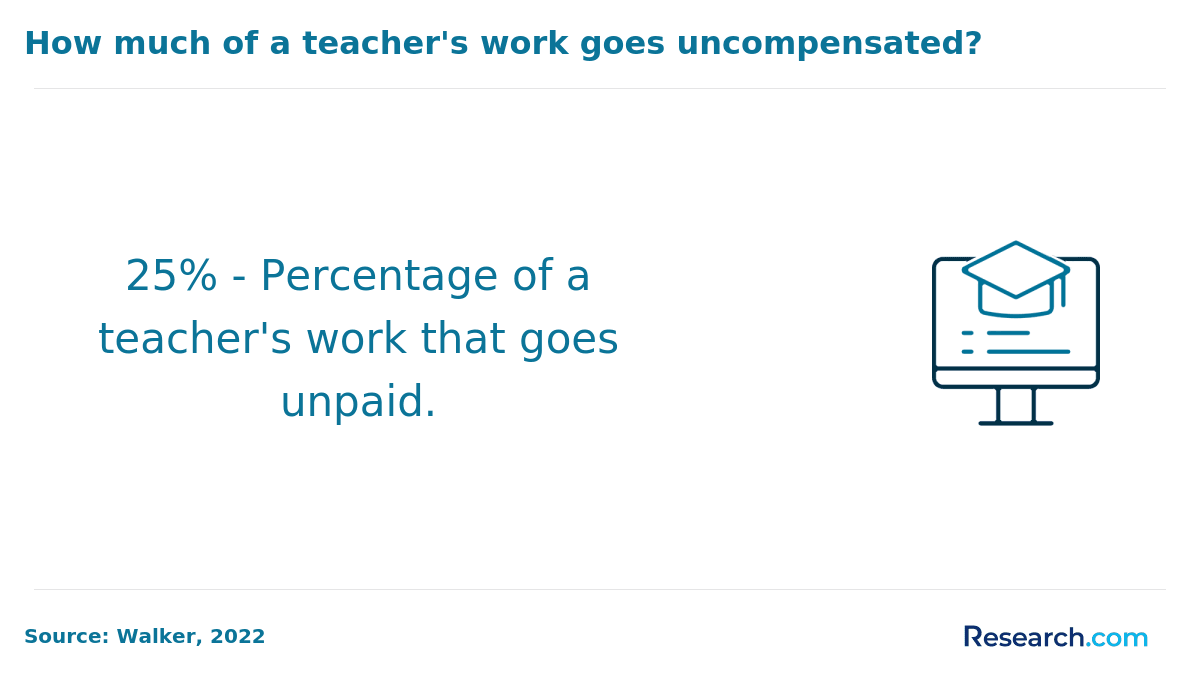
- Lesson planning, family communication, documentation, and classroom preparation often extend beyond the school day.
Teachers who want to expand their long-term options can compare in-demand education careers to see how endorsements, age-level specialization, or leadership roles may change their trajectory.
| Common mistake | Why it can hurt your career plan | Better approach |
| Choosing a program without checking Arizona requirements | You may finish coursework that does not lead smoothly to certification. | Verify program alignment with Arizona Department of Education expectations before enrolling. |
| Looking only at tuition | Low tuition may hide testing fees, commuting costs, unpaid student teaching, or weak placement support. | Compare total cost, certification outcomes, field placement support, and schedule fit. |
| Assuming online programs automatically qualify | Not every online option includes Arizona-approved fieldwork or licensure alignment. | Ask directly whether the program prepares candidates for Arizona kindergarten certification. |
| Ignoring classroom experience until student teaching | You may discover too late that kindergarten is not the right setting for you. | Volunteer, substitute teach, or work as a paraeducator before committing fully. |
| Assuming salary outcomes are guaranteed | Pay varies by district, experience, credentials, and contract terms. | Review district salary schedules and ask about stipends, benefits, and advancement rules. |
What advancement options are available to Arizona kindergarten teachers?
Kindergarten teachers can grow into roles such as lead teacher, mentor teacher, instructional coach, curriculum coordinator, reading specialist, early childhood program leader, or school administrator. Advancement usually depends on experience, performance, additional endorsements, graduate coursework, and district needs.
Some teachers broaden their scope by moving into elementary teaching beyond kindergarten. If that route interests you, compare the elementary school teacher requirements in Arizona with your current credentials before making a move.
Can substitute teaching help you become a kindergarten teacher in Arizona?
Yes. Substitute teaching can strengthen a kindergarten career plan because it gives candidates classroom exposure, district contacts, and practical experience with routines, transitions, behavior expectations, and different school cultures. It can also help principals see your professionalism before a full-time opening appears.
Substitute teaching is not a complete replacement for certification, but it is a useful bridge while completing coursework, waiting for exam dates, or applying for full-time roles. If this pathway fits your timeline, learn how to become a substitute teacher in Arizona before applying to districts.
What continuing education do Arizona kindergarten teachers need?
Arizona teachers are expected to complete 60 clock hours every five years for renewal. For kindergarten teachers, these hours often include training in literacy, social-emotional learning, classroom management, inclusive instruction, English learner support, and early childhood development.
ADE-approved providers, district professional development, AZAEYC workshops, graduate courses, and endorsement coursework can all support renewal when they meet the required criteria. Specialized endorsements, including English Learner or Reading Specialist preparation, may strengthen classroom practice while also contributing to renewal hours.
Keep a digital and physical record of certificates, transcripts, workshop confirmations, webinar documentation, and applied projects. If ADE audits your renewal, organized documentation can prevent delays or compliance problems.
Teachers seeking flexible advanced study can compare online coursework and programs such as online master’s programs in child development.
Is private school teaching a realistic option for Arizona kindergarten teachers?
Private schools can be a viable option, but the decision should be made carefully. Private institutions may have different certification expectations, classroom sizes, curriculum models, salary structures, benefits, religious or mission-based requirements, and professional cultures than public schools.
Before transitioning, ask whether the school requires Arizona certification, how pay is structured, what curriculum is used, whether classroom aides are available, and how special education or English learner support is handled. For a role-specific overview, review how to become a private school teacher in Arizona.
How can you find a kindergarten teaching job in Arizona?
A strong job search starts before applications open. Make sure your Arizona teaching certificate, fingerprint clearance card, transcripts, exam documentation, and references are ready. Then identify districts with hiring needs by reviewing district career pages, ADE information, local staffing reports, and school community data.
Tailor your resume to kindergarten teaching rather than using a generic education resume. Highlight student teaching, substitute teaching, paraeducator work, early literacy instruction, English learner support, IEP collaboration, family communication, and classroom management. Include a sample lesson plan aligned with Arizona Early Learning Standards when appropriate.
Networking also matters. Join local chapters of the Arizona Educational Association, attend early childhood workshops, stay connected with mentor teachers, and build relationships during substitute or volunteer assignments. Many candidates learn about openings through supervisors, principals, and district contacts before positions are widely circulated.
Timing can improve your odds. Many districts begin serious hiring activity in late winter or early spring as budgets, retirements, and enrollment projections become clearer.
What resources are useful for Arizona kindergarten teachers?
Arizona kindergarten teachers can draw on state agencies, professional associations, scholarship programs, district networks, and early childhood organizations for certification guidance, classroom support, and professional development.
- Head Start, Early Head Start, and ELTAC: Federal programs and supports that provide child development materials, coaching, and curriculum-related resources.
- National Association for the Education of Young Children (NAEYC): Professional standards, journals, policy updates, and early childhood teaching guidance.
- ADE Early Childhood Division: State-level information related to early childhood instruction, SEAE exam preparation, fingerprint clearance, and background check expectations.
- AZAEYC webinars: Professional learning on Arizona licensing issues, bilingual education, classroom practice, and social-emotional learning.
- TEACH Arizona Scholarship Program: Awards up to $3,000 per year for undergraduates pursuing early childhood certification.
- ASU Mary Lou Fulton Teachers College: Offers an Online Post-Baccalaureate Certificate that meets ADE endorsement requirements.
How long does it take to become a kindergarten teacher in Arizona?
The timeline depends on your starting point. A traditional full-time route usually includes a four-year bachelor’s degree, required exams, fingerprint clearance, and student teaching. If you already hold a bachelor’s degree, an alternative or accelerated certification route may take 12 to 18 months after your degree.
| Starting point | Possible timeline | Main factors that affect speed |
| No bachelor’s degree | Usually a four-year bachelor’s program plus required certification steps. | Course load, transfer credits, student teaching availability, and testing schedule. |
| Bachelor’s degree already completed | Alternative or accelerated certification may take 12 to 18 months. | Program format, practicum placement, exam timing, and ADE processing. |
| Current substitute or paraeducator | Varies based on prior credits and chosen certification pathway. | Existing semester hours, district support, and ability to complete supervised teaching. |
Because timelines can differ widely, compare program calendars, practicum requirements, testing windows, and certification support before enrolling. For a broader comparison, see how long it takes to become a teacher in Arizona.
What Arizona kindergarten teachers say about the work
My Tempe classroom placement helped me understand what real kindergarten teaching feels like, not just what it looks like in coursework. The workshops through ASU’s Mary Lou Fulton Teachers College continue to strengthen how I teach early reading, and the best part is watching students realize they can decode new words. —Estrella
The Arizona Teachers Academy program in Tucson gave me a clear path through certification and connected me with mentorship during my first year in the Sierra Vista district. Family reading nights have become one of the most rewarding parts of my work because they make the school feel connected to the community. —Jamal
Twilight seminars offered by the district and online professional development keep my teaching current. Even with the hard days, the laughter, progress, and small breakthroughs in kindergarten are what keep me committed. —Linda
Related Articles for Nearby States
- 2027 How to Become a Kindergarten Teacher in New Mexico
- 2027 How to Become a Kindergarten Teacher in Nevada
- 2027 How to Become a Kindergarten Teacher in California
- 2027 How to Become a Kindergarten Teacher in Utah
- 2027 How to Become a Kindergarten Teacher in Colorado
- 2027 How to Become a Kindergarten Teacher in Texas
- 2027 How to Become a Kindergarten Teacher in Oklahoma
- 2027 How to Become a Kindergarten Teacher in Kansas
- 2027 How to Become a Kindergarten Teacher in Wyoming
- 2027 How to Become a Kindergarten Teacher in Idaho
References
- Arizona K12 Center. (n.d.). Centered: Building a robust support system for beginning teachers.
- First Things First. (n.d.). Find free early childhood programs across Arizona.
- Teaching Arizona. (n.d.). Teaching jobs Arizona.
- Toltec School District. (n.d.). Current job openings.
- Tucson Unified School District. (n.d.). Teacher jobs.
- Bureau of Labor Statistics. (2023, April 25). Kindergarten teachers, except special education.
- Zippia. (2025, January 8). Kindergarten teacher demographics and statistics [2025]: Number of kindergarten teachers in the US.
- Zippia. (2025, January 8). Kindergarten teacher demographics and statistics [2025].
- America's Health Rankings. (n.d.). Explore early childhood education in the United States.
Other Things You Should Know About Becoming a Kindergarten Teacher in Arizona
Arizona requires a valid fingerprint clearance card from the Arizona Department of Public Safety before certification. Applicants must also complete the Arizona Department of Education application and meet all professional conduct and identity verification requirements. Schools and districts may request additional screening before hiring.
Yes, in 2027, Arizona offers an alternative certification pathway known as the Arizona Teaching Intern Certificate. This allows individuals with a bachelor's degree to teach while completing necessary coursework and requirements, providing a route for career changers or those entering the teaching profession from non-traditional backgrounds.


