
2027 Most Affordable Online Education Degrees

Co-Founder and Chief Data Scientist
Schools nationwide are facing challenges in recruiting and retaining teachers. The LPI reports that as of 2025, 44% of public schools have at least one teaching vacancy. The circumstances are more dire in high-poverty neighborhoods, where shortages are most severe.
State governments are increasingly endorsing online education degree programs to make teaching a more accessible career path. We cover everything you must know about earning your teaching degree online, including costs and career prospects for graduates. We also list some of the top undergraduate options available today.
What are the benefits of getting an online degree in education?
- You can use an education degree as a foundation for a lifelong academic career.
- You can make a median of $59,940 as a professional in the education sector.
- Online education degree programs let you earn your credentials at your own pace and schedule.
What can I expect from an online education program?
Online education degree programs provide a flexible and convenient way to enter a career in education. They are often a more accessible and sometimes more affordable option for students who cannot attend traditional on-campus classes. Online teaching degree programs cover various topics, including pedagogy, education theory, communication skills, and collaboration techniques.
Where can I work with an online education degree?
Education degree holders can work in various industries and settings. Schools are the most popular option, especially amid the teacher shortage in elementary and secondary learning institutions. Graduates can also work in corporate as trainers and consultants. Alternatively, they can establish tutorial centers or schools.
How much can I make with an online education degree?
According to the U.S. Bureau of Labor Statistics (BLS), educators make between $30,670 and $106,130. Your income will depend on your chosen specialty, setting, and location.
Graduates with even the most inexpensive online teaching certification can earn an average of $63,680 as elementary or secondary school educators. Those working in the administrative side of education can make even more. For example, the average kindergarten, elementary, or secondary school administrator earns about $103,460.
You can maximize your earning potential by working in a high-paying state. Jobs are most lucrative in D.C., where employers offer teachers and school staff an average wage of $86,380. New York, California, and Massachusetts are more of the best states for educators, offering average salaries over $80,000.
- 2027 List of the Best Online Education and Teaching Programs List of Programs
- How long does it take to complete an online education program? How long does it take to complete an online education program?
- How does an online education program compare to an on-campus program? Online vs. On-Campus
- What is the average cost of an online education program? Cost
- What are the financial aid options for students enrolling in an online education program? Financial Aid
- What are the prerequisites for enrolling in an online education program? Requirements
- What courses are typically in an online education program? Courses
- How does an online education program apply to real-world teaching environments? How does an online education program apply to real-world teaching environments?
- What types of specializations are available in online education programs? Specializations
- What are the options for accelerated online education degrees? What are the options for accelerated online education degrees?
- How can I verify the accreditation and quality of an online education program? How can I verify the accreditation and quality of an online education program?
- What challenges might I face in an online education program? What challenges might I face in an online education program?
- Is an online education degree a worthwhile investment? Is an online education degree a worthwhile investment?
- Can an online education degree bridge interdisciplinary pathways like library science? Can an online education degree bridge interdisciplinary pathways like library science?
- How do online education programs offer comprehensive student support? How do online education programs offer comprehensive student support?
- How to choose the best online education program? How to choose the best online education program?
- What career paths are available for graduates of online education programs? What career paths are available for graduates of online education programs?
- What is the job market for graduates with an education degree? Job Outlook
- What are the technology requirements for an online education program? What are the technology requirements for an online education program?
- How to transition from an online bachelor's degree to an online doctorate in education? How to transition from an online bachelor's degree to an online doctorate in education?
- How does curriculum design in online education programs align with current industry needs? How does curriculum design in online education programs align with current industry needs?
- What are the benefits of pursuing an alternative teacher certification? What are the benefits of pursuing an alternative teacher certification?
Best Online Education and Teaching Programs for 2027
Choosing an online education or teaching degree is not just a question of convenience. The program you select can affect whether you qualify for teacher licensure, how much field experience you receive, what grade levels or subjects you can teach, and how easily you can move into graduate study, leadership, counseling, curriculum design, or other education-related roles.
This guide is for aspiring teachers, paraprofessionals, school staff, career changers, early childhood educators, and working adults comparing online education programs. It explains which programs stand out, how online teaching degrees compare with campus programs, what they cost, how licensure and accreditation work, what career paths may be available, and what questions to ask before enrolling.
Quick answer: What should you look for in an online education degree?
The best online education program is one that matches your career goal, is properly accredited, fits your state’s teacher licensure rules if you plan to teach in public schools, includes supervised field experience, and has a cost structure you can realistically afford. A low tuition rate is helpful, but it should not be the only factor. For teaching careers, licensure alignment and practicum or student teaching requirements matter just as much as flexibility.
How these online education programs were selected
Research.com reviewed online education and teaching programs using information from the IPEDS database, Peterson’s database, the Distance Learning Licensed Data Set from the College Scorecard database, and the National Center for Education Statistics. Program details were evaluated with attention to degree options, cost, accreditation, online availability, credit requirements, and relevance for teaching or education-related careers. You can review the broader ranking process on our methodology page.
1. Kansas State University
Kansas State University offers online bachelor’s options for students preparing for teaching or education-related leadership work. Its available pathways include Early Childhood Education, Elementary Education, and Educational Studies. The programs are designed for students who want to build professional judgment, ethical practice, and the ability to work with diverse learners in changing school and community settings.
- Program length: Four years
- Tracks or concentrations: Early Childhood Education, Educational Studies, Elementary Education
- Estimated cost: $394 to $469 per credit hour
- Credits required to graduate: 120 credit hours
- Accreditation: Higher Learning Commission (HLC)
2. Liberty University
Liberty University provides online undergraduate education degrees for students who want structured preparation for classroom teaching. Coursework commonly covers learning theory, instructional strategies, educational technology, and methods for supporting students academically and personally. Graduates may pursue roles in public, private, or Christian school settings, depending on their track and state requirements.
- Program length: Four years
- Tracks or concentrations: Business Education (6-12), Elementary Education, English as a Second Language (ESL), English Education (6-12), Middle Education, Physics Education (6-12), Physics Education – Earth Science (6-12), Social Studies Education (6-12), Special Education
- Estimated cost: $390 per hour (full-time rate), $455 per hour (part-time rate)
- Credits required to graduate: 120 credit hours
- Accreditation: Council for the Accreditation of Educator Preparation (CAEP)
3. Wilmington University
Wilmington University offers a B.S. in Education Studies for students interested in education careers that do not require state teacher licensure. The program is available through day, evening, and online formats, which can help students balance school with work or family responsibilities. Concentration options are built around learning theory, child development, and practical education principles.
- Program length: Four years
- Tracks or concentrations: Early Childhood Education (Preschool), Elementary Education (K-6), Middle-Level Education (6-8) with a content focus in English, Mathematics, Science or Social Studies, Skilled and Technical Sciences
- Estimated cost: $419 per credit
- Credits required to graduate: 120 to 122 credits
- Accreditation: Council for the Accreditation of Educator Preparation (CAEP)
4. Athens State University
Athens State University has several education-related bachelor’s options, including programs in educational studies, instructional design, military instruction, and technical education. A health and physical education concentration is available in a blended format. The curriculum emphasizes collaboration, ethical practice, critical thinking, civic engagement, and preparation to support learners from varied backgrounds.
- Program length: Four years
- Tracks or concentrations: Educational Studies, Technical Education Early Instructor, Technical Education Instructional Design, Technical Education Military Instructor, Technical Education Secondary and Post-Secondary Instructor
- Estimated cost: $251 per credit
- Credits required to graduate: 124 credits
- Accreditation: Southern Association of Colleges and Schools Commission on Colleges (SACSCOC)
5. University of Arkansas
The University of Arkansas offers an online Bachelor of Science in Education in Educational Studies for paraprofessionals and school employees in Arkansas. The program is designed to let working students remain employed and stay in their communities while completing a bachelor’s degree, which can be an important step toward full teaching licensure in Arkansas. Coursework focuses on education foundations, learning theory, and teaching practices for varied learning environments.
- Program length: Four years
- Tracks or concentrations: None specified
- Estimated cost: $256 tuition cost per credit hour
- Credits required to graduate: 120 credit hours
- Accreditation: Council for the Accreditation of Educator Preparation (CAEP)
6. Fort Hays State University
Fort Hays State University offers online teacher preparation options with several concentrations. Its programs are especially relevant for students seeking licensure preparation connected to Kansas, where the university is located. Students may complete internships and student teaching experiences, and the curriculum incorporates educational technology to support instructional practice.
- Program length: Four years
- Tracks or concentrations: Early Childhood Unified, Elementary Education PreK-6, Elementary Education PreK-6 Special Education, Secondary Education
- Estimated cost: $243 per credit hour
- Credits required to graduate: 120 to 136 credits
- Accreditation: Council for the Accreditation of Educator Preparation (CAEP)
7. University of the Cumberlands
University of the Cumberlands provides online undergraduate education options in areas such as interdisciplinary early childhood and education. The program includes opportunities for face-to-face student teaching, which is important for students who need to practice classroom management, lesson delivery, and learner engagement in real educational settings. Coursework also addresses diversity and teaching practice.
- Program length: Four years
- Tracks or concentrations: Interdisciplinary Early Childhood Education, Education
- Estimated cost: $220 per credit hour
- Credits required to graduate: 120 credits
- Accreditation: Southern Association of Colleges and Schools Commission on Colleges (SACSCOC)
8. Eastern New Mexico University
Eastern New Mexico University offers both licensure and non-licensure education degrees for students preparing for teaching or related education careers. Options include grade-level teaching pathways, special education, career and technical education, and physical education. The programs are designed to help future educators create supportive learning environments and develop effective teaching practices.
- Program length: Four to five years
- Tracks or concentrations: Career and Technical Education, Physical Education, Early Childhood Education, Elementary Education, Special Education
- Estimated cost: $295 per credit hour (resident rate), $377 per credit hour (non-resident rate)
- Credits required to graduate: 120 credits
- Accreditation: Higher Learning Commission (HLC)
9. North Seattle College
North Seattle College offers a Bachelor of Applied Science in Early Childhood Education for students focused on young children, family engagement, and early learning leadership. The curriculum includes research-based instruction, practicum work, capstone learning, and anti-bias education. Graduates are prepared to understand child development, support families, and use developmentally appropriate teaching practices.
- Program length: Four years
- Tracks or concentrations: Early Childhood Education
- Estimated cost: $43,218 (part-time resident rate), $46,340 (part-time out-of-state rate)
- Credits required to graduate: 180 credits
- Accreditation: Northwest Commission on Colleges and Universities (NWCCU)
10. Purdue University
Purdue University offers two online early childhood-related credentials: an Associate of Applied Science in Early Childhood Development and a Bachelor of Science in Early Childhood Administration. The associate program focuses on foundational classroom work with young children, while the bachelor’s program emphasizes leadership, curriculum planning, family and community partnerships, and financial management. Both options may support future education or licensure goals depending on the student’s path.
- Program length: Two years (AAS), Four years (BS)
- Tracks or concentrations: AAS in Early Childhood Development, BS in Early Childhood Administration
- Estimated cost: $371 per credit
- Credits required to graduate: 90 credit hours (AAS), 180 credit hours (BS)
- Accreditation: Higher Learning Commission (HLC)
What students say about completing an online education program
-
: "I moved into teaching after retiring from engineering because I wanted to help the next generation learn practical skills. Since my background was technical rather than instructional, the online program helped me understand lesson planning and classroom teaching. Now I teach vocational education, and the most rewarding part is watching students finally connect with a difficult idea.
David"
-
: "I had classroom experience as a teacher aide, but I needed a degree to move toward full licensure. Studying online let me keep my job while finishing my coursework. The faculty support and licensure preparation helped me feel more confident going into the required exams.
Lisa"
-
: "After earning a history degree, I realized I needed a clearer professional credential to enter the classroom. An online teaching program allowed me to work toward certification while applying for positions. It strengthened my qualifications and helped me secure a social studies teaching role at a local middle school.
Michael"
Key Findings
- Online education degrees can work well for working adults, paraprofessionals, career changers, and students who need scheduling flexibility, but they still require fieldwork, practicum, or student teaching for many licensure-focused paths.
- Among the programs listed, estimated per-credit tuition ranges from $220 per credit hour to $469 per credit hour, while some programs use total program estimates or different resident and non-resident rates.
- Accreditation matters. Institutional accreditation confirms that the school meets recognized academic standards, while CAEP accreditation can be especially relevant for educator preparation programs.
- Licensure rules are state-specific. Before enrolling, students should confirm whether the program meets teacher certification requirements in the state where they plan to work.
- The Bureau of Labor Statistics projects about 857,600 openings for teaching and library occupations through 2032, but growth varies widely by role and education level.
How long does it take to finish an online education degree?
Completion time depends on the credential level, whether the student attends full time or part time, and whether the program requires field placements or student teaching. Associate degrees commonly take two years, bachelor’s degrees often take four years, and graduate degrees such as master’s or doctoral programs may take two to six years.
Online scheduling can make the timeline more flexible. Some four-year programs allow students to extend completion up to seven years, while accelerated formats may let students finish an associate degree in two years or a bachelor’s degree in three. Students with transfer credits, prior college coursework, or existing classroom experience should ask each school how those credits or experiences are evaluated.
| Credential type | Typical timeline | Best fit |
| Associate degree | Two years | Students seeking entry-level early childhood or childcare preparation, or a lower-cost pathway before a bachelor’s degree |
| Bachelor’s degree | Four years | Aspiring teachers, paraprofessionals, and education staff who need a bachelor’s degree for licensure or advancement |
| Master’s or doctoral degree | Two to six years | Licensed teachers, administrators, specialists, and professionals seeking leadership, research, or advanced practice roles |
Online vs. on-campus education programs: Which format fits your goals?
Online and campus-based education degrees can lead to similar academic outcomes when they are properly accredited and aligned with licensure requirements. The better choice depends on your schedule, learning style, need for in-person support, and access to local schools for fieldwork.
| Factor | Online education program | On-campus education program |
| Scheduling | Often more flexible, which can help working adults, parents, paraprofessionals, and students comparing the most affordable online education degrees. | Usually follows set class meeting times, which can support routine but may be harder for students with work or caregiving responsibilities. |
| Learning experience | Uses learning management systems, video meetings, discussion boards, digital simulations, and virtual collaboration tools. | Offers face-to-face classroom interaction, immediate access to campus resources, and more informal peer networking. |
| Cost considerations | May reduce commuting and housing costs, but students should budget for technology, internet access, fees, books, and possible travel for field placements. | May include commuting, housing, parking, campus fees, books, and other location-based expenses. |
| Hands-on preparation | Can be strong if the school arranges local practicum, observation, or student teaching experiences. Students should confirm this before enrolling. | Often has established relationships with nearby schools, which may make field placement coordination more direct. |
The biggest risk in an online teaching degree is assuming that online coursework alone is enough for licensure. Most teacher preparation pathways require supervised classroom experience. Ask the program where placements occur, who approves them, and whether they satisfy the rules in your state.
What does an online education program cost?
Based on the programs reviewed here, several affordable online teaching programs cost between $220 and $420 per credit. The lowest per-credit tuition in this ranking is the University of the Cumberlands at $220 per credit hour. However, tuition is only one part of the full cost. Students should also account for books, online learning fees, background checks, testing fees, devices, internet service, transportation to field placements, and any required campus or residency visits.
Costs can also vary by specialization and licensure status. For example, online colleges with early childhood education programs may price licensure and non-licensure tracks differently. Some schools also offer special rates for veterans or military-affiliated students.
| Cost item | Why it matters |
| Tuition per credit | This is the headline price, but it does not always include mandatory fees or materials. |
| Program fees | Education programs may charge additional fees for assessment platforms, field placement administration, or online learning services. |
| Licensure exams and background checks | Teacher preparation students may need to pay for testing, fingerprinting, and clearance requirements. |
| Technology | A laptop, webcam, microphone, stable internet, and required software can add to the budget. |
| Fieldwork travel | Even fully online students may need transportation to schools, childcare centers, or practicum sites. |
What financial aid is available for online education students?
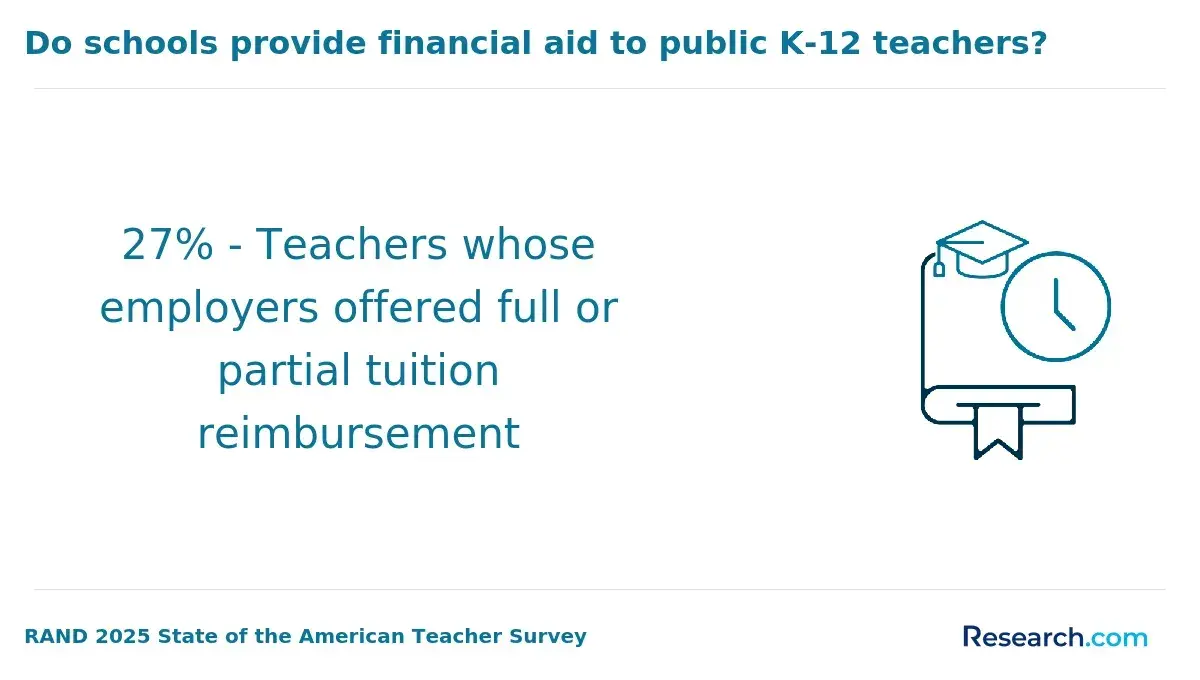
Students in eligible online education programs may use financial aid such as scholarships, grants, federal loans, and work-study opportunities. The usual first step is completing the Free Application for Federal Student Aid, or FAFSA, which helps determine eligibility for federal aid.
Students should also search for aid from school districts, state education agencies, community foundations, private organizations, and their own colleges. Some institutions provide scholarship options across disciplines, whether students are preparing for teaching, education leadership, or other graduate pathways such as the most affordable online MFA programs.
- Complete the FAFSA early. Some grants and institutional funds are awarded on limited timelines.
- Ask about educator-specific scholarships. Some aid is designed for future teachers, paraprofessionals, or students entering high-need fields.
- Check employer benefits. School employees may qualify for tuition assistance, reimbursement, or district-sponsored pathways.
- Compare net price, not just tuition. A program with higher tuition may become more affordable if it offers stronger grant aid or accepts more transfer credits.
What are the common admission requirements for an online education program?
Admission standards differ by school, degree level, and licensure track. Online bachelor’s programs in education commonly ask applicants to submit an application and fee along with academic and personal materials. Some teacher preparation programs may also require background checks because students will eventually work with children or vulnerable populations.
- High school diploma or equivalent
- High school transcripts
- GPA of 2.0 or higher
- Standardized test scores
- Letters of recommendation
- Personal statement or essay
- Interviews and a background check
- Resumè or CV
Transfer students should ask whether prior college credits apply to general education, major requirements, electives, or field experience. This can change both the cost and timeline of the degree.
What courses are usually included in an online education degree?
Online education bachelor’s programs usually combine general education, professional teaching coursework, subject-specific methods, assessment training, and field-based learning. Students exploring future leadership roles may later compare options such as affordable online educational leadership programs.
- General education courses. These classes, such as English composition and social sciences, build the academic foundation students need before moving into advanced education coursework.
- Subject-specific methods. These courses teach future educators how to explain content in areas such as math, science, English, social studies, or physical education.
- Assessment and evaluation. Students learn how to measure progress, interpret learning data, and adjust instruction to meet individual student needs.
- Professional education courses. Common subjects include educational psychology, classroom management, learning theory, instructional planning, and child or adolescent development.
- Practicum and student teaching. Field experiences connect theory with actual classroom practice through observation, supervised teaching, and feedback from experienced educators.
How do online education programs prepare students for real classrooms?
An online education degree can teach the theory and planning skills future educators need, but classroom readiness depends heavily on practical experience. Students considering a low-cost online elementary education degree should verify that the program includes supervised fieldwork, observation hours, practicum experiences, or student teaching that matches their career goal.
Strong online programs do more than post lectures and readings. They use lesson-planning assignments, video feedback, case studies, simulated classroom scenarios, mentor support, and partnerships with local schools. Students should ask how the program evaluates teaching performance and whether faculty or cooperating teachers observe and assess classroom practice.
Before enrolling, confirm three things: where you will complete fieldwork, who is responsible for arranging the placement, and whether the placement meets licensure standards in your state. This is especially important for students who live outside the state where the institution is based.
What specializations are available in online education programs?
Specializations help students prepare for specific age groups, subjects, learner needs, or education roles. Choosing the right concentration is important because it may affect licensure eligibility and career options.
| Specialization | What it prepares you to do | Best for |
| Early childhood education | Work with young children in preschool, childcare, early learning, or early intervention settings. | Students interested in child development, family engagement, and foundational learning. |
| Elementary education | Teach multiple subjects to younger students, commonly across kindergarten and elementary grades. | Students who want a broad classroom teaching role. |
| Middle or secondary education | Teach specific subjects to older students. | Students with strong interest in a subject such as English, science, social studies, or math. |
| Special education | Support students with disabilities, learning differences, behavioral needs, or individualized education plans. | Students who want to work with learners who need specialized instructional support. |
| English as a Second Language (ESL) | Help multilingual learners develop English language skills in school or community settings. | Students interested in language development and culturally responsive teaching. |
| Curriculum and instruction | Design, evaluate, and improve learning materials, instructional strategies, and assessments. | Aspiring instructional coordinators, curriculum designers, or future administrators. |
Are accelerated online education degrees a good option?
Accelerated online education degrees can help motivated students finish faster by using condensed terms, heavier course loads, year-round enrollment, or generous transfer-credit policies. They may be useful for career changers, paraprofessionals, and students who need a faster route to a bachelor’s degree or graduate study.
The trade-off is intensity. Faster programs often require stronger time management and may leave less room for work, caregiving, or unexpected schedule changes. Students preparing for licensure should also make sure the accelerated timeline still includes the required practicum or student teaching experience.
When comparing fast options, review admissions rules, weekly workload, transfer-credit limits, field placement timing, and student support. You can also compare broader accelerated online degree programs to understand how fast-track formats differ across fields.
How can you verify accreditation and program quality?
Accreditation is one of the first things to check before applying. Institutional accreditation shows that the college or university meets recognized academic standards. Programmatic accreditation, such as accreditation from the Council for the Accreditation of Educator Preparation (CAEP), can be especially important for teacher preparation.
- Confirm institutional accreditation. Check the school’s official accreditation page and verify the accreditor through recognized public sources.
- Check educator preparation approval. If you plan to teach, confirm that the program is approved for teacher preparation in the relevant state.
- Ask about licensure portability. A program may prepare students for one state’s requirements but not automatically satisfy another state’s rules.
- Review fieldwork structure. Quality teacher preparation should include supervised experience, not only online coursework.
- Look at graduate pathways. If you may specialize later, consider whether the school offers or supports next-step programs such as online master’s programs in reading and literacy.
What challenges should online education students expect?
Online education programs offer flexibility, but they also require discipline. Students must manage deadlines, participate in virtual discussions, complete readings, coordinate fieldwork, and communicate proactively with instructors and advisors. The lack of a physical classroom can make it easier to fall behind if the student does not build a routine.
Common obstacles include limited real-time interaction, technology problems, difficulty finding local practicum placements, and fewer informal networking opportunities than a campus program might provide. Students who want more structure should compare advising, tutoring, technical support, and faculty availability before choosing a school. Graduate students comparing options such as the cheapest online master’s degree in early childhood education should evaluate support services as carefully as tuition.
Is an online education degree worth it?
An online education degree can be worth it when it clearly supports your intended career, meets licensure requirements if needed, and has a total cost that fits your expected budget and career path. It may be a strong option for paraprofessionals who need a bachelor’s degree, working adults who cannot relocate, and students who want to continue earning income while studying.
It may not be the best choice if the program does not meet your state’s licensure rules, offers weak field placement support, or requires a workload that does not fit your schedule. Students aiming for leadership may eventually consider advanced pathways such as a fast-track doctorate in educational leadership, but they should evaluate return on investment carefully and avoid assuming that any degree guarantees a salary increase or promotion.
Can an online education degree support interdisciplinary paths such as library science?
Yes, an education degree can support adjacent fields when students build transferable skills in research, digital literacy, learning design, information organization, and instructional support. These abilities can be useful in school libraries, community education, instructional technology, training, and information management.
Students who want to move beyond classroom teaching may later compare graduate options in library and information science. For example, those focused on affordability can review low-cost MLIS programs as a possible next step.
What student support should an online education program provide?
Strong online education programs provide more than access to course materials. Students should look for academic advising, licensure guidance, tutoring, technical help, digital library access, career counseling, faculty office hours, and support for field placements. Mentorship from experienced educators can also help students connect coursework to real classroom decisions.
Support becomes even more important when students plan to continue into graduate study. Programs that offer clear advising may help undergraduates transition into advanced options such as affordable online master’s degrees in teaching.
How to choose the best online education program
The right program depends on what you want to do after graduation. A student who wants to become a licensed elementary teacher should evaluate different criteria than a student who wants to work in childcare administration, instructional design, corporate training, or education policy.
| Decision factor | What to ask before enrolling |
| Accreditation | Is the institution accredited, and is the educator preparation program recognized by an appropriate body such as CAEP or another relevant authority? |
| Licensure alignment | Does the program meet teacher certification requirements in the state where I plan to work? |
| Specialization | Does the degree prepare me for the grade level, subject, or education role I actually want? |
| Field experience | Who arranges practicum or student teaching, and where will I complete it? |
| Total cost | What is the full cost after tuition, fees, books, testing, technology, and travel? |
| Schedule | Are courses asynchronous, synchronous, self-paced, accelerated, part time, or full time? |
| Transfer credit | How many credits can I transfer, and will they reduce my time to graduation? |
| Student support | Will I have access to advising, tutoring, technical support, licensure guidance, and career services? |
- Do not choose based on tuition alone. A cheap program that does not meet licensure requirements can become an expensive mistake.
- Verify state requirements yourself. Do not assume a program approved in one state will qualify you automatically in another.
- Ask about placement support. Online students may need local school placements, and coordination can vary by institution.
- Review the academic calendar. A flexible format is only useful if it fits your actual weekly schedule.
- Compare outcomes carefully. Look for transparent information about licensure exam preparation, fieldwork, and graduate or career support.
What careers can graduates pursue with an online education degree?
Many graduates pursue teacher certification, which is a common requirement for public school teaching roles. Once certified, educators may teach specific subjects, grade levels, or student populations depending on their preparation and state license.
Teaching is not the only option. Education graduates may also work in curriculum design, childcare administration, educational technology, school support roles, training and development, or nonprofit education programs. Students interested in school counseling or career advising may later compare affordable online master’s degree programs in counseling.
Elementary and secondary schools employ the largest number of educators and school staff, with over five million employees. Colleges, universities, professional schools, childcare services, junior colleges, and other instructional organizations also employ education professionals.
| Industry | Employment |
| Elementary and Secondary Schools | 5,658,850 |
| Colleges, Universities, and Professional Schools | 1,267,700 |
| Child Care Services | 468,280 |
| Junior Colleges | 363,580 |
| Other Schools and Instruction | 264,960 |
What is the job market for education degree graduates?
The employment outlook depends on the role, education level, location, and school budget conditions. According to the BLS, middle and high schools may see fewer openings because of declining student populations and possible budget constraints. Postsecondary institutions may hire more teachers as enrollment rises, although budget limits and part-time hiring patterns can affect growth.
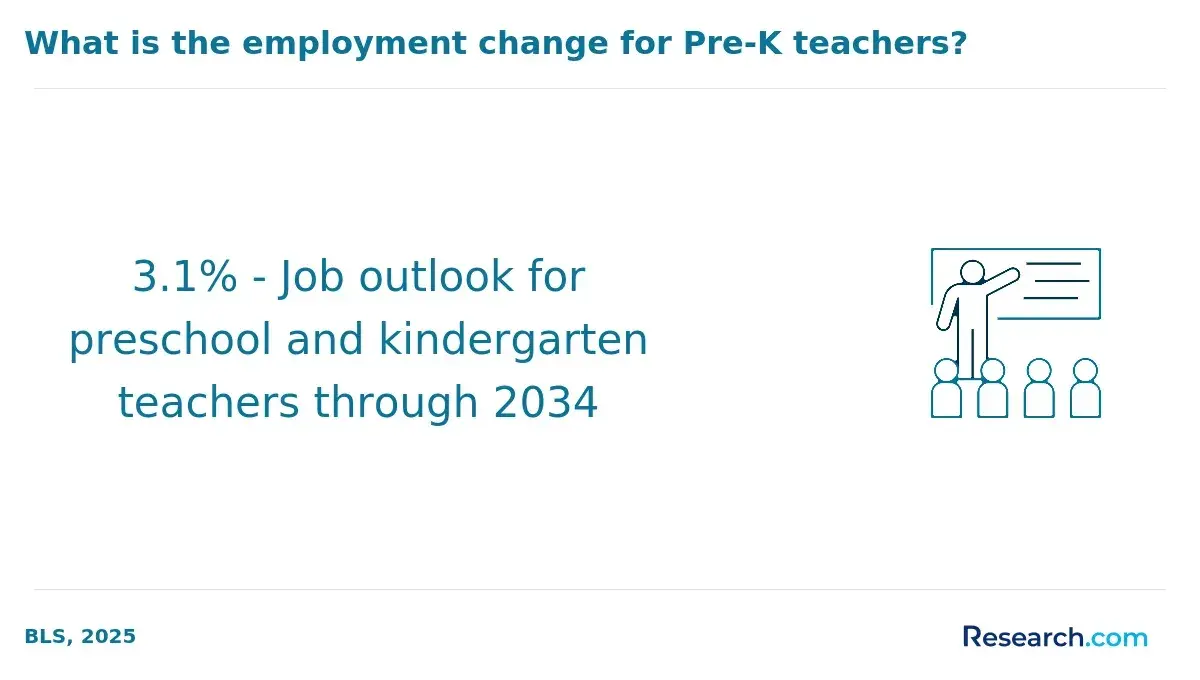
Across teaching and library occupations, the BLS reports about 857,600 openings through 2032. Postsecondary teachers have the highest projected growth in the roles listed below, while several K-12 roles show limited growth but still produce large numbers of annual openings.
| Role | Projected Job Growth (2032) | Average Annual Job Openings (2032) |
| Preschool Teachers | 3% | 56,300 |
| Kindergarten or Elementary School Teachers | 1% | 109,000 |
| Middle School Teachers | 1% | 42,200 |
| High School Teachers | 1% | 67,100 |
| Postsecondary Teachers | 8% | 118,800 |
| Career and Technical Education Teachers | 0% | 14,800 |
What technology do online education students need?
Online education programs depend on digital platforms for lectures, discussions, assignments, exams, collaboration, and sometimes classroom simulations. Students should confirm technology requirements before classes begin, especially if they will attend live sessions or upload video teaching demonstrations.
- Reliable internet connection: Stable high-speed access is important for streaming lectures, joining live meetings, submitting assignments, and using online course platforms.
- Computer or laptop: Students usually need a device that can run word processing software, video conferencing tools, browsers, and education platforms at the same time.
- Webcam and microphone: Live class discussions, presentations, advising meetings, and teaching demonstrations may require audio and video participation.
- Learning management system access: Programs may use Blackboard, Canvas, Moodle, or similar systems for content, quizzes, forums, grades, and assignment submission.
- Productivity and education software: Students may need Microsoft Office, Google Workspace, or classroom tools such as Kahoot and Flipgrid, depending on program requirements.
How can students move from an online bachelor’s degree to an online doctorate in education?
Students who want leadership, research, policy, curriculum, or advanced administrative roles may eventually consider a doctoral degree in education. Moving from an online bachelor’s program to an Ed.D. requires planning because doctoral admission is competitive and usually expects strong academic preparation, professional experience, and a clear purpose.
- Clarify your career goal. Decide whether you are aiming for educational leadership, curriculum and instruction, special education, higher education, or another focus.
- Compare costs early. Doctoral tuition varies, so students seeking lower-cost options can review the most affordable online Ed.D. programs.
- Build relevant experience. Teaching, tutoring, mentoring, school support work, or education-related volunteering can strengthen an application.
- Protect your GPA. Strong undergraduate performance can help when applying to selective graduate programs.
- Prepare application materials. Doctoral programs commonly require transcripts, recommendation letters, a statement of purpose, and sometimes GRE scores.
- Plan financially. Ask about scholarships, grants, assistantships, employer tuition benefits, and federal aid eligibility.
- Develop doctoral-level habits early. Online doctoral study requires sustained reading, writing, research, and independent project management.
A bachelor’s degree is not the final step for every educator, but it can be the foundation for specialized and leadership-focused graduate study.
How do online education curricula reflect current classroom and workforce needs?
Modern online education programs increasingly include digital learning tools, data-informed instruction, inclusive teaching practices, assessment literacy, and applied projects. These elements reflect what many educators encounter in schools: mixed learning needs, technology-supported instruction, accountability measures, and the need to adapt lessons for diverse classrooms.
Students interested in leadership should look for coursework that uses case studies, simulations, school improvement projects, and practical assessments rather than theory alone. Those comparing advanced leadership paths may review affordable online doctoral programs in educational leadership to see how graduate curricula build on undergraduate preparation.
What are the benefits of alternative teacher certification?
Alternative teacher certification can be useful for career changers or degree holders who want a more direct route into the classroom. These pathways often emphasize practical teaching skills, mentoring, and supervised classroom experience instead of requiring a full traditional undergraduate teacher preparation program.
The main benefit is efficiency, but students should still verify state approval, placement requirements, testing expectations, and long-term credential rules. Those comparing cost-conscious options can explore affordable online alternative teacher certification programs.
Common mistakes to avoid when choosing an online education program
| Mistake | Better approach |
| Choosing the lowest tuition without checking licensure fit | Confirm state certification alignment before comparing price. |
| Assuming every online education degree leads to teaching certification | Separate licensure programs from non-licensure education studies programs. |
| Ignoring field placement requirements | Ask how student teaching, practicum, and observation hours are arranged. |
| Looking only at rankings | Use rankings as a starting point, then compare accreditation, cost, support, and outcomes. |
| Underestimating the online workload | Review weekly time expectations and decide whether full-time, part-time, or accelerated study is realistic. |
| Forgetting technology and testing costs | Build a full budget that includes devices, internet, software, exams, background checks, and travel. |
Key Insights
- Licensure alignment is the most important filter for future teachers. If you plan to teach in public schools, confirm that the program meets requirements in the state where you want to work.
- Online does not mean fully remote in practice. Many education degrees still require classroom observation, practicum hours, or student teaching at approved sites.
- Affordability requires a full-cost comparison. Tuition rates such as $220 per credit hour or $469 per credit hour do not always include fees, materials, technology, testing, and placement-related costs.
- Specialization shapes career options. Early childhood, elementary, secondary, special education, ESL, and curriculum tracks prepare students for different roles and may have different certification rules.
- Accreditation protects your investment. Look for institutional accreditation and, when relevant, educator preparation recognition such as CAEP accreditation.
- Career outcomes vary by role. BLS projections show stronger growth for postsecondary teachers than for several K-12 roles, but K-12 fields still generate substantial annual openings.
- The best program is the one that fits your goal, state, budget, and schedule. A highly ranked program is only a good choice if it supports the specific teaching or education career you want.
References:
- U.S. Bureau of Labor Statistics. (2024, April 3). 11-9032 Education Administrators, Kindergarten through Secondary. Bureau of Labor Statistics. Retrieved April 24, 2024, from https://www.bls.gov/oes/current/oes119032.htm
- U.S. Bureau of Labor Statistics. (2024, April 3). 25-0000 Educational Instruction and Library Occupations (Major Group). Bureau of Labor Statistics. Retrieved April 23, 2024, from https://www.bls.gov/oes/current/oes250000.htm
- U.S. Bureau of Labor Statistics. (2024, April 3). 25-2021 Elementary School Teachers, Except Special Education. Bureau of Labor Statistics. Retrieved April 23, 2024, from https://www.bls.gov/oes/current/oes252021.htm
- U.S. Bureau of Labor Statistics. (2024, April 17). Career and Technical Education Teachers: Occupational Outlook Handbook. Retrieved April 25, 2024, from https://www.bls.gov/ooh/education-training-and-library/career-and-technical-education-teachers.htm
- U.S. Bureau of Labor Statistics. (2024, April 17). Kindergarten and Elementary School Teachers: Occupational Outlook Handbook. Retrieved April 25, 2024, from https://www.bls.gov/ooh/education-training-and-library/kindergarten-and-elementary-school-teachers.htm
- U.S. Bureau of Labor Statistics. (2024, April 17). Middle School Teachers: Occupational Outlook Handbook. Retrieved April 25, 2024, from https://www.bls.gov/ooh/education-training-and-library/middle-school-teachers.htm
- U.S. Bureau of Labor Statistics. (2024, April 17). Postsecondary Teachers: Occupational Outlook Handbook. Retrieved April 25, 2024, from https://www.bls.gov/ooh/education-training-and-library/postsecondary-teachers.htm
- U.S. Bureau of Labor Statistics. (2024, April 17). Preschool Teachers: Occupational Outlook Handbook. Retrieved April 25, 2024, from https://www.bls.gov/ooh/education-training-and-library/preschool-teachers.htm
Other Things You Should Know About Affordable Online Education Degrees
Yes, many institutions offer scholarships tailored for online education degrees in 2027. These include grants for online learners like the Online Learning Scholarship and program-specific awards. Check individual school offerings for application requirements and deadlines.
Yes. Most online education degrees require in-person supervised field experience, usually student teaching or practicum work. Programs commonly require 12 to 16 weeks in a K–12 classroom and a school district placement before graduation and, for licensure tracks, before state certification approval.


