2027 Most Affordable Online Master’s in Early Childhood Education

Co-Founder and Chief Data Scientist
An affordable online master’s in early childhood education can help teachers, childcare professionals, and career changers move into higher-level work with young children without stepping away from employment. The decision is not only about finding the lowest tuition. You also need to compare accreditation, licensure alignment, fieldwork expectations, online flexibility, total program cost, and whether the degree supports your intended role.
The need for qualified early childhood educators remains important because many children begin formal learning before kindergarten. According to a 2024 NCES report, around 59% of children aged 3 to 5 are now enrolled in school. For professionals who want to lead preschool programs, improve curriculum, support inclusive classrooms, or qualify for advanced education roles, a master’s degree can be a strategic next step.
This guide explains what online master’s in early childhood education programs include, how much they cost, which affordable programs stand out, what careers they can lead to, and how to choose a program that fits your budget and professional goals.
Quick Answer: What should you know about affordable online master’s in early childhood education programs?
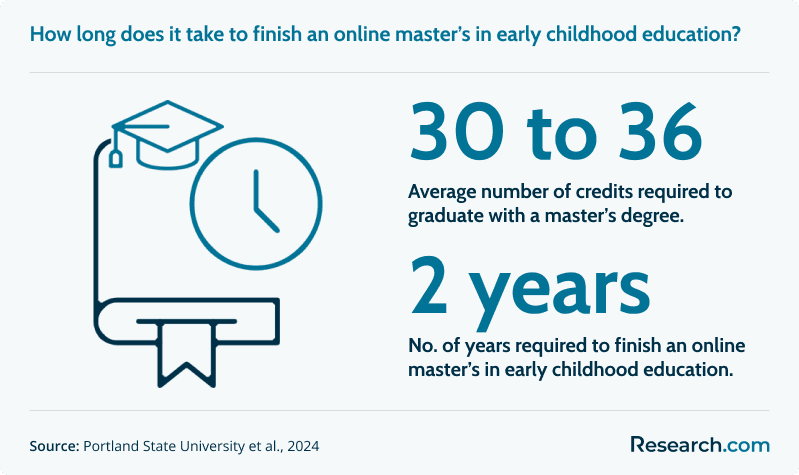
Affordable online master’s in early childhood education programs usually require 30 to 36 credit hours, although some programs require more. Many can be completed in 1 to 2 years, depending on whether you study full-time, part-time, or in an accelerated format. Tuition often falls between $400 to $600 per credit hour, but total cost varies by school, residency status, fees, and financial aid.
- Best for: working teachers, preschool educators, childcare leaders, curriculum specialists, and professionals seeking early childhood leadership roles.
- Main benefits: flexible online coursework, advanced child development training, leadership preparation, and potential eligibility for higher-responsibility roles.
- Important caution: not every online program leads to teacher licensure or certification in every state. Always confirm state requirements before enrolling.
- Common outcomes: preschool teacher, childcare center director, instructional coordinator, curriculum specialist, education consultant, special education teacher, or policy advocate.
What are the main benefits of earning an online master’s in early childhood education?
- An online master’s in early childhood education can support advancement into roles such as program director, curriculum specialist, instructional coordinator, or early childhood administrator.
- Many programs use applied assignments, research projects, practicum experiences, and classroom-based activities so students can connect graduate coursework to real early learning environments.
- A master’s degree may improve access to higher-paying or leadership-focused positions. Leadership positions can offer annual salaries over $70,000, though earnings depend on role, location, employer, and licensure status.
What can I expect from online master’s in early childhood education programs?
An online master’s in early childhood education focuses on how young children learn, develop, communicate, and build foundational academic and social skills. Students typically study child development, learning theory, early literacy, assessment, inclusive teaching, classroom environments, curriculum planning, and family engagement.
Most programs are designed for working adults. Courses may be asynchronous, synchronous, or a combination of both. Assignments often ask students to create lesson plans, analyze child development cases, design learning activities, evaluate curriculum, or conduct action research in an early childhood setting.
Program length and cost vary. On average, tuition for an online master’s in early childhood education costs between $400 to $600 per credit hour. Most programs require between 30 to 36 credit hours, although some programs in this guide require more.
| Program feature | What it usually means for students |
| Coursework | Child development, early literacy, assessment, curriculum design, inclusive education, leadership, and family engagement. |
| Format | Online classes may be self-paced, scheduled live sessions, cohort-based, or delivered in short accelerated terms. |
| Applied learning | Some programs include practicum hours, field projects, research assignments, or classroom-based observations. |
| Licensure relevance | Some degrees are designed for licensed teachers, while others are non-licensure programs for leadership, childcare, or policy roles. |
| Total time | Many students finish in 1 to 2 years, depending on course load and fieldwork requirements. |
Where can I work with an online master’s degree in early childhood education?
Graduates can work in schools, childcare centers, preschool programs, early intervention settings, nonprofit organizations, government agencies, and education-focused consulting roles. The degree can also support advancement within current teaching or childcare careers.
According to 2024 data from the BLS, preschool teachers held around 528,500 jobs. The majority of these roles—63%—were in child daycare services. About 17% worked in educational services, including state, local, and private schools. Another 14% were employed by religious, civic, and professional organizations, while around 2% worked in individual and family services.
Beyond classroom teaching, a master’s degree can help educators move into program management, curriculum development, professional development, early childhood policy, research support, or district-level coordination.
How much can I make with an online master’s in early childhood education?
Salary depends heavily on job title, state, employer type, licensure, and years of experience. For entry-level or classroom-focused positions, earnings may be closer to preschool teacher pay. For leadership or curriculum roles, compensation can be higher.
| Role | Salary information stated in source material | How a master’s degree may help |
| Preschool teacher | The median annual wage is around $37,130, according to 2024 BLS data. | May support advancement, specialized teaching responsibilities, or eligibility for some higher-level positions. |
| Kindergarten teacher | The median annual salary is about $62,690. | May strengthen credentials for public school roles, depending on state licensure requirements. |
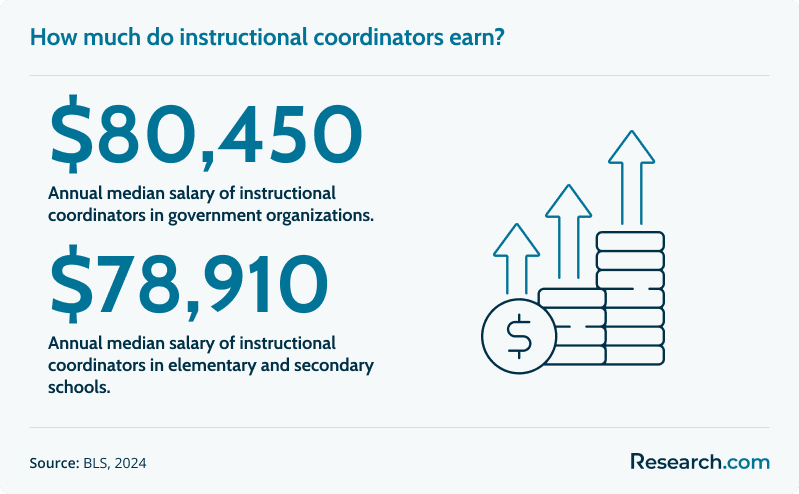
| Instructional coordinator or program director | The median annual wage is around $74,620. | Can prepare graduates for curriculum leadership, teacher training, program evaluation, and administrative responsibilities. |
A master’s degree can improve your competitiveness for advanced roles, but it does not guarantee a specific salary. Before enrolling, compare your program’s cost with the pay scale for the specific roles and locations you are targeting.
- Most affordable online master’s in early childhood education programs for 2027
- How long does an online master’s in early childhood education take?
- Online vs. on-campus master’s in early childhood education
- Average cost of online master’s in early childhood education programs
- Financial aid options for early childhood education graduate students
- Admission requirements and prerequisites
- Common courses in online early childhood education master’s programs
- Specializations available in early childhood education master’s programs
- More ways to pay for an online master’s in early childhood educationspecialization planning
- Child life specialist pathways
- Trends shaping online early childhood education programs
- Challenges of online early childhood education graduate study
- How to choose the right online master’s in early childhood education
- Accreditation and quality assurance
- Is the degree worth it?
- Teaching credential steps after graduation
- Career paths after an online master’s in early childhood education
- Job market for early childhood education master’s graduates
- Digital tools in online graduate education
- Student support and mentorship
- Digital research resources
- Advanced opportunities beyond the master’s degree
- Networking and career development in online programs
- Leadership training for early childhood administrators
- Interdisciplinary learning and teaching innovation
- Using interdisciplinary studies to strengthen early childhood practice
- Digital research tools for evidence-based teaching
- Library science skills and curriculum resource management
- Creative writing strategies in early childhood curriculum
- Creative communication for early childhood leadershipcreative curriculumresource managementresearch toolsinterdisciplinary studyleadership trainingnetworkingadvanced options
- Licensure and certification preparation advanced pathwaysjob marketcertification planning
List of the Most Affordable Online Master’s in Early Childhood Education Programs for 2027
How do we rank our schools?
Research.com evaluates affordability and program quality using information from trusted education data sources, including the IPEDS database, Peterson's database, the College Scorecard database, and the National Center for Education Statistics. These sources help compare tuition, institutional information, and program data so students can review lower-cost online options with greater confidence. For a fuller explanation, see the Research.com methodology page.
| Rank | School | Credits | Cost stated by program | Accreditation |
| 1 | Portland State University | 45 credits | $512 per credit hour for residents, $739 for non-residents | Northwest Commission on Colleges and Universities (NWCCU) |
| 2 | West Chester University of Pennsylvania | 33 credits | $1,430.03 flat rate for 9 credits or more | Middle States Commission on Higher Education (MSCHE) |
| 3 | Northwestern College | 33 credits | $360 per credit hour | Higher Learning Commission (HLC) |
| 4 | Prescott College | 36 credits | $598 per credit hour | HLC |
| 5 | Northwestern State University of Louisiana | 36 credits | $475 per credit hour up to 9 hours | NAEYC |
| 6 | University of West Alabama | 34 credits | $429 per credit hour | Southern Association of Colleges and Schools Commission on Colleges (SACSCOC) |
| 7 | Eastern Washington University | 49 credits | $325 per credit hour | Washington State Professional Educator Standards Board (PESB), NWCCU |
| 8 | University of South Alabama | 30 credits | $480 per credit hour | Council for the Accreditation of Educator Preparation (CAEP) |
| 9 | University of North Dakota | 32 credits | $552.57 per credit hour | CAEP |
| 10 | Stephen F. Austin State University | 36 credits | $567 per credit hour for residents, $987 for non-residents | SACSCOC |
1. Portland State University
Portland State University offers a Master’s in Early Childhood: Inclusive Education for students who want an interdisciplinary, equity-focused program serving children from birth to age 8. The online curriculum emphasizes inquiry, anti-bias education, inclusive practice, and action research. Students may also participate in summer intensives and study abroad options, and the program typically takes two years to complete.
- Required Credits to Graduate: 45 credits
- Tracks/Concentrations: Infant Toddler Mental Health, Constructivism, Early Childhood Special Education
- Cost: $512 per credit hour for residents, $739 for non-residents
- Accreditation: Northwest Commission on Colleges and Universities (NWCCU)
2. West Chester University of Pennsylvania
West Chester University offers an online M.Ed. in Early Childhood Education built for educators preparing for leadership in early learning settings. The program uses an accelerated cohort model with both synchronous and asynchronous learning. Students focus on designing, improving, and evaluating learning experiences for young children, with career applications in childcare, curriculum development, and early intervention.
- Required Credits to Graduate: 33 credits
- Tracks/Concentrations: N/A
- Cost: $1,430.03 flat rate for 9 credits or more
- Accreditation: Middle States Commission on Higher Education (MSCHE)
3. Northwestern College
Northwestern College provides an online master’s in early childhood education for preK-3rd grade professionals who want to strengthen teaching practice while maintaining flexibility. Students take one 8-week class at a time and are expected to finish in two years. The program is structured for working educators and notes financial aid options such as the TEACH Grant for eligible teachers in high-need areas.
- Required Credits to Graduate: 33 credits
- Tracks/Concentrations: N/A
- Cost: $360 per credit hour
- Accreditation: Higher Learning Commission (HLC)
4. Prescott College
Prescott College offers a fully online Master of Education in Early Childhood Education centered on social justice, cultural diversity, democratic school participation, and parent-educator relationships. The program is designed for educators serving children from birth to age 8 and includes experiential learning opportunities. Students may also pursue pathways connected to professional development and Arizona teacher certification.
- Required Credits to Graduate: 36 credits
- Tracks/Concentrations: N/A
- Cost: $598 per credit hour
- Accreditation: HLC
5. Northwestern State University of Louisiana
Northwestern State University offers Louisiana’s only online M.Ed. in Early Childhood Education. Coursework is aligned with National Association for the Education of Young Children (NAEYC) standards and includes a practicum. The program is designed to deepen existing education knowledge and includes an add-on certification option for students who already hold Elementary certification.
- Required Credits to Graduate: 36 credits
- Tracks/Concentrations: General, Add-On Certification
- Cost: $475 per credit hour up to 9 hours
- Accreditation: NAEYC
6. University of West Alabama
The University of West Alabama offers an online master’s in early childhood development for educators who want to better support children’s educational, developmental, and emotional needs. The curriculum includes topics such as psychology, technology, and program planning. Students may also access the Mentor Collective program, which connects them with mentors for support and professional growth.
- Required Credits to Graduate: 34 credits
- Tracks/Concentrations: N/A
- Cost: $429 per credit hour
- Accreditation: Southern Association of Colleges and Schools Commission on Colleges (SACSCOC)
7. Eastern Washington University
Eastern Washington University provides an online M.Ed. in Early Childhood Education focused on children from birth through age eight. The program aligns with NAEYC standards and covers development, family partnerships, and evidence-based early learning practices. Graduates may pursue an early childhood education endorsement or leadership opportunities in early learning programs.
- Required Credits to Graduate: 49 credits
- Tracks/Concentrations: N/A
- Cost: $325 per credit hour
- Accreditation: Washington State Professional Educator Standards Board (PESB), NWCCU
8. University of South Alabama
The University of South Alabama offers a 30-hour online Master of Education in Early Childhood Education for teachers who already hold a Class B Professional Early Childhood Certification. The degree focuses on child development and teaching for ages four through eight. Students can finish within one to two years and may become eligible for Class A Professional Early Childhood Education certification.
- Required Credits to Graduate: 30 credits
- Tracks/Concentrations: N/A
- Cost: $480 per credit hour
- Accreditation: Council for the Accreditation of Educator Preparation (CAEP)
9. University of North Dakota
The University of North Dakota offers an online master’s in early childhood education that connects theory, applied practice, and curriculum development. Students complete a 60-hour practicum and can access free workshops to build professional skills. The program prepares students for roles such as Early Childhood Program Specialist or Coach.
- Required Credits to Graduate: 32 credits
- Tracks/Concentrations: N/A
- Cost: $552.57 per credit hour
- Accreditation: CAEP
10. Stephen F. Austin State University
Stephen F. Austin State University offers an online Master of Education in Curriculum and Instruction with an Early Childhood focus. The program combines theory, research, leadership, and practical curriculum work for educators who want broader opportunities in early childhood and related educational environments.
- Required Credits to Graduate: 36 credits
- Tracks/Concentrations: N/A
- Cost: $567 per credit hour for residents, $987 for non-residents
- Accreditation: SACSCOC
What graduates say about online master’s in early childhood education programs
-
: "
“The flexibility of the online format made it possible to keep teaching while completing graduate coursework. The assignments connected directly to classroom practice, so I could use new strategies right away.” – Leila
"
-
: "
“I expected online courses to feel isolated, but the discussions and peer collaboration helped me learn from educators in different communities. Studying from home gave me control over my schedule without losing interaction.” – Gregory
"
-
: "
“The degree helped me build the confidence and knowledge to lead more effectively in my early childhood classroom. Faculty support and practical resources made a real difference while I balanced work and school.” – Melanie
"
Key Findings
- Most online master’s in early childhood education programs take 1 to 2 years to complete.
- Many programs require 30 to 36 credits, though some listed programs require 45 or 49 credits.
- The average cost of an online master’s in early childhood education, depending on the school, is around $10,000 to $30,000.
- Graduates with a master’s in early childhood education earn an average salary of $35,000 to $75,000 per year.
- The job outlook for early childhood teachers is strong, with a projected growth rate of 15% until 2028.
How long does it take to complete an online master’s in early childhood education program?
Most online master’s in early childhood education programs take about 1 to 2 years. Full-time students may finish in 12 to 18 months, while part-time students may need 2 or more years, especially if they are working while enrolled.
Program design matters. Accelerated programs with shorter terms can reduce the timeline, while research projects, theses, practicum placements, or certification requirements may extend it. Students comparing education-related options can also review the fastest online master's in applied behavior analysis if their interests include behavior support and child development.
| Enrollment style | Typical completion pattern | Best for |
| Accelerated full-time | As little as 12 months in some programs | Students who can handle an intensive course load. |
| Standard full-time | Usually 12 to 18 months | Educators who want a faster path but still need a manageable pace. |
| Part-time | Often 2 or more years | Working adults balancing teaching, childcare, family, or administrative duties. |
| Practicum-heavy or thesis-based | May take closer to 2 years | Students seeking licensure alignment, research preparation, or advanced applied training. |
How does an online master’s in early childhood education program compare to an on-campus program?
Online and on-campus master’s programs can lead to the same degree, but the student experience is different. The better option depends on your schedule, location, learning style, need for in-person support, and whether you already work in an early childhood setting where you can complete fieldwork.
| Factor | Online program | On-campus program |
| Flexibility | Often easier to fit around teaching, childcare work, or family responsibilities. | Usually follows set class times and campus schedules. |
| Location | Allows students to study from outside the school’s region, if state authorization and fieldwork rules allow. | Requires access to campus, which may limit school choices. |
| Interaction | Uses discussion boards, video meetings, virtual office hours, and group projects. | Offers face-to-face discussions, campus events, and in-person faculty access. |
| Cost considerations | May reduce commuting and relocation costs. Students comparing budgets can also review cheap online master's programs for teachers. | May include campus-based resources, but commuting, housing, and schedule constraints can add costs. |
| Hands-on learning | May rely on local field placements, virtual simulations, or workplace-based assignments. | May provide easier access to campus child development centers or supervised settings. |
| Best fit | Working professionals who need convenience and can stay self-directed. | Students who prefer in-person structure, immediate peer contact, and campus resources. |
What is the average cost of online master’s in early childhood education programs?
The average cost of an online master’s in early childhood education commonly ranges from $10,000 to $30,000 in total tuition. Lower-cost public programs may start around $10,000 to $15,000, especially for students who qualify for in-state pricing. Private universities and specialized programs may cost closer to $25,000 or even $30,000.
Tuition is only one part of the cost. Compare required fees, books, technology charges, background checks, practicum costs, certification tests, and licensure expenses. As with affordable online master's in public policy, the advertised tuition may not show the full amount you will pay by graduation.
The chart below lists the average tuition for graduate students in degree-granting postsecondary schools, according to a 2023 report published by the NCES.
What are the financial aid options for students enrolling in an online master’s in early childhood education program?
Graduate students in online early childhood education programs may use federal aid, scholarships, employer support, state programs, private loans, or school payment plans. The best approach is to start with aid that does not require repayment, then compare federal and private borrowing carefully if loans are needed.
- Federal Financial Aid: Complete the FAFSA to determine eligibility for federal loans and certain grants. The TEACH Grant offers up to $4,000 per year for eligible students who meet service obligations.
- Scholarships: Universities, foundations, and professional organizations may offer scholarships for students pursuing early childhood education. Some awards are need-based, while others consider academic performance, career goals, or service commitments.
- Employer Tuition Assistance: Schools, childcare centers, and education organizations may help pay tuition for employees who remain with the organization or meet specific work requirements.
- State-Based Grants: Some states provide grant or scholarship support for educators who commit to teaching or working in early childhood education after graduation. The TEACH Early Childhood® Scholarship Program is available in several states.
- Private Loans: Private loans can fill funding gaps, but they often have less flexible repayment protections than federal loans. Compare interest rates, repayment terms, and borrower protections before accepting them.
What are the prerequisites for enrolling in an online master’s in early childhood education program?
Admission requirements vary, but most online master’s in early childhood education programs expect applicants to show academic readiness and some connection to education or child development. Licensure requirements differ by program, so read admissions pages carefully before applying.
- Bachelor’s Degree: Applicants generally need a bachelor’s degree from an accredited institution. Some programs prefer education majors, while others consider candidates from related or different academic backgrounds.
- Minimum GPA: Many schools require a minimum undergraduate GPA, often around 2.75 to 3.0. Conditional admission may be available for applicants who submit stronger supplemental materials.
- Teaching License: Programs built for practicing educators may require current teacher licensure. Other programs are designed for non-licensed students or professionals pursuing childcare leadership, policy, or administrative work.
- Professional Experience: Some programs prefer applicants with experience teaching, volunteering, working in daycare, or supporting young children in community settings.
- Letters of Recommendation: Applicants often submit two to three recommendations from supervisors, professors, or professional contacts who can speak to their readiness for graduate study and work with children.
What courses are typically in online master’s in early childhood education programs?
Coursework in online early childhood education master’s programs is designed to deepen knowledge of young children’s development while preparing graduates for classroom, leadership, curriculum, or advocacy roles.
- Child Development: Students examine physical, cognitive, social, and emotional development in young children and learn how developmental theory should guide teaching decisions. Students interested in deeper developmental research may also compare the most affordable PhD psychology programs.
- Curriculum Design and Assessment: This course covers how to build age-appropriate curricula and evaluate children’s learning through observation, formal tools, and performance-based measures.
- Inclusive Education: Students learn how to support children with disabilities, developmental delays, language differences, and diverse learning needs through classroom adaptations and inclusive planning.
- Leadership and Advocacy in Early Childhood Education: This course explores program leadership, policy, advocacy, and management issues. Professionals interested in broader service systems may also compare the cheapest online master's degree in human services.
- Family and Community Engagement: Students learn how to build partnerships with families, caregivers, and community organizations to support children’s learning beyond the classroom.
What types of specializations are available in an online master’s in early childhood education program?
Specializations help students align the degree with a specific career path. Before choosing one, confirm whether it supports licensure, endorsement, leadership advancement, or a non-classroom goal.
| Specialization | Best for | Career connection |
| Special Education | Educators who want to support young children with disabilities or developmental delays. | Inclusive classrooms, early intervention, special education coordination. |
| Curriculum and Instruction | Teachers interested in curriculum planning, instructional design, and assessment. | Curriculum specialist, instructional coach, program trainer. |
| Leadership and Administration | Professionals aiming to manage preschool, childcare, or early learning programs. | Program director, center administrator, education coordinator. |
| Infant and Toddler Education | Educators focused on children from birth to age 3. | Infant-toddler specialist, early care educator, family support roles. |
| Language and Literacy | Teachers who want to strengthen early reading, vocabulary, and communication development. | Literacy specialist, reading support educator, curriculum developer. |
If your long-term goal is to teach older children, compare the cheapest online elementary education degree before committing to an early childhood-specific track.
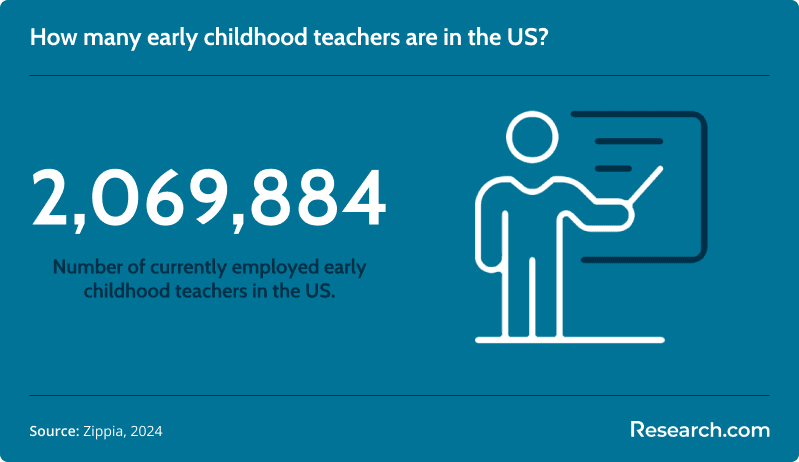
The chart below lists the most common degrees for early childhood teachers, according to data published by Zippia in 2024.
What financial aid options are available for online master’s in early childhood education students?
Because graduate tuition can be substantial, students should build a funding plan before enrolling. Start by listing the total cost of attendance, not just tuition, then subtract grants, scholarships, tuition reimbursement, and savings before deciding how much to borrow.
FAFSA should usually be the first step. It can help students access federal aid and determine whether they qualify for loans or grant-related opportunities. Programs such as the TEACH Grant can be valuable, but only if you understand and can meet the service obligations.
Scholarships can come from universities, education associations, local foundations, or professional groups. Some schools offering online programs also provide awards for current educators or students committed to early childhood work.
Employer tuition assistance can be especially useful for teachers and childcare professionals already working in the field. Ask your employer whether reimbursement is available and whether accepting it requires you to stay employed for a certain period.
Private loans should generally be considered after grants, scholarships, employer benefits, and federal options. They can help close a gap, but repayment terms may be less forgiving than federal loans.
Some schools also offer payment plans that divide tuition into monthly installments. This can reduce upfront pressure, though students should still make sure the full program cost is realistic. To compare broader program options, review Research.com’s guide to the best masters in early childhood education online programs.
Can an online master’s in early childhood education lead to a child life specialist role?
An online master’s in early childhood education can be relevant to child life specialist work because both fields require strong knowledge of child development, family systems, communication, and support for children facing stress. However, an early childhood education degree alone may not satisfy all requirements for child life specialist roles. Students may need additional coursework, supervised clinical experience, or certification preparation related to healthcare settings. For more detail on the career and pay considerations, review Research.com’s guide on how much do child life specialists make.
What emerging trends are shaping online master’s programs in early childhood education?
Online early childhood education programs are increasingly emphasizing practical digital learning, inclusive instruction, social-emotional learning, data-informed decision-making, and family-community partnerships. Programs may use virtual collaboration tools, recorded classroom demonstrations, interactive modules, and applied research projects to help students connect theory to real early learning challenges.
Another important shift is the connection between early childhood education and related fields such as child development, behavioral support, literacy, technology, and leadership. Students who want a developmental research focus may also compare options in masters in child development.
What challenges might online master’s programs in early childhood education present?
Online graduate study can be flexible, but it requires discipline. Students must manage deadlines, technology, fieldwork, group projects, and reading-heavy coursework without the routine of campus attendance.
- Time management: Working educators may struggle to balance lesson planning, family responsibilities, and graduate assignments.
- Limited in-person contact: Online students may need to make extra effort to build relationships with faculty and classmates.
- Fieldwork coordination: Students may need to secure approved local placements or document work-based experiences.
- Technology barriers: Unreliable internet, unfamiliar learning platforms, or limited access to digital tools can disrupt progress.
- Licensure complexity: Online programs may not automatically meet certification rules in every state.
Students considering longer-term leadership study can also explore structured doctoral options such as fully funded EdD programs, while confirming the details and funding terms of any program they consider.
How to choose the best online master’s in early childhood education program?
The best online master’s in early childhood education is the one that matches your state requirements, budget, schedule, career goal, and preferred type of student support. A low tuition rate is helpful, but it should not outweigh accreditation, licensure alignment, field placement quality, or curriculum fit.
| What to check | Questions to ask before enrolling |
| Accreditation | Is the institution regionally accredited? Is the education program recognized by relevant bodies such as the National Council for Accreditation of Teacher Education (NCATE), CAEP, NAEYC, or state boards where applicable? |
| Licensure alignment | Does the program meet the certification rules in your state, or is it a non-licensure degree? |
| Curriculum fit | Does the program focus on teaching, leadership, special education, infant-toddler work, literacy, or curriculum design? |
| Flexibility | Are classes asynchronous, live, cohort-based, accelerated, part-time, or full-time? |
| Total cost | What will you pay after tuition, fees, books, technology charges, background checks, and certification-related expenses? |
| Student support | Will you have advising, tech support, career services, field placement guidance, and faculty access? |
If your goals overlap with child behavior, autism support, or developmental intervention, you may also compare online degree in applied behavior analysis programs before choosing an early childhood education track.
How do accreditation and quality assurance measures affect the value of your online master’s in early childhood education?
Accreditation helps verify that a school or program meets recognized academic and professional standards. For early childhood education students, this matters because accreditation can affect financial aid eligibility, employer recognition, transferability of credits, and whether a program supports state certification requirements.
Before enrolling, confirm both institutional accreditation and any program-level accreditation or state approval that applies to your career goal. If you are comparing cost across education programs, Research.com’s guide to the cheapest online education degree can help you think through affordability and value beyond tuition alone.
Is an online master’s in early childhood education a worthwhile investment?
An online master’s in early childhood education may be worth it if it helps you qualify for a role you could not otherwise access, supports licensure or endorsement requirements, increases leadership opportunities, or strengthens your practice in a way that improves long-term career options. It may be less worthwhile if the program is not recognized in your state, requires more debt than your target salary can support, or does not align with your intended role.
| Choose this degree if... | Consider another path if... |
| You want leadership, curriculum, or advanced teaching roles in early childhood education. | You only need a short endorsement, certificate, or state-specific licensure coursework. |
| You already work with young children and want graduate-level expertise. | Your career goal is outside education and does not require child development training. |
| Your state or employer rewards advanced credentials. | The program does not meet your state’s licensing or certification requirements. |
| You can use grants, scholarships, employer support, or affordable tuition to control debt. | The total cost would exceed realistic salary gains for your target role. |
For budget comparison, you may also review Research.com’s guide to the cheapest online teaching degree options.
How do I get my teaching credential after earning an online master’s in early childhood education?
A master’s degree may support credentialing, but teacher certification is controlled by state rules. In general, candidates may need to submit transcripts, complete approved supervised teaching requirements, pass state exams, clear background checks, and apply through the state education agency.
Before enrolling in an online program, ask the school whether it prepares students for certification in your state. If you are still mapping the credential process, review Research.com’s guide, How do I get a teaching credential?.
What career paths are available for graduates of an online master’s in early childhood education?
Graduates can pursue classroom, administrative, curriculum, consulting, special education, and policy-related roles. Exact eligibility depends on state rules, licensure, work history, and employer expectations.
- Preschool Teacher: Advanced coursework can help teachers strengthen instruction, classroom leadership, assessment, and developmental support for young children.
- Childcare Center Director: Directors oversee staff, operations, curriculum, compliance, and family communication in early learning settings.
- Instructional Coordinator: These professionals develop curriculum, support teachers, review instructional materials, and help improve program quality.
- Early Childhood Education Consultant: Consultants advise schools, childcare centers, agencies, or organizations on curriculum, program quality, training, and best practices.
- Special Education Teacher: With the right specialization and licensure, graduates may work with young children who have disabilities or developmental delays.
- Policy Advocate or Researcher: Graduates may work on early childhood access, funding, quality standards, or research. Students interested in public-sector leadership may also consider a cheap online MPA.
What is the job market for graduates with an online master’s in early childhood education?
The job market for graduates with an online master’s in early childhood education is supported by continued demand for preschool, childcare, early intervention, and early learning leadership professionals. The field has a projected growth rate of 15% for early childhood teacher roles from 2018-2028. Early childhood education is also listed among the top 10 highest-paying master's degrees.
Graduates with advanced credentials may be more competitive for leadership, curriculum, coaching, and specialized support positions. However, demand varies by state, funding levels, employer type, and required credentials.
Special education remains an important adjacent area because many early learning programs need professionals who can support children with disabilities or developmental delays. Students interested in that path may compare the cheapest online special education master's degree.
How can emerging digital tools enhance online master’s programs in early childhood education?
Digital tools can make online graduate learning more practical when they are used intentionally. Virtual classroom examples, real-time discussions, recorded demonstrations, collaborative planning platforms, and interactive modules can help students connect child development theory to instructional decisions. Students comparing costs across education pathways may also review the cheapest elementary education degree.
How do online master’s programs provide essential student support and mentorship?
Strong online programs do more than post readings and assignments. They provide academic advising, technical help, faculty access, fieldwork support, career services, and structured opportunities to connect with peers. Mentorship can be especially valuable for working educators who are applying coursework immediately in classrooms, childcare centers, or leadership roles.
Students who want an administrative focus can also compare the cheapest online master's in education administration programs.
How can digital research resources strengthen your online master’s in early childhood education?
Online access to journals, databases, virtual libraries, curriculum repositories, and research tools helps graduate students evaluate evidence and improve instructional decision-making. These resources are especially useful for action research, curriculum design, assessment projects, and leadership assignments. Students interested in information organization and academic research may also explore the best master's in library science programs.
What are the advanced career opportunities beyond a master’s in early childhood education?
A master’s degree can be a strong credential, but some professionals continue into doctoral study, advanced certification, policy work, education technology, or specialized practice. The right next step depends on whether you want to lead institutions, conduct research, influence policy, or specialize in a high-need area.
- Doctoral Programs in Education Leadership: An Ed.D. can support leadership at the district, state, organizational, or policy level. Students comparing doctoral options may review the cheapest online doctorate in educational leadership.
- Further Specialization: Additional training in special education, behavior analysis, literacy, infant-toddler development, or coaching can strengthen expertise for advanced roles.
- Policy and Advocacy: Professionals interested in early childhood funding, access, quality standards, or family services may work with agencies, nonprofits, or research organizations.
- Education Technology Leadership: Educators with technology skills may help early learning programs evaluate and integrate digital tools in developmentally appropriate ways.
How can online master’s programs enhance professional networking and career development?
Online programs can support networking through cohort models, discussion groups, faculty mentoring, virtual conferences, professional webinars, group projects, and alumni communities. Students should ask whether career support includes resume reviews, interview preparation, job boards, certification guidance, and connections to early childhood organizations.
Professionals interested in digital information skills may also compare masters in library and information science online programs.
How can additional leadership training boost administrative effectiveness in early childhood education?
Leadership training can help early childhood professionals move from classroom practice into program management, staff development, compliance, budgeting, strategic planning, and family-community partnerships. For educators aiming at broader organizational leadership, affordable doctoral programs in leadership may be worth comparing after the master’s degree.
How can online interdisciplinary studies programs boost innovative teaching practices?
Interdisciplinary study can help early childhood educators draw from psychology, family studies, literacy, technology, policy, library science, and communication. This broader perspective can improve curriculum design, family engagement, research interpretation, and problem-solving. Educators who want a flexible academic path may review online interdisciplinary studies programs.
Can interdisciplinary studies enrich your online master’s in early childhood education?
Interdisciplinary learning can strengthen early childhood practice by helping educators connect child development with research methods, resource management, communication, information literacy, and social services. For example, understanding information systems and curriculum resources can support stronger instructional planning. Students curious about that pathway can read Why get a masters in library science?
How do digital research tools enhance evidence-based educational strategies?
Digital research tools help educators evaluate instructional strategies, review academic literature, organize sources, and apply findings to classroom and program decisions. These skills are useful for graduate research projects, curriculum evaluation, and leadership planning. Students interested in research-heavy information careers can also explore careers with a library science degree.
How can blending library science expertise with early childhood education optimize curriculum resource management?
Library science skills can help early childhood educators select, organize, evaluate, and maintain high-quality learning materials. Resource curation, digital archiving, information evaluation, and data organization can improve lesson planning and curriculum quality. Professionals considering a broader information-focused career can review what to do with a library science degree.
How can integrating creative writing strategies enhance early childhood curriculum design?
Creative writing strategies can strengthen early childhood curriculum by supporting storytelling, vocabulary, oral language, imagination, sequencing, and early literacy development. Educators can use narrative prompts, picture-based storytelling, shared writing, and dramatic play to make literacy instruction more engaging. For broader creative pedagogy ideas, explore the best online creative writing degree.
How can creative communication training enhance early childhood educational leadership?
Early childhood leaders need to communicate clearly with teachers, families, administrators, policymakers, and community partners. Creative communication training can support persuasive writing, storytelling, advocacy, grant narratives, curriculum explanations, and staff development materials. Educators who want formal writing training may compare a fast creative writing degree online accredited program.
How does an online master’s in early childhood education prepare you for licensure or certification?
An online master’s in early childhood education may support licensure or certification, but preparation depends on the program and the state. Some programs are designed for already licensed teachers. Others include a licensure track. Some are non-licensure programs for leadership, childcare, curriculum, or policy roles.
- Confirm state-specific requirements: Every state sets its own rules for early childhood educators, including required coursework, exams, supervised teaching hours, and application steps.
- Identify whether the program is licensure or non-licensure: Do not assume an online master’s automatically qualifies you for public school teaching certification.
- Check certification exam preparation: Some students may need to pass state-approved assessments, such as Praxis exams, depending on state rules and role.
- Review fieldwork expectations: Licensure-track programs may require supervised teaching, practicum hours, or approved placements.
- Verify accreditation and state approval: Look for recognized institutional accreditation and relevant program recognition, such as NAEYC or CAEP where applicable.
- Ask about career support: Quality programs should help students understand licensure steps, documentation, timelines, and job search preparation.
If you are comparing broader education pathways, online master's in education programs may also offer routes for specialization, licensure, or professional advancement.
Common mistakes to avoid when choosing an online master’s in early childhood education
- Choosing only by tuition: A low price is helpful, but poor licensure alignment, weak support, or extra fees can reduce value.
- Ignoring accreditation: Accreditation affects credibility, financial aid, employer recognition, and sometimes certification eligibility.
- Assuming online means self-paced: Some online programs have live classes, strict cohorts, or fixed deadlines.
- Overlooking fieldwork requirements: Practicum or supervised hours can affect your schedule and may require local placement approval.
- Not checking state licensure rules: A program based in one state may not meet certification requirements in another.
- Borrowing without an ROI plan: Compare total debt with realistic salary expectations for your target role and region.
- Relying only on rankings: Rankings are useful starting points, but the best program is the one that fits your credentials, goals, and state requirements.
Key Insights
- An affordable online master’s in early childhood education should be evaluated by total cost, accreditation, licensure alignment, flexibility, and career fit—not tuition alone.
- Most programs take 1 to 2 years and often require 30 to 36 credits, though several affordable options require more credits.
- Career outcomes can include preschool teaching, curriculum work, childcare leadership, instructional coordination, special education, consulting, and policy-related roles.
- Salary varies by role. The cited BLS figures include around $37,130 for preschool teachers, about $62,690 for kindergarten teachers, and around $74,620 for instructional coordinators or program directors.
- Before enrolling, ask the school whether the program is licensure-track or non-licensure, whether it meets your state’s requirements, and what fieldwork or certification exams may be required.
- The strongest program choice is the one that helps you reach a specific role while keeping debt manageable and preserving enough flexibility to complete the degree successfully.
References:
- Bureau of Labor Statistics (BLS). (2024a). Instructional Coordinators. Occupational Outlook Handbook. BLS.
- Bureau of Labor Statistics (BLS). (2024b). Kindergarten and Elementary School Teachers. Occupational Outlook Handbook. BLS.
- Bureau of Labor Statistics (BLS). (2024c). Preschool Teachers. Occupational Outlook Handbook. BLS and BLS preschool teacher profile.
- National Center for Education Statistics (NCES). (2023). Average and percentiles of graduate tuition and required fees in degree-granting postsecondary institutions, by control of institution: Academic year 1989-90 through 2021-22. Digest of Education Statistics. NCES.
- National Center for Education Statistics (NCES). (2024). Preprimary education enrollment. Fast Facts. NCES.
- Zippia. (2024a). Early Childhood Teacher Education Requirements. Zippia.
- Zippia. (2024b). Job Outlook for Early Childhood Teachers in the United States. Zippia.
Other Things You Should Know About Online Degrees in Early Childhood Education
Many graduates seeking state teacher or administrator licensure must pass the Praxis or a state-specific content exam before applying. Some states also require a separate pedagogy test, supervised field experience, and fingerprint-based background checks through the state education department.
When evaluating the value of an online master’s in early childhood education in 2026, consider program accreditation, tuition costs, potential salary increase, career advancement opportunities, and student support services. Accreditation ensures recognized quality, while strategic financial planning and networking can enhance long-term career benefits.