
2027 What Can You Do With a Master’s in Early Childhood Education?

Co-Founder and Chief Data Scientist
A Master’s in Early Childhood Education is a graduate degree for educators who want deeper expertise in how young children learn, how early programs should be designed, and how to move into advanced teaching, leadership, curriculum, or program administration roles. It is most relevant for preschool teachers, elementary educators, childcare professionals, program coordinators, and career changers who already have experience working with children and want a stronger credential.
This guide explains what the degree covers, how admissions and online study work, what it may cost, which jobs it can support, and how to judge whether the investment makes sense. It also compares career paths, highlights common mistakes, and gives practical questions to ask before choosing a program.
Quick answer: Is a Master’s in Early Childhood Education a good choice?
A Master’s in Early Childhood Education can be worthwhile if you want to specialize in teaching children from birth to eight years old, qualify for leadership roles in early learning settings, strengthen your curriculum and child development knowledge, or prepare for doctoral study. It is less likely to pay off quickly if your target role does not require a graduate degree, if the program is not properly accredited, or if tuition costs are high relative to your expected salary.
- The degree can support roles in preschool, childcare administration, early intervention, curriculum development, and elementary education.
- Reported salaries in related roles range from $33,176 for Preschool Lead Teachers to $63,670 for Kindergarten and Elementary School Teachers.
- Online programs may be a practical option for working educators, especially when the institution is accredited and respected by employers.
- What a Master’s in Early Childhood Education Covers
- Admission Requirements
- Cost and Budget Planning
- Employer Recognition of Online Degrees
- Career Paths for Graduates
- Salary Expectations
- Best Industries for Graduates
- Best States for Early Childhood Education Careers
- Job Outlook
- Doctorate Options After the Master’s
- Is the Degree Worth It?
- Using Interdisciplinary Skills in the Classroom
- Finding Quality and Affordable Programs
- Additional Credentials After Graduation
- Funding Options for Advanced Study
- How to Choose a Strong Program
- Current Trends in Early Childhood Education
- Accelerated Degree Options
- Workforce Challenges for Graduates
- Broader Interdisciplinary Applications
- Complementary Credentials
What is a Master’s in Early Childhood Education?
A Master’s in Early Childhood Education is an advanced academic program focused on children from birth to eight years old. Coursework usually examines child development, early literacy, assessment, family engagement, inclusive classrooms, curriculum design, classroom leadership, and research-based teaching methods for young learners.
The degree is designed for professionals who want to understand early learning beyond basic classroom practice. Instead of only learning how to manage a classroom, graduate students study why children develop at different rates, how social and emotional development affects learning, and how educators can design environments that support language, cognition, behavior, and physical development.
Graduates often pursue work as early childhood educators, preschool leaders, childcare center directors, curriculum specialists, early childhood consultants, or program administrators. Some students prefer a broader academic administration path; in that case, comparing this degree with the best online master's in higher education can clarify whether your goals are closer to early childhood practice or postsecondary education leadership.
The degree may also lead into doctoral study. If long-term plans include research, university teaching, executive leadership, or policy work, it is useful to review what jobs can you do with a doctorate in education before deciding whether a master’s is the final credential or one step in a longer academic path.
| Student goal | How the master’s degree can help | When another path may fit better |
| Improve early childhood teaching practice | Builds advanced knowledge of development, curriculum, assessment, and classroom design. | If you need only an entry-level teaching credential, a bachelor’s or certification route may be enough. |
| Move into program leadership | Supports preparation for director, coordinator, or specialist roles in preschool and childcare settings. | If your target role is in K-12 administration, check whether a different education leadership degree is required. |
| Work in research or policy | Provides a foundation in theory, evidence-based practice, and early learning systems. | If you want senior research or university faculty roles, doctoral study may eventually be necessary. |
| Change careers into education | Can add specialized knowledge, especially if the program accepts non-education majors. | If you lack classroom experience, you may first need prerequisite coursework or a licensure pathway. |
What are the requirements for admission to a Master’s in Early Childhood Education?
Admission standards differ by school, but most programs look for evidence that applicants can succeed in graduate-level education courses and understand the realities of working with young children. A bachelor’s degree is usually required, and many schools prefer applicants with an education, child development, psychology, or related background.
If your undergraduate degree is not in education, you may need prerequisite coursework or documented experience with children. Some applicants build that foundation through options such as an online bachelor's degree in elementary education before applying to a graduate program.
Graduate admissions committees commonly review academic performance, professional experience, recommendations, and a written statement explaining your goals. Some programs also ask whether you are pursuing licensure, already hold a teaching credential, or plan to work in a non-licensure role such as administration, consulting, or curriculum support.
Common admission materials include:
- Bachelor’s degree in education or a closely related field
- Minimum undergraduate GPA, often around 3.0
- Two or three letters of recommendation
- Personal statement or statement of purpose
- Teaching, childcare, or child-focused professional experience
- GRE scores if the school still requires them
Applicants should also be honest about whether early childhood education is the right field. Graduate school is a major commitment, and some students use the research stage to compare unrelated graduate options. For example, someone interested in technology and security may ask what jobs can I get with a master’s in cyber security instead of pursuing an education degree.
How much does it cost to complete a Master’s in Early Childhood Education?
The reported average tuition for graduate programs in Early Childhood Education and Teaching for the 2023-2024 academic year is $19,395 for graduate programs. That number is useful as a starting point, but it does not represent the full cost of earning the degree.
Students should also plan for fees, books, supplies, technology, transportation, childcare, and living expenses. Online students may avoid commuting or relocation costs, but they still need reliable internet, a suitable device, software access, and time away from work or family responsibilities. If online study is your preferred format, compare program structure, tuition, fieldwork expectations, and student support among online masters in early childhood options.
Cost should be evaluated against your likely career outcome. A lower-priced program is not automatically the best choice if it lacks accreditation, weak student support, or does not meet licensure requirements. Likewise, a higher-cost program may not be financially sensible if it does not improve your eligibility for the roles you want.
| Cost category | What to check before enrolling | Why it matters |
| Tuition | Confirm whether the listed rate is per credit, per course, per term, or full program. | Tuition is usually the largest direct expense, but pricing formats vary. |
| Fees | Ask about technology, graduation, clinical placement, distance learning, and student service fees. | Fees can change the real cost even when tuition appears affordable. |
| Books and materials | Review required texts, software, assessment tools, and classroom materials. | Education programs may require specialized resources for lesson design and assessment. |
| Fieldwork or practicum | Confirm whether in-person experience is required and where it can be completed. | Working students need to know whether placements fit their schedule and location. |
| Lost income or reduced hours | Estimate whether you will need to work less during student teaching, fieldwork, or intensive terms. | Opportunity cost can be as important as tuition. |
Students comparing degree costs across fields may also look at unrelated online programs to understand how pricing and flexibility differ. For instance, those exploring business pathways may review whether is online entrepreneurship affordable when comparing graduate education with other career investments.
Will employers recognize an online Master’s in Early Childhood Education degree?
Employers can recognize an online Master’s in Early Childhood Education when the program is properly accredited, academically rigorous, and aligned with the requirements of the role. In most cases, the delivery format matters less than the institution’s legitimacy, accreditation status, curriculum quality, and whether the program satisfies licensure or employment standards in your state.
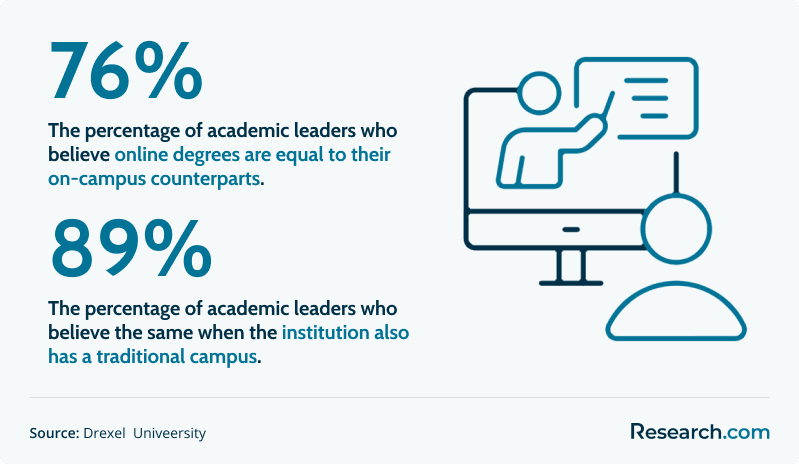
Drexel University’s discussion of online and traditional degrees notes that 76% of academic leaders consider online degrees comparable to campus-based programs, rising to 89% when the online program is connected to an established brick-and-mortar university. This reinforces a practical point: the school behind the online degree matters.
Before enrolling, verify regional accreditation, program outcomes, clinical or practicum arrangements, and whether the degree title on the transcript differs from the campus version. If you are still at the undergraduate stage, reviewing an early childhood education degree online accredited can also help you understand how accreditation affects acceptance by employers and graduate schools.
Online recognition also depends on the career path. A childcare employer may focus on your degree, experience, and leadership ability. A public school district may also require state licensure. A Head Start or early intervention program may have additional credential expectations. Do not assume that an online degree automatically meets every state or employer requirement.
Career changers sometimes compare structured professional pathways in other fields before committing to education. For example, healthcare-oriented readers may benefit from understanding how to become a military nurse if they are weighing service-based clinical careers against classroom-based work.
Career Path for Master’s in Early Childhood Education Graduates
A Master’s in Early Childhood Education can lead to several teaching, specialist, and leadership roles. The best fit depends on whether you want to work directly with children, supervise staff, design programs, support families, or manage early learning operations. Related opportunities also overlap with broader child development careers.
| Role | Typical focus | Average annual salary | Growth rate |
| Preschool Lead Teacher | Leads classroom learning, coordinates activities, supports safety, and communicates with families. | $33,176 | 15% |
| Early Childhood Teacher | Plans learning activities for young children and monitors social, cognitive, and physical development. | $33,205 | 15% |
| Lead Pre-K Teacher | Prepares preschool-aged children for kindergarten through structured curriculum and assessment. | $34,380 | 15% |
| Early Childhood Specialist | Supports educators and families with targeted developmental strategies and program improvement. | $35,575 | 15% |
| Early Head Start Director | Manages services for infants, toddlers, staff, families, and compliance requirements. | $39,448 | 8% |
| Director of Preschool | Oversees preschool operations, staffing, curriculum, parent communication, and safety standards. | $45,132 | 8% |
| Children Director | Coordinates child-focused programming in community, nonprofit, or religious settings. | $48,361 | 5% |
| Preschool and Childcare Center Directors | Runs childcare or preschool facilities, including budgets, regulations, staff, and educational quality. | $54,290 | -2% |
| Early Childhood Services Director | Leads programs that support early development, family engagement, and community partnerships. | $58,450 | 8% |
| Kindergarten and Elementary School Teachers | Teaches foundational subjects and supports student growth in early grades. | $63,670 | -1% |
Preschool Lead Teacher
Preschool Lead Teachers guide classroom instruction, organize daily routines, coordinate with assistant teachers, and create learning experiences that support language, motor, social, and early academic development. They also maintain classroom safety and keep families informed about progress and concerns.
- Average Annual Salary: $33,176
- Minimum Education: Bachelor's degree in Early Childhood Education.
- Growth Rate: 15%
Early Childhood Teacher
Early Childhood Teachers work with children from about ages three to five, using play-based and structured learning to support development. Their responsibilities include lesson planning, observation, progress documentation, classroom management, and communication with parents and colleagues.
- Average Annual Salary: $33,205
- Minimum Education: Bachelor’s degree in Early Childhood Education.
- Growth Rate: 15%
Lead Pre-K Teacher
Lead Pre-K Teachers focus on school readiness. They design age-appropriate activities, assess children’s development, manage the classroom environment, and collaborate with families and staff to help children transition successfully into kindergarten.
- Average Annual Salary: $34,380
- Minimum Education: Bachelor's degree in Early Childhood Education.
- Growth Rate: 15%
Early Childhood Specialist
Early Childhood Specialists often support teachers, families, or programs rather than managing one classroom full time. They may help create learning plans, recommend interventions, coach educators, and align activities with developmental needs for children under five years old.
- Average Annual Salary: $35,575
- Minimum Education: Bachelor's degree in Early Childhood Education or a related field.
- Growth Rate: 15%
Early Head Start Director
Early Head Start Directors supervise programs serving infants, toddlers, and families. Their work can include staff management, compliance, curriculum oversight, family engagement, reporting, and coordination of services that support early development.
- Average Annual Salary: $39,448
- Minimum Education: Bachelor's degree in Early Childhood Education or a related field.
- Growth Rate: 8%
Director of Preschool
Directors of Preschool manage the daily operation of preschool programs. They oversee teachers, maintain safety and education standards, coordinate curriculum, communicate with parents, and often handle budgets, enrollment, and community relationships.
- Average Annual Salary: $45,132
- Minimum Education: Bachelor's degree in Early Childhood Education or a related field.
- Growth Rate: 8%
Children Director
Children Directors lead child-focused programming in organizations such as community centers, nonprofits, or religious institutions. Their role may include scheduling, volunteer or staff supervision, family communication, safety planning, and age-appropriate activity design.
- Average Annual Salary: $48,361
- Minimum Education: Bachelor's degree in Early Childhood Education, Child Development, or a related field.
- Growth Rate: 5%
Preschool and Childcare Center Directors
Preschool and Childcare Center Directors are responsible for overall facility operations. They supervise employees, manage budgets, ensure regulatory compliance, support curriculum quality, and create safe learning environments for young children.
- Average Annual Salary: $54,290
- Minimum Education: Bachelor's degree in Early Childhood Education or a related field.
- Growth Rate: -2%
Early Childhood Services Director
Early Childhood Services Directors oversee programs that support children’s learning, development, and well-being. Their work may involve staff leadership, family partnerships, service coordination, community collaboration, and program evaluation.
- Average Annual Salary: $58,450
- Minimum Education: Bachelor's degree in Early Childhood Education or a related field.
- Growth Rate: 8%
Kindergarten and Elementary School Teachers
Kindergarten and elementary school teachers teach core subjects, monitor academic and social development, create lesson plans, assess student progress, and build classroom environments that support learning and confidence.
- Average Annual Salary: $63,670
- Minimum Education: Bachelor's degree in Elementary Education.
- Growth Rate: -1%
How much can I make with a Master’s in Early Childhood Education?
Salary outcomes vary by job title, employer, state, school funding, experience, licensure, and whether the role is classroom-based or administrative. Among the roles listed in this guide, reported average annual salaries range from $33,176 to $63,670.
Leadership and school-based teaching roles may offer higher pay than some classroom preschool roles. For example, Preschool and Childcare Center Directors are listed at $54,290, Early Childhood Services Directors at $58,450, and Kindergarten and Elementary School Teachers at $63,670. These figures should be treated as planning estimates, not guaranteed outcomes.
Some education-adjacent careers require different preparation and can have different salary profiles. For comparison, the reported educational psychologist salary is approximately $78,780, showing how specialization, licensure, and role type can affect earnings within education and child development fields.
The chart below summarizes earning potential across related early childhood education roles and shows why job title matters when evaluating return on investment.
Which industries are best for graduates of a Master’s in Early Childhood Education?
Graduates are not limited to preschool classrooms. Early childhood expertise is valuable anywhere organizations serve young children, support families, design educational products, or manage developmental programs. The best industry depends on whether you prefer direct teaching, administration, family services, policy, consulting, or curriculum work.
- Educational Services: Schools, preschools, and early learning programs need educators who understand developmentally appropriate instruction.
- Childcare Services: Daycare centers and preschool programs may hire graduates for classroom leadership, director, or quality improvement roles.
- Healthcare: Pediatric and community health settings may use education professionals to support developmental education and family guidance.
- Social Services: Family support organizations, child welfare programs, and early intervention services rely on child development knowledge.
- Public Administration: Local, state, and federal agencies may need professionals who can help design, monitor, or improve early learning initiatives.
- Non-Profit Organizations: Child development, education access, and family advocacy groups often need program managers and education specialists.
- Corporate Training and Development: Some organizations design family-focused programming, child enrichment resources, or community outreach education.
- Consulting: Experienced graduates may advise schools, childcare providers, startups, or education organizations.
- Research and Development: Early childhood professionals can help evaluate practices, curricula, and policies.
- Technology and Educational Software Companies: Edtech companies may need specialists who understand how young children learn and interact with digital tools.
| If you want... | Consider these settings | Best fit for |
| Daily work with children | Preschools, Pre-K classrooms, elementary schools | Educators who enjoy classroom interaction and direct developmental support |
| Leadership and operations | Childcare centers, preschool programs, Head Start settings | Professionals comfortable supervising staff, budgets, compliance, and families |
| Family and community impact | Nonprofits, social services, public programs | Graduates interested in access, intervention, advocacy, and family engagement |
| Curriculum or product design | Educational publishers, edtech companies, consulting firms | Educators who like lesson design, research translation, and instructional tools |
The chart below highlights industries where Education and Childcare Administrators, Preschool and Daycare can earn the most, which can help graduates compare compensation by employment setting.
Which states are best for graduates of a Master’s in Early Childhood Education?
The best state for an early childhood education graduate depends on salary, cost of living, state licensure rules, public funding, demand for early learning services, and available employers. A high salary may not translate into stronger purchasing power if housing and everyday costs are also high.
Best states for graduates of a Master’s in Early Childhood Education
- New York
- California
- Massachusetts
- Washington
- New Jersey
- Virginia
- Illinois
- Connecticut
- Minnesota
- Maryland
These states are often attractive because of their early childhood systems, education infrastructure, and professional opportunities. However, graduates should compare state licensure rules, childcare regulations, salary levels, and living costs before relocating.
| State selection factor | Question to ask | Why it affects your decision |
| Licensure | Does this degree meet the state’s teaching or director requirements? | Licensure rules can vary, especially for public school teaching roles. |
| Cost of living | Will the salary support housing, transportation, childcare, and debt repayment? | A higher wage may be offset by higher expenses. |
| Employer mix | Are there public schools, private preschools, Head Start programs, nonprofits, or agencies hiring? | More employer types can improve job flexibility. |
| Professional development | Are there state-supported training networks or advancement pathways? | Ongoing development can support promotion and specialization. |
The chart below ranks top-paying states for Education and Childcare Administrators in preschool and daycare settings by average annual salary.
What is the job outlook for graduates of Master’s in Early Childhood Education?
The job outlook is mixed by role. Some positions connected to early childhood teaching and specialization show stronger growth, while certain administrative and elementary teaching roles show declines. This makes it important to choose a program and career path based on your target occupation, not only on the general appeal of the degree.
Preschool Lead Teacher, Early Childhood Teacher, Lead Pre-K Teacher, and Early Childhood Specialist roles all report a growth rate of 15%. These roles align closely with classroom instruction, developmental support, and specialized early learning services.
Other roles show moderate positive growth. Early Head Start Director, Director of Preschool, and Early Childhood Services Director are listed at 8%, while Children Director is listed at 5%. In contrast, Preschool and Childcare Center Directors show a growth rate of -2%, and Kindergarten and Elementary School Teachers show -1%.
The differences reflect the importance of local labor markets, funding, program enrollment, and role requirements. A master’s degree may improve competitiveness, but it does not guarantee job growth in every occupation.
The chart below compares job growth rates across early childhood education roles so readers can identify stronger and weaker employment outlooks.
Is a Doctorate in Education a Valuable Next Step for Early Childhood Educators?
A doctorate may be valuable if your goals extend beyond classroom teaching or center-level leadership. Doctoral programs can support preparation for research, senior administration, teacher education, policy analysis, university instruction, or large-scale program design. For many educators, however, a doctorate is not necessary unless the desired role clearly requires or strongly rewards it.
Before applying, compare accreditation, dissertation or capstone expectations, faculty expertise, research support, and how the degree connects to your professional goals. Educators seeking flexible and lower-cost doctoral pathways can review online EdD programs as one possible starting point.
Is a Master’s in Early Childhood Education worth it?
A Master’s in Early Childhood Education is worth considering when it directly supports a role you want, meets accreditation and licensure requirements, and can be completed at a cost that fits your expected earnings. It is not automatically worth it for every educator.
The tuition benchmark cited earlier is $19,395 for graduate programs, not including books, supplies, fees, living costs, or possible lost wages. On the earnings side, related roles in this guide range from $33,176 to $63,670. That means return on investment depends heavily on whether the degree helps you move into a higher-paying role, qualify for leadership, receive salary schedule credit, or access work that would otherwise be unavailable.
The degree may be a strong fit if you plan to stay in early childhood education, want leadership responsibilities, need a graduate credential for advancement, or want a foundation for doctoral study. It may be a weaker fit if your employer does not reward graduate study, you are unsure about remaining in education, or you choose an expensive program without checking outcomes.
| Choose this degree if... | Be cautious if... |
| You want to specialize in birth-to-eight learning and development. | You are mainly pursuing the degree because it sounds broadly useful. |
| Your employer, district, or state rewards graduate education. | Your target role does not require or value a master’s degree. |
| You want to move into director, specialist, curriculum, or program roles. | You have not compared salaries with tuition and debt repayment. |
| The program is accredited and fits your licensure goals. | You have not confirmed whether the program meets state requirements. |
| You need a flexible online or part-time format while working. | The program requires fieldwork you cannot complete because of schedule or location limits. |
How Can Interdisciplinary Approaches Enhance Classroom Innovation?
Early childhood classrooms benefit when educators draw from language development, storytelling, the arts, movement, psychology, family studies, and technology. Young children learn through multiple channels, so interdisciplinary teaching can make lessons more engaging and developmentally responsive.
For example, educators with strong writing and storytelling skills may design richer read-alouds, dramatic play activities, and language-building lessons. Readers interested in that type of creative skill development can compare education training with a creative writing online degree to see how narrative techniques can support communication and literacy instruction.
How Can I Identify Programs That Offer Both Quality and Affordability?
A good program is not simply the cheapest option. Quality and affordability should be judged together. Start with accreditation, curriculum relevance, faculty qualifications, fieldwork support, student services, completion expectations, and whether the program aligns with licensure or career advancement goals.
Then compare tuition, fees, financial aid, employer reimbursement, transfer credit policies, and part-time options. If affordability is a priority, reviewing affordable online master's in education programs can help you understand how education degrees differ in price and format.
What Are the Emerging Trends Shaping Early Childhood Education?
Early childhood education is being shaped by technology use, more individualized instruction, stronger attention to social-emotional development, family engagement, inclusion, and data-informed assessment. These trends do not replace responsive teaching, but they do change the skills educators need.
Digital tools are increasingly used to document learning, communicate with families, and support differentiated instruction. At the same time, educators must be careful not to overuse screens or adopt technology that is not developmentally appropriate. Strong programs should teach candidates how to evaluate tools, not just how to use them.
Interdisciplinary knowledge is also becoming more valuable. Professionals who work with literacy, information access, and children’s learning environments may explore areas such as masters in library science to broaden their instructional and research skills.
How Can Accelerated Degree Options Impact Career Advancement?
Accelerated programs can shorten the time between enrollment and credential completion, which may help educators move more quickly toward promotion, licensure advancement, or specialized roles. The trade-off is intensity. Compressed courses can be demanding, especially for students who are teaching full time or managing family responsibilities.
Before choosing an accelerated option, ask about weekly workload, field placement timing, transfer credit, course sequencing, and whether the faster pace affects access to faculty or advising. Readers comparing fast routes into teaching can review how fast can you get a teaching credential for additional context on expedited education pathways.
What Challenges Do Graduates Face When Entering the Workforce?
Graduates may face practical challenges that a degree alone cannot solve. Early childhood settings often require strong classroom management, family communication, documentation, patience, cultural responsiveness, and the ability to work within limited resources.
New graduates may also discover that leadership roles require budgeting, staff supervision, licensing compliance, and conflict resolution. Building a professional network, seeking mentorship, and gaining experience during the degree can make the transition easier.
Communication skills are especially important for family engagement, reports, curriculum writing, and advocacy. Some professionals strengthen those abilities through complementary study, such as a low cost bachelor's degree in English online, though additional credentials should be pursued only when they clearly support a career goal.
How Can Interdisciplinary Approaches Broaden Early Childhood Education?
Early childhood education connects with public policy, health, social services, literacy, family support, and community planning. Graduates who understand these connections may be better prepared to lead programs, collaborate across agencies, and advocate for young children and families.
For example, policy and governance knowledge can help educators understand funding, regulation, and program administration. Professionals who want that broader perspective may compare education-focused study with an affordable online political science degree to understand how policy analysis can complement early childhood leadership.
Can Complementary Credentials Broaden My Career Opportunities?
Complementary credentials can help when they add a skill that your master’s program does not fully cover. Useful areas may include special education, speech and language development, trauma-informed practice, bilingual education, instructional technology, assessment, or program administration.
The key is to avoid collecting credentials without a plan. Ask whether the credential is recognized by employers, required for the role, connected to salary advancement, or useful for serving children more effectively. Educators interested in language and communication support may consider whether a speech pathologist degree online aligns with their long-term goals.
What Do Graduates Say About Their Master’s in Early Childhood Education?
- Leila described the degree as a turning point in her teaching practice because it gave her a stronger understanding of child psychology, development, and advanced instructional strategies. She said the experience helped her connect more effectively with young learners. Leila
- Jayson valued the online format because it allowed him to keep teaching while studying. He found that applying coursework immediately in his classroom made the program more practical and relevant. Jayson
- Anita said the master’s strengthened both her credentials and her ability to design preschool curriculum around children’s developmental needs. She viewed the degree as an important step in her career growth. Anita
Are Further Credentials Worth Pursuing After Earning Your Master’s?
Additional credentials can be useful when they lead to a specific career outcome. Certifications in curriculum design, special education, early intervention, literacy, administration, or child development assessment may help educators qualify for specialized positions or leadership responsibilities.
However, further study should be evaluated like any investment. Compare the cost, time, employer recognition, and expected career benefit. Professionals who want to understand higher-paying education pathways can review high-paying jobs with a master's in education before deciding whether another credential is likely to improve advancement.
What Funding Options are Available for Advanced Degrees?
Students considering doctoral or additional graduate study should look for scholarships, grants, employer tuition assistance, assistantships, fellowships, payment plans, and public service-related aid where available. Funding options vary by school and program, so applicants should ask financial aid offices for degree-specific information rather than relying only on general tuition pages.
For doctoral study, some programs may offer structured support or lower-cost online pathways. Educators exploring advanced leadership credentials can compare options such as fully funded EdD programs online while carefully verifying funding terms, eligibility, and academic expectations.
How Do I Choose a Quality Master’s Program in Early Childhood Education?
Choosing a program should start with fit, not rankings alone. The right program is accredited, affordable for your budget, aligned with your state and career goals, and structured around how you actually learn and work.
- Confirm accreditation. Make sure the institution is properly accredited and that the program meets any relevant licensure or employer requirements.
- Match the curriculum to your goal. A classroom teacher, director, curriculum specialist, and future doctoral student may need different coursework.
- Ask about fieldwork. Online programs may still require in-person observations, practicum hours, or local placements.
- Compare total cost. Include tuition, fees, books, technology, travel, and time away from work.
- Review faculty and support. Look for advising, career services, licensure guidance, and faculty with early childhood expertise.
- Check outcomes. Ask about completion rates, graduate employment, licensure exam support if relevant, and employer partnerships.
- Evaluate flexibility honestly. A fast or online program is helpful only if you can keep up with the workload.
When comparing costs, it can be useful to see how other online degree pages explain tuition and affordability. For a cross-field example, review what is the cost of creative writing degree and apply the same cost-checking discipline to education programs.
| Common mistake | Better approach |
| Choosing a program because it is online without checking accreditation. | Verify institutional accreditation and program relevance before applying. |
| Looking only at tuition. | Calculate fees, materials, technology, travel, fieldwork costs, and lost income. |
| Assuming every online program meets licensure rules. | Contact the program and your state licensing agency before enrolling. |
| Relying only on rankings. | Use rankings as one input, then check curriculum, outcomes, support, and cost. |
| Assuming a master’s guarantees a salary increase. | Ask your employer or target employers how graduate degrees affect pay and promotion. |
| Ignoring transfer credit policies. | Ask whether prior graduate credits, certificates, or professional learning can reduce time or cost. |
References:
- Bureau of Labor Statistics. Kindergarten and Elementary School Teachers.
- Bureau of Labor Statistics. Preschool and Childcare Center Directors.
- College Tuition Compare. Early Childhood Education and Teaching.
- Drexel University Online. Online Degree vs. Traditional Degree.
- Education Data. Average Cost of College.
- Zippia. Children's Director Jobs.
- Zippia. Director of Preschool Jobs.
- Zippia. Early Childhood Services Director Jobs.
- Zippia. Early Childhood Specialist Jobs.
- Zippia. Early Childhood Teacher Jobs.
- Zippia. Early Head Start Director Jobs.
- Zippia. Lead Pre-K Teacher Jobs.
- Zippia. Preschool Lead Teacher Jobs.
Key Insights
- A Master’s in Early Childhood Education is best for educators who want deeper expertise in birth-to-eight learning, leadership, curriculum, or early childhood program administration.
- The reported average graduate tuition is $19,395, but total cost should also include fees, materials, technology, fieldwork expenses, and possible lost income.
- Online degrees can be respected by employers when the institution is accredited and credible; Drexel University reports that 76% of academic leaders view online degrees as comparable to campus programs, increasing to 89% for online programs tied to established brick-and-mortar universities.
- Salary varies widely by role. Listed averages range from $33,176 for Preschool Lead Teachers to $63,670 for Kindergarten and Elementary School Teachers.
- Job outlook is not uniform. Several early childhood roles show 15% growth, while Preschool and Childcare Center Directors show -2% and Kindergarten and Elementary School Teachers show -1%.
- The degree is most likely to be worth it when it meets accreditation and licensure needs, fits your work schedule, and connects directly to a role or salary pathway you have verified.
- Before enrolling, ask schools about accreditation, state requirements, field placements, total cost, graduate outcomes, transfer credits, and employer recognition.
Other Things You Should Know About Master’s in Early Childhood Education
With a Master’s in Early Childhood Education, you can pursue advanced roles such as curriculum developer, education consultant, or early childhood program director. These positions often involve shaping educational policies, designing educational programs, and leading teams in educational settings.
In 2027, a Master's in Early Childhood Education can lead to innovative roles like curriculum designer or educational consultant, where one can create innovative teaching materials or advise on educational practices and policies.
Yes. Public pre-K teachers usually need a state teaching license or early childhood credential in addition to the master’s degree. Most states require a bachelor’s degree, supervised student teaching, passing scores on state exams, and a criminal background check before issuing or renewing licensure.


