
2027 How to Become a Military Nurse

Co-Founder and Chief Data Scientist
Becoming a military nurse means choosing two careers at once: registered nursing and commissioned military service. You are not only caring for patients; you are also joining a structured officer corps with fitness standards, deployment expectations, leadership duties, and branch-specific requirements. For students, licensed RNs, veterans, and career changers, the main decision is not simply “Can I become a military nurse?” but “Which route, branch, specialty, and education plan make sense for my goals and family?”
This guide explains how military nursing works in the United States, what qualifications are commonly expected, how specialties and branches differ, what deployment and training can look like, and how to evaluate education options without overpaying or choosing a program that does not support your long-term plan.
Quick Answer: How Do You Become a Military Nurse?
To become a military nurse, you generally need to earn a nursing degree, pass the NCLEX-RN, hold an active and unrestricted registered nursing license, meet commissioning requirements, satisfy medical and physical standards, and be selected by a military branch. A Bachelor of Science in Nursing (BSN) is typically the preferred or required degree for commissioned nurse roles, although some pathways may allow ADN-prepared nurses to continue toward the BSN.
The most important early steps are to confirm eligibility with a healthcare recruiter, choose an accredited nursing program, maintain a strong academic and clinical record, prepare for the NCLEX-RN, and decide whether direct commissioning, ROTC, an enlisted-to-nurse route, or an advanced practice pathway best fits your background.
Key Things You Should Know About Becoming a Military Nurse
- Education: A BSN is typically expected, along with RN licensure and successful completion of the NCLEX-RN.
- Officer status: Military nurses serve as commissioned officers, so leadership ability, professionalism, and physical readiness matter.
- Branch fit: The Army, Navy, Air Force, and Space Force have different cultures, missions, assignments, and healthcare needs.
- Specialization: Military nurses may work in areas such as emergency care, critical care, flight nursing, mental health, public health, perioperative care, and family practice.
- Civilian benchmark: Registered nurses in the civilian workforce earned a median annual salary of $86,070 in 2023, according to the BLS.
- Advanced practice: Nurse anesthetists, nurse midwives, and nurse practitioners earned a median annual salary of $129,480 in 2023, and these roles typically require graduate education.
- Deployment reality: Military nurses should be prepared for assignments that may include domestic bases, overseas facilities, humanitarian missions, and combat-support environments.
- Benefits: Military nursing can include salary, allowances, healthcare coverage, education support, retirement options, and structured promotion pathways.
- Training: Nurses complete military and specialty training that prepares them for clinical work under military standards and operational conditions.
- Leadership: Advancement often requires leading teams, managing resources, mentoring personnel, and operating within a chain of command.
- Lifestyle: Frequent moves, deployments, family adjustments, and a strong service community are part of the career.
- Transition planning: Military experience can translate well to civilian nursing, but nurses should document certifications, leadership roles, clinical scope, and specialty experience before separating.
- What does a military nurse do?
- What qualifications do military nurses need?
- Which military nursing specialties are available?
- How should you choose a military branch?
- What should military nurses expect during deployment?
- How much do military nurses earn and what benefits are available?
- How does the military nursing application process work?
- How can military nurses advance their careers?
- Does advanced education help military nurses move up?
- Can non-nurses enter military nursing?
- What training do military nurses complete?
- How does retirement work for military nurses?
- Can a dual degree improve leadership impact?
- How does military nursing affect daily life and family?
- What financial aid can support military nursing education?
- Are affordable online options available for specialty preparation?
- Can a fast-track RN to BSN help military nurses?
- When do accelerated programs make sense?
- How should you compare military nursing education programs?
- How should you think about ROI for advanced nursing education?
- Are RN to BSN programs without clinical hours useful for military nurses?
What is a military nurse and what are its roles and responsibilities?
A military nurse is a licensed registered nurse who serves in a branch of the armed forces and provides care within military healthcare systems. Patients may include active-duty service members, military families, retirees, veterans, and, in certain missions, civilians affected by disasters, conflict, or humanitarian crises.
The role combines clinical care with military readiness. A military nurse may work in a hospital on a base, a stateside military treatment facility, a shipboard or aviation-related setting, a deployment location, a field medical unit, or a public health environment. The work can be routine one month and operationally intense the next.
- Clinical nursing care: Military nurses assess patients, administer medications, coordinate treatment, manage documentation, educate patients, and support recovery across inpatient, outpatient, surgical, emergency, and specialty settings.
- Emergency and trauma response: Some nurses support urgent care, battlefield injury management, disaster response, evacuation care, or mass-casualty preparation.
- Health readiness and prevention: Nurses help keep service members medically ready through immunizations, screenings, education, chronic disease support, and preventive care.
- Leadership duties: Because nurses are officers, many supervise teams, coordinate shifts, mentor junior personnel, and contribute to unit readiness.
- Operational and global health support: Nurses may participate in missions that involve partner nations, military families overseas, humanitarian operations, or public health initiatives.
Military nursing is a good fit for people who want clinical responsibility, structured advancement, and a service mission. It is less ideal for someone who wants complete control over location, schedule, and patient population. Nurses who are also interested in healthcare technology leadership may eventually explore adjacent paths such as healthcare IT management, especially as military hospitals rely heavily on secure patient data systems, cybersecurity, and medical technology.
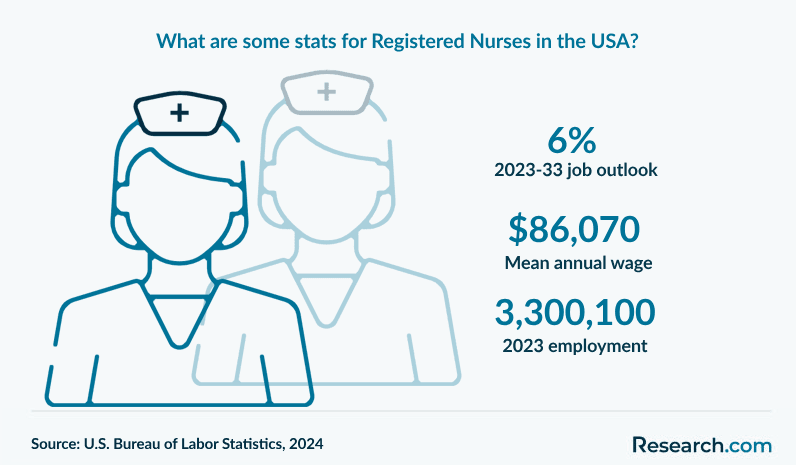
For civilian context, the Bureau of Labor Statistics reported that registered nurses earned a median annual salary of $86,070 in 2023, equal to $41.38 per hour. The RN workforce included 3,300,100 positions in 2023, and employment is projected to grow 6% from 2023 to 2033. These figures do not define military pay, but they provide a useful baseline when comparing military service with civilian nursing options.
How do I qualify for a military nursing career in the USA?
Military nursing eligibility starts with professional nursing qualifications, then adds military commissioning standards. Requirements can vary by branch, specialty, accession program, and current staffing needs, so applicants should verify details with an official healthcare recruiter before committing to a degree plan or timeline.
In general, applicants need the right nursing education, an RN license, physical and medical eligibility, U.S. service eligibility, and evidence that they can function as officers in a military healthcare environment.
| Requirement Area | What It Usually Means | Why It Matters |
| Nursing degree | A BSN from an accredited program is typically expected for commissioned nurse roles. | The BSN supports clinical preparation, leadership coursework, and officer-level expectations. |
| RN licensure | You must pass the NCLEX-RN and hold an active, unrestricted RN license in the United States or one of its territories. | Licensure confirms minimum competency to practice as a registered nurse. |
| Academic record | A competitive GPA and strong clinical evaluations can strengthen an application. | Selection boards often evaluate both academic readiness and professional potential. |
| Physical and medical standards | Applicants must satisfy military fitness, health, and medical review requirements. | Nurses may need to work in physically demanding or austere settings. |
| Officer potential | Leadership, judgment, communication, ethics, and adaptability are evaluated. | Military nurses are expected to lead, not only provide bedside care. |
Here are the most common education and licensure routes to understand:
- BSN route: A Bachelor of Science in Nursing is the clearest academic pathway for most applicants who want to commission as military nurses.
- ADN-to-BSN route: An ADN may be considered in limited circumstances, but nurses are often expected to complete the BSN. If you already hold an RN license, comparing the most affordable online RN to BSN programs can help you control cost while meeting degree expectations.
- Accelerated BSN route: Students who already have a non-nursing bachelor’s degree may use an accelerated BSN to move into nursing faster than completing a traditional four-year path.
- Foreign nursing education: Nurses educated outside the United States typically need credential evaluation and may need additional coursework, exams, or licensure steps.
- Continuing education: Military nurses are expected to keep clinical skills current and may pursue specialty certifications, graduate degrees, and leadership development.
People exploring service-related careers sometimes compare nursing with education, counseling, forensic, or public-service fields. If you are still weighing options, Research.com also offers guides on career options with a master’s in early childhood education, substance abuse counselor requirements, and affordable online forensic science programs. These are different paths, but they can help you clarify whether your strongest fit is clinical care, behavioral health, education, investigation, or healthcare leadership.
What are the different nursing specialties in the military?
Military healthcare needs are broad, so nurses can build careers in bedside care, emergency response, mental health, public health, advanced practice, education, administration, and operational medicine. Specialty availability depends on branch needs, experience, credentials, and assignment opportunities.
| Specialty | Typical Focus | Best Fit For |
| Critical care nursing | Care for unstable or seriously injured patients in intensive care and high-acuity settings. | Nurses who handle pressure well and want advanced bedside responsibility. |
| Emergency nursing | Rapid assessment and treatment of acute illness, trauma, and urgent medical needs. | Nurses who prefer fast-paced settings and quick clinical decision-making. |
| Perioperative nursing | Patient care before, during, and after surgery. | Nurses interested in operating rooms, surgical teams, and procedural care. |
| Flight nursing | Care during aeromedical evacuation or transport. | Nurses who want operational, mobile, and high-acuity care environments. |
| Mental health nursing | Assessment and support for conditions such as PTSD, depression, anxiety, and other behavioral health needs. | Nurses drawn to psychological resilience, service member wellness, and family support. |
| Pediatric nursing | Care for infants, children, and adolescents in military family settings. | Nurses who want to support military families and children. |
| OB/GYN nursing | Pregnancy, childbirth, postpartum, and gynecologic health care. | Nurses interested in women’s health and family-centered care. |
| Medical-surgical nursing | Broad care for adult patients with medical and surgical conditions. | Newer nurses building a wide clinical foundation. |
| Community and public health nursing | Prevention, outreach, health education, screening, and population health. | Nurses interested in readiness, prevention, and large-scale health planning. |
| Infectious disease nursing | Disease prevention, outbreak support, and infection management. | Nurses interested in epidemiology, deployment medicine, and infection control. |
| Occupational health nursing | Workplace safety, injury prevention, screenings, and health education. | Nurses who want to support safe military work environments. |
| Advanced practice nursing | Roles such as psychiatric/mental health nurse practitioner, CRNA, family nurse practitioner, and other graduate-level roles. | Experienced nurses willing to pursue graduate education and higher clinical autonomy. |
Public health preparation can be especially useful for nurses interested in readiness, prevention, outbreaks, and community-level planning. Students comparing population health options may review affordable online public health degree programs. Nurses interested in advanced mental health practice can compare affordable online psychiatric nurse practitioner programs, while those drawn to primary care can explore affordable online FNP programs.
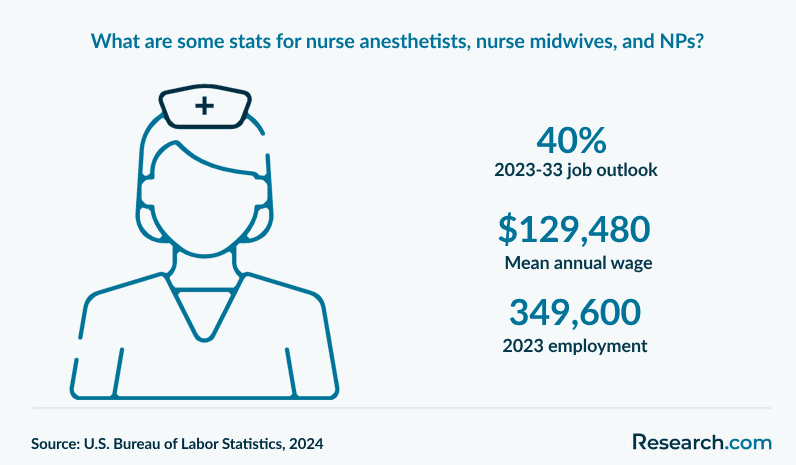
The BLS reported that nurse anesthetists, nurse midwives, and nurse practitioners earned a median annual salary of $129,480 in 2023, or $62.25 per hour. These professions typically require a master’s degree. The workforce included 349,600 jobs in 2023, and employment is projected to grow 40% from 2023 to 2033, with about 141,200 new jobs expected. These figures describe the broader advanced practice market and can help military nurses evaluate whether graduate education may be worth the time and cost.
Which military branch should I choose for my nursing career?
The best branch for your nursing career depends on the kind of patients you want to serve, the environments where you want to work, your tolerance for deployment, your interest in operational medicine, and how each branch uses nurses. Do not choose only by reputation or bonus availability. Choose based on fit.
- Army Nurse Corps: Often associated with large medical systems, field medicine, operational support, and a wide range of clinical assignments.
- Navy Nurse Corps: May include hospitals, ship-related environments, overseas assignments, and care for sailors, Marines, and eligible beneficiaries.
- Air Force nursing: Often emphasizes aerospace-related missions, medical evacuation, base healthcare, and highly structured medical readiness systems.
- Space Force considerations: Applicants interested in the Space Force should confirm current healthcare accession options with official recruiters because nursing opportunities may be organized differently than in longer-established branches.
- Reserve and active-duty options: Active duty offers full-time military service, while Reserve pathways may appeal to nurses who want to maintain a civilian career while serving part time.
Students should also compare commissioning routes. Direct commissioning may work for licensed nurses who already meet degree and experience requirements. ROTC may support students earlier in their education. Enlisted-to-nurse pathways can be relevant for service members who already have healthcare or military experience.
| Path | Who It May Fit | Key Trade-Off |
| Direct commission | Licensed RNs who already meet degree, license, and eligibility standards. | Fastest for qualified nurses, but selection can be competitive. |
| ROTC route | Students planning ahead while completing nursing education. | Can provide structure and support, but creates service obligations and requires early commitment. |
| Enlisted-to-nurse pathway | Current service members who want to move into professional nursing. | May require careful planning around education, command approval, and timing. |
| Reserve nursing | Licensed nurses balancing civilian employment with military service. | Offers flexibility, but still includes training, readiness, and possible activation requirements. |
Financing can also influence your branch and program choice. The Nurse Corps scholarship and loan repayment programs may help some nursing students and nurses reduce education-related debt, though eligibility and obligations should be reviewed carefully.
The Veterans Health Administration is also an important point of comparison for nurses who want to serve military-connected populations without joining active-duty service. The VHA is the largest employer of nursing personnel in the United States, with 119,388 nurses, a 7.7% increase from the previous year. That workforce includes 79,616 RNs, 15,460 LPNs/LVNs, 14,174 Nursing Assistants, 8,705 CNPs, 1,173 CRNAs, 257 CNSs, and 3 CNMs. RNs and LPNs are among the top clinical shortage occupations in the VHA.
Advanced practice nurses comparing faster graduate pathways may also want to review 12-month FNP program options, while confirming whether any accelerated format meets employer, licensure, clinical, and military expectations.
What can I expect from deployment as a military nurse?
Deployment is one of the biggest differences between civilian and military nursing. A deployment may place nurses in overseas hospitals, field medical units, humanitarian missions, evacuation systems, combat-support environments, or other operational settings. The exact experience depends on branch, specialty, assignment, mission, and global events.
- Locations vary: Nurses may work at established medical facilities, deployed clinics, temporary field settings, ships, air evacuation platforms, or partner-nation support missions.
- Conditions can change quickly: Some settings are well equipped; others require practicing with limited space, supplies, staff, or infrastructure.
- Deployment length is not one-size-fits-all: Duration depends on the mission, branch policies, specialty, and operational needs.
- Family preparation is essential: Nurses should understand family readiness resources, communication plans, childcare contingencies, financial planning, and emotional support options before deployment.
- Clinical scope may feel different: Deployed nurses often need adaptability, cross-functional teamwork, cultural awareness, and calm decision-making under pressure.
Before choosing military nursing, ask yourself whether you can tolerate uncertainty, separation from family, changes in living conditions, and assignments based on service needs. These realities do not make the career negative, but they do make it different from most civilian nursing jobs.
What are the benefits and salaries for military nurses?
Military nurse compensation is not calculated like a standard civilian hourly nursing job. Pay depends on rank, years of service, specialty, allowances, bonuses, duty status, and benefits. That makes direct comparison difficult: a civilian job may show a higher wage, while a military role may include housing support, healthcare, education benefits, retirement options, and structured advancement.
- Base pay: Military nurses are paid according to officer rank and years of service.
- Allowances: Housing and subsistence allowances may apply depending on duty status, location, and eligibility.
- Healthcare and insurance: Military benefits can reduce out-of-pocket healthcare exposure for eligible nurses and families.
- Bonuses and loan repayment: Some specialties or accession needs may qualify for incentives, but availability changes and should be confirmed with recruiters.
- Education support: Tuition assistance, specialty training, and graduate education opportunities may be available, often with service obligations.
- Retirement: Long-term service can create retirement benefits, but nurses should understand which retirement system applies to them.
Reported salary figures vary widely by source and role. Army Nurses have been reported between $66,114 and $87,759. Critical Care Nurses average $98,734, while Licensed Practical Nurses average $44,147. Other reported military nurse figures include $78,133 from the Army ROTC Official Page, $63,405 from Military Network, $67,711 to $81,673 from Military to Medicine, and $81,556 from a US Army Recruiting Office. The US Department of Defense reports an average salary of $94,967, while the Army Nurse Corps Association cites $106,455 for Professional Nurses. Registered Nurses at Keller Army Community Hospital average $82,448, and Military Network reports $63,405 for Registered Nurses.
Use these numbers as comparison points, not guarantees. Your actual military compensation depends on the official pay system, rank, specialty, location, incentives, and benefits package in effect when you serve.
How do I apply and get selected for a military nursing position?
The military nursing application process is selective because applicants are being evaluated as both nurses and officers. Strong clinical credentials help, but selection committees also look for leadership, physical readiness, maturity, service motivation, and the ability to operate within military structure.
- Talk with an official healthcare recruiter. Confirm branch-specific requirements, openings, degree expectations, age considerations, medical standards, and commissioning routes.
- Complete or verify your nursing education. Make sure your program is accredited and that your degree supports RN licensure and military eligibility.
- Pass the NCLEX-RN and secure licensure. An active, unrestricted RN license is a core requirement for most nurse accession pathways.
- Prepare documentation. You may need transcripts, proof of citizenship, license information, résumé, recommendations, certifications, medical forms, and other records.
- Complete medical and physical screening. Applicants must meet military health and fitness standards.
- Interview and board review. Be ready to explain why you want military service, how you handle stress, how you lead, and what specialty or branch aligns with your goals.
- Wait for selection and commissioning instructions. The process can take months, so plan around school timelines, current employment, licensing dates, and family obligations.
Common reasons applicants struggle include incomplete paperwork, weak understanding of military service, unresolved licensure issues, unrealistic expectations about assignment control, and inadequate physical preparation.
What are the career advancement opportunities for military nurses?
Military nursing advancement can include higher rank, specialty assignments, charge nurse and unit leadership roles, education and training positions, quality improvement work, command-related responsibilities, and advanced practice roles. Progression is tied not only to clinical performance but also to officer evaluations, leadership record, professional development, readiness, and branch needs.
If you are not yet a nurse and want to understand the fastest practical entry routes, Research.com’s guide to the fastest way to become a nurse can help you compare entry-level timelines before pursuing military-specific options.
Can advanced education further my military nursing career?
Advanced education can help military nurses qualify for specialized clinical practice, leadership, education, research, administration, and quality improvement roles. A DNP may be useful for nurses who want to lead evidence-based practice, improve systems of care, or move into advanced clinical leadership. However, graduate study should be evaluated against service obligations, tuition cost, clinical placement requirements, promotion timing, and branch needs.
Nurses seeking flexible doctoral options can compare short online DNP programs, but they should verify accreditation, clinical requirements, state authorization, and whether the program supports their intended specialty.
Can non-nurses transition directly into military nursing?
Non-nurses cannot simply join as military nurses without becoming licensed nurses first. They must complete an approved nursing education pathway, qualify for RN licensure, pass the NCLEX-RN, and then meet military commissioning standards. For students who already hold a bachelor’s degree in another field, accelerated BSN or direct-entry graduate nursing pathways may be worth comparing.
A direct-entry MSN online program may appeal to career changers, but applicants should be cautious. Not every direct-entry program leads to the same licensure outcomes, not all online formats are available in every state, and military eligibility may still depend on branch-specific degree and licensure rules.
What kind of training is involved in military nursing?
After selection, military nurses complete training that introduces them to military expectations, leadership, discipline, customs, and operational readiness. They may also complete specialty-specific clinical training depending on assignment and career path.
- Officer training: New nurse officers learn military structure, leadership principles, ethics, communication standards, and branch-specific expectations.
- Basic Officer Leadership Course: Army nurses, for example, may complete BOLC to build military leadership and operational knowledge.
- Specialty preparation: Nurses assigned to critical care, perioperative nursing, flight nursing, emergency care, or other specialties may receive additional training.
- Ongoing clinical development: Military nurses must maintain competency through continuing education, certifications, unit training, and clinical practice.
- Physical and mental readiness: Training also supports resilience, fitness, stress management, and performance in challenging environments.
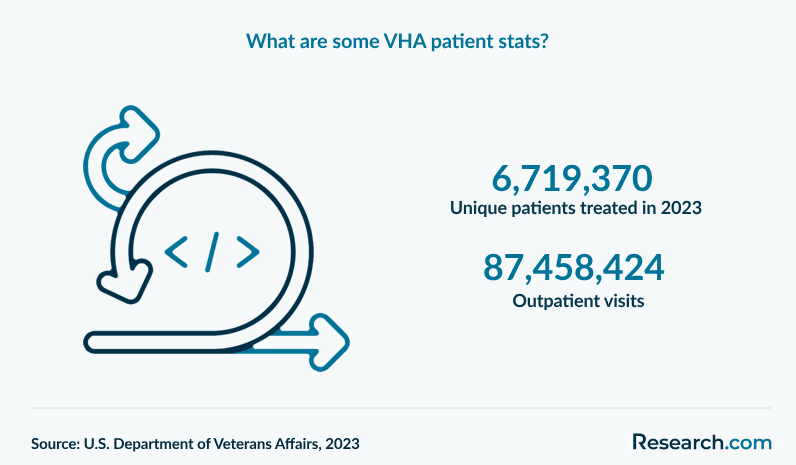
In 2023, the Veterans Health Administration provided care to 6,719,370 unique patients and supported 87,458,424 outpatient visits. Those figures show the scale of military-connected healthcare and why nurses with strong training, adaptability, and systems awareness remain essential.
How does military retirement work for nurses?
Military retirement can be a major long-term advantage, but it is not automatic for every nurse who serves. Retirement eligibility and benefits depend on years of service, duty status, retirement system, and applicable military policies.
- Service length: Military retirement commonly requires at least 20 years of qualifying service, which may involve active duty, Reserve service, or a combination depending on the situation.
- Retirement pay: Retirement income is generally tied to years of service and pay calculations based on rank and service history.
- Legacy Retirement: This system applies to those who entered service before 2018 and provides a defined benefit based on service time and final pay structure.
- Blended Retirement System: Introduced in 2018, the BRS combines a defined benefit with a defined contribution element through the Thrift Savings Plan.
- Thrift Savings Plan: The TSP functions similarly to a 401(k), allowing service members to contribute to retirement savings and potentially receive government matching contributions when eligible.
- Healthcare after service: Retired military nurses and eligible family members may continue healthcare coverage through TRICARE.
Nurses should ask for retirement briefings early, not only near separation. The best decisions about TSP contributions, graduate education obligations, Reserve participation, and career length often require long-term planning.
Could dual degree programs boost my strategic impact in military nursing?
A dual degree can be valuable for nurses who want to move beyond clinical practice into executive leadership, healthcare operations, budgeting, policy, or system improvement. An MSN/MBA combination may help nurses connect patient care decisions with staffing, finance, logistics, and organizational strategy.
This route is not necessary for every military nurse. It makes the most sense for nurses aiming at administration, command-level healthcare leadership, resource management, or senior roles after military service. If that aligns with your goals, compare online MSN MBA dual degree programs and pay close attention to accreditation, workload, practicum requirements, and employer recognition.
What is it like to be a military nurse and how does it affect my family?
Military nursing can be professionally meaningful, but the lifestyle is demanding. Nurses and families must be ready for moves, separations, changing assignments, unfamiliar communities, and a chain-of-command culture that is different from civilian healthcare employment.
| Lifestyle Factor | What to Expect | Question to Ask Before Joining |
| Relocation | Assignments may require moving to new bases, states, or countries. | Can my household adapt to repeated moves? |
| Deployment | Separation from family and work in operational environments may occur. | Do we have a practical family readiness plan? |
| Work schedule | Clinical shifts, readiness events, training, and mission needs can affect predictability. | How will I handle schedule changes and high-demand periods? |
| Community | Military life can create strong peer networks and shared purpose. | Am I comfortable joining a structured service community? |
| Family support | Resources may include readiness groups, counseling, spouse support, and relocation assistance. | Which resources are available at the installations we may use? |
Nurses who later want broader management roles in hospitals, clinics, or military-connected systems may also compare affordable online healthcare administration degree programs.
Here’s What Graduates Have to Say About Their Military Nursing Careers
-
: "
“Military nursing gave me the chance to care for service members and families in places I never expected to work. The assignments were demanding, but the sense of mission, travel, and education benefits helped shape both my career and my personal goals.” Kiana
"
-
: "
“The biggest surprise was how quickly leadership became part of my identity. I developed as a clinician, but I also learned to manage teams, mentor newer nurses, and take responsibility for decisions that affected readiness and patient care.” Marcus
"
-
: "
“Serving overseas changed how I think about nursing. I worked with diverse patients, adjusted to new cultures, and learned to stay flexible. It was not always easy for my family, but the growth was real.” Anya
"
Which financial aid options are available for military nursing education?
Military nursing students and nurses may have access to scholarships, tuition assistance, loan repayment, grants, employer support, federal aid, state aid, and school-based funding. The right option depends on whether you are a pre-licensure student, current service member, reservist, veteran, spouse, or licensed nurse pursuing graduate education.
For advanced practice preparation, some nurses compare affordable online BSN to DNP programs. Cost matters, but it should not be the only factor. A lower-tuition program can still be a poor choice if it lacks proper accreditation, has weak clinical placement support, or does not meet state authorization or licensure requirements.
Are cost-effective online programs available for specialized military nursing roles?
Online programs can help working nurses pursue specialty credentials or graduate study while balancing service obligations, family needs, and relocation. However, online does not always mean flexible, inexpensive, or licensure-ready. Clinical placements, synchronous class times, state restrictions, and military duty schedules can affect whether a program is realistic.
Nurses interested in women’s health can compare affordable online women’s health nurse practitioner programs, while confirming clinical requirements and eligibility in their state or duty location.
Can an RN to BSN fast track program accelerate my military nursing career?
An RN to BSN fast-track program can help ADN- or diploma-prepared nurses complete a bachelor’s degree more quickly. For military nursing, the value is strongest when the program is accredited, affordable, compatible with duty schedules, and recognized for commissioning or advancement purposes.
A fast format is not automatically better. Nurses should compare workload, transfer credit policies, writing expectations, leadership coursework, and whether the program can be completed during deployments or relocations. To compare options, review Research.com’s guide to fast-track RN to BSN online programs.
How can accelerated programs boost my military nursing career?
Accelerated programs can shorten the time needed to enter nursing or move into advanced practice, but they are intensive. They work best for students who have strong academic preparation, reliable time management, financial planning, and the ability to handle condensed coursework and clinical expectations.
For licensed nurses considering advanced practice, accelerated FNP programs may be worth reviewing. Before enrolling, verify accreditation, clinical placement support, state authorization, certification eligibility, and whether the pace is realistic with military obligations.
What should I consider when choosing a military nursing education program?
The best nursing program for a future military nurse is not always the cheapest, fastest, or easiest to enter. It is the program that supports RN licensure, military eligibility, clinical competence, and long-term advancement without creating unnecessary debt or delays.
| Program Factor | Why It Matters | What to Verify |
| Accreditation | Accreditation can affect licensure, transfer credits, graduate admission, and employer recognition. | Confirm institutional and nursing program accreditation before applying. |
| NCLEX preparation | Pre-licensure programs must prepare students for RN licensure. | Ask about NCLEX support, pass-rate reporting, and remediation resources. |
| Clinical placement | Hands-on training is essential for entry-level nursing and many advanced practice roles. | Ask who secures placements and whether sites are available in your location. |
| Military compatibility | Deployments, moves, and duty schedules can interrupt coursework. | Ask about leave policies, online access, transfer flexibility, and advisor experience with military students. |
| Total cost | Tuition is only one part of expense. | Compare fees, books, travel, clinical costs, technology, and lost work time. |
| Career alignment | Not every nursing program supports every military or advanced practice goal. | Confirm that the degree supports your intended role, branch, and licensure pathway. |
Students who need accessible options can examine nursing schools that may be easier to get into, but admission ease should never replace accreditation, clinical quality, licensure outcomes, or military eligibility.
What is the Return on Investment for Advanced Military Nursing Education?
ROI for advanced military nursing education should be measured in more than salary. Graduate education may improve eligibility for advanced practice, leadership roles, specialty assignments, teaching, administration, and civilian opportunities after service. But it can also add tuition costs, clinical hour demands, service obligations, and time away from other priorities.
Before enrolling, compare the total cost of attendance, available military education benefits, required clinical hours, certification eligibility, promotion relevance, and likely career use. Nurses seeking lower-cost doctoral pathways can compare affordable online DNP programs.
Can RN to BSN programs without clinical hours adequately prepare military nurses?
RN to BSN programs without traditional clinical hours can be useful for already licensed RNs because these programs often emphasize leadership, evidence-based practice, public health, quality improvement, policy, and care coordination rather than entry-level bedside skills. They are not a replacement for pre-licensure clinical education, but they may help practicing nurses complete the BSN for advancement or commissioning expectations.
If you are considering this format, confirm that the program is accredited, accepted by your intended employer or branch, and appropriate for your goals. Research.com’s guide to RN to BSN programs with no clinical hours can help you compare this option.
Common Mistakes to Avoid When Planning a Military Nursing Career
- Choosing a nursing program without checking accreditation: Accreditation problems can affect licensure, transfer credits, graduate admission, and employer acceptance.
- Assuming every online program works for military nursing: State authorization, clinical placement, licensure eligibility, and branch recognition still matter.
- Focusing only on tuition: Fees, travel, books, technology, clinical costs, lost income, and required campus visits can change the real cost.
- Ignoring physical requirements: Academic readiness is not enough if you cannot meet medical and fitness standards.
- Waiting too long to speak with a recruiter: Branch needs, eligibility rules, and accession timelines can affect when and how you apply.
- Assuming salary outcomes are guaranteed: Pay depends on rank, service time, specialty, allowances, bonuses, and official pay policies.
- Underestimating family impact: Relocations and deployments require planning, communication, and support systems.
- Choosing a specialty before understanding military demand: Your preferred specialty may not be immediately available or may require experience, training, or graduate education.
Questions to Ask Before You Commit
- Does this nursing program meet RN licensure requirements in the state where I plan to be licensed?
- Is the program properly accredited, and will the military branch I am considering recognize it?
- Which commissioning route fits my current education level: ROTC, direct commission, Reserve, or enlisted-to-nurse?
- What physical, medical, age, citizenship, and background standards apply to my target branch?
- How likely are deployments in the branch and specialty I am considering?
- What service obligation comes with scholarships, bonuses, tuition assistance, or graduate education support?
- Can my family realistically handle relocation, deployment, and schedule uncertainty?
- What civilian career options will this military nursing experience support if I separate later?
Key Insights
- A BSN is usually the safest academic target. ADN-prepared nurses may have options, but the BSN is typically the stronger route for commissioning and advancement.
- Military nurses are officers, not only clinicians. Selection and promotion depend on leadership, readiness, professionalism, and adaptability in addition to nursing skill.
- Branch choice matters. The Army, Navy, Air Force, and Space Force differ in mission, culture, assignments, and healthcare needs, so applicants should compare fit before committing.
- Deployment is a defining feature. Military nursing can involve domestic, overseas, humanitarian, and combat-support settings, so family and personal readiness are essential.
- Advanced education can pay off when tied to a clear role. Graduate degrees are most valuable when they support advanced practice, leadership, command, education, or post-military career goals.
- Use salary data carefully. Registered nurses earned a median annual salary of $86,070 in 2023, while nurse anesthetists, nurse midwives, and nurse practitioners earned $129,480, but military compensation also includes rank-based pay, allowances, benefits, and retirement considerations.
- The VHA illustrates strong nursing demand in military-connected care. The Veterans Health Administration employed 119,388 nurses and treated 6,719,370 unique patients in 2023, showing the scale of veteran healthcare needs.
- The best program is not always the fastest or cheapest. Accreditation, licensure alignment, clinical support, military compatibility, and total cost should guide your decision.
References:
- Bureau of Labor Statistics. (2023). Occupational Outlook Handbook: Registered Nurses. Bureau of Labor Statistics.
- Bureau of Labor Statistics. (2024, August 29). Healthcare Occupations. Bureau of Labor Statistics.
- DataUSA. (2023). Nursing. DataUSA.
- NSIN. (2025, January 13). What is an Average Military Nurse Salary in 2025? NSIN.
- Salary.com. (2025). Army Nurse Corps Association Professional Nurse Salary. Salary.com.
- Salary.com. (2025). Army Nurse Salary in the United States. Salary.com.
- Salary.com. (2024). Army ROTC (Official Page) Nurse Salary. Salary.com.
- Salary.com. (2025). Keller Army Community Hospital Registered Nurse Salary. Salary.com.
- Salary.com. (2024). Military.Com Critical Care Nurse Salary. Salary.com.
- Salary.com. (2025). Military Network Registered Nurse Salary. Salary.com.
- Salary.com. (2025). Military To Medicine Nurse Salary. Salary.com.
- Salary.com. (2025). US Army Retired Licensed Practical Nurse Salary. Salary.com.
- Salary.com. (2024). US Army Recruiting Office Nurse Salary. Salary.com.
- Salary.com. (2025). US Department of Defense Nurse Salary. Salary.com.
- Salary.com. (2025). Army Nurse Salary in the United States. Salary.com.
- Salary.com. (2025). Military To Medicine Nurse Salary. Salary.com.
- U.S. Chamber of Commerce. (2024, January 29). Data Deep Dive: A National Nursing Crisis. U.S. Chamber of Commerce.
- U.S. Bureau of Labor Statistics. (2024). Nurse Anesthetists, Nurse Midwives, and Nurse Practitioners. Occupational Outlook Handbook. U.S. Bureau of Labor Statistics.
- U.S. Department of Defense. (2023). Military Pay Scales. U.S. Department of Defense.
- U.S. Department of Veterans Affairs. (2023). VHA Nursing. U.S. Department of Veterans Affairs.
- U.S. Department of Veterans Affairs, Office of Nursing Services. (2023). Nursing services 2023 annual report. U.S. Department of Veterans Affairs.
Other Things You Should Know About Military Nursing
A current, unrestricted RN license is required before commissioning as a military nurse. Applicants must also hold a BSN from an accredited program recognized by the appropriate nursing board and meet service-specific commissioning standards set by the Army, Navy, or Air Force.
In 2027, to become a military nurse, you must hold an accredited BSN degree, possess a valid RN license, and meet age, health, and citizenship requirements. Completion of officer training is also needed. Additionally, a security clearance may be mandatory depending on the role.


