2027 Easiest Nursing Schools to Get Into

Co-Founder and Chief Data Scientist
The American Association of Colleges of Nursing (AACN, 2024) records that 255,455 students were enrolled in entry-level baccalaureate programs in 2023. Although enrollment dipped in 2022, many still consider nursing a good college major. Therefore, finding a program that is accessible and less competitive can make all the difference to an aspiring nurse’s journey.
This is why many students try to find the easiest nursing schools. These schools offer a pathway that allows them to focus on their studies without facing high academic barriers or fighting for admissions spots. Naturally, students must still meet application requirements, but the criteria for passing are more relaxed.
In this guide, I’ve compiled a list of nursing schools with high acceptance rates to help aspiring nurses select the best institution that fits their needs. Furthermore, I will explore the differences in admission requirements, advantages, curricula, and job pathways between easy and competitive nursing schools to guide you in making more informed decisions.
What are the perks of getting into the easiest nursing schools?
- Easy nursing schools have higher acceptance rates, which help diversify future nurses and offer opportunities to talented students who might otherwise be denied admission.
- With less stringent admission processes, students can begin their nursing education sooner, allowing them to enter the workforce and earn as much as $66,000 to 98,000 yearly.
- Many easy nursing programs offer various BSN degree avenues to help professionals from different backgrounds and industries utilize their skills in nursing and healthcare.
- 2027 List of the Easiest Nursing Schools to Get Into List of Schools
- What are the differences in admission requirements between easy and competitive nursing schools? What are the differences in admission requirements between easy and competitive nursing schools?
- What are the acceptance rates in the easiest vs. competitive nursing schools? What are the acceptance rates in the easiest vs. competitive nursing schools?
- What are the pros and cons of enrolling in the easiest nursing schools? What are the pros and cons of enrolling in the easiest nursing schools?
- Do easier nursing schools still offer quality education? Do easier nursing schools still offer quality education?
- What should I include in my nursing school application to increase my chances? What should I include in my nursing school application to increase my chances?
- What types of nursing programs are the easiest to get into? Types of Programs
- How do the curricula and student experiences differ between the easiest vs. competitive nursing schools? How do the curricula and student experiences differ between the easiest vs. competitive nursing schools?
- How to prepare for nursing school prerequisites? Program Requirements
- Are easier nursing schools accredited to ensure quality education and career success? Are easier nursing schools accredited to ensure quality education and career success?
- Are accredited online nursing programs a credible alternative? Are accredited online nursing programs a credible alternative?
- What bridge programs can support your progression to advanced nursing roles? What bridge programs can support your progression to advanced nursing roles?
- What financial aid options can help manage costs at easier nursing schools? Financial Aid Options
- How to choose the easiest nursing school? How to choose the easiest nursing school?
- What career paths are available for graduates of the easiest nursing schools? What career paths are available for graduates of the easiest nursing schools?
- What is the job market for graduates with a nursing degree? Job Market
- Can you fast-track your nursing career with an easier nursing school? Can you fast-track your nursing career with an easier nursing school?
- Are affordable online FNP programs a viable option for advancing your nursing career? Are affordable online FNP programs a viable option for advancing your nursing career?
- The Easiest RN to BSN Programs for Working Nurses The Easiest RN to BSN Programs for Working Nurses
- Can easier nursing schools pave the way for advanced doctoral studies? Can easier nursing schools pave the way for advanced doctoral studies?
2027 Guide to the Easiest Nursing Schools to Get Into
Getting into nursing school can be difficult even for qualified applicants. Many programs have limited seats, strict prerequisite rules, competitive GPA cutoffs, required entrance exams, and clinical placement constraints. For students who want a realistic route into nursing, schools with higher acceptance rates can offer a more accessible starting point without automatically sacrificing licensure preparation or academic quality.
This guide is for prospective nursing students comparing BSN, RN-BSN, bridge, accelerated, and entry-level nursing pathways. You will learn which schools on this list have more accessible admissions profiles, how to compare them beyond acceptance rate, what accreditation and NCLEX-RN results mean, and how to avoid choosing a program that is easy to enter but not a good fit for your goals.
Quick Answer: What Makes a Nursing School Easier to Get Into?
The easiest nursing schools to get into usually have higher overall acceptance rates, broader admissions criteria, flexible prerequisite policies, multiple entry points, or bridge options for students who already hold healthcare credentials. However, “easy to get into” does not mean the nursing coursework is easy. Accredited nursing programs still require clinical training, science-heavy coursework, and preparation for the NCLEX-RN licensure exam.
The best choice is not simply the school with the highest acceptance rate. Applicants should also compare accreditation, NCLEX-RN pass rates, clinical placement support, tuition, transfer credit policies, program length, and whether the program meets licensure requirements in the state where they plan to practice.
How this list was prepared
Research.com reviewed schools using our published ranking methodology and information from trusted education data sources, including the Integrated Postsecondary Education Data System, Peterson’s database and its Distance Learning Licensed Data Set, College Scorecard, and the National Center for Education Statistics. The goal is to help applicants compare accessible nursing schools using transparent academic, admissions, cost, accreditation, and licensure-related information.
List of Accessible Nursing Schools and Programs
| Rank | School | Acceptance Rate | Cost Information | 2023 NCLEX-RN Pass Rate | Accreditation |
| 1 | The University of North Carolina at Pembroke | 91% | BSN Cost per Credit: $152 (resident); $318.66 (nonresident) | 97% | Commission on Collegiate Nursing Education (CCNE) |
| 2 | Regis University | 100% | BSN Cost per Credit: $1,566 (part-time) | 91.46% | CCNE |
| 3 | The University of Texas at El Paso | 100% | BSN Cost per Credit: $440.30 (resident); $955.90 (nonresident) | 96.49% | CCNE |
| 4 | Georgia State University | 100% | BSN Cost per Semester: $4,474 (resident); $13,993 (nonresident) | 83.64% | CCNE |
| 5 | Oklahoma Wesleyan University | 83% | BSN Cost per Semester: $15,775 (full-time resident) | 83.33% | CCNE |
| 6 | California State University, Fresno | 97% | Yearly Tuition and Fees: $6,980 | 89.39% | CCNE |
| 7 | Lewis-Clark State College | 100% | Cost per Semester: $3,805 (resident); $11,014 (nonresident) | 96.05% | CCNE |
| 8 | Sam Houston State University | 97% | Cost per Credit: $636.60 (resident); $1,046.60 (nonresident) | 93.63% | CCNE |
| 9 | Massachusetts College of Pharmacy and Health Sciences | 98% | Annual Tuition Cost: $56,820 | 86% (Accelerated BSN), 90% (Post-baccalaureate BSN) | CCNE |
| 10 | The University of New Mexico | 97% | Cost per Credit: $526.84 (resident); $1,252.88 (nonresident) | 92.7% | CCNE |
1. The University of North Carolina at Pembroke
The University of North Carolina at Pembroke Department of Nursing offers several nursing pathways, including a four-year pre-licensure BSN. The program is organized into two academic stages. Students first complete 58 semester credit hours in lower-division liberal arts, science, behavioral science, and nursing prerequisite coursework. They then move into 62 semester credit hours of upper-division nursing courses focused on professional nursing practice. Admission into the nursing major happens at the upper-division stage, so applicants need to complete the required lower-division coursework first.
- Degrees Offered:
- Pre-Licensure BSN
- RN-BSN
- RIBN (ADN-BSN dual degree)
- MSN
- RN-MSN
- DNP
- Acceptance Rate: 91%
- BSN Cost per Credit: $152 (resident); $318.66 (nonresident)
- 2023 NCLEX-RN Pass Rate: 97%
- Accreditation: Commission on Collegiate Nursing Education (CCNE)
2. Regis University
Regis University’s nursing school evaluates more than grades alone. Its BSN admissions process considers academic records, healthcare exposure, recommendations, and personal statements. The curriculum emphasizes holistic patient care, ethics, values, and social justice, while Service Learning gives students structured opportunities to connect coursework with community engagement. In addition to traditional and accelerated BSN options, Regis offers the CHOICE Program for healthcare professionals who want to transition into nursing.
- Degrees Offered:
- BSN
- Accelerated BSN (non-BSN)
- MSN
- DNP
- BSN-DNP
- Acceptance Rate: 100%
- BSN Cost per Credit: $1,566 (part-time)
- 2023 NCLEX-RN Pass Rate: 91.46%
- Accreditation: CCNE
3. The University of Texas at El Paso
The University of Texas at El Paso School of Nursing offers a traditional BSN built around an integrated conceptual teaching model. Students move from foundational science into increasingly complex nursing concepts, with coursework addressing patient care across the lifespan. The program emphasizes clinical reasoning, decision-making, and comprehensive nursing care. Its four-semester nursing curriculum can be finished in 15 to 24 months, making it a potentially efficient option for students who have already completed the necessary prerequisites.
- Degrees Offered:
- BSN
- RN-BSN
- MSN
- DNP
- Acceptance Rate: 100%
- BSN Cost per Credit: $440.30 (resident); $955.90 (nonresident)
- 2023 NCLEX-RN Pass Rate: 96.49%
- Accreditation: CCNE
4. Georgia State University
Georgia State University’s nursing programs include a traditional BSN grounded in liberal arts, math, science, language arts, social science, nursing theory, and clinical practice. The full plan spans eight academic semesters. Students spend the first four semesters completing core curriculum and prerequisites, then enter the nursing major for the final four semesters. Training takes place through classrooms, labs, simulation centers, clinical sites, and community-based settings, with an emphasis on connecting theory to clinical judgment.
- Degrees Offered:
- ASN
- BSN
- LPN-BSN
- RN-BSN
- MSN
- RN-MSN
- DNP
- Nursing PhD
- Acceptance Rate: 100%
- BSN Cost per Semester: $4,474 (resident); $13,993 (nonresident)
- 2023 NCLEX-RN Pass Rate: 83.64%
- Accreditation: CCNE
5. Oklahoma Wesleyan University
Oklahoma Wesleyan University’s Department of Nursing offers a BSN that combines technical nursing preparation, scientific coursework, and humanities-based learning. The program also integrates biblical truth and attention to spiritual well-being as part of its approach to patient care. Students train in a simulation lab with multiple mannequins and participate in an annual disaster drill using live actors. The university offers several degree pathways for different types of nurses and also provides an LPN to BSN Scholarship.
- Degrees Offered:
- BSN
- LPN/RN-BSN
- Diploma BSN
- RN-BSN (non-BSN)
- MSN/MBA dual degree
- BSN-DNP
- MSN-DNP
- FNP-DNP
- Acceptance Rate: 83%
- BSN Cost per Semester: $15,775 (full-time resident)
- 2023 NCLEX-RN Pass Rate: 83.33%
- Accreditation: CCNE
6. California State University, Fresno
California State University, Fresno’s nursing program requires at least 120 semester units, with the nursing curriculum delivered over five semesters. Graduates are prepared for nursing licensure eligibility and may also pursue the California Public Health Nurse Certificate. Fresno State serves applicants with previous nursing education, such as LVNs and RNs, as well as students without prior nursing preparation. The Nursing Resource Center gives students a dedicated space to practice, learn, and demonstrate nursing procedures in a professional environment.
- Degrees Offered:
- BSN
- RN-BSN
- MSN
- DNP
- Acceptance Rate: 97%
- Yearly Tuition and Fees: $6,980
- 2023 NCLEX-RN Pass Rate: 89.39%
- Accreditation: CCNE
7. Lewis-Clark State College
Lewis-Clark State College’s BSN program is designed around student support, evidence-based nursing, patient safety, and quality care. Admission considers prerequisite grade patterns and other requirements, so applicants should review the school’s criteria carefully before applying. The program aims to graduate nurses who can serve diverse patient populations, advocate effectively, continue learning throughout their careers, and develop leadership skills.
- Degrees Offered:
- Pre-Licensure BSN
- LPN-BSN
- CC-BSN
- RN-BSN
- MSN Nursing Leadership
- Acceptance Rate: 100%
- Cost per Semester: $3,805 (resident); $11,014 (nonresident)
- 2023 NCLEX-RN Pass Rate: 96.05%
- Accreditation: CCNE
8. Sam Houston State University
Sam Houston State University’s nursing programs include a Pre-Nursing track and an upper-level BSN. Pre-Nursing students complete core curriculum and nursing prerequisite courses at the main campus in Huntsville, Texas. BSN students study at The Woodlands Center, which includes study areas, classrooms, and clinical labs and is located near five major healthcare systems. The BSN combines classroom learning with clinical experience and prepares graduates for NCLEX-RN eligibility.
- Degrees Offered:
- Pre-Nursing
- BSN
- RN-BSN
- LVN-BSN
- Acceptance Rate: 97%
- Cost per Credit: $636.60 (resident); $1,046.60 (nonresident)
- 2023 NCLEX-RN Pass Rate: 93.63%
- Accreditation: CCNE
9. Massachusetts College of Pharmacy and Health Sciences
The Massachusetts College of Pharmacy and Health Sciences School of Nursing offers two BSN routes: an accelerated pathway and a post-baccalaureate pathway. The accelerated 32-month BSN at the Boston campus blends coursework, simulation, patient assessment labs, and clinical exposure at medical and research institutions. The 16-month postbaccalaureate BSN is intended for students who already hold a non-BSN bachelor’s degree and want intensive nursing preparation through labs and clinical experiences in Boston, Worcester, or Manchester.
- Degrees Offered:
- Accelerated BSN
- Post-baccalaureate BSN
- MSN
- RN-MSN
- DNP
- Acceptance Rate: 98%
- Annual Tuition Cost: $56,820
- 2023 NCLEX-RN Pass Rate: 86% (Accelerated BSN), 90% (Post-baccalaureate BSN)
- Accreditation: CCNE
10. The University of New Mexico
The University of New Mexico College of Nursing offers several routes into nursing, including Freshmen Direct-Entry, Pre-Licensure BSN, ADN-BSN dual degree, RN-BSN, and Accelerated 2nd Degree options. The Freshman Direct-Entry pathway guarantees admission for motivated high school seniors who meet specific criteria. Students can work with nursing advisors, engage with faculty, participate in research, join nursing organizations, volunteer, complete community service, and gain clinical experience through the UNM Health System.
- Degrees Offered:
- BSN
- RN-BSN
- MSN
- DNP
- Nursing PhD
- Acceptance Rate: 97%
- Cost per Credit: $526.84 (resident); $1,252.88 (nonresident)
- 2023 NCLEX-RN Pass Rate: 92.7%
- Accreditation: CCNE
What Nursing Graduates Say About Choosing Accessible Programs
- Adeena: "Choosing a nursing school with a more accessible admissions process gave me a realistic path forward. The mix of classroom instruction and clinical training helped me understand difficult material, and the flexible schedule made the workload easier to manage. The supportive environment also helped me form strong personal and professional relationships."
- Kayla: "I needed a clear, practical route into nursing, and a less selective program was the right fit. The admissions staff explained each step, the coursework pushed me without feeling impossible, and my clinical placements helped me connect what I learned in class to real patient care. I felt supported by faculty and classmates from start to finish."
- Rainer: "I was nervous about whether I could get accepted into nursing school, so applying to a more accessible program reduced a lot of stress. My classmates came from many backgrounds, which helped me understand healthcare from different perspectives. Clinical rotations gave me confidence, and I left the program feeling ready to work in the field."
Key Findings
- High acceptance rates can make a nursing school more accessible, but applicants still need to meet prerequisite, clinical, and licensure expectations.
- Accreditation and NCLEX-RN outcomes are more important than acceptance rate alone when judging program quality.
- Bridge, ADN, RN-BSN, LPN-BSN, and accelerated pathways can be easier entry points for students who already have college credits, healthcare experience, or a prior degree.
- Costs vary widely, so students should compare tuition, fees, clinical expenses, commuting, transfer credits, scholarships, and lost work time.
- The nursing job market is favorable in many areas, but burnout, turnover, pay concerns, and workplace conditions should be considered before committing to the field.
How Admission Requirements Differ Between Accessible and Competitive Nursing Schools
Most first-time undergraduate nursing applicants should expect schools to ask for some combination of academic records, test scores, recommendations, essays, interviews, and prerequisite coursework. Common requirements include:
- High school diploma/GED
- Official transcripts
- Cumulative GPA of 2.50+
- SAT/ACT score
- Test of Essential Academic Skills (TEAS) V score of 70%+
- Letters of recommendation
- Personal essay
- Interview
Schools with more accessible admissions may require only some of these items or may apply them with more flexibility. Competitive nursing schools often expect stronger GPAs, commonly around 3.0 to 3.5, and may use higher standardized test or entrance exam expectations to narrow their applicant pools.
Some accessible programs may accept lower TEAS V or Health Education Systems Incorporated (HESI) scores, waive SAT/ACT requirements, or place less emphasis on interviews and essays. Others may allow conditional admission while students finish prerequisites or offer pre-licensure pathways that help applicants complete academic requirements while moving toward registered nurse eligibility.
| Admissions Factor | More Accessible Nursing Schools | More Competitive Nursing Schools |
| Acceptance rate | Often higher, usually designed to admit a broader group of qualified students | Often lower because demand exceeds available seats |
| GPA expectations | May accept applicants near minimum thresholds such as 2.50+ | Often expects stronger records, commonly 3.0 to 3.5 |
| Entrance exams | May allow lower TEAS V or HESI scores, depending on the school | May require higher exam performance |
| Prerequisites | May offer more flexible timing or conditional admission | May require all prerequisites completed before review |
| Non-academic review | May place meaningful weight on healthcare experience, service, essays, and references | May still review these factors but often uses stricter academic screening |
Acceptance Rates: Easiest Nursing Schools vs. Competitive Programs
The easiest nursing schools to get into typically report acceptance rates ranging from 70% to 100%. These schools often aim to widen access to nursing education and may serve applicants who are academically prepared but not competitive for highly selective programs.
Competitive nursing schools often report acceptance rates between 10% and 50%. These programs may receive far more applications than they can accommodate and may admit only applicants with the strongest grades, test scores, healthcare exposure, and prerequisite performance.
Acceptance rate should be treated as a starting point, not a guarantee. A university may have a high institutional acceptance rate while the upper-division nursing major remains selective. This is especially common in BSN programs where students apply once to the university and later apply again to the nursing program.
Students comparing traditional BSN options with flexible completion routes, such as the most affordable online RN to BSN programs, should look at both university-level and nursing-program-level admissions policies.
Pros and Cons of Choosing an Easier Nursing School
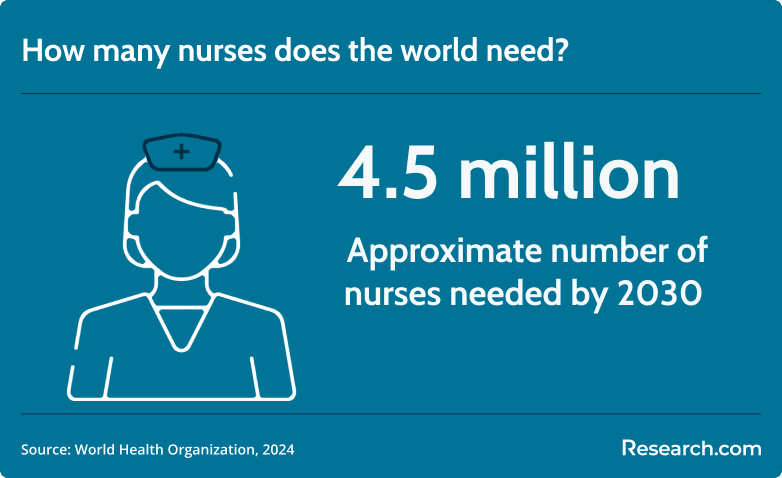
The World Health Organization reports a global need for around 4.5 million nurses by 2030. Accessible nursing schools can help expand the pipeline of trained professionals, but applicants should still examine whether a specific program can support their licensure, clinical, academic, and career goals.
| Potential Benefit | Why It Matters |
| Greater access | Higher acceptance rates can help students with gap years, career changes, non-nursing degrees, or less traditional academic histories enter the field. |
| Less admissions pressure | Lower GPA or test-score thresholds can reduce the stress of applying to extremely selective nursing programs. |
| Holistic review | Some schools value work experience, service, caregiving, leadership, and community involvement alongside grades. |
| Flexible formats | Part-time, evening, online, and bridge options can help working adults and parents complete nursing education. |
| Possible Drawback | What to Check Before Enrolling |
| Reputation concerns | Ask local employers whether they hire graduates from the program and review graduate outcomes when available. |
| Resource limitations | Compare simulation labs, clinical sites, faculty access, tutoring, advising, and career support. |
| Larger cohorts | Find out how many students are assigned to each clinical group and whether course sections fill quickly. |
| Variable outcomes | Review NCLEX-RN pass rates, graduation rates, retention, and clinical placement policies before committing. |
Do Easier Nursing Schools Still Provide a Quality Education?
Yes, many nursing schools with higher acceptance rates can still provide strong preparation, especially when they hold recognized nursing accreditation and report solid NCLEX-RN outcomes. In this context, “easy” usually refers to admissions accessibility, not the academic difficulty of the nursing curriculum.
Accredited nursing programs must still cover essential patient care, clinical reasoning, safety, pharmacology, health assessment, pathophysiology, evidence-based practice, and supervised clinical learning. Many accessible schools also use simulation labs, community-based placements, and hands-on clinical experiences to help students develop entry-level nursing competence.
Flexible formats can also improve access. For example, some students who cannot relocate or attend a traditional daytime program may compare online ABSN programs that combine online coursework with in-person clinical requirements.
The American Association of Colleges of Nursing reports that in 2023, 65,766 qualified applications were turned away by nursing colleges and universities, including 55,111 from entry-level BSN applications. This shows that many students who meet requirements still cannot secure seats, which is one reason accessible, accredited options matter.
How to Strengthen Your Nursing School Application
Even when a nursing school has a high acceptance rate, applicants should submit a careful, complete, and persuasive application. Many programs use holistic review, so your preparation, reliability, healthcare exposure, and motivation can matter.
- Follow instructions exactly: Submit every required form, transcript, test result, recommendation, and prerequisite document by the deadline.
- Show healthcare exposure: Include volunteer work, caregiving, hospital experience, clinic work, long-term care experience, or community health service when relevant.
- Explain your motivation clearly: Use the personal statement to connect your background, goals, and understanding of nursing responsibilities.
- Choose strong recommenders: Ask teachers, employers, healthcare professionals, supervisors, or other credible references who can speak to your work ethic and judgment.
- Document leadership and service: List clubs, organizations, service projects, work responsibilities, or team roles that show maturity and follow-through.
- Prepare for interviews: If the school requires one, practice explaining why nursing, why this program, and how you handle stress, feedback, and patient-centered situations.
- Add basic certifications: CPR or first aid training can show readiness for healthcare environments.
- Consider CNA or MA experience: Becoming a Certified Nursing Assistant (CNA) or Medical Assistant (MA) can build practical skills and may support future entry into CNA-RN or MA to LPN bridge programs online.
Types of Nursing Programs That May Be Easier to Enter
The easiest nursing path depends on your current education, credentials, schedule, and career goal. A recent high school graduate, a working LPN, an RN with an associate degree, and a bachelor’s degree holder changing careers may all need different routes.
| Program Type | Best For | Typical Advantage | Career Direction |
| Associate Degree in Nursing (ADN) | Students who want a faster and often community-college-based route into registered nursing | Usually about two years and focused on foundational nursing practice | Graduates can become RNs after passing the licensure exam |
| Bridge Programs | CNAs, LPN/LVNs, or ADN-prepared RNs who want to advance | Builds on prior education or licensure instead of starting from the beginning | Can support RN licensure, BSN completion, or entry-level leadership options |
| Accelerated BSN (ABSN) | Students with a bachelor’s degree in another field | Can be completed within 12 to 18 months and may include online coursework | Prepares graduates for the nursing licensure exam and RN roles |
Students who already completed college-level general education, healthcare prerequisites, or related coursework may have an advantage. For instance, someone with a social work background or experience from one of the most affordable online counseling degree programs may have already completed relevant general education or human-services coursework.
More advanced programs, including BSN, MSN, DNP, and Nursing PhD options, may apply stricter requirements because they prepare students for expanded clinical, leadership, research, administrative, or academic roles.
According to the 2022 National Nursing Workforce Survey by Smiley et al. (2023), 51.1% of RNs in the U.S. hold a BSN as their highest educational achievement. As employers and schools continue emphasizing BSN preparation, accessible BSN and RN-BSN pathways can be especially important for career mobility.
Curriculum and Student Experience: Accessible vs. Competitive Nursing Schools
Accredited nursing programs tend to cover similar core content because they must prepare students for safe practice and licensure. Differences often appear in program emphasis, clinical partnerships, faculty specialization, cohort size, research opportunities, and student support.
Some accessible nursing schools focus heavily on applied clinical training, community-based practice, simulation, and flexible scheduling. Highly competitive schools may offer more specialized research opportunities, advanced simulation technology, broader faculty expertise, selective clinical placements, or stronger professional networks.
That does not mean a less selective school is a weaker choice. A program with strong advising, reliable clinical placements, responsive faculty, good NCLEX-RN outcomes, and affordable tuition may be a better fit than a prestigious program that is too expensive, too far away, or misaligned with your schedule.
How to Prepare for Nursing School Prerequisites
Nursing prerequisites are not just admissions boxes to check. Courses such as biology, anatomy, chemistry, psychology, and related sciences prepare students for pharmacology, health assessment, pathophysiology, and clinical reasoning. Weak prerequisite preparation can make the nursing major much harder, even if you are admitted.
Students balancing work, caregiving, or relocation limits may compare flexible options for completing science and general education requirements. Researching the most affordable online nursing prerequisites can help applicants find lower-cost options, but transferability must be verified before enrolling.
Before taking prerequisite courses elsewhere, ask each target nursing school whether the credits are accepted, whether lab components must be in person, whether there are grade minimums, and whether science courses expire after a certain number of years.
Why Accreditation Matters More Than Acceptance Rate
Accreditation is one of the most important quality checks for any nursing program. Applicants should confirm that the program holds recognized nursing accreditation from organizations such as the Commission on Collegiate Nursing Education (CCNE) or the Accreditation Commission for Education in Nursing (ACEN).
Accreditation can affect eligibility for licensure, transfer credits, graduate school admission, employer recognition, and preparation for specialized pathways. This is especially important for students who may later pursue advanced practice areas such as psychiatric-mental health nursing through options like the most affordable online PMHNP programs.
Are Accredited Online Nursing Programs Credible?
Accredited online nursing programs can be credible when they meet the same academic, clinical, and licensure-related standards as campus-based options. The key issue is not whether coursework is online; it is whether the program is accredited, approved where required, and able to arrange appropriate clinical learning.
Students comparing accredited online nursing programs should ask how clinical placements are secured, whether the program meets state licensure requirements, how simulation is used, how faculty feedback is delivered, and what support is available for online learners.
Bridge Programs That Can Lead to Advanced Nursing Roles
Bridge programs help nurses move from one credential level to another without repeating unnecessary coursework. ADN-prepared nurses, diploma nurses, LPN/LVNs, and RNs may use bridge pathways to earn a BSN, MSN, or advanced credential more efficiently.
These programs typically combine review of core nursing concepts with higher-level coursework in leadership, research, population health, advanced assessment, or specialty practice. Students interested in long-term advanced practice roles may explore an ADN to MSN bridge pathway as one possible route toward nurse practitioner preparation.
Financial Aid Options for Accessible Nursing Schools
Higher acceptance rates do not automatically mean lower costs. Nursing students should compare tuition, fees, books, uniforms, lab supplies, background checks, immunizations, clinical transportation, testing fees, and potential lost income from reduced work hours.
Common ways to manage cost include federal aid, Pell Grants, subsidized student loans, institutional scholarships, work-study, employer tuition support, state grants, and nursing-specific awards. Students may also compare institutional pathways, including HBCU accelerated nursing programs, to identify schools that may offer specialized support or mission-aligned opportunities.
How to Choose the Right Easy Nursing School
The right program should be accessible, accredited, affordable, and aligned with your licensure and career goals. Use the following criteria before applying or accepting admission.
- Accreditation: Confirm CCNE or ACEN accreditation and check whether the program is approved for nursing licensure in the state where you plan to work.
- NCLEX-RN and graduation outcomes: Review NCLEX-RN pass rates, graduation rates, and retention data to understand whether admitted students are completing the program and passing licensure exams.
- Clinical placement support: Ask whether the school assigns placements or expects students to find their own sites.
- Curriculum structure: Compare course sequencing, simulation hours, clinical expectations, electives, and opportunities for specialization.
- Faculty access: Look for faculty with nursing experience, relevant credentials, research or practice expertise, and availability for advising.
- Student support: Ask about tutoring, skills labs, mental health services, career advising, exam preparation, and support for working adults.
- Total cost: Compare tuition, fees, supplies, transportation, housing, and financial aid instead of focusing only on the advertised tuition rate.
- Schedule fit: Confirm whether classes, labs, simulations, and clinical shifts match your work and family responsibilities.
| Common Mistake | Better Approach |
| Choosing only by acceptance rate | Compare accreditation, NCLEX-RN outcomes, cost, and clinical placement quality. |
| Looking only at tuition | Calculate total attendance costs, including fees, supplies, transportation, and lost work time. |
| Assuming online means fully remote | Verify in-person clinical, lab, and simulation requirements before enrolling. |
| Ignoring state licensure rules | Confirm the program meets requirements in the state where you plan to practice. |
| Assuming credits will transfer | Get written confirmation that prerequisites or prior nursing credits will be accepted. |
| Relying only on rankings | Use rankings as a starting point, then speak with admissions, financial aid, and nursing advisors. |
Career Paths After Graduating From an Accessible Nursing School
Graduates from accredited nursing programs can pursue many healthcare roles, depending on degree level, licensure, experience, and additional credentials. Passing the NCLEX-RN is essential for registered nurse practice after completing an eligible RN-preparation program.
- Registered Nurses (RNs): BSN-prepared graduates who pass the NCLEX can provide direct patient care in hospitals, clinics, long-term care facilities, community health agencies, and related settings.
- Long-Term Care Nurses: These nurses support patients in nursing homes, rehabilitation centers, and assisted living facilities.
- Nurse Midwives and Neonatal Nurses: These specialized roles focus on care for expectant mothers, newborns, delivery support, and postpartum needs.
- Nurse Practitioners (NPs): MSN-prepared advanced practice registered nurses diagnose, treat, and manage acute and chronic conditions in areas such as family care, pediatrics, psychiatric mental health, and geriatrics.
- Nurse Educators: PhD-prepared nurses teach and mentor future nurses through academic and clinical education programs.
- Healthcare Administrators: These professionals manage healthcare operations, staffing, finances, and service delivery. Some nurses compare administrative or leadership pathways with broader leadership credentials while researching topics such as doctor of strategic leadership salary.
Nursing is a strong career path for many students, but it is not the right fit for everyone. If you are still comparing fields or considering a different graduate or professional direction, these related Research.com guides may help:
- easiest doctoral degrees for students considering advanced academic credentials
- easy finance degree programs for applicants interested in business and financial careers
- easy healthcare degree programs for students who want healthcare options beyond nursing
- fastest RN degree programs for students focused on speed to licensure preparation
Job Market Outlook for Nursing Graduates
Graduates from both competitive and more accessible nursing schools enter a field with strong employment demand in many settings. U.S. Bureau of Labor Statistics data cited in this guide projects a 6% increase in RN job opportunities from 2022 to 2032. Nurse practitioners are projected to see a 45% growth rate over the same decade.
According to BLS (2024), major RN employment industries include general medical and surgical hospitals, physicians’ offices, home health care services, outpatient care centers, and employment services. Reed (2024) identified states with notable nurse demand, including Texas (37,740), California (35,000), New York (33,420), Florida (27,390), and Arizona (22,980).
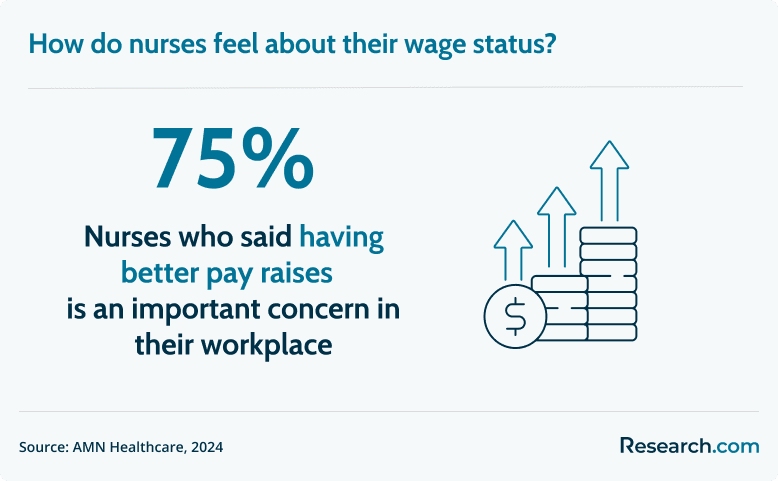
The outlook is promising, but nursing also has real workplace challenges. Some nurses weigh further education against the time and cost involved, including questions such as how much DNPs make a year. AMN Healthcare (2024) reported that 75% of nurses prioritize better pay raises, while the American Nurses Association (2023) noted that 18% of new nurses leave their jobs within the first year.
Before enrolling, applicants should consider both sides of the profession: strong demand and meaningful work, but also shift work, emotional strain, physical demands, staffing concerns, and the need for resilience.
Can an Easier Nursing School Help You Fast-Track Your Career?
Sometimes. A school with flexible admission requirements, multiple start dates, generous transfer policies, or bridge options may help students begin nursing coursework sooner. However, fast does not always mean better. Nursing programs must still provide enough clinical and academic preparation for licensure and safe patient care.
Students who want to move quickly should look for programs that accept prior credits, clearly sequence prerequisites, provide reliable clinical placements, and offer accelerated or bridge tracks without compromising accreditation. Those planning for advanced practice may also research the shortest time to become a nurse practitioner to understand the full education timeline.
Are Affordable Online FNP Programs a Good Next Step?
Affordable online Family Nurse Practitioner programs can be useful for licensed nurses who want advanced clinical roles in primary care, family practice, and community health. These programs generally combine advanced nursing coursework, evidence-based practice, supervised clinical placements, and preparation for expanded responsibility.
Working nurses comparing graduate options may review cheap FNP programs online, but they should verify accreditation, clinical placement expectations, state authorization, certification preparation, and total cost before applying.
Easiest RN to BSN Programs for Working Nurses
RN to BSN programs are often among the most accessible nursing degree options because applicants already hold RN preparation and may be able to transfer a significant number of credits. Many programs are built for working nurses and use online coursework, flexible pacing, and streamlined admissions requirements.
If you are already licensed as an RN and want to complete a bachelor’s degree, comparing the easiest RN to BSN online programs can help you find options that balance convenience with academic quality. A BSN can expand knowledge in leadership, evidence-based practice, community health, and systems-based care.
Can Easier Nursing Schools Lead to Doctoral Study?
Yes. Graduating from a less selective but accredited nursing program can still lead to graduate and doctoral study if you build strong grades, clinical experience, recommendations, and professional credentials. The key is choosing a program that is recognized by employers, licensure boards, and graduate schools.
Nurses who later want leadership, advanced practice, or systems-level roles may compare options such as the fastest DNP programs. Before planning that route, confirm that your undergraduate or graduate nursing degree will meet admission requirements for future doctoral study.
Questions to Ask Before Choosing an Easy Nursing School
- Is the nursing program accredited by CCNE or ACEN?
- Is the program approved for RN licensure in the state where I plan to work?
- What is the program’s 2023 NCLEX-RN Pass Rate, and how has it performed over time?
- Are clinical placements assigned by the school, or must students find them independently?
- How many students are admitted to each cohort, and how many graduate on time?
- What prerequisites are required, and do any expire after a certain period?
- Can I transfer previous college, ADN, LPN/LVN, or healthcare credits?
- What is the full cost, including fees, supplies, testing, clinical expenses, and commuting?
- Does the schedule work with my job, family responsibilities, and transportation limits?
- What academic support is available if I struggle in science, pharmacology, or clinical courses?
Key Insights
- The easiest nursing schools to get into are usually more accessible because of higher acceptance rates, flexible admissions, bridge pathways, or broader applicant review—not because nursing coursework is less demanding.
- Accreditation, NCLEX-RN pass rates, clinical placement support, and state licensure alignment should carry more weight than acceptance rate alone.
- Students with prior healthcare experience, completed prerequisites, an ADN, LPN/LVN licensure, RN licensure, or a non-nursing bachelor’s degree may have more pathway options.
- Program cost should be judged by total attendance expenses, not tuition alone. Fees, supplies, transportation, clinical requirements, and reduced work hours can change affordability.
- Accessible nursing schools can be a smart choice when they are accredited, transparent about outcomes, realistic about clinical requirements, and aligned with the student’s long-term career plan.
References:
- American Association of Colleges of Nursing. (2024, April 15). New AACN data points to enrollment challenges facing U.S. schools of nursing. https://www.aacnnursing.org/news-data/all-news/article/new-aacn-data-points-to-enrollment-challenges-facing-us-schools-of-nursing
- AMN Healthcare. (2024). Nurses in 2024: A brief check-in. https://online.flippingbook.com/view/533072170
- American Nurses Association. (2023, May 19). Nurse retention strategies: How to combat nurse turnover. ANA Nursing Resources Hub. https://www.nursingworld.org/content-hub/resources/nursing-leadership/nurse-retention-strategies
- Reed, E. (2024, March 1). Which states have a nursing shortage? Medical Solutions. https://www.medicalsolutions.com/blog/job-seeker/which-states-have-a-nursing-shortage
- U.S. Bureau of Labor Statistics. (2024, April 3). Occupational employment and wages, May 2023 - Registered nurses. Occupational Employment and Wage Statistics. https://www.bls.gov/oes/current/oes291141.htm
Other Things You Should Know About the Easiest Nursing Schools
In 2027, schools like Southwestern Oklahoma State University and South Dakota State University are noted for high acceptance rates in nursing programs. These institutions may offer more accessible entry, but it's important to confirm any changes in acceptance criteria directly with them.
In 2027, the minimum GPA required for admission into the easiest nursing schools typically ranges from 2.0 to 2.5. These schools aim to offer accessible education pathways for students, emphasizing practical experience and coursework in foundational nursing subjects to prepare them for the NCLEX-RN exam.
In 2027, some of the easiest nursing schools may waive standardized entrance exams like the TEAS. However, requirements vary by school, so applicants should check specific admission criteria, as some might still require basic assessments to evaluate math, science, and reading skills.
Yes. Most U.S. nursing programs require a criminal background check before clinical placement, and many also require drug screening and immunization records. Some boards of nursing review certain convictions separately, so applicants should check the state board and program handbook before applying.