
2027 Best HBCU Nursing Programs

Co-Founder and Chief Data Scientist
Choosing an HBCU nursing program is not only a question of school reputation. You also need to know whether the program fits your pathway to licensure, your budget, your schedule, and your long-term career goals. Historically Black Colleges and Universities offer nursing education in learning environments that often emphasize cultural competence, community health, mentorship, and service to medically underserved populations. For students who want to become registered nurses, advance from RN to BSN, move into advanced practice, or prepare for healthcare leadership, that context can matter as much as curriculum design.
This guide explains how HBCU nursing programs work, what they cost, how online and campus formats compare, which programs stand out, and what to check before applying. It also covers accreditation, clinical training, financial aid, career options, salary expectations, advanced certifications, bridge pathways, and common mistakes to avoid when comparing schools.
Quick answer: Are HBCU nursing programs worth considering?
Yes, HBCU nursing programs can be a strong choice for students who want accredited nursing education, clinical preparation, and a learning environment that values diversity and culturally responsive care. The best option depends on your current education level, whether you need initial RN licensure or an advanced degree, the program’s accreditation status, NCLEX preparation, clinical placement support, total cost, and state licensure requirements.
What are the benefits of earning a nursing degree from an HBCU?
- Broad healthcare career access: A nursing credential can lead to roles in hospitals, community clinics, public health agencies, long-term care facilities, home health, government settings, and advanced practice fields.
- Career-ready skill development: Nursing students build clinical judgment, patient communication, documentation, teamwork, dosage calculation, health assessment, and fast learning skills that transfer across healthcare environments.
- Competitive earning potential: Registered nurses earn a median annual salary of $81,220, and graduate-level specializations can lead to higher-paying roles depending on credentials, employer, location, and experience.
- Community-centered training: Many HBCU nursing programs place strong emphasis on health equity, culturally competent care, and service to diverse and underserved communities.
What should you expect in an HBCU nursing program?
An HBCU nursing degree combines classroom learning, lab practice, simulation, clinical rotations, and professional preparation. Students study patient care, anatomy and physiology, pharmacology, health assessment, ethics, community health, evidence-based practice, leadership, and healthcare systems. Pre-licensure programs also prepare students to sit for the National Council Licensure Examination for Registered Nurses (NCLEX-RN).
Nursing school is academically and physically demanding. Students must absorb large amounts of medical terminology, apply scientific concepts to patient scenarios, practice technical skills, complete clinical hours, and make safe decisions under supervision. Strong time management is essential, especially for students who plan to work while enrolled.
The HBCU setting can add another layer of value for students who want nursing education grounded in community engagement, health equity, and culturally aware patient care. However, students should still evaluate each program individually. Accreditation, clinical placement quality, licensure outcomes, and affordability matter more than the HBCU label alone.
Where can HBCU nursing graduates work?
Graduates of HBCU nursing programs can work in many healthcare settings, depending on their license, degree level, certifications, and experience. Common employers include hospitals, physician offices, outpatient centers, public health departments, correctional health services, schools, rehabilitation centers, home health agencies, and nursing care facilities.
Registered nurses may specialize in areas such as pediatrics, geriatrics, emergency nursing, cardiovascular care, behavioral health, oncology, women’s health, or community health. Nurses with graduate education may pursue advanced practice, education, administration, informatics, research, or executive leadership roles.
| Work Setting | Typical Nursing Responsibilities | Best Fit For |
| Hospitals | Provide direct patient care, monitor conditions, administer medications, coordinate with care teams | Students who want fast-paced clinical experience and exposure to complex cases |
| Community health centers | Support preventive care, chronic disease management, education, and access to care | Nurses interested in public health, health equity, and underserved populations |
| Home health | Care for patients in their homes, assess progress, educate families, manage care plans | Nurses who prefer one-on-one care and greater independence |
| Nursing and residential care facilities | Support residents with ongoing medical needs, medication management, and care coordination | Nurses interested in geriatrics, rehabilitation, or long-term care |
| Education and coaching | Teach, train, advise, or support patients and future healthcare workers | Experienced nurses who enjoy instruction, mentoring, or health promotion |
How much can you make with an HBCU nursing degree?
Salary depends on the role, state, employer, specialty, education level, shift differentials, and years of experience. According to the U.S. Bureau of Labor Statistics (BLS), registered nurses earn a median annual salary of $81,220. RNs employed by the government earn $92,310, while RNs in nursing and residential care facilities earn $75,410.
Advanced nursing roles can pay more, but they require additional graduate education, certification, and often state authorization for advanced practice. Nurse practitioners have a median salary of $123,172, while nurse anesthetists have a median salary of $212,444. Salary.com data as of November 27, 2023, reports that a certified nurse anesthetist in New York, NY, earns an average annual salary of $226,699.
Students should treat salary figures as planning benchmarks, not guarantees. Local hiring demand, licensure, specialization, union coverage, clinical experience, and employer type can significantly affect actual pay.
- Top HBCU nursing programs for 2027
- How long HBCU nursing programs take
- Online vs. campus-based HBCU nursing programs
- Average HBCU nursing program cost
- Financial aid for HBCU nursing students
- Common HBCU nursing admission prerequisites
- Typical HBCU nursing courses
- Nursing specializations available at HBCUs
- How to choose the right HBCU nursing program
- Career paths after an HBCU nursing degree
- ADN to MSN bridge options for HBCU nursing students
- Accreditation and career outcomes
- Advanced nursing certification optionsAccreditation details
- Nursing job market outlook
- Accessible HBCU nursing program options
- Accelerated RN-to-BSN pathways
- Digital health and nursing technology
- Moving into advanced practice
- Dual degrees for nursing leadership
- Alternatives to traditional HBCU nursing programs
- Mental health and psychiatric nursing preparation
- How to gain clinical experienceJob outlook reference
Best HBCU Nursing Programs for 2027
The HBCU nursing programs below include associate, bachelor’s, RN-to-BSN, accelerated BSN, and graduate options. Research.com selected these programs using institutional data, program information, and our ranking principles. Readers who want to understand how programs are evaluated can review Research.com’s methodology.
How do we rank schools?
Ranking a nursing program requires more than looking at name recognition. Research.com reviews school-level and program-level indicators using sources such as the IPEDS database, Peterson’s database and its Distance Learning Licensed Data Set, the College Scorecard database, and the National Center for Education Statistics. Students should use this list as a starting point and then confirm accreditation, licensure eligibility, clinical requirements, and current tuition directly with each school.
1. University of the District of Columbia
The University of the District of Columbia offers an Associate of Applied Science in Nursing (AASN) through its community college. The program prepares students to care for patients across age groups and health conditions in settings such as acute care, rehabilitation, and home care. Graduates are prepared to pursue the NCLEX-RN.
- Program Length: 2 years
- Cost: $150 per semester
- Required Credits to Graduate: 61
- Accreditation: Approved by the District of Columbia Board of Nursing
2. Prairie View A&M University
Prairie View A&M University in Texas offers a Bachelor of Science in Nursing (BSN) for students preparing for professional nursing practice. Students complete prerequisite coursework, build foundational nursing skills, and learn to deliver care in multiple healthcare environments. Admission to the BSN requires prerequisite courses and a cumulative grade average of 3.0. Graduates may sit for the NCLEX-RN and continue to graduate study.
- Program Length: 4.5 years
- Cost: $11,299 per year
- Required Credits to Graduate: 124
- Accreditation: The Texas Higher Education Coordinating Board (THECB), Texas Board of Nursing (BON), Accreditation Commission for Education in Nursing (ACEN), Commission on Collegiate Nursing Education (CCNE), National Organization of Nurse Practitioner Faculties (NONPF)
3. Bowie State University
Bowie State University offers a traditional Bachelor of Science in Nursing program for students entering the profession. The curriculum prepares graduates for generalist nursing practice, professional responsibilities, and NCLEX-RN eligibility after degree completion.
- Program Length: 4 years
- Cost per Credit: $263 (in-state), $708 (out-of-state)
- Required Credits to Graduate: 123
- Accreditation: Accreditation Commission for Education in Nursing (ACEN)
4. Bluefield State College
Bluefield State College offers an RN to BSN program for licensed registered nurses who want to complete a bachelor’s degree. The program can be completed in three or four semesters and is designed around holistic health promotion, wellness, and professional skill development. Coursework is 100% online, although some courses may require completion in the student’s home county.
- Program Length: 2 years
- Cost per Credit: $375
- Required Credits to Graduate: 120
- Accreditation: Commission on Collegiate Nursing Education
5. Claflin University
Clafin University provides an online RN to BSN pathway for nurses who already hold an Associate Degree in Nursing. The program uses planned clinical learning activities to help students strengthen professional competencies and prepare for broader responsibilities in nursing practice.
- Program Length: 1 year
- Cost per Credit: $459
- Required Credits to Graduate: 120
- Accreditation: Commission Collegiate Nursing Education (CCNE)
6. Florida Agricultural and Mechanical University
Florida Agricultural and Mechanical University (FAMU) offers a BSN that begins with pre-professional liberal arts coursework, which may be completed at another institution. Students complete clinical experiences in hospitals and clinics and prepare for generalist nursing practice. The program emphasizes leadership, evidence-based care, and culturally sensitive service to families and communities.
- Program Length: 4 years
- Cost: $2,277 per semester (in-state), $8,250 per semester (out-of-state)
- Required Credits to Graduate: 120
- Accreditation: Southern Association of Colleges and Schools Commission on Colleges (SACSCOC), Accreditation Commission for Education in Nursing (ACEN)
7. Oakwood University
Oakwood University offers a four-year BSN that prepares students for professional nursing roles in varied healthcare settings. Students complete general education and nursing coursework. Admission to the university does not automatically guarantee admission to the nursing major, so applicants must complete a separate nursing application process.
- Program length: 4 years
- Cost per credit: $805
- Required credits to graduate: 123
- Accreditation: Approved by the Alabama Board of Nursing
8. Winston-Salem State University
Winston-Salem State University offers an accelerated BSN for students who already hold a bachelor’s degree in another field and want to transition into nursing. Full-time students can complete the program in 15 months. The curriculum emphasizes health inequities, culturally responsive care, compassion, and preparation to serve diverse and underserved communities.
- Program Length: 15 months
- Cost: $19,728 per year (in-state), $29,975 per year (out-of-state)
- Required Credits to Graduate: 128
- Accreditation: Commission of Collegiate Nursing Education
9. Fayetteville State University
Fayetteville State University offers a pre-licensure BSN for students preparing to become registered nurses. The program covers professional nursing roles, primary and preventive care, NCLEX preparation, community health, and clinical skill development.
- Program Length: 4 years
- Cost per Credit: $42 (in-state), $208 (out-of-state)
- Required Credits to Graduate: 127-128
- Accreditation: Commission on Collegiate Nursing Education (CCNE)
10. Delaware State University
Delaware State University offers a Master of Science in Nursing with concentrations in Nursing Education and Global Leadership. The program is built for nurses who want to advance into culturally competent leadership, teaching, or systems-focused healthcare roles. Students comparing graduate options may also want to review Research.com’s guide to the best online master’s programs.
- Program Length: 2 years
- Cost: $16,500
- Required Credits to Graduate: 33
- Accreditation: Middle States Commission on Higher Education, Accreditation Commission for Education in Nursing (ACEN)
How to compare the best HBCU nursing programs
| Program Type | Who It Is For | Typical Outcome | Key Question to Ask |
| AASN or ADN pathway | Students who want a shorter route toward RN licensure | Eligibility to pursue the NCLEX-RN after meeting program and state requirements | Does the program meet licensure requirements in the state where I plan to work? |
| Traditional BSN | First-time college students or transfer students pursuing RN preparation | Bachelor’s degree and preparation for RN licensure | What are the nursing admission requirements after general university admission? |
| Accelerated BSN | Students who already have a bachelor’s degree in another field | Condensed preparation for RN licensure | Can I handle full-time intensive coursework and clinical hours? |
| RN-to-BSN | Licensed RNs with an associate degree or diploma | Bachelor’s degree completion for career advancement | How many credits will transfer, and are clinical requirements local? |
| MSN | RNs seeking education, leadership, or advanced specialty preparation | Graduate-level nursing credential | Does the concentration match my certification or career goal? |
What graduates value about HBCU nursing programs
-
: "
“Studying for my HBCU nursing degree online gave me the room to manage coursework, employment, and family responsibilities. Faculty support and virtual simulations helped me build confidence before entering practice.” Jessica
"
-
: "
“I chose an online HBCU nursing program because its focus on underserved communities matched the reason I entered healthcare. Learning with classmates from different backgrounds also strengthened my understanding of patient care.” Michael
"
-
: "
“The program’s online format, clinical placement support, and leadership focus helped me earn my degree while staying connected to my community and preparing for advocacy in healthcare.” Ashley
"
Key findings about HBCU nursing education
- HBCUs can expand access to higher education for qualified students, including many low-income students.
- As of 2021, HBCUs were located in 19 states.
- HBCU nursing programs often combine professional nursing preparation with a mission to serve diverse and underserved communities.
- Clinical partnerships with healthcare facilities help students gain supervised patient care experience.
- Students can find both campus-based and online nursing options at many HBCUs, although clinical requirements usually still involve in-person practice.
How long does it take to complete an HBCU nursing program?
Program length depends on your starting point. A traditional BSN usually takes four years and includes general education, prerequisites, nursing coursework, simulation, and clinical practice. MSN and DNP pathways may take two to four years, depending on whether a student attends full time or part time.
Accelerated pathways are designed for students with prior credentials. RN-to-BSN programs may allow registered nurses to finish a bachelor’s degree in two years or less, depending on transfer credits and enrollment intensity. Always check the required credits, clinical expectations, course sequencing, and whether courses are offered every term before estimating your completion timeline.
| Pathway | Common Student Profile | Time Consideration |
| AASN or ADN | Students seeking a shorter route to RN preparation | Often structured around two years of nursing study |
| Traditional BSN | New college students or transfer students | Typically four years including prerequisites and clinical preparation |
| Accelerated BSN | Students who already hold a bachelor’s degree | Can be intensive and faster than a traditional BSN |
| RN-to-BSN | Licensed RNs completing a bachelor’s degree | May be shorter if credits transfer efficiently |
| MSN or DNP | RNs preparing for advanced roles | Often varies by full-time or part-time enrollment |
How does an online nursing degree compare to an on-campus program?
Online HBCU nursing programs can be a good fit for working nurses, parents, military-affiliated students, and students who do not live near campus. However, nursing cannot be completed entirely through online study because students must complete labs, simulations, and clinical experiences that involve hands-on learning.
| Format | Advantages | Limitations | Best For |
| Online | More schedule flexibility, reduced commuting, wider access to distant programs | May feel less connected; clinical placements may still require local or campus-based participation | Licensed RNs, working students, and students with strong self-discipline |
| On campus | Direct access to labs, faculty, classmates, campus resources, and structured routines | Less flexible and may be harder for students who live far away or work full time | Pre-licensure students who need close supervision and frequent skills practice |
| Hybrid | Combines online coursework with scheduled in-person learning | Requires careful planning for campus visits and clinical days | Students who want flexibility but still benefit from face-to-face training |
What is the average cost of an HBCU nursing program?
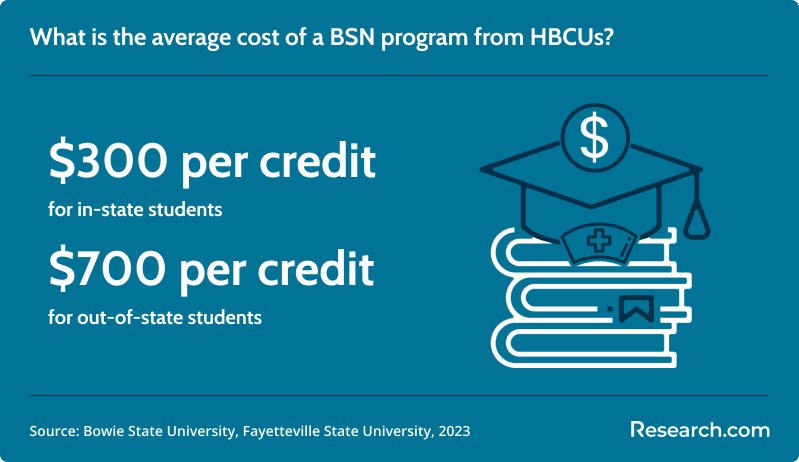
Costs vary widely by school, state residency, degree level, credit load, online fees, books, supplies, uniforms, background checks, exams, insurance, technology fees, and clinical travel. On average, tuition for a BSN program is around $300 per credit for in-state students and $700 per credit for out-of-state students. Graduate program costs depend on the program type and specialization. For example, Delaware State University’s Master of Science in Nursing costs $16,500.
Students should calculate total cost, not just tuition. Nursing programs often include extra expenses for clinical requirements, health screenings, immunizations, testing platforms, lab materials, transportation, and licensure exam preparation. Accelerated programs may cost less in calendar time but can make it harder to work while enrolled.
What are the financial aid options for students enrolling in an HBCU nursing program?
HBCU nursing students may qualify for federal aid, state aid, institutional scholarships, outside scholarships, employer tuition assistance, military benefits, and nursing-specific funding. Start by completing the FAFSA and then ask each school’s financial aid office about nursing scholarships, emergency grants, tuition payment plans, and work-study options.
- Health Resources and Services Administration (HRSA) Nursing Scholarship Program: Some HBCUs may qualify for HRSA-supported nursing aid programs that help eligible nursing students cover educational costs.
- National Black Nurses Association (NBNA) Scholarships: The NBNA offers scholarship opportunities for students from underrepresented groups, including African American nursing students.
- Pell Grants: Pell Grants are need-based federal grants for eligible undergraduate students and generally do not need to be repaid except in specific circumstances. According to the UNCF, more than 70% of HBCU students are eligible for the Pell Grant.
- Local scholarships and community aid: Churches, civic organizations, hospitals, local businesses, and community foundations may offer small scholarships, grants, or low-interest loans that can reduce out-of-pocket costs.
What are the prerequisites for enrolling in an HBCU nursing program?
Admission requirements differ by institution and pathway. A pre-licensure BSN may require completion of science and general education prerequisites, a minimum GPA in pre-nursing coursework, standardized entrance testing such as the TEAS, immunization records, background checks, and CPR certification. RN-to-BSN programs usually require an Associate Degree in Nursing or nursing diploma and an active RN license.
Students should distinguish between admission to the university and admission to the nursing major. Some schools admit students first as pre-nursing majors and then require a competitive application for the clinical nursing sequence.
What courses are typically in an HBCU nursing program?
HBCU nursing curricula cover the same core competencies expected of professional nursing programs while often adding a strong focus on community health, cultural competence, and care for diverse populations. Common courses include:
- Pharmacology: Medication actions, uses, side effects, interactions, and safe administration practices.
- Bioethics: Ethical decision-making, patient rights, consent, confidentiality, and professional responsibility in healthcare.
- Case Management: Coordination of patient services, care transitions, discharge planning, and interdisciplinary communication.
- Promoting the Health of Populations: Public health strategies, prevention, health education, and interventions for diverse communities.
- Nursing Leadership and Management: Team coordination, delegation, quality improvement, healthcare policy, and leadership decision-making.
- Evidence-Based Practice: Using research, clinical evidence, and patient data to guide safe and effective care.
What types of specializations are available in HBCU nursing programs?
Specializations are more common at the graduate level than in traditional BSN programs. At Florida Agricultural and Mechanical University (FAMU), MSN options include nursing education, nursing administration, and family nurse practitioner. FAMU also offers an online Ph.D. in nursing and a minor in gerontology with a four-credit internship.
Most BSN students receive broad generalist preparation instead of formal specialization. However, HBCU nursing programs may integrate themes such as community health, minority health, health disparities, patient advocacy, and culturally sensitive care throughout the curriculum.
How to choose the best HBCU nursing program
The best HBCU nursing program is the one that matches your licensure goal, learning needs, budget, and career plan. Use rankings as a research tool, not as the only deciding factor.
- Confirm accreditation and board approval: Check whether the program is accredited by a recognized nursing accreditor such as ACEN or CCNE and approved by the relevant state board of nursing.
- Match the pathway to your starting point: Choose an AASN, BSN, accelerated BSN, RN-to-BSN, MSN, or bridge program based on your current education and license status.
- Review NCLEX preparation and outcomes: Ask about NCLEX pass rates, exam support, remediation policies, and how the program identifies students at academic risk.
- Understand clinical placement support: Find out where clinical rotations occur, who arranges placements, and whether distance learners must secure their own sites.
- Calculate total cost: Include tuition, fees, books, uniforms, supplies, testing, background checks, travel, and lost income if you reduce work hours.
- Ask about student support: Look for tutoring, mentoring, advising, simulation support, faculty access, career services, and support for first-generation or working students.
| Question to Ask | Why It Matters |
| Is the nursing program accredited and state-approved? | Accreditation and board approval can affect licensure eligibility, graduate admissions, and employer recognition. |
| What percentage of students complete the program? | Completion data can reveal whether students receive enough academic and clinical support. |
| Who arranges clinical placements? | Students in online or hybrid programs need to know whether the school provides placement assistance. |
| How many credits will transfer? | Transfer policy can change cost, timeline, and graduation requirements. |
| What are the real out-of-pocket costs? | Fees, supplies, travel, and reduced work hours can materially affect affordability. |
What career paths are available for graduates of HBCU nursing programs?
HBCU nursing graduates can pursue bedside care, community health, advanced practice, education, administration, and leadership roles. The right path depends on degree level, license status, certifications, and professional goals.
- Registered Nurse (RN): RNs provide direct patient care, educate patients and families, administer medications, monitor conditions, and coordinate with physicians and other healthcare professionals. They work in hospitals, clinics, long-term care, home health, and community health settings.
- Nurse Practitioner (NP): NPs need additional graduate education and certification. They may diagnose conditions, treat patients, prescribe medications where authorized, and provide primary or specialty care. Students interested in women’s health can compare online WHNP programs.
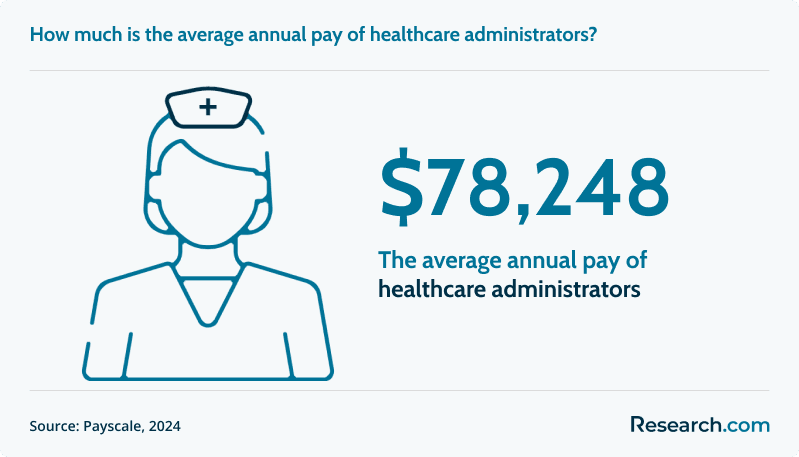
- Healthcare Administrator: Healthcare administrators manage operations, staffing, compliance, budgets, and service delivery in medical settings. The average yearly salary of a healthcare administrator as of 2024 is $78,248. Students interested in administrative preparation can explore medical office administration classes.
Are ADN to MSN bridge programs a viable option for HBCU nursing students?
ADN to MSN bridge programs can make sense for registered nurses who want to move from associate-level preparation into graduate nursing without following a traditional BSN-to-MSN sequence. These programs build on prior clinical experience while adding advanced coursework, leadership preparation, and specialty-focused clinical training.
This route is best for disciplined working nurses who are clear about their long-term goal. Before enrolling, confirm transfer credit rules, bridge course requirements, clinical placement expectations, accreditation, and whether the program prepares you for the certification or advanced role you want. Students comparing this pathway can review ADN to MSN bridge programs.
Are HBCU nursing programs accredited and how does accreditation affect career prospects?
Accreditation is one of the most important quality checks for nursing education. It shows that a program has been reviewed against recognized standards for curriculum, faculty qualifications, student learning, clinical preparation, and outcomes. State board approval is also critical for pre-licensure programs because it can determine whether graduates are eligible to pursue the NCLEX-RN.
Accreditation may affect employer confidence, graduate school admission, certification eligibility, and transferability of credits. Students considering advanced online options, including DNP nursing programs online, should verify both institutional accreditation and programmatic nursing accreditation before applying.
What advanced certification opportunities are available for HBCU nursing graduates?
Advanced certifications can help nurses demonstrate specialized competence in areas such as critical care, oncology, maternal-child health, family practice, psychiatric mental health, informatics, or nurse education. Certification requirements vary by specialty and may include a graduate degree, supervised clinical hours, an active RN license, and passing a national exam.
For nurses who already hold a graduate credential, certificate pathways may help them change specialties or add advanced practice preparation without repeating an entire degree. For example, post-masters FNP certification online options may support nurses seeking family nurse practitioner preparation after earning a master’s degree.
What is the job market for HBCU graduates with a nursing degree?
The nursing labor market remains favorable for qualified graduates, though hiring conditions vary by location, specialty, facility type, and experience level. Many HBCUs offer accredited nursing programs at undergraduate, graduate, and doctoral levels, and some provide online coursework similar in flexibility to online graduate certificate programs.
From 2022 to 2032, employment of registered nurses is projected to grow by 6%, with 193,100 openings each year. Advanced practice roles have a higher projected growth rate, reflecting demand for nurse practitioners, nurse anesthetists, and nurse midwives.
| Occupation | Projected Employment Rate | Projected Number of Openings per Year |
| Registered nurses | 6% | 193,100 |
| Licensed practical nurses and licensed vocational nurses | 5% | 54,400 |
| Nurse anesthetists, nurse midwives, nurse practitioners | 38% | 29,200 |
What are the easiest HBCU nursing programs to get into?
Some students search for “easy” nursing programs because they are changing careers, returning to school, rebuilding their GPA, or entering college without a healthcare background. A better way to think about this is accessibility. Look for programs with clear prerequisites, bridge courses, strong advising, tutoring, realistic admissions standards, and transparent progression policies.
Even accessible nursing programs are not academically easy. They must prepare students for safe patient care and licensure requirements. Students comparing flexible admissions options can read Research.com’s guide to the easiest nursing schools to get into.
Are accelerated RN-to-BSN programs a valuable option for HBCU nursing students?
Accelerated RN-to-BSN programs can be valuable for licensed nurses who want to earn a bachelor’s degree faster while continuing to work. These programs typically focus on leadership, evidence-based practice, community health, population health, and professional advancement rather than repeating initial RN training.
This option is strongest for RNs who already have solid clinical foundations and can manage online coursework, writing assignments, and any required practice experiences. Students seeking a shorter completion window can compare top 6 month RN to BSN online programs, but they should verify workload, accreditation, transfer requirements, and whether the timeline is realistic for their schedule.
How are HBCU nursing programs integrating digital health and emerging technologies?
Nursing practice increasingly involves electronic health records, telehealth, remote monitoring, simulation, clinical decision support, and data-informed care. HBCU nursing programs may use simulation labs, virtual patient cases, telehealth practice, and electronic documentation exercises to help students build digital fluency before entering clinical settings.
Technology skills are especially important in areas such as psychiatric care, population health, chronic disease management, and rural or community-based care. Students interested in mental health advanced practice can review fastest online MSN PMHNP programs.
How can HBCU nursing students transition into advanced practice roles?
Moving into advanced practice typically requires graduate education, specialty clinical hours, national certification, and state authorization. Common advanced roles include nurse practitioner, clinical nurse specialist, nurse educator, nurse administrator, nurse anesthetist, and nurse midwife.
Some working nurses use bridge pathways such as RN to MSN online programs to move from registered nursing into master’s-level preparation. These programs may allow qualified RNs to pursue an MSN without first completing a separate BSN, depending on the school’s structure.
Students should choose a specialty carefully. Family practice, mental health, gerontology, education, and leadership each require different clinical placements, certification exams, and career strategies. Networking through HBCU healthcare partnerships, faculty mentorship, internships, and professional organizations can help students build the experience needed for advanced roles.
How can dual degree programs enhance leadership opportunities for HBCU nursing graduates?
Dual degree programs can help nurses combine clinical expertise with management, finance, operations, and strategy. This can be useful for nurses who want to move into executive leadership, healthcare administration, quality improvement, consulting, population health management, or entrepreneurship.
An MSN/MBA pathway is not necessary for every nurse, but it can make sense for professionals who want leadership responsibilities beyond direct care. Nurses considering this route can compare MSN/MBA online programs and evaluate cost, accreditation, workload, and career alignment before enrolling.
What alternatives are available for those who cannot attend traditional HBCU nursing programs?
Students who cannot attend a traditional campus-based HBCU nursing program still have options. Depending on their goals, they may consider online RN-to-BSN programs, hybrid nursing programs, local community college ADN programs, LPN pathways, employer-sponsored training, or non-HBCU accredited nursing programs with strong diversity support.
Students who want a shorter entry route into nursing-related practice may explore fast track medical LPN options. However, LPN and RN pathways lead to different scopes of practice, licensure requirements, and advancement opportunities, so students should compare them carefully before choosing.
How do HBCU nursing programs equip graduates for mental health and psychiatric roles?
Mental health needs are a major part of modern nursing practice, even for nurses who do not specialize in psychiatry. HBCU nursing programs may include behavioral health assessment, therapeutic communication, crisis response, trauma-informed care, substance use topics, and community mental health experiences.
Students who want to specialize further may pursue psychiatric mental health nursing or advanced practice preparation after becoming licensed. Graduate-level options such as affordable psychiatric nurse practitioner programs can help nurses build advanced psychiatric assessment, diagnosis, treatment, and medication management skills where permitted by state law.
What are the best ways to gain clinical experience in HBCU nursing programs?
Clinical experience is where nursing students connect classroom knowledge to patient care. Strong programs give students repeated opportunities to practice assessment, communication, safety procedures, medication administration, documentation, prioritization, and teamwork under supervision.
- Clinical rotations: Students rotate through settings such as hospitals, outpatient clinics, long-term care facilities, community health centers, and specialty units to experience different patient populations and care models.
- Simulation labs: Simulation allows students to practice skills and decision-making in controlled patient scenarios before working with real patients.
- Healthcare partnerships: HBCUs may partner with local hospitals, clinics, and community organizations to provide clinical placement opportunities and exposure to diverse care settings.
- Nursing internships: Internship experiences can help students learn professional routines, build confidence, and develop relationships with practicing nurses and healthcare teams.
- Volunteer work: Community clinics, health fairs, blood drives, and outreach events can help students gain patient-facing experience and better understand barriers to care. Students planning advanced practice careers can also review guidance on the shortest time to become a nurse practitioner.
Common mistakes to avoid when choosing an HBCU nursing program
| Mistake | Why It Can Hurt You | Better Approach |
| Choosing based only on rankings | A highly ranked school may not fit your budget, location, licensure state, or schedule | Use rankings as a shortlist, then verify outcomes and requirements |
| Ignoring accreditation or board approval | This may affect licensure eligibility, transfer credit, and graduate study options | Confirm programmatic accreditation and state board approval before applying |
| Looking only at tuition | Fees, supplies, clinical travel, and lost income can change affordability | Compare full cost of attendance and financial aid offers |
| Assuming online means fully remote | Nursing requires hands-on clinical and lab experiences | Ask where and how clinical requirements are completed |
| Overlooking progression policies | Strict grade requirements or limited course repeats can delay graduation | Review retention, remediation, and dismissal policies in advance |
| Assuming salary outcomes are guaranteed | Pay varies by state, employer, specialty, experience, and shift | Use salary data as a planning tool and research local employers |
Practical steps before applying
- Define your pathway: Decide whether you need pre-licensure RN preparation, RN-to-BSN completion, graduate specialization, or a bridge program.
- Check licensure alignment: Contact the state board of nursing where you plan to work and confirm that the program meets educational requirements.
- Verify accreditation: Look for institutional accreditation and nursing program accreditation or board approval.
- Compare total cost: Include tuition, fees, supplies, clinical travel, exam costs, and potential lost wages.
- Ask about clinical placement: Confirm whether the school arranges placements or expects students to find their own sites.
- Review student support: Look for tutoring, simulation access, faculty advising, mentoring, NCLEX preparation, and career services.
- Speak with current students or alumni: Ask about workload, faculty responsiveness, clinical quality, and whether the program matched what admissions promised.
Current trends affecting HBCU nursing students
- Greater demand for culturally competent care: Healthcare employers need nurses who can communicate effectively with diverse patients and understand social factors that affect health.
- Growth in advanced practice roles: Nurse practitioners, nurse anesthetists, and nurse midwives have a projected employment rate of 38%, creating opportunities for nurses who pursue graduate education.
- Expansion of online and hybrid learning: More nursing programs use online coursework, but clinical training remains hands-on and must meet licensure standards.
- More digital health expectations: Nurses increasingly use electronic health records, telehealth platforms, simulation, and data tools in daily practice.
- Continued focus on health equity: HBCU nursing programs are well-positioned to prepare graduates for community health, public health, and underserved-care settings.
Key Insights
- The best HBCU nursing program is the one that fits your licensure goal, budget, schedule, clinical needs, and long-term career plan.
- Accreditation and state board approval should be verified before you apply; they can affect licensure, employment, graduate school, and certification eligibility.
- Online HBCU nursing programs can offer flexibility, but nursing education still requires in-person clinical or skills-based training.
- Registered nurses earn a median annual salary of $81,220, while advanced roles such as nurse practitioners and nurse anesthetists can offer higher earning potential with additional education and certification.
- Do not compare schools by tuition alone. Include fees, clinical travel, supplies, testing, transfer credits, financial aid, and the ability to keep working while enrolled.
- HBCU nursing programs may be especially appealing to students who value mentorship, cultural competence, community health, and service to underserved populations.
References
- American Association of Retired Persons (2023). HBCU Learning Collaborative. https://campaignforaction.org/mentor-training/hbcu-learning-collaborative
- Bowie State University (2023). Undergraduate Tuition and Fees Fall 2023/Spring 2024. https://www.bowiestate.edu/about/administration-and-governance/division-of-administration-and-finance/office-of-student-accounts/tuition-and-fees/undergraduate-tutition-and-fees/fall-spring-tuition-and-fees.php
- Bureau of Labor Statistics (2023 November 27). Registered Nurses. Occupational Outlook Handbook. https://www.bls.gov/ooh/healthcare/registered-nurses.htm
- Bureau of Labor Statistics (2023 September 6). Medical and Health Services Managers. Occupational Outlook Handbook. https://www.bls.gov/ooh/management/medical-and-health-services-managers.htm
- Bureau of Labor Statistics (2023 September 6). Nurse Anesthetists, Nurse Midwives, and Nurse Practitioners. Occupational Outlook Handbook. https://www.bls.gov/ooh/healthcare/nurse-anesthetists-nurse-midwives-and-nurse-practitioners.htm
- Bureau of Labor Statistics (2023 September 6). Licensed Practical and Licensed Vocational Nurses. Occupational Outlook Handbook. https://www.bls.gov/ooh/healthcare/licensed-practical-and-licensed-vocational-nurses.htm#tab-6
- Centers for Disease Control and Prevention (2022). Interactive Summary Health Statistics for Adults. https://wwwn.cdc.gov/NHISDataQueryTool/SHS_adult/index.html
- Florida Agricultural and Mechanical University (n.d.). Undergraduate Cost of Attendance. https://www.famu.edu/students/office-of-financial-aid/cost-of-attendance/cost-of-attendance-undergrad.php
- Green, Y. (2023). HBCU Enrollment Continues to Rise, Reaching Historic Heights. https://www.thehbcucareercenter.com/blog/hbcu-enrollment-continues-to-rise-reaching-historic-heights
- National Black Nurses Association, Inc. (n.d.). National Black Nurses Association. https://www.nbna.org
- National Center for Education Statistics (2021). Historically Black Colleges and Universities. https://nces.ed.gov/fastfacts/display.asp?id=667
- Payscale (2024). Average Healthcare Administrator Salary. https://www.payscale.com/research/US/Job=Healthcare_Administrator/Salary
- Prairie View A&M University (2023). College of Nursing. https://catalog.pvamu.edu/academicprogramsanddegreeplans/collegeofnursing
- Salary.com (2023 November 27). Nurse Practitioner Salary in the United States. https://www.salary.com/research/salary/benchmark/nurse-practitioner-salary
- Salary.com (2023 November 27). Certified Nurse Anesthetist Salary in New York. https://www.salary.com/research/salary/benchmark/certified-nurse-anesthetist-crna-salary/ny
- Smith, D. (2022 September 19). The Facts on HBCUs: Top 10 Facts about Historically Black Colleges and Universities. https://tcf.org/content/commentary/the-facts-on-hbcus-top-10-facts-about-historically-black-colleges-and-universities
- United Negro College Fund (n.d.). The HBCU Effect. https://uncf.org/pages/the-hbcu-effect
Other things you should know about HBCU nursing programs
The program should hold CCNE or ACEN accreditation in 2027. These accreditations show that the curriculum, faculty, clinical training, and student outcomes meet national standards, and they support eligibility for licensure and graduate study after earning the BSN or MSN.
The best HBCU nursing programs offer clinical experience in diverse healthcare settings, including major hospitals, community clinics, and specialized care facilities. Students may gain hands-on practice in pediatrics, geriatrics, and acute care, typically completing around 800 hours before graduation.


