2027 Cheapest Accredited Online Medical Office Administration Degree Programs: Tuition, Fees, and Financial Aid

Co-Founder and Chief Data Scientist
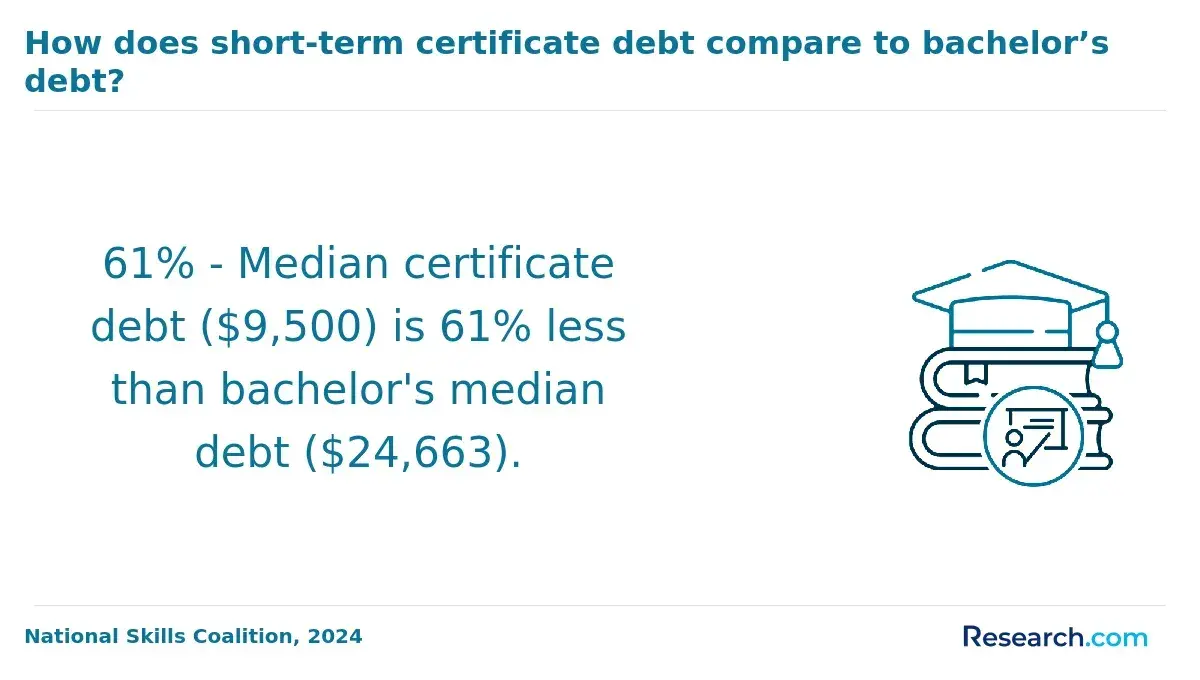
Choosing the cheapest online Medical Office Administration degree is harder than comparing tuition rates. Mandatory fees, residency rules, transfer credits, books, software, and financial aid can change the real price. College Board reported the average published tuition and fees for public two-year colleges at $4,050 in 2024-25, making community colleges a key affordability benchmark.
This guide is for students comparing accredited online options and explains how to identify low-cost programs, verify accreditation, estimate total cost, and use aid to lower net price.
Key Things You Should Know
- The lowest published tuition for accredited online Medical Office Administration associate programs is often found at public community colleges; North Carolina community colleges commonly publish $76 per credit for in-state students, putting tuition-only cost near $4,500 to $5,100 for many 60- to 67-credit programs before fees.
- Advertised tuition is not the same as total cost: students should add mandatory technology, online learning, student activity, graduation, proctoring, books, coding manuals, software, and exam-prep costs before deciding which program is cheapest.
- Net price matters more than sticker price because Pell Grants, state grants, institutional scholarships, employer tuition benefits, and transfer credits can make a slightly higher-tuition accredited program less expensive out of pocket.
What Are the Cheapest Accredited Online Medical Office Administration Degree Programs?
The cheapest accredited online Medical Office Administration degree programs are usually associate degrees offered by public community colleges with regional accreditation and distance-learning delivery. Many are named Medical Office Administration, Medical Administrative Assistant, Health Information Technology, Medical Office Technology, or Medical Billing and Coding with an administrative focus.
The table below highlights low-cost accredited online options to use as a starting point. Tuition policies, fees, and online availability can change, so students should confirm the current catalog, residency rate, and full fee schedule before applying.
| School | Online degree option | Accreditation to verify | Published tuition benchmark | Cost notes |
| Wayne Community College | AAS in Medical Office Administration | Regional institutional accreditation | North Carolina community college in-state tuition is commonly $76 per credit | Low tuition can be offset by semester fees, books, and technology charges |
| Pitt Community College | AAS in Medical Office Administration | Regional institutional accreditation | North Carolina community college in-state tuition is commonly $76 per credit | Students should compare online course fees and required office software costs |
| Vance-Granville Community College | AAS in Medical Office Administration or related healthcare office pathway | Regional institutional accreditation | North Carolina community college in-state tuition is commonly $76 per credit | Transfer and residency requirements affect the final number of paid credits |
| Central Piedmont Community College | Medical Office Administration pathway | Regional institutional accreditation | North Carolina community college in-state tuition is commonly $76 per credit | Students should verify which courses are fully online and which fees apply |
| Wake Technical Community College | Medical Office Administration or related healthcare administrative pathway | Regional institutional accreditation | North Carolina community college in-state tuition is commonly $76 per credit | Large course selection may help students finish faster if online sections are available |
These programs tend to be affordable because they are public, career-focused, and credit-efficient. However, a program with the same per-credit tuition may still cost more if it requires more credits, charges higher online fees, or accepts fewer transfer credits.
Students who are mainly interested in billing, coding, and reimbursement work may also want to compare a best online school for medical billing and coding, because some shorter programs can be cheaper than a full associate degree while still supporting entry-level healthcare office roles.
How Were the Cheapest Online Medical Office Administration Degree Programs Ranked?
The most useful affordability ranking does not treat the advertised per-credit rate as the final answer. A fair comparison weighs tuition, required credits, mandatory fees, aid eligibility, accreditation, transfer policy, and whether the program can be completed fully online without extra travel costs.
The ranking logic below is designed to help students compare programs consistently, especially when schools present costs in different formats.
- Start with accreditation and Title IV eligibility, because a low-cost program that is not properly accredited may limit federal financial aid, transfer options, and employer recognition.
- Calculate tuition for the full credential by multiplying the per-credit rate by the number of required credits, not by looking only at one semester.
- Add mandatory fees that every online student must pay, including technology, distance learning, registration, graduation, student services, and assessment fees.
- Estimate program-specific costs such as textbooks, coding manuals, office software, keyboarding tools, proctoring, background checks, or certification exam preparation.
- Subtract confirmed grants, scholarships, employer assistance, and accepted transfer-credit value to estimate net price.
- Review quality indicators such as completion support, online course availability, career services, internship requirements, certification preparation, and student outcomes.
A program ranked as cheapest by tuition may not be the cheapest by net price. For example, a school with higher tuition but stronger institutional grants, generous transfer-credit acceptance, and no online course surcharge can produce a lower out-of-pocket cost.
How Can You Verify the Accreditation of an Online Medical Office Administration Degree Program?
Accreditation is the first affordability checkpoint because it affects federal aid, credit transfer, employer confidence, and eligibility for some certification or continuing-education pathways. For Medical Office Administration, institutional accreditation is usually more important than programmatic accreditation, although related programs in health information may also carry specialized accreditation.
Use this quick distinction when reviewing a school's claims.
| Accreditation type | What it means | Why it matters for cost |
| Institutional accreditation | The college or university is reviewed by a recognized accrediting agency | Usually required for federal financial aid and more reliable transfer options |
| Programmatic accreditation | A specific academic program is reviewed by a field-specific accreditor | May matter more for health information, coding, or clinical programs than for general office administration |
| State authorization | The school is allowed to offer online education to students in a particular state | Can affect whether an out-of-state online student may enroll |
| Title IV eligibility | The institution participates in federal student aid programs | Determines whether students can use FAFSA-based grants and federal loans |
Students can verify accreditation before paying an application fee. The safest process is to check the school name in the U.S. Department of Education's Database of Accredited Postsecondary Institutions and Programs, then confirm federal aid participation through the school's financial aid office or federal school code listing.
- Search the exact institutional name, not just the program name or marketing brand.
- Confirm that the accreditor is recognized by the U.S. Department of Education or the Council for Higher Education Accreditation.
- Ask whether the online Medical Office Administration program is included under the institution's accreditation and state authorization.
- Verify whether the credential is an associate degree, diploma, certificate, or noncredit training program.
- Request written confirmation that the program is eligible for federal financial aid if FAFSA funding is part of your plan.
A major red flag is a school that advertises "accredited" status without naming the accrediting body or that pressures students to enroll before they can review a catalog, tuition schedule, and refund policy.
How Much Does an Accredited Online Medical Office Administration Degree Really Cost?
The real cost of an accredited online Medical Office Administration degree includes tuition, mandatory fees, course materials, technology, and the number of credits the student must complete after transfer evaluation. For many low-cost public community college programs, tuition-only cost may be under $6,000 for in-state students, but total cost can rise once fees and materials are included.
The table below shows how different cost categories affect affordability. It is not enough to compare tuition alone because two programs with the same per-credit rate can produce different final bills.
| Cost category | What to include | Why it changes the final price |
| Tuition | Per-credit charge multiplied by required credits | This is the base cost but rarely the full cost |
| Mandatory institutional fees | Registration, technology, student services, activity, graduation, and assessment fees | Fees may be charged per credit, per course, per semester, or once at graduation |
| Online learning fees | Distance education, proctoring, course platform, or digital access charges | Some schools charge online students differently than campus students |
| Program materials | Textbooks, coding manuals, keyboarding software, office productivity software, and exam-prep resources | Healthcare administration courses may require updated coding or compliance materials |
| Opportunity cost | Work hours reduced to study, childcare, internet, and computer upgrades | These costs do not appear on a bill but affect affordability |
A simple estimate can help students compare schools before financial aid is finalized. Multiply credits by tuition, add all mandatory fees for each term, then subtract only aid that is confirmed and renewable.
Example: A 65-credit program at $76 per credit has a tuition-only cost of $4,940 before fees, books, and aid. If another program charges $110 per credit but accepts 20 transfer credits, the second program may cost less because the student pays for fewer credits.
For labor-market context, the U.S. Bureau of Labor Statistics reported a May 2024 median annual wage of about $43,000 for medical secretaries and administrative assistants. That figure is not a promised outcome, but it helps students avoid borrowing far more than the typical entry-level administrative healthcare pathway can comfortably support.
Which Tuition Models Make Online Medical Office Administration Degree Programs More Affordable?
Tuition models matter because online students often study part time, bring transfer credits, or need flexible pacing. The best model depends on how many credits a student still needs, whether they can enroll full time, and whether the school charges different rates for in-state and out-of-state learners.
The comparison below shows how common tuition structures affect cost control.
| Tuition model | Best fit | Affordability advantage | Risk to check |
| Per-credit tuition | Part-time students and students using transfer credits | You pay only for credits attempted | Fees may still apply every term |
| Flat-rate semester tuition | Students who can take a heavy full-time load | More credits in the same term can lower cost per credit | Dropping courses can waste tuition |
| In-state public tuition | Residents attending public community colleges | Often the lowest published rate | Residency rules can be strict |
| Same-rate online tuition | Out-of-state online students | Can remove the out-of-state penalty | Base rate may be higher than local community college tuition |
| Competency-based tuition | Experienced students who can finish courses quickly | Faster completion can reduce total terms paid | Requires discipline and may not fit every learner |
Students comparing healthcare education ladders should also think about future credentials. Someone starting in medical office administration may later pursue clinical or management study, so comparing transfer pathways with options such as an online ASN program can help clarify which credits may or may not apply to a different healthcare track.
The most affordable tuition model is the one that matches the student's pace. A full-time flat-rate plan can be a bargain for a student who completes 15 to 18 credits successfully, but it can be expensive for a working adult who needs to withdraw or repeat courses.
What Fees and Hidden Costs Should Online Medical Office Administration Degree Students Expect?
Fees and hidden costs can make a program with low tuition less affordable than expected. Online Medical Office Administration students should request an itemized cost sheet that covers the full program, not just the first semester.
The most common additional costs fall into several categories that are easy to miss during enrollment conversations.
- Mandatory college fees, including technology, student services, registration, graduation, transcript, and assessment charges.
- Online course costs, including learning platform access, digital course materials, remote proctoring, and identity verification tools.
- Program materials, including medical terminology texts, health records software, keyboarding tools, spreadsheet or office productivity software, and coding manuals if billing and coding courses are included.
- Testing and credential costs, including optional certification exam fees, practice exams, background checks, and professional membership fees.
- Personal technology costs, including a reliable computer, webcam, microphone, broadband internet, printer access, and secure storage for course files.
Students should also watch for policies that indirectly raise cost. Repeated courses, late registration, dropped-course penalties, and limited online course availability can add extra terms and fees.
A good admissions or financial aid office should be able to answer these questions in writing.
- What is the total estimated cost to complete the full degree online, including mandatory fees?
- Are online students charged any distance education or proctoring fees in addition to tuition?
- Which textbooks, software, coding manuals, or access codes are required, and can used or digital versions be purchased?
- Are certification exams included in tuition or billed separately?
- How many credits must be completed at your institution even if I transfer prior coursework?
How Does FAFSA and Federal Financial Aid Work for Online Medical Office Administration Degree Programs?
FAFSA-based aid can apply to accredited online Medical Office Administration degree programs when the institution participates in federal student aid and the program itself is eligible. Online delivery alone does not disqualify a student, but noncredit training, short certificate programs, or non-Title IV programs may not qualify.
The maximum Federal Pell Grant for the 2024-25 award year was $7,395. For a low-tuition community college student, that means grant aid can cover a large share of tuition and fees, although the exact award depends on Student Aid Index, enrollment intensity, cost of attendance, and remaining lifetime eligibility.
Students should follow a practical sequence before assuming federal aid will cover the bill.
- Confirm the school has a federal school code and participates in Title IV federal student aid.
- Ask whether the specific Medical Office Administration degree is financial-aid eligible.
- Submit the FAFSA as early as possible and list every school being considered.
- Compare financial aid offers by separating grants and scholarships from loans.
- Check whether the award assumes full-time enrollment, because part-time study can reduce grant amounts.
- Ask how aid changes if courses are dropped, repeated, or taken outside the degree plan.
The distinction between grants and loans is critical. Grants and scholarships generally do not need to be repaid if requirements are met, while federal student loans must be repaid with interest. Students considering broader healthcare pathways can compare how federal aid may apply across programs, including nursing bridge options such as RN BSN online programs no clinicals, but each school and program must be checked separately.
Which Scholarships, Grants, and Tuition Benefits Can Help Pay for an Online Medical Office Administration Degree?
Students should look beyond federal aid because smaller awards can make a low-cost program nearly tuition-free. The most useful funding sources are renewable, stackable, and available to online students in career-focused associate programs.
The table below summarizes common funding sources and what students should verify before counting the money in their budget.
| Funding source | Typical provider | What to verify | Best use |
| Federal Pell Grant | Federal government | FAFSA eligibility, enrollment level, and lifetime limits | Tuition, fees, books, and approved education costs |
| State grants | State higher education agency | Residency, FAFSA deadline, and eligible schools | Reducing community college tuition and fees |
| Institutional scholarships | College foundation or department | Minimum GPA, renewal rules, and application deadlines | Filling gaps after federal and state grants |
| Workforce grants | Local workforce boards or career centers | Approved program list and employment requirements | Career retraining and short-term healthcare office pathways |
| Employer tuition assistance | Hospitals, clinics, insurers, or healthcare employers | Annual cap, grade requirements, repayment clauses, and eligible majors | Lowering out-of-pocket cost for working adults |
Scholarships are often merit-based, need-based, program-specific, or tied to local workforce goals. Grants are usually need-based or public-purpose funds. Employer benefits may require the student to stay employed for a certain period, so the cheapest option is not always the most flexible option.
Medical office students who plan to move into healthcare leadership later may want to keep records of all completed credits and employer-funded coursework. Those planning long-term advancement can compare future options such as an accelerated healthcare management degree online after gaining work experience.
Can Transfer Credits, Prior Learning, and Competency-Based Study Lower the Cost of an Online Medical Office Administration Degree?
Transfer credits are one of the fastest ways to reduce the cost of an online Medical Office Administration degree. Each accepted credit can remove tuition, fees, books, and time from the remaining program, but schools set their own limits and residency requirements.
Before enrolling, students should request an official transfer evaluation instead of relying on a verbal estimate. The following cost-saving options are worth asking about because they can lower the number of credits the student must pay for.
- Previous college credits in English, math, psychology, business, computer applications, medical terminology, or general education.
- Credit for prior learning based on documented work experience in healthcare offices, billing departments, insurance verification, scheduling, or records management.
- Industry credentials that may convert into elective or technical credit, depending on school policy.
- College Level Examination Program or other approved exam credits for general education requirements.
- Competency-based courses that allow experienced students to move faster through material they already know.
The key limitation is residency. A school may require students to complete a minimum number of credits through that institution even if many transfer credits are accepted. Students should also ask whether old technology, coding, or healthcare compliance courses expire because some programs require current content.
Transfer planning is especially important for students who may later pursue advanced healthcare education. While a Medical Office Administration associate degree is not the same pathway as a clinical graduate credential such as a DNP program, choosing accredited courses and keeping syllabi can still help preserve future academic options.
How Should Students Compare the Net Price, Quality, and Return on Investment of Online Medical Office Administration Degree Programs?
The best-value program is not always the one with the lowest tuition. Students should compare net price, completion likelihood, career relevance, schedule flexibility, and transfer value. A slightly more expensive program may be worth it if it offers stronger advising, more online course availability, better credit acceptance, or employer-aligned training.
The table below shows how to evaluate value beyond sticker price.
| Decision factor | What to compare | Why it matters |
| Net price | Total cost after grants, scholarships, employer benefits, and transfer credits | This is closer to the amount the student actually pays |
| Program length | Required credits, course availability, and expected time to completion | Extra semesters can add fees and delay earnings |
| Career alignment | Courses in medical terminology, scheduling, billing, coding basics, EHR systems, privacy, and customer service | Relevant coursework supports healthcare office readiness |
| Student support | Online tutoring, advising, library access, technical support, and career services | Support can reduce failed or repeated courses |
| Transfer value | Articulation agreements and bachelor's pathways | Credits with transfer value may reduce future education costs |
Students should also compare expected roles. Medical Office Administration graduates may pursue jobs such as medical office assistant, patient access representative, medical receptionist, unit secretary, scheduling coordinator, records clerk, billing assistant, or insurance verification specialist. Employers often value accuracy, confidentiality, communication, electronic health record familiarity, and customer service.
Use these common mistakes as a final checklist before enrolling.
- Choosing the lowest tuition without verifying accreditation and federal aid eligibility.
- Comparing per-credit tuition while ignoring mandatory fees and total required credits.
- Assuming all online courses are offered every term, which can delay graduation.
- Counting scholarships before confirming renewal rules and enrollment requirements.
- Ignoring transfer-credit limits, residency rules, and course expiration policies.
- Borrowing based on the full cost of attendance when grants, part-time payment, or employer benefits could reduce the need for loans.
A practical next step is to create a one-page comparison for the top three programs: full tuition, mandatory fees, estimated books and software, accepted transfer credits, aid offer, net price, time to completion, and accreditation status. That comparison will reveal which program is genuinely cheapest for the student's situation.
Other Things You Should Know About Medical Office Administration
No. Medical Office Administration usually focuses on front-office and administrative work such as scheduling, records, billing support, insurance processes, and patient communication. Medical assistant programs often include clinical skills such as taking vital signs or assisting with exams, depending on state rules and program design.
It can support remote-friendly roles such as scheduling, insurance verification, billing support, patient services, or records coordination, but remote work is not guaranteed. Employers may require healthcare office experience, secure internet, familiarity with electronic health records, and compliance with privacy rules.
Certification is usually optional, but it may help in some job markets. Students may consider credentials related to medical administration, billing, coding, or electronic health records if the credential matches their target role and the exam cost fits their budget.
Many associate programs are designed for about two years of full-time study. Part-time students may take longer, while students with transfer credits, summer courses, or accelerated terms may finish sooner if the required online courses are available when needed.
References
- Healthcare Administration Scholarships https://www.healthadministrationdegrees.com/healthcare-administration-scholarships/
- Why Accreditation Matters | C-RAC https://www.c-rac.org/why-accreditation-matters
- Financial Aid Guide https://www.publichealth.org/resources/financial-aid/
- Hidden Costs in Online Degrees: What You Should Know Before Enrolling https://www.onlinecu.in/blog/cu/hidden-costs-to-consider-in-online-degrees
- Average Cost of Medical School [2025]: Yearly + Total Costs https://educationdata.org/average-cost-of-medical-school
- Scholarships and Financial Aid for Healthcare Students: How to Fund Your Education https://explorehealthcareers.org/resources/scholarship-financial-aid/
- Who Accredits MHA Programs? https://www.mhaonline.com/faq/who-accredits-online-mha-programs
- What Med School Accreditation Means — and Why It Matters for Your Future | Alice L. Walton School of Medicine https://alwmedschool.org/resources/blog/what-med-school-accreditation-means-and-why-it-matters-for-your-future
- The Online College Students' Guide to Financial Aid https://www.edumed.org/financial-aid/
- Medical Administrative Professional https://www.ntc.edu/academics-training/programs/all/associate-degree/medical-administrative-professional