2027 Cheapest Accredited Online Medical Office Administration Degree Programs That Accept FAFSA

Co-Founder and Chief Data Scientist
Choosing an online medical office administration degree is really a cost-and-credibility decision: you need a program that is accredited, aid-eligible, flexible, and affordable after grants. The federal Pell Grant maximum is $7,395 for the 2025-26 award year, which can cover a large share of tuition at many community colleges.
This guide is for students comparing low-cost online associate degree options, especially those who want FAFSA access. You'll learn how to compare tuition, aid, transfer credit, accreditation, and career value before enrolling.
Key Things You Should Know
- FAFSA acceptance does not mean free tuition: a school may participate in federal aid, but your actual grant, loan, and work-study eligibility depends on your FAFSA data, enrollment status, cost of attendance, and satisfactory academic progress.
- The lowest published tuition is often at public community colleges: some North Carolina community colleges charge $76 per credit for in-state students, so a 66-credit associate degree can have published tuition near $5,000 before fees, books, and aid.
- ROI depends on total borrowing: BLS wage data published in 2024 places medical administrative roles around the low-$40,000 median annual wage range, so keeping debt low is especially important for this career path.
Which Are the Cheapest Accredited Online Medical Office Administration Degree Programs That Accept FAFSA?
The cheapest accredited online medical office administration degree programs that accept FAFSA are usually associate degree programs at public community colleges. The most affordable choices are often state-resident options, so the "cheapest" program for you depends heavily on residency, transfer credits, fees, and whether the online program is approved for federal student aid.
The table below highlights examples of low-cost, institutionally accredited online or largely online medical office administration associate degree options. Published tuition can change, and fees vary, so use these figures as a starting point and confirm current totals with each school's tuition calculator and financial aid office:
| School | Online degree option | Institutional accreditation | Typical published tuition basis | Estimated tuition before fees and aid | Best fit |
| Pitt Community College | Associate in Applied Science in Medical Office Administration | SACSCOC | North Carolina resident community college rate | About $5,000 for a 66-credit plan at $76 per credit | North Carolina residents seeking a very low-tuition associate degree |
| Vance-Granville Community College | Associate in Applied Science in Medical Office Administration | SACSCOC | North Carolina resident community college rate | About $5,000 for a 66-credit plan at $76 per credit | Students who want a public, career-focused online pathway |
| Craven Community College | Associate in Applied Science in Medical Office Administration | SACSCOC | North Carolina resident community college rate | About $5,100 for a 67-credit plan at $76 per credit | Cost-conscious learners comparing healthcare office tracks |
| Central Carolina Community College | Associate in Applied Science in Medical Office Administration | SACSCOC | North Carolina resident community college rate | About $5,000 for a 66-credit plan at $76 per credit | Students who value a low-cost public college with transfer potential |
| Wayne Community College | Associate in Applied Science in Medical Office Administration | SACSCOC | North Carolina resident community college rate | About $5,000 for a 66-credit plan at $76 per credit | Learners seeking a healthcare office administration credential with FAFSA access |
These programs are inexpensive mainly because they are public community college degrees, not because FAFSA automatically lowers the sticker price. If you are not a North Carolina resident, compare out-of-state tuition carefully; a nearby public college in your own state may be cheaper after residency discounts, local scholarships, or employer aid.
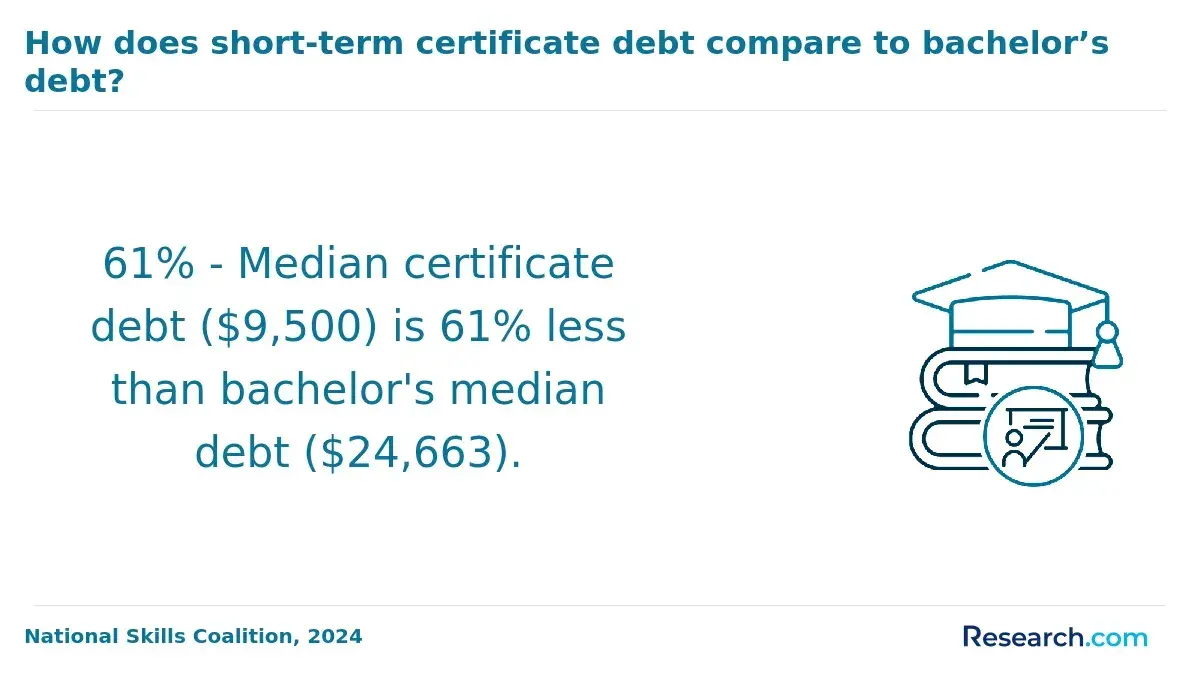
Medical office administration is broader than coding alone. If your primary goal is billing, reimbursement, or insurance coding rather than front-office operations, you may also want to compare a best online school for medical billing and coding because certificate and diploma options can sometimes be shorter and less expensive than a full associate degree.
How Does FAFSA Eligibility Work for Online Medical Office Administration Degree Programs?
FAFSA eligibility starts with the institution, not the marketing page for a program. A college must participate in Title IV federal student aid programs, and the specific online medical office administration degree must also be an eligible academic program for aid to apply.
In practical terms, a FAFSA-eligible online associate degree usually has the same federal aid framework as an on-campus degree at the same accredited college. However, short certificates, noncredit training, continuing education courses, and some workforce bootcamps may not qualify even if they are offered by a college that accepts FAFSA.
Before you enroll, confirm the following items because each one affects whether aid can actually be used for your program:
- The school has a valid federal school code and participates in federal student aid.
- The medical office administration degree is a credit-bearing, aid-eligible program, not only a noncredit training option.
- Your enrollment status is clear because half-time, three-quarter-time, and full-time schedules can change your aid package.
- The program length, academic calendar, and online delivery format are included in the school's financial aid calculations.
- You understand satisfactory academic progress rules, since falling below GPA or completion-rate standards can suspend aid.
A common mistake is assuming that "online" and "FAFSA-eligible" always go together. The safer approach is to ask the financial aid office, "Can federal Pell Grants and federal Direct Loans be applied to this exact online medical office administration associate degree?" Get the answer in writing before you make a deposit.
How Much Does an Online Medical Office Administration Degree Cost After Financial Aid?
The cost after financial aid is your net price, not the advertised tuition. Net price usually includes tuition, mandatory fees, textbooks, software, technology charges, exam fees, transportation if any campus visits are required, and living expenses if the school includes them in the cost of attendance.
The 2025-26 maximum Pell Grant is $7,395, but not every student receives the maximum. The table below shows how grant aid can change the tuition picture at a low-cost community college program before books and fees are added:
| Example cost scenario | Published tuition before aid | Example Pell Grant level | Estimated tuition balance before fees | What it means |
| Low-cost public community college, maximum Pell-eligible student | About $5,000 | Up to $7,395 | $0 tuition balance, with remaining aid possibly applied to eligible education costs | Grants may cover tuition, but fees and books still matter |
| Low-cost public community college, partial Pell-eligible student | About $5,000 | Example partial award below the maximum | Varies by award amount | Net price depends on Student Aid Index, enrollment status, and school packaging |
| Out-of-state or higher-tuition online program | Often higher than resident community college tuition | Up to $7,395 | Could still require payment or borrowing | FAFSA access helps, but it may not erase a higher sticker price |
To avoid underestimating cost, review the full cost of attendance rather than tuition alone. The items below are the charges most likely to surprise online students:
- Online learning or technology fees charged per course or per credit.
- Textbooks, access codes, simulations, or electronic health record software.
- Proctoring fees for online exams.
- Graduation, transcript, background check, or placement-related fees.
- Certification exam costs if you pursue optional credentials after the degree.
The lowest-tuition program is not always the lowest-cost program after aid. A slightly more expensive school may cost less out of pocket if it offers stronger institutional scholarships, accepts more transfer credits, or lets you finish faster while working.
Which Affordable Online Medical Office Administration Degree Programs Offer the Best Value?
The best-value program is the one that keeps total cost low while still helping you finish, qualify for relevant jobs, and build skills employers use in healthcare offices. For medical office administration, value often comes from a practical curriculum in scheduling, insurance, medical terminology, electronic health records, office software, privacy rules, and patient communication.
The table below explains how to compare "cheap" programs against "high-value" programs. This matters because a program with the lowest tuition can still be a poor choice if credits do not transfer, courses are hard to schedule, or student support is weak:
| Value factor | Why it matters | When a higher-cost program may be worth it |
| Transfer credit acceptance | Accepted credits reduce the number of courses you pay for | If the school accepts many prior credits and shortens your time to graduation |
| Flexible online scheduling | Working students may need asynchronous courses or multiple start dates | If flexibility helps you stay enrolled instead of stopping out |
| Healthcare-specific curriculum | Medical offices use privacy rules, billing workflows, EHR systems, and insurance processes | If the program includes stronger applied healthcare administration coursework |
| Career services | Resume help, local employer connections, and interview preparation can support job searches | If services are active and relevant to healthcare office roles |
| Stackable pathway | Some associate degrees can later transfer into healthcare administration or business programs | If you plan to continue to a bachelor's degree |
A more expensive program can make sense if it clearly reduces time to completion or strengthens your long-term education plan. For example, students who later want healthcare operations or management roles may eventually compare an accelerated healthcare management degree online, so choosing an associate program with transferable credits may be more valuable than choosing the absolute lowest tuition.
Programs that provide the best value usually make costs transparent. Be cautious if a school will not provide a written total cost estimate, does not clearly explain transfer policies, or pushes loans before reviewing grants and scholarships.
Are the Cheapest Online Medical Office Administration Degree Programs Properly Accredited?
The cheapest online medical office administration degree programs can be properly accredited, but you must verify accreditation rather than assume it. For FAFSA purposes, the most important issue is institutional accreditation by an accreditor recognized by the U.S. Department of Education.
Medical office administration associate degrees typically do not require the same kind of programmatic accreditation used in some clinical healthcare fields. That said, employers may still care whether the school is legitimate, whether credits transfer, and whether the curriculum covers current healthcare office systems.
Use this verification process before you apply or submit financial documents:
- Search for the college in the U.S. Department of Education's accreditation database or confirm the accreditor listed on the college website.
- Confirm that the accreditor covers the whole institution, not just a single non-degree training division.
- Ask the financial aid office whether the exact online medical office administration degree is Title IV eligible.
- Check whether credits are transcripted as college credit and whether they can transfer to related bachelor's programs.
- Review state authorization information if you live outside the college's home state.
Red flags include vague language such as "nationally recognized" without naming an accreditor, no federal school code, pressure to enroll immediately, or a program that advertises unrealistic salary outcomes. Accreditation does not guarantee employment, but it protects you from many of the worst risks: nontransferable credits, limited aid access, and credentials employers may not recognize.
What FAFSA Grants and Federal Aid Can Pay for an Online Medical Office Administration Degree?
FAFSA is the application that determines eligibility for several types of federal student aid. For a low-cost online medical office administration associate degree, grants are usually the most valuable because they generally do not need to be repaid if you meet enrollment and academic requirements.
The main federal aid options to understand are listed below. The right mix depends on your financial profile, school cost, enrollment status, dependency status, and annual aid limits:
- Federal Pell Grant: Need-based grant aid, with a maximum of $7,395 for the 2025-26 award year.
- Federal Supplemental Educational Opportunity Grant: Additional campus-based grant aid for students with exceptional financial need, available only at participating schools with limited funds.
- Federal Work-Study: Part-time job funding through participating schools, which can help with indirect costs but is not guaranteed at every college.
- Federal Direct Subsidized Loans: Need-based undergraduate loans where the government pays interest during certain enrollment and deferment periods.
- Federal Direct Unsubsidized Loans: Undergraduate loans that are not based on financial need and begin accruing interest when disbursed.
Loans can help cover a gap, but they should not be treated like discounts. For the 2025-26 year, the fixed interest rate for undergraduate Direct Loans is 6.39%, so borrowing for a relatively modest-wage administrative career should be done carefully and only after grants, scholarships, payment plans, and employer tuition benefits are considered.
How Do Transfer Credits Lower the Cost of an Online Medical Office Administration Degree?
Transfer credits lower cost by reducing the number of credits you must complete at the new school. In a 60- to 70-credit associate degree, even a few accepted general education courses can save money and shorten the time you spend balancing school, work, and family responsibilities.
The table below shows why transfer policy can matter as much as tuition rate. A school with slightly higher tuition may cost less overall if it accepts more of your completed credits:
| Scenario | Credits accepted | Credits still needed | Cost impact | Decision point |
| Lowest tuition, few transfers accepted | 6 credits | About 60 credits in a 66-credit degree | You still pay for most of the program | Low rate may not produce the lowest total cost |
| Moderate tuition, many transfers accepted | 24 credits | About 42 credits in a 66-credit degree | Fewer courses may reduce tuition, books, and time | Higher per-credit cost may still be a better deal |
| Prior allied health or business coursework reviewed course by course | Varies by transcript evaluation | Varies | Savings depend on whether credits match degree requirements | Request an official evaluation before enrolling |
Ask for a written transfer evaluation before committing to a program. The questions below help you avoid paying twice for similar coursework:
- How many of my prior credits apply to the medical office administration degree, not just to elective credit?
- Is there a maximum number of transfer credits the school will accept?
- Do healthcare, business, computer applications, or medical terminology courses expire after a certain number of years?
- Will transfer credits affect my financial aid pace of completion or satisfactory academic progress calculation?
- Can credits from this associate degree transfer later into a bachelor's program in healthcare administration, business, or health information management?
Transfer credit is one of the easiest ways to turn a low-tuition program into a genuinely low-cost program. Do not rely on informal admissions estimates; the registrar or academic department should provide the official answer.
Which Students Benefit Most From a Low-Cost Online Medical Office Administration Degree With FAFSA?
A low-cost online medical office administration degree with FAFSA is a strong fit for students who want an entry-level healthcare office career without taking on high debt. It is especially practical for adults who need online coursework, community college pricing, and a credential that can lead to receptionist, medical office specialist, patient services, scheduling, records, or insurance support roles.
This path tends to work best for students with clear administrative goals. It may not be the right choice for someone who wants hands-on clinical patient care, because medical office administration is not a nursing or clinical practice degree.
Students most likely to benefit include the following groups:
- First-time college students who want an affordable healthcare-related associate degree.
- Working adults who need online classes and cannot attend campus during standard business hours.
- Students eligible for Pell Grants who can keep borrowing very low or avoid loans entirely.
- Career changers moving from retail, customer service, or office support into healthcare settings.
- Students who want a stackable credential before pursuing healthcare administration, business, or health information roles.
Students should consider a different path if they want clinical licensure, direct patient treatment, or nursing advancement. For example, someone focused on becoming a nurse should compare an online ASN program instead of choosing medical office administration simply because it is cheaper.
How Does the Cost of an Online Medical Office Administration Degree Affect Career ROI?
Career ROI depends on the relationship between total education cost, debt, completion time, and realistic earnings for the jobs you want. For medical office administration, low borrowing matters because many entry-level roles are stable but not high-paying compared with clinical or management occupations.
BLS wage data published in 2024 places medical secretaries and administrative assistants around the low-$40,000 median annual wage range nationally. That figure is not a promise for any individual graduate, but it is useful for setting a borrowing limit: the more you borrow, the longer it may take for the degree to feel financially worthwhile.
The table below shows how total program cost can affect ROI thinking for the same career target:
| Total education cost pattern | Debt risk | ROI interpretation | Best use case |
| Low tuition, high grant aid, little or no borrowing | Low | Often the strongest financial fit for entry-level administrative healthcare roles | Pell-eligible students at public community colleges |
| Moderate tuition, strong transfer credit, limited borrowing | Moderate | Can be worthwhile if completion is faster and credits transfer later | Students with prior college coursework |
| High tuition, heavy loan reliance | High | Harder to justify unless the program clearly leads to advancement or a broader degree pathway | Students with employer tuition assistance or a strong transfer plan |
Current workplace trends also affect ROI. Healthcare offices increasingly use electronic health records, automated scheduling, digital patient portals, and AI-supported revenue-cycle tools, so students should look for programs that teach adaptable office technology skills rather than only basic clerical tasks.
If you already hold a nursing license or want a clinical advancement route, the ROI calculation changes. In that case, comparing administrative programs with RN BSN online programs no clinicals may make more sense because the credential target and labor market are different.
How Should Students Choose the Cheapest FAFSA-Eligible Online Medical Office Administration Degree?
Choose the cheapest FAFSA-eligible online medical office administration degree by comparing net price, accreditation, aid eligibility, transfer credit, flexibility, and career fit together. Do not choose solely from a tuition page, and do not assume that a school's FAFSA participation means your full cost will be covered.
The most practical way to compare programs is to follow a repeatable checklist for each school. This keeps your decision focused on total cost and completion likelihood rather than advertising claims:
- Confirm institutional accreditation through a recognized accreditor and verify the school's federal aid participation.
- Ask whether the exact online medical office administration degree is eligible for Pell Grants and federal Direct Loans.
- Request a full cost estimate that includes tuition, fees, books, technology costs, and any exam or proctoring fees.
- Submit transcripts early and request an official transfer credit evaluation before enrolling.
- Compare your estimated net price from at least three schools, not just the lowest published tuition.
- Review course format, start dates, part-time options, and whether any campus visits are required.
- Ask what career support, internship options, employer connections, or job-search services are available to online students.
- Estimate borrowing before accepting loans and compare monthly repayment expectations with realistic entry-level wages.
Common mistakes include overlooking fees, ignoring out-of-state tuition, assuming all aid renews automatically, failing to maintain satisfactory academic progress, and choosing the cheapest program even when it will not accept useful transfer credits. A low-cost program is a good investment only if you can finish it, pay for it responsibly, and use it toward your intended career.
Finally, consider your long-term healthcare goal. If you eventually want advanced clinical leadership rather than office administration, your education path may look very different and could one day include a DNP program; in that case, compare pathways before spending time and aid eligibility on the wrong credential.
Other Things You Should Know About Medical Office Administration
Many programs can be completed fully online, especially at the associate degree level. Still, confirm whether any orientation, testing, internship, or proctored exam requirement must be completed in person.
Certification is not always required for medical office administration jobs, but optional credentials in medical office support, billing, coding, or electronic health records may improve your competitiveness for certain roles. Employer preferences vary by region and job function.
A full-time student typically completes an associate degree in about two academic years. Part-time students often take longer, while students with transfer credits may finish faster.
No. Medical office administration usually prepares students for front-office, records, scheduling, insurance, and patient services roles. Healthcare administration is broader and often refers to management, operations, finance, or leadership roles that may require a bachelor's or graduate degree.
References
- Online Medical Assistant Program With Financial Aid (2026) https://www.clinicalskillsinstitute.com/post/online-medical-assistant-program-with-financial-aid
- Cheapest Medical Assistant Programs: Online & In-Person https://www.stepful.com/post/cheapest-medical-assistant-programs
- Online Health Science Degrees with Financial Aid https://www.edumed.org/online-schools/health-science-degrees/financial-aid/
- Earn An Online Medical Office Administration Certificate https://www.learnhowtobecome.org/best-online-medical-office-administration-certificate-programs/
- Medical Office Administration - Forsyth Tech Community College https://www.forsythtech.edu/programs/medical-office-administration/
- Medical Administrative Assistant (AAS) https://www.uagrantham.edu/online-degrees/medical-administrative-assistant/
- Find Canada's Best Medical Office Administration Courses https://www.coursecompare.ca/subject/medical-office-administration-course/
- Medical Office Administrator Certification https://courses.msicertified.com/course/medical-office-administrator-certification
- Healthcare Office Administration Programs Associate Degree, Specialized Diploma, Certificate https://www.northampton.edu/education-and-training/programs/healthcare-office-programs.html
- Become a Medical Office Assistant - Education & Certification https://www.healthcaredegree.com/administration/medical-office-assistant