2027 Best Accredited Online Medical Office Administration Degree Programs: Compare Tuition, Admissions, and Career Outcomes

Co-Founder and Chief Data Scientist
Choosing an online medical office administration degree is a cost, time, and career decision-not just a school search. The field matters because healthcare employers still need staff who can manage scheduling, records, insurance workflows, patient communication, and compliance; BLS 2024-2034 projections show medical secretaries and administrative assistants growing by 7%. This guide is for first-time college students, working adults, and career changers comparing accredited online options. You'll learn how to judge tuition, admissions, accreditation, flexibility, support, and career outcomes so you can choose a program with stronger practical value.
Key Things You Should Know
- For most students, the strongest value is an accredited public community or technical college associate degree because College Board's 2024 data lists average published public two-year in-district tuition and fees at $4,050 for 2024-25.
- Accreditation should start with institutional accreditation recognized by the U.S. Department of Education; medical office administration does not have one universally required programmatic accreditor, so students should verify outcomes, curriculum, and transferability.
- BLS May 2024 wage data places medical secretaries and administrative assistants at about $45,000 nationally, so keeping debt low is central to ROI.
Which Accredited Online Medical Office Administration Degree Programs Offer the Best Overall Value?
The best overall value usually comes from accredited online programs that combine low total cost, flexible pacing, strong transfer policies, career-aligned coursework, and transparent student support. For medical office administration, "best" rarely means the most expensive or most selective option; it means the program fits the student's budget, schedule, and target role.
Medical office administration degree programs are most often offered as associate degrees, although some schools package similar coursework into diplomas, certificates, or broader healthcare administration degrees. Students comparing administrative programs with coding-focused training may also want to review the best online school for medical billing and coding, since billing and coding can overlap with-but are not identical to-front-office administration.
The table below summarizes the main program categories students are likely to encounter and when each tends to offer the strongest value. Use it as a decision filter before comparing individual schools.
| Program category | Best fit | Value strengths | Common trade-off |
| Public community college online associate degree | First-time students, local residents, transfer-minded students | Usually lower tuition, regional employer familiarity, transferable general education courses | May require placement testing, fixed term dates, or in-state residency for the lowest rate |
| Public technical college online associate degree or diploma | Students who want job-focused training quickly | Practical curriculum, career services, workforce partnerships | Credits may not transfer as broadly as a traditional associate degree |
| Private nonprofit online associate or bachelor's pathway | Working adults who need structured online support | Often strong advising, multiple start dates, adult learner services | Higher tuition can weaken ROI unless grants, transfer credits, or employer aid reduce cost |
| Private career college online associate degree | Students who value speed and direct career preparation | Streamlined admissions and condensed scheduling | Students should carefully verify accreditation, fees, transferability, and completion outcomes |
For most cost-conscious students, the best first shortlist includes accredited public two-year colleges and technical colleges. Private options can make sense when they accept significant transfer credit, provide a faster completion path, or offer career support that directly matches the student's goals.
What Accreditation Should Students Look for in an Online Medical Office Administration Degree Program?
Accreditation is the baseline quality check for any online medical office administration degree. It affects federal financial aid eligibility, credit transfer, employer confidence, and whether a later bachelor's program will recognize your coursework.
The most important distinction is between institutional accreditation and programmatic accreditation. Institutional accreditation applies to the college or university; programmatic accreditation applies to a specific program, but medical office administration does not have one single required specialized accreditor in the way nursing, radiography, or some clinical healthcare programs often do.
Before applying, students should verify accreditation through official school pages and federal or accreditor databases. The following checks help reduce the risk of enrolling in a program that looks convenient but has weak recognition.
- Confirm that the institution is accredited by an agency recognized by the U.S. Department of Education.
- Check whether the program leads to an associate degree, diploma, or certificate, because transfer and employer value may differ.
- Ask whether credits transfer into a bachelor's degree in healthcare administration, health information management, business, or a related field.
- Review whether the curriculum includes medical terminology, healthcare law and ethics, insurance procedures, electronic health records, billing basics, and office software.
- Look for transparent graduation, retention, licensure-style certification, or employment information when available.
A common mistake is assuming that "online" is the accreditation category. It is not. A reputable online program should be part of an accredited institution and should provide the same transcript value as comparable campus-based coursework.
How Do Tuition Costs Compare Across Accredited Online Medical Office Administration Degree Programs?
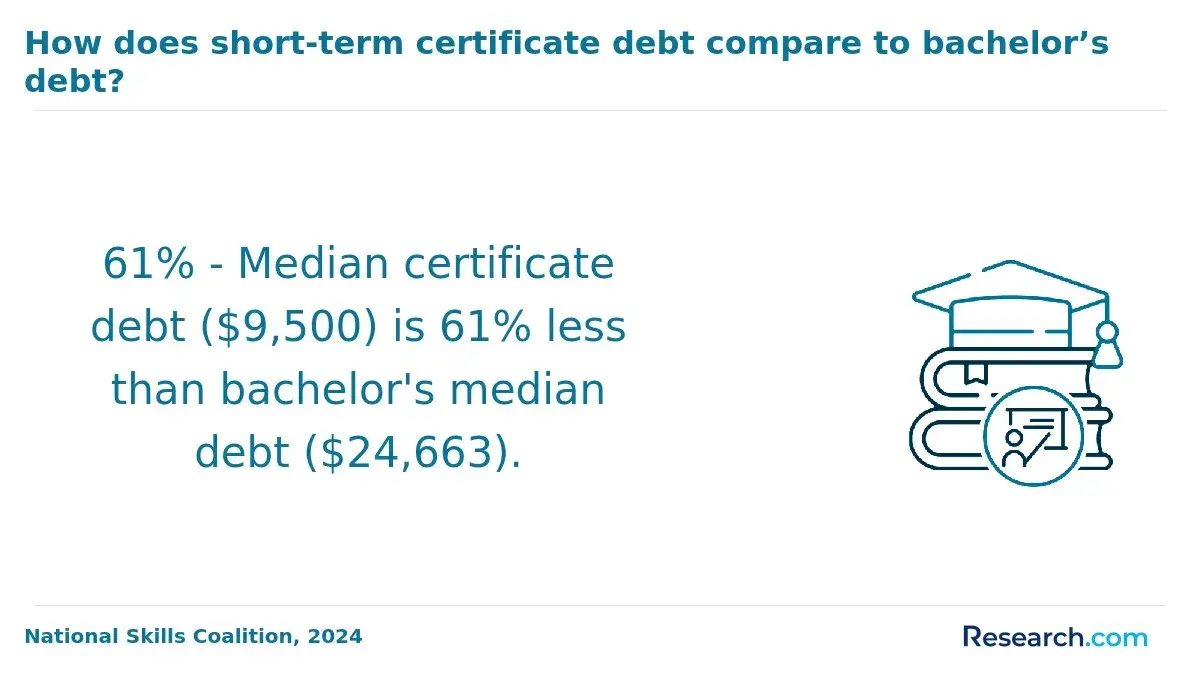
Tuition comparisons are most useful when students look at total cost rather than price per credit alone. A low tuition rate can be offset by technology fees, online course fees, textbooks, software subscriptions, exam costs, background checks, or out-of-district rates.
College Board's 2024 pricing data gives students a helpful benchmark: average published tuition and fees for public two-year in-district students were $4,050 for 2024-25. If an online associate degree costs far more than that, the program may still be worthwhile, but the school should provide a clear reason such as faster completion, stronger transfer pathways, or unusually strong support.
The table below shows how common cost structures compare. These are decision categories rather than guaranteed prices, because tuition varies by state, residency, credit load, and school policy.
| Cost factor | Lower-cost public online programs | Higher-cost private online programs | What students should compare |
| Tuition model | Often per credit with in-district, in-state, and out-of-state rates | Often flat online rates or per-credit tuition | Total tuition for the full credential, not one semester |
| Fees | May include online course, technology, graduation, and transcript fees | May include platform, resource, or student service fees | Mandatory fees across all terms |
| Books and software | May use open educational resources or bookstore materials | May bundle digital materials into tuition or fees | Whether EHR software, office applications, or exam prep costs extra |
| Residency impact | Can be substantial if the student is out of district or out of state | May be less dependent on state residency | Final cost after residency classification is confirmed |
| Transfer credit | Can sharply reduce cost if prior credits apply | Can be valuable but policies vary widely | Written transfer evaluation before enrollment |
Students should ask each school for a full program cost estimate before committing. The strongest affordability comparison includes tuition, fees, books, software, exam costs, transfer credits, expected aid, and the number of terms needed to finish.
How Competitive Is Admission to Accredited Online Medical Office Administration Degree Programs?
Admission to online medical office administration programs is usually less competitive than admission to clinical healthcare programs, but that does not mean every applicant will have the same starting point. Many associate degree programs use open or broad-access admissions while still requiring students to meet placement, prerequisite, residency, or technology requirements.
This is important because flexible admissions can be a strength for working adults and career changers. It can also hide extra time or cost if a student needs developmental coursework before taking college-level classes.
| Admissions item | Common requirement | Why it matters |
| Prior education | High school diploma, GED, or equivalent | Confirms eligibility for college-level enrollment and financial aid review |
| Placement | Math, reading, or writing placement through transcripts, test scores, or assessments | May affect whether students can start program courses immediately |
| Technology access | Reliable computer, internet access, webcam, and required software | Online success depends on meeting technical expectations from the first week |
| Program prerequisites | Sometimes keyboarding, computer applications, or introductory healthcare courses | Prerequisites can extend the timeline if not planned early |
| Background check | Possible for programs with internship, practicum, or healthcare-site components | Can affect placement eligibility for hands-on experiences |
Students should not treat easy admission as a red flag by itself. The better question is whether the program has clear academic expectations, strong advising, transparent outcomes, and enough support to help admitted students finish.
Which Learning Formats Offer the Greatest Flexibility in Online Medical Office Administration Degree Programs?
The most flexible online medical office administration programs are usually asynchronous, meaning students can complete weekly work without logging in at a fixed class time. This format is especially helpful for working adults, parents, and students balancing unpredictable schedules.
Flexibility still has limits. Most online courses have weekly deadlines, group projects, proctored exams, or scheduled advising appointments. Students comparing healthcare programs can see similar flexibility trade-offs in RN BSN online programs no clinicals, where online delivery may reduce campus time but does not remove academic workload.
The table below compares common learning formats and the type of student each format tends to serve best.
| Format | Best for | Strength | Potential drawback |
| Asynchronous online | Working adults and students with changing schedules | Highest schedule flexibility | Requires strong self-management |
| Synchronous online | Students who want live interaction | More structure and real-time discussion | Fixed meeting times may conflict with work |
| Hybrid | Students near campus who want some in-person support | Can combine online convenience with face-to-face help | Less practical for distant students |
| Accelerated terms | Students who can handle a faster workload | May shorten completion time | Can be difficult with full-time work |
| Part-time pathway | Students balancing family, work, or caregiving | Lower weekly workload | Longer time to completion |
A common mistake is choosing the fastest format without considering weekly workload. Students who work full time should ask how many hours per week each course typically requires and whether courses are offered every term.
What Student Support Services Improve Success in Online Medical Office Administration Degree Programs?
Student support can be the difference between enrolling and finishing. In online medical office administration programs, support is especially important because students must learn healthcare terminology, insurance processes, privacy rules, electronic health records, and professional communication without relying on daily campus interaction.
The most useful support services are the ones tied directly to completion and employment readiness. Students should look beyond a general "online support" promise and ask what help is available, when it is available, and whether it is included in tuition.
- Academic advising that maps every required course through graduation and flags prerequisites early.
- Online tutoring for writing, math, medical terminology, and computer applications.
- Technical support with evening or weekend availability for learning platforms, proctoring tools, and software access.
- Career services that help with healthcare resumes, interview preparation, local employer connections, and remote job-search strategies.
- Certification guidance for optional credentials such as medical administrative assistant or electronic health records credentials when aligned with the curriculum.
- Library access, research help, and citation support for students returning to school after a long gap.
Red flags include unclear advisor access, no published tutoring options, limited technology support, and career services that appear designed only for campus students. Online learners should receive services that are comparable in quality and accessibility to those available on campus.
Which Financial Aid Options Are Available for Accredited Online Medical Office Administration Degree Students?
Financial aid can substantially change the real cost of an accredited online medical office administration degree. The key is to compare net price-the amount left after grants and scholarships-rather than assuming the lowest listed tuition will always be the cheapest option.
Federal Student Aid lists the maximum Pell Grant at $7,395 for the 2024-25 award year, which can cover a meaningful share of tuition at many public two-year colleges for eligible students. Students considering a later move into clinical healthcare may also want to compare prerequisites and aid rules early for an online ASN program, because nursing pathways often have different clinical, lab, and admission costs.
Students should compare aid offers in a structured way before enrolling. The following steps help prevent surprises after the first term.
- Submit the FAFSA and list every school under serious consideration.
- Ask each college whether the program is Title IV eligible for federal grants and loans.
- Request a written estimate of tuition, fees, books, software, and required exam costs for the full program.
- Compare grants and scholarships before loans, because grants do not usually require repayment.
- Ask about state workforce grants, employer tuition reimbursement, military education benefits, and WIOA funding if you are eligible.
- Calculate expected borrowing against realistic entry-level wages in medical office roles.
The most common financial aid mistake is accepting a school's first award letter without comparing net cost across multiple institutions. A higher-tuition school may become affordable with grants, but a lower-cost school may still be the better investment if it offers similar outcomes with less borrowing.
Which Career Outcomes Are Associated With Accredited Online Medical Office Administration Degree Programs?
Accredited online medical office administration programs prepare students for administrative healthcare roles rather than clinical practice. Typical responsibilities include patient scheduling, front-desk communication, records management, insurance forms, billing support, referrals, medical terminology use, and compliance with privacy rules such as HIPAA.
BLS May 2024 wage data places medical secretaries and administrative assistants at about $45,000 nationally. That figure is a median, not a promise; actual pay depends on location, employer type, experience, software skills, and whether the role includes billing, coding, records, or supervisory duties.
The table below connects common program outcomes to related roles. It helps students evaluate whether the curriculum matches the job they actually want.
| Target role | Relevant program preparation | Helpful skills | Career note |
| Medical office assistant | Scheduling, patient intake, medical terminology, office software | Communication, accuracy, multitasking | Often a first healthcare administration role |
| Medical administrative assistant | Records, forms, insurance basics, healthcare office procedures | Organization, confidentiality, customer service | May exist in clinics, hospitals, specialty practices, and outpatient centers |
| Patient services representative | Front-desk systems, patient communication, referrals | Problem-solving, empathy, data entry | Good fit for students who like direct patient interaction without clinical duties |
| Billing support specialist | Insurance procedures, coding basics, claims workflow | Detail orientation, payer knowledge, persistence | Students seeking coding-heavy roles may need additional specialized training |
| Office coordinator | Administrative procedures, records, communication, workflow management | Leadership, scheduling, process improvement | Often requires experience beyond the degree |
Students who want long-term advancement into department leadership, operations, or healthcare administration may eventually consider an accelerated healthcare management degree online. That step is usually more relevant after gaining experience or completing a bachelor's degree pathway.
How Do Online and Campus-Based Medical Office Administration Degree Programs Compare?
Online and campus-based medical office administration programs can lead to similar academic credentials when they are offered by the same accredited institution. The better choice depends on how the student learns, how much structure they need, and whether they can access campus resources.
The strongest online programs are not "easier" versions of campus programs. They should teach the same core skills-medical terminology, electronic health records, insurance workflows, healthcare ethics, communication, and office systems-through a format that fits distance learners.
The table below compares the practical differences that affect student success.
| Factor | Online program | Campus-based program | Best choice when... |
| Schedule | Often more flexible, especially if asynchronous | Fixed class times and campus attendance | Online is better for students with work or caregiving obligations |
| Accountability | Requires self-direction and time management | Built-in structure through in-person meetings | Campus may help students who need routine and immediate feedback |
| Networking | Depends on virtual career services and local internships | May offer easier face-to-face networking | Campus may help students seeking local employer exposure |
| Cost | Can reduce commuting and relocation costs | May involve transportation, parking, or campus fees | Online may lower indirect costs even when tuition is similar |
| Technology | Requires reliable computer access and comfort with online systems | May provide more on-campus lab access | Campus may be better for students with limited home technology |
A practical rule is to choose online if you are organized, comfortable communicating digitally, and need schedule control. Choose campus or hybrid study if you benefit from in-person accountability or have limited access to reliable technology at home.
How Should Students Choose the Best Accredited Online Medical Office Administration Degree Program?
Students should choose an accredited online medical office administration degree by matching the program to their career goal, budget, learning style, and transfer plans. A program that is "best" for a full-time adult learner may not be best for a recent high school graduate who wants a future bachelor's degree.
The most reliable choice process is sequential: verify quality first, then compare cost, then evaluate fit. Students planning a long clinical leadership pathway should recognize that medical office administration is nonclinical; someone whose ultimate goal is advanced nursing may later compare a DNP program, but that is a very different educational route.
Use the following checklist before applying or paying an enrollment deposit. It focuses on decisions that affect completion, transfer, and return on investment.
- Confirm institutional accreditation through official sources, not advertising language.
- Identify the exact credential: associate degree, diploma, or certificate.
- Compare full program cost after grants, scholarships, transfer credits, and required fees.
- Ask whether the program is fully online, hybrid, asynchronous, synchronous, accelerated, or part time.
- Review the curriculum for electronic health records, insurance, medical terminology, healthcare law, communication, and office software.
- Request written transfer credit information if you may continue into a bachelor's degree.
- Ask how the school supports online students with tutoring, advising, technology, and career services.
- Compare career outcomes carefully, including what jobs recent students pursued and whether those outcomes match your goals.
- Avoid borrowing more than the likely wage range can reasonably support.
The best investment is usually the program that lets you finish with a recognized credential, minimal unnecessary debt, relevant healthcare office skills, and a realistic path to your next role. Rankings can help you start a search, but final selection should be based on accreditation, total cost, flexibility, support, and career fit.
Other Things You Should Know About Medical Office Administration
No. Medical office administration is primarily administrative and focuses on scheduling, records, communication, insurance workflows, and office systems. Medical assisting may include clinical tasks such as taking vital signs or assisting with procedures, depending on state rules and employer policies.
Certification is usually not a legal requirement for front-office roles, but some employers prefer credentials related to medical administration, billing, coding, or electronic health records. Check job postings in your area before paying for an exam.
Some roles, especially billing support, scheduling, patient access, and records-related positions, may offer remote or hybrid options. Entry-level remote jobs can be competitive, so experience with EHR systems, phone etiquette, and privacy compliance can help.
Many associate degrees are designed for about two years of full-time study. Part-time students may take longer, while students with transfer credits or accelerated terms may finish sooner.
References
- Medical Office Administration Online | 8 Month Program | UCI https://unitedcareer.edu/online-medical-office-administration/
- College Requirements: Understanding What Colleges Expect https://cbrg.info/college-requirements-guide/
- Medical Office Administrator Career https://slchc.edu/medical-office-administrator/medical-office-administrator-career/
- High School Classes Required for College Admission - National Association for College Admission Counseling (NACAC) https://www.nacacnet.org/high-school-classes-required-for-college-admission/
- Online Medical Administration Courses in Canada | Online Classes at CD-ED https://cd-ed.com/online-programs/medical-office/
- Earn An Online Medical Office Administration Certificate https://www.learnhowtobecome.org/best-online-medical-office-administration-certificate-programs/
- 2026: The Most Affordable MBA Programs in Health Administration with AACSB, ACBSP or IACBE Accreditation https://mhadegree.org/the-most-affordable-mba-programs-in-health-administration/
- Medical Office Administration - Forsyth Tech Community College https://www.forsythtech.edu/programs/medical-office-administration/
- 2025 Most Affordable Healthcare Administration Degrees Online https://www.onlineu.com/most-affordable-colleges/healthcare-administration-degrees
- Accredited Online Prerequisite Courses and Their Importance: 7 Great Insights - Prereqcourses https://www.prereqcourses.com/accredited-online-prerequisite-courses/