
2027 Most Affordable Online MBA in Finance Degree Programs

Co-Founder and Chief Data Scientist
An online MBA in finance is for professionals who want graduate-level business training with a deeper focus on financial strategy, investment decisions, risk management, valuation, and leadership. It is often considered by working adults who cannot pause their careers for a full-time campus MBA but still want a credential that may support advancement into finance, management, consulting, or executive-track roles.
This guide explains what to expect from an online MBA in finance, how long programs take, what they cost, how online and campus formats compare, which admissions requirements matter, and how to judge whether the degree is worth the investment. It also lists online MBA in finance programs for 2027 and highlights career paths, salary figures, accreditation, financial aid, and practical questions to ask before enrolling.
Quick Answer: Is an Online MBA in Finance Worth It?
An online MBA in finance can be worth it if you want a flexible graduate business degree, already have professional experience, and need stronger finance, analytics, and leadership skills for advancement. The strongest candidates usually choose accredited programs, compare total cost rather than tuition alone, and select a curriculum aligned with their target role, such as corporate finance, investment management, fintech, or financial planning.
- Online MBA in finance programs may be completed in about one to five years, depending on whether students enroll full-time, part-time, or in an accelerated format.
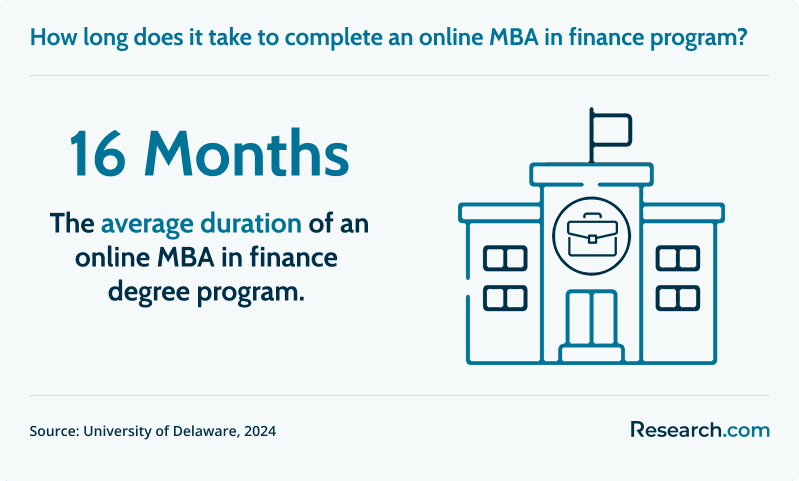
- Based on the programs reviewed, the average completion time is about 16 months, with around 44 credit hours.
- Common finance-related roles include financial manager, financial analyst, accountant and auditor, personal financial advisor, risk manager, portfolio manager, and financial consultant.
- Financial managers earn an average annual salary of $156,100, while financial analysts earn $99,890.
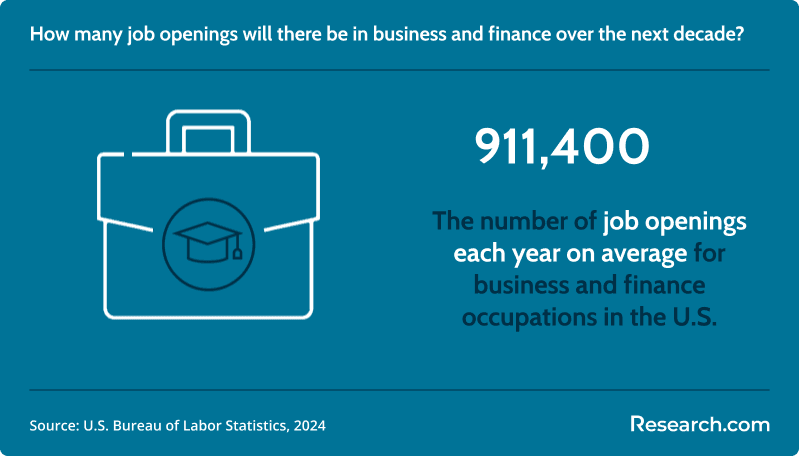
- About 911,400 job openings in business and financial occupations are expected each year, on average, over the next decade.
What can I expect from an online MBA in finance program?
An online MBA in finance combines broad business administration training with focused coursework in financial decision-making. Students usually study accounting, economics, leadership, strategy, operations, marketing, analytics, and management before moving into finance subjects such as corporate finance, investments, capital markets, risk management, valuation, and financial modeling.
The online format is designed for students who need schedule flexibility. Depending on the school, coursework may include recorded lectures, live virtual sessions, case studies, simulations, online discussion boards, team projects, and exams delivered through a learning management system. Strong programs also provide career coaching, alumni access, resume support, finance-related networking events, and academic advising.
Students should expect the program to be demanding. Finance-focused MBA coursework often requires quantitative reasoning, comfort with spreadsheets, data interpretation, and the ability to explain financial recommendations clearly to nontechnical stakeholders.
Where can I work with an online MBA in finance degree?
Graduates may pursue roles across organizations that make complex financial decisions. Common work settings include:
- Corporate finance departments
- Investment banking and capital markets firms
- Financial planning and advisory companies
- Consulting firms
- Government agencies and nonprofit organizations
- Insurance companies
- Accounting, analytics, real estate, and fintech-related organizations
How much can I make with an online MBA in finance degree?
Earnings depend on job title, employer, location, prior experience, specialization, and performance. An MBA does not guarantee a specific salary, but it may help professionals qualify for roles with greater responsibility. Common salary figures for finance-related occupations include financial managers at $156,100, financial analysts at $99,890, accountants and auditors at $79,880, and personal financial advisors at $99,580.
- Best Online MBA in Finance Programs for 2027
- How long does an online MBA in finance take?
- Online MBA in finance vs. on-campus MBA: Which format fits you?
- What does an online MBA in finance cost?
- Financial aid options for online MBA in finance students
- Online MBA in finance admissions requirements
- Common online MBA in finance courses
- Finance MBA specialization options
- How to choose the best online MBA in finance program
- Emerging trends in online MBA in finance programs
- Should you pursue more education after an online MBA in finance?
- Online MBA in finance ROI
- Why accreditation matters
- Networking and mentorship in online MBA programs
- Challenges to consider before enrolling
- Employer views of online MBA in finance degrees
- Online MBA in finance vs. other graduate business degrees
- Online MBA in finance vs. online executive MBA
- Soft skills that matter in finance MBA programs
- Career paths for online MBA in finance graduates
- Job market for online MBA in finance graduates
- How the degree prepares students for global finance challenges
- How to strengthen your credentials alongside the MBA
Best Online MBA in Finance Programs for 2027
How do we rank schools?
Research.com reviews programs using our methodology and data sources intended to support accurate, decision-focused school comparisons. Ranking inputs may include institutional and program information from the following sources:
- IPEDS database
- Peterson's database, including the Distance Learning Licensed Data Set
- College Scorecard database
- National Center for Education Statistics
1. Pennsylvania State University-World Campus
Pennsylvania State University’s World Campus offers an online MBA with more than 25 concentration options, including finance and business analytics. The program is designed around integration, collaboration, and engagement, which can appeal to working professionals who want a structured MBA experience without relocating. Students work with advisers to plan a course sequence that fits their schedule and career goals.
- Program Length: Two Years
- Tracks/concentrations: accounting, finance, business analytics, healthcare business, marketing analytics, and more.
- Cost per Credit/Tuition: $1,248
- Required Credits to Graduate: 48
- Accreditation: Association to Advance Collegiate Schools of Business (AACSB)
2. University of North Carolina at Chapel Hill
The University of North Carolina at Chapel Hill offers an online MBA finance concentration focused on financial strategy and analytics. Students can choose electives covering topics such as capital markets, tax, corporate valuation, and real estate. The program is built to connect business judgment with applied financial analysis. UNC also offers a master of finance option for students who prefer a more mathematics-intensive finance curriculum.
- Program Length: 18 to 36 months
- Tracks/concentrations: N/A
- Cost per Credit/Tuition: $2,803 (in-state), $3,792 (out-of-state).
- Required Credits to Graduate: 62
- Accreditation: AACSB
3. Babson College
Babson College offers a flexible online MBA pathway that may be completed in as fast as 18 months or extended to three years. Its finance concentration emphasizes shareholder value, securities valuation, trading, investment strategy, and corporate finance. Students may focus on investment or corporate finance and can expect coursework in areas such as capital markets, equities, financial trading strategies, real estate finance, and investment banking.
- Program Length: 18 to three years
- Tracks/concentrations: investment and corporate finance
- Cost per Credit/Tuition: $1,990
- Required Credits to Graduate: 24
- Accreditation: AACSB
4. Villanova University
Villanova University offers online MBA specialization options in areas such as finance, international business, marketing, sustainability, and business analytics. Students may begin in the general MBA track while deciding which specialization best supports their long-term plans. The accelerated hybrid option can be completed in as fast as 18 months. The curriculum also includes a social enterprise consulting practicum where students work with social enterprises, social businesses, and nonprofits on issues such as funding, logistics, and branding.
- Program Length: 18 months to two years
- Tracks/concentrations: business analytics, finance, strategic marketing, international business, sustainability, and more.
- Cost per Credit/Tuition: $1,300
- Required Credits to Graduate: 48
- Accreditation: AACSB
5. Purdue University Online
The Daniels School of Business at Purdue University offers an online MBA with a finance specialization. The concentration is designed to help students understand financial tools, investment decisions, valuation, portfolio theory, financial statements, and corporate finance. Students comparing timeline options may also review Purdue in the context of the fastest way to get a finance degree.
- Program Length: Two Years
- Tracks/concentrations: finance, digital marketing and analytics, human resources, business analytics, and more.
- Cost per Credit/Tuition: $1,250 (in-state), $1,293 (out-of-state).
- Required Credits to Graduate: 48
- Accreditation: AACSB
6. University of Delaware
The University of Delaware offers an online MBA finance specialization for students seeking stronger preparation in financial management, analysis, and reporting. Coursework emphasizes investment and valuation concepts such as risk and return, financial risk management, and portfolio theory.
- Program Length: 16 months
- Tracks/concentrations: N/A
- Cost per Credit/Tuition: $950
- Required Credits to Graduate: 44
- Accreditation: AACSB
7. University of Massachusetts-Amherst
The Isenberg School of Management at the University of Massachusetts offers an online MBA with a focus in finance. Students combine general business courses with finance electives and may prepare for roles in corporate finance, investment banking, venture capital, or consulting. The program also allows students to substitute up to three credits of finance electives with flexible electives in areas such as business analytics, project management, and data management.
- Program Length: One to two years
- Tracks/concentrations: N/A
- Cost per Credit/Tuition: $1,930
- Required Credits to Graduate: 45
- Accreditation: AACSB
8. Florida Atlantic University
Florida Atlantic University offers an online MBA with concentration options including finance, international business, accounting, marketing, operations management, and business analytics. The program is fully online, has no residency or international residency requirement, and allows students to use electives to broaden their knowledge across industries and disciplines.
- Program Length: 16 to 23 months
- Tracks/concentrations: finance, marketing, accounting, international business, operations management, business analytics, and more.
- Cost per Credit/Tuition: $371.82 (in-state), $1,026.81 (out-of-state).
- Required Credits to Graduate: 40 to 46
- Accreditation: AACSB
9. Southern New Hampshire University
Southern New Hampshire University offers an online MBA in finance that does not require SAT or ACT scores. The program covers short-term financial management, capital budgeting, portfolio management, ethics, leadership, strategy, and innovation. It may fit students aiming for roles such as investment broker, project analyst, business owner, or top executive.
- Program Length: One Year
- Tracks/concentrations: N/A
- Cost per Credit/Tuition: $637 (full-time), $470 (military benefits).
- Required Credits to Graduate: 30
- Accreditation: Accreditation Council for Business Schools and Programs (ACBSP)
10. Syracuse University
Syracuse University offers an online MBA finance specialization for students preparing for leadership roles in finance. Students study managerial finance and may choose electives such as financial analytics, introduction to derivatives, corporate finance policy and strategy, and investment analysis. The curriculum also includes exposure to investment, corporate finance, risk management, and real estate.
- Program Length: 24 months
- Tracks/concentrations: N/A
- Cost per Credit/Tuition: $1,734
- Required Credits to Graduate: 54
- Accreditation: AACSB
Students comparing business-related online degrees may also want to review affordability in other fields, such as how an online nutrition program can reduce overall nutritionist degree cost.
Online MBA in Finance Program Comparison
| School | Program length | Cost per credit/tuition | Credits | Accreditation |
| Pennsylvania State University-World Campus | Two Years | $1,248 | 48 | AACSB |
| University of North Carolina at Chapel Hill | 18 to 36 months | $2,803 (in-state), $3,792 (out-of-state). | 62 | AACSB |
| Babson College | 18 to three years | $1,990 | 24 | AACSB |
| Villanova University | 18 months to two years | $1,300 | 48 | AACSB |
| Purdue University Online | Two Years | $1,250 (in-state), $1,293 (out-of-state). | 48 | AACSB |
| University of Delaware | 16 months | $950 | 44 | AACSB |
| University of Massachusetts-Amherst | One to two years | $1,930 | 45 | AACSB |
| Florida Atlantic University | 16 to 23 months | $371.82 (in-state), $1,026.81 (out-of-state). | 40 to 46 | AACSB |
| Southern New Hampshire University | One Year | $637 (full-time), $470 (military benefits). | 30 | ACBSP |
| Syracuse University | 24 months | $1,734 | 54 | AACSB |
Here’s what graduates have to say about their online MBA in finance degrees:
-
: "
"My online MBA in finance changed the way I approached my career. I developed a stronger grasp of financial principles and strategy, and the online format made it possible to keep working while managing family responsibilities. The faculty support and interactive platform helped make the experience valuable." - Emily
"
-
: "
"The online format gave me the flexibility I needed as a working professional. I could study from anywhere and move through coursework at a pace that fit my schedule. The focus on case studies and applied finance helped me build confidence in real business situations." - Jett
"
-
: "
"Even without a traditional classroom, I felt connected to classmates and faculty through virtual discussions and group projects. The program helped me practice financial analysis, decision-making, and technology-enabled problem solving in ways that supported my career goals." - Lizzie
"
Key Findings
- Online MBA in finance programs are built for students who want both management training and specialized finance expertise.
- Program length varies significantly, from accelerated formats to part-time options that may extend up to five years.
- Cost can differ widely by institution, credit requirement, residency status, and fees.
- Accreditation is one of the most important quality signals when comparing programs.
- Graduates may pursue work across corporate finance, banking, investment, consulting, government, nonprofit, insurance, accounting, and advisory settings.
- Business and financial occupations are expected to have about 911,400 job openings each year, on average, over the next decade.
How long does it take to complete an online MBA in finance program?
Most full-time online MBA in finance students complete their degree in one to two years, depending on the program structure and course load. Based on the programs reviewed, the average timeline is about 16 months, with around 44 credit hours. Part-time students commonly take about two to three years because they are balancing graduate study with work and personal responsibilities.
Some schools offer accelerated options, including 12-month MBA pathways, while others allow students to extend enrollment up to five years. Before choosing a pace, consider your workload, family obligations, tuition payment plan, employer reimbursement rules, and tolerance for intensive coursework.
How does an online MBA in finance program compare to an on-campus program?
The best format depends on how you learn, how much flexibility you need, and how important in-person networking is to your goals.
| Factor | Online MBA in finance | On-campus MBA in finance |
| Schedule flexibility | Often better for working professionals because coursework can be completed remotely and may include asynchronous content. | Less flexible because students usually attend classes at set times and locations. |
| Networking | May include virtual networking, online alumni groups, group projects, and optional residencies. | Usually offers more frequent face-to-face interaction with classmates, faculty, recruiters, and alumni. |
| Learning technology | Relies on digital platforms, live video, discussion boards, virtual collaboration, and online databases. | Uses classroom discussion, in-person group work, campus events, and physical facilities. |
| Cost considerations | May reduce commuting, relocation, housing, and campus-related expenses. Students seeking lower-cost options can also compare affordable finance degree online programs. | May involve additional costs for housing, commuting, parking, relocation, or reduced work hours. |
| Best fit | Students who need flexibility and are comfortable managing their own schedule. | Students who prefer classroom structure and in-person networking. |
What is the average cost of an online MBA in finance program?
The cost of an online MBA in finance varies by school, program length, credit requirement, residency status, and fees. Among the examples reviewed, SNHU costs about $19,110 for full-time students and $14,100 for students using military benefits. Other examples include about $59,904 at Penn State, $47,700 at Babson College, and about $62,400 at Villanova University.
When comparing programs, calculate the full price rather than looking only at cost per credit. Include technology fees, books, residency costs if any, graduation fees, and lost income if you plan to reduce work hours.
What are the financial aid options for students enrolling in an online MBA in finance program?
Online MBA in finance students may qualify for several types of aid, but availability depends on the school, enrollment status, citizenship or residency status, and individual financial circumstances.
- Federal Student Aid: Eligible students can complete the Free Application for Federal Student Aid (FAFSA) to be considered for federal aid options such as loans, grants, and work-study.
- Scholarships: Universities, private organizations, employers, and professional associations may offer awards based on merit, financial need, leadership, background, or finance-related goals.
- Employer sponsorship or tuition reimbursement: Some employers help pay for graduate education when the degree aligns with the employee’s role or advancement plan.
- Grants: Need-based grants may be available through federal, state, or institutional sources and generally do not require repayment.
- Private loans: Banks and private lenders may offer education loans, but students should compare interest rates, repayment terms, and borrower protections carefully.
- Military benefits: Active-duty service members, veterans, and eligible family members may be able to use GI Bill benefits or other military-specific education support.
What are the prerequisites for enrolling in an online MBA in finance program?
Admissions requirements differ by school, but most online MBA in finance programs look for evidence that applicants can handle graduate business coursework and contribute professional perspective to class discussions.
- Bachelor’s degree: Applicants generally need a bachelor’s degree from an accredited institution. Some programs prefer business, finance, accounting, economics, or quantitative coursework, but many accept applicants from other fields. Students still comparing undergraduate pathways can review the highest-paid bachelor degrees.
- Professional experience: Many MBA programs require or prefer several years of work experience, especially for applicants seeking leadership-oriented business training.
- GMAT or GRE scores: Some schools require standardized test scores, while others provide waivers based on work experience, prior grades, or other qualifications.
- Letters of recommendation: Programs may request professional or academic references who can describe the applicant’s leadership potential, work quality, and readiness for graduate study.
- Personal statement: Applicants usually explain why they want the MBA, how finance fits their career goals, and why the specific program is a good match.
- Resume or CV: A current resume helps admissions committees evaluate work history, leadership experience, technical skills, and progression.
- Official transcripts: As with many graduate programs, including an online doctorate in education, applicants are commonly asked to submit transcripts from previously attended institutions.
What courses are typically in an online MBA in finance program?
Online MBA in finance programs usually combine core MBA courses with finance electives. Students comparing timelines may also consider whether one year MBA programs provide enough depth for their career goals.
- Investment Analysis: Students learn methods for evaluating investment opportunities, assessing asset values, and managing portfolios.
- Financial Markets and Institutions: This course examines market structure, financial intermediaries, regulations, and the role of institutions in financial activity.
- International Finance: Students study exchange rate risk, international capital flows, cross-border investment, and global financial decision-making.
- Financial Risk Management: Coursework covers risk identification, assessment, mitigation, hedging, derivatives, and risk modeling.
- Strategic Management: Students learn how organizations set direction, analyze competition, execute strategy, and pursue long-term objectives.
- Business Ethics and Corporate Responsibility: This area examines governance, stakeholder responsibility, ethical decision-making, and business conduct. Students who want more focused accounting-related training may also compare the best online bookkeeping certificate programs.
What types of specializations are available in an online MBA in finance program?
Some online MBA programs offer a general finance concentration, while others allow students to narrow their focus. Choose a specialization based on the roles you want after graduation.
| Specialization | Best for students interested in | Common focus areas |
| Corporate Finance | Finance leadership inside companies | Capital structure, mergers and acquisitions, valuation, budgeting, and investment decisions |
| Investment Management | Asset management, portfolio analysis, and securities research | Portfolio management, securities analysis, asset allocation, and investment strategy |
| Financial Planning | Client advisory, wealth management, and personal finance | Retirement planning, estate planning, tax planning, and client financial strategies |
| Fintech | Technology-driven finance roles | Blockchain, cryptocurrencies, digital banking, financial software, and analytics. Students may also strengthen technical preparation through an accelerated online computer science degree. |
| Real Estate Finance | Real estate investment and property finance | Commercial real estate, property valuation, financing, and real estate markets |
| International Finance | Global finance, multinational firms, and cross-border investment | Foreign exchange, international investment, and global financial operations |
How do I choose the best online MBA in finance program?
The best online MBA in finance is not simply the highest-ranked or most expensive program. It is the program that fits your career target, budget, schedule, learning style, and need for employer-recognized quality.
- Verify accreditation first: Look for recognized business accreditation from organizations such as the Association to Advance Collegiate Schools of Business (AACSB), ACBSP, or IACBE, as well as appropriate institutional accreditation.
- Match the curriculum to your target role: Corporate finance, investment management, fintech, financial planning, and international finance require different course strengths.
- Compare total program cost: Include tuition, fees, books, travel, technology requirements, and potential lost income.
- Review student support: Strong online programs offer advising, career coaching, library access, technical support, and finance-related networking.
- Evaluate the learning platform: As with choosing a nurse practitioner degree online, online students should examine whether the platform supports interaction, collaboration, faculty access, and academic resources.
- Ask about outcomes carefully: Review employment support and alumni pathways, but avoid assuming that any program can guarantee a promotion or salary increase.
Questions to ask before enrolling
- Is the business school accredited by AACSB, ACBSP, or IACBE?
- Does the program offer finance electives tied to my career goal?
- Are courses synchronous, asynchronous, or a mix of both?
- How often will I interact with faculty and classmates?
- What is the total cost after fees?
- Can I use employer reimbursement, military benefits, scholarships, or federal aid?
- Does the program require residencies, travel, or live attendance?
- What career services are available specifically for online MBA students?
What are the emerging trends shaping online MBA in finance programs?
Online MBA in finance programs are adapting to changes in financial technology, analytics, sustainability, and global business. Many curricula now place greater emphasis on fintech, artificial intelligence-supported analytics, financial modeling, digital transformation, and sustainability finance. These topics matter because finance professionals increasingly work with larger datasets, faster decision cycles, and technology-enabled financial products.
Students should look for programs that teach both financial judgment and modern tools. Courses, simulations, and projects that involve data analytics, valuation, risk assessment, and financial technology may be especially useful for students targeting roles in the highest paid MBA concentrations.
Should I pursue further education after an online MBA in finance?
Further education is not necessary for every MBA graduate. It may make sense if you want to move into research, academia, consulting, organizational transformation, or executive-level leadership that requires deeper expertise beyond finance. For example, an online doctorate in organizational leadership may fit professionals who want advanced study in strategy, governance, leadership systems, and organizational change.
Before pursuing another degree, compare the opportunity cost with alternatives such as professional certifications, employer-sponsored leadership programs, industry credentials, or targeted technical training.
What is the return on investment of an online MBA in finance program?
The return on investment of an online MBA in finance depends on what you pay, how much career mobility the degree creates, and how well the program fits your goals. A lower-cost program can produce a strong ROI if it is accredited, respected by employers, and aligned with your target role. A higher-cost program may be worthwhile if it provides stronger brand value, networking, recruiting access, or specialized coursework that supports advancement.
Students focused on affordability should compare affordable MBA programs online and estimate total debt, monthly repayment, employer reimbursement, expected career path, and the time required to recover the investment.
How does accreditation impact the value of an online MBA in finance program?
Accreditation is one of the clearest ways to evaluate whether an online MBA in finance meets recognized academic and professional standards. Business accreditors assess areas such as curriculum quality, faculty qualifications, assessment practices, and institutional support. Employers may view accredited programs more favorably because accreditation signals that the school has gone through external review.
Students should check both institutional accreditation and business-school accreditation. Accreditation can also matter for transfer credits, employer tuition reimbursement, admission to doctoral programs, and international recognition. When evaluating ROI, compare accreditation together with cost, including lower-cost graduate business options such as cheap EMBA programs.
How do online MBA in finance programs facilitate networking and mentorship?
Quality online MBA programs do not rely only on recorded lectures. Many provide virtual networking events, alumni communities, group consulting projects, peer discussion forums, faculty office hours, and mentor matching. These features matter because finance careers often advance through professional credibility, referrals, industry knowledge, and access to decision-makers.
Students who want an intensive format with networking built into a shorter timeline may compare online MBA programs 1 year. However, shorter programs can be academically demanding, so applicants should weigh speed against available study time and networking depth.
What potential challenges should candidates consider with an online MBA in finance program?
Online MBA programs offer flexibility, but they are not easier by default. Students must manage deadlines, virtual teamwork, technical tools, and finance-heavy coursework while often continuing to work full time.
- Self-discipline: Online students need a reliable weekly study schedule and must avoid falling behind.
- Limited in-person contact: Students who rely on face-to-face interaction may need to be proactive about virtual networking.
- Technology dependence: A stable internet connection, comfort with learning platforms, and access to required software are essential.
- Team coordination: Group projects can be difficult when classmates work across time zones and schedules.
- Accelerated workload: Students considering fast MBA programs should confirm they can handle compressed coursework without sacrificing performance.
How do employers perceive an online MBA in finance degree?
Employers are more likely to respect an online MBA in finance when it comes from an accredited institution with a rigorous curriculum and relevant career preparation. Hiring managers typically care less about whether classes were online and more about the candidate’s skills, experience, communication ability, leadership record, and ability to solve financial problems.
Applicants can strengthen employer perception by selecting an accredited program, completing applied finance projects, building proficiency with current tools, and clearly connecting the MBA to measurable career accomplishments. Students comparing earlier business education options may also review an affordable bachelor's degree in business administration as part of a longer-term business education plan.
How does an online MBA in finance differ from other graduate business programs?
An online MBA in finance differs from a general business degree because it combines broad management training with deeper financial analysis. Students still learn leadership, strategy, operations, marketing, and organizational decision-making, but finance electives add specialized preparation in areas such as capital markets, investment strategy, valuation, risk, and corporate financial management.
Compared with a highly specialized master’s in finance, an MBA usually has broader management content. Compared with a general management degree, it usually provides stronger finance coursework. Students still deciding between business pathways can review business administration vs management for a broader comparison of business degree focus areas.
How does an online MBA in finance differ from an online executive MBA?
An online MBA in finance is usually designed for professionals who want graduate business training with specialized finance coursework. An online executive MBA is generally built for experienced managers and executives who already have significant leadership experience and want broader strategic, organizational, and executive-level development.
If your main goal is to deepen finance expertise, an online MBA in finance may be the better fit. If your goal is enterprise leadership and peer learning with experienced executives, an online executive MBA may be more appropriate.
What soft skills are critical for success in an online MBA in finance program?
Technical finance skills are essential, but they are not enough. Finance professionals must explain complex information, influence decisions, collaborate with nonfinance teams, and make recommendations under uncertainty.
- Communication: Students must translate financial analysis into clear recommendations for executives, clients, or stakeholders.
- Critical thinking: Finance coursework often requires evaluating incomplete data, comparing alternatives, and defending assumptions.
- Adaptability: Markets, regulations, technologies, and business models change quickly.
- Time management: Online students often balance coursework, work, and personal responsibilities.
- Teamwork: Virtual group projects require coordination, accountability, and conflict resolution.
- Ethical judgment: Financial decisions can affect investors, employees, customers, and communities.
Students who want a rigorous business-school quality signal may compare an online MBA accredited by AACSB.
What career paths are available for graduates of online MBA in finance programs?
Online MBA in finance graduates may pursue several finance and management career paths, depending on their prior experience and specialization.
| Career path | Typical responsibilities | Who it may fit |
| Financial Analyst | Analyze data, research markets, evaluate performance, and support investment or business decisions. | Students who enjoy modeling, research, and data-driven recommendations. |
| Finance Manager | Oversee budgeting, forecasting, financial operations, reporting, and strategic financial planning. | Professionals seeking leadership in corporate finance or organizational finance teams. |
| Investment Banker | Advise clients on mergers, acquisitions, capital raising, and transaction strategy. | Students interested in high-pressure deal environments and capital markets. |
| Risk Manager | Identify, assess, monitor, and reduce risks such as credit, market, operational, and liquidity risk. | Professionals drawn to risk analysis, controls, regulation, and uncertainty management. |
| Portfolio Manager | Manage investment portfolios, asset allocation, and performance for individuals or institutions. | Students interested in securities, markets, and investment strategy. |
| Financial Consultant | Advise clients on financial strategy, tax planning, wealth management, or business finance issues. | Professionals who combine finance knowledge with client-facing communication. |
| Entrepreneur/Startup Founder | Use finance knowledge to launch, fund, and manage ventures, including fintech-related businesses. | Students who want to apply financial strategy to new business creation. |
Related business and financial occupations also employ large numbers of professionals. In the U.S., there are 1,538,400 accountants and auditors, 868,600 market research analysts, 376,100 financial analysts, and 51,600 budget analysts. These workers support accounting firms, market research organizations, financial institutions, government agencies, and other employers. The chart below shows the number of professionals employed in finance-related areas in the U.S. as of 2022:
What is the job market for graduates with an online MBA in finance degree?
The job market for online MBA in finance graduates is supported by demand across banking, investment, corporate finance, consulting, insurance, government, and financial services. About 911,400 job openings in business and financial occupations are expected each year, on average, over the next decade.
Opportunities may be strongest for graduates who pair the MBA with relevant experience, analytical capability, technical tools, communication skills, and a clear specialization. Areas such as fintech, sustainable finance, risk management, and global financial services may create additional pathways, but applicants should evaluate local labor market conditions and role-specific requirements before enrolling.
How does an online MBA in finance prepare you for global financial challenges?
An online MBA in finance can help students understand how financial decisions change across countries, markets, currencies, regulations, and cultures. This preparation is useful for professionals working with multinational companies, international investments, cross-border transactions, or global supply chains.
- Global markets and economic systems: Students examine how international markets operate and how political, economic, and social conditions affect financial decisions.
- International financial management: Coursework may cover exchange rate risk, tax considerations, cross-border investments, and multinational reporting.
- Global investment strategy: Students learn to evaluate international markets, assess emerging-market opportunities, and compare global portfolio risks and returns.
- Cultural awareness: Finance professionals working across borders must communicate effectively with teams, clients, and stakeholders from different business cultures.
- Applied global learning: Case studies, simulations, and projects can help students practice decision-making in international financial scenarios. Students seeking affordability may compare the cheapest online finance master's degree programs as an alternative or complement.
How can you enhance your credentials alongside an online MBA in finance?
An online MBA in finance can be strengthened with targeted credentials and technical skills. Certifications such as the Chartered Financial Analyst (CFA), Certified Public Accountant (CPA), or Financial Risk Manager (FRM) may help demonstrate specialized expertise in investment analysis, accounting, or risk. Students seeking shorter credential options can also compare easy finance certifications.
Technical skills can also matter. Familiarity with tools such as Bloomberg Terminal, Tableau, or Python for financial analysis may improve employability in data-heavy finance roles. The best credential strategy depends on your target job: investment roles may value CFA-related preparation, accounting leadership may require CPA eligibility, and risk-focused jobs may benefit from FRM-related knowledge.
Common mistakes to avoid when choosing an online MBA in finance
- Choosing a program without checking accreditation: Always verify institutional and business-school accreditation before applying.
- Looking only at tuition per credit: Total cost can change once fees, books, travel, and credit requirements are included.
- Assuming online means easier: Online MBA programs require discipline, independent planning, and consistent participation.
- Ignoring career fit: A finance MBA should connect clearly to your target role, not just sound impressive.
- Overvaluing rankings: Rankings can help, but curriculum, cost, accreditation, support, and outcomes matter more for your individual decision.
- Assuming salary outcomes are guaranteed: Salary depends on role, location, experience, employer, performance, and market conditions.
- Skipping employer reimbursement details: Some employers require minimum grades, continued employment, or preapproval before reimbursing tuition.
Key Insights
- An online MBA in finance is best for professionals who want flexible graduate business education with deeper preparation in financial strategy, investment analysis, risk, valuation, and leadership.
- Program quality depends heavily on accreditation, curriculum relevance, faculty support, career services, networking access, and total cost.
- The degree may support advancement into finance and management roles, but it does not guarantee a promotion or salary increase.
- Students should compare program length carefully. Accelerated options can save time, while part-time formats may be more realistic for working professionals.
- ROI is strongest when the MBA aligns with a specific career goal and is paired with relevant experience, applied projects, technical skills, and, when useful, professional certifications.
- Before enrolling, ask whether the program’s finance courses, accreditation, online format, cost, and career support match the outcome you want.
Resources:
- Babson College. (2024). Tuition and Financial Aid. https://www.babson.edu/graduate/admissions/tuition-and-financial-aid/tuition-and-deadlines
- Pennsylvania State University. (2024). Costs and Financial Aid. https://www.worldcampus.psu.edu/degrees-and-certificates/penn-state-online-mba-business-administration-masters-degree#costs
- Southern New Hampshire University. (2024). MBA in Finance: Tuition & Fees. https://www.snhu.edu/online-degrees/masters/mba-online/mba-in-finance
- University of Delaware. (2024). Online MBA: Finance Specialization. https://www.udel.edu/academics/online/programs/mba-masters-business-administration/finance-specialization
- U.S. Bureau of Labor Statistics. (2024). Business and Financial Occupations. https://www.bls.gov/ooh/business-and-financial
- Villanova University. (2024). Admissions: Tuition. https://www1.villanova.edu/university/business/academics/graduate-programs/mba/professional-mba/admissions.html
Other Things You Should Know About Online MBA in Finance Programs
Yes, many affordable online MBA in Finance programs offer financial aid options like scholarships, grants, and federal student loans. Check with individual programs for specific offerings and eligibility criteria in 2027.
Most affordable online MBA in finance programs require about 30 to 36 credit hours. Many schools add 6 to 12 foundation credits for students without business coursework. Full-time students often finish in 12 to 18 months, while part-time enrollment usually takes 2 to 3 years.


