2027 How to Get Into MBA Programs at Top Business Schools

Co-Founder and Chief Data Scientist
Choosing an MBA program is no longer just a question of prestige. Applicants now have to weigh cost, format, accreditation, admissions requirements, specialization, career outcomes, and whether the degree fits their timeline. The decision matters because the U.S. Bureau of Labor Statistics projects employment in Business and Financial occupations to grow considerably faster than the average for all U.S. jobs from 2024 to 2034, with 942,500 job openings each year during that period.
This guide explains what an MBA is, who benefits most from earning one, how to prepare a strong application, and how to compare programs before committing time and money. It is designed for working professionals, recent graduates, career changers, and business-focused students asking, “What MBA program is right for me?"
How to Get Into MBA Programs Table of Contents
- What is an MBA?
- Career Benefits of an MBA
- Requirements for an MBA Program Application
- Strategies to Strengthen Your MBA Application
- What Undergraduate Degree Best Prepares You for an MBA?
- How Can I Manage the Financial Investment of an MBA?
- Is an Executive MBA a Cost-Effective Option?
- What Role Do Accreditation and Rankings Play in an MBA's Value?
- Top MBA Programs for 2027
- How Do Global Experiences Shape an MBA Journey?
- Is a Doctorate in Business a Viable Next Step After an MBA?
- What unique specializations are available in MBA programs?
- How to Leverage Technology to Enhance MBA Education
- How Are Emerging Blockchain and Fintech Trends Impacting MBA Programs?
- How to Evaluate the ROI of an MBA
Quick Answer: How Do You Get Into an MBA Program?
To get into an MBA program, you generally need a bachelor’s degree, a strong academic record, professional experience, a targeted resume, application essays, recommendation letters, and, for many programs, GMAT or GRE scores. Competitive applicants also show leadership potential, clear career goals, and a specific reason for choosing each school.
The strongest MBA application is not simply the one with the highest test score. Admissions committees usually look for evidence that an applicant can handle graduate business coursework, contribute to peer learning, and use the MBA to pursue realistic career objectives.
| Application factor | Why it matters | How to strengthen it |
| Academic preparation | Shows readiness for quantitative and analytical coursework | Highlight strong grades, relevant courses, or recent business, statistics, accounting, or economics training |
| Professional experience | Demonstrates maturity, workplace judgment, and leadership exposure | Use measurable results, promotions, project ownership, and team leadership examples |
| Test scores | Give schools a standardized measure of academic readiness when required | Prepare early, retake if appropriate, and confirm whether your target programs offer waivers |
| Essays | Explain your goals, motivation, fit, and personal story | Connect your past experience, MBA plans, and post-graduation goals clearly |
| Interview | Allows the school to evaluate communication skills and program fit | Practice concise career stories and prepare thoughtful questions about the program |
What is an MBA?
A Master of Business Administration, or MBA, is a graduate business degree focused on management, leadership, financial decision-making, strategy, and organizational performance. It is commonly pursued by professionals who want to move into management, consulting, finance, entrepreneurship, operations, product leadership, or other business-facing roles. It can also support advancement in business-adjacent fields, including some career paths in finance. MBAs remained the most in-demand master's degree by employers in 2025, with 90% of recruiters planning to hire MBA graduates this year.
Most MBA programs combine core business courses with electives or concentrations. Core subjects often include accounting, finance, marketing, organizational behavior, business ethics, operations, analytics, and strategic management. Students may also complete case analyses, team projects, consulting assignments, internships, simulations, or capstone work that connects classroom concepts to business problems.
The degree is designed to build both technical and managerial ability. Students learn how to read financial statements, evaluate markets, manage teams, communicate recommendations, make decisions with incomplete information, and understand how different parts of an organization affect one another.
MBA programs are available in several formats, including full-time, part-time, executive, hybrid, and online options. Many working professionals also compare MBA programs with related graduate business pathways, such as a masters of management online, especially when they want management training without the same MBA structure. Depending on format, an MBA typically takes one to two years to complete.
Graduates use the degree in many ways. Some move into corporate management, consulting, investment roles, marketing leadership, operations, product management, or entrepreneurship. Others use the MBA to pivot industries, qualify for promotion, or strengthen business knowledge for roles in healthcare, technology, nonprofit leadership, government, or family business management.
Career Benefits of an MBA
The central question for many applicants is, “Is an MBA worth it?" The answer depends on your career stage, program cost, employer expectations, and target role. For some professionals, the MBA can accelerate promotion, broaden leadership options, and improve earnings compared with many salaries for finance majors. For others, a specialized master’s degree, certificate, or employer-sponsored training may be a better fit.
Stronger Business Knowledge and Management Skills
An MBA gives students a structured way to understand how companies make money, compete, hire, market, finance growth, manage risk, and measure performance. This is especially valuable for professionals who have strong technical or functional expertise but limited formal business training.
The degree also helps students connect business functions. For example, a pricing decision affects marketing, finance, sales, customer behavior, and operations. MBA coursework is built around this kind of cross-functional thinking, which is useful for managers who need to make decisions beyond one department.
Strategic thinking is another major part of the MBA experience. Students learn to evaluate market conditions, competitors, internal capabilities, and long-term risks before recommending a plan. These skills are especially relevant for leadership, consulting, product strategy, business development, and general management roles.
Financial fluency is also a core advantage. MBA students typically practice interpreting financial statements, evaluating budgets, comparing investment opportunities, and using financial information to support business decisions. This matters even for non-finance managers because budget ownership and performance accountability are common at higher levels.
Better Job Prospects and More Career Options
An MBA can improve a candidate’s visibility for roles that require business judgment, leadership ability, and comfort with complex decisions. Employers may value MBA graduates for management-track positions, consulting roles, finance functions, rotational leadership programs, and strategy-focused jobs.
In a recent survey conducted by the Graduate Management Admission Council, MBA talent was expected to be the most-hired in 2024, even compared with bachelor's and industry candidates. The Energy/Utilities industry had the highest percentage of MBA hiring among surveyed employers, with 100% hiring an MBA. The Technology industry had the lowest percentage in that survey, with 93% of employers hiring MBAs.
Some professionals also use dual-degree options to widen their career range. For example, those interested in healthcare leadership may compare traditional MBA programs with MSN MBA dual degree programs, especially if they want both clinical leadership and business preparation.
A Larger Professional Network
Networking is one of the most practical benefits of an MBA. Students often build relationships with classmates, faculty, alumni, career coaches, recruiters, executives, and guest speakers. These connections can lead to job referrals, mentorship, startup partnerships, consulting leads, or industry introductions.
The value of the network depends heavily on the school, cohort quality, alumni engagement, and how actively the student participates. Simply enrolling does not guarantee access to career opportunities. Students who attend events, join professional clubs, complete internships, and maintain relationships usually benefit more than those who treat the MBA as coursework only.
Potential for Higher Compensation
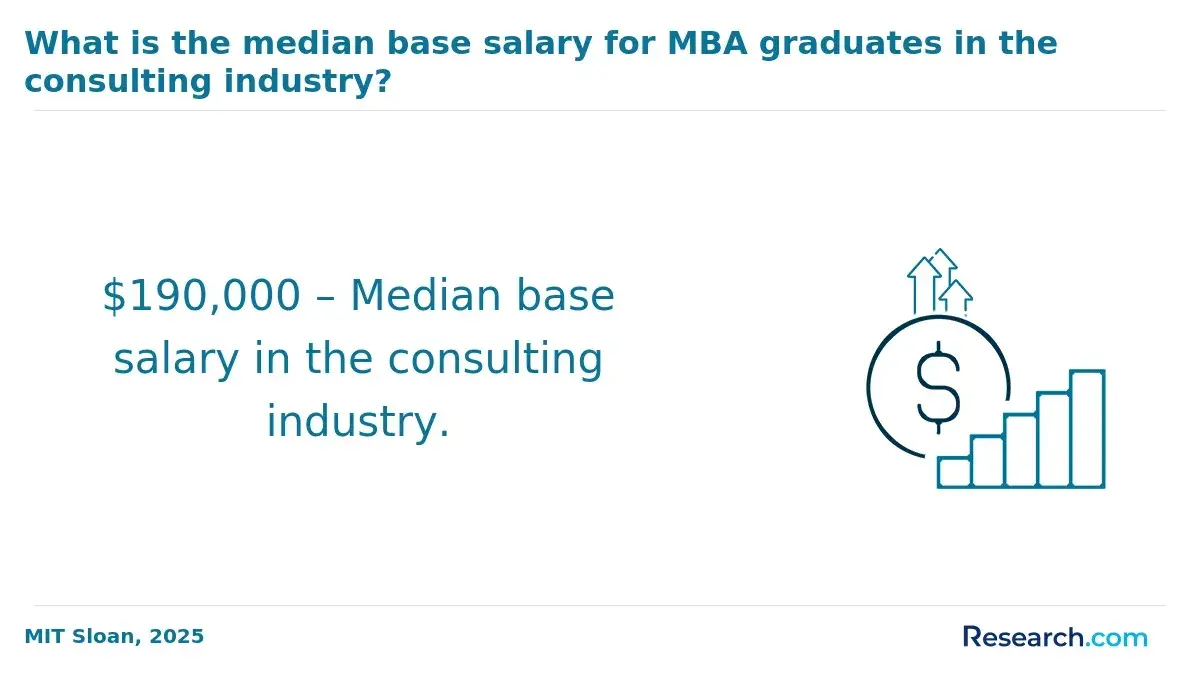
An MBA can improve earning power, especially when it leads to a promotion, industry pivot, or entry into higher-paying fields. The median starting salary for MBA Graduates with US companies was $125,000 in 2025.
For comparison, the average projected starting salary for bachelor’s degree holders in business or business-related fields was $75,000.
Compensation is not limited to base salary. Some employers compete for MBA talent with bonuses, relocation support, professional development budgets, or educational assistance. In one surveyed group, 48% of employers offered educational assistance as an employment benefit.
Requirements for an MBA Program Application
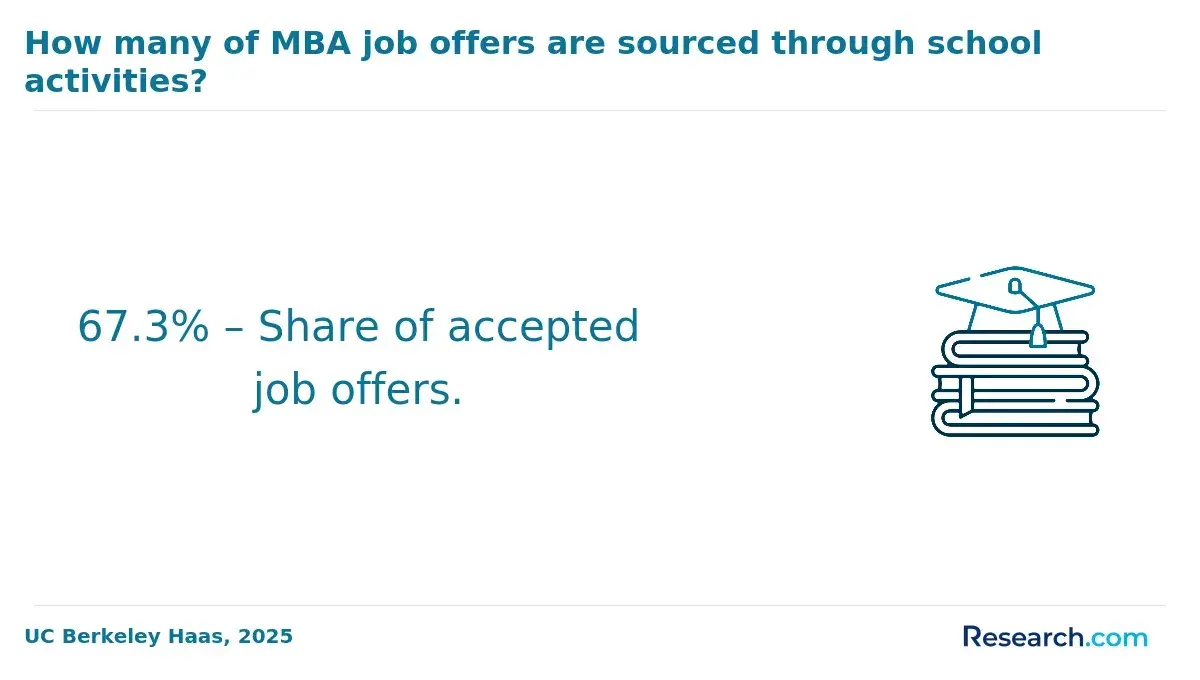
MBA admissions can be competitive, particularly at highly selective schools. The acceptance rate into top MBA programs in the US averaged around 25%.
The best way to approach the application process is to build a complete, accurate, and targeted file for every school. Applicants interested in the best MBA for consulting or another competitive pathway should pay close attention to each program’s stated requirements and submit materials before the business school application deadlines. Common application components include the following:
GMAT or GRE Scores
The Graduate Management Admission Test, or GMAT, is a standardized exam used by many graduate business programs to evaluate academic readiness. It is administered by the Graduate Management Admission Council and is designed specifically for business school applicants.
The traditional GMAT has included sections that evaluate analytical writing, integrated reasoning, quantitative reasoning, and verbal reasoning. These areas test skills such as data interpretation, mathematical reasoning, argument analysis, reading comprehension, and written communication. Applicants should check each school’s current testing policy because requirements and accepted exams can vary.
Many business schools use GMAT scores as one part of the admissions review. A strong score can support an application, but it rarely compensates for unclear goals, weak essays, poor fit, or limited evidence of leadership.
Resume
An MBA resume should be results-focused. Instead of listing job duties only, applicants should show scope, impact, leadership, and progression. Admissions teams want to understand what you changed, improved, built, analyzed, managed, or influenced.
Strong MBA resumes often include metrics when available, such as revenue impact, cost savings, team size, project scale, process improvements, client outcomes, or promotion history. Applicants should also highlight certifications, international exposure, entrepreneurial work, community leadership, or technical skills when they support the overall application story.
Application Essays
The essay is where applicants explain why they want an MBA, why now, why that program, and what they plan to do after graduation. It should not repeat the resume. A strong essay connects experience, motivation, goals, and school fit in a way that feels specific and credible.
Applicants should avoid vague claims such as wanting to “become a leader” without explaining the kind of leader, the industry, the problem they want to solve, or how the MBA curriculum and network will help. Admissions committees can usually tell when an essay has been reused across schools with minimal changes.
The best essays show self-awareness. They acknowledge what the applicant has already accomplished, what gaps remain, and why the selected program is the right environment to close those gaps.
Admissions Interview
The interview helps the school evaluate communication style, professionalism, motivation, and fit. It also gives applicants a chance to add context that may not be obvious in written materials.
Applicants should be ready to discuss career decisions, leadership examples, failures, teamwork, ethical judgment, and post-MBA goals. They should also prepare thoughtful questions that show they understand the program rather than asking only information that is easily found on the school website.
The interview is not just a formality. It can confirm the strength of an application or reveal uncertainty about goals, communication, or preparation.
Application expectations may differ by format. Some MBA course online programs may offer more flexible testing policies, rolling admissions, or options designed for working adults. Cost-conscious applicants may also compare traditional programs with an affordable online MBA.
Strategies to Strengthen Your MBA Application
A competitive MBA application tells a clear story: what you have done, what you want to do next, why you need graduate business training, and why the school is a logical match. The following strategies can help applicants improve that story.
- Show academic readiness: Use transcripts, test scores, quantitative coursework, or recent professional training to demonstrate that you can handle graduate-level business work.
- Clarify your career direction: Admissions teams do not expect every detail to be fixed, but they do expect realistic goals. Explain your target role, industry, and reason for pursuing an MBA.
- Choose recommenders carefully: Select people who can describe your work quality, leadership potential, judgment, and growth. A detailed recommendation from a direct supervisor is usually stronger than a generic letter from a famous contact.
- Customize each essay: Refer to specific program features, such as concentrations, faculty strengths, clubs, experiential learning, recruiting pathways, or alumni networks that fit your goals.
- Prepare for testing early: Some accelerated MBA online programs may waive GMAT or GRE requirements for qualified applicants, but if scores are required, early preparation gives you time to retest.
- Document leadership beyond job title: Leadership can include managing people, influencing senior stakeholders, launching an initiative, mentoring peers, solving a crisis, or leading volunteer work.
- Address weaknesses directly: If you have a low grade, employment gap, or career change, explain it briefly and focus on evidence of growth.
| Common mistake | Why it hurts the application | Better approach |
| Using the same essay for every school | It makes the applicant look unfocused or unfamiliar with the program | Connect each school’s curriculum, culture, and career resources to your goals |
| Listing responsibilities without outcomes | Admissions readers cannot judge impact | Use measurable accomplishments and examples of influence |
| Applying without checking deadlines | Late or incomplete files may not be reviewed | Create a deadline calendar for every round and requirement |
| Choosing recommenders by title only | Prestige does not help if the letter is vague | Ask recommenders who know your work and can provide specific examples |
| Ignoring program fit | A strong candidate can still be rejected if goals do not match the school | Research employment outcomes, concentrations, clubs, and recruiting relationships |
What Undergraduate Degree Best Prepares You for an MBA?
No single undergraduate major is required for MBA admission. Business, finance, economics, accounting, engineering, computer science, humanities, social science, healthcare, and other backgrounds can all lead to successful MBA applications. What matters most is whether the applicant can show analytical ability, communication skill, leadership promise, and a reason for pursuing graduate management education.
Applicants with finance, economics, accounting, or management degrees may enter with more familiarity in quantitative business topics. Those from non-business backgrounds may need to prepare by taking courses in statistics, accounting, economics, Excel modeling, or business writing before starting the MBA. Students still choosing an undergraduate path may find it useful to compare business majors, including resources on the easiest business major, but they should not choose a major only because it seems convenient for future MBA admission.
| Undergraduate background | Potential MBA advantage | Possible preparation gap |
| Business, finance, accounting, or economics | Familiarity with core business language and quantitative analysis | May need to show broader leadership or non-classroom impact |
| Engineering, computer science, or analytics | Strong problem-solving, data, and technical skills | May need more exposure to marketing, management, and communication-heavy work |
| Humanities or social sciences | Strong writing, research, and human-centered analysis | May need to strengthen quantitative readiness |
| Healthcare, education, public service, or nonprofit fields | Clear sector expertise and mission-driven leadership examples | May need foundational business and finance preparation |
How Can I Manage the Financial Investment of an MBA?
An MBA can involve tuition, fees, books, travel, relocation, technology, professional clothing, networking events, exam costs, and lost wages if you leave work for a full-time program. Applicants should compare total cost, not just advertised tuition.
Financial aid may include scholarships, fellowships, assistantships, employer sponsorship, military benefits, payment plans, and federal or private loans. Working professionals should also ask employers whether tuition reimbursement or educational assistance is available. Comparing formats can make a major difference because online and part-time options may allow students to keep earning while studying. Reviewing the cost of online MBA programs can help applicants benchmark affordability before choosing a school.
| Cost category | Questions to ask before enrolling |
| Tuition and required fees | What is the full program price, and can tuition increase while I am enrolled? |
| Lost income | Will I need to reduce hours, pause work, or relocate? |
| Travel and residency costs | Are campus visits, global trips, or residencies required? |
| Career services value | Does the school provide recruiting access, coaching, internships, or employer connections aligned with my goals? |
| Financing terms | How much debt would I need, and what repayment amount is realistic after graduation? |
Is an Executive MBA a Cost-Effective Option?
An Executive MBA, or EMBA, is typically designed for experienced professionals who want advanced management education while continuing to work. It may be cost-effective for students who can maintain their salary, receive employer support, and apply coursework immediately to senior responsibilities.
An EMBA is not automatically cheaper or better than a traditional MBA. Applicants should compare program price, schedule intensity, travel requirements, cohort profile, employer sponsorship options, and the career outcomes they expect. Professionals evaluating this route can review affordable EMBA programs to understand how price and format vary.
| Choose an EMBA if... | Consider a traditional or online MBA if... |
| You already have significant management experience | You are earlier in your career and need broader recruiting access |
| You plan to keep working while studying | You want internships, career switching, or full-time campus immersion |
| Your employer may help pay | You are self-funding and need the lowest possible cost |
| You value a senior-level peer network | You want more flexibility in pacing or specialization |
What Role Do Accreditation and Rankings Play in an MBA's Value?
Accreditation helps confirm that a business school or program has been reviewed against external academic and operational standards. Recognized business accreditors include AACSB, EQUIS, and AMBA. Accreditation does not guarantee a job, but it can affect employer perception, transferability, academic credibility, and, in some cases, eligibility for certain forms of aid or employer reimbursement.
Rankings can be useful, but they should not be the only decision tool. A highly ranked program may not be the best fit if it is too expensive, weak in your target industry, inconvenient for your schedule, or misaligned with your goals. Applicants should look beyond rank and compare curriculum, faculty, alumni network, employment reports, career support, specialization depth, and student outcomes. Students comparing MBA options with finance-focused graduate study may also review the best online masters in finance.
| Evaluation factor | What to verify |
| Accreditation | Is the institution and business program recognized by credible accrediting bodies? |
| Employment outcomes | Does the school publish placement, salary, industry, and function data? |
| Recruiting access | Do employers in your target field recruit from the program? |
| Program format | Can you realistically complete the schedule while managing work and personal responsibilities? |
| Net cost | What will you pay after scholarships, employer support, and loan interest? |
Top MBA Programs for 2027
Employer recognition varies by school, industry, and region. Prestigious programs may offer powerful networks and recruiting access, but they are also highly competitive and often expensive. The programs below are widely recognized, but applicants should still compare fit, cost, location, culture, and career outcomes before applying.
Harvard Business School
Harvard Business School is known for a demanding general management curriculum and a case-based learning model that asks students to analyze business decisions from multiple perspectives. Its MBA is built around leadership development, decision-making, and broad exposure to finance, marketing, strategy, operations, and organizational behavior.
The program is often associated with intensive classroom discussion, peer learning, and leadership practice. Students are expected to defend recommendations, evaluate trade-offs, and work through ambiguous management problems.
Harvard Business School also has a large alumni base across industries and regions. For many students, that network is one of the most valuable parts of the degree because it can support mentorship, recruiting, entrepreneurship, and long-term career mobility.
Class Average GMAT Score: 730
Stanford Graduate School of Business
Stanford Graduate School of Business offers a highly selective MBA program with strengths in entrepreneurship, venture capital, private equity, innovation, and social impact. The curriculum includes a general management foundation and electives that allow students to shape the degree around their interests.
Entrepreneurship is a major part of the Stanford GSB experience. Students can engage with resources such as the Center for Entrepreneurial Studies, connect with mentors, and explore venture creation in an environment closely tied to Silicon Valley.
The program’s alumni network includes founders, investors, executives, and leaders across sectors. Students interested in innovation, startups, investing, or mission-driven leadership often examine Stanford closely, while still considering cost, admissions competitiveness, and career fit.
Class Average GMAT Score: 737
Wharton University of Pennsylvania
The Wharton MBA Program is known for a flexible curriculum, quantitative strength, and broad elective choice. Students build a foundation in major business disciplines and can then customize their studies through electives and concentrations.
Wharton emphasizes applied learning through internships, consulting projects, leadership development, and entrepreneurship opportunities. The McNulty Leadership Program and Wharton’s Center for Leadership and Change Management are examples of resources that help students connect academic work to business practice.
The program is often considered by applicants targeting finance, consulting, analytics, management, entrepreneurship, and global business roles. Its value depends on how well students use the curriculum, network, and recruiting resources to pursue their goals.
Class Average GMAT Score: 733
Columbia Business School
Columbia Business School offers an MBA curriculum that combines core business study with a wide selection of electives and concentrations. Students study areas such as finance, marketing, strategy, and operations before tailoring the degree around career interests.
Its New York City location gives students access to employers, executives, investors, media companies, financial institutions, startups, and global organizations. That location can be a major advantage for students who actively use internships, networking events, consulting projects, and industry programming.
Columbia also offers global learning opportunities, including international study options and immersion experiences. These can help students understand cross-border business issues, international markets, and cultural differences in management.
Class Average GMAT Score: 729
| MBA Program | Average GMAT Score |
| Harvard Business School | 730 |
| Stanford Graduate School of Business | 737 |
| Wharton University of Pennsylvania | 733 |
| Columbia Business School | 729 |
How Do Global Experiences Shape an MBA Journey?
Global experiences can help MBA students understand how business decisions change across countries, cultures, legal systems, supply chains, and consumer markets. Programs may include international case studies, study trips, exchange opportunities, global consulting projects, or partnerships with multinational companies.
These experiences are most valuable when they connect directly to the student’s goals. For example, a student targeting international consulting, global supply chain management, emerging markets, or cross-border finance may benefit more than someone pursuing a local management role. Students still building their foundation in business may also compare MBA preparation with an undergraduate option such as a business administration bachelor degree online.
Is a Doctorate in Business a Viable Next Step After an MBA?
A doctorate in business can make sense after an MBA for professionals who want to teach, conduct research, publish scholarship, or move into advanced consulting and thought leadership. It is not the typical next step for every MBA graduate because doctoral study is more research-intensive and usually serves a different purpose than the MBA.
Applicants should compare DBA and PhD-style business programs carefully. Important factors include research expectations, dissertation requirements, faculty expertise, residency obligations, time to completion, and whether the program supports academic, executive, or consulting goals. Cost also matters, so some candidates compare flexible options such as a cheap online DBA.
What unique specializations are available in MBA programs?
MBA specializations help students align coursework with specific career goals. A general MBA may be enough for broad management roles, but a concentration can be useful when a student wants to enter a specialized field or signal interest in a particular industry.
- Healthcare Management: This concentration prepares students for leadership roles in hospitals, health systems, biotechnology companies, insurers, and healthcare consulting. Coursework may address health policy, healthcare finance, operations, and patient-centered management.
- Sustainability and Environmental Management: Students study business strategies related to environmental responsibility, sustainable supply chains, renewable energy, and corporate social responsibility. This path can fit careers in sustainability consulting, ESG strategy, or operations transformation.
- Entrepreneurship and Innovation: This option supports students who want to launch companies, lead new ventures, or manage innovation inside established organizations. Courses may cover venture financing, product development, design thinking, and startup strategy.
- Financial Technology: A FinTech specialization focuses on digital banking, blockchain, cryptocurrency, payments, and technology-driven financial services. Graduates may pursue roles with banks, fintech firms, product teams, or investment organizations adapting to digital finance.
- Luxury and Brand Management: This niche path examines consumer behavior, brand strategy, digital marketing, and positioning in premium markets. It may appeal to students targeting fashion, beauty, hospitality, lifestyle, or luxury goods companies.
- Data Analytics and Business Intelligence: This concentration develops skills in data analysis, predictive analytics, machine learning applications, and decision support. It can fit roles such as data analyst, business intelligence manager, operations manager, or analytics-focused strategy professional.
- Global Business and International Relations: Students study international markets, cross-cultural leadership, trade issues, and multinational management. This option can be useful for careers in global corporations, international consulting, or cross-border operations.
How to Leverage Technology to Enhance MBA Education
Technology has changed both what MBA students learn and how they learn it. Employers increasingly expect business leaders to understand data, automation, digital platforms, cybersecurity risk, AI-supported decision-making, and technology-enabled business models.
- AI and data analytics in coursework: Many MBA programs now include analytics, data science, machine learning applications, and AI-supported business decision-making. Students should look for practical assignments that require interpreting data, not just theoretical discussion.
- Online learning platforms and virtual classrooms: Online and hybrid MBA programs use digital classrooms, collaboration tools, learning management systems, recorded lectures, discussion boards, and simulations. These formats can help working students participate without relocating.
- Simulations and business games: Digital simulations allow students to test decisions in finance, marketing, operations, leadership, and strategy. These tools can show how one decision affects long-term performance and competing priorities.
- Blockchain and financial technology: Courses in blockchain, cryptocurrency, and fintech help students understand how digital finance is changing payment systems, banking, investing, and regulation.
- Entrepreneurship and technology startups: Startup-focused MBA offerings may include incubators, venture labs, innovation courses, digital marketing, product development, and fundraising preparation for students interested in technology ventures.
Students evaluating technology-focused MBA options should ask whether the curriculum includes hands-on tools, current case studies, employer projects, and faculty with relevant expertise. Those who want a faster path may compare one year MBA programs online that include technology-focused coursework.
How Are Emerging Blockchain and Fintech Trends Impacting MBA Programs?
Blockchain and fintech are pushing business schools to update finance, strategy, regulation, and innovation coursework. Instead of treating digital finance as a narrow technical topic, many MBA programs now frame it as a business leadership issue involving risk, compliance, customer experience, operations, and market disruption.
Students interested in digital finance should look for programs that include hands-on projects, industry partnerships, case studies, and exposure to regulatory questions. Those who want deeper specialization beyond the MBA may also explore blockchain degrees.
How to Evaluate the ROI of an MBA
Return on investment is not just the salary you earn after graduation. MBA ROI includes cost, debt, time, career mobility, network access, skill growth, promotion potential, and whether the program helps you reach a goal you could not reach as easily without the degree.
- Calculate the full cost: Include tuition, fees, books, technology, travel, housing, interest, and any income you may lose while enrolled. According to the Graduate Management Admission Council, the average cost of an MBA program in the U.S. is over $60,000 per year. Applicants looking for lower-cost options can compare online masters under 10K.
- Compare expected earnings carefully: The median salary for MBA graduates is $125,000, but outcomes vary by school, specialization, industry, location, prior experience, and economic conditions. No program can guarantee a salary.
- Check labor market alignment: The U.S. Bureau of Labor Statistics projects that business and financial occupations will grow faster than the collective average for all jobs in the country through 2034. Applicants should still research demand in their specific target field.
- Review career advancement resources: Career coaching, employer relationships, internships, alumni access, and recruiting events can directly influence ROI. A cheaper program with weak career support may not always be the better investment.
- Value skills and network realistically: Leadership, communication, negotiation, analysis, and strategic thinking can help over a long career, but students must apply these skills actively. The network is useful only if the student engages with it.
- Compare program alternatives: A full-time MBA, part-time MBA, online MBA, EMBA, specialized master’s degree, certificate, or employer training program can each make sense in different situations.
| MBA path | Best fit | Main trade-off |
| Full-time MBA | Career changers, internship seekers, and students wanting campus immersion | May require leaving work and taking on higher opportunity cost |
| Part-time MBA | Working professionals who want to keep earning | Can take longer and may offer less immersive recruiting access |
| Online MBA | Students needing flexibility, geographic access, or lower relocation costs | Requires strong self-direction and careful review of networking support |
| Executive MBA | Experienced managers seeking senior-level peer learning | May be expensive and less suited to early-career career changers |
| Specialized master’s degree | Students focused on finance, analytics, accounting, or another narrow field | May provide less general management breadth than an MBA |
Questions to Ask Before Choosing an MBA Program
- Is the program accredited by a recognized accreditor?
- Does the curriculum match my target role, industry, and skill gaps?
- What are the total costs, including fees, travel, and lost income?
- What career outcomes does the school publish, and are they relevant to my goals?
- Do employers in my target field recruit from this program?
- How strong is the alumni network in my region or industry?
- Can I complete the program format while managing work and personal obligations?
- Are GMAT or GRE scores required, optional, or waived for qualified applicants?
- What scholarships, employer sponsorships, or educational assistance options are available?
- Will this MBA help me reach a goal that I cannot reach through a certificate, promotion, or specialized master’s degree?
Acquiring an MBA is No Small Feat
An MBA can be a powerful credential, but it is not a shortcut. The degree requires time, money, sustained effort, and a clear plan. It can help students build advanced business knowledge, develop leadership ability, expand networks, and pursue higher-level roles, but the value depends on school quality, career fit, cost, and how actively the student uses the opportunity.
The best MBA choice is the one that matches your goals and constraints. A prestigious full-time program may be right for one applicant, while an affordable online MBA, part-time MBA, EMBA, specialized master’s, or non-degree credential may be the smarter option for another.
Key Insights
- MBA demand remains strong: Business and Financial occupations are projected by the U.S. Bureau of Labor Statistics to grow considerably faster than the average for all U.S. jobs from 2024 to 2034, with 942,500 job openings each year.
- Admissions require more than credentials: Strong applicants connect academic readiness, work impact, leadership examples, essays, recommendations, and career goals into one coherent application story.
- Program fit matters as much as prestige: Rankings can help with research, but accreditation, career outcomes, employer access, cost, format, and specialization should drive the final decision.
- ROI varies widely: The median starting salary for MBA Graduates with US companies was $125,000 in 2025, but individual outcomes depend on experience, school, market, industry, location, and career strategy.
- Online, part-time, and executive formats expand access: Flexible MBA options can help working professionals reduce opportunity cost, but applicants should verify academic quality, career support, and networking strength.
- Technology is reshaping MBA education: AI, analytics, fintech, blockchain, simulations, and virtual learning are now important factors when comparing modern business programs.
- Cost control is essential: Applicants should calculate total program cost, compare aid and employer support, and avoid assuming that higher tuition always means better career value.
References
- Baker, M. (2025, December 18). Which top US business schools have the highest and lowest acceptance rates? https://www.gmac.com/resources/learners/business-programs/explore-programs/us-bschools-highest-lowest-acceptance-rates
- BLS. (2025, August 28). Business and Financial Occupations: Occupational Outlook Handbook. U.S. Bureau of Labor Statistics. https://www.bls.gov/ooh/business-and-financial/home.htm
- Columbia Business School Academics. (n.d.). Class Profile. Columbia Business School Academics. https://academics.gsb.columbia.edu/mba/admissions/class-profile
- Duke Fuqua School of Business. (2025). Daytime MBA Employment Report 2025. https://www.fuqua.duke.edu/sites/default/files/media/programs/daytime/duke-mba-employment-2025.pdf
- Ethier, M. (2025, August 27). The MBA Price Tag: 21 Of The Top 25 U.S. B-Schools Now Charge $100K A Year Or More. Poets&Quants. https://poetsandquants.com/2025/08/27/the-mba-price-tag-21-of-the-top-25-u-s-b-schools-now-charge-100k-a-year-or-more/
- Flynn, J. (2026, February 2). 25 Educational MBA Statistics [2026]: Average Age, Cost, And Salary For MBA Graduates. Zippia. https://www.zippia.com/advice/mba-statistics
- Graduate Management Admission Council. (2025). Corporate Recruiters Survey 2025 Report. https://www.gmac.com/-/media/files/gmac/research/employment-outlook/2025-corporate-recruiters-survey/summary-report.pdf?rev=90517bad744b47959c7f593937f8f1d7
- Harvard Business School. (n.d.). Class Profile MBA. hbs.edu. https://www.hbs.edu/mba/admissions/class-profile/Pages/default.aspx
- Human Resources Director. (2025, July 1). Demand for MBA graduates remains strong. hcamag.com. https://www.hcamag.com/us/specialization/learning-development/demand-for-mba-graduates-remains-strong/541138
- NACE Salary Survey. https://careers.unc.edu/wp-content/uploads/2022/02/NACE-Salary-Survey_Winter-2022.pdf
- Stanford GSB. (n.d.). MBA Entering Class Profile. Stanford Graduate School of Business. https://www.gsb.stanford.edu/programs/mba/admission/class-profile
- Washington State University Online MBA. 5 Hidden Benefits of Getting an MBA. https://onlinemba.wsu.edu/mba/resources/5-hidden-benefits-of-getting-an-mba
- Wharton MBA. (2026). MBA Class of 2027. https://mba.wharton.upenn.edu/class-profile
Other Things You Should Know About How to Get Into MBA Programs at Top Business Schools
In 2027, typical requirements for an MBA application include a bachelor's degree, GMAT or GRE scores, a resume, letters of recommendation, work experience (usually 2-5 years), and personal essays. Specific requirements may vary by school, so checking individual program prerequisites is essential.
In 2027, the average GMAT scores for top MBA programs typically range between 700 and 740. Having a high GMAT score strengthens applications, demonstrating analytical ability and readiness for rigorous academic study. However, schools also consider work experience, leadership skills, and academic history.
The MBA interview is usually the final evaluation step and is used to confirm leadership, communication, and fit with the school. Many top programs invite only selected candidates, and interviews are often 30 to 60 minutes long, conducted by alumni, admissions staff, or faculty.
In 2027, top business schools offer various scholarships such as merit-based awards, need-based aid, and fellowships. Programs like the Forté Fellowship and Consortium for Graduate Study in Management aim to support diversity and inclusivity. Application deadlines generally align with program admission deadlines.