2027 Is it Possible to Transfer to a Top MBA Program?

Co-Founder and Chief Data Scientist
Interest in MBA programs has surged in a way industry experts haven’t seen for years. According to GMAC, applications to graduate business schools globally rose 12% year over year, reversing declines from the past periods. This boom reflects renewed confidence in the value of a top MBA amid accelerating changes in the workplace.
But the path to entering an MBA program remains ambiguous, especially regarding the number of credits that will be accepted, coursework offerings, and whether prior MBA-level study is even eligible or not. Read on to explore policies, strategies, and what you need to do to maximize your chances of a top MBA program transfer.
Key things you should know about MBA programs
- MBA applicants need to pay application fees, travel costs for interviews, and the potential for lost tuition if they can't transfer credits.
- The top MBA program transfer process involves applying with your academic transcripts, recommendation letters, GMAT or GRE scores (if required), a statement of purpose, and sometimes an interview.
- It can take several months to transfer, with application deadlines often falling in the spring or summer before the start of the academic year.
- What documents are needed for an MBA transfer application? Required Documents
- Are transfer policies different for full-time vs. part-time MBA programs? Transfer Policies
- How do you apply to transfer to a top MBA program? Application Process
- How long does the MBA transfer process take? How long does the MBA transfer process take?
- Can you transfer electives to a top MBA program? Can you transfer electives to a top MBA program?
- Can MBA transfer students get financial aid at top schools? Financial Aid
- Do you need to repay tuition if you transfer to an MBA program? Do you need to repay tuition if you transfer to an MBA program?
- Do employers view MBA transfers differently? Employer Perception
- Should you transfer to MBA programs or reapply from scratch? Should you transfer to MBA programs or reapply from scratch?
- Can international students transfer to MBA programs in the U.S.? Can international students transfer to MBA programs in the U.S.?
- What role do accreditation and cost factors play in MBA transfers? What role do accreditation and cost factors play in MBA transfers?
- What are the disadvantages of transferring to MBA programs? Disadvantages
- What strategies help you transfer to top MBA programs? Best Strategies
MBA Transfer Guide: What to Know Before You Switch Programs
Transferring from one MBA program to another is not the same as changing undergraduate schools. MBA cohorts are often tightly structured, required courses may not match across institutions, and many highly selective business schools limit or do not publicize transfer pathways. Before you spend time and money on applications, you need to know whether the target school accepts transfer students, how many credits may count, whether financial aid is available, and how the move will affect your graduation timeline and career plans.
This guide is for current MBA students who are considering a move to another business school, including full-time, part-time, online, and international students. It explains the documents you may need, how transfer policies differ by program format, what timeline to expect, when transferring makes sense, and when reapplying from the beginning may be the stronger strategy.
Quick Answer: Can You Transfer to a Top MBA Program?
Yes, some MBA students can transfer, but policies vary widely by school. Top MBA programs may accept few transfer students, limit the number of credits that can be applied, or require applicants to apply through the regular admissions process instead. A successful transfer application usually depends on strong MBA grades, a clear reason for leaving your current program, professional achievements, recommendations, and a convincing explanation of why the new school is a better fit.
The process generally takes 4 to 6 months, and students should begin by contacting the target school’s admissions office before preparing documents or paying application fees.
| Question | Short Answer |
| Do all MBA programs accept transfer students? | No. Some schools accept transfers only under limited conditions, while others require applicants to start over. |
| Can MBA credits transfer? | Sometimes. Core courses are more likely to be reviewed for equivalency than specialized electives. |
| Will transferring save time? | It can, but only if the new school accepts enough credits to reduce your remaining coursework. |
| Is financial aid guaranteed? | No. Transfer students may have fewer scholarship options and should confirm aid policies early. |
| Will employers care? | Usually, employers focus more on skills, experience, internships, leadership, and the final degree-granting school than on the transfer itself. |
What documents are needed for an MBA transfer application?
An MBA transfer application must show three things clearly: you can handle graduate-level business coursework, you have a credible reason for changing schools, and the target program is a better match for your goals. Requirements differ by institution, but most applicants should prepare the following materials before contacting admissions.
- Official MBA transcripts: Schools typically require records from your current MBA program showing completed courses, grades, credits, and academic standing. These transcripts help the admissions team decide whether your coursework is comparable to their curriculum.
- Prior college transcripts: Some programs also request undergraduate and previous graduate transcripts, especially if they need to verify prerequisites, GPA history, or degree completion.
- GMAT or GRE scores: Some schools ask transfer applicants to submit standardized test scores. Others may waive testing based on academic performance, professional experience, or current admissions policies. Confirm this directly with the program because test requirements can change by admissions cycle.
- Two to three recommendation letters: Most MBA programs ask for two to three letters from faculty members, supervisors, or professional mentors. Strong letters should address your leadership, analytical ability, teamwork, maturity, and reason for transferring.
- Statement of purpose or transfer essay: This is one of the most important documents. Your essay should explain why your current program no longer fits, why the new program does, and how the transfer supports your career plan. Avoid criticizing your current school; focus on fit, goals, and evidence.
- Current resume: A concise MBA resume should highlight career progression, promotions, measurable achievements, leadership roles, internships, entrepreneurial work, and community involvement.
- Course syllabi and descriptions: If you want credits evaluated, expect to provide syllabi, course descriptions, reading lists, assignments, exams, or learning outcomes from completed MBA courses.
- Application forms and fees: Transfer applicants may need to complete either a separate transfer application or the school’s regular MBA application. Always ask which route applies.
Students comparing large-scale online institutions, including those researching the biggest online colleges, will notice that document expectations often look similar across programs: transcripts, proof of readiness, a resume, and a clear academic plan. The difference with MBA transfers is that credit evaluation and cohort fit often carry more weight.
Applicants can also strengthen their academic narrative by showing a record of focused business preparation. For example, prior business coursework, supply chain training, or an accelerated pathway such as the shortest bachelor's program in supply chain management can help demonstrate discipline and career direction when it is relevant to the MBA concentration.
Are transfer policies different for full-time vs. part-time MBA programs?
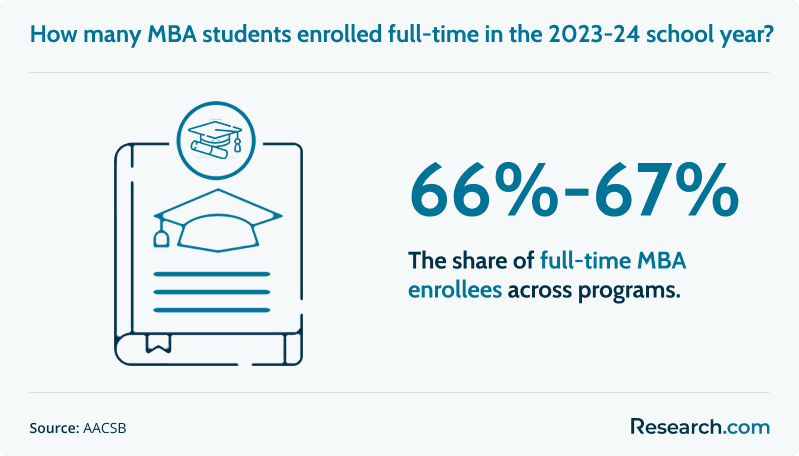
Yes. Full-time and part-time MBA programs often treat transfer applicants differently because they are built around different student needs. Full-time MBA programs tend to be cohort-based and sequenced, while part-time MBA programs usually offer more scheduling flexibility for working professionals.
| Policy Area | Full-Time MBA | Part-Time MBA |
| Admissions structure | Often cohort-based with fixed entry points | May offer rolling or more frequent admissions options |
| Credit transfer flexibility | Usually more limited because coursework follows a set sequence | May be more flexible, depending on course equivalency and residency rules |
| Best for | Students seeking internships, career switching, and immersive networking | Working professionals who need evening, weekend, hybrid, or online formats |
| Main transfer challenge | Fitting prior courses into a lockstep curriculum | Confirming that accepted credits still support concentration and graduation requirements |
| Timeline risk | May need to repeat first-year courses if credits are not accepted | May progress smoothly if the program has flexible course sequencing |
Full-Time MBA Program Policies
Full-time MBA programs are often more difficult to enter as a transfer student because the curriculum is designed around a specific cohort experience. Core courses, internships, recruiting events, team projects, and leadership labs may be tied to a defined first-year or second-year sequence. If your completed courses do not match that sequence, the school may require you to repeat classes or begin with the next incoming cohort.
This is similar to structured technical programs, where students pursuing fields such as robotics engineering must satisfy prerequisites in the correct order before moving into advanced work. In an MBA transfer, the same principle applies: course names alone are not enough; schools compare learning outcomes, contact hours, academic rigor, and sequencing.
Full-time students should also consider recruiting calendars. If you transfer after major internship recruiting events have passed, the academic fit may be strong but the career timing may be less favorable.
Part-Time MBA Program Policies
Part-time MBA programs may be more practical for transfer students because they are designed for students who are balancing school with full-time employment. These programs may offer evening, weekend, online, or hybrid courses and may be less dependent on a single cohort schedule.
Some part-time programs also review transfer credits more flexibly because their student populations often include professionals with varied academic backgrounds. This flexibility is similar to what students may look for in career-oriented online options such as fast-track online fashion merchandising degrees, where scheduling and transfer policies can be important decision factors.
Even in a flexible part-time MBA, however, you should not assume that credits will transfer automatically. Ask about residency requirements, maximum transferable credits, minimum grades, course age limits, and whether transferred credits can apply to concentrations.
How do you apply to transfer to a top MBA program?
Applying as an MBA transfer student requires more upfront research than a standard application. The most important step is confirming that the school actually accepts transfer applicants before you invest time in essays, test scores, and recommendations.
- Confirm the school’s transfer policy. Contact admissions and ask whether the MBA program accepts transfer students, which terms are open for entry, how many credits may transfer, and whether applicants use a separate transfer process or the regular MBA application.
- Request an informal credit review if available. Some schools may not evaluate credits until after admission, but others can explain general limits. Ask whether syllabi, assignments, exams, or course descriptions are required.
- Clarify your reason for transferring. Your explanation should be specific and professional. Strong reasons include better alignment with a concentration, stronger recruiting access in your target industry, location needs, format needs, or a change in career direction.
- Prepare application documents. Gather transcripts, recommendations, resume, essays, test scores if required, and course materials. Students in other fields often ask pathway questions such as whether you can enter an MSW without a BSW; MBA transfer applicants should take the same approach by verifying every alternate-entry rule directly with the program.
- Submit the application before the stated deadline. Transfer applicants may have different deadlines from first-year MBA applicants. Do not rely on general MBA deadlines unless admissions confirms they apply to transfers.
- Prepare for a possible interview. If invited, be ready to discuss your current MBA experience, career goals, leadership examples, academic record, and why the target program is the right next step.
- Wait for both admission and credit evaluation. Admission does not always mean all prior credits will count. Your final decision should be based on the total cost, remaining time to graduation, and career value after the credit review.
Students often pursue MBA programs to develop leadership capacity, broaden career options, and build professional networks. A transfer application should connect those goals to concrete features of the new program rather than relying on prestige alone.
How long does the MBA transfer process take?
The full MBA transfer process generally takes 4 to 6 months, though the timeline depends on the target school’s admissions calendar, interview process, and credit evaluation procedures. Many transfer applications are reviewed in the spring or summer for fall entry, but some programs follow different timelines.
| Stage | What Happens | What You Should Do |
| Initial research | You identify programs and confirm whether they accept MBA transfers. | Email admissions, review policy pages, and ask about credit limits. |
| Document preparation | You collect transcripts, syllabi, recommendations, test scores if needed, resume, and essays. | Start early because official transcripts and faculty recommendations can take time. |
| Application review | The school evaluates academic strength, professional fit, and transfer rationale. | Monitor your applicant portal and respond quickly to missing-item requests. |
| Interview, if required | Admissions may ask about your goals, current program experience, and readiness. | Prepare a concise, positive explanation for transferring. |
| Credit evaluation | Faculty or academic advisors compare completed courses with MBA requirements. | Provide detailed syllabi and ask how accepted credits affect graduation timing. |
| Enrollment decision | You compare admission, aid, transferred credits, and career services access. | Decide only after reviewing the full financial and academic impact. |
Because the process can stretch across several months, applicants should use the preparation period strategically. Building relevant skills, updating quantitative knowledge, improving leadership examples, or earning professional credentials can strengthen the case for admission. This is one reason the importance of upskilling matters for MBA applicants who want to show momentum rather than dissatisfaction with their current program.
Can you transfer electives to a top MBA program?
Electives are often harder to transfer than core MBA courses. Core subjects such as accounting, finance, marketing, operations, economics, or organizational behavior may be easier to compare across schools. Electives, however, can vary widely in depth, prerequisites, teaching method, and industry focus.
A target MBA program may reject an elective even when the title sounds similar to one of its own courses. For example, “Strategic Marketing” at one school might emphasize case analysis, while another version may focus on analytics, simulations, or international markets. Admissions or faculty reviewers may ask for detailed syllabi to determine whether the course meets the same academic standard.
Electives from reputable and relevant programs may receive closer consideration when the content aligns with the MBA curriculum. For instance, coursework connected to business operations, service management, or customer strategy from programs such as the fastest online hospitality management degree programs could be relevant if it maps clearly to graduate-level business learning outcomes.
To improve the chance of elective credit approval, provide the course syllabus, credit hours, grading method, major assignments, exams, instructor credentials if requested, and proof that you earned the minimum grade required by the target program.
Can MBA transfer students get financial aid at top schools?
MBA transfer students may be eligible for financial aid, but availability depends on the school, program format, funding source, and timing. Many business schools allocate institutional scholarships during the first-year admissions cycle, so transfer applicants may have fewer scholarship options than new entrants. Federal loans, private loans, employer tuition assistance, military benefits, and need-based aid may still be possible if the student and program meet eligibility requirements.
Students comparing accelerated or career-focused programs, such as accelerated online entertainment business degree programs, should use the same financial discipline when evaluating MBA transfers: do not compare tuition alone. Compare the net cost after aid, the number of credits that will transfer, fees, travel costs, lost work time, and the value of the career services you will actually use.
Before applying, ask the financial aid office whether transfer students are considered for scholarships, whether aid is awarded by term or academic year, whether assistantships are available, and whether aid depends on full-time enrollment.
Do you need to repay tuition if you transfer to an MBA program?
You generally do not repay tuition simply because you transfer, but you may lose money already paid to your current school. Most institutions follow published refund schedules. If you withdraw after the refund period, tuition and fees for that term may be nonrefundable. If you withdraw early enough, a partial refund may be possible.
Financial aid can make the situation more complicated. Scholarships, grants, employer benefits, or loans may have enrollment conditions. If you leave before completing a term or fail to meet aid requirements, you may owe a balance or trigger a recalculation of aid. You may also need to apply separately for aid at the new MBA program.
Speak with both schools before withdrawing. Ask your current school about refund deadlines, tuition liability, scholarship conditions, and transcript holds. Ask the new school when aid can begin and whether any funding depends on the number of accepted transfer credits.
Do employers view MBA transfers differently?
Most employers care more about what you can do than whether you transferred. They typically evaluate the MBA degree-granting institution, work experience, internships, leadership record, technical skills, industry knowledge, and interview performance. A transfer is usually not a problem if you can explain it clearly and professionally.
In some cases, transferring can support your career story. Moving from a program that does not match your goals to one with stronger recruiting access, a better concentration, or a more relevant alumni network can look intentional. The key is to frame the decision as a strategic adjustment, not an escape from difficulty.
However, frequent school changes or unclear explanations can raise questions. This is true across disciplines, whether someone moves between MBA programs or changes from another field such as the top online UX design degrees. Employers may wonder whether the student had trouble with academic fit, workload, collaboration, or commitment.
The safest approach is to keep the explanation brief: identify the mismatch, explain what you learned, and connect the transfer to your professional goals.
Should you transfer to MBA programs or reapply from scratch?
The right choice depends on how many credits you can transfer, how much time you have already invested, which schools you want to target, and whether your career goals have changed. Transferring is usually best when the new program accepts meaningful credit and offers a better fit. Reapplying from scratch may be better when your target schools do not accept transfers or when you want a complete reset.
| Option | Choose This If | Watch Out For |
| Transfer to another MBA program | You are performing well academically, have a clear fit issue, and the new school may accept credits. | You may lose credits, receive less aid, or enter after key recruiting events. |
| Reapply from scratch | You want access to schools that do not accept transfers, your goals have changed substantially, or you want a fresh admissions profile. | You may spend more time and money because you may need to repeat coursework. |
| Stay in your current program | Your main concerns can be solved through electives, networking, career coaching, internships, or format changes. | You may still need to work harder to reach target employers or industries. |
When transferring makes sense
Transferring can be a practical move if you are already making strong academic progress but need a program with better career alignment, a stronger concentration, a different schedule, a geographic advantage, or a more useful alumni network. The biggest advantage is efficiency: if the new school accepts enough credits, you may avoid restarting the degree.
Transferring also lets you build on what you have already completed. You can bring your academic record, professional growth, and clarified goals into the new application. Still, the value of transferring depends heavily on the credit decision. If the target school accepts only a small number of credits, the financial and time savings may disappear.
When reapplying from scratch is better
Starting over may be the better route if your goals have changed so much that your current academic record no longer supports your target path. For example, a student who entered an MBA for corporate finance but now wants entrepreneurship, technology management, or social impact investing may want to rebuild the application around a clearer story.
Reapplying can also open doors to highly selective schools that do not offer a meaningful transfer pathway. The trade-off is cost and time. A fresh start may provide a stronger long-term fit, but it can require repeating coursework and delaying graduation.
Before choosing either option, calculate the remaining cost, likely graduation date, lost credits, recruiting access, and the strength of the career outcomes you expect from each path.
Can international students transfer to MBA programs in the U.S.?
Yes, international students can transfer to MBA programs in the U.S., but they must manage both academic admissions requirements and immigration compliance. The academic process may look similar to the domestic transfer process, but visa documentation and SEVIS procedures add important steps.
Students on F-1 visas should confirm that the new school is authorized to enroll international students and issue the required immigration documents. The transfer must also be handled through the Student and Exchange Visitor Information System so the student’s record is properly moved from the current school to the new one.
International applicants should also verify English language requirements, transcript evaluation rules, financial documentation requirements, start dates, and whether the transfer affects work authorization planning. Some U.S. MBA programs may offer limited transfer opportunities after a certain point in the curriculum, so international students should speak with both the admissions office and the designated school official before making any withdrawal decision.
At Harvard Business School, Asians made up the largest enrollment group in its latest academic year. International students considering similarly selective schools should review each institution’s current admissions and enrollment policies rather than assuming transfer access is available.
What role do accreditation and cost factors play in MBA transfers?
Accreditation and cost should be central to your transfer decision. Accreditation helps signal that a business school meets recognized academic standards, and it can affect credit transfer, employer perception, financial aid eligibility, and doctoral or professional study later. If your current MBA program lacks the accreditation expected by the target school, your credits may be harder to transfer.
Cost is equally important because a transfer can create hidden expenses. You may lose credits, pay new application and enrollment fees, repeat courses, relocate, travel for residencies, or lose access to scholarship funding at your current institution. Students seeking lower-cost routes should compare accredited options carefully, including resources on the cheapest online MBA USA, but affordability should always be weighed against curriculum fit, support services, flexibility, and career outcomes.
| Cost Factor | Why It Matters in an MBA Transfer |
| Accepted transfer credits | More accepted credits can reduce time and tuition; fewer credits may make transferring financially inefficient. |
| Tuition and fees | Compare total program cost, not just per-credit tuition. |
| Scholarships and grants | Transfer students may have fewer institutional awards available. |
| Employer tuition assistance | Some employers require approval before you change schools. |
| Residency or campus requirements | Travel, lodging, and missed work can increase the real cost of an online or hybrid MBA. |
| Graduation delay | Repeating courses can postpone salary growth, promotions, or post-MBA job transitions. |
What are the disadvantages of transferring to MBA programs?
Transferring can be the right move, but it carries real risks. The biggest mistake is assuming that admission alone makes the transfer worthwhile. You need to evaluate the full academic, financial, and career impact.
- Credit loss: Your new school may reject some or all completed MBA credits, which can increase cost and extend the program.
- Delayed graduation: If required courses are offered only once per year or in a specific sequence, you may wait longer than expected to finish.
- Reduced financial aid: Institutional scholarships may be limited for transfer students, and your current aid may not move with you.
- Adjustment to a new culture: You will need to learn new academic expectations, faculty styles, team norms, and student networks.
- Lost relationships: Leaving your current cohort may mean losing access to peer, faculty, and alumni relationships you have already built.
- Recruiting timing problems: If you enter after major internship or full-time recruiting events, you may need to rebuild your career strategy quickly.
- Employer questions: A transfer is not usually harmful, but unclear or negative explanations can weaken your story in interviews.
What strategies help you transfer to top MBA programs?
A strong MBA transfer application is not built around the idea that a new school is “better.” It is built around fit. Just as students researching the best esports business programs online need to show they understand a specific industry niche, MBA transfer applicants must show that they understand the target program’s curriculum, recruiting strengths, culture, and network.
- Research transfer rules before applying. Ask admissions whether the program accepts transfers, how credits are reviewed, and whether transfer students are eligible for scholarships.
- Earn strong grades in your current MBA program. A solid academic record shows that you are not transferring because you could not handle graduate business coursework.
- Prepare a positive transfer explanation. Focus on academic fit, career alignment, location, format, concentration, or recruiting goals. Avoid blaming your current school.
- Document course equivalency carefully. Save syllabi, assignments, exams, group project descriptions, and reading lists so the target school can evaluate credits.
- Strengthen your professional profile. Update your resume with promotions, leadership experience, internships, measurable results, and new skills gained during the MBA.
- Engage admissions thoughtfully. Ask specific questions that show preparation. Do not ask questions already answered clearly on the school’s website.
- Compare net outcomes, not brand alone. A higher-ranked or more recognizable program is not automatically worth it if you lose too many credits or miss recruiting opportunities.
Questions to Ask Before You Transfer MBA Programs
| Ask This Question | Why It Matters |
| Does the MBA program officially accept transfer students? | Some schools require applicants to apply as new students instead of transfers. |
| What is the maximum number of credits I can transfer? | This determines whether the move saves time or forces a restart. |
| Will transferred credits apply to core requirements, electives, or both? | Credits may transfer generally but not satisfy specific degree requirements. |
| Are transfer students eligible for scholarships? | Financial aid policies can differ from those for first-year applicants. |
| Will I have access to the same career services and recruiting events? | Career access is one of the main reasons students pursue a stronger MBA fit. |
| How will the transfer affect my graduation date? | A transfer that delays graduation may reduce the value of switching. |
| Who evaluates my prior coursework? | Faculty review, registrar review, and admissions review may produce different timelines. |
| What happens if I am admitted but receive fewer transfer credits than expected? | You need to know whether you can decline without major financial penalties. |
Common Mistakes MBA Transfer Applicants Should Avoid
- Applying before confirming transfer eligibility: Do not assume a school accepts MBA transfers just because it accepts undergraduate transfers.
- Focusing only on prestige: A recognizable name matters less if the program does not support your target industry, schedule, or concentration.
- Ignoring credit limits: Losing credits can turn a transfer into a costly restart.
- Missing refund deadlines at the current school: Withdrawals after the refund period can leave you responsible for tuition you expected to recover.
- Writing a negative transfer essay: Criticizing your current school can make you appear unprofessional. Explain fit instead.
- Assuming online credits transfer easily: Online, hybrid, and campus-based courses are still evaluated by accreditation, rigor, content, credits, and grades.
- Overlooking visa rules: International students must coordinate admissions decisions with F-1 and SEVIS requirements before changing schools.
- Waiting too long to collect syllabi: Once you leave a program, it may be harder to access detailed course materials needed for credit review.
Here’s What Transferees Have to Say About Their MBA Programs
- : "Moving to a different MBA program was demanding, but it helped me connect my career goals with a stronger academic environment and a broader professional network. The process forced me to be clear about what I wanted next. — Sandy"
- : "For me, transferring was less about leaving one school and more about finding the right fit. Once I entered a program that matched my goals, I felt more focused and more confident about my business career. — Darlene"
- : "The transfer process required patience, but the new relationships and opportunities made the effort worthwhile. Joining a cohort that challenged me every week changed how I approached leadership and growth. — Andy"
Current Trends Affecting MBA Transfers
MBA transfer decisions are being shaped by several ongoing changes in graduate business education. Flexible formats have expanded, making part-time, hybrid, and online MBA options more realistic for working professionals. At the same time, employers continue to look for practical evidence of leadership, analytical ability, communication, and technology fluency rather than relying on the MBA credential alone.
Artificial intelligence and analytics are also influencing MBA curricula. Students who transfer should compare how programs teach data-driven decision-making, AI strategy, operations, finance technology, and responsible management. A program that looked like a good fit when you enrolled may no longer match your goals if your target industry now expects stronger technical or analytical preparation.
Admissions offices are also evaluating applicants in a competitive and changing market. Research such as GMAC’s Application Trends Survey - 2024 Infographic can help applicants understand broader application patterns, but individual transfer policies still come down to each school’s rules.
Key Insights
- MBA transfers are possible, but not universal. Some top programs accept few transfer students or require applicants to restart through the regular MBA admissions process.
- Credit transfer determines whether switching is worth it. Admission is only half the decision; the number of accepted credits affects cost, graduation date, and ROI.
- Full-time MBA transfers are often harder than part-time transfers. Cohort sequencing, recruiting calendars, and fixed core curricula can limit flexibility.
- Your transfer essay should focus on fit, not frustration. Explain why the target program better supports your goals without criticizing your current school.
- Financial aid may be more limited for transfer students. Ask about scholarships, loans, employer benefits, and aid timing before you withdraw from your current program.
- International students must coordinate admissions and immigration steps. F-1 and SEVIS requirements should be handled with both schools before enrollment changes.
- Reapplying from scratch may be smarter for some students. If your target schools do not accept transfers or your goals have changed significantly, a fresh application may create better long-term alignment.
References:
- GMAC. (n.d.). Application Trends Survey - 2024 Infographic. Retrieved September 12, 2025, from GMAC.
- Harvard Business School. (n.d.). Application Process. Retrieved September 12, 2025, from Harvard Business School.
- MIT Management Sloan School. (n.d.). How to Apply to the MBA Program. Retrieved September 12, 2025, from MIT Management Sloan School.
- Walden University. (n.d.). How Many Years Does It Take to Earn an MBA? Retrieved September 12, 2025, from Walden University.
Other Things You Should Know About MBA Programs
You need transcripts from your current program, proof of completed credit hours, recommendation letters, and a transfer application form. Some programs may require a personal statement or specific standardized test scores. Check the specific requirements of your target institution for additional documentation.
Your current GPA is crucial when transferring to a top MBA program in 2027. Admissions committees will closely evaluate your academic performance to ensure it aligns with their standards. A strong GPA enhances your application, showcasing your capability to handle rigorous coursework in the new program.
Yes. Top MBA programs may accept up to 15 to 30 semester credits, but only for courses taken at an AACSB-accredited business school and only if the grades are usually B or higher. Core leadership and capstone courses are often excluded, and credit approval comes from the admissions office.