
2027 MBA/MHA Dual Degree: ROI, Curriculum & Career Opportunities

Co-Founder and Chief Data Scientist
It can be a significant challenge to find accurate and up-to-date information on an MBA/MHA dual degree, as details on return on investment, curriculum, and career paths are often scattered across various university websites and sources. As a career planning and education expert, I have compiled a comprehensive overview to guide you through this complex landscape.
This dual degree is a powerful credential for those seeking leadership roles in the dynamic U.S. healthcare sector. It uniquely combines business management expertise with specialized knowledge of health administration, preparing graduates for high-level positions.
This guide will provide clarity on the program's value, what to expect academically, and the promising opportunities that await you.
What are the benefits of getting a dual MBA/MHA degree?
- Career advancement: An MBA/MHA dual degree opens pathways to high-level executive and management roles such as chief operating officer, hospital administrator, and healthcare consultant.
- Earning potential: Graduates with this dual degree can command significantly higher salaries. Positions like chief operating officer and chief nursing officer earn an average of $157,520 and $158,795, respectively.
- Dual expertise: The program provides a unique combination of business acumen from the MBA and specialized healthcare knowledge from the MHA, making graduates highly competitive in a growing and complex industry.
What can I expect from a dual MBA/MHA degree program?
- Integrated curriculum: The curriculum combines core business courses like financial management and strategic planning with specialized health administration topics such as healthcare policy and operations management.
- Condensed timeline: A dual degree program typically allows students to complete two master’s degrees in a more efficient timeframe, often in two to three years, which is less than pursuing each degree separately.
- Applied strategic knowledge: Programs emphasize solving real-world challenges through case studies, projects, and a required administrative residency or internship, which allows for hands-on experience in a healthcare setting.
- Networking opportunities: Students can connect with faculty who are experts in both business and healthcare, as well as with a diverse cohort of peers, building a strong professional network.
- Diverse coursework: Expect to take core classes that cover both general business principles and specialized topics, including healthcare law, health informatics, and organizational behavior within a healthcare context.
Where can I work with a dual MBA/MHA degree?
- Hospitals and healthcare systems: Manage the daily operations, finances, and strategic planning for large medical facilities.
- Physician offices and clinics: Oversee the administration of smaller-scale healthcare providers and outpatient facilities.
- Government and public health agencies: Handle large-scale health-related programs and logistical operations for public sector and defense agencies.
- Pharmaceutical and biotechnology firms: Work in leadership roles that bridge the gap between scientific development and business operations.
- Healthcare consulting firms: Advise clients on how to optimize their organizations for efficiency and cost savings.
- Insurance and managed care companies: Manage provider networks, negotiate contracts, and develop strategies for healthcare plans.
How much can I make with a dual MBA/MHA degree?
- Analyst-level roles: Early-career professionals in positions such as data analyst can expect to earn an average of $66,921, while a human resources director averages $69,726.
- Management-level roles: With a few years of experience, professionals in roles like practice manager or project manager can expect to earn between $74,750 and $78,567 on average, according to PayScale.
- Director & senior leadership roles: Positions with greater responsibility command significantly higher salaries. A director of operations earns an average of $122,512, while a chief operating officer earns $157,520.
- What is an MBA/MHA dual degree, and why is it beneficial for students for 2027? Degree Overview
- What are the typical admission requirements for an MBA/MHA dual degree program? Admission
- What is the curriculum of an MBA/MHA dual degree program like? Curriculum
- What are the core courses in an MBA/MHA dual degree program? What are the core courses in an MBA/MHA dual degree program?
- How long does it take to complete an MBA/MHA dual degree? Completion Time
- What is the return on investment (ROI) for an MBA/MHA dual degree? ROI
- What are the typical career opportunities for an MBA/MHA dual degree graduate? Careers
- What is the job outlook for MBA/MHA dual degree graduates? Job outlook
- What are the average salaries for MBA/MHA dual degree graduates? Salaries
- What are some of the key skills gained from an MBA/MHA dual degree? Core Skills
- Which universities offer top-ranked MBA/MHA dual degree programs? Top universities
- What financing options are available for an MBA/MHA dual degree? What financing options are available for an MBA/MHA dual degree?
MBA/MHA Dual Degree Guide for 2026: Is It the Right Path for Healthcare Leadership?
An MBA/MHA dual degree is designed for people who want to manage healthcare organizations with both business discipline and sector-specific expertise. It combines a Master of Business Administration, which focuses on finance, strategy, operations, marketing, and leadership, with a Master of Health Administration, which covers healthcare policy, regulation, quality improvement, health systems, and patient-centered administration.
This degree can be useful if your goal is to lead hospitals, health systems, insurance organizations, outpatient networks, consulting teams, pharmaceutical companies, or healthcare startups. It is not the shortest or least expensive graduate path, so the central question is not simply “What is an MBA/MHA?” The better question is whether the extra time, cost, and workload will help you reach roles that require both executive-level business judgment and deep healthcare knowledge.
This guide explains how MBA/MHA dual degree programs work, what admissions committees look for, what students study, how long the degree takes, what careers it can support, what salary and labor market data show, how to evaluate return on investment, and what mistakes to avoid before applying.
Quick Answer: What Is an MBA/MHA Dual Degree?
An MBA/MHA dual degree is a graduate program that lets students earn both an MBA and an MHA through an integrated curriculum. Because some credits count toward both degrees, students usually complete the two credentials faster than earning them separately. The degree is best suited for aspiring healthcare executives, administrators, consultants, and managers who need strong business skills as well as a detailed understanding of healthcare systems, regulation, reimbursement, staffing, quality, and patient outcomes.
| Best fit | May not be the best fit |
| Professionals targeting healthcare executive, operations, finance, consulting, or strategy roles | Students who want the fastest route into an entry-level healthcare job |
| Applicants who want broad management mobility across hospitals, insurers, consulting firms, and health systems | Applicants focused only on clinical practice rather than administration |
| Students who can manage a demanding graduate workload across two disciplines | Students who need the lowest-cost graduate option and do not need two degrees |
The main benefit is breadth. Graduates learn to think like business leaders while accounting for healthcare-specific constraints such as reimbursement rules, staffing shortages, patient safety, compliance, ethics, and public health policy. For example, hospital administrators who understand compensation trends such as med surg nurse salary patterns may be better prepared to make staffing, budgeting, and retention decisions.
- Business and healthcare training in one plan: Students study management fundamentals while learning how healthcare organizations operate under clinical, regulatory, financial, and ethical pressures.
- Preparation for leadership-track roles: The degree is commonly aligned with hospital administration, healthcare operations, managed care, consulting, finance, and executive management pathways.
- Stronger positioning for complex roles: Employers that need leaders who can interpret budgets, manage teams, understand reimbursement, and improve care delivery may value the combined credential.
- More efficient than two separate degrees: Shared credits can reduce duplication, making the dual route shorter than completing an MBA and an MHA independently.
- Broader career flexibility: The skill set can apply across hospitals, physician groups, government agencies, insurers, pharmaceutical firms, biotechnology companies, and healthcare consulting organizations.
The degree is most useful when it clearly connects to your target role. If your career goal is general business leadership outside healthcare, a traditional MBA may be enough. If your goal is healthcare administration without broader business mobility, a standalone MHA may be more efficient.
MBA/MHA Dual Degree Admission Requirements
Admission requirements vary by university, but MBA/MHA programs typically expect applicants to show graduate-level academic readiness, leadership potential, and a clear reason for pursuing both degrees. Some schools require admission to both the business school and the health administration program, even when the university offers a coordinated dual-degree pathway.
Healthcare experience is not always mandatory, but it can strengthen an application. Work in hospital operations, revenue cycle, insurance, public health, clinical settings, analytics, or administrative support can help demonstrate that the applicant understands the field. Relevant credentials, including a medical billing and coding certification or other healthcare certifications, may also help show practical exposure to healthcare workflows.
| Requirement | What applicants should prepare |
| Bachelor’s degree | A degree from an accredited institution; most programs do not require a specific undergraduate major. |
| Minimum GPA | Many programs look for at least a 3.0 on a 4.0 scale, though some may review lower GPAs through provisional or holistic admission policies. |
| GMAT or GRE | Some schools require test scores, while others have waived or made them optional. |
| Résumé | A record of employment, leadership, healthcare exposure, project management, supervisory work, or analytical responsibility. |
| Letters of recommendation | Usually two to three letters from supervisors, faculty members, or professional contacts who can evaluate readiness for graduate study. |
| Statement of purpose | A focused explanation of why the applicant needs both the MBA and MHA to reach specific career goals. |
| Interview | Some programs use interviews to assess motivation, communication skills, leadership maturity, and fit. |
| Prerequisite coursework | Applicants without a business background may need accounting, statistics, economics, or quantitative preparation. |
How to Make Your Application Stronger
- Explain why one degree is not enough: Admissions committees should understand why your goals require both business and healthcare administration training.
- Use specific career targets: “Hospital operations leadership” or “healthcare consulting focused on payer-provider strategy” is stronger than a vague interest in healthcare.
- Show evidence of leadership: Include examples of supervising people, managing budgets, improving processes, leading projects, or working across departments.
- Address academic weaknesses directly: If your GPA is below the common benchmark, highlight recent coursework, certifications, quantitative work, or strong test scores where applicable.
- Clarify your healthcare exposure: If you come from outside healthcare, explain how your background transfers and how you have researched the sector.
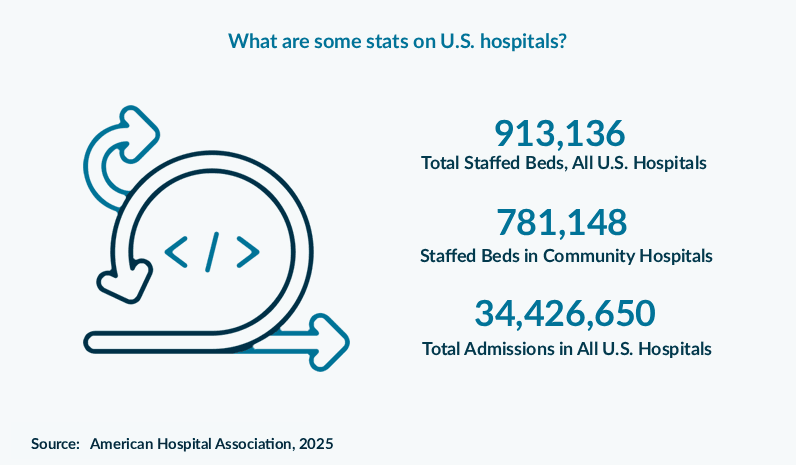
The size and complexity of the healthcare system help explain why graduate programs value applicants who can work across business and health administration. There were 6,093 hospitals in the United States in 2024, including 5,112 community hospitals. Within community hospitals, there were 2,978 nongovernment not-for-profit facilities, 1,214 investor-owned facilities, and 920 state and local government community hospitals. Other categories included 207 federal government hospitals, 654 nonfederal psychiatric hospitals, and 120 other hospitals.
Those hospitals represented a large operating footprint: 913,136 staffed beds across all U.S. hospitals, including 781,148 in community hospitals. Total admissions reached 34,426,650 across all U.S. hospitals, with 32,345,846 admissions in community hospitals. The data also points to consolidation and system-based care, with 3,525 community hospitals belonging to a larger system.
Location also matters for career planning. The United States had 1,796 rural community hospitals and 3,316 urban community hospitals, meaning opportunities are distributed across both rural and urban markets but are more concentrated in urban areas.
What Students Learn in an MBA/MHA Dual Degree Program
The curriculum blends general management education with healthcare-specific administration. A strong program should not feel like two unrelated degrees stitched together. The best fit is a curriculum that helps students connect business concepts such as capital budgeting, market strategy, organizational design, and analytics to healthcare realities such as reimbursement, compliance, patient safety, access, health equity, and quality performance.
Coursework may include healthcare finance, strategic management, operations, organizational leadership, informatics, policy, and accounting. Students interested in finance-heavy healthcare roles may also want to understand specialized business topics such as M&A accounting, especially if they plan to work in health system consolidation, private equity-backed provider groups, consulting, or corporate development.
| Curriculum area | What it helps students do |
| MBA core | Build skills in finance, marketing, operations, strategy, leadership, and organizational decision-making. |
| MHA core | Develop healthcare-specific knowledge in policy, law, ethics, quality, informatics, reimbursement, and health systems management. |
| Electives | Allow students to focus on areas such as consulting, analytics, hospital administration, payer strategy, global health, or entrepreneurship. |
| Practicum, internship, or residency | Provides supervised experience in a healthcare organization and helps students test career interests before graduation. |
| Capstone project | Requires students to solve a practical healthcare management problem using both business and health administration tools. |
| Shared credits | Reduce repeated coursework and shorten the total path compared with earning the degrees separately. |
Students comparing this option with accelerated healthcare management degree online programs should look carefully at scope. An accelerated healthcare administration program may be faster, but it may not include the full MBA business core that many dual-degree students want.
Questions to Ask About Curriculum Quality
- Are MBA and MHA courses integrated, or do students simply complete two separate checklists?
- Does the program include a healthcare residency, internship, practicum, consulting project, or capstone?
- Can students take electives in analytics, finance, strategy, quality, health policy, or healthcare entrepreneurship?
- Do faculty have experience in healthcare systems, payers, consulting, public health, or executive leadership?
- Are career services available through both the business school and the health administration program?
Common MBA/MHA Dual Degree Courses
Core courses give students the management foundation needed to work across finance, operations, people leadership, policy, and healthcare delivery. Course names vary by university, but the subjects below are common in MBA/MHA dual degree plans.
| Course area | Why it matters in healthcare leadership |
| Financial Management | Prepares students to analyze budgets, evaluate investments, manage costs, and understand financial trade-offs in healthcare organizations. |
| Healthcare Law and Ethics | Covers compliance, liability, patient privacy, ethical decision-making, and the legal environment affecting providers and administrators. |
| Healthcare Policy and Economics | Explains how regulation, reimbursement, market forces, and public policy shape healthcare access, delivery, and organizational strategy. |
| Health Informatics | Focuses on data, digital systems, electronic health records, reporting, security, and information-driven improvement. |
| Marketing Management | Teaches market analysis, service positioning, consumer behavior, and communication strategy for healthcare services and organizations. |
| Operations Management | Builds skills in process improvement, capacity planning, quality, scheduling, and efficiency. |
| Organizational Behavior | Examines leadership, culture, teams, motivation, negotiation, and workforce management. |
| Strategic Management | Helps students evaluate competition, partnerships, growth opportunities, service lines, and long-term organizational direction. |
Students who want a healthcare administration credential but do not need the MBA side can compare dual degrees with accelerated MBA healthcare administration online pathways and standalone MHA programs. The right choice depends on whether your target roles require broad business training or specialized healthcare management preparation.
How Long Does an MBA/MHA Dual Degree Take?
An MBA/MHA dual degree usually takes less time than completing both degrees separately because of shared credits. Full-time students commonly finish in approximately 2.5 to 3 years. Part-time students typically need 4 to 6 years, depending on course load, sequencing, prerequisites, and whether the program requires a residency or internship.
Program length is one reason applicants compare graduate options carefully. For example, someone deciding between CFA vs MBA pathways may be weighing finance specialization against broader management preparation. An MBA/MHA is more targeted than a general MBA because it is built around healthcare leadership rather than finance alone.
| Format | Typical timeline | Best for |
| Full-time dual degree | Approximately 2.5 to 3 years | Students who can step away from full-time work or reduce work hours to finish faster. |
| Part-time dual degree | Typically 4 to 6 years | Working professionals who need schedule flexibility and steady income while studying. |
| Cohort-based program | Often more structured | Students who value peer networks, predictable sequencing, and guided progression. |
| Flexible program | Varies by course load | Students balancing work, family, clinical schedules, military service, or relocation. |
- Shared coursework: Dual programs often reduce total credit hours by 15–20% compared with taking the degrees separately.
- Residency or internship requirements: Practical experiences can extend the timeline but may improve career readiness.
- Prerequisites: Students without business preparation may need additional coursework in accounting, statistics, economics, or quantitative methods.
- Course sequencing: Some classes may be offered only once per year, so missed courses can delay graduation.
MBA/MHA Dual Degree ROI: How to Decide If It Is Worth It
The return on investment for an MBA/MHA depends on tuition, fees, scholarships, employer support, lost income, program length, prior experience, location, and the kind of role a graduate obtains. The dual degree may be worthwhile for students who are targeting leadership roles where both business and healthcare expertise are useful. It may be harder to justify for students who only need a lower-cost credential for entry-level administration work.
Instead of assuming the degree will automatically pay off, applicants should calculate a realistic ROI using their own numbers. Compare the total cost of attendance with expected salary growth, the likelihood of advancement, and the strength of the program’s employer network. If your target is one of the broader MBA jobs in healthcare, review whether employers in that market prefer an MBA, an MHA, or the combined credential.
| ROI factor | What to check before enrolling |
| Total program cost | Tuition, fees, books, technology costs, travel, residency expenses, and any added prerequisite courses. |
| Opportunity cost | Income you may give up if you study full time or reduce your work hours. |
| Career outcomes | Where graduates work, what roles they enter, and whether those roles match your goals. |
| Employer support | Tuition reimbursement, promotion pathways, leadership development tracks, or paid practicum opportunities. |
| Network value | Access to hospitals, health systems, consulting firms, alumni, residencies, and executive mentors. |
| Credential fit | Whether employers in your target field actually value the dual MBA/MHA over a single degree. |
The broader healthcare business environment is one reason some students pursue management training. The U.S. health and medical insurance industry experienced significant revenue shifts in recent years. Revenues surged in 2020 and 2021 during the COVID-19 pandemic as healthcare spending rose, then slowed sharply in 2022 when high inflation reduced consumer purchasing power and limited growth to just over 2.0%. The industry recovered in 2023 as inflation eased and gained additional momentum in 2024 as investment income increased revenue growth.
Over the five years to 2025, the industry recorded a 3.8% compound annual growth rate (CAGR) and reached an estimated market size of $1.5 trillion. Growth is expected to continue over the next five years, supported by a stable economy, low unemployment, and rising employer-sponsored health plan spending.
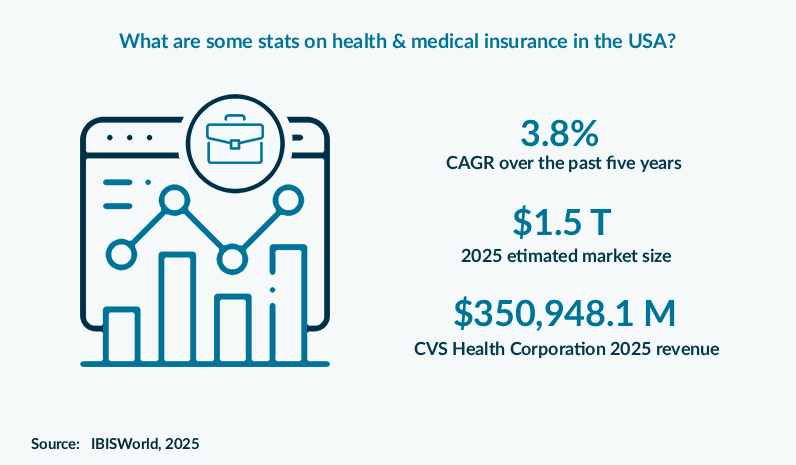
In 2025, leading firms included CVS Health Corporation, with revenue of $350,948.1 million and profit of $10,419.7 million, representing a 3.0% margin; UnitedHealth Group Incorporated, with revenue of $346,159.7 million and profit of $17,902.2 million, representing a 5.2% margin; and Anthem, Inc., with revenue of $192,000.0 million and profit of $8,256.0 million, representing a 4.3% margin.
Career Paths for MBA/MHA Dual Degree Graduates
MBA/MHA graduates can pursue leadership, operations, finance, consulting, and strategy roles across the healthcare sector. The degree does not guarantee an executive title immediately after graduation, especially for applicants without substantial prior experience. However, it can support movement into higher-responsibility roles as graduates build management experience and industry credibility.
| Role | Typical focus |
| Ambulatory Care Manager | Manages outpatient clinics, service lines, staffing, scheduling, budgets, and patient flow. |
| Chief Executive Officer or Chief Operating Officer | Leads organizational strategy, operations, finance, growth, quality, and executive decision-making. |
| Director of Revenue Cycle Management | Oversees billing, coding, claims, collections, reimbursement, and financial performance. |
| Healthcare Consultant | Advises providers, payers, or healthcare companies on operations, strategy, compliance, cost control, or growth. |
| Health Information Management Director | Leads health data governance, privacy, records, analytics, and information management teams. |
| Hospital Administrator | Coordinates hospital or department operations, budgets, staff, service quality, and regulatory readiness. |
| Managed Care Executive | Works on provider networks, contracts, utilization, member services, and payer strategy. |
| Medical and Health Services Manager | Supervises departments, physician practices, nursing homes, outpatient units, or specialized healthcare services. |
| Pharmaceutical or Biotechnology Manager | Supports research, commercial operations, product strategy, compliance, or drug development processes. |
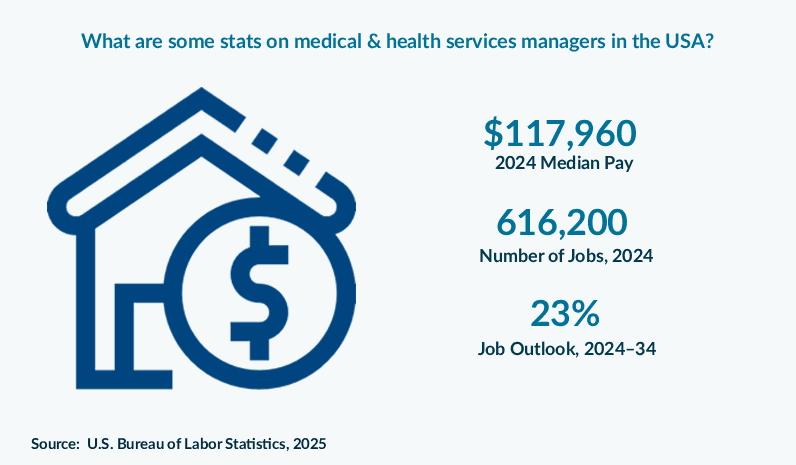
According to the U.S. Bureau of Labor Statistics, medical and health services managers held approximately 616,200 jobs in 2024. Employment was concentrated in traditional healthcare settings. Hospitals, including state, local, and private facilities, were the largest employers and accounted for 29.0% of all jobs.
Offices of physicians employed 14.0% of medical and health services managers, followed by nursing and residential care facilities at 9.0%. Government, excluding state and local education and hospitals, accounted for 7.0%, and outpatient care centers also accounted for 7.0%.
These employment patterns show that hospitals remain a major destination for healthcare managers, but physician offices, outpatient care, nursing facilities, government agencies, and payer-related organizations also create career opportunities.
Job Outlook for MBA/MHA Graduates
The outlook for healthcare management is strong based on U.S. Bureau of Labor Statistics projections for medical and health services managers. This does not mean every MBA/MHA graduate will receive the same opportunities, but it does indicate that the occupation is expected to expand much faster than the overall labor market.
- Projected employment growth: Employment of medical and health services managers is projected to grow 23% from 2024 to 2034, much faster than the average for all occupations.
- Annual openings: About 62,100 average annual openings are expected from 2024–34 because of job growth and the need to replace workers who leave the occupation.
- Aging population: Greater demand for healthcare services, chronic disease management, and long-term care is increasing the need for skilled administrators.
- Regulatory pressure: Healthcare organizations need leaders who understand compliance, reimbursement changes, quality requirements, and policy shifts.
- Technology adoption: Electronic health records, telehealth, health informatics, analytics, and cybersecurity concerns require managers who can guide implementation and integration.
- Cost control: Organizations continue to need leaders who can improve efficiency, manage budgets, and redesign operations while maintaining care quality.
- Sector range: Opportunities extend across hospitals, outpatient care centers, nursing facilities, physician offices, managed care organizations, government agencies, and related healthcare businesses.
- Median wage: As of May 2024, the median annual wage for medical and health services managers was $117,960, with higher earnings in hospitals and government sectors.
- Education level: A bachelor’s degree is standard for many roles, but master’s-level preparation, including an MBA/MHA, can improve competitiveness for advanced leadership positions.
MBA/MHA Salary Expectations
Salaries for MBA/MHA graduates vary widely by role, employer type, location, experience, and leadership scope. The degree may help graduates compete for higher-paying management roles, but salary outcomes are not guaranteed. Prior healthcare experience, quantitative skills, people-management history, and the strength of the employer network often matter as much as the credential itself.
Data from a 2025 Payscale.com report shows that compensation tends to rise with broader leadership responsibility. Chief operating officer and chief nursing officer roles had some of the highest averages in the reported data, at $157,520 and $158,795, respectively. Entry- to mid-level roles such as data analyst and human resources director reported lower averages of $66,921 and $69,726.
| Role | Average salary cited in 2025 Payscale.com data |
| Chief Nursing Officer | $158,795 |
| Chief Operating Officer | $157,520 |
| Director of Operations | $122,512 |
| Finance Director | $107,631 |
| Operations Manager | $87,909 |
| Senior Financial Analyst | $79,867 |
| Human Resources Director | $69,726 |
| Data Analyst | $66,921 |
The same data illustrates how pay can increase as graduates move from analyst and manager roles into director-level or executive responsibilities. For example, the average cited for an operations manager was $87,909, while the average for a director of operations was $122,512. A finance director average of $107,631 was also higher than the $79,867 average for a senior financial analyst.
Applicants should use these figures as reference points rather than promises. Local market conditions, employer size, prior experience, performance, and whether the role includes bonuses, equity, or incentive pay can significantly affect compensation.
Skills Developed in an MBA/MHA Dual Degree
An MBA/MHA curriculum is valuable when it turns students into practical decision-makers, not just credential holders. Graduates should leave with the ability to interpret financial data, lead teams, improve processes, communicate with clinicians and executives, understand healthcare regulation, and evaluate technology-driven change. Students comparing programs should review healthcare administration degree requirements alongside MBA requirements to see whether the combined curriculum matches their goals.
| Skill | How it applies in healthcare organizations |
| Communication | Helps leaders work with clinicians, executives, patients, vendors, regulators, and community stakeholders. |
| Data Analytics | Supports decisions involving quality metrics, utilization, financial performance, staffing, patient access, and outcomes. |
| Digital Innovation | Prepares managers to evaluate telehealth, health IT, automation, analytics platforms, and workflow redesign. |
| Financial Acumen | Builds ability to manage budgets, analyze costs, assess revenue, and make investment decisions. |
| Healthcare Policy Knowledge | Helps administrators understand regulation, reimbursement, ethics, law, and system-level constraints. |
| Leadership and Management | Develops the ability to supervise teams, manage change, resolve conflict, and align people around goals. |
| Operations Management | Improves scheduling, throughput, process design, capacity management, and service quality. |
| Problem-Solving | Strengthens structured analysis, root-cause thinking, and evidence-based decision-making. |
| Strategic Planning | Supports long-term decisions about growth, partnerships, service lines, competition, and organizational positioning. |
Universities That Offer MBA/MHA Dual Degree Programs
Several U.S. universities offer MBA/MHA dual degree programs or closely related joint graduate pathways in business and healthcare administration. Rankings and reputations can be useful starting points, but applicants should not choose a program based on name recognition alone. Accreditation, curriculum fit, cost, location, residency access, employer connections, and career outcomes matter more for most students.
- Army-Baylor University: Known for preparing leaders for federal and military healthcare environments.
- Georgia State University: Offers a flexible MBA/MHA structure with urban health policy strengths.
- Ohio State University: Provides a structured three-year pathway with coordinated business and health administration study.
- Saint Louis University: Combines business and public health perspectives with attention to social justice.
- University of Alabama at Birmingham: Recognized nationally for healthcare management education.
- University of Houston-Clear Lake: Offers a flexible option for students pursuing healthcare executive roles.
- University of Minnesota: Connects business education through the Carlson School of Management with public health training.
- University of North Carolina at Chapel Hill: Combines business and public health resources from highly regarded schools.
- University of Scranton: Features AACSB- and CAHME-accredited dual degree programs.
- University of Washington: Uses resources from the Foster School of Business and the School of Public Health.
If speed is a top priority, compare dual degrees with accelerated healthcare programs. Accelerated options can be efficient, but they may require a heavy workload and may not provide the same breadth as a full MBA/MHA dual degree.
Online vs. Campus MBA/MHA Programs
Online, hybrid, and campus-based formats can all work, but the best choice depends on your schedule, learning style, location, and career goals. Healthcare leadership is relationship-driven, so students in online programs should pay close attention to networking, residencies, alumni access, and employer partnerships.
| Format | Advantages | Trade-offs |
| Online | Flexible scheduling, easier for working professionals, less relocation pressure. | Requires self-discipline; networking and experiential learning quality vary by program. |
| Campus | More face-to-face networking, easier access to campus recruiting, stronger cohort experience. | May require relocation, commuting, or reduced work hours. |
| Hybrid | Balances flexibility with in-person sessions, residencies, or intensive weekends. | Travel requirements and scheduling blocks can still affect working students. |
How to Pay for an MBA/MHA Dual Degree
MBA/MHA programs can be expensive, so financing should be part of the school selection process from the beginning. Applicants should compare net cost, not just advertised tuition. Net cost includes scholarships, assistantships, employer reimbursement, loan terms, fees, travel, technology costs, and income lost while studying.
- Institutional scholarships: Business schools and health administration departments may offer merit-based or need-based funding.
- Graduate assistantships: Some students reduce costs through research, teaching, or administrative assistant roles.
- Federal student loans: Eligible students may use federal graduate loan options, but borrowing should be evaluated against realistic earnings expectations.
- Private loans: These may be available, but terms, interest rates, and repayment protections vary.
- Employer tuition assistance: Healthcare systems, insurers, consulting firms, and government employers may provide reimbursement for job-related graduate study.
- Payment plans: Some universities allow students to spread payments across a term instead of paying all costs upfront.
- Lower-cost alternatives: If the MBA side is your main goal, compare dual programs with an inexpensive online MBA and healthcare-focused electives.
Cost Questions to Ask Before You Enroll
- What is the total cost for both degrees, including fees and required residencies?
- How many credits are shared between the MBA and MHA?
- Are scholarships available to dual-degree students, or only to single-degree students?
- Can working students complete internships or residencies without leaving their jobs?
- What percentage of graduates enter healthcare leadership, consulting, payer, hospital, or executive-track roles?
- Does the program publish career outcomes by degree pathway?
Current Trends Affecting MBA/MHA Students
Healthcare management is changing quickly, and dual-degree students should choose programs that address current operating realities rather than only traditional administration theory.
- Health data and analytics: Leaders increasingly need to interpret performance dashboards, quality measures, utilization data, financial reports, and patient access metrics.
- AI and automation: Healthcare organizations are evaluating AI-supported documentation, scheduling, claims review, decision support, and administrative automation. Managers need to understand risk, workflow impact, ethics, privacy, and governance.
- Telehealth and digital care models: Administrators must evaluate access, reimbursement, staffing, technology integration, and patient experience.
- Cost and reimbursement pressure: Financial management remains central as organizations balance rising costs, payer negotiations, quality requirements, and operating margins.
- Workforce challenges: Staffing, retention, burnout, compensation, and team design are major leadership issues in hospitals and other care settings.
- Consolidation and system strategy: Many healthcare organizations operate within larger systems, making enterprise strategy, integration, and change management increasingly important.
Common Mistakes When Choosing an MBA/MHA Program
| Mistake | Better approach |
| Choosing only by ranking | Use rankings as one input, then compare curriculum, accreditation, cost, outcomes, and employer access. |
| Ignoring accreditation | Confirm the business and health administration components meet recognized quality standards relevant to your goals. |
| Looking only at tuition | Calculate total cost, including fees, travel, lost income, prerequisites, and loan interest. |
| Assuming online means easier | Evaluate workload, live session expectations, group projects, practicum requirements, and support services. |
| Skipping career outcome research | Ask where graduates work, what titles they hold, and whether employers recruit from the program. |
| Overestimating immediate salary gains | Use salary data cautiously and account for experience, location, employer type, and role level. |
| Failing to check credit sharing | Review exactly how many credits count toward both degrees and how that affects time to graduation. |
Step-by-Step: How to Choose the Right MBA/MHA Dual Degree
- Define your target role: Decide whether you want hospital operations, consulting, payer leadership, revenue cycle, analytics, pharmaceutical management, public health administration, or executive leadership.
- Confirm you need both degrees: Compare a dual MBA/MHA with a standalone MBA, standalone MHA, MPH, healthcare MBA concentration, or graduate certificate.
- Check accreditation and structure: Review whether the business and health administration programs meet recognized standards and whether students must apply separately to each school.
- Compare curriculum depth: Look for strong coverage of finance, analytics, health policy, law, operations, quality, strategy, and leadership.
- Evaluate experiential learning: Prioritize programs with residencies, internships, consulting projects, capstones, or employer-connected practicum options.
- Calculate total cost and financing: Compare scholarships, assistantships, employer reimbursement, payment plans, and borrowing needs.
- Review outcomes: Ask for graduate placement information, employer lists, alumni examples, and career services available to dual-degree students.
- Test schedule fit: Make sure the program format works with your job, family responsibilities, relocation limits, and learning preferences.
References
- American Hospital Association. (2025). Fast facts on U.S. hospitals, 2025. American Hospital Association.
- IBISWorld. (2025). Health & medical insurance in the US: Market research report. IBISWorld.
- PayScale. (2025). Master of Business Administration (MBA), Health Care Administration salary. PayScale.
- U.S. Bureau of Labor Statistics. (2025). Medical and health services managers. Occupational Outlook Handbook. U.S. Bureau of Labor Statistics.
Key Insights
- An MBA/MHA dual degree is best for students who want healthcare leadership roles that require both business strategy and healthcare administration expertise.
- The degree usually takes approximately 2.5 to 3 years full time or typically 4 to 6 years part time, with shared coursework often reducing total credit hours by 15–20%.
- Admissions committees commonly review GPA, test scores where required, recommendations, essays, interviews, leadership experience, and healthcare exposure.
- Career options include hospital administration, ambulatory care management, revenue cycle leadership, consulting, managed care, health information management, and pharmaceutical or biotechnology management.
- BLS data projects 23% growth for medical and health services managers from 2024 to 2034, with about 62,100 average annual openings during 2024–34.
- Salary outcomes vary significantly. Payscale.com data from 2025 shows averages ranging from $66,921 for data analyst roles to $158,795 for chief nursing officer roles.
- ROI depends on total cost, lost income, employer support, prior experience, target role, and whether employers in your market value the dual credential.
- Before applying, compare accreditation, curriculum integration, experiential learning, graduate outcomes, total cost, and format. Do not rely on rankings alone.
Other Things You Should Know About MBA/MHA Dual Degrees
A strong program should be accredited by AACSB for the MBA and CAHME for the MHA. AACSB covers business education quality, while CAHME is the main accreditor for healthcare management programs. Regional institutional accreditation is also expected for federal aid and credit transfer eligibility.
Prerequisites for enrolling in a 2027 MBA/MHA dual degree program typically include a bachelor's degree, relevant work experience, and GMAT or GRE scores. Specific requirements may vary by institution, so it's crucial to check individual program details.


