2027 Quick Medical Certifications That Pay Well in Healthcare

Co-Founder and Chief Data Scientist
A short medical certification can help you move into healthcare faster than a degree program, but speed should not be the only factor. The credential must match local employer expectations, qualify you for any required exam, include enough hands-on practice, and make financial sense based on realistic wages in your area.
This guide compares quick medical certifications that can lead to healthcare support jobs, including billing and coding, medical assisting, sterile processing, pharmacy technician work, phlebotomy, dental assisting, surgical technology, and home health aide training. You will learn what each role does, how long training may take, what pay ranges to expect, where graduates may work, what costs to ask about, and how to choose a program without overpaying for a credential employers may not recognize.
Quick answer: Which fast medical certifications can pay well?
Common short healthcare certification paths include medical billing and coding, medical assisting, sterile processing technician, pharmacy technician, medical transcriptionist, dental assistant, patient access representative, patient care technician, phlebotomy technician, surgical tech, and home health aide. Program length can range from 4-12 weeks to 12-24 months, while the pay ranges covered in this guide span from $10-$15 per hour on the lower end to $30-$35 per hour for selected higher-paying roles.
The best option depends on your goals. Choose medical billing and coding or patient access if you prefer administrative healthcare work. Consider phlebotomy, medical assisting, patient care technician training, or home health aide training if you want direct patient interaction. Look at sterile processing or surgical tech programs if you are interested in procedure-focused work in surgical or hospital settings.
Why short medical certifications appeal to students and career changers
- They can shorten the path to employment: Many certificate programs are designed for specific healthcare support roles such as phlebotomy technician, medical assistant, dental assistant, medical coder, and surgical technician.
- They may lead to role-based earning opportunities: Depending on the occupation, location, employer, experience, and credential, certified workers may earn from $20 to $35 per hour.
- They offer flexible training formats: Some online medical certification programs allow students to complete coursework while working or caring for family, although clinical programs often still require labs, externships, or in-person skill checks.
- Medical Billing and Coding
- Medical Assisting
- Sterile Processing Technician
- Pharmacy Technician
- Medical Transcriptionist
- Home Health Aide
- Dental Assistant
- Patient Access Representative
- Patient Care Technician
- Phlebotomy Technician
- Surgical Tech
- Medical certification definition
- Typical completion time
- Online, campus, and hybrid formats
- Cost and return on investment
- Financial aid options
- Common prerequisites
- Steps to get certified
- Certification exams
- How to compare programs
What should you expect from a quick medical certification program?
Most short medical certification programs are built to prepare students for a defined workplace function rather than a broad academic pathway. Instead of spending years on general education, students usually study the terminology, procedures, technology, documentation rules, safety standards, and patient interactions connected to one role.
- Job-focused practice is often more important than lengthy theory courses.
- Some credentials require continuing education so workers can stay current with clinical procedures, compliance rules, and workplace expectations.
- Courses commonly include Medical Terminology, Anatomy and Physiology, and Patient Care and Communication.
- Many medical certification programs cost from $1,500 to $10,000, depending on the school and credential.
- Program length can range from one semester to 24 months, depending on the occupation and required clinical training.
Where people with medical certifications may work
A certificate can prepare you for several healthcare or health-related work environments. Your options will depend on the specific credential, state rules, employer requirements, and whether the role involves direct patient care.
- Hospitals: Roles may include patient care, sterile processing, surgical support, registration, medical records, and administrative support.
- Clinics: Opportunities may be found in primary care practices, specialty offices, urgent care centers, and outpatient facilities.
- Nursing homes and assisted living facilities: These settings often hire workers for direct care and daily support roles.
- Home healthcare agencies: Certified workers may provide in-home assistance, personal care, companionship, and basic support.
- Ambulance services and emergency medical centers: Emergency-response pathways, including EMT-related training, may lead to work in urgent and mobile care settings.
- Laboratories and blood donation centers: Phlebotomy and specimen-handling skills are especially relevant in these environments.
- Government health departments: Some positions support public health, community health, intake, and patient services.
- Insurance companies: Billing, coding, claims processing, medical review, and administrative roles may be available.
Estimated pay ranges for common healthcare support credentials
Wages are not guaranteed by earning a certificate. Pay can change based on state, city, employer type, shift, experience, certification status, and demand for the role.
| Role | Estimated pay range | Strong fit for learners who want |
| Certified Nursing Assistant (CNA) | $12-$18 per hour | Hands-on patient care and possible preparation for nursing pathways |
| Medical Assistant | $15-$25 per hour | A role combining patient support, basic clinical tasks, and front-office work |
| Phlebotomist | $14-$22 per hour | A focused clinical skill involving specimens, labs, and patient contact |
| Emergency Medical Technician (EMT) | $15-$25 per hour | Emergency response, field work, and fast-paced care environments |
| Dialysis Technician | $18-$25 per hour | Specialized support for patients receiving kidney treatment |
| Medical Coder | $18-$25 per hour | Work with health records, coding systems, billing, and claims documentation |
2027 Quick Medical Certifications that Pay Well in Healthcare
How to use this list
A quick certificate has value only when it leads to the role you actually want and meets the expectations of employers, state agencies, or certification organizations. To support a more transparent comparison, Research.com reviewed information from sources including the IPEDS database, Peterson's database, the College Scorecard database, and the National Center for Education Statistics. You can read more about how we evaluate education options on our methodology page.
1. Medical Billing and Coding
Medical billers and coders translate diagnoses, procedures, treatments, and services into standardized codes used for claims, reimbursement, medical records, and patient account processing. This path often suits detail-oriented learners who want to work in healthcare without providing bedside care.
- Time to completion: up to 1 year
- Average pay: $15-$20 per hour
- Top pay: $25-$30 per hour
- Choose this if: you enjoy accuracy, health records, insurance workflows, medical terminology, and computer-based tasks.
- Check carefully: whether the curriculum prepares you for recognized coding exams and current coding systems.
2. Medical Assisting
Medical assistants help clinical and administrative teams keep healthcare offices running. Their duties may include recording patient histories, taking vital signs, preparing exam rooms, supporting minor procedures, updating records, scheduling appointments, and communicating with patients.
- Time to completion: 6-12 months
- Average pay: $15-$20 per hour
- Top pay: $25-$30 per hour
- Choose this if: you want a flexible healthcare support role with both patient-facing and office responsibilities.
- Check carefully: the quality of externships and whether the program prepares students for the certification exam local employers prefer.
3. Sterile Processing Technician
Sterile processing technicians support patient safety by cleaning, disinfecting, assembling, sterilizing, storing, and tracking medical instruments and surgical equipment. Their work is critical in hospitals, operating rooms, and surgical centers.
- Time to completion: 12-24 months
- Average pay: $25-$28 per hour
- Top pay: $30-$35 per hour
- Choose this if: you are methodical, safety-minded, and interested in surgical environments without working directly as part of the surgical team at the operating table.
- Check carefully: whether training includes substantial practice with instrument processing, infection control, and sterilization protocols.
4. Pharmacy Technician
Pharmacy technicians assist pharmacists with prescription preparation, medication labeling, inventory, insurance processing, customer support, and pharmacy workflow. Jobs may be available in retail pharmacies, hospitals, long-term care facilities, and other medication-dispensing settings.
- Time to completion: 4 months to 1 year
- Average pay: $15-$20 per hour
- Top pay: $25-$30 per hour
- Choose this if: you are comfortable with medication names, calculations, regulated procedures, inventory, and customer interaction.
- Check carefully: state requirements, exam eligibility, and whether local employers prefer or require certification.
5. Medical Transcriptionist
Medical transcriptionists convert dictated clinical recordings into written reports, including patient histories, operative notes, discharge summaries, and other medical documents. Strong listening, typing, editing, terminology, and confidentiality skills are essential.
- Time to completion: 6-12 months
- Average pay: $15-$25 per hour
- Top pay: $25-$35 per hour
- Choose this if: you are a strong typist and editor who prefers documentation-focused healthcare work.
- Check carefully: whether the program teaches electronic health records, speech recognition tools, and modern documentation workflows.
6. Home Health Aide
Home health aides support clients in private homes by helping with bathing, dressing, grooming, meals, light housekeeping, companionship, medication reminders, and daily living activities. It is one of the fastest entry points into direct care work.
- Time to completion: 4-12 weeks
- Average pay: $10-$15 per hour
- Top pay: $18-$22 per hour
- Choose this if: you want short training and meaningful one-on-one support work.
- Check carefully: physical demands, travel expectations, shift structure, and state training requirements.
7. Dental Assistant
Dental assistants support dentists and dental hygienists by preparing treatment rooms, welcoming patients, sterilizing instruments, maintaining records, scheduling visits, assisting during procedures, and taking X-rays where state rules allow.
- Time to completion: 6-12 months
- Average pay: $15-$20 per hour
- Top pay: $25-$30 per hour
- Choose this if: you want a patient-facing healthcare role in a dental office with both clinical and administrative tasks.
- Check carefully: requirements for radiography, expanded functions, and state-recognized credentials.
8. Patient Access Representative
Patient access representatives help patients start the care process. They handle registration, insurance verification, copay collection, scheduling, intake questions, and service coordination, often serving as the first point of contact for a healthcare facility.
- Time to completion: around 12 months
- Average pay: $12-$18 per hour
- Top pay: $25-$35 per hour
- Choose this if: you have strong communication skills and want a healthcare role centered on service, registration, and insurance information.
- Check carefully: whether coursework covers privacy rules, medical terminology, billing basics, and electronic health record systems.
9. Patient Care Technician
Patient care technicians provide bedside support under nursing supervision. Duties may include taking vital signs, helping with hygiene, collecting specimens, observing patient changes, assisting with mobility, and supporting patient comfort.
- Time to completion: 2 months to 1 year
- Average pay: $12-$18 per hour
- Top pay: $20-$25 per hour
- Choose this if: you want direct patient care experience and may later pursue nursing or another clinical pathway.
- Check carefully: clinical hour requirements, physical workload, and whether local employers recognize the certificate.
10. Phlebotomy Technician
Phlebotomy technicians draw blood for lab testing, donation, or medical evaluation. They confirm patient identity, explain the process, prepare supplies, collect specimens, label samples correctly, and help patients remain calm and safe.
- Time to completion: 4-8 months
- Average pay: $15-$20 per hour
- Top pay: $25-$30 per hour
- Choose this if: you want a focused clinical skill that can be learned in a relatively short program.
- Check carefully: required successful blood draws, externship access, and state certification expectations.
11. Surgical Tech
Surgical technologists help operating room teams prepare for and complete procedures. They organize sterile instruments, set up surgical spaces, pass supplies to surgeons, assist with patient positioning, and help maintain sterile technique throughout surgery.
- Time to completion: 12-24 months
- Average pay: $20-$25 per hour
- Top pay: $30-$35 per hour
- Choose this if: you can handle high-pressure clinical settings and precise procedural work.
- Check carefully: accreditation, clinical rotation quality, and whether graduates qualify for the certification exam preferred by employers.
Quick comparison: medical certifications by time, pay, and fit
| Certification path | Training time | Average pay | Top pay | Best-fit learner |
| Medical Billing and Coding | up to 1 year | $15-$20 per hour | $25-$30 per hour | Learners who prefer codes, records, compliance, and claims work |
| Medical Assisting | 6-12 months | $15-$20 per hour | $25-$30 per hour | Students who want a mix of clinical support and office tasks |
| Sterile Processing Technician | 12-24 months | $25-$28 per hour | $30-$35 per hour | Organized learners interested in procedure, safety, and hospital support |
| Pharmacy Technician | 4 months to 1 year | $15-$20 per hour | $25-$30 per hour | Students interested in medications, inventory, insurance, and customer service |
| Medical Transcriptionist | 6-12 months | $15-$25 per hour | $25-$35 per hour | Strong listeners, typists, and editors who understand medical terminology |
| Home Health Aide | 4-12 weeks | $10-$15 per hour | $18-$22 per hour | Students seeking the fastest direct-care entry point |
| Dental Assistant | 6-12 months | $15-$20 per hour | $25-$30 per hour | Learners drawn to dental offices, patient preparation, and chairside support |
| Patient Access Representative | around 12 months | $12-$18 per hour | $25-$35 per hour | People with communication, service, registration, and insurance skills |
| Patient Care Technician | 2 months to 1 year | $12-$18 per hour | $20-$25 per hour | Students who want bedside experience before advancing clinically |
| Phlebotomy Technician | 4-8 months | $15-$20 per hour | $25-$30 per hour | Learners who want one focused clinical and lab-related skill |
| Surgical Tech | 12-24 months | $20-$25 per hour | $30-$35 per hour | Students ready for operating room expectations and precise sterile technique |
What students often appreciate about short healthcare certifications
Many learners choose quick medical certificates because they provide a faster way to test a healthcare career, learn practical job skills, and gain experience before committing to a longer academic program.
-
: "
"Phlebotomy training gave me a way to leave retail and start working in healthcare. The clinical practice mattered most because it taught me how to talk with patients while developing a specific hands-on skill." - Ben
"
-
: "
"I chose medical coding because the online format was flexible and the work matched my strengths in documentation, accuracy, and problem-solving rather than bedside care." - Jake
"
-
: "
"Medical transcription fit around my schedule and helped me strengthen useful skills in terminology, listening, editing, and healthcare documentation." - Simone
"
Labor market points to consider before enrolling
- Short medical certifications can provide a faster healthcare entry route than traditional degrees because they focus on specific job functions.
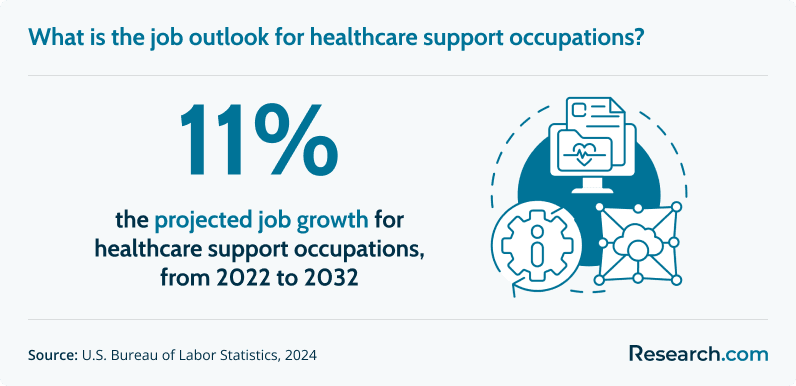
- Healthcare support occupations are projected to add over 706,000 new jobs by 2032, equal to an 11% increase.
- Medical assistant, psychiatric technician, and phlebotomist roles are among the faster-growing healthcare support occupations, with projected growth of 14%, 10%, and 8%, respectively, by 2032.
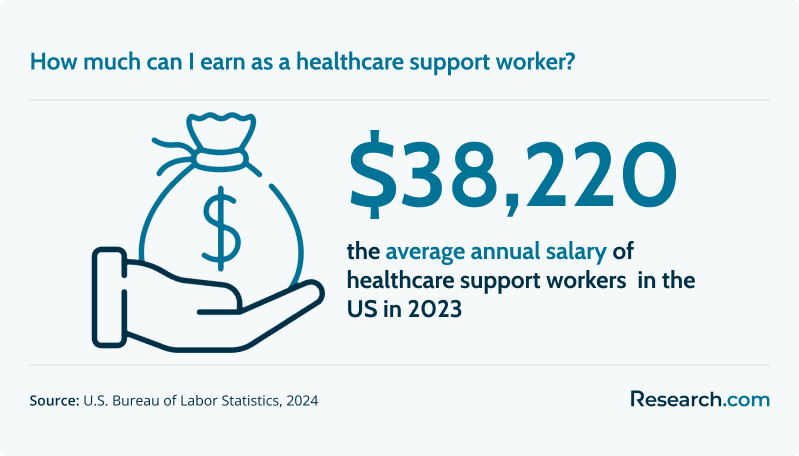
- Healthcare support occupations had an average annual salary of $38,220, although wages vary by occupation, state, employer, and industry.
- Some quick medical certifications that pay well can be finished in one semester, while others may require up to 24 months.
What is a medical certification?
A medical certification is a credential that shows a person has completed training and demonstrated competency in a specific healthcare skill or support function. Many certifications involve a course or program followed by an exam from a professional organization, certifying body, or state-approved entity.
Several healthcare support roles do not require a college degree for entry. A high school diploma or equivalent, role-specific training, and exam preparation may be enough for some positions, but rules differ by occupation, employer, state, and credentialing organization.
A certificate can also serve as a first step toward a broader healthcare education plan. Students who later want roles in public health or healthcare leadership may compare a bachelor's pathway with low-cost online MPH programs after gaining work experience.
How long do quick medical certifications take?
Completion time depends on the role, required clinical experience, program format, and whether you enroll full time or part time. Some programs take only weeks or months, while others require six months to 2 years.
Shorter certificates usually teach a narrower set of job skills. Longer options may include more lab sessions, externships, clinical practice, or exam preparation. Administrative tracks may also include records, office, and finance-related skills; students who want stronger accounting or office preparation may compare those expectations with a bookkeeping certificate course.
For instance, Certified Phlebotomy Technician (CPT) preparation commonly covers blood collection, specimen handling, patient communication, and laboratory procedures. Supervised practice matters because employers need workers who can perform safely, accurately, and confidently.
Online vs. on-campus medical certification programs: which format is better?
Online medical certification programs can be a good match for students who need flexibility. Lectures, readings, quizzes, and terminology assignments may be completed around work or family responsibilities. This format is often practical for administrative or documentation-focused tracks, but clinical programs usually still require in-person labs, externships, or skill evaluations.
Campus-based programs may be stronger for students who want fixed schedules, face-to-face instructor feedback, and direct access to equipment. For hands-on roles, in-person practice can be valuable because students must learn procedures, safety protocols, and patient communication under supervision.
Students exploring online healthcare certificates may also see related options in behavioral and health sciences, such as online psychology certificate programs.
| Program format | Advantages | Possible drawbacks | Best for |
| Online | Flexible coursework, convenient access, and better fit for some working adults | Clinical hours may still be in person, and hands-on support can be limited | Billing, coding, transcription, patient access, and students needing schedule flexibility |
| On campus | Structured class times, direct instructor access, and easier use of labs and equipment | Less scheduling flexibility, plus possible commuting costs and time | Clinical programs that require repeated supervised practice |
| Hybrid | Online theory combined with in-person labs, externships, or skill checks | Students must coordinate online work with scheduled clinical requirements | Learners who want flexibility but still need practical clinical preparation |
How much do quick medical certifications cost?
Cost varies by school, credential, supplies, clinical requirements, exam fees, and format. One estimate places medical certifications that pay well at $37,228 to $49,110, while many shorter medical certification programs are also described as costing $1,500 to $10,000.
Because cost ranges can differ so widely, ask each school for the full program price. Tuition may not include books, uniforms, background checks, immunizations, drug screening, lab fees, technology fees, certification exam fees, or renewal costs.
Certification exams are often charged separately, and fees depend on the organization that administers the test. Before enrolling, ask whether tuition covers exam preparation, practice exams, testing vouchers, or retake assistance.
Return on investment depends on how long training takes, whether local employers value the credential, and what you can realistically earn after certification. Healthcare support occupations have an average annual salary of around $38,000, but wages differ substantially by role and industry.
The spectator sports industry is listed as the highest-paying industry for healthcare support occupations, with an average annual salary of $100,020. The chart below offers more context on higher-paying industries for this occupational group.
What financial aid is available for quick medical certification programs?
Certificate programs may have fewer aid options than degree programs, but students should still investigate funding before paying out of pocket. Eligibility depends on the institution, program length, accreditation, personal circumstances, and funding rules.
- Federal Student Aid: Some certificate programs may qualify students for federal student loans after completing the Free Application for Federal Student Aid (FAFSA). Confirm aid eligibility for the exact certificate, not just the school.
- Scholarships and grants: Healthcare associations, community foundations, hospitals, workforce boards, and local organizations may provide training funds.
- Employer reimbursement: Some healthcare employers help employees pay for credentials tied to staffing needs.
- Payment plans: A school may let students divide tuition into scheduled installments.
- Veterans benefits: Veterans and eligible dependents may be able to apply education benefits through the Veterans Affairs (VA) department.
Before taking on debt, compare the full cost with entry-level wages in your local job market. A fast certificate can be worthwhile, but only if it leads to jobs you can reasonably access.
What prerequisites do quick medical certification programs require?
Admissions requirements vary by occupation and school. Many programs require a high school diploma or GED equivalent, while clinical programs may add screenings and documentation before students can train with patients.
- High school diploma or GED equivalent: Many certificate programs use this as the baseline education requirement.
- Prerequisite coursework: Some schools may expect biology, anatomy, physiology, or related classes.
- Healthcare experience: Certain patient care programs may prefer or require volunteering or prior healthcare employment.
- Background checks and drug screenings: These are common because clinical sites serve patients who may be vulnerable.
- CPR and first aid certification: Several healthcare support roles may require or strongly recommend these credentials.
- Immunizations: Clinical placements often require proof of required immunizations before students can enter the site.
Never assume every school has the same requirements. Review admissions criteria, clinical site rules, and certification exam eligibility before paying an enrollment fee.
How do you earn a quick medical certification?
Begin by choosing the job you want, then identify the credential local employers request. A student interested in healthcare documentation, for example, may compare community college programs, online providers, and affordable online medical billing and coding courses.
After selecting a program, complete the required coursework, labs, simulations, externships, or clinical hours. Strong programs connect lessons to real job tasks such as drawing blood, coding patient records, sterilizing instruments, assisting patients, or processing insurance information.
The final step is completing a certification exam if the role or employer requires one. For example, students pursuing medical assisting may prepare for the Certified Medical Assistant (CMA) exam from the American Association of Medical Assistants (AAMA), as long as they meet the exam's eligibility rules.
- Choose the healthcare support role you want to pursue.
- Research state rules and local employer requirements.
- Compare accredited or otherwise recognized training programs.
- Verify certification exam eligibility before enrolling.
- Finish coursework, labs, externships, and clinical hours.
- Pass the required exam if your target role requires certification.
- Apply for entry-level jobs and track renewal or continuing education deadlines.
Do quick medical certifications require exams?
Often, yes. Many online certifications that can pay well are designed to prepare students for a role-specific exam. These exams may be administered by professional associations, credentialing agencies, or state-approved organizations.
Examples of certification exams and organizations include:
- National Healthcareer Association (NHA) Certified Phlebotoy Technician exam
- Certified Professional Coder (CPC) exam offered by the American Academy of Professional Coders (AAPC)
- Pharmacy Technician Certification Exam (PTCE) offered by the Pharmacy Technician Certification Board (PTCB)
- Certified Clinical Medical Assistant (CCMA) exam offered by the National Certified Medical Assistant (NCMA)
- Certified Medical Administrative Assistant (CMAA) exam offered by the American Association of Medical Assistants (AAMA)
- Registered Behavior Technician (RBT) exam offered by the Behavior Analysis Certification Board (BACB)
- Certified Patient Care Technician (CPCT) exam offered by the National Healthcareer Association (NHA) or other relevant certifying bodies state-specific CNA certification exams
- National Registry of Emergency Medical Technicians (NREMT) exam
- Certification exams offered by organizations such as the National Nephrology Foundation (NNF) or the Board of Nephrology Examiners (BNE)
This is not a complete list. Requirements can differ by certification, state, region, employer, and credentialing body.
Using a certificate as a stepping stone
A quick medical certification does not have to be your last credential. Many workers use certificate-based jobs to gain experience, understand healthcare settings, and decide whether to pursue a degree later. Someone working in healthcare administration or patient access, for example, may later compare affordable online healthcare administration degree options.
Direct-care workers may also use an entry-level role as a bridge into nursing. A nursing assistant who becomes an RN may later review low-cost online RN to BSN programs.
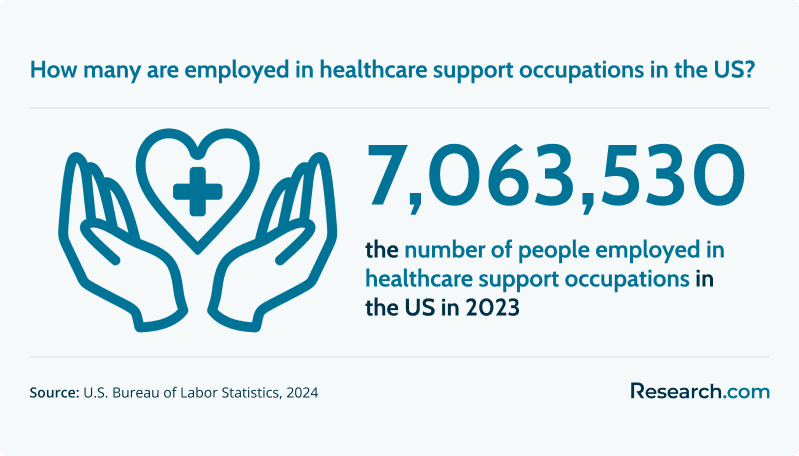
Healthcare support jobs can also provide ongoing employment opportunities. In 2023, the healthcare support occupational group had an average annual salary of $38,220.
How can you verify accreditation and employer recognition?
First, confirm whether the institution is accredited and whether the specific program is accepted by the certification body connected to your target job. Accreditation and program recognition may affect exam eligibility, financial aid access, transfer credit, and employer confidence.
Check the accreditor or certifying organization's website directly instead of relying only on a school's promotional materials. Then ask the program for completion rates, exam pass rates, externship details, employer partnerships, and job placement support. If you want a short medical assisting pathway, compare these details with accelerated medical assistant programs.
How much does location affect pay for quick medical certifications?
Regional factors can make a major difference in wages. Pay may reflect cost of living, local demand, the number of healthcare facilities, union presence, state scope-of-practice rules, and competition for entry-level roles.
Before enrolling, search local job postings for the exact certification names employers request. Pay attention to entry-level wages, required experience, shift differentials, and whether the job requires state registration or national certification. For a location-based example, review this medical assistant salary by state resource.
Should you continue your education after earning a medical certification?
Further education may be useful if your long-term goal requires licensure, advanced clinical responsibility, management, or specialized practice. A quick certificate can help you start, but occupations such as pharmacist, registered nurse, healthcare administrator, and advanced clinical specialist usually require more education and, in many cases, licensure.
For example, a pharmacy technician who wants to become a pharmacist must complete a much longer academic and professional route. The difference between a short certificate and that career pathway is explained in how much school is required to become a pharmacist.
What challenges come with fast medical certification programs?
Short programs can be efficient, but they may also compress a large amount of information into a limited timeline. Students may have less time to practice complex scenarios, build patient communication skills, or master medical terminology and safety procedures.
Be careful with programs that advertise speed but do not clearly explain clinical practice, exam preparation, or employer recognition. If your long-term goal is a more advanced healthcare profession, compare certificates with longer professional tracks, including top 6-year pharmacy programs, before committing.
What is the ROI of a quick medical certification?
Return on investment depends on total cost, program length, exam fees, local job demand, and realistic starting pay. A lower-cost certificate with strong employer recognition may be a better value than an expensive program with weak placement support.
When comparing programs, calculate the total amount you will spend and estimate how soon you can begin earning. Also consider whether the credential can help you move into supervisory, administrative, or degree-based roles later. Students thinking about healthcare leadership may compare certificate training with accelerated healthcare administration programs.
Are quick medical certifications future-ready?
The strongest programs prepare students for current jobs while also addressing how healthcare workplaces are changing. Look for training in electronic health records, privacy rules, digital documentation, updated clinical protocols, patient communication, and recertification requirements.
Technology is especially relevant in billing, coding, transcription, scheduling, health records, and patient communication. Students who want broader academic choices can also compare certificate routes with online medical degree options.
Can a quick certification lead to a degree later?
Some certificates can help students build experience that supports later admission to associate, bachelor's, or professional programs. However, transfer credit is not automatic, and some noncredit certificates may not apply toward a degree.
Ask each school whether the certificate is stackable, whether credits transfer, and whether prior learning or work experience can be evaluated. Students interested in advanced pharmacy education may eventually compare options such as a Doctor of Pharmacy degree program.
How to choose the best quick medical certification program
The best program is the one that fits your target job, qualifies you for the credential employers recognize, works with your schedule, meets state or exam requirements, and offers a reasonable cost-to-earnings trade-off. It is not always the shortest or cheapest option.
- Start with the job, not the school: Search local postings first to see which certification employers actually request.
- Confirm accreditation and recognition: Make sure the school and program support exam eligibility and employment goals.
- Compare format and schedule: Decide whether online, on-campus, or hybrid learning fits your life and learning style.
- Review the curriculum: Look for terminology, safety, documentation systems, clinical skills, technology, and exam preparation.
- Evaluate hands-on practice: Clinical roles should include labs, simulations, externships, or supervised competency checks.
- Calculate the complete price: Include tuition, books, supplies, uniforms, immunizations, background checks, exam fees, and renewal costs.
- Ask for outcomes: Request completion rates, exam pass rates, placement assistance, and employer partner information.
- Read reviews with caution: Look for repeated comments about instruction quality, clinical placements, communication, and career support.
Questions to ask before you enroll
| Question | Why the answer matters |
| Does this program meet eligibility rules for my target certification exam? | If it does not qualify you for the exam, it may not support your employment goal. |
| Are labs, clinical hours, or externships included? | Many patient care and procedural roles require supervised practice before employment. |
| What does tuition include and exclude? | Books, uniforms, background checks, supplies, and exam vouchers may add to the total cost. |
| What are the exam pass rates and job placement outcomes? | These results help you judge whether students are successfully completing the pathway. |
| Can this certificate transfer into a degree later? | Transfer options matter if you plan to continue your education. |
| Which local employers hire graduates? | Strong local employer connections can make the job search more realistic. |
Common mistakes to avoid when choosing a medical certification
- Choosing only the fastest program: A very short program may not include enough practice or may fail to meet exam requirements.
- Skipping accreditation checks: An unrecognized program can create problems with exam eligibility, financial aid, transfer credit, and employment.
- Comparing tuition only: The real cost may include books, supplies, uniforms, screenings, immunizations, exam fees, and renewal fees.
- Assuming online means no campus visits: Clinical certificates often require in-person labs, externships, or skill demonstrations.
- Ignoring state rules: Scope of practice and credential requirements can vary by state.
- Expecting guaranteed wages: Salary depends on employer, location, experience, shift, demand, and certification status.
- Failing to review job postings first: Local openings show which credentials employers value and what entry-level pay looks like.
What advancement options are available after a quick medical certification?
Short medical certifications can help workers enter healthcare and later move toward more specialized jobs. A CNA may pursue additional training and licensure to become an LPN or RN. A pharmacy technician seeking greater clinical responsibility may eventually research an online pharmacy doctorate.
Work experience can also help you identify a better long-term fit. A medical assistant might move toward phlebotomy, patient access, billing and coding, healthcare administration, or nursing. A coder may pursue advanced credentials and supervisory roles after gaining experience.
Some schools may offer transfer pathways, prior learning credit, or degree completion options for certified professionals. Ask admissions staff whether your certificate can count toward an associate or bachelor's degree before assuming it will transfer.
How do quick medical certifications compare with healthcare degrees?
Quick certifications and healthcare degrees serve different purposes. Certificates are usually shorter, narrower, and tied to specific support roles, which can make them useful for people who want to start working sooner.
Healthcare degrees usually provide broader preparation and are often required for licensed, advanced, specialized, or leadership positions. They generally involve more time and cost but may support wider career mobility.
The healthcare support job outlook remains strong across many occupations, with projected growth of 11% from 2022 to 2032.
| Path | Main advantage | Main limitation | Best for |
| Quick medical certification | Shorter training focused on a specific role | Advancement may require more education later | Entry-level healthcare support, career changers, and skill-focused learners |
| Associate degree | More academic depth and possible transfer value | Takes longer than most certificate programs | Students planning clinical advancement or future degree completion |
| Bachelor's degree or higher | Broader mobility and stronger preparation for leadership or advanced study | Requires more time and a larger financial commitment | Students targeting advanced, licensed, administrative, or specialized roles |
What is the job market for medical certification graduates?
Job projections can help you compare healthcare support options before enrolling. Among selected healthcare support occupations, medical assistant employment is projected to grow the fastest at 14% from 2022 to 2032, with 105,900 jobs added by the end of that period.
The chart below shows projected job growth for selected healthcare support occupations.
If you are comparing healthcare with other education and career pathways, you may also review budget-conscious degree options such as the fastest online MHA programs, affordable online finance degrees, and low-cost online urban planning degrees.
How can quick medical certifications support healthcare career changes?
Short certifications can help current healthcare workers move into a different specialty without beginning a long degree from scratch. For example, a medical assistant might add phlebotomy, billing and coding, or patient access training to move into a role that better fits their strengths.
They can also help people from outside healthcare enter the field. Workers with customer service, business, administrative, or information technology backgrounds may find patient access, medical records, health administration, or health informatics especially relevant.
Healthcare organizations increasingly depend on electronic systems and data-supported workflows, making informatics knowledge more useful. Students interested in that direction can compare online health informatics programs to understand longer-term education options.
Key Insights
- Quick medical certifications can be a practical way to enter healthcare without immediately committing to a degree, but the credential must match a real job market need.
- The best short programs are recognized by employers, prepare students for relevant exams, and include hands-on practice when the role involves patient care or procedures.
- Training time varies widely, from 4-12 weeks for home health aide programs to 12-24 months for sterile processing technician and surgical tech pathways.
- Cost comparisons should include tuition, exam fees, supplies, screenings, immunizations, clinical requirements, and renewal costs, not just the advertised program price.
- Local job postings are one of the strongest decision tools because they show which certifications employers request and what wages are realistic in your area.
- A certificate can lead to advancement, but higher-level clinical, administrative, or professional roles may require additional education, licensure, or a degree.
- Avoid programs that make vague salary promises, do not clearly explain accreditation or exam eligibility, or offer limited support for externships and job placement.
References
- U.S. Bureau of Labor Statistics. (2024, April 03). Phlebotomists [Occupational Employment and Wage Statistics]. bls.gov. https://www.bls.gov/ooh/healthcare/phlebotomists.htm
- U.S. Bureau of Labor Statistics. (2024). Medical assistants [Occupational Outlook Handbook]. bls.gov. https://www.bls.gov/ooh/healthcare/medical-assistants.htm
- U.S. Bureau of Labor Statistics. (2024). Psychiatric technicians and aides. [Occupational Outlook Handbook]. bls.gov. https://www.bls.gov/ooh/healthcare/psychiatric-technicians-and-aides.htm
- U.S. Bureau of Labor Statistics. (2024, April 03). May 2023 National Occupational Employment and Wage Estimates. bls.gov. https://www.bls.gov/bls/blswage.htm
- ZipRecruiter. (2024). Behavioral technician salary. [Salary information]. https://www.ziprecruiter.com/Salaries/Behavioral-Technician-Salary
- ZipRecruiter. (2024). CPC coder salary. [Salary information]. https://www.ziprecruiter.com/Salaries/Cpc-Coder-Salary
- ZipRecruiter. (2024). Certified Medical Assistant (CMA) salary. [Salary information]. https://www.ziprecruiter.com/Salaries/Certified-Medical-Assistant-Cma-Salary
- ZipRecruiter. (2024). CPhT salary. [Salary information]. https://www.ziprecruiter.com/Salaries/Cpht-Salary#Yearly
- ZipRecruiter. (2024). Dialysis technician salary. [Salary information]. https://www.ziprecruiter.com/Salaries/Dialysis-Technician-Salary
- ZipRecruiter. (2024). Emergency medical technician salary. [Salary information]. https://www.ziprecruiter.com/Salaries/Emergency-Medical-Technician-Salary
- ZipRecruiter. (2024). Medical office specialist salary. [Salary information]. https://www.ziprecruiter.com/Salaries/Medical-Office-Specialist-Salary
- ZipRecruiter. (2024). Nursing assistant salary. [Salary information]. https://www.ziprecruiter.com/Salaries/Nursing-Assistant-Salary
- ZipRecruiter. (2024). Patient care technician salary. [Salary information]. https://www.ziprecruiter.com/Salaries/Patient-Care-Technician-Salary
Other Things You Should Know About Quick Medical Certifications That Pay Well
Yes. Most short healthcare certifications require a high school diploma or GED before enrollment, and some also require a background check, immunization records, or a drug screen. Programs leading to CPR, phlebotomy, or medical assistant credentials usually set these entry rules through the training provider or state licensing board.
In 2027, one of the fastest medical certifications to obtain is the Phlebotomy Technician certification, achievable in as little as 4-8 weeks. This quick path provides entry-level access to the healthcare field, allowing individuals to start working efficiently in medical settings.
Prerequisites for quick medical certifications in 2027 vary by program. Most require a high school diploma or GED. Some may ask for CPR certification or a background check. It's essential to check specific course requirements before enrolling to ensure you're eligible.