
2027 Fastest Online Phlebotomy Technician Certificate Programs

Co-Founder and Chief Data Scientist
Choosing a phlebotomy technician certificate is usually a time-sensitive decision: you want healthcare training that is short, affordable, recognized by employers, and practical enough to lead to real blood-draw experience. Online phlebotomy programs can help with the classroom portion, but the best options still include supervised labs, clinical externships, or documented venipuncture requirements because phlebotomy is a hands-on clinical role.
This guide explains how fast online and hybrid phlebotomy technician certificate programs work, what they cost, how to compare them, which schools offer short completion timelines, and what to verify before enrolling. It is designed for career changers, recent high school graduates, working adults, and healthcare support workers who want a quick entry point into patient care without committing to a long degree program.
Quick answer: Is an online phlebotomy technician certificate worth it?
An online phlebotomy technician certificate can be worth it if the program prepares you for certification, includes or helps arrange hands-on clinical practice, and meets the requirements in the state where you plan to work. Phlebotomy training is relatively short, often taking 4 to 12 weeks, and can lead to entry-level roles in hospitals, laboratories, blood donation centers, clinics, and mobile healthcare services.
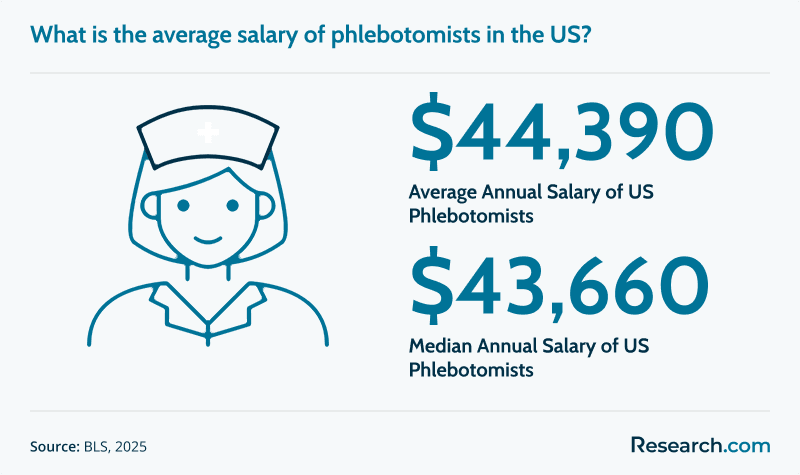
- The average yearly salary of phlebotomists is $44,390, while their median yearly salary is $43,660.
- Graduates may qualify for roles such as phlebotomy technician, laboratory assistant, donor phlebotomy technician, or medical assistant with phlebotomy duties.
- Online programs are often more flexible and accessible than campus-only options, but students should confirm whether clinical training, certification preparation, and state-specific requirements are included.
What can I expect from an online phlebotomy technician certificate program?
An online phlebotomy technician certificate usually delivers the academic portion of training through a learning platform, while the hands-on portion is completed through labs, skills sessions, simulations, or an externship. The online coursework typically covers blood collection methods, specimen handling, anatomy and physiology, infection control, patient care, medical terminology, laboratory safety, and professional ethics.
Because phlebotomy requires direct patient contact, a fully online program without supervised practice may not be enough for certification or employment. Strong programs make the clinical expectations clear before enrollment, including how many hours or blood draws are required, where students complete them, and whether the school helps secure a placement.
Students should expect videos, quizzes, reading assignments, virtual demonstrations, and exam preparation. However, the most important learning outcome is practical competence: safely identifying patients, choosing the correct collection method, labeling specimens, preventing contamination, responding to nervous patients, and following laboratory protocols.
Where can I work with an online phlebotomy technician certificate program?
Graduates of online or hybrid phlebotomy technician certificate programs can pursue many of the same entry-level settings as graduates of campus-based programs, provided they complete the required hands-on training and meet employer or state expectations. Common workplaces include the following:
- Hospitals: Hospital phlebotomists collect specimens from emergency, inpatient, outpatient, and surgical departments. This setting can be fast-paced and may involve patients with urgent, complex, or sensitive needs.
- Medical and diagnostic laboratories: Lab-based phlebotomists draw blood, label tubes, prepare samples for testing, protect specimen integrity, and may assist with basic laboratory workflow.
- Physicians’ offices and urgent care clinics: These roles often involve routine venipuncture, specimen preparation, patient intake support, and coordination with providers who need timely test results.
- Blood donation centers and plasma clinics: Donor phlebotomy technicians collect blood or plasma, monitor donor comfort and safety, document donor information, and may support mobile collection events.
- Nursing homes and assisted living facilities: In long-term care, phlebotomists work with older adults and chronically ill patients, often coordinating closely with nurses to reduce discomfort and avoid repeat draws.
- Home healthcare agencies: Mobile phlebotomists travel to patients who cannot easily visit a clinic. This work requires punctuality, organization, safe specimen transport, and independent judgment.
- Public health departments and community clinics: Phlebotomists may support screenings, disease surveillance, research programs, and outreach services for communities with limited access to care.
How much can I make with an online phlebotomy technician certificate program?
According to the United States Bureau of Labor Statistics (BLS), the average yearly salary of phlebotomists is $44,390, while their median yearly salary is $43,660. This is below the collective median annual salary of all jobs in the country ($49,500), but the field remains attractive to many students because training is short, the role is healthcare-based, and experience can lead to related clinical or administrative pathways.
Phlebotomists, at any point in their careers, earn from $34,860 to $57,750. New graduates usually begin closer to the lower end of that range, while experienced phlebotomists in large outpatient care centers, high-demand regions, or specialized collection environments may earn more than the profession’s average annual salary.
- Fastest online phlebotomy technician certificate programs for 2027
- How long does an online phlebotomy technician certificate take?
- Online vs. on-campus phlebotomy technician certificate programs
- Average cost of an online phlebotomy technician certificate
- Financial aid and payment options for phlebotomy students
- Common prerequisites for online phlebotomy programs
- Typical courses in an online phlebotomy technician certificate
- Skills phlebotomists need to succeed
- How to choose the best online phlebotomy technician certificate
- Additional certifications that can support a phlebotomy career
- Using phlebotomy as a pathway to further healthcare education
- Career paths after an online phlebotomy technician certificate
- Job market for phlebotomy certificate graduates
- Why accreditation matters in online phlebotomy training
- Challenges to expect after earning an online phlebotomy certificate
Fastest Online Phlebotomy Technician Certificate Programs for 2027
How do we rank schools?
Fast phlebotomy programs can look similar at first glance, but important differences affect value: clinical requirements, certification preparation, accreditation, total cost, scheduling, and whether students receive real supervised practice. Because these certificates require time and money, rankings should be used as a starting point rather than the only basis for enrollment.
Our research team reviewed information from reliable education data sources, including the IPEDS database, College Scorecard, Peterson's database, and the National Center for Education Statistics. You can review our ranking process on the Research.com methodology page.
| Program | Length | Training requirement | Cost | Accreditation |
| University of California-Los Angeles Licensed Phlebotomist Course | 6 weeks | 40 hours of lectures, 40 hours of clinical training | $2,275 | WASC Senior College and University Commission |
| Eastern Virginia Career College Phlebotomy Technician Program | 6 to 7 weeks | 60 clock hours | $1,500 | Commission of the Council on Occupational Education |
| Contra Costa Medical Career College Phlebotomy Technician 1 | 4, 5, or 10 weeks | 120 clock hours | $3,200 | Accrediting Council for Continuing Education & Training |
| Northeast Technical Institute Phlebotomy Technician Program | 6 weeks | 11 credits | $2,895 to $18,495 | Council on Occupational Education |
| Regional Center for Border Health Phlebotomy Technician | 2 weeks | 40 hours | $1,680 | Accrediting Bureau of Health Education Schools |
| Compu-Med Vocational Careers Phlebotomy Technician | 8 weeks | 165 hours | $1,200 | Accrediting Commission of Careers Schools and Colleges |
| Mountainland Technical College Phlebotomy Program | 8 week | 90 hours | $550 | Commission of the Council on Occupational Education |
| High Desert Medical College Phlebotomy Technician Course | 5 weeks | 120 clock hours | $1,915 | Accrediting Council for Continuing Education & Training |
| Bryan College of Health Sciences Phlebotomy Course | 8 week | N/A | $250 | Higher Learning Commission |
| Associated Technical College Los Angeles Phlebotomy Training | 4 week | 100 hours | $2,498.50 | Accrediting Commission of Career Schools and Colleges |
1. University of California-Los Angeles Licensed Phlebotomist Course
The University of California-Los Angeles Licensed Phlebotomist Course is structured as a six-week option with evening lectures, weekend skills labs, and clinical rotations through UCLA hospitals and affiliated clinics. The format is built for students who need a compressed schedule while preparing for California phlebotomy certification requirements. Students complete 40 hours of lectures and 40 hours of clinical training and become eligible to sit for the Certified Phlebotomy Technician exam.
- Program Length: 6 weeks
- Required Credits to Graduate: 40 hours of lectures, 40 hours of clinical training
- Total Cost: $2,275
- Accreditation: WASC Senior College and University Commission
2. Eastern Virginia Career College Phlebotomy Technician Program
Eastern Virginia Career College offers a Phlebotomy Technician Program focused on blood collection techniques, specimen handling, safety procedures, and entry-level readiness for healthcare settings. The curriculum includes 60 clock hours across four courses and can be completed in 6 weeks for day students or 7 weeks for night students.
- Program Length: 6 to 7 weeks
- Required Credits to Graduate: 60 clock hours
- Total Cost: $1,500
- Accreditation: Commission of the Council on Occupational Education
3. Contra Costa Medical Career College Phlebotomy Technician 1
The Contra Costa Medical Career College Phlebotomy Technician 1 program is intended for people already working in or familiar with healthcare who want additional training in blood collection, specimen handling, patient care, anatomy, safety, and professional practice. Graduates receive a Certificate of Completion and may test for state certification in California.
- Program Length: 4, 5, or 10 weeks
- Required Credits to Graduate: 120 clock hours
- Total Cost: $3,200
- Accreditation: Accrediting Council for Continuing Education & Training
4. Northeast Technical Institute Phlebotomy Technician Program
The Northeast Technical Institute Phlebotomy Technician Program combines classroom learning, hands-on lab work, and clinical experience in a 6-week format. Topics include medical terminology, anatomy, electronic health records, blood collection techniques, and externship-based practice.
- Program Length: 6 weeks
- Required Credits to Graduate: 11
- Total Cost: $2,895 to $18,495
- Accreditation: Council on Occupational Education
5. Regional Center for Border Health Phlebotomy Technician
The Regional Center for Border Health Phlebotomy Technician Program is a 2-week, 40-hour option for learners with prior healthcare education or experience, including CNAs or EMTs. The program includes classroom instruction, lab practice, and a 10-hour clinical externship in which students must complete 40 successful blood draws. Coursework covers medical terminology, anatomy, collection techniques, safety, and special procedures.
- Program Length: 2 weeks
- Required Credits to Graduate: 40 hours
- Total Cost: $1,680
- Accreditation: Accrediting Bureau of Health Education Schools
6. Compu-Med Vocational Careers Phlebotomy Technician
The Compu-Med Vocational Careers Phlebotomy Technician Program runs for 8 weeks and includes 165 hours of classroom, lab, and clinical preparation. Students study venipuncture, specimen collection, safety procedures, medical terminology, and administrative tasks under instructor supervision.
- Program Length: 8 weeks
- Required Credits to Graduate: 165 hours
- Total Cost: $1,200
- Accreditation: Accrediting Commission of Careers Schools and Colleges
7. Mountainland Technical College Phlebotomy Program
The Mountainland Technical College Phlebotomy Program is an 8-week option with 90 hours of classroom and lab instruction. The curriculum emphasizes blood collection procedures, safety, specimen handling, and practical experience, including students both performing and receiving blood draws.
- Program Length: 8 week
- Required Credits to Graduate: 90 hours
- Cost per Credit: $550
- Accreditation: Commission of the Council on Occupational Education
8. High Desert Medical College Phlebotomy Technician Course
The High Desert Medical College Phlebotomy Technician course is a 5-week program designed for students with previous healthcare experience. It includes 120 total clock hours and trains learners in blood collection methods for patients of different ages, infection control, labeling, specimen handling, and quality assurance.
- Program Length: 5 weeks
- Required Credits to Graduate: 120
- Total Cost: $1,915
- Accreditation: Accrediting Council for Continuing Education & Training
9. Bryan College of Health Sciences Phlebotomy Course
The Bryan College of Health Sciences Phlebotomy Course is an 8-week, non-certification course that introduces students to blood collection fundamentals, lab safety, specimen handling, venipuncture, and capillary collection. The weekly format may work for high school students or working adults who want basic exposure before pursuing certification-focused training.
- Program Length: 8 week
- Required Credits to Graduate: N/A
- Cost per Credit: $250
- Accreditation: Higher Learning Commission
10. Associated Technical College Los Angeles Phlebotomy Training
The Associated Technical College Los Angeles Phlebotomy Training Program covers basic and advanced phlebotomy topics before students complete a 40-hour clinical externship. During the externship, students perform at least 10 skin punctures and 50 venipunctures. The curriculum emphasizes infection control, specimen handling, patient preparation, and legal and ethical responsibilities.
- Program Length: 4 week
- Required Credits to Graduate: 100 hours
- Total Cost: $2,498.50
- Accreditation: Accrediting Commission of Career Schools and Colleges
How long does it take to complete an online phlebotomy technician certificate program?
An online phlebotomy technician certificate program typically takes 4 to 12 weeks to complete. Some programs move faster, especially if they are designed for people with healthcare experience, while others take longer because they include fixed class meetings, supervised labs, externship scheduling, or certification preparation.
| Factor | How it affects completion time | What to ask before enrolling |
| Program format | Self-paced coursework may allow faster completion, while cohort-based programs follow a set calendar. | Can I finish faster if I complete assignments early? |
| Clinical externship | Externship placement can add 1 to 3 weeks or more depending on site availability and required hours. | Does the school place students, or must I find my own site? |
| Certification or state requirements | Some programs include required procedures, clinical hours, or exam preparation that extend the timeline. | Does this program meet the requirements where I plan to work? |
| Student availability | Working adults and caregivers may need extra time to complete coursework or schedule clinical hours. | Are evening, weekend, or part-time options available? |
Some phlebotomists later move into broader community support or counseling-adjacent roles. If that type of long-term path interests you, compare healthcare support work with social service education options such as LCSW and LPC degree pathways before changing fields.
How does an online phlebotomy technician certificate program compare to an on-campus program?
Online and on-campus phlebotomy certificates share the same goal: preparing students to collect blood safely, handle specimens correctly, and work with patients in clinical environments. The difference is how students complete the academic and hands-on parts of training. Online programs are convenient, but campus programs may provide more immediate practice and instructor feedback.
| Comparison point | Online or hybrid program | On-campus program | Best fit |
| Schedule | Often asynchronous or self-paced, with deadlines and possible in-person requirements. | Usually follows fixed class and lab times. | Online works well for students balancing work or family; campus works well for students who need structure. |
| Hands-on practice | May use simulations first, then require local labs or externships. | Typically integrates supervised practice throughout the program. | Campus may be better for students who want frequent in-person coaching. |
| Access to equipment | Depends on lab kits, scheduled skills sessions, or clinical partners. | Students usually use campus labs and equipment directly. | Students who learn by repetition should compare lab hours carefully. |
| Support | Support may be delivered by email, video meetings, discussion boards, or online tutoring. | Students can often meet instructors and classmates in person. | Choose based on how much direct feedback you need. |
| Total cost | May reduce commuting, housing, and campus-related costs. | May involve transportation, parking, supplies, or campus fees. | Online may be more accessible for rural students or working adults. |
Students who like flexible online healthcare training sometimes continue into other fields that combine health systems and technology. For example, healthcare workers interested in analytics may compare phlebotomy with an accelerated online data science master’s program, while those who want broader front-office and clinical duties may explore affordable online medical assistant programs.
What is the average cost of an online phlebotomy technician certificate program?
The average cost of an online phlebotomy technician certificate program typically ranges from $700 to $2,500. Price differences usually reflect program length, whether clinical training is included, whether the program prepares students for a certification exam, and how much student support is provided.
Tuition is not the only cost to compare. Students may also need to pay for textbooks, lab kits, CPR certification, uniforms, immunizations, background checks, drug screening, exam fees, and transportation to a clinical site. A program with a higher published tuition may be a better value if it includes externship coordination, exam preparation, or certification exam fees.
| Cost item | Why it matters | Question to ask |
| Tuition | The advertised program price may not include clinical or exam-related costs. | What is the full program cost from enrollment to completion? |
| Clinical placement | Externships can require travel, health documentation, and scheduling flexibility. | Is placement included, guaranteed, or only recommended? |
| Certification exam | Some employers prefer or require national certification. | Are exam fees included in tuition? |
| Supplies and compliance | Uniforms, CPR, immunizations, background checks, and drug screening can add expenses. | Which items must I buy separately? |
| Payment flexibility | Short programs often require quick payment unless a plan is available. | Can I use a payment plan, scholarship, or workforce funding? |
The US states that provide the highest average yearly salaries, as shown by the chart below, are California ($52,370), Washington ($50,800), and New York ($50,110). Some healthcare professionals later move into operations, management, or policy-related roles; those considering leadership in healthcare organizations may compare short clinical training with options such as short online MBA sustainability programs.
What are the financial aid options for students enrolling in an online phlebotomy technician certificate program?
Financial aid for short phlebotomy certificates varies widely because many non-degree programs do not qualify for federal student aid. That does not mean students must pay everything upfront. Schools, workforce agencies, employers, and community programs may offer funding or payment support.
- Payment plans: Many training providers let students divide tuition into smaller payments during the program. Ask whether there are fees, deadlines, or penalties.
- Scholarships and grants: Some schools, nonprofits, and healthcare organizations provide aid for allied health or workforce training students. These awards generally do not need to be repaid.
- Workforce development funding: Local or state workforce agencies may help eligible students who are unemployed, underemployed, or retraining for an in-demand role.
- Employer sponsorship or reimbursement: Healthcare employers may cover phlebotomy training for current employees who are moving into expanded clinical support duties.
- Private loans: Career training loans may be available, but students should compare interest rates, repayment terms, and total borrowing costs carefully.
- Military education benefits: Eligible service members, veterans, spouses, or dependents may be able to use benefits such as the GI Bill® or MyCAA.
If you are using phlebotomy as a first step rather than a final credential, think ahead about how funding might change for a future degree. Some students eventually move outside healthcare entirely, so comparing unrelated academic options such as online history bachelor’s degree programs can clarify whether a short certificate or a longer degree better matches your goals.
What are the prerequisites for enrolling in an online phlebotomy technician certificate program?
Most online phlebotomy technician certificate programs have accessible admissions requirements. However, programs with clinical components may require additional documentation because students will interact with patients and healthcare facilities. Requirements vary by school, much like career-specific prerequisites vary in fields such as the wildlife biologist career path.
- High school diploma or equivalent: Most programs require a high school diploma or GED to confirm basic academic preparation.
- Minimum age requirement: Many programs require students to be at least 18 years old, especially when clinical placement is involved.
- Basic computer skills: Online learners should be able to use email, upload assignments, navigate a learning platform, and participate in digital coursework.
- English proficiency: Students need to read medical instructions, understand terminology, communicate with patients, and document information accurately.
- Immunizations and health screenings: Clinical sites may require Hepatitis B, MMR, TB screening, or other health documentation.
- Background check and drug screening: Externship sites commonly require clearance before students can work with patients or specimens.
In regard to educational attainment, as seen in the visual below, 45.45% of phlebotomists finished a certificate program, 31.82% have a high school diploma or less, 13.64% have some college experience, 4.55% earned an associate degree, and 4.55% hold a bachelor's degree.
What courses are typically in an online phlebotomy technician certificate program?
A phlebotomy technician certificate teaches the medical knowledge, safety standards, and collection procedures needed for entry-level work. The strongest programs connect each online lesson to practical skills students will use during labs, externships, certification exams, and patient care.
- Introduction to phlebotomy: Students learn the purpose of the role, professional expectations, patient interaction basics, and how phlebotomists fit into the healthcare team.
- Medical terminology: This course covers common healthcare terms related to body systems, laboratory testing, diagnoses, and documentation.
- Anatomy and physiology: Students study body systems with special attention to the circulatory system and veins commonly used for blood collection.
- Phlebotomy procedures and techniques: Learners study venipuncture, capillary puncture, equipment selection, order of draw, tube labeling, and common complications.
- Infection control and safety: Coursework covers standard precautions, PPE, sharps safety, biohazard handling, and OSHA and CDC-related practices.
- Laboratory procedures: Students learn how specimens are processed, transported, entered into systems, and protected through quality control practices.
- Clinical practicum or lab simulation: Depending on the program, students complete supervised clinical practice, in-person skills labs, virtual simulations, or a combination of these formats.
Students who enjoy both healthcare and technology may later consider education in health informatics, medical data systems, or cloud-based healthcare infrastructure. One related option to compare is online cloud computing degree programs, especially for learners who want to move from direct patient care into technical systems support.
What are the skills needed to become a successful phlebotomist?
Successful phlebotomists need more than the ability to insert a needle. They must collect accurate specimens, protect patient safety, calm anxious patients, follow detailed procedures, and work efficiently with nurses, physicians, laboratory staff, and administrators.
| Skill | Why it matters in phlebotomy |
| Venipuncture and technical technique | Phlebotomists must locate veins, select equipment, perform draws safely, and reduce patient discomfort. |
| Attention to detail | Accurate patient identification, tube labeling, and specimen handling help prevent testing errors. |
| Communication | Clear explanations help patients understand the procedure and help teams coordinate lab orders. |
| Compassion and empathy | Patients may be nervous, ill, elderly, pediatric, or uncomfortable with needles. |
| Dexterity and hand-eye coordination | Precise movements support smoother venipuncture and safer collection. |
| Organization | Phlebotomists manage supplies, records, draw schedules, and specimen transport procedures. |
| Problem-solving | Difficult veins, unclear orders, fainting risk, or anxious patients require calm professional judgment. |
| Medical terminology and procedure knowledge | Understanding orders, tests, anatomy, and infection control supports safer work. |
| Professionalism and ethics | Confidentiality, reliability, and respect are essential in clinical environments. |
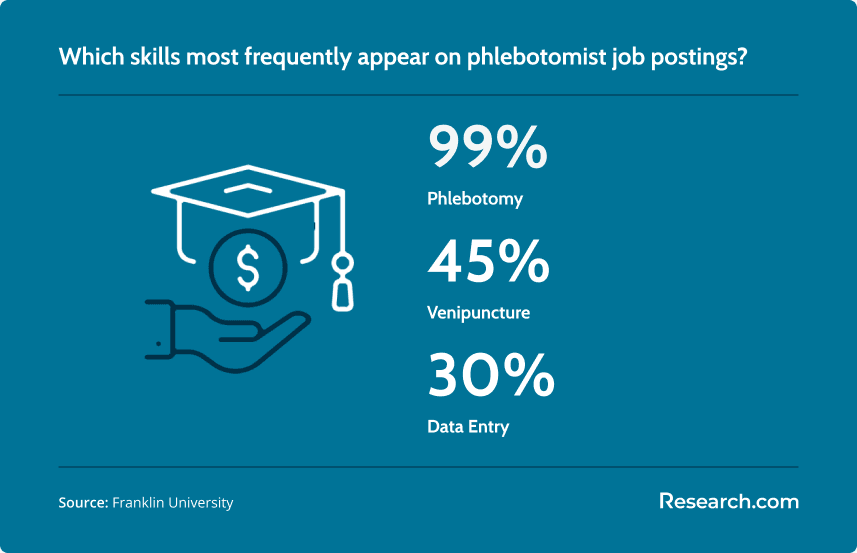
According to Franklin University, the top skills for phlebotomists based on their appearance on job postings are phlebotomy (99%), venipuncture (45%), data entry (30%), specimen collection (25%), and medical assistance (23%).
How to choose the best online phlebotomy technician certificate program?
The best online phlebotomy technician certificate is not always the fastest or cheapest one. Choose the program that matches your state requirements, offers credible training, prepares you for certification, and gives you enough supervised practice to feel ready for real patients.
- Verify accreditation and institutional reputation: Accreditation helps signal that a school meets external quality standards. Employers and certification boards may also look more favorably on recognized programs.
- Confirm certification exam preparation: Ask whether the curriculum prepares students for exams from organizations such as NHA, ASCP, NCCT, or AMT, and whether exam fees or practice materials are included.
- Check clinical externship support: Do not assume the school will find a clinical site for you. Ask whether placements are arranged, assisted, optional, or entirely student-responsible.
- Review state requirements: Phlebotomy rules vary by state. Before enrolling, confirm that the program meets the requirements where you plan to work.
- Compare format and pace: A 2-week program may be too intense for a beginner, while a longer program may provide more practice. Match the timeline to your experience and schedule.
- Calculate the true cost: Include tuition, fees, supplies, immunizations, background checks, exam costs, and transportation to clinical sites.
- Ask about student outcomes: Request information on certification exam support, employer partnerships, completion support, and career services, but avoid assuming any school can guarantee a job.
Common mistakes to avoid when choosing a program
- Choosing only by speed: A very short program may work for experienced healthcare workers, but beginners often need more guided practice.
- Ignoring clinical requirements: Online theory alone may not satisfy certification, employer, or state expectations.
- Looking only at tuition: A low-cost program can become expensive if exam fees, supplies, and externship costs are excluded.
- Assuming every certificate is accepted everywhere: State rules and employer preferences vary, so confirm requirements before paying.
- Relying only on rankings: Rankings are useful, but your decision should also include location, externship access, schedule, cost, and certification alignment.
What additional certifications can further enhance a phlebotomy career?
Additional credentials can help phlebotomy graduates broaden their responsibilities beyond blood collection. The right choice depends on whether you want more patient care duties, laboratory exposure, administrative work, billing knowledge, or a pathway into healthcare operations.
- Medical assistant training: Useful for clinic roles that combine patient intake, vital signs, basic procedures, and phlebotomy.
- EKG technician training: Helpful for students who want to support cardiac testing in hospitals, clinics, or diagnostic environments.
- Medical billing and coding: A good fit for phlebotomists who want to move into administrative revenue cycle work while staying in healthcare. Students comparing low-cost options can review affordable online medical billing and coding certification programs.
- Patient care technician training: Appropriate for students who want broader bedside support responsibilities in hospitals or long-term care facilities.
Can an online phlebotomy certificate pave the way for advanced healthcare degrees?
Yes. A phlebotomy certificate can serve as a practical first step into healthcare, especially for students who want patient-facing experience before committing to a longer program. It can help you decide whether you prefer direct care, laboratory work, administration, health information, or another healthcare pathway.
For example, phlebotomy experience can pair well with future study in health information management because students already understand specimen workflows, documentation accuracy, and the importance of patient data. If that direction interests you, compare certificate training with affordable online health information management programs.
What career paths are available for graduates of online phlebotomy technician certificate programs?
Phlebotomy can be either a direct career path or an entry point into broader healthcare work. Like other specialized healthcare paths, including the flight nurse career path, advancement usually depends on experience, additional credentials, and comfort working with patients in demanding settings.
| Career path | What the role involves | When it may be a good fit |
| Phlebotomy technician | Draws blood, labels specimens, follows collection protocols, and prepares samples for laboratory testing. | Best for students who want a focused entry-level clinical role. |
| Donor phlebotomy technician | Collects blood or plasma from donors and monitors donor safety during and after collection. | Good for people comfortable with repetitive procedures and donor interaction. |
| Laboratory assistant | Supports specimen processing, equipment preparation, data entry, and basic lab workflow. | Useful for students interested in laboratory operations. |
| Medical assistant with phlebotomy duties | Combines blood draws with patient intake, vital signs, documentation, and clinical support. | Best for students who want varied clinic responsibilities. Review medical assistant certification requirements by state before choosing this route. |
| Travel or mobile phlebotomist | Visits homes, facilities, or workplaces to collect blood specimens and transport them safely. | Good for organized, independent workers who can manage routes and documentation. |
| Patient care technician | Provides broader patient support, often including vital signs, mobility help, and specimen collection. | Requires additional training and is a fit for students who want more bedside care duties. |
| Phlebotomy instructor or trainer | Teaches phlebotomy theory, safety, and technique to new students after gaining field experience. | Best for experienced phlebotomists with strong communication skills. |
Some graduates eventually consider forensic or investigative work involving blood evidence rather than clinical collection. If that path interests you, learn more about how to become a blood spatter analyst.
What is the job market for graduates with an online phlebotomy technician certificate program?
The phlebotomy labor market is supported by ongoing demand for blood testing, donor collection, outpatient diagnostics, and healthcare services. According to the BLS, employment of these technicians from 2023 to 2033 is projected to grow by 8%, twice as fast as the national average (4%).
During the same period, aspirants can expect 19,600 job openings for phlebotomists each year. Currently, according to the job portal Indeed, there are over 13,000 openings for the profession and over 33,000 for phlebotomy.
The largest employers of phlebotomists are hospitals (35%), medical and diagnostic laboratories (31%), and all other ambulatory healthcare services (17%). The states with the highest employment levels for phlebotomists are Texas (13,080), California (13,010), and Florida (9,060).
The visual below shows the industries that employ the most phlebotomists in the country.
Current trends affecting phlebotomy training and work
- More hybrid training models: Many programs now place lecture content online while preserving labs and externships for in-person skill development.
- Greater emphasis on documentation accuracy: Electronic health records and laboratory information systems make data entry, patient verification, and specimen tracking increasingly important.
- Automation in laboratories: Testing and processing workflows may become more automated, but blood collection still requires human clinical judgment, patient interaction, and safe technique.
- Employer preference for certification: Even when certification is not always legally required, many employers use it as a signal that applicants understand core safety and collection standards.
- Broader healthcare career stacking: Students often combine phlebotomy with EKG, medical assisting, billing and coding, patient care technician, or health information credentials to increase flexibility.
Why is accreditation crucial for online phlebotomy technician certificate programs?
Accreditation helps students identify programs that are reviewed for educational quality, institutional stability, and alignment with recognized standards. It can also affect whether employers, certification organizations, or future schools recognize your training. For short healthcare certificates, accreditation is especially important because programs vary widely in clinical support, exam preparation, and transparency.
Accreditation does not guarantee employment, certification success, or clinical placement. It does, however, give students a stronger basis for comparison. If you plan to advance into administration later, accredited training can also make it easier to evaluate future programs, including affordable online healthcare administration degree programs.
What are the potential challenges after earning an online phlebotomy technician certificate?
Online phlebotomy training can be convenient, but graduates may still face a learning curve when moving from coursework or simulation into real patient care. Drawing blood from anxious, dehydrated, elderly, pediatric, or medically fragile patients requires confidence that only develops with supervised practice and experience.
- Limited hands-on exposure: Graduates of programs with weak clinical components may need extra practice before feeling job-ready.
- Externship competition: Clinical sites may have limited availability, especially in crowded markets.
- State-specific requirements: A certificate that works in one state may not meet expectations in another.
- Entry-level pay: Phlebotomy is accessible, but salaries vary by employer, region, experience, and setting.
- Physical and emotional demands: The role can involve long periods of standing, early shifts, difficult draws, and patients who are nervous or unwell.
Graduates who want to stay competitive may add administrative or technical skills over time. For example, those interested in revenue cycle work can compare phlebotomy with accredited medical billing and coding online schools with financial aid.
Questions to ask before enrolling in an online phlebotomy technician certificate program
- Is the program accredited or offered by an accredited institution?
- Does the program meet requirements in the state where I plan to work?
- Which national certification exam does the curriculum prepare me for?
- Are clinical hours, labs, or externships required?
- Does the school arrange clinical placement, or am I responsible for finding a site?
- How many successful venipunctures or skin punctures are required before completion?
- What is included in tuition, and what costs are separate?
- Are background checks, immunizations, CPR certification, or drug screenings required?
- What support is available if I struggle with online coursework or clinical skills?
- Does the program offer career services, resume help, or employer connections?
Key Insights
- Online phlebotomy certificates are best understood as hybrid career training: theory may be online, but safe blood collection requires supervised hands-on practice.
- An online phlebotomy technician certificate program typically takes 4 to 12 weeks to complete, though externship scheduling can affect the final timeline.
- The average cost of an online phlebotomy technician certificate program typically ranges from $700 to $2,500, but students should budget for supplies, screening, CPR, exam fees, and clinical travel.
- The US states that provide the highest average yearly salaries are California ($52,370), Washington ($50,800), and New York ($50,110).
- Educational backgrounds vary: 45.45% of phlebotomists finished a certificate program, 31.82% have a high school diploma or less, 13.64% have some college experience, 4.55% earned an associate degree, and 4.55% hold a bachelor's degree.
- The employment of these technicians from 2023 to 2033 is projected to grow by 8%, with 19,600 job openings for phlebotomists expected each year during the same period.
- The strongest program choice is not necessarily the cheapest or fastest. Prioritize accreditation, certification preparation, clinical placement support, state alignment, and total cost.
- The top skills for phlebotomists based on their appearance on job postings are phlebotomy (99%), venipuncture (45%), data entry (30%), specimen collection (25%), and medical assistance (23%).
References:
- BLS (2024, April 3). 31-9097 Phlebotomists. BLS occupational employment and wage statistics for phlebotomists
- BLS (2025, July 8). Industry: Cross-industry, Private, Federal, State, and Local Government Period: May 2024. BLS occupational employment data
- BLS (2025, April 18). Phlebotomists. BLS Occupational Outlook Handbook for phlebotomists
- College Board. Phlebotomists. College Board career education profile for phlebotomists
- Franklin University. What Do Medical Screeners/Phlebotomists Do? Franklin University phlebotomist skills and duties overview
Other Things You Should Know About Online Phlebotomy Technician Certificate Programs
Yes. Most fast online phlebotomy certificate programs require a criminal background check and drug screening before clinical placement. Many clinical sites also require up-to-date immunization records, CPR certification, and proof of TB testing before students can begin supervised blood collection practice.
In 2027, the fastest online phlebotomy technician certificate programs typically last between 4 to 8 weeks. These accelerated courses are designed for students who want to quickly enter the workforce, providing comprehensive training in a condensed time frame while still meeting certification requirements.


