
2027 Fastest Online Respiratory Care Therapy Associate's Degree Programs

Co-Founder and Chief Data Scientist
Many aspiring respiratory therapists risk missing out on high-paying, in-demand roles by delaying enrollment in a fast-track degree. With the U.S. Bureau of Labor Statistics projecting a 13% growth in respiratory therapy jobs through 2032—much faster than average—the window to capitalize on this surge is closing fast.
To help you act now, this expert guide highlights the fastest online associate's degree programs in respiratory care, many of which can be completed in just 18–24 months. Curated by career planning professionals, it outlines top accredited options so you can launch your healthcare career before opportunities pass you by.
What are the benefits of the fastest online respiratory care therapy associate's degree programs?
- Qualifies you for roles such as Registered Respiratory Therapist (RRT), pulmonary function technologist, or neonatal respiratory care specialist in hospitals, clinics, and home healthcare settings.
- Earn a median annual salary of $70,540 as of 2024, according to the U.S. Bureau of Labor Statistics.
- Complete your degree in as little as 18–24 months through accelerated online programs—study on your schedule and enter the workforce faster.
What can I expect from the fastest online respiratory care therapy associate's degree programs?
Fastest online respiratory care therapy associate’s degree programs focus on efficiency without sacrificing quality. You’ll cover a core curriculum that includes anatomy, physiology, pharmacology, and mechanical ventilation. Many programs also require a capstone project to demonstrate clinical decision-making skills.
Expect to complete hands-on internship or clinical hours at a local healthcare facility, arranged by the school. This is essential for licensing and real-world training.
Online courses are typically delivered through a mix of recorded lectures, virtual labs, and live sessions with instructors. Most platforms are accessible 24/7 to support flexible learning.
Tuition ranges from $7,000 to $25,000 depending on the school and program length. Financial aid and scholarships may be available for eligible students.
Where can I work with an online respiratory care therapy associate's degree?
An online respiratory care therapy associate’s degree opens doors to careers in hospitals, outpatient clinics, rehabilitation centers, nursing homes, and home healthcare agencies. Graduates can also work in sleep labs, emergency transport teams, and diagnostic labs.
Beyond clinical roles, opportunities exist in medical equipment sales, education, government health programs, and public health nonprofits. With experience, some move into management, research, or consulting.
According to the U.S. Bureau of Labor Statistics, over 135,000 respiratory therapists were employed in 2024, with job growth projected at 13% through 2032—well above the national average.
The degree also builds valuable skills—like critical thinking and patient communication—that translate well into diverse healthcare settings and leadership roles.
How much can I make with an online respiratory care therapy associate's degree?
With an online respiratory care therapy associate’s degree, you can earn a solid income right out of school. The median annual salary for respiratory therapists was $70,540 in 2024, according to the U.S. Bureau of Labor Statistics.
Entry-level professionals typically start around $50,000 to $60,000, while those with several years of experience can make over $90,000, especially in high-demand areas like California or New York.
Salaries vary by industry—those working in outpatient care centers or specialty hospitals often earn more. Additional certifications, such as becoming a Registered Respiratory Therapist (RRT), and pursuing a bachelor’s degree can significantly boost earning potential over time.
- List of the Fastest Online Respiratory Care Therapy Associate's Degree Programs for 2027 List of Programs
- How long does it take to complete the fastest online respiratory care therapy associate's degree programs? Program Length
- How does the fastest online respiratory care therapy associate's degree programs compare to an on-campus program? How does the fastest online respiratory care therapy associate's degree programs compare to an on-campus program?
- What is the average cost of the fastest online respiratory care therapy associate's degree programs? Cost
- What are the financial aid options for students enrolling in the fastest online respiratory care therapy associate's degree programs? Financial Aid
- What are the prerequisites for enrolling in the fastest online respiratory care therapy associate's degree programs? Prerequisites
- What courses are typically in the fastest online respiratory care therapy associate's degree programs? What courses are typically in the fastest online respiratory care therapy associate's degree programs?
- What types of specializations are available in the fastest online respiratory care therapy associate's degree programs? What types of specializations are available in the fastest online respiratory care therapy associate's degree programs?
- How to Choose the Best Among the Fastest Online Respiratory Care Therapy Associate's Degree Programs How to Choose the Best Among the Fastest Online Respiratory Care Therapy Associate's Degree Programs
- What career paths are available for graduates of the fastest online respiratory care therapy associate's degree programs? What career paths are available for graduates of the fastest online respiratory care therapy associate's degree programs?
- What additional certifications can complement an accelerated respiratory care therapy associate's degree? What additional certifications can complement an accelerated respiratory care therapy associate's degree?
- How Can Combining Clinical and Administrative Skills Enhance Career Opportunities? How Can Combining Clinical and Administrative Skills Enhance Career Opportunities?
- How does an online respiratory care therapy degree compare with other healthcare degree options? How does an online respiratory care therapy degree compare with other healthcare degree options?
Best Online Respiratory Care Therapy Associate Degree Programs for 2027
Choosing an online or hybrid respiratory care associate degree is not just a school decision. It affects whether you can qualify for clinical training, sit for national credentialing exams, meet state licensure expectations, and enter a healthcare role where patient safety depends on hands-on competence. The best program for you is the one that fits your schedule and budget while still giving you accredited instruction, supervised clinical experience, and clear preparation for respiratory therapist credentialing.
This guide is designed for students who want a faster route into respiratory care, working adults comparing flexible healthcare programs, and applicants trying to understand whether an online associate degree can lead to the same career outcomes as a campus-based option. You will find ranked program options, cost and timeline comparisons, admissions requirements, common courses, career paths, job market context, and practical questions to ask before enrolling.
Quick answer: what should you look for first?
The fastest online respiratory care therapy associate degree programs usually combine online lectures with in-person labs and clinical rotations. Most students should first confirm CoARC accreditation, local clinical placement availability, NBRC exam preparation, total program cost, and whether the program meets licensure requirements in the state where they plan to work.
How we evaluate respiratory care associate programs
Research.com ranks programs using a transparent, data-informed process because respiratory care education involves both academic cost and professional eligibility. Our evaluation considers information from sources such as the IPEDS database, Peterson’s database, the College Scorecard, and the National Center for Education Statistics.
These sources help us review factors such as tuition, institutional data, completion indicators, and student outcomes. Readers who want to understand the broader ranking process can review Research.com’s methodology page. Rankings should be used as a starting point, not as a substitute for confirming accreditation, clinical placement rules, and state licensure eligibility directly with each school.
Program comparison table
| School and program | Format and student fit | Required credits | Cost | Accreditation or credentialing noted |
| Seminole State College — Associate of Science in Respiratory Care | Best for students who want a CoARC-accredited program with online coursework and local clinical rotations. | 60–65 | Approximately $150 per credit | CoARC, SACS |
| University of Saint Francis — Associate of Applied Science in Respiratory Therapy | Best for students seeking an 18-month hybrid path with online coursework, clinical labs, on-site training, and a summer cohort start. | 75 | Approximately $400 per credit | CoARC, HLC |
| Daytona State College — Associate of Science in Respiratory Care | Best for students who want an accelerated four-semester structure with online lectures and clinical work in local healthcare settings. | 65 | $200 per credit | CoARC |
| South College — Associate of Science in Respiratory Therapy | Best for learners who prefer online lectures paired with campus lab sessions and small-class faculty access. | 70 | $450 per credit | CoARC |
| Southeast Community College — Associate of Applied Science in Respiratory Care | Best for adult learners or working students who need a part-time online structure with local clinical hours. | 70.5 | $250 per credit | CoARC, HLC |
| Keiser University — Associate of Science in Respiratory Therapy | Best for students looking for a fully online program description with supervised clinical practice built into the degree. | ~60 | $350 per credit | CoARC |
| Lone Star College — Kingwood Associate of Applied Science in Respiratory Care | Best for in-state students who want a lower per-credit price, hybrid instruction, and locally arranged clinical training. | 60 | $135 per credit (in-state) | CoARC |
| Del Mar College — Associate of Science in Respiratory Therapy | Best for students seeking online coursework with clinical exposure in therapeutic procedures, ventilator support, and cardiopulmonary testing. | ~65 | $180 per credit | CoARC, NBRC |
| GateWay Community College — Associate in Respiratory Care | Best for cost-conscious students who need online lectures, in-person clinical practice, and a structure that can fit around work or family. | ~60 | $120 per credit | CoARC |
| Ivy Tech Community College — Indianapolis Associate of Applied Science in Respiratory Care | Best for Indiana students who want a large support network, hybrid delivery, and preparation for national licensure exams. | ~60 | $120 per credit | CoARC, HLC |
What these programs teach
Most listed programs cover cardiopulmonary physiology, respiratory procedures, patient assessment, pharmacology, mechanical ventilation, critical care, pediatric or neonatal care, and diagnostic testing. The online portion usually delivers lectures, assignments, and theory-based instruction. The clinical portion requires supervised practice with real patients and equipment in approved healthcare settings.
How Long Do the Fastest Online Respiratory Care Associate Programs Take?
The fastest online respiratory care therapy associate degree programs can often be completed in 18 to 24 months. These programs are built for students who want to enter the workforce sooner, but they are still intensive because respiratory therapy requires science coursework, lab training, and clinical rotations.
Typical completion timelines
| Enrollment path | Typical time to complete | Who it works best for |
| Full-time accelerated study | 18 to 20 months | Students who can prioritize school and clinical scheduling with limited outside obligations. |
| Part-time study | 24 to 30 months | Working adults, caregivers, or students who need a more manageable weekly schedule. |
| Bridge programs for licensed professionals | As little as 12 months | Applicants who already hold relevant healthcare credentials and meet bridge-program entry requirements. |
What can speed up or slow down graduation?
- Transfer credits: Prior college coursework may reduce the number of general education classes you need to complete.
- Clinical availability: A program can be online, but clinical rotations must still be scheduled at approved sites, which may affect your timeline.
- Academic calendar: Year-round, cohort-based, or self-paced formats can change how quickly students move through the curriculum.
- Prerequisite sequencing: Anatomy, physiology, algebra, or other required courses may need to be completed before students can enter clinical respiratory care coursework.
Fast-track online respiratory care therapy degrees are best for organized students who can handle compressed coursework and mandatory clinical requirements. Before enrolling, confirm that the program’s pace is realistic for your work schedule, transportation needs, and clinical site access.
Online vs. On-Campus Respiratory Care Associate Programs: Which Is Better?
Online and on-campus respiratory care associate programs can lead to similar credentials when they meet accreditation and licensure expectations. The main difference is how students complete lectures, labs, and clinical scheduling. Students comparing flexible healthcare programs may also review broader affordability-focused options such as the cheapest online FNP programs, but respiratory care is a more direct associate-level route into hands-on cardiopulmonary patient care.
| Factor | Online or hybrid respiratory care associate degree | Traditional on-campus respiratory care associate degree |
| Time to completion | Often 18 to 24 months, depending on program structure and clinical scheduling. | Often 24 to 30 months when following a traditional academic calendar. |
| Flexibility | Better for students balancing school with work, caregiving, or distance from campus. | Better for students who prefer fixed schedules and frequent face-to-face instruction. |
| Learning format | Online lectures and assignments, with required in-person labs or clinicals. | In-person classes, campus labs, and scheduled clinical rotations. |
| Clinical training | Usually arranged through approved local or regional healthcare sites. | Often coordinated through established campus-affiliated clinical partners. |
| Student experience | Requires independence, strong time management, and comfort with online learning platforms. | Provides more immediate access to classmates, instructors, and campus-based resources. |
| Credential value | Can be comparable when the program is properly accredited and meets state requirements. | Can be comparable when the program is properly accredited and meets state requirements. |
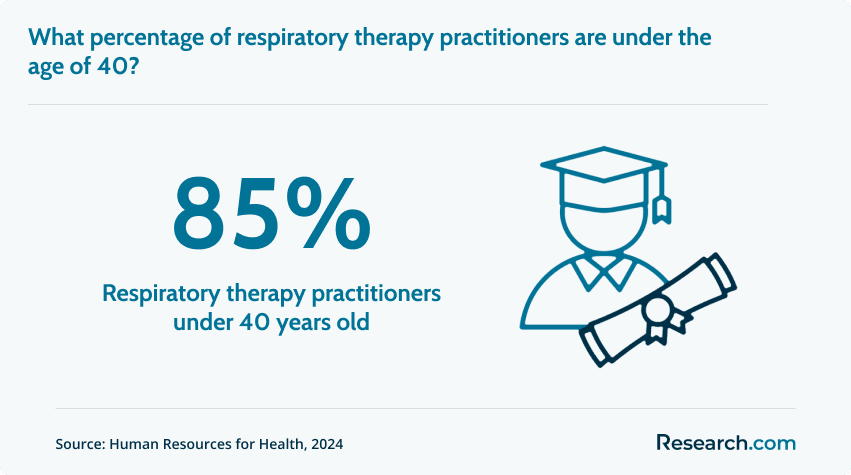
The online format may appeal to younger and early-career healthcare workers. Human Resources for Health reported that 85% of respiratory therapy practitioners are under the age of 40. Students comparing fast, flexible healthcare credentials may also consider the fastest online bachelor's in public health degree, although public health usually prepares graduates for population health, prevention, policy, or program roles rather than bedside respiratory care.
Choose an online or hybrid program if you need schedule flexibility and can manage independent study. Choose an on-campus program if you learn best through structured in-person instruction and want easier access to campus labs, faculty, and classmates.
Average Cost of Fast Online Respiratory Care Therapy Associate Programs
The average cost of the fastest online respiratory care therapy associate degree programs commonly falls between $10,000 and $25,000 in total tuition. Actual cost depends on whether the school is public or private, whether you qualify for in-state tuition, how many credits you transfer, and whether fees are included in the listed tuition rate.
As with career research in other healthcare and human services fields, such as learning how to become a disability social worker, students should compare more than tuition. Program structure, clinical placement support, accreditation, exam preparation, and student services can all affect the real value of the degree.
Cost factors to compare before applying
| Cost item | Why it matters | Question to ask |
| Per-credit tuition | Community colleges and public programs may charge around $120 to $250 per credit hour, while private colleges may cost more. | Is the quoted rate in-state, out-of-state, or the same for online students? |
| Required credits | Programs may require 60 to 75 credit hours, depending on curriculum and transfer policies. | How many of my previous credits will apply to the respiratory care degree? |
| Clinical and lab fees | Hands-on healthcare programs often involve expenses beyond online tuition. | Are lab supplies, clinical insurance, background checks, or uniforms included? |
| Technology and materials | Online students may need reliable hardware, software access, textbooks, and simulation tools. | What technology fees or required equipment should I budget for? |
| Transportation | Online coursework may reduce commuting, but clinical rotations still require travel. | Where are clinical sites located, and how often must I attend in person? |
Online programs can reduce relocation, housing, and daily commuting expenses, but they do not eliminate all in-person costs. Build a full budget before choosing the lowest sticker price.
Financial Aid for Online Respiratory Care Associate Degree Students
Students enrolling in accelerated online respiratory care associate programs may be able to use several forms of financial aid. Eligibility depends on the school, accreditation status, enrollment level, citizenship or residency rules, and individual financial circumstances.
Planning for aid should happen early. Just as students researching how to become an online therapist need to understand education requirements and credential pathways, respiratory care applicants should confirm whether their program qualifies for federal, state, employer, or military education benefits.
Federal financial aid
Many students start by completing the Free Application for Federal Student Aid. The FAFSA is used to determine eligibility for Pell Grants, federal student loans, and work-study opportunities at participating accredited institutions.
State grants and scholarships
State aid may be available for residents who enroll in eligible healthcare programs. Awards can be need-based, merit-based, or tied to workforce priorities, depending on the state and the student’s profile.
Institutional scholarships and payment plans
Schools may offer scholarships, tuition waivers, emergency aid, or installment payment plans. Some colleges also provide healthcare-specific funding for students entering high-demand allied health programs.
Employer and military education benefits
Healthcare employers may provide tuition reimbursement for employees pursuing clinical credentials. Veterans, active-duty service members, and eligible dependents may also be able to use GI Bill® benefits or other military education assistance.
Smart ways to reduce out-of-pocket cost
- Ask whether transfer credits can reduce both time and tuition.
- Compare total program cost, not only cost per credit.
- Confirm whether clinical-related expenses are included or billed separately.
- Apply for healthcare workforce scholarships before program deadlines.
- Avoid borrowing the full cost until you understand graduation, exam, and licensure requirements.
Admissions Requirements and Prerequisites
According to Zippia, a medical technician major is the most common educational pathway for respiratory therapists at 71.8%. Admission to the fastest online respiratory care therapy associate degree programs usually requires both general college eligibility and healthcare-specific screening because students will eventually work with patients in clinical settings.
Understanding scope of practice matters in every clinical pathway. For example, students reviewing whether medical assistants can give injections are really asking how education, regulation, and supervision define what a worker can safely do. Respiratory care applicants should take the same approach when reviewing admissions and licensure requirements.
Common prerequisites
- High school diploma or GED: This is the standard minimum requirement for entry into an associate degree program.
- Science and math preparation: Programs may require biology, chemistry, algebra, anatomy, physiology, or related coursework.
- Minimum GPA: Many schools expect a 2.5 to 3.0 GPA, especially for competitive healthcare admissions.
- Entrance or placement testing: Some applicants may need TEAS scores, ACT/SAT scores, or placement results, although some online programs are test-optional.
- CPR certification and health documentation: Students may need CPR certification, immunization records, background checks, drug screening, or other clearances before clinical rotations.
Questions to ask admissions advisors
- Are general college admission and respiratory care program admission separate steps?
- Which prerequisites must be finished before I can start clinical coursework?
- Is admission competitive, and how are applicants ranked?
- Can I complete prerequisites online before entering the cohort?
- Will a prior misdemeanor, health record issue, or failed background check affect clinical placement or licensure?
Courses in Fast Online Respiratory Care Therapy Associate Programs
Accelerated respiratory care associate programs typically combine general education, science foundations, respiratory therapy theory, lab practice, and supervised clinical rotations. Students who want a different quick-entry patient care route may compare this path with a fast track associate's degree dental assistant, but respiratory care usually involves more direct training in cardiopulmonary assessment, ventilator support, and acute-care respiratory procedures.
General education courses
- English composition
- Mathematics, often college algebra
- Psychology or sociology
- Communication or speech
Science and health foundation courses
- Human anatomy and physiology
- Microbiology
- Medical terminology
- Pharmacology
Respiratory care core courses
- Introduction to respiratory care
- Cardiopulmonary physiology
- Mechanical ventilation
- Patient assessment and diagnostics
- Pediatric and neonatal respiratory care
- Respiratory care procedures and equipment
Clinical and lab requirements
Even when lectures are online, respiratory care students must complete hands-on clinical rotations at approved healthcare sites. This is where students practice under supervision, work with respiratory equipment, and build the judgment needed for patient-facing roles.
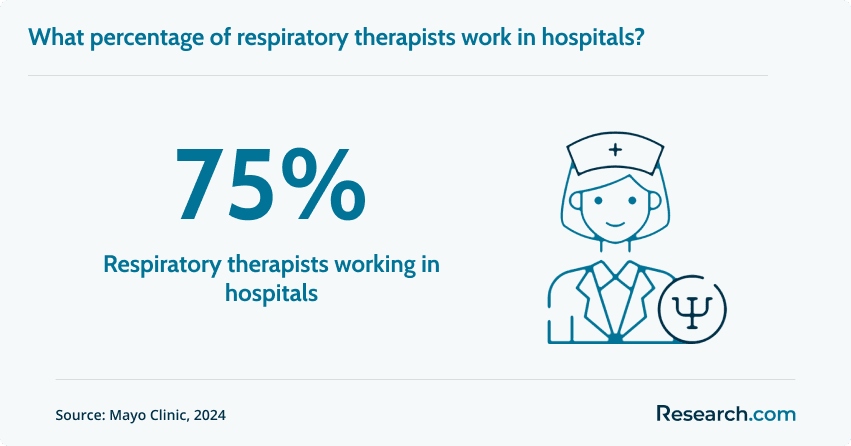
Clinical preparation matters because 75% of respiratory therapists work in hospitals, where speed, accuracy, documentation, and safe equipment use are essential. Students who want shorter healthcare credentials outside respiratory therapy may also explore accelerated online dental assistant certificate programs, but they should compare scope of practice, credential requirements, and long-term advancement options before choosing.
Respiratory Care Focus Areas and Specializations
Most associate degree programs in respiratory care are designed for entry-level preparation rather than deep specialization. However, students may gain focused exposure through electives, lab scenarios, clinical rotations, or certificate add-ons. Similar to students researching how to become a pharmaceutical scientist, respiratory care students should think about whether a focused area supports their long-term career goals.
Common focus areas
| Focus area | What students may learn | Potential work setting |
| Pediatric and neonatal care | Respiratory support for infants and children, including care in neonatal or pediatric settings. | NICUs, pediatric units, children’s hospitals |
| Critical care | Ventilator management, emergency response, and advanced respiratory support in high-acuity settings. | ICUs, emergency departments, acute-care hospitals |
| Pulmonary diagnostics | Spirometry, arterial blood gas analysis, and lung function testing. | Diagnostic labs, outpatient clinics, hospitals |
| Sleep disorders | Exposure to sleep studies, breathing-related sleep disorders, and polysomnography concepts. | Sleep centers, outpatient diagnostic facilities |
| Home care and long-term care | Oxygen therapy, nebulizer education, chronic respiratory condition support, and patient teaching. | Home healthcare, nursing facilities, long-term care settings |
Applicants should not assume every associate program offers formal specializations. If a focus area matters to you, ask which clinical sites, electives, or faculty expertise support that area.
How to Choose the Best Fast Online Respiratory Care Associate Degree
The best respiratory care program is the one that meets professional requirements and fits your real life. A low-cost or fast program is not a good choice if it lacks proper accreditation, cannot place you in clinical rotations, or does not meet licensure expectations where you plan to work.
1. Verify CoARC accreditation
Start with accreditation from the Commission on Accreditation for Respiratory Care. CoARC accreditation is a key indicator that the curriculum, clinical preparation, and program standards align with respiratory care education expectations. Ask the school for its current accreditation status and verify it independently.
2. Confirm state licensure alignment
Licensure rules vary by state. Before enrolling in an online program, ask whether graduates are eligible for respiratory therapy licensure in your state and whether the school regularly serves students from your location.
3. Review clinical placement support
Clinical training is mandatory. Ask whether the school arranges placements, whether students must find their own sites, how far students may need to travel, and what happens if a placement is delayed.
4. Compare total cost and aid eligibility
Look beyond tuition. Include fees, supplies, background checks, uniforms, exam costs, transportation, and lost work hours. Confirm whether the institution participates in federal financial aid and whether respiratory care students qualify for program-specific scholarships.
5. Ask about NBRC exam preparation
Strong programs should explain how coursework and clinical experiences prepare students for Certified Respiratory Therapist and Registered Respiratory Therapist credentialing pathways. Ask for exam pass-rate context and how students are supported if they struggle.
6. Evaluate online student support
Accelerated online learning can be demanding. Look for academic advising, tutoring, faculty availability, technical support, career services, and clinical coordination. Students comparing other quick-entry care options may also review the shortest home health care aide certification online, but respiratory care generally requires a more extensive clinical and credentialing pathway.
Program selection checklist
- Is the program CoARC-accredited?
- Does it meet licensure expectations in my state?
- How are clinical rotations assigned and supervised?
- What is the full cost after fees and supplies?
- What is the expected weekly time commitment?
- Are labs on campus, local, or scheduled in intensive sessions?
- What student support is available outside normal business hours?
- How does the program prepare students for NBRC exams?
Career Paths After a Fast Online Respiratory Care Associate Degree
Graduates of fast online respiratory care therapy associate degree programs typically pursue entry-level respiratory care roles after completing required credentialing and licensure steps. Employers generally focus on accredited education, clinical readiness, credentials, and state licensure rather than whether lectures were delivered online.
Common roles for graduates
| Career path | What the role involves | Typical setting |
| Respiratory therapist | Provides oxygen therapy, airway management, mechanical ventilation support, and respiratory treatments. | Hospitals, ICUs, emergency departments |
| Pulmonary function technologist | Performs diagnostic tests that evaluate lung capacity, breathing function, and cardiopulmonary status. | Outpatient clinics, hospitals, diagnostic labs |
| Sleep lab technician or polysomnographic technician | Assists with overnight sleep studies and breathing-related sleep disorder testing. | Sleep centers, outpatient facilities |
| Home health respiratory therapist | Supports patients using oxygen therapy, nebulizers, or respiratory equipment in home-based care. | Home healthcare, long-term care |
| NICU or pediatric respiratory therapist | Works with infants and children who need respiratory assessment, treatment, or ventilatory support. | NICUs, pediatric hospitals, pediatric units |
Respiratory care can also support advancement into specialized clinical practice, education, supervision, healthcare administration, or bachelor’s degree study. Other sectors offer solid pay as well, including nursing care facilities at $75,910 and physicians’ offices at $75,240. Salary outcomes vary by location, employer, shift, credentials, and experience, so students should not treat any salary figure as guaranteed.
Challenges of Online Respiratory Care Degree Programs
Online respiratory care programs can be flexible, but they are not easy. Students must manage online coursework, clinical scheduling, lab requirements, and healthcare documentation deadlines without the daily structure of a traditional classroom. The most successful online learners are proactive, organized, and willing to communicate early when they run into problems.
Common challenges and better ways to handle them
| Challenge | Why it matters | Better approach |
| Finding or attending clinical placements | Clinical hours are required and may not be available at the closest facility. | Ask before enrollment how placements are arranged and how far students typically travel. |
| Keeping up with accelerated science coursework | Respiratory care relies on anatomy, physiology, pharmacology, and clinical judgment. | Block weekly study time and use tutoring before grades fall behind. |
| Limited in-person peer contact | Some students learn better through real-time discussion and campus interaction. | Look for live sessions, faculty office hours, cohort discussion groups, or study teams. |
| Technology problems | Online lectures, simulations, exams, and assignments depend on reliable access. | Confirm platform requirements and technical support availability before classes begin. |
| Balancing work, family, and clinical days | Clinical rotations may require fixed daytime, evening, or weekend availability. | Review the clinical schedule early and discuss flexibility with employers or family support systems. |
Students who want healthcare roles with less direct clinical intensity may compare respiratory care with administrative pathways such as the cheapest online healthcare administration degrees.
Job Market Outlook for Respiratory Care Associate Degree Graduates
The job market for graduates of the fastest online respiratory care therapy associate degree programs remains favorable when students complete accredited training, pass required exams, and qualify for licensure. Respiratory therapists are needed in hospitals, intensive care units, outpatient clinics, sleep centers, home healthcare, and long-term care settings.
Projected job growth
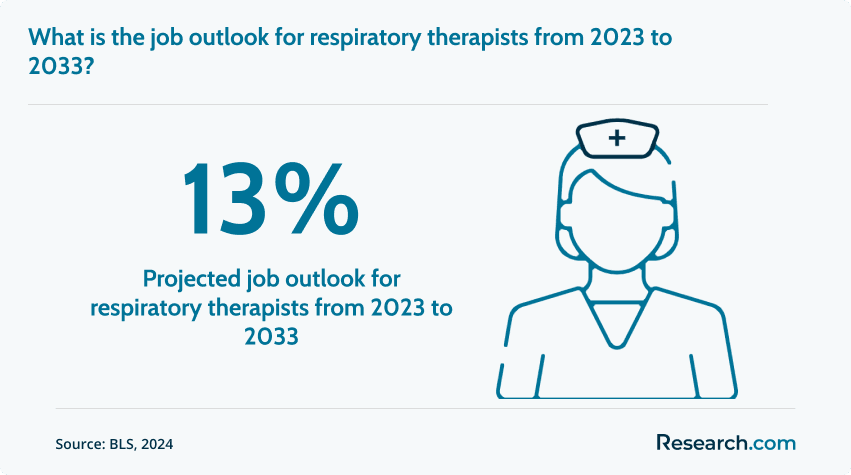
According to the U.S. Bureau of Labor Statistics, employment for respiratory therapists is projected to grow 13% between 2022 and 2032, much faster than the average for all occupations. Demand is connected to respiratory support needs across acute care, chronic disease management, and aging-related healthcare services.
Where graduates may find opportunities
- Hospitals and intensive care units
- Emergency departments
- Outpatient pulmonary clinics
- Sleep centers
- Home healthcare agencies
- Nursing care facilities
- Physicians’ offices
How employers view online degrees
Employers are generally more concerned with accreditation, licensure, credentials, and clinical competence than with whether didactic coursework was completed online. A graduate from an online or hybrid program must still demonstrate the same patient care skills expected of a campus-based graduate.
Certifications That Can Complement a Respiratory Care Associate Degree
Additional credentials can help respiratory care graduates broaden their career options, especially if they want to move into specialized clinical work, quality improvement, education, operations, or healthcare administration. The right credential depends on your workplace, state requirements, and long-term goals.
Respiratory therapists who want to understand billing, documentation, and reimbursement may benefit from administrative training. For example, low cost medical billing and coding online courses can introduce the financial and documentation side of healthcare, which may be useful for professionals interested in revenue cycle processes or clinic operations.
How Clinical and Administrative Skills Can Expand Career Options
Respiratory care professionals who understand both patient care and healthcare operations may be better prepared for roles involving documentation quality, compliance, department coordination, patient education, or administrative leadership. Clinical skill remains the foundation, but administrative knowledge can help professionals communicate with billing teams, managers, providers, and quality departments.
Students who want a stronger administrative skill set can compare respiratory care with programs offered through medical billing and coding online schools. This combination may be especially useful for respiratory care workers who later want to move into supervisory, clinic-based, or operations-focused roles.
Graduate Perspectives on Fast Online Respiratory Care Programs
- Tyler: "The accelerated online format helped me move into respiratory care in less than two years while keeping a part-time job. Having a clear weekly structure made it possible to manage school, work, and family responsibilities."
- Janice: "The program moved quickly, so I had to stay disciplined. The clinical rotations were what made the difference for me because they helped me feel prepared when I started working in an ICU department."
- Lea: "Going back to school in my 30s felt intimidating at first, but the online structure made the goal realistic. Supportive instructors, organized coursework, and career-focused clinical training helped me transition into respiratory therapy faster than I expected."
Respiratory Care vs. Other Online Healthcare Degree Options
An online respiratory care therapy associate degree is a clinical pathway. It prepares students for direct patient care, supervised respiratory procedures, national credentialing, and state licensure. By contrast, programs such as affordable online HIM degree programs usually focus on healthcare data, records, compliance, coding, and information systems rather than bedside treatment.
| Degree path | Main focus | Best for students who want | Important caution |
| Respiratory care associate degree | Cardiopulmonary patient care, diagnostics, ventilator support, and clinical procedures. | A direct clinical role working with patients who have breathing or cardiopulmonary problems. | Requires in-person clinical training and state licensure eligibility. |
| Health information management | Health records, data systems, coding, compliance, and information governance. | A healthcare career with more administrative, technical, or records-focused responsibilities. | May not lead to direct patient care roles. |
| Healthcare administration | Operations, management, staffing, policy, and healthcare organization support. | Leadership or administrative roles rather than bedside care. | Entry-level clinical licensure is usually not the purpose of the degree. |
| Medical billing and coding | Claims, coding systems, reimbursement, and documentation accuracy. | A shorter administrative healthcare pathway focused on revenue cycle support. | Clinical patient care responsibilities are limited or absent. |
Common Mistakes to Avoid Before Enrolling
- Choosing speed over accreditation: A fast program is not worth it if it does not support credentialing and licensure requirements.
- Assuming online means fully remote: Respiratory care programs require in-person labs or clinical rotations.
- Looking only at tuition: Fees, supplies, clinical travel, background checks, and exam costs can change the true price.
- Ignoring state licensure rules: A program may be available online but still not meet requirements in every state.
- Waiting to ask about clinical placement: Clinical access can affect your graduation timeline and ability to complete the program.
- Assuming salary outcomes are guaranteed: Pay depends on employer, location, credentials, shift differentials, and experience.
- Relying only on rankings: Rankings help narrow choices, but your final decision should be based on accreditation, fit, cost, and licensure alignment.
References
- Mayo Clinic School of Health Sciences. (2024). Respiratory therapist. Mayo Clinic College of Medicine & Science.
- Tulenko, K., & Osei, A. F. (2024). Age, gender, and educational composition of the global health workforce: A cross-sectional analysis of 194 countries. Human Resources for Health.
- U.S. Bureau of Labor Statistics. (2024). Respiratory therapists. U.S. Department of Labor.
- Zippia. (2024). Respiratory therapist education. Zippia.
Key Insights
- The fastest online respiratory care associate programs usually take 18 to 24 months, but clinical placement availability can affect the actual timeline.
- CoARC accreditation should be your first screening factor because respiratory care is tied to credentialing, clinical standards, and state licensure.
- Online respiratory care degrees are usually hybrid in practice: lectures may be online, but labs and clinical rotations require in-person attendance.
- Total tuition commonly ranges from $10,000 to $25,000, but students should also budget for clinical fees, supplies, background checks, technology, and travel.
- Program fit matters as much as speed. Choose a school that can support your location, schedule, licensure goals, clinical training needs, and exam preparation.
- Respiratory care is a clinical pathway, not an administrative healthcare degree. Students who prefer records, billing, management, or data work may be better served by HIM, healthcare administration, or medical billing and coding programs.
Other Things You Should Know About the Fastest Online Respiratory Care Therapy Associate's Degree Programs
The fastest online respiratory care therapy associate's degree programs can typically be completed in about 18 to 24 months. However, this duration may vary depending on the specific school, the student's enrollment status, and the flexibility of the program schedule.
It should hold programmatic accreditation from the Commission on Accreditation for Respiratory Care, or CoARC. Graduates from CoARC-accredited programs are the ones typically eligible to sit for the National Board for Respiratory Care’s Certified Respiratory Therapist exam, which many states require for licensure.
Yes, even the fastest programs require clinical practice hours. Typically, students must complete around 20-30 hours of supervised clinical work to gain hands-on experience, which is essential for licensure and competency in the respiratory care field in 2027.


