2027 Comparing Tuition and Acceptance Rates of Top Online SLP Schools

Co-Founder and Chief Data Scientist

Reviewed by Rhea Paul, PhD
SLP Education & Research Expert
Choosing an online master’s program in speech-language pathology is not just a question of convenience. It affects how much debt you may take on, whether you can complete clinical requirements where you live, and how smoothly you can move toward state licensure and professional certification.
Aspiring speech-language pathologists (SLPs) also face a more competitive and expensive program landscape. In 2025, the median annual tuition for online SLP programs stands at approximately $14,950, while acceptance rates vary significantly by institution, cohort size, prerequisites, and clinical placement capacity.
This guide compares leading online SLP options with a practical focus on tuition, acceptance rates, program format, financial aid, licensure preparation, and career outcomes. It is designed for prospective graduate students who want to evaluate programs carefully before applying—not just find a recognizable university name.
What are the benefits of getting an online SLP degree?
- Graduates can pursue roles such as school-based SLPs, hospital clinicians, or private practice owners, directly impacting individuals with communication disorders.
- The median annual wage for SLPs in 2026 was $97,870, reflecting the profession's strong financial prospects.
- Online programs offer the convenience of studying from home, allowing students to balance education with personal and professional commitments.
What are the top online SLP schools in 2027?
The strongest online SLP programs combine accredited graduate coursework, supervised clinical training, faculty support, and clear preparation for licensure and certification. Flexibility matters, but it should not come at the expense of clinical quality or state eligibility.
Here are ten leading institutions offering online SLP programs in 2027, including several widely considered by students comparing flexible graduate pathways.
1. Maryville University
Maryville University offers an online Master of Science in Speech-Language Pathology designed to prepare students for professional practice, licensure, and certification. The curriculum emphasizes evidence-based assessment and intervention, while supervised clinical experiences help students apply coursework in real client settings. Applicants should review prerequisite requirements, placement expectations, and state authorization before enrolling.
2. Pepperdine University
Pepperdine University offers an online Master of Science in Speech-Language Pathology with full-time and part-time tracks. The program combines rigorous online coursework with over 400 hours of supervised clinical practice, making it a fit for students who want a structured path but need some scheduling flexibility. Prospective students should compare the cost of attendance with available scholarship and loan options.
3. Baylor University
Baylor University offers an MS in Communication Sciences and Disorders that blends online coursework with in-person clinical placements. The program is aimed at students preparing for evidence-based, patient-centered practice across education and healthcare settings. Because clinical training is central to SLP preparation, applicants should ask how placements are arranged and what support is available in their region.
4. Ithaca College
Ithaca College offers an online Master of Science in Speech-Language Pathology with two pathways: a general pathway for students with prior speech-language-hearing preparation and a leveling pathway for students entering from another academic background. This distinction matters because leveling coursework can affect both cost and time to completion. The program includes immersive virtual simulations and in-person clinical placements.
5. Pennsylvania Western University (PennWest)
PennWest offers an online Master of Science in Speech-Language Pathology built for students who need flexibility while completing graduate-level academic and clinical requirements. Public university options such as PennWest may be especially worth comparing for students who are cost-sensitive but still want a program aligned with professional preparation expectations.
6. University of North Carolina at Greensboro
The University of North Carolina at Greensboro offers an online Master of Arts in Speech-Language Pathology accredited by the Council on Academic Accreditation in Audiology and Speech-Language Pathology. Accreditation is one of the first items applicants should verify because it can affect eligibility for certification, licensure, and employment after graduation.
How do tuition rates compare across these top online SLP programs?
Tuition for online Speech-Language Pathology programs varies widely because schools use different credit requirements, fee structures, residency rules, and clinical placement models. Based on recent data, the average total tuition for an online SLP master’s program ranges from $55,000 to $75,000, but individual programs can fall below or above that range.
For example, Maryville University’s total tuition is $51,300 for 57 credits, while Pepperdine University’s program costs around $95,400 for 53 credits. Public universities may be less expensive for eligible students: programs at public universities such as the University of Texas Health Science Center at San Antonio tend to be more affordable, with in-state rates averaging about $6,500 per semester.
| Cost factor | Why it matters | Example from available data |
| Total tuition | Shows the main program cost before fees, books, travel, and living expenses. | Maryville University: $51,300 for 57 credits |
| Cost per credit | Helps compare programs with different credit loads. | Baylor University charges approximately $2,000 per credit hour |
| Program type | Private universities often cost more; public universities may offer lower rates, especially for in-state students. | Pepperdine University: around $95,400 for 53 credits |
| Residency status | In-state and out-of-state tuition policies can change the final cost substantially. | University of Texas Health Science Center at San Antonio: in-state rates averaging about $6,500 per semester |
Private universities generally fall on the higher end of the spectrum, often because of differences in course delivery, faculty access, clinical placement support, and student services. Baylor University, for instance, charges approximately $2,000 per credit hour, which can exceed $100,000 for the full program. Public institutions such as PennWest or UNC Greensboro often remain below $60,000.
Overall, students pursuing a speech pathologist degree online can expect to pay an average of $65,000 in total tuition for accredited master’s programs. Before applying, calculate the full cost of attendance, not just tuition. Ask each program about mandatory fees, campus visit costs, clinical travel, background checks, immunizations, equipment, and whether tuition is locked for the duration of the program.
What are the acceptance rates for leading online SLP programs?
Acceptance rates for online SLP programs are useful, but they should be interpreted cautiously. Based on available data, the average acceptance rate for leading online SLP master’s programs appears to fall in the 57 % to 94 % range—roughly averaging around 75 %. One source lists the acceptance rate for a prominent online SLP program at Maryville University as 92 %. Another source puts the rate for Baylor University at about 57 %.
These figures do not always tell the full story. Acceptance rates may not be published every year, may apply to a different program format, or may reflect a broader graduate admissions category rather than a specific online SLP cohort. Online programs can also be constrained by the number of available faculty supervisors and clinical placements, not just classroom capacity.
How to use acceptance rates when choosing where to apply
- Do not treat a high acceptance rate as a guarantee. SLP admissions still depend on prerequisites, GPA, letters of recommendation, personal statements, interviews, and fit with the program.
- Compare selectivity with cost and outcomes. A more selective program is not automatically a better financial decision if it leads to substantially more debt.
- Ask whether the rate applies to the online cohort. Hybrid, campus-based, and online tracks may have different applicant pools.
- Build a balanced application list. Apply to a mix of programs based on accreditation, affordability, format, clinical support, and realistic admissions odds.
How do program length and format affect tuition and acceptance rates?
Program length and format affect both cost and competitiveness. A shorter program may reduce the time before you can enter the workforce, but it can also create a heavier academic and clinical workload. A longer part-time format may be easier to manage while working, but additional terms can increase fees, living expenses, and the amount of time before you earn a full SLP salary.
- Maryville University: 5 semesters; online format.
- Pepperdine University: 5–8 trimesters; hybrid format with online coursework and in-person experiences.
- Baylor University: Varies; online coursework with in-person clinical placements.
Key trade-offs by format
| Format | Potential advantages | Potential drawbacks |
| Full-time online | Faster completion and a more direct path into supervised practice and employment. | Less flexibility for students working full time or managing family responsibilities. |
| Part-time online | More manageable pacing and often better for working adults. | Longer time before graduation and possible additional term-based costs. |
| Hybrid | Combines online coursework with required in-person learning or clinical experiences. | Travel and scheduling requirements can add cost and complexity. |
| Online coursework with local placements | Allows students to complete much of the academic work remotely while gaining hands-on experience. | Clinical placement availability can vary by location and may affect admissions capacity. |
Acceptance rates can also be influenced by format. Programs that offer extensive placement support or attract applicants nationwide may receive more applications. Programs with smaller cohorts may be more selective even if their online delivery makes them appear broadly accessible.
What scholarships or financial aid options are available for online SLP students?
Online SLP programs can be expensive, but students may be able to reduce out-of-pocket costs through scholarships, federal aid, employer support, and university funding. Anyone comparing a speech pathologist degree online should evaluate net cost after aid, not just advertised tuition.
Common financial aid opportunities include:
- Sertoma’s Communicative Disorders Scholarship – Awards $1,000 annually to graduate students in audiology or speech-language pathology.
- ASHFoundation Graduate Student Scholarship – Provides up to $5,000 for full-time students pursuing degrees in communication sciences and disorders.
- University-based funding – Schools such as Pepperdine University and Baylor University offer internal scholarships and graduate assistantships to eligible students.
Financial aid can also include federal student loans, tuition reimbursement programs for educators, and need-based grants for graduate-level learners. Students who already work in schools, healthcare, or related service settings should ask employers about tuition assistance or repayment benefits.
Questions to ask before accepting an aid package
- Is the scholarship renewable, or is it limited to one term or year?
- Does the award require full-time enrollment?
- Are graduate assistantships available to online students?
- Will the program’s clinical schedule limit your ability to work?
- What is the estimated total borrowing needed after scholarships and grants?
What factors influence a school’s acceptance rate for online SLP programs?
Acceptance rates vary widely among online SLP programs because admissions capacity is shaped by more than the number of online seats. In speech-language pathology, programs must also ensure that students can complete supervised clinical experiences and meet professional preparation standards.
Major influences include:
- Program reputation – Highly ranked or well-known universities often receive more applications, which can make them more selective.
- Clinical placement availability – Programs with strong clinical networks may attract more applicants, while limited placement capacity can restrict cohort size.
- Admission criteria – Programs requiring strong GPAs, GRE scores, prerequisite coursework, interviews, or detailed application materials may admit fewer applicants overall.
- Cohort size – Smaller programs with limited faculty-to-student ratios may maintain tighter admissions control.
Other factors can include whether the program accepts students from all states, how many leveling courses are required for non-majors, and whether applications are reviewed on a rolling or fixed-deadline basis. Applicants who want a smoother path to admission may explore the easiest speech pathology programs to get into, which typically have higher acceptance rates and rolling admission options.
How applicants can strengthen their odds
- Complete prerequisite courses before applying, or clearly explain any in-progress coursework.
- Gain observation, volunteer, school, clinic, or caregiving experience related to communication disorders.
- Choose recommenders who can speak to academic readiness, professionalism, and communication skills.
- Tailor the personal statement to the program’s format, clinical model, and mission.
- Apply early when rolling admissions are available.
What career paths are available for graduates of an SLP degree program?
Graduates of speech-language pathology programs can work across education, healthcare, rehabilitation, and private practice. The right path often depends on the populations you want to serve, your preferred work environment, and your tolerance for documentation, caseload structure, and clinical intensity.
Career paths for SLP graduates
- School-based SLPs – Support students with articulation, fluency, language, social communication, and related needs in educational settings.
- Medical or hospital clinicians – Treat patients with speech, language, cognitive-communication, voice, or swallowing disorders related to illness, injury, surgery, or neurological conditions.
- Private practice owners – Build independent clinics or contract-based services for children, adults, families, schools, or healthcare organizations.
- Rehabilitation specialists – Collaborate with occupational therapists, physical therapists, physicians, nurses, and families to support recovery and functional communication.
According to the Bureau of Labor Statistics, SLPs work across diverse populations and settings, improving communication and quality of life. Students comparing programs should look for clinical experiences that align with their intended career path. For example, a student aiming for a hospital role should ask about adult medical placements, dysphagia training, and interprofessional learning opportunities.
What is the job market for graduates of an SLP degree program?
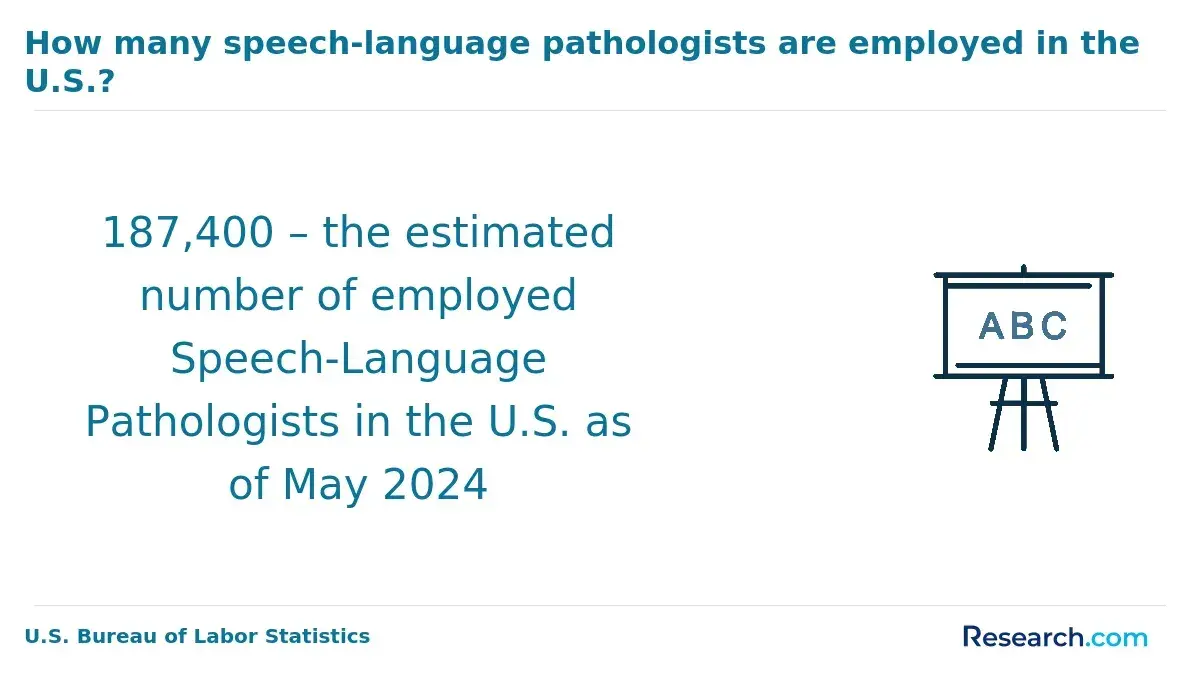
The job market for speech-language pathologists remains strong. The Bureau of Labor Statistics projects a 17% growth rate from 2025 to 2035, much faster than average for all U.S. occupations. Demand is supported by increased awareness of communication disorders, services for children, and the needs of an aging population.
The median speech-language pathologist salary is $95,410 per year as of 2024, reflecting strong demand and the specialized training required for the profession. Graduates can find employment in hospitals, rehabilitation centers, private practices, and public schools.
Job prospects can vary by location and setting. Rural and underserved communities may have strong need for SLPs, while some urban markets may be more competitive for specialized medical roles. Students should consider where they plan to live after graduation because state licensure rules, school hiring cycles, clinical fellowship opportunities, and employer demand can all affect the transition from graduate school to practice.
How do online SLP programs prepare students for licensure and certification?
Online SLP programs are designed to help students complete the academic and clinical preparation needed for professional practice. However, students are responsible for confirming that a program meets the licensure requirements in the state where they plan to work.
Key preparation components include:
- Accredited coursework – Courses cover essential areas such as phonetics, anatomy, speech and language development, assessment, intervention, and professional ethics.
- Clinical practicums – Students complete supervised clinical hours in appropriate settings to build direct experience with clients and patients.
- Praxis exam readiness – Many programs integrate preparation for the Praxis II, which is required for national certification.
- Accelerated options – Certain schools offer 5 year SLP programs, which combine undergraduate and graduate coursework for faster completion.
Accreditation is especially important. Programs accredited by the Council on Academic Accreditation in Audiology and Speech-Language Pathology are designed around recognized professional standards. Still, licensure is granted by individual states, and requirements can differ. Before enrolling, students should verify state authorization, clinical placement rules, certification eligibility, and whether the program supports students pursuing licensure outside the school’s home state.
What are the pros and cons of choosing a higher-cost versus lower-cost online SLP program?
Choosing between a higher-cost and lower-cost online SLP program is a financial decision and a professional preparation decision. The most expensive program is not automatically the best choice, and the cheapest program is not always the best value. The goal is to choose an accredited program that you can afford and that can support your clinical and licensure goals.
| Option | Potential advantages | Potential risks |
| Higher-cost online SLP program | May offer broader clinical networks, more structured student support, smaller class sizes, stronger alumni connections, or additional advising. | Can lead to substantially higher debt, especially when total tuition exceeds $90,000. |
| Lower-cost online SLP program | May reduce borrowing and improve long-term return on investment while still meeting CAA-accredited standards. | May have fewer placement options, less individualized support, or more responsibility placed on the student to coordinate logistics. |
Higher-cost programs, such as those at Baylor or Pepperdine, often provide extensive clinical networks, smaller class sizes, and stronger alumni connections—but they can exceed $90,000 in total tuition. Lower-cost options, including some public universities, may reduce financial strain while maintaining CAA-accredited standards, though they sometimes offer fewer clinical placement options.
The best choice depends on your budget, learning style, location, clinical interests, and risk tolerance. Before committing, compare total cost, accreditation, placement support, graduation requirements, licensure alignment, faculty access, and student outcomes. A program that is affordable, accredited, and realistic for your life circumstances is usually a stronger choice than one selected only for prestige.
Other Things You Should Know About Speech-Language Pathology Programs
An online SLP program should hold accreditation from the Council on Academic Accreditation in Audiology and Speech-Language Pathology (CAA), the accreditor recognized by ASHA. Most state licensing boards require graduation from a CAA-accredited program before you can apply for the speech-language pathology license.
Accreditation can impact tuition rates for online SLP programs as schools with prestigious accreditations may charge higher fees. For instance, a program accredited by ASHA's Council on Academic Accreditation might have tuition fees ranging from $25,000 to $50,000 annually in 2027.
Yes, accredited online SLP programs include required clinical practicum hours. These experiences are often arranged at local clinics, schools, or healthcare facilities near your location. Programs provide supervision by certified SLPs to ensure you meet licensing requirements. Clinical placements are crucial for skill development and preparing for state licensure and the Certificate of Clinical Competence in Speech-Language Pathology (CCC-SLP).
References
- U.S. Bureau of Labor Statistics - Speech-Language Pathologists https://www.bls.gov/ooh/healthcare/speech-language-pathologists.htm
- ASHA EdFind - Accredited Speech-Language Pathology Programs https://find.asha.org/ed/
- Audiology and Speech-Language Pathology Interstate Compact https://aslpcompact.com/compact-map/
- Baylor University - Master of Science in Speech-Language Pathology (Online) https://csd.robbins.baylor.edu/graduate/online-csd-graduate-program
- West Virginia University - Speech-Language Pathology, M.S. - Online https://medicine.hsc.wvu.edu/communications-sciences-and-disorders/speech-language-pathology-ms/future-students/curriculum/online-slp-program/
- Nova Southeastern University - SLP Program - Master of Science in Speech-Language Pathology https://osteopathic.nova.edu/degrees/masters/speech-language-pathology/index.html
- California State University-Northridge - Master of Science in Communicative Disorders (Online) https://tsengcollege.csun.edu/programs/CDS
- Ithaca College - Online Master of Science in Speech-Language Pathology https://slponline.ithaca.edu/programs/masters-speech-language-pathology-online