2027 State-by-State Licensing Requirements for Speech Pathology Graduates

Co-Founder and Chief Data Scientist

Reviewed by Rhea Paul, PhD
SLP Education & Research Expert
Speech-language pathology licensure is not one national application. New graduates must meet a shared professional baseline while also satisfying the rules of the state where they plan to evaluate, diagnose, treat, supervise, or provide telepractice services. That distinction matters because a missing Praxis score report, an unapproved supervisor, an incomplete background check, or state-specific coursework can slow the start of paid clinical work.
The demand outlook makes early planning even more important. According to the U.S. Bureau of Labor Statistics, employment of speech-language pathologists is projected to grow 17% from 2025 to 2035. Graduates entering this expanding field should understand not only the standard path to licensure, but also how requirements differ for clinical fellowship, provisional licensure, assistants, telepractice, continuing education, and multi-state practice.
This guide explains the core components of SLP licensure across U.S. states, where state rules commonly diverge, how the ASLP-IC may affect mobility, and what steps graduates can take to avoid delays after completing a speech-language pathology program.
Key Things You Should Know About Licensing Requirements
- State-by-state differences emerge strongly in required exams (national vs state), minimum credit/hours, supervised clinical fellowship periods, and provisional or conditional license options.
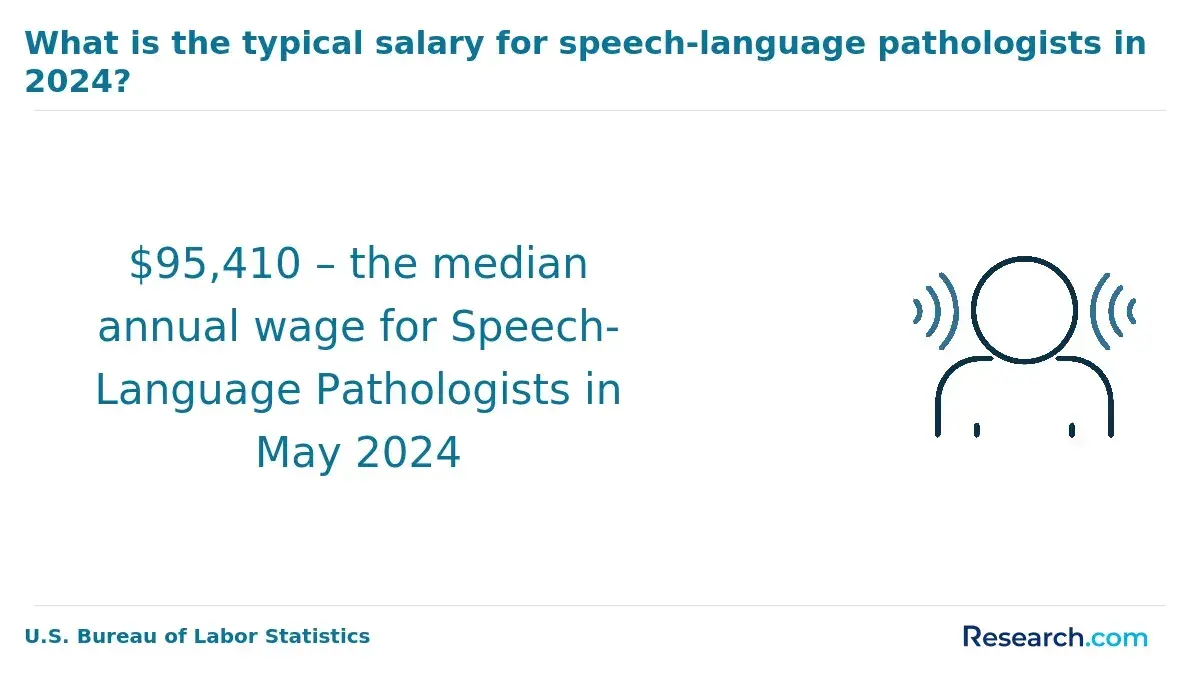
- Salary outcomes vary by setting and location; nationally, speech-language pathologists report median annual earnings around $97,870 as of May 2026.
- Recent frameworks such as the Audiology & Speech‑Language Pathology Interstate Compact (ASLP-IC) aim to permit multistate practice; however, processing and activation vary by state.
What are the core components common to SLP licensure across U.S. states?
Most SLP licensing boards use a similar foundation: graduate education, supervised clinical training, a national examination, proof of professional readiness, and a background review. The details vary by state, but the purpose is consistent—to confirm that licensed speech-language pathologists can practice safely, ethically, and within an approved scope of practice.
Core requirements most applicants should expect
- Graduate degree in speech-language pathology: Applicants generally need a master’s degree from a program accredited by the Council on Academic Accreditation (CAA). Because graduate preparation is a major investment, prospective students should compare program costs early. Researching how much does a master’s in speech pathology cost can help applicants understand why tuition may range from $25,000 to $75,000 depending on the institution.
- Supervised clinical practicum: States typically require a minimum of 400 supervised hours in clinical settings. Applicants should keep records of supervisors, settings, populations served, and dates because boards may request documentation during review.
- Praxis Speech-Language Pathology exam: Most states require the Praxis II (SLP) test administered by ETS. Applicants should confirm whether the board requires scores before submission or will accept them during a provisional licensing period.
- Clinical fellowship or supervised post-graduate practice: Many graduates complete a mentored transition period before independent licensure. The supervisor’s credentials and reporting obligations are often state-specific.
- Background check and eligibility review: Fingerprint-based screening is common and may need to be completed before an application is considered complete.
Why these shared components matter
These common requirements make professional mobility easier, but they do not guarantee automatic licensure from one state to another. A graduate who meets ASHA-aligned standards may still need an additional state law exam, a specific course, a separate school credential, or a new background check. The safest approach is to plan for the state where you intend to practice first, then evaluate whether your credentials transfer cleanly to other jurisdictions.
How do states differ in their required exams and testing pathways?
The Praxis Speech-Language Pathology exam is the main national testing benchmark for SLP licensure, but states do not all use the same timing rules, score submission process, or supplemental exams. These differences can affect when a graduate may start a clinical fellowship, accept a job offer, or move from provisional to full licensure.
Common exam-related differences
- Praxis score requirement: Nearly every state, including California, Texas, and New York, mandates a passing Praxis score of 162 or higher.
- State jurisprudence or ethics exams: States such as Florida and New Jersey require an additional exam focused on state laws, rules, ethics, or professional responsibilities.
- Application timing: Some states allow graduates to complete testing after receiving a provisional or conditional license. Others require passing scores before the initial application can be approved.
- Score reporting method: Some boards require official Praxis scores sent directly from ETS, while others may use ASHA verification or require applicants to upload supplemental documentation.
Practical planning advice
Graduates should treat exam logistics as part of the licensure timeline, not as a separate task. Before applying, verify the required score, the recipient code for score reporting, whether older scores are accepted, and whether a state exam is required. A common mistake is assuming that passing Praxis automatically updates every state board; in many cases, the applicant must request official score delivery and confirm receipt.
Applicants who want a shorter transition from graduate study to licensure may compare accelerated SLP programs online, especially programs that incorporate Praxis preparation, clinical placement planning, and licensure advising into the curriculum.
Which states mandate specific graduate coursework, minimum credit hours, or accredited program requirements?
Education requirements are usually built around CAA-accredited graduate preparation, but some states add content-specific coursework, training modules, or credit expectations. This is one of the most important areas to check before enrolling in a program, especially for students attending an online program based outside the state where they intend to practice.
Accreditation and credit expectations
All 50 states require a master’s degree from a CAA-accredited institution, but states may still differ in how they evaluate transcripts. Some focus on program accreditation and competency coverage, while others examine course titles, clinical content, or semester-credit totals. Some states also specify a minimum of 75 graduate semester credits, while others emphasize competencies over credit totals.
Examples of state-specific coursework mandates
- California: Requires additional instruction in audiology and school-based speech services.
- New York: Mandates coursework in child abuse identification and harassment prevention.
- Texas: Expects training in ethics, multicultural awareness, and professional issues.
- Massachusetts: May require completion of bilingual or literacy-focused modules for public school positions.
How students can avoid transcript problems
- Ask the program for licensure disclosures: Online and out-of-state programs should be able to explain whether their curriculum meets requirements in the states they serve.
- Save syllabi and course descriptions: Boards may ask for proof that a course covered a required topic, especially when the course title is broad.
- Check school-based requirements separately: Working in public schools may involve education agency rules in addition to the health or professional licensing board.
- Confirm requirements before changing states: A curriculum that satisfies one state may require extra documentation or training modules in another.
Students balancing admission competitiveness, flexibility, and accreditation may review easiest SLP grad schools to get into. The key is not choosing the least selective option alone; it is choosing an accredited program that aligns with the state where you plan to become licensed.
How do supervised clinical hours and the clinical fellowship year (CFY) requirements vary by jurisdiction?
Supervised experience is where licensure rules become especially detailed. The academic practicum confirms that students can apply clinical skills under supervision, while the Clinical Fellowship Year (CFY) or similar post-graduate experience helps new clinicians move toward independent practice. States may differ in what counts, who may supervise, how hours are documented, and when the applicant may begin working.
Common areas of variation
- Pre-degree practicum hours: Some states, like North Carolina, count undergraduate hours toward total experience, while others only consider graduate-level supervision.
- Clinical Fellowship Year (CFY): This post-graduate period usually lasts 36 weeks, equating to at least 1,260 hours of mentored practice under a licensed SLP.
- Supervisor qualifications: States such as Illinois require that mentors hold ASHA certification and at least two years of clinical experience.
- Documentation requirements: Some licensing boards require official forms signed by both the fellow and supervisor, while others use digital verification via ASHA’s online portal.
- Setting and service delivery rules: States may place conditions on telepractice, school placements, medical settings, or supervision across multiple sites.
Questions to ask before starting a CFY
- Is the supervisor approved under the state board’s rules?
- Does the state require a provisional, intern, temporary, or limited license before the fellow begins providing services?
- How often must supervision occur, and what portion must be direct observation?
- Can tele-supervision be used, and if so, under what conditions?
- What form must be submitted at the end of the fellowship, and who must sign it?
These details matter because hours may not count if they were completed before the proper authorization was issued or under a supervisor who did not meet state criteria. Graduates should confirm requirements in writing before accepting a CFY position, particularly if the position involves telepractice, multiple worksites, or services across state lines.
Where do conditional or provisional licenses fit into the postgraduation timeline for new SLPs?
Conditional or provisional licenses are temporary authorizations that allow new graduates to work under supervision while completing final licensure requirements. They are not shortcuts to independent practice. Instead, they bridge the period between graduation and full licensure, most often during the Clinical Fellowship Year or while waiting for final Praxis scores, transcripts, or credential verification.
How provisional licensing works
- Purpose: Permits employment during the Clinical Fellowship Year or while waiting for Praxis results.
- Eligibility: Requires submission of transcripts, supervisor verification, and proof of ASHA membership or pending certification.
- Duration: Typically valid for 6–12 months and renewable once if additional supervision is needed.
- Examples: Ohio and Maryland issue “Limited Licenses” for CFY completion; Georgia grants an “Intern License” that expires after one year.
How to use a provisional license correctly
A provisional license should be matched to a specific employment situation and supervisor. Graduates should not assume they can practice broadly, change supervisors freely, or continue working after the temporary credential expires. Many boards require notification if the fellow changes jobs, adds a site, or replaces a supervisor.
The most common delay occurs when graduates accept a position before the provisional license is active. If the state requires temporary authorization before supervised practice begins, those early hours may not count. Applicants should wait for formal approval from the licensing board unless the board’s rules clearly allow work to begin after submission.
Who regulates scope of practice, supervision rules, and assistant use in each state?
State licensing boards regulate what SLPs may do, how they may supervise others, and whether speech-language pathology assistants may be used. These boards are typically housed under a state Department of Health, Department of Education, or professional licensing agency. Their rules define legal practice, while employers may add workplace policies that are more restrictive.
Key regulatory elements
- Scope of practice: States define the settings, populations, and procedures SLPs can legally serve. For instance, California’s Speech-Language Pathology & Audiology Board limits dysphagia therapy to clinicians with verified competence in swallowing assessment.
- Supervision rules: Many states, including New York and Illinois, specify direct and indirect supervision ratios for Clinical Fellows and Speech-Language Pathology Assistants (SLPAs). Violating supervision ratios can delay license renewal.
- Assistant utilization: Regulations differ sharply. Texas permits SLPAs to implement therapy plans under ongoing supervision, while Massachusetts prohibits assistants from performing any diagnostic tasks.
Why scope and supervision rules require close attention
Scope-of-practice rules are especially important in specialized services such as dysphagia care, instrumental assessment, early intervention, school-based services, and telepractice. A clinician may have academic exposure to a procedure but still need documented competence, employer approval, or additional state authorization before performing it independently.
Assistant rules also deserve careful review. In some states, SLPAs can support treatment plans under supervision; in others, their permitted duties are narrower. Supervising clinicians remain responsible for compliance, documentation, and service quality. New SLPs should review state board guidance before delegating tasks, signing assistant documentation, or accepting a supervisory role.
How will the Audiology & Speech-Language Pathology Interstate Compact (ASLP-IC) change multi-state practice and licensure privileges in 2025?
The Audiology & Speech-Language Pathology Interstate Compact (ASLP-IC) is designed to reduce the burden of obtaining separate full licenses in multiple participating states. It does not eliminate regulation. Instead, it creates a pathway for eligible licensees in compact states to seek a privilege to practice in other compact states, subject to compact rules and state participation.
Understanding the compact
- Participating states: As of 2025, more than 30 states—including Florida, Ohio, and Arizona—have enacted ASLP-IC legislation, and implementation is ongoing.
- Privileges of practice: Once the compact is active, an SLP licensed in a participating state can apply for a “privilege to practice” in other compact states, simplifying cross-state telepractice and temporary work.
- Impact on mobility: The compact particularly benefits traveling clinicians, military spouses, and telehealth providers who serve clients in multiple jurisdictions.
What the compact changes—and what it does not
The ASLP-IC can make multi-state practice faster by standardizing certain verification processes, background checks, and conduct expectations. It may be especially useful for clinicians who provide telepractice to clients located in different states or who accept temporary assignments.
However, clinicians should not assume that compact participation means unrestricted practice everywhere. A privilege to practice is still tied to compact eligibility, member-state rules, and the laws of the state where the client is located. Clinicians may also need to monitor renewal deadlines, disciplinary reporting obligations, and any state-specific rules related to telepractice, supervision, or specialized procedures.
Do telepractice, instrumental assessment, and continuing education requirements differ significantly from state to state?
Yes. Telepractice, instrumental assessment, and continuing education requirements can vary significantly by state, even when the underlying clinical services are similar. These rules affect how clinicians deliver care, document services, maintain competence, and renew their licenses.
Key differences
- Telepractice rules: Nearly all states permit telepractice for licensed SLPs, but supervision, privacy, and platform requirements vary. For example, Pennsylvania mandates synchronous video for evaluations, while Oregon allows asynchronous data collection.
- Instrumental assessment permissions: Some states—such as Georgia and Michigan—require additional credentials for conducting modified barium swallow studies, ensuring safety and radiologic compliance.
- Continuing education requirements: Renewal cycles and CE hours differ. Florida requires 30 hours biennially (including ethics), while Washington mandates 36 hours with specific pediatric content.
How these differences affect practice decisions
Telepractice rules matter because licensure is usually based on the client’s location, not only the clinician’s location. A clinician providing virtual services across state lines may need authorization in the state where the patient or student receives services. Employers and platforms may help with compliance, but the clinician should still verify board rules directly.
Instrumental assessment requirements are another high-risk area because these procedures may involve medical facilities, radiologic safety standards, physician collaboration, and additional competency documentation. Clinicians should confirm both state rules and facility policies before performing or interpreting these assessments.
Continuing education should be planned before the renewal deadline, not rushed at the end of the cycle. SLPs should track ethics, pediatric, supervision, telepractice, or topic-specific CE requirements separately when a state requires them.
When and how should graduates submit applications, background checks, and verification of credentials to avoid delays?
Graduates should start the licensure process before they expect to begin work, because boards often wait to review an application until all required documents are received. Delays usually come from missing transcripts, incomplete supervisor forms, Praxis scores sent to the wrong recipient, background checks completed too late, or applications submitted under the wrong license type.
Key steps
- Application windows: Many boards, such as those in Virginia and Illinois, advise applying 4–6 weeks before completing the Clinical Fellowship Year (CFY).
- Background checks: Fingerprint-based background checks are mandatory in over 40 states. Some, like Texas and Florida, require them to be completed before application review begins.
- Verification of credentials: ASHA’s Council on Academic Accreditation (CAA) typically provides electronic verification of program completion, while Praxis scores must be sent directly from ETS.
A practical order of operations
- Identify the correct license type: Determine whether you need a provisional, limited, intern, temporary, full professional, school-based, or assistant-related credential.
- Request official transcripts early: Confirm whether the board needs a degree-conferred transcript rather than an unofficial transcript or enrollment verification.
- Send Praxis scores to the correct recipient: Do not rely on a personal score report unless the board explicitly accepts it.
- Complete fingerprinting exactly as instructed: Some states require a specific vendor, form, or agency code.
- Track supervisor documentation: Make sure CFY forms are complete, signed, dated, and submitted by the required party.
- Keep copies of everything: Save confirmations, receipts, emails, score reports, and submitted forms in case the board requests proof.
Applicants who are comparing employment options during this phase may also review speech pathologist salary with a masters degree information to understand how setting, location, and role can affect career planning.
Which authoritative resources and state contacts should graduates consult for the most current licensing steps and forms?
The most reliable licensing information comes from official boards and recognized professional organizations. Because states may revise forms, fees, supervision rules, CE requirements, and telepractice policies, applicants should verify requirements directly rather than relying only on program handouts, employer advice, or informal online discussions.
Trusted references
- American Speech-Language-Hearing Association (ASHA): Offers a comprehensive State-by-State Licensure Guide detailing educational, clinical, and renewal standards.
- State licensing boards: Each state maintains official websites where applicants can download forms, track processing times, and confirm CE requirements.
- Audiology & Speech-Language Pathology Interstate Compact (ASLP-IC): Provides updates on participating states and application procedures.
What to confirm before submitting an application
- The exact license category you need for your role and setting
- Whether your graduate program and coursework meet state requirements
- Whether a provisional credential is required before supervised work begins
- How Praxis scores, transcripts, and clinical hours must be verified
- Whether fingerprinting must be completed before review starts
- Whether telepractice, assistant supervision, or school-based practice requires separate authorization
- When renewal and continuing education requirements begin
Applicants are encouraged to double-check all requirements at least 60 days before application to avoid delays or rejections. Students considering online masters speech pathology programs should also ask admissions teams for state authorization and licensure-alignment disclosures before enrolling, especially if they plan to practice in a different state from the institution.
Other Things You Should Know About SLP Licensing
Most states require the Praxis Speech-Language Pathology exam, administered by ETS, for initial licensure. A passing score is commonly 162, but state boards set the final cutoff and may add supervised clinical hours, background checks, and state jurisprudence requirements before issuing a license.
As of 2027, states like California and New York mandate a postgraduate fellowship for speech pathology graduates seeking licensure. This fellowship typically lasts 9-12 months, focusing on supervised clinical practice and skill development in various speech disorders.
References
- U.S. Bureau of Labor Statistics - Speech-Language Pathologists https://www.bls.gov/ooh/healthcare/speech-language-pathologists.htm
- ASHA EdFind - Accredited Speech-Language Pathology Programs https://find.asha.org/ed/
- Audiology and Speech-Language Pathology Interstate Compact https://aslpcompact.com/compact-map/
- California State University-Northridge - Master of Science in Communicative Disorders (Online) https://tsengcollege.csun.edu/programs/CDS
- University of Nebraska at Kearney - Speech-Language Pathology, Master of Science in Education (Online Track) https://www.unk.edu/online/degrees-programs/speech-language-pathology-online.php
- West Virginia University - Speech-Language Pathology, M.S. - Online https://medicine.hsc.wvu.edu/communications-sciences-and-disorders/speech-language-pathology-ms/future-students/curriculum/online-slp-program/
- New York University - Online MS, Communicative Sciences and Disorders (Speech@NYU) https://steinhardt.nyu.edu/degree/online-ms-communicative-sciences-and-disorders
- Auburn University, Montgomery - Master of Science in Speech-Language Pathology https://www.aum.edu/degree/ms-speech-language-pathology/