2027 Choosing the Right SLP Specialty Based on Your Career Goals

Co-Founder and Chief Data Scientist

Reviewed by Rhea Paul, PhD
SLP Education & Research Expert
Choosing the right SLP specialty can be challenging for individuals transitioning from unrelated fields. Many face uncertainty about which path aligns best with their professional goals and lifestyle preferences.
The diversity within the speech pathology industry means that selecting an appropriate specialty is crucial for job satisfaction and career growth. Without clear guidance, candidates risk investing time and resources in directions that may not fit their ambitions or strengths.
This article explores various SLP specialties, examining how each matches different career objectives, and provides insight to help readers make informed decisions for a successful and fulfilling career pivot.
Key Things You Should Know
- SLP specialties, such as pediatric, geriatric, or medical settings, require distinct skills and certifications, impacting career trajectory and earning potential.
- Employment growth for speech pathologists is projected at 17% through 2035, with highest demand in schools and healthcare, advising specialty alignment with job market trends.
- Advanced certifications in areas like swallow therapy or autism spectrum disorders enhance job prospects and are increasingly preferred by employers in 2025-2026 data.
What Are the Main SLP Specialties?
Specialties in speech pathology careers offer diverse options tailored to distinct patient needs and professional settings.
Pediatric speech pathology, for example, involves diagnosing and treating communication disorders in infants, toddlers, and children. These specialists often address articulation, language delays, and feeding issues in schools, pediatric clinics, or early intervention programs.
The clinical speech pathology specialty options also include medical speech pathology, which focuses on patients with speech or swallowing difficulties related to conditions like stroke, brain injury, or cancer. Medical SLPs typically work in hospitals, rehabilitation centers, and nursing homes, where managing dysphagia and neurological communication disorders is crucial.
School-based speech-language pathology aims to support children's academic and social success by collaborating with educators to develop individualized education programs (IEPs). This role requires familiarity with education law and special education, improving outcomes for students with communication challenges.
Adult or neurogenic speech pathology focuses on treating neurological communication impairments in adults, such as stroke survivors or Parkinson's disease patients. These professionals often serve in outpatient, home health, or medical settings.
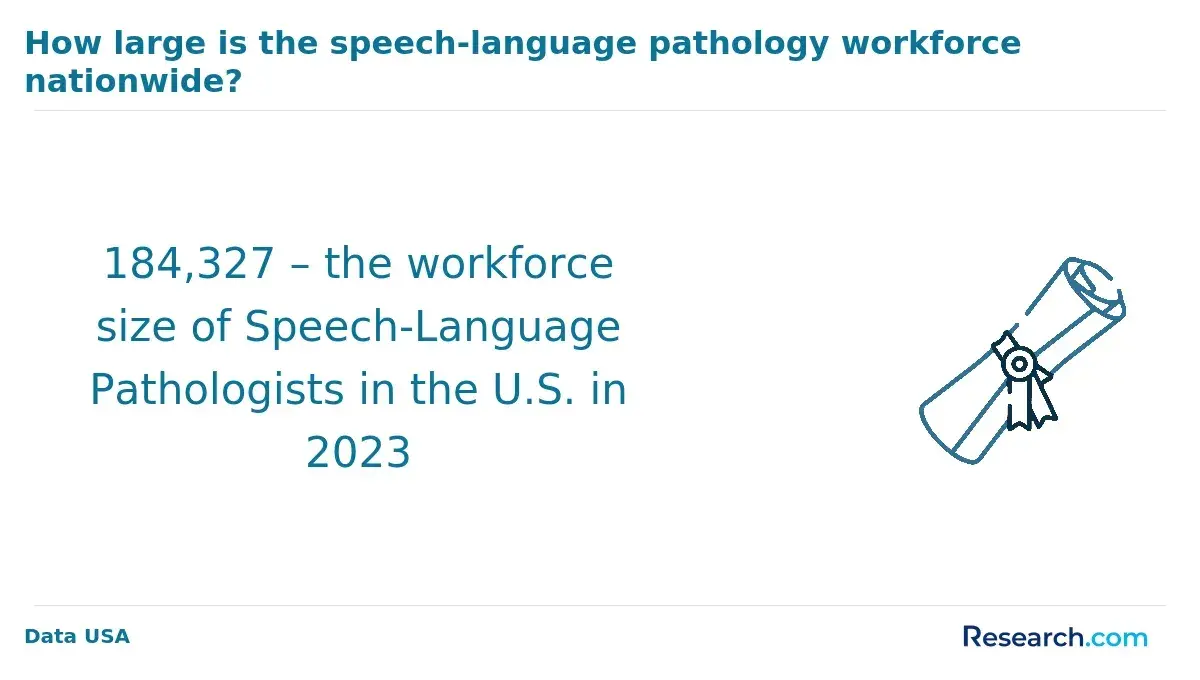
The field of speech pathology is expected to grow by 15%, adding roughly 13,300 new jobs annually. For those interested in efficient training, accelerated speech pathology programs online provide a pathway to quickly enter this expanding profession.
How Do SLP Specialties Align with Career Goals?
SLP specialties align with career goals by matching professional interests, work environments, and population focus. Selecting a specialty depends on whether you want to work with children, adults, or specific disorders.
For example, pediatrics suits those passionate about early development and education. Federal mandates guarantee school-based SLP services for children with speech needs, creating approximately 14,600 yearly job openings through 2034. This ensures abundant opportunities for those aiming to make a measurable impact on young lives.
Aligning speech pathology specialties with professional goals can also mean focusing on adult rehabilitation, helping patients recovering from strokes or traumatic brain injuries. Geriatrics is another expanding field driven by an aging population, emphasizing speech, language, and swallowing disorders. Medical SLPs working in hospitals or outpatient clinics face complex cases, appealing to those seeking clinical challenges and interdisciplinary collaboration.
Career goals tied to research or academia may lead to specialty certifications in swallowing disorders or voice therapy, allowing professionals to contribute to evidence-based practices. Private practice or telepractice offers flexibility and varied caseloads for those wanting independent career paths.
Before choosing, assessing your preferred work environment, patient demographics, and certification needs is essential. Specific conditions like autism spectrum disorders or cognitive-communication impairments open unique niches aligned with personal expertise.
Understanding how each specialty affects job availability, salary potential, and professional growth helps in choosing the right speech pathology specialty for career success. For a detailed outlook on the speech pathologist salary and career opportunities, this resource provides valuable insights to aid your decision-making.
What Education Is Required for SLP Specialties?
Becoming a specialist in speech pathology requires at least a master's degree from an American Speech-Language-Hearing Association (ASHA)-accredited program. This is the baseline for all certified clinical roles, including specialties such as geriatrics, pediatric speech disorders, or neurogenic speech pathology.
Many professionals enhance their expertise through additional certifications, such as fluency disorders or augmentative communication. Advanced roles in research and academia often require a doctoral degree (PhD or Clinical Doctorate like the CScD), focusing on research methodologies, advanced clinical practice, or leadership within specialty areas.
For example, clinicians working with neurogenic communication disorders due to traumatic brain injury or stroke benefit from doctoral studies combined with postdoctoral fellowships or residencies. These educational paths align with speech pathology graduate program requirements in the US.
Certification and licensure for SLP specialties involve completing a clinical fellowship and passing the national Praxis exam. Requirements vary by state, and many specialties mandate ongoing continuing education to stay current with evolving evidence-based practices.
In geriatrics, where the employment growth for speech-language pathologists is projected at 17% between 2025 and 2035, training includes gerontology coursework and clinical experience in adult rehabilitation settings. This prepares practitioners to manage age-related communication and swallowing disorders effectively.
Ultimately, rigorous ASHA standards guide educational paths, supplemented by targeted clinical training and certifications specific to patient populations. Prospective students can explore accelerated speech pathology programs to advance their careers efficiently.
Several accredited SLP programs offer flexible options including both online speech pathology programs with campus options, accommodating various student needs.
Institutions like the University of Wisconsin, University of Mississippi, and Eastern Washington University provide fully online master's programs, ideal for working professionals or those managing family commitments. These typically require some on-campus practicum while allowing core coursework remotely.
Traditional campus programs, such as Vanderbilt University and the University of Iowa, focus on immersive, in-person clinical training that benefits students seeking direct faculty interaction and comprehensive access to campus resources. Hybrid speech pathology degree programs also exist, blending synchronous online lectures with periodic campus visits for labs and clinical experience, striking a balance between flexibility and hands-on training.
When selecting a program, students should consider if clinical externship placements match their specialty interests. Those targeting dysphagia and swallowing disorders should prioritize programs linked to inpatient rehab or acute care settings, where demand is rapidly increasing.
Inpatient rehab/acute care SLPs specializing in dysphagia currently earn $2,000-$3,200 weekly in travel roles amidst a 40% year-over-year demand surge, as reported by United Healthcare Staffing. Online learning improves accessibility but requires students to be proactive in securing quality clinical opportunities nearby.
Campus programs often guarantee integrated practicum sites, smoothing the path to licensure and specialty certification. For more detailed comparisons of program accessibility and competitiveness, prospective students may find valuable insights in speech language pathology programs.
The Council on Academic Accreditation in Audiology and Speech-Language Pathology (CAA), operating under the American Speech-Language-Hearing Association (ASHA), accredits reputable speech pathology programs. This accreditation ensures master's and doctoral curricula cover essential clinical competencies needed for certification and licensure.
Students should verify CAA recognition before enrollment, as only graduates of accredited programs qualify for the national Praxis exam and the Certificate of Clinical Competence in Speech-Language Pathology (CCC-SLP). Without the CCC-SLP, practicing in most U.S. states is legally restricted or impossible.
Accredited programs uphold standards including qualified faculty, sufficient clinical practicum opportunities, and current evidence-based methods. Programs focusing on Augmentative and Alternative Communication (AAC) also meet CAA standards to prepare clinicians for this expanding specialty, which is driving increased demand and high travel pay rates of $1,700-$3,200 weekly in competitive markets, based on United Healthcare Staffing forecasts.
Non-accredited programs may lack comprehensive clinical experiences and recognized outcomes, complicating licensure and hiring prospects. Students pursuing specialties such as pediatric or geriatric speech pathology should prioritize accreditation to ensure their education aligns with national professional standards.
SLP curricula differ widely across specialties, reflecting the diverse expertise required in the field. Pediatric tracks emphasize language development, phonological disorders, speech sound acquisition, and childhood language delays, combined with practical clinical hours in educational or healthcare settings.
Fluency disorders focus on stuttering theories, behavioral interventions, and counseling methods. Neurogenic disorders require advanced study of neuroanatomy, cognitive-linguistic therapy, and dysphagia management.
Programs cover adult neurological conditions such as stroke, traumatic brain injury, and degenerative diseases. Demand for cognitive-communication rehabilitation specialists is growing, with staffing firms like United Healthcare Staffing (2026) reporting increased need and offering premium compensation to neurogenic experts.
Augmentative and alternative communication (AAC) specialization teaches assistive technology use, communication boards, and device programming to support clients with complex communication needs across all age groups. Voice therapy training addresses laryngeal anatomy, vocal hygiene, and clinical voice rehabilitation, which benefits those working with performers or vocal pathology patients.
Many programs integrate interdisciplinary coursework and practicum placements to prepare students for settings such as schools, medical centers, or private practice. Prospective students should carefully assess program specialty courses and clinical rotation options to align their education with career objectives and target populations.
Admission requirements for SLP degrees generally include a bachelor's degree with coursework in communication sciences, psychology, biology, and linguistics. Most graduate programs expect a minimum GPA of 3.0, though more competitive schools may require higher academic achievement.
Applicants usually need to submit GRE scores unless waived by the institution. Proof of relevant volunteer or clinical observation hours is commonly required to demonstrate practical exposure to the profession.
Some programs also mandate prerequisite classes in anatomy, physiology, and phonetics if these were not completed during undergraduate studies. Letters of recommendation from professors or professionals in speech pathology or related fields are important for supporting an applicant's academic and professional preparedness. A personal statement detailing career goals and motivation is standard for highlighting commitment and specific interests.
For specialized tracks such as voice disorders or pediatric speech pathology, additional prerequisites may include hands-on experience or a demonstrated interest in these areas. Clinical internships, educational roles, or community service experiences improve an applicant's competitiveness.
Practitioners with over ten years of experience or specialization in voice disorders earn median salaries near $107,160 annually, reflecting high industry demand.
Applicants with non-traditional academic backgrounds should review post-baccalaureate options or provide evidence of equivalent coursework. International candidates must meet language proficiency requirements like TOEFL or IELTS scores. Prospective students should consult each university's admissions criteria carefully for best results in competitive SLP programs.
Speech pathology programs generally take between two and four years, depending on the educational path. Entry-level master's degrees, required to earn the Certificate of Clinical Competence in Speech-Language Pathology (CCC-SLP), typically last about two years post-bachelor's.
Accelerated options may allow completion in 18 months, while part-time formats extend to four years, offering flexibility for working professionals. Doctoral programs, aimed at advanced clinical or academic careers, add three to five years beyond the master's degree and involve intensive research and clinical training.
Costs vary widely due to factors such as school prestige, residency, and format. Master's tuition ranges from $20,000 to over $70,000, with public in-state institutions being more affordable than private ones. Additional expenses include clinical placement fees, books, and certification exams.
Online or hybrid programs can reduce costs but require careful accreditation review and clinical opportunity assessment. Leadership roles in speech pathology, including supervisory positions, can lead to salaries near the 90th percentile of $129,400 annually, according to the BLS.
Advanced degrees and certifications enhance eligibility for these higher-paying positions, making the extended education worthwhile for many. Prospective students should consider these long-term career gains alongside the investment in time and finances.
Salaries for speech pathology professionals vary widely depending on specialty, work setting, and experience. Clinical speech-language pathologists in healthcare typically earn between $62,900 and $134,160 annually, with factors like location influencing pay. Public school positions often start nearer to $60,000, increasing with years of service and advanced qualifications.
Specialties such as pediatric speech pathology or neurogenic disorders tend to offer higher salaries, especially in private practice or hospital environments. For example, those specializing in swallowing disorders (dysphagia) usually earn toward the top of the pay scale due to the advanced clinical skills required.
The job outlook is strong, with the U.S. Bureau of Labor Statistics projecting about 28,200 new openings each year through 2034. Growth is driven by telepractice and technology, widening access to care in underserved and rural areas. Telehealth roles demand technical skill and flexibility, and salaries vary by payment systems and employer type.
Public schools and government agencies remain stable employers, although their compensation generally falls below private healthcare. Pursuing advanced certifications or dual expertise can improve earning potential and job market positioning.
What Certifications and Licensing Are Needed for SLP?
To practice as a speech-language pathologist (SLP) in the U.S., certification and state licensure are essential. The key credential is the Certificate of Clinical Competence in Speech-Language Pathology (CCC-SLP), awarded by the American Speech-Language-Hearing Association (ASHA).
To earn this, candidates must hold a master's degree from an accredited speech pathology program, complete a supervised clinical fellowship totaling at least 1,260 hours, and pass the Praxis Examination in Speech-Language Pathology.
Licensure requirements vary by state but typically include holding the CCC-SLP or an equivalent credential, passing the Praxis exam, and completing required continuing education. Some states may impose additional exams or jurisprudence requirements, so early research of specific state boards is advised.
Specialty certifications, such as those for fluency or pediatric swallowing disorders, enhance expertise and career options, especially valuable in private practice where demand is rising. According to United Healthcare Staffing, demand for SLPs in private practice, particularly pediatrics and home health, has grown by 40% annually.
Entrepreneurial SLPs should also consider business licensing and compliance with healthcare regulations like HIPAA. Knowledge of billing codes such as CPT and insurance requirements is critical to sustaining a practice.
Maintaining certification involves continuous professional development; ASHA requires 30 continuing education credits every three years to renew certification and remain competitive in specialty areas.
Other Things You Should Know About Speech Pathology
To work in pediatric SLP, you need a master’s degree in speech-language pathology, a passing Praxis exam score, state licensure, and the CCC-SLP from ASHA. The Clinical Fellowship lasts at least 1,260 hours over 36 weeks, and many pediatric jobs also require pediatric practicum experience.
In 2027, SLPs can optimize their role by engaging in collaborative case reviews, attending joint workshops, and leveraging telehealth platforms to communicate effectively with team members. This integration helps them develop holistic treatment plans and broadens their professional exposure, aligning with evolving career goals.
Speech pathologists also work in hospitals, rehabilitation centers, nursing homes, outpatient clinics, and private practices. These environments often focus on treating clients with speech and swallowing disorders related to medical conditions. Each setting offers different challenges and opportunities for specialization.
Continuing education is important for maintaining licensure and certifications in speech pathology. Ongoing learning helps professionals stay current with advances in therapy techniques and research. Many states require a set number of continuing education hours periodically to ensure high standards of practice.
- U.S. Bureau of Labor Statistics - Speech-Language Pathologists https://www.bls.gov/ooh/healthcare/speech-language-pathologists.htm
- ASHA EdFind - Accredited Speech-Language Pathology Programs https://find.asha.org/ed/
- Audiology and Speech-Language Pathology Interstate Compact https://aslpcompact.com/compact-map/
- California State University-San Marcos - Online MS in Speech-Language Pathology https://www.csusm.edu/slp/programs/mastersonline/index.html
- New England Institute of Technology - Master of Science in Speech Language Pathology https://www.neit.edu/academics/graduate-degrees/speech-language-pathology-ms
- Abilene Christian University - Master of Science in Speech-Language Pathology (Online) https://acu.edu/academics/graduate/master-of-science-in-speech-language-pathology/
- California State University-Northridge - Master of Science in Communicative Disorders (Online) https://tsengcollege.csun.edu/programs/CDS
- Auburn University, Montgomery - Master of Science in Speech-Language Pathology https://www.aum.edu/degree/ms-speech-language-pathology/