2027 How to Find Affordable SLP Programs With Strong Outcomes

Co-Founder and Chief Data Scientist

Reviewed by Rhea Paul, PhD
SLP Education & Research Expert
Many aspiring graduate students face the challenge of identifying affordable SLP programs that also demonstrate strong graduate outcomes such as licensure success and job placement.
High tuition costs and variable program quality make it difficult for career changers with non-related undergraduate degrees to invest wisely. Additionally, flexible formats suitable for working professionals are limited, compounding accessibility issues.
This article will outline effective strategies to evaluate program affordability, accreditation, post-graduate results, and flexibility. It aims to equip readers with reliable criteria and resources to select SLP programs that balance cost and quality for a successful career transition.
Key Things You Should Know
- Affordable SLP programs often balance cost with accreditation and clinical training quality, key to licensure and career success in 2026.
- Programs with strong graduate outcomes report 90%+ employment within a year, demonstrating effective preparation for varying clinical settings.
- Financial aid, scholarships, and in-state tuition options minimize student debt, with median program costs ranging from $20,000 to $50,000 for master's degrees.
What are affordable SLP programs?
Affordable speech pathology programs with strong outcomes are typically found at public universities, where in-state tuition averages around $17,500 annually for master's level programs. Private institutions, by contrast, often charge between $40,000 and over $110,000 per year, leading to a significant difference in total costs. However, cost alone should not be the deciding factor when selecting a program.
The best value speech pathology programs in the United States combine affordability with strong accreditation, high graduation rates, and excellent pass rates on the Praxis exam and certification requirements. Many state universities with lower tuition also provide valuable clinical experiences through partnerships with local clinics and effective job placement support.
Prospective students should consider factors such as residency status for in-state tuition benefits, availability of scholarships or assistantships, hybrid or online program formats with reduced fees, and targeted financial aid packages. For those seeking flexible options, SLP masters online programs offer an accessible alternative without compromising quality.
Students must research multiple sources to verify accreditation by the Council on Academic Accreditation in Audiology and Speech-Language Pathology (CAA) and review transparent tuition and completion statistics. Balancing affordability with program quality ensures a solid foundation for a successful career in speech pathology.
How much do SLP programs cost?
In the U.S., the average cost of speech pathology programs ranges widely, typically from about $7,300 to over $50,000 annually. Accredited programs with strong outcomes generally charge between $7,322 and $16,210 per year, offering affordable speech pathology program tuition rates without sacrificing quality.
Examples such as Arkansas State University and Indiana University of Pennsylvania report 100% pass rates on the Praxis exam and full employment for graduates, despite being in the lower-cost bracket. This demonstrates that affordability does not compromise outcomes or career prospects.
Students should factor in total costs beyond tuition, including fees, materials, and clinical practicum expenses, which may add several thousand dollars annually. Public universities typically offer a substantial discount, often 40% or more, for in-state students compared to out-of-state tuition.
Private or highly ranked schools may charge $30,000 to $50,000 annually, although higher prices do not always translate into better licensure or employment success.
When evaluating programs, consider accreditation and outcome data such as Praxis exam pass rates and employment rates rather than tuition alone. Applying to multiple institutions with transparent cost and outcome reporting, seeking financial aid, and discussing total expenses with departments can help manage budgets effectively.
For those interested in pursuing a career as a speech language pathologist, choosing a program with strong outcomes and reasonable costs provides the best return on investment.
What accreditation do SLP programs need?
The essential accreditation for speech pathology programs in the United States comes from the Council on Academic Accreditation in Audiology and Speech-Language Pathology (CAA), a body under the American Speech-Language-Hearing Association (ASHA) recognized by the U.S. Department of Education.
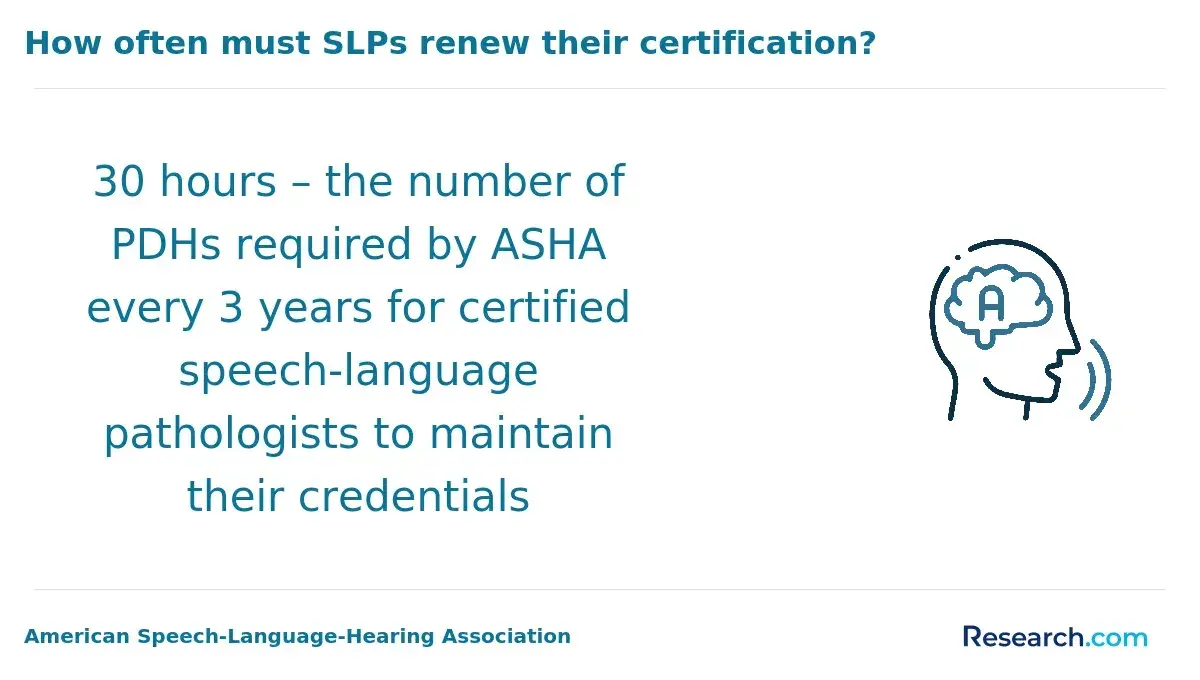
Graduating from a CAA-accredited program is necessary to pursue the Certificate of Clinical Competence in Speech-Language Pathology (CCC-SLP), a key requirement for licensure and employment in most states.
State licensure boards generally require completion of a CAA-accredited graduate program, making this accreditation critical for clinical certification and job eligibility. Without it, graduates may face restrictions in licensure and limited career options. Many employers, particularly healthcare systems, often require the CCC-SLP credential, directly linking accreditation to career advancement.
Programs vary in degree types, such as Master of Science or clinical certificates, so verifying SLP program accreditation requirements and standards at the specific institution and program level is important. Regional institutional accreditation ensures overall educational quality but does not replace CAA accreditation for professional qualifications.
Considering return on investment is vital as the median SLP salary is $97,870 annually (BLS). Graduates from affordable programs costing between $16,000 and $30,000 can recoup tuition costs within a year in many markets. To reduce risk and secure eligibility for certification and licensure, students are advised to explore options like the speech language pathology accelerated program.
Degrees required for speech language pathology careers typically include a master's degree in speech-language pathology, which is the essential educational qualification for this field. This graduate degree is necessary to pursue licensure and clinical practice. Many accredited programs meet standards set by the Council on Academic Accreditation in Audiology and Speech-Language Pathology (CAA), ensuring quality education.
A bachelor's degree is usually required for entry into master's programs. Common undergraduate majors include communication sciences and disorders (CSD), linguistics, psychology, or education. Although the bachelor's degree alone does not qualify for speech language pathology jobs, it provides critical foundational knowledge and is a stepping stone toward graduate study.
Applicants with unrelated bachelor's degrees often complete post-baccalaureate or certificate programs in communication sciences and disorders to become eligible for master's-level programs.
Some institutions offer combined bachelor's/master's pathways to streamline progress. After earning a master's degree, candidates must complete a clinical fellowship and pass the Praxis exam in speech-language pathology to achieve certification.
Demand in this field is growing rapidly, with a projected 17% job increase through 2035, highlighting the value of pursuing accredited graduate degrees. For those researching easier entry options, exploring the easiest SLP programs to get into can be helpful as a starting point when considering educational qualifications for speech language pathology jobs.
Campus-based and online SLP programs each offer unique benefits and challenges that students must weigh carefully. Campus programs provide valuable in-person clinical experiences, direct faculty interaction, and a structured learning environment.
These qualities favor students who thrive on hands-on mentorship but may require relocation and adherence to strict schedules, which can be difficult for professionals or those with family duties. Online SLP programs offer greater flexibility through remote and often asynchronous coursework, accommodating those balancing work or personal responsibilities.
However, online students need to take initiative securing diverse clinical placements, as some programs assist while others leave arrangement to the student. Additionally, online formats may reduce spontaneous peer engagement and direct access to faculty.
Financial factors are critical when choosing between formats. For instance, more than half of students in Indiana University of Pennsylvania's campus-based program receive graduate assistantships with partial or full tuition remission and stipends, helping to lower costs significantly. Such assistantships, often linked to teaching or research, tend to be more accessible through on-campus programs.
Students should evaluate accreditation, clinical placement support, faculty accessibility, and financial aid. Those focused on cost savings and networking might favor campus options with assistantships, while those valuing flexible schedules may prefer online study but must ensure strong clinical training and local licensure compliance.
A typical speech pathology master's program requires a bachelor's degree from an accredited institution, often in fields like communication sciences, linguistics, or psychology.
Applicants usually need to provide official transcripts showing a strong academic record with a minimum GPA of 3.0, though some programs may demand higher. Prerequisite courses often include anatomy, physiology, phonetics, and language development.
Many programs require standardized tests such as the GRE, although some are waiving this requirement. Essential components of the application also include two to three letters of recommendation from academic or professional contacts and a statement of purpose outlining career goals and motivation.
Practical experience, such as volunteering or working with clients who have speech or language disorders, strengthens applications. Several programs also require prerequisite clinical observation hours, typically 25 to 50, to ensure exposure to the field. For international students, submitting TOEFL or IELTS scores to verify English proficiency is often necessary. Interviews may be conducted in person or virtually during the selection process.
Financial considerations are crucial when choosing a program. Fort Hays State University offers one of the most affordable verified speech pathology master's programs in the U.S., charging $284.38 per credit ($16,210 total) for Kansas residents and $734.83 per credit ($41,945 total) for non-residents, according to onlinespeechpathologyprograms.org.
SLP programs demand a rigorous blend of foundational science, clinical skills, and professional practice. Students take core courses in anatomy and physiology of speech mechanisms, neuroanatomy, phonetics, and language development across the lifespan.
Coursework also includes swallowing disorders, audiology, and tailored assessment techniques to serve diverse populations. Advanced classes emphasize intervention methods for speech and language impairments, ethical considerations, and evidence-based practice.
The curriculum balances theory with practical lab work, featuring supervised clinical experiences to develop diagnostic and therapeutic competencies. Specialized electives may cover pediatric speech disorders, adult rehabilitation post-stroke, or voice therapy.
Online options with CAA accreditation offer equivalent foundational coursework combined with virtual simulations and remote clinical practicums. For example, Grand Canyon University's online Master of Science in Speech-Language Pathology program costs approximately $40,500 total, around $750-$760 per credit, matching the typical 60-credit-hour requirement. This makes it a cost-conscious choice without compromising accreditation standards.
Prospective students should confirm that programs provide strong clinical placements and thorough preparation for the Praxis exam. Course sequencing and faculty expertise also influence success. Careful review of curriculum details ensures alignment with career objectives and licensure requirements.
Speech pathology programs in the United States generally range from two to four years, depending on the degree type and prior credits. Most graduate students pursue a master's degree, typically requiring about two years of full-time study.
This includes coursework, supervised clinical practice, and a final clinical fellowship. Some students opt for accelerated or part-time tracks, extending the timeline to three or four years to accommodate work or personal commitments.
Doctoral programs, aimed at research or academic careers, usually take an additional three to four years beyond the master's. These include intensive research alongside clinical training. Combined bachelor's and master's programs can sometimes shorten total study time to three or four years.
Costs per credit vary widely by region. In-state tuition can be up to $457.45 less per credit compared to out-of-state public university rates. Establishing residency or using regional tuition exchange programs may significantly reduce expenses without extending program duration.
Program length is also influenced by factors such as enrollment status (full- or part-time), availability of clinical placements, and specific clinical hour requirements needed for certification. Prospective students should verify these requirements as they impact completion time and overall experience.
Speech pathology career outcomes depend on work setting, location, and experience level. Entry-level speech-language pathologists (SLPs) typically earn between $62,900 and $134,160 annually. Those working in hospitals or specialized clinical environments usually receive higher salaries, whereas school-based SLPs often start lower but benefit from structured pay and benefits.
Mid-career SLPs with 5 to 10 years of experience often see salaries rise to $80,000-$95,000, especially in specialties like pediatric language disorders or neurogenic communication. Advanced certifications and roles in research or administration may push earnings above $100,000. Regions with strong demand, such as California and New York, offer higher pay but also higher living costs.
Career advancement options include supervisory roles, clinical coordination, and academic positions. Engaging in early childhood language development research can provide access to funding and grant opportunities.
The ASHFoundation and NSSLHA offer annual scholarships up to $5,000 for eligible graduate students, helping reduce financial burdens during education. These scholarships and research grants enhance access to programs with strong career outcomes. Prospective students should prioritize programs with diverse clinical practica, as hands-on experience correlates with successful employment.
Salary growth tends to be steady when combined with continued education and professional development in the field. Focus on gaining specialty certifications and research experience for the best prospects.
What is SLP job outlook and demand?
Employment opportunities for speech-language pathologists (SLPs) are expected to grow 17% from 2025 to 2035, according to the U.S. Bureau of Labor Statistics, which is much faster than average. This surge is fueled by an aging population needing rehabilitation and greater recognition of speech and communication disorders in all age groups.
SLPs work in diverse environments such as schools, hospitals, rehabilitation centers, and private practices. Public schools are major employers due to federal mandates under the Individuals with Disabilities Education Act (IDEA). Healthcare settings continue to offer expanding opportunities, especially in acute care, outpatient, and home health services.
While accreditation may influence program selection, employers focus heavily on clinical skills and professional performance once graduates attain ASHA's Certificate of Clinical Competence (CCC-SLP). This national certification enhances job placement prospects and removes disadvantages tied to program cost or prestige.
Key factors driving demand include:
- Increasing incidence of speech and swallowing disorders in aging populations
- Expansion of early intervention services for children with developmental delays
- Rising awareness of communication challenges in neurodegenerative diseases
Graduates with CCC-SLP certification enjoy broad geographic and employment flexibility, making strong clinical training and job placement outcomes more crucial than program cost when choosing where to study speech pathology.
Other Things You Should Know About Speech Pathology
Yes, reputable speech pathology programs include training on working with diverse populations, including individuals of different ages, cultural backgrounds, and with various communication disorders. Coursework and clinical practicum experiences typically emphasize culturally competent care and effective communication strategies tailored to diverse client needs.
CAA accreditation is the main signal that a speech-language pathology program meets national standards and supports state licensure eligibility. In the United States, the Council on Academic Accreditation in Audiology and Speech-Language Pathology recognizes programs; most states require graduation from a CAA-accredited master’s program before the Praxis exam and supervised clinical fellowship.
Program success can often be measured by graduation rates, certification exam pass rates (such as the Praxis in Speech-Language Pathology), and graduate employment statistics. Many programs publish this data on their websites or provide it upon request. Additionally, alumni feedback and professional network reputation offer insight into program quality and outcomes.
- U.S. Bureau of Labor Statistics - Speech-Language Pathologists https://www.bls.gov/ooh/healthcare/speech-language-pathologists.htm
- ASHA EdFind - Accredited Speech-Language Pathology Programs https://find.asha.org/ed/
- Audiology and Speech-Language Pathology Interstate Compact https://aslpcompact.com/compact-map/
- West Virginia University - Speech-Language Pathology, M.S. - Online https://medicine.hsc.wvu.edu/communications-sciences-and-disorders/speech-language-pathology-ms/future-students/curriculum/online-slp-program/
- California State University-San Marcos - Online MS in Speech-Language Pathology https://www.csusm.edu/slp/programs/mastersonline/index.html
- Abilene Christian University - Master of Science in Speech-Language Pathology (Online) https://acu.edu/academics/graduate/master-of-science-in-speech-language-pathology/
- Pennsylvania Western University - Master of Science in Speech-Language Pathology https://online.pennwest.edu/programs/speech-language-pathology-grad/index.php
- Ithaca College - Online Master of Science in Speech-Language Pathology https://slponline.ithaca.edu/programs/masters-speech-language-pathology-online