2027 What Makes a Speech Pathology Program ASHA-Ready?

Co-Founder and Chief Data Scientist

Reviewed by Rhea Paul, PhD
SLP Education & Research Expert
Many prospective students face uncertainty when choosing a speech pathology program that meets ASHA accreditation standards. Without proper guidance, they risk investing time and resources in programs that fall short of essential clinical and academic requirements. This challenge is intensified for career changers seeking flexible pathways that align with their schedules and backgrounds.
Understanding what makes a speech pathology program ASHA-ready is crucial for ensuring licensure eligibility and professional success. This article examines the core criteria programs must satisfy and offers clear insights to help candidates identify accredited, comprehensive options that align with their career goals.
Key Things You Should Know
- Accreditation by ASHA's Council on Academic Accreditation (CAA) is essential for speech pathology programs to ensure graduates meet national standards and qualify for certification.
- Programs must integrate current evidence-based practice and offer extensive clinical practicum hours; 400 clinical clock hours are required for 2026 certification eligibility.
- Graduate students' success is linked to curriculum alignment with the ASHA 2024 standards, emphasizing cultural competence and telepractice skills in response to diverse client needs.
What does ASHA accreditation mean for speech pathology programs?
ASHA accreditation benefits for speech pathology programs are critical, reflecting strict adherence to educational and professional standards. It confirms that curricula, faculty credentials, clinical training, and evaluation methods align with nationally recognized benchmarks.
This ensures graduates are prepared to earn the Certificate of Clinical Competence (CCC), a credential required for most clinical and educational roles across the U.S. Accreditation also impacts program reputation, graduate employability, and access to federal funding.
Core elements of ASHA certification standards for speech pathology education include a comprehensive coursework foundation, supervised clinical practicum, and ongoing program evaluation.
For instance, phonological awareness—a vital skill for diagnosing speech sound disorders—is taught in most Communication Sciences and Disorders (CSD) programs, though many speech-language pathologists report feeling underprepared in this area. This highlights why ASHA mandates evidence-based content and practical training.
Prospective students should look for programs offering:
- Faculty holding ASHA-required credentials with active research or clinical roles
- A curriculum covering articulation, voice, fluency, and language development
- Varied clinical placements with client interaction under expert supervision
- Systems for tracking student success and program outcomes
Choosing an ASHA-accredited program reduces the risk of inadequate preparation for licensure and clinical competence. To explore affordable options, consider reviewing online speech pathology programs masters that meet these essential criteria.
What are the educational requirements to become a speech-language pathologist?
To become a speech-language pathologist in the United States, candidates must earn a master's degree in speech-language pathology from an accredited program. This graduate degree and certification process for speech pathology programs includes coursework in anatomy, linguistics, cognitive communication, and clinical methods, alongside supervised practicum hours.
Students are required to complete at least 400 clinical clock hours combining direct client interaction and observation, preparing them for varied settings like schools or hospitals.
After graduation, candidates must complete a clinical fellowship lasting a minimum of 36 weeks full-time or an equivalent part-time schedule. Passing the Praxis Examination in Speech-Language Pathology is necessary to earn the Certificate of Clinical Competence (CCC-SLP). Additional requirements often include state licensure and continuing education to maintain credentials.
Many programs, however, lack sufficient training in literacy and written language treatment, leaving about 70% of SLPs feeling unprepared to address literacy challenges effectively.
Students should carefully evaluate program curricula, especially if interested in literacy intervention. Specializations may require further certifications in areas such as pediatric speech disorders or cognitive-communication deficits.
For those exploring career prospects, information about the highest paying SLP jobs can guide future goals in this evolving field.
How do online and campus-based speech pathology programs compare?
Online versus campus-based speech pathology program outcomes largely hinge on delivery format and clinical training opportunities. Campus programs provide traditional, in-person instruction with hands-on labs and direct faculty interaction, benefiting students who prefer real-time collaboration. These programs often require relocation and strict scheduling, which might not suit everyone.
In contrast, online speech pathology degrees offer flexibility through virtual platforms, catering especially to working professionals or those in remote areas. Quality online programs combine synchronous classes, recorded lectures, and virtual lab simulations to meet ASHA accreditation standards.
However, both formats face widespread challenges securing clinical placements due to a national shortage of sites, as noted by ASHA's Ad Hoc Committee on Graduate Education.
Proactive student engagement is crucial for obtaining necessary clinical hours regardless of the mode. Students should inquire about a program's clinical partnerships within their region. Some online programs include hybrid options with on-campus intensives or local clinical support to strengthen hands-on experience.
Considering these factors helps assess the comparative benefits of online and campus speech pathology degrees.
Key considerations include:
- Access to quality clinical placements aligned with ASHA certification requirements
- Faculty support and availability for mentoring and supervision
- Flexibility to balance coursework, clinical hours, and personal commitments
For those exploring accelerated speech pathology programs, detailed information is available on accelerated speech pathology programs, which may offer an option to expedite training while maintaining rigorous clinical experience.
ASHA-ready speech pathology programs combine core coursework for ASHA certification in speech pathology with extensive clinical experience, ensuring alignment with American Speech-Language-Hearing Association standards. Foundational courses cover communication sciences, anatomy and physiology of speech and hearing, phonetics, language development, and neuroanatomy.
Advanced studies focus on diagnostics, treatment planning, and evidence-based interventions for pediatric and adult populations with speech, language, cognitive-communication, and swallowing disorders.
Clinical practicum requirements typically include at least 400 supervised hours involving direct client contact across diverse settings such as schools, hospitals, and private practices. These experiences develop skills in assessment, intervention, and interprofessional collaboration while emphasizing culturally and linguistically diverse populations to mirror real-world complexities.
Speech pathology clinical practicum requirements prepare students to engage effectively with varied disorders and age groups.
Programs also integrate professional ethics, counseling techniques, and research methodologies to prepare students for certification and practice. Given that only 3.6% of speech-language pathologists were male in 2022, many curricula promote diversity and inclusion to enhance representation in the field.
Prospective students should verify program accreditation by the Council on Academic Accreditation (CAA) to ensure compliance with ASHA certification and state licensure requirements.
For those exploring options, a useful resource is the speech language pathology master's programs list, which highlights accessible pathways to enter this rewarding profession.
Candidates aspiring to become licensed speech pathologists in the United States must complete graduate education and pass key exams. Central to this process is the Praxis Examination in Speech-Language Pathology, administered by the Educational Testing Service (ETS).
This exam assesses fundamental knowledge in assessment, intervention, and professional issues, serving as a gateway to certification by the American Speech-Language-Hearing Association (ASHA) and nearly all state licensure boards.
After passing the Praxis exam, candidates pursue the ASHA Certificate of Clinical Competence in Speech-Language Pathology (CCC-SLP), which requires:
- Completion of a master's or doctoral degree from an accredited SLP program
- A supervised clinical fellowship of at least 36 weeks (about 1,260 hours)
- Successful passage of the Praxis exam
State licensure often involves additional mandates like jurisprudence exams or state-specific continuing education. For instance, California and New York require their own licensure exams after ASHA certification. Prospective speech pathologists should verify state requirements since licensure is mandatory for clinical practice.
Employment in speech pathology is projected to grow 17% from 2025 to 2035, reflecting strong demand and highlighting the importance of timely certification and licensure. Planning ahead for exam schedules, clinical fellowships, and varying state regulations can ensure a smooth transition into the profession.
Completing an accredited speech pathology degree typically takes 2 to 4 years, depending on prior education and whether the program offers accelerated paths. For students entering the field fresh, a master's degree in speech pathology usually requires about 2 years after earning a bachelor's degree.
This graduate-level program is the primary route recognized by the American Speech-Language-Hearing Association (ASHA) for certification eligibility.
Some institutions offer combined bachelor's-to-master's programs that shorten the timeline to around 3 years by integrating undergraduate and graduate coursework. Post-baccalaureate students without related background coursework should anticipate at least 2 full academic years focused on clinical and theoretical training.
The Commission on Accreditation in Speech-Language Pathology and Audiology (CASPA) mandates programs to include extensive clinical practicum hours, usually 400 or more, which can extend program duration, especially if completed part-time or with additional field placements. Students balancing other commitments may take 3 to 4 years to finish all requirements.
According to the 2025 ASHA Interprofessional Practice Survey, 80% of speech-language pathologists in healthcare and educational settings engage frequently in interprofessional collaboration, highlighting its growing importance in training.
Prospective students should verify accreditation, clinical hour requirements, and program format—whether on-campus, hybrid, or online—to set realistic expectations aligned with ASHA certification pathways.
Competitive speech pathology programs prioritize strong academic records, relevant experience, and readiness for clinical work. Most admissions require a bachelor's degree in communication sciences and disorders or a related field, with prerequisite coursework in anatomy, linguistics, phonetics, cognitive science, and statistics.
A minimum undergraduate GPA of 3.0 is typical, though top programs often expect higher.
Some programs still require GRE scores, but many are moving away from this. Letters of recommendation from academic or clinical professionals are crucial in demonstrating research capabilities, clinical potential, and professional demeanor.
Applicants benefit from practical experience in environments like schools, hospitals, or rehabilitation centers, offering valuable insights into client interaction and the realities of speech pathology practice.
Personal statements must convey clear career goals, dedication, and an understanding of the field's challenges, helping admissions committees assess motivation and communication skills.
Research from the ASHA Ad Hoc Committee on Graduate Education highlights a gap in standardized competency frameworks for student preparation and evaluation in speech pathology programs, making it essential for candidates to proactively showcase skills across multiple areas.
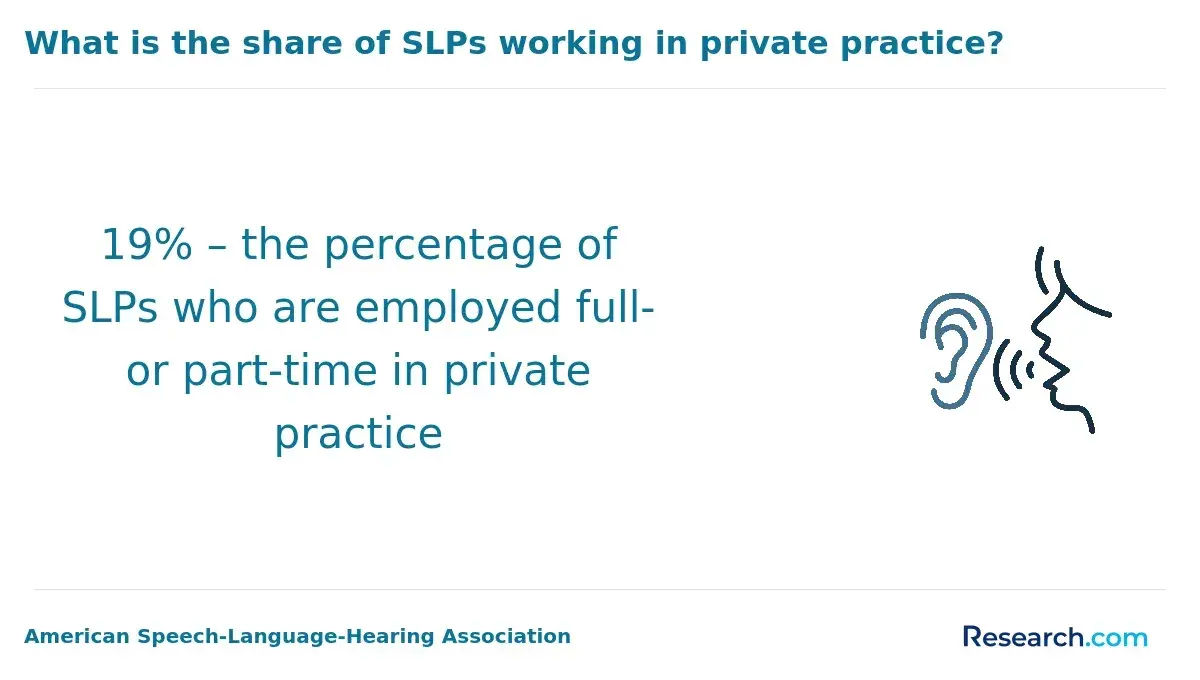
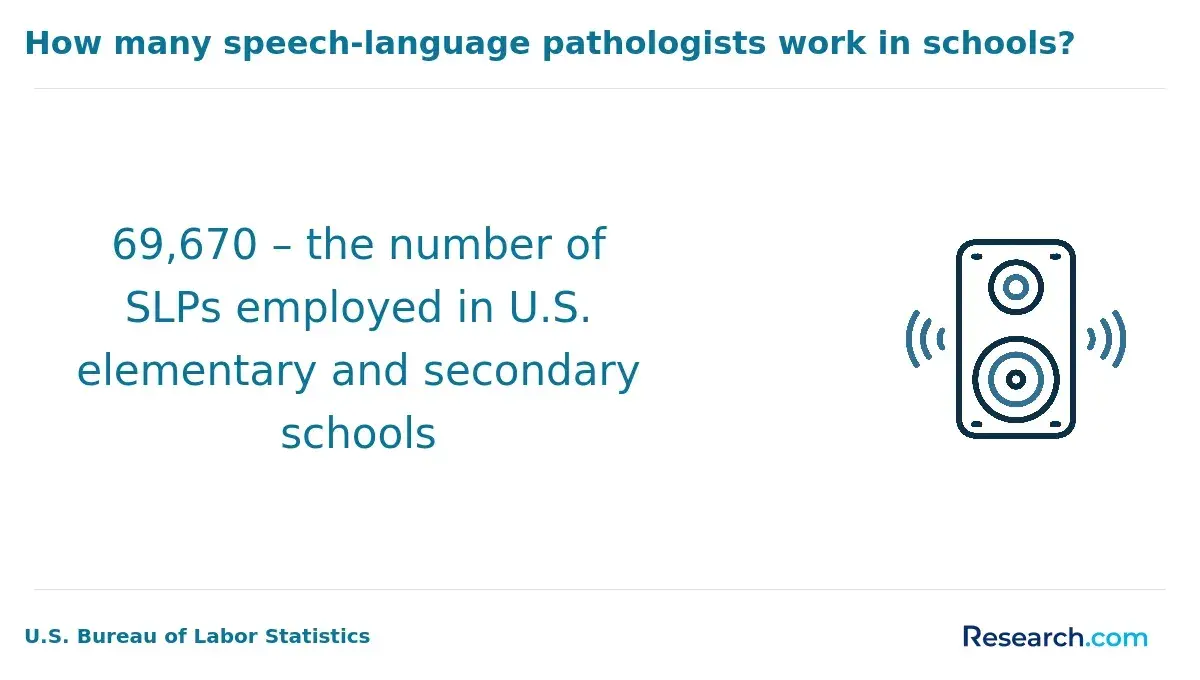
Speech-language pathologists (SLPs) work in a variety of settings, reflecting a broad demand for their expertise across the United States. Common workplaces include schools, healthcare facilities, private practices, and specialized clinics.
While school-based roles remain significant, only 77.5% of surveyed SLPs reported working with school-age children (5-21 years), marking a decline in this traditional sector (Yi & Erickson, ASHA Journals). This highlights the growing diversity of employment beyond K-12 education.
In healthcare, SLPs typically engage with patients recovering from stroke, brain injuries, or neurodegenerative disorders in hospitals, rehabilitation centers, and nursing homes. These roles require specialized skills in adult and geriatric communication and swallowing disorders.
Private practices and outpatient clinics offer flexible opportunities where SLPs may focus on voice therapy, fluency issues, or augmentative and alternative communication (AAC). These settings frequently serve both children and adults referred for specialized care.
Additional roles include early intervention programs, university clinical educators and researchers, telepractice platforms, correctional facilities, and corporate wellness initiatives.
- Evaluate career choices based on population served, clinical specialty, and work hours.
- Consider how each setting aligns with professional goals and certification requirements.
The job outlook for speech pathologists is strong, with the U.S. Bureau of Labor Statistics projecting a 17% growth rate from 2025 to 2035, far surpassing the average for all occupations. This growth is fueled by an aging population, greater recognition of speech and language disorders, and increased demand for services in schools and healthcare environments.
Entry-level speech pathologists earn a median salary around $77,000 annually, while experienced practitioners, particularly those in clinical or specialized areas, can earn $90,000 or more. Salary varies by factors such as geographic location, work setting, and professional certification.
For example, those employed in hospitals or private clinics often receive higher pay than those in educational roles. Specializing in fields like pediatric speech disorders or neurogenic communication brings added financial benefits.
There is a notable gap between academic preparation and practical readiness. While 65% of Communication Sciences and Disorders (CSD) faculty report including spelling interventions in their teaching, only 20% of practicing speech-language pathologists feel adequately prepared to manage these challenges, according to Yi & Erickson (2024a, ASHA Journals).
Selecting ASHA-accredited programs with comprehensive, clinically focused training is essential.
Graduates who combine strong academic knowledge with extensive hands-on experience tend to achieve better job placement and salary results in a competitive job market.
How should prospective students evaluate program quality and accreditation status?
Verify that a program is accredited by the Council on Academic Accreditation in Audiology and Speech-Language Pathology (CAA), as this is essential for certification and licensure eligibility. Graduates from non-CAA programs may face obstacles obtaining professional certification through the American Speech-Language-Hearing Association (ASHA).
Focus on how the program integrates interprofessional education (IPE) and interprofessional practice (IPP). The ASHA Interprofessional Practice Survey Results from May 2025 reveal that 74% of audiologists and 80% of speech-language pathologists regularly engage in interprofessional collaboration.
Programs emphasizing these elements prepare students to work effectively in team-based clinical settings.
Assess faculty qualifications and the student-to-faculty ratio. Programs featuring licensed clinicians actively involved in research or clinical innovation typically provide evidence-based training. Smaller ratios allow for personalized mentorship and better clinical skills development.
Consider clinical placements and the volume of supervised clinical hours. Diverse settings such as hospitals, schools, and rehabilitation centers enrich practical experience. ASHA mandates at least 400 supervised clinical hours, but additional hours improve readiness for professional practice.
Review graduate outcomes like certification pass rates and employment success to gauge program quality. Also, ensure the curriculum aligns with the latest ASHA standards and addresses trends like telepractice and culturally responsive care, maintaining relevance in evolving healthcare environments.
Other Things You Should Know About Speech Pathology
In 2027, an ASHA-Ready speech pathology program emphasizes research and evidence-based practice to prepare students for effective, informed clinical decision-making. By integrating the latest scientific findings and methodologies, these programs ensure that future speech-language pathologists apply proven strategies and interventions in their practice.
ASHA requires at least 400 supervised clinical practicum hours for the Certificate of Clinical Competence in Speech-Language Pathology. At least 325 hours must be completed at the graduate level, with direct client contact, observation, and appropriate supervision documented by the program.
Research and evidence-based practice are central components of speech pathology education. Students learn to critically evaluate scientific literature and apply research findings to clinical decision-making. This approach ensures that treatment methods are effective and tailored to the individual needs of clients, maintaining high standards of professional care.
Interprofessional collaboration is a key focus in many speech pathology programs, recognizing the importance of working with other healthcare and educational professionals. Students often engage in team-based learning experiences with audiologists, occupational therapists, and educators. This collaboration enhances communication skills and prepares future speech pathologists for integrated care environments.
- U.S. Bureau of Labor Statistics - Speech-Language Pathologists https://www.bls.gov/ooh/healthcare/speech-language-pathologists.htm
- ASHA EdFind - Accredited Speech-Language Pathology Programs https://find.asha.org/ed/
- Audiology and Speech-Language Pathology Interstate Compact https://aslpcompact.com/compact-map/
- Maryville University - Master of Science in Speech-Language Pathology https://www.maryville.edu/masters/speech-language-pathology/
- Auburn University, Montgomery - Master of Science in Speech-Language Pathology https://www.aum.edu/degree/ms-speech-language-pathology/
- University of North Carolina at Greensboro - Speech-Language Pathology, M.A. (Online) https://csd.uncg.edu/graduate/masters-of-arts-online/
- Pennsylvania Western University - Master of Science in Speech-Language Pathology https://online.pennwest.edu/programs/speech-language-pathology-grad/index.php
- University of Nebraska at Kearney - Speech-Language Pathology, Master of Science in Education (Online Track) https://www.unk.edu/online/degrees-programs/speech-language-pathology-online.php