2027 Online Speech Pathology Programs With Live Classes vs Recorded Lectures

Co-Founder and Chief Data Scientist

Reviewed by Rhea Paul, PhD
SLP Education & Research Expert
Choosing between live classes and recorded lectures poses a significant challenge for prospective speech pathology students seeking flexibility without compromising quality. Many professionals balancing work and personal commitments struggle to find programs that accommodate varied schedules while offering interactive learning experiences.
The decision impacts engagement, skill acquisition, and networking opportunities critical for career transitions into speech pathology. Understanding the trade-offs between synchronous and asynchronous course formats can clarify which path best supports individual learning needs and professional goals.
This article examines current online speech pathology programs featuring live versus recorded instruction to guide readers in selecting the optimal approach for their education and career advancement.
Key Things You Should Know
- Online speech pathology programs with live classes offer real-time interaction, enhancing engagement and immediate feedback, preferred by 62% of students in recent 2025 surveys.
- Recorded lectures provide flexible learning schedules, supporting 48% of part-time students balancing work and study, yet may limit spontaneous clarification opportunities.
- Programs combining live sessions with recorded content show higher completion rates, nearing 85%, indicating blended formats effectively balance flexibility and active learning.
What are online speech pathology programs with live classes?
Online speech pathology programs with live interactive classes offer graduate-level courses delivered remotely in real time through video conferencing platforms. This format fosters direct communication with instructors and peers, allowing immediate feedback, group discussions, and active participation that enhance the learning experience.
Unlike recorded programs where students watch lectures at their own pace without live interaction, speech pathology online courses featuring real-time instruction maintain structured pacing with fixed attendance and deadlines, supporting accountability and consistent progress.
Typical synchronous sessions include lectures, clinical simulations, and case study discussions, often complemented by digital resources and live Q&A segments to deepen understanding. Prospective students should consider that live class programs:
- Often require adherence to scheduled sessions aligned with academic calendars.
- Enable interactive skill development, especially in communication and clinical reasoning.
- Promote collaboration that mirrors in-person cohort experiences for networking and peer support.
Enrollment in online graduate speech-language pathology programs increased by 28% compared to the previous year, reflecting a growing preference for flexible learning that balances interactive live instruction with remote convenience.
Those interested in affordable options can explore speech pathology online masters programs recognized for combining quality education with accessible pricing.
How do live classes differ from recorded lectures in speech pathology programs?
Live online speech pathology classes differ significantly from recorded lectures in interactivity and pacing. Synchronous sessions require students to join at scheduled times, fostering real-time communication with instructors and peers.
This setting supports immediate feedback, discussions, and hands-on activities like role-play exercises that are vital for developing clinical skills. Such live engagement is critical for many learners focused on mastering practical components.
Recorded lectures offer asynchronous flexibility, allowing students to study at their convenience, which benefits those balancing work or family. However, this format can reduce accountability and interaction, sometimes leading to lower motivation and comprehension.
Students opting for recorded lectures should create structured study plans to stay on track.
The differences between live and recorded speech pathology courses are evident in retention, with data from the American Speech-Language-Hearing Association Distance Learning Survey showing live classes increase retention by 35%.
This highlights how interactive, scheduled learning environments support student persistence and success.
Choosing between these formats depends on individual preferences, time management abilities, and value placed on interactivity. Those prioritizing hands-on practice and structured pacing should seek programs featuring live elements.
Additionally, prospective students should consider potential career outcomes, such as speech language pathology salary expectations, which vary with education and specialization. For more on career potential, visit speech language pathology salary.
Which accredited online speech pathology programs offer live classes?
Several of the best accredited online speech pathology programs with live instruction offer live classes in 2026. Universities such as the University of Pittsburgh, the University of Wisconsin-Madison, and the University of Florida provide hybrid models where students participate in scheduled live lectures and discussions via video conferencing.
These sessions encourage immediate feedback, active engagement, and valuable networking, all crucial for developing clinical skills.
Top online speech pathology degrees featuring live virtual classes often require fixed attendance times, which may challenge working professionals or those with changing schedules.
Nevertheless, these live formats promote accountability and involvement, often including live case studies and group activities that simulate in-person experiences.
On the other hand, hybrid programs with recorded lectures offer greater flexibility. A 2025 study in the Journal of Speech, Language, and Hearing Research involving 1,200 students found that those studying with recorded content completed coursework 22% faster while maintaining equal clinical competency.
Students should balance live class commitments with their personal and professional responsibilities. Programs combining live and recorded content provide an ideal middle ground, allowing live participation when possible and offering recordings for review and asynchronous study.
For more details on accelerated options and program comparisons, explore SLP accelerated programs.
Accreditation requirements for online speech pathology degrees in the United States are crucial for ensuring program quality and eligibility for certification. The Council on Academic Accreditation in Audiology and Speech-Language Pathology (CAA) is the primary accrediting body recognized by the U.S. Department of Education.
Graduate programs offering master's or doctoral degrees in speech pathology must have CAA accreditation to meet certification standards set by the American Speech-Language-Hearing Association (ASHA).
Programs lacking CAA accreditation may leave graduates ineligible for the Certificate of Clinical Competence in Speech-Language Pathology (CCC-SLP), which is typically required for state licensure and clinical practice.
States may also have additional requirements such as supervised clinical hours or specific coursework, so consulting state licensing boards early on is vital.
Recognized accrediting bodies for speech pathology programs with live and recorded coursework emphasize the importance of supervised practicum hours to prepare students for clinical competence.
A 2025 study found that students attending live online lectures scored 12% higher in phonetics than those using recorded lectures, highlighting how live instruction can impact outcomes.
Students considering online SLP programs should verify CAA accreditation and the program's structure to align with certification and licensure goals.
Many accredited programs offer fully online speech pathology degrees, combining recorded lectures with various interaction formats. While asynchronous coursework provides flexibility, it often lacks vital live engagement with instructors and peers, which is crucial for developing practical skills and receiving prompt feedback.
Live classes significantly boost learning outcomes. The 2025 NYU Steinhardt Education Technology Report highlights that synchronous sessions improve peer interaction by 41% and instructor feedback responsiveness by 52% compared to recorded lectures.
Such interaction fosters clinical reasoning and effective communication, essential for a successful career.
Prospective students should consider programs offering:
- Synchronous discussions and live case study analyses.
- Role-playing exercises to simulate real-world scenarios.
- Hybrid models mixing recorded content with scheduled live seminars.
- Local clinical practicum arrangements compliant with licensure requirements.
Most licensure boards require supervised clinical hours, which online programs may facilitate through local partnerships. It is important to verify program accreditation and how practicum experiences are managed.
Prioritizing programs with synchronous learning components alongside recorded lectures can enhance readiness for professional certification and effective practice.
Admission to speech pathology programs generally requires a bachelor's degree in communication sciences, psychology, biology, or a related field.
Most programs expect a minimum GPA of around 3.0 on a 4.0 scale, although more competitive schools may set higher standards. Prerequisite courses often include anatomy, physiology, linguistics, and statistics.
Applicants typically submit letters of recommendation, a personal statement, and sometimes a resume outlining clinical or educational experience. While some programs still request GRE scores, its importance is decreasing as holistic approaches to admission gain favor.
Strong communication skills are essential and evaluated through essays, interviews, or clinical observations. Practical experience, whether through volunteering or paid roles in speech pathology settings, strengthens applications.
Accessibility plays a growing role in admissions. Online programs with live classes saw a 19% rise in enrollment of students with disabilities, compared to a 7% increase in programs offering recorded lectures alone, as reported by the U.S. Department of Education National Center for Education Statistics 2025.
Prospective students should check individual program requirements early, as some schools require background checks, immunization records, or direct clinical skill observation before acceptance.
Online speech pathology programs generally take 2 to 3 years to complete, depending on degree type and program format. A master's degree, the minimum credential for clinical certification and licensure, usually requires 24 to 36 months of full-time study.
Programs with live class formats follow a structured semester schedule, supporting steady progress and effective time management for students managing other commitments.
In contrast, programs based mainly on recorded lectures offer flexibility but may prolong completion time, especially if students enroll part-time or delay clinical placements. These programs can extend beyond 3 years. However, the absence of scheduled live interaction might reduce accountability and delay completion.
The clinical practicum, a required hands-on component, usually determines the minimum program length since accredited programs mandate specific supervised clinical hours over multiple semesters.
Data from the ASHA Employment Outcomes Survey highlights career benefits of live-class emphasis. Graduates from programs with significant live instruction had a 15% higher first-year job placement rate-92% compared to 77%.
This suggests that live engagement and timely program completion improve readiness and employability in the competitive speech pathology field.
Graduate programs in speech pathology equip students with essential clinical skills and research knowledge. Core coursework covers anatomy and physiology of speech, language, and hearing mechanisms, neuroanatomy related to communication disorders, phonetics, language development, and speech sound disorders.
Specialized topics include fluency disorders, voice and resonance pathologies, and swallowing disorders. A clinical practicum offers supervised hands-on experience with diverse patient groups.
Programs emphasize theoretical frameworks and evidence-based treatments preparing students for certification and licensure. Research methods and statistics courses help students critically analyze clinical data and contribute to the field's advancement.
Many programs integrate multicultural communication issues and augmentative and alternative communication (AAC) technologies to serve a broad range of clients.
Delivery formats vary between live online classes, which promote real-time interaction through case discussions, and recorded lectures, which provide flexibility but require strong self-discipline.
Tuition for live-class online speech pathology programs averages $45,200, with an estimated 245% return on investment within five years, based on a median salary of $97,870 according to the National Center for Education Statistics 2025.
Degrees in speech pathology prepare students for careers primarily as licensed speech-language pathologists (SLPs), who assess and treat speech, language, and swallowing disorders.
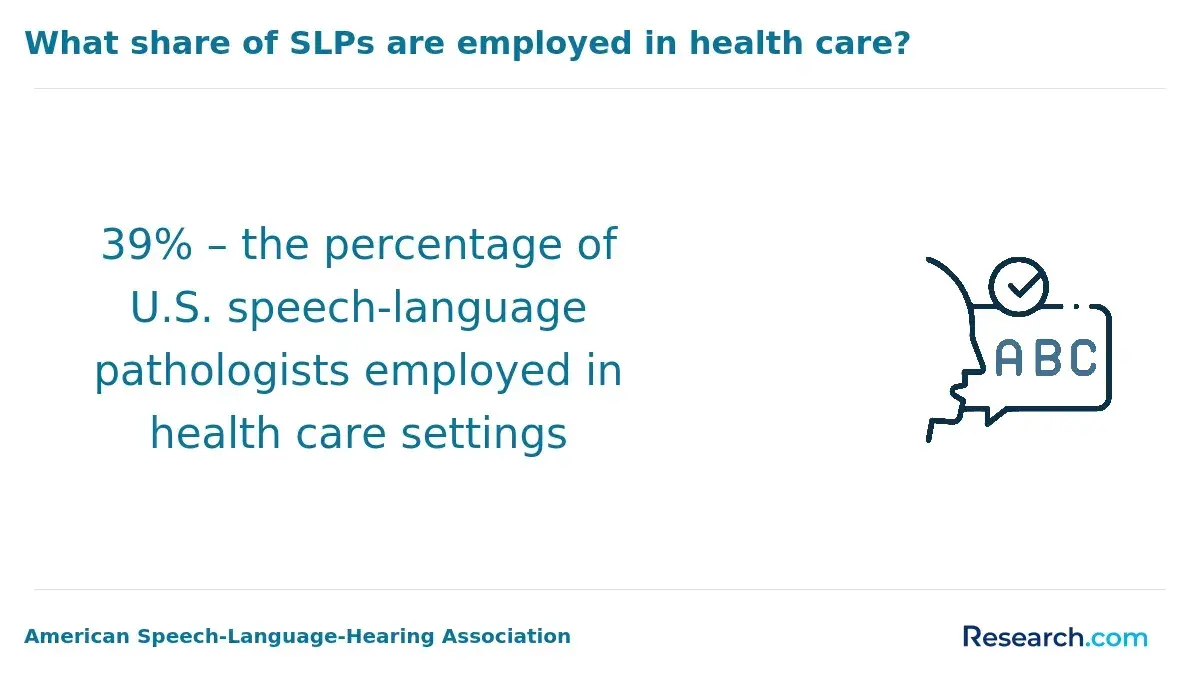
Employment settings commonly include schools, hospitals, rehabilitation centers, and private practices. Additional opportunities exist in research, healthcare administration, and specialized clinical fields such as pediatric or geriatric speech therapy.
Salaries generally start around $62,900 annually for entry-level speech pathologists, rising to over $95,000 with experience or advanced certifications, according to the U.S. Bureau of Labor Statistics.
Those working in educational settings may begin near $60,000, while healthcare-based clinicians in metropolitan areas often earn $90,000 or more.
Advancement usually requires obtaining state licensure and American Speech-Language-Hearing Association (ASHA) certification, which improve job prospects and income potential. Specialized expertise in areas like swallowing or neurogenic communication disorders tends to command higher salaries due to increased demand and skill level.
The ASHA Faculty Worklife Survey 2025 highlights that 85% of speech pathology faculty prefer live online teaching over recorded lectures for developing clinical reasoning skills. This suggests that programs emphasizing real-time interaction better prepare graduates for clinical demands, enhancing employability and patient care effectiveness.
What is the job outlook for speech-language pathologists?
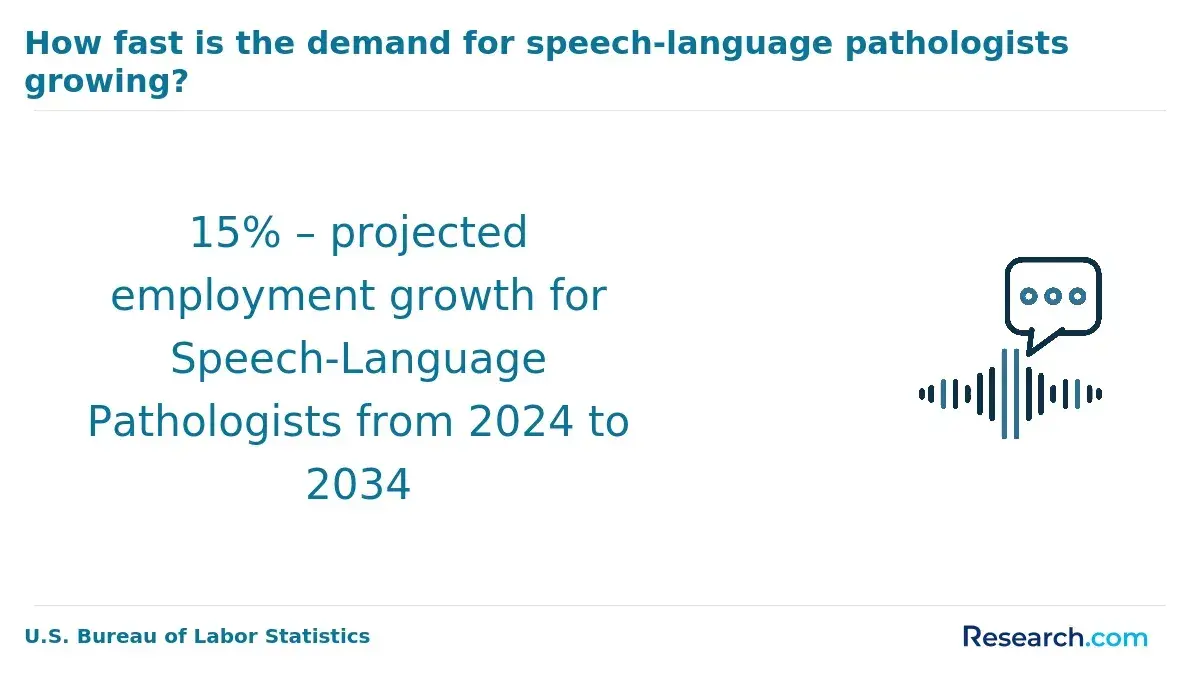
The job outlook for speech-language pathologists remains strong, with a projected 17% growth in telepractice positions from 2025 to 2035, according to the Bureau of Labor Statistics. This trend reflects broader adoption of remote care technologies and hybrid service models.
By 2026, 68% of new speech-language pathology programs are expected to offer hybrid live and recorded class formats, up from 42% in 2024, providing flexible training that aligns with evolving job demands.
Demand is rising in schools, medical facilities, and telehealth platforms. Professionals skilled in both in-person and remote therapy will have increased job prospects. Telepractice positions enable therapists to serve rural and underserved populations efficiently. Combining clinical expertise with technology integration is critical for success in this field.
Graduates should prepare for roles requiring versatility across delivery settings, including live patient interaction and virtual care management. Programs with hybrid courses blend direct instruction with asynchronous learning to enhance clinical knowledge and technical skills.
The aging population and heightened awareness of communication disorders sustain steady demand for qualified speech-language pathologists. Employers seek candidates trained in evidence-based treatments applicable across diverse environments.
Prospective students should prioritize programs that emphasize both face-to-face clinical practice and telepractice competencies to strengthen employment potential.
Other Things You Should Know About Speech Pathology
In 2027, online speech pathology programs with live classes typically offer synchronous, real-time interaction with instructors, facilitating immediate feedback and practical demonstrations. Recorded lectures, however, may lack such immediate interactivity, possibly requiring additional sessions for hands-on practice to meet clinical experience needs.
Yes, licensed speech pathologists must complete continuing education units (CEUs) regularly to maintain their licenses and certifications. Requirements vary by state and professional organizations, but ongoing education helps practitioners stay current with advances in treatment techniques and best practices. Many online and in-person options are available to fulfill these requirements.
Licensure for speech pathologists is state-specific, but many states have reciprocity agreements or participate in the ASHA Certification of Clinical Competence (CCC) pathway, which can facilitate license transfer. However, each state has its own application process and requirements, so professionals often need to submit documentation or meet additional criteria before practicing. It is important to verify with the specific state licensing board.
Yes. Many 2027 online speech pathology programs include at least one on-campus residency or in-person clinical intensive, often 2 to 5 days per term. These sessions are used for skills checks, simulations, and supervised practicum preparation, while actual clinical hours are completed in approved placements.
- U.S. Bureau of Labor Statistics - Speech-Language Pathologists https://www.bls.gov/ooh/healthcare/speech-language-pathologists.htm
- ASHA EdFind - Accredited Speech-Language Pathology Programs https://find.asha.org/ed/
- ETS Praxis - Speech-Language Pathology (5331) https://praxis.ets.org/test/speech-language-pathology-5331.html
- University of Scranton - Master of Science (M.S.) in Speech-Language Pathology https://www.scranton.edu/academics/pcps/health-and-human-performance/programs/speech-language-pathology/index.shtml
- Emerson College - Master of Science (M.S.) in Communication Disorders (Speech@Emerson, online) https://speech.emerson.edu/
- New York University - Online MS, Communicative Sciences and Disorders (Speech@NYU) https://steinhardt.nyu.edu/degree/online-ms-communicative-sciences-and-disorders
- West Virginia University - Speech-Language Pathology, M.S. - Online https://medicine.hsc.wvu.edu/communications-sciences-and-disorders/speech-language-pathology-ms/future-students/curriculum/online-slp-program/
- Pepperdine University - Master of Science in Speech-Language Pathology https://healthscience.pepperdine.edu/online-masters-in-speech-language-pathology/