2027 Comparing Cohort-Based vs Flexible Online SLP Programs

Co-Founder and Chief Data Scientist

Reviewed by Rhea Paul, PhD
SLP Education & Research Expert
Many aspiring professionals face a tough choice when pursuing graduate studies in speech pathology: whether to enroll in a cohort-based program with fixed timelines or opt for a flexible online format that accommodates personal schedules.
Each approach presents distinct challenges in time management, peer interaction, and accreditation adherence. Choosing the wrong type could lead to delays in certification or difficulties balancing work and study commitments.
This article examines the key differences between cohort-based and flexible online speech pathology programs, focusing on how each can impact career progression and learning experience to help prospective students make an informed decision.
Key Things You Should Know
- Cohort-based programs provide structured schedules and peer interaction, benefiting 65% of students who prefer collaborative learning environments in speech pathology education.
- Flexible online programs offer asynchronous coursework, attracting 70% of working professionals seeking to balance study with employment or personal commitments.
- Graduation rates vary slightly: 82% in cohort models versus 78% in flexible formats, reflecting differences in student engagement and support.
What Are Cohort-Based vs Flexible Online SLP Programs?
Cohort-based and flexible online speech pathology programs differ mainly in structure and scheduling. Cohort-based programs enroll students in fixed groups progressing together through a set curriculum and timeline.
This model benefits those who thrive on community support, structured deadlines, and peer interaction, offering synchronous classes and group projects with predetermined start and end dates.
Flexible online programs, on the other hand, allow students to learn at their own pace, often featuring asynchronous coursework. This format is ideal for working professionals or those balancing family commitments, requiring strong self-discipline.
Multiple annual start dates provide greater enrollment options for students choosing this path. Understanding the differences between cohort-based and flexible online speech pathology programs is crucial for selecting the best fit.
Acceptance rates to master's speech pathology programs are competitive. According to ASHA's 2024 Communication Sciences and Disorders Education Survey, the per-application acceptance rate was 45.3%, with applications to 8-12 programs recommended to improve chances.
Additionally, program cost, accreditation, and clinical placement opportunities vary widely. Cohort-based formats typically provide structured clinical rotations aligned with course pacing, whereas flexible programs may require students to secure clinical placements independently.
These factors influence the benefits of cohort-based versus self-paced online speech pathology courses. For a comprehensive overview of affordable and reputable options, prospective students can explore the best online SLP programs available.
What Are Key Differences Between Cohort and Flexible SLP Formats?
Cohort-based speech pathology programs have distinct advantages rooted in structure, pacing, and student interaction. These programs enroll students who progress through courses together on a fixed schedule, which fosters strong peer support and consistent faculty engagement.
This model creates a structured environment that enhances accountability and often results in higher completion rates. For example, CSUSM's online M.S. in SLP cohort demonstrated a 100% program completion rate and a 100% Praxis exam pass rate, showcasing the benefits of cohort-based speech pathology program advantages.
In contrast, flexible online speech pathology program features prioritize student autonomy, allowing learners to progress at their own pace with asynchronous coursework. This adaptability suits those balancing work or family responsibilities but may reduce immediate social interaction and delay program completion.
Key differences include:
- Scheduling: Cohorts follow semester or quarterly calendars; flexible programs offer year-round enrollment.
- Social interaction: Cohorts encourage group discussions; flexible programs depend more on self-study.
- Completion rates: Cohorts tend to produce faster, more reliable graduation outcomes.
- Time commitment: Cohorts require fixed deadlines; flexible formats offer varied pacing.
Prospective students should assess their discipline, need for peer support, and scheduling constraints when choosing between these formats. Those interested in career outcomes might also explore the speech pathologist salary with a master's degree to better understand how educational choices impact earning potential.
Which SLP Program Format Best Suits Working Professionals?
Flexible online SLP programs offer an ideal solution for working professionals seeking career advancement. These programs enable students to balance education, family, and work commitments without demanding rigid schedules.
Unlike cohort-based formats, which require progressing with peers simultaneously, flexible programs allow self-paced study, helping learners adjust their pace according to workload or personal obligations. This flexibility is a key factor in the best online SLP programs for working professionals.
Data from UNC's Online MA SLP program highlights the success of flexible formats, with 100% of the 2024 cohort completing on time compared to 88% in 2017. This improvement reflects how adaptable pacing supports persistence and timely graduation, especially for professionals managing multiple responsibilities.
Key considerations include:
- Time management: Flexible programs reduce stress by allowing coursework during evenings or weekends without conflicting with full-time jobs.
- Accountability and interaction: Cohort models provide peer support and community, though with less flexibility.
- Program requirements: Certain certification or clinical placements may require fixed schedules favoring cohort options.
- Self-discipline: Flexible learning demands high motivation, which not all can maintain amid job pressures.
Those considering flexible speech pathology programs for career advancement should evaluate their self-regulation abilities alongside their need for peer interaction. Individuals with unpredictable schedules often benefit the most from flexible programs, while others may prefer structured cohort paths.
For more options on accelerated education, explore accelerated speech pathology programs.
The Council on Academic Accreditation in Audiology and Speech-Language Pathology (CAA), part of the American Speech-Language-Hearing Association (ASHA), is the primary body ensuring quality in online SLP program accreditation standards.
CAA accreditation confirms a program meets rigorous criteria for curriculum, faculty expertise, clinical practicum opportunities, and student outcomes. Prospective students should verify CAA accreditation to ensure their degree is recognized for certification and employment.
Regional accreditation from bodies such as the Higher Learning Commission or the Southern Association of Colleges and Schools affects eligibility for federal financial aid and general academic standards but does not substitute for CAA accreditation. Programs with only regional accreditation may limit graduates' eligibility for the Certificate of Clinical Competence in Speech-Language Pathology (CCC-SLP).
Acceptance rates also reflect accessibility; states like Wyoming and Montana have online SLP programs accepting 50% to 85% of applicants, surpassing the national average of 45%. These more accessible programs that offer accredited speech pathology degrees online maintain professional standards.
For a broader selection, explore SLP master's programs with varying acceptance rates and requirements.
Additionally, online programs with CAA accreditation ensure clinical practicum experiences meet ASHA's mandated hours and supervision standards. Without this, coursework alone may not qualify graduates for licensure, making it essential that programs combine accredited academics with approved clinical placements.
Admission to online speech pathology degree programs typically requires a bachelor's degree from an accredited institution, often with a minimum GPA around 3.0, though some programs may accept lower GPAs with additional qualifications. Prerequisite coursework commonly includes anatomy, physiology, linguistics, and psychology to build a necessary foundation for advanced study.
Standardized test scores like the GRE are increasingly optional but might still be requested by certain programs. Cohort-based programs usually feature synchronous learning with fixed start dates, requiring students to commit to a structured schedule.
Flexible or self-paced formats offer rolling admissions, appealing to those who prefer independent progress but demand strong self-motivation.
Other typical application materials include:
- Official transcripts confirming academic history
- Two or three letters of recommendation from academic or professional contacts
- A personal statement describing motivation and career objectives
- Documentation of clinical experience or volunteer work in speech-language settings, preferred or required by some programs
Programs must meet Council on Academic Accreditation (CAA) standards, shaping admission criteria to ensure quality and maintain accreditation.
Research from the Institute of Education Sciences indicates that cohort-based online programs yield completion and retention rates comparable to flexible models among adult professional learners, highlighting that academic readiness and commitment drive admission decisions more than delivery format.
Cohort-based online SLP programs generally take two to three years to complete, similar to traditional on-campus schedules. These programs follow a synchronous structure where students advance together through set terms or semesters.
This ensures coordinated clinical practicum placements and coursework completion, which is essential considering that by 2035, 92% of U.S. SLPs had adopted telepractice-a 17% increase since the COVID-19 onset. Cohorts promote peer collaboration but offer limited flexibility in pacing.
Flexible online SLP programs vary widely in length, from two years for full-time students to over five years for part-time learners. These asynchronous formats let students tailor their course loads around work or personal commitments, sometimes extending program duration to balance responsibilities.
However, such flexibility can delay completing vital clinical practicum hours required for certification and licensure.
Important considerations when choosing between these formats include:
- Cohort models provide predictable timelines, valuable for planned career transitions.
- Flexible programs demand strong time management due to variable pacing.
- Clinical practicum scheduling tends to be stricter in cohort programs, while flexible ones require proactive effort to meet in-person or telepractice requirements.
Prospective students should assess their availability, learning style, and licensure deadlines before deciding. Telepractice's rise has improved access to online clinical experiences, yet arranging practicums on flexible schedules can remain challenging.
SLP curricula in cohort-based and flexible online programs cover essential topics including anatomy and physiology of speech and hearing, language development, phonetics, audiology, and speech and language disorders throughout the lifespan.
Cohort-based programs follow a structured sequence addressing pediatric and adult neurogenic communication disorders, swallowing disorders, and therapeutic interventions, supporting streamlined learning.
Flexible online formats allow students to personalize their pacing, focusing on areas such as augmentative communication or voice disorders to align with career goals. Clinical practicum remains integral in both, with cohort models often providing coordinated placements fostering peer support.
Flexible programs may demand more self-advocacy to arrange practicum hours that fit individual schedules.
Coursework in both formats meets Council on Academic Accreditation (CAA) standards, ensuring foundational knowledge and preparing students for the Praxis exam. Programs emphasize evidence-based practice and data analysis to align with professional standards.
For example, Baylor University's accelerated online SLP program reports Praxis pass rates near 90%, according to speechpathologygraduateprograms.org, reflecting curriculum effectiveness.
Prospective students should review specialty tracks, clinical supervision models, and research requirements. Cohort-based formats benefit those seeking structured pacing and collaborative learning, while flexible options suit individuals balancing work or personal commitments.
Prioritizing programs with clear clinical hour guidance and standardized content supports certification readiness and diverse career paths post-graduation.
Graduates of online SLP programs often find careers in clinical, educational, and research settings. Many become certified speech-language pathologists working in hospitals, rehabilitation centers, and outpatient clinics, where they diagnose and treat communication disorders, swallowing difficulties, and voice impairments across all age groups.
In schools, SLPs collaborate with teachers, parents, and specialists to support children with speech, language, and literacy challenges by developing individualized education programs (IEPs). Some professionals specialize further in areas such as pediatric feeding therapy or adult neurogenic disorders.
Beyond clinical roles, career options include research, policy advocacy, and leadership positions. Research roles emphasize evidence-based approaches and innovative treatments, while leadership roles often involve managing departments or programs in healthcare or educational institutions.
Common job roles include:
- Clinical speech-language pathologist
- School-based SLP
- Speech-language pathology assistant
- Researcher or academic faculty
- Program coordinator or department director
- Private practice or telepractice clinician
Costs and return on investment vary. Online SLP programs typically cost more than in-state public options, but programs like UW-Eau Claire's offer part-time formats tailored for working professionals. These flexible three-year pathways help maintain employment while advancing qualifications, balancing initial income impact with long-term career prospects.
SLP graduates in the U.S. have a median annual salary near $97,870, with entry-level positions starting around $62,900. Experienced speech-language pathologists working in specialized or high-demand areas can earn over $100,000. Salaries depend largely on the employment sector, geographical location, and work environment.
Common employers like public schools usually offer salaries from $60,000 to $85,000, while healthcare facilities and private clinics, especially in urban centers, tend to pay more, often exceeding $85,000. Specializations such as pediatric feeding disorders or neurogenic communication disorders may bring additional salary premiums due to scarcity of qualified professionals.
Job flexibility, especially post-2020, has become influential in salary potential. More than 60% of U.S. school-based SLPs provided virtual therapy after March 2020, opening opportunities to serve clients beyond traditional locations. Telepractice can enable access to higher-paying markets remotely, potentially increasing income.
Certification and licensure are also important for earning potential. Holding the Certificate of Clinical Competence (CCC) from ASHA can enhance salary prospects, as can advanced degrees or administrative roles. Graduates should consider regional salary variations and the benefits of telepractice to maximize their career growth and income.
What Is the Job Outlook for Speech-Language Pathologists?
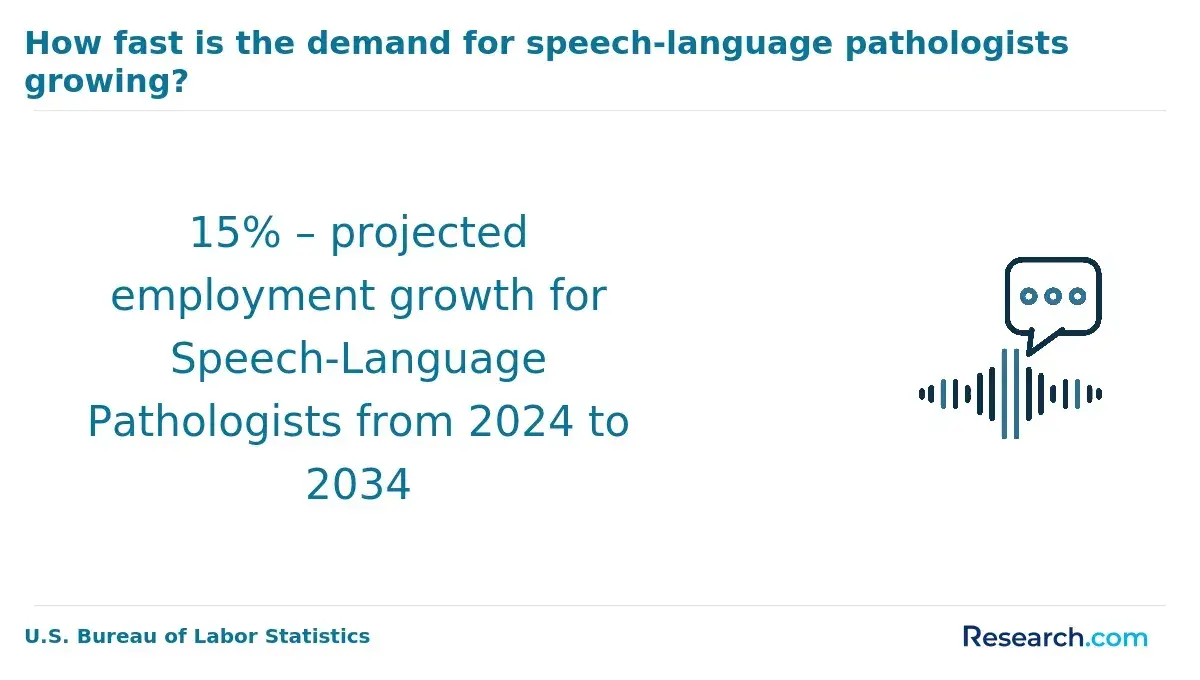
The demand for speech-language pathologists (SLPs) continues to grow rapidly, driven by an aging population and increasing awareness of communication disorders in children. The U.S. Bureau of Labor Statistics projects a 17% growth rate in this field from 2025 to 2035, much faster than the average for all occupations.
Education pathways are becoming more flexible, with about 19 fully online accredited graduate programs available, many including in-person clinical components. Additionally, over 40 programs do not require prerequisites, widening access for diverse students and professionals.
Employment opportunities span various settings including:
- Hospitals and rehabilitation centers treating speech impairments due to injury or illness
- Schools supporting language development and literacy in children
- Private practice specializing in tailored therapy approaches
- Skilled nursing facilities aiding elderly patients
As healthcare continues to evolve, experienced clinicians with training in telepractice and bilingual services are highly sought after. Prospective SLPs should select programs offering strong clinical placements and online flexibility to meet these needs.
Other Things You Should Know About Speech Pathology
Clinical experience is a mandatory component of all accredited speech pathology programs. Students must complete supervised practicum hours to gain hands-on experience with clients of various ages and disorders. These placements help develop essential assessment, diagnosis, and intervention skills under professional supervision.
Yes, most accredited online speech pathology programs are designed to prepare students for the Certificate of Clinical Competence in Speech-Language Pathology (CCC-SLP) exam by the American Speech-Language-Hearing Association (ASHA). Coursework and clinical hours meet the eligibility requirements, but students must ensure their program includes necessary supervised practicum to be fully qualified for certification.
Students enrolled in online speech pathology programs generally need reliable internet access, a computer with updated software for video conferencing, and access to digital learning platforms. Some programs may also require specialized software for assessments or telepractice training. Meeting these technical needs is essential to participate fully in coursework and clinical simulations.
Cohort-based programs often place students in the same practicum sequence with a fixed timeline, while flexible programs usually require students to arrange placements within approved sites and deadlines. Both must meet ASHA standards for supervised clinical hours, and many programs require about 400 clock hours before graduation.
- U.S. Bureau of Labor Statistics - Speech-Language Pathologists https://www.bls.gov/ooh/healthcare/speech-language-pathologists.htm
- ASHA EdFind - Accredited Speech-Language Pathology Programs https://find.asha.org/ed/
- Audiology and Speech-Language Pathology Interstate Compact https://aslpcompact.com/compact-map/
- University of North Carolina at Greensboro - Speech-Language Pathology, M.A. (Online) https://csd.uncg.edu/graduate/masters-of-arts-online/
- Ithaca College - Online Master of Science in Speech-Language Pathology https://slponline.ithaca.edu/programs/masters-speech-language-pathology-online
- James Madison University - Master of Science (M.S.) in Speech-Language Pathology (Distance Education / Online) https://www.jmu.edu/chbs/csd/online_ms/index.shtml
- Delaware Valley University - Master of Science in Speech-Language Pathology (M.S.) https://delval.edu/programs/graduate-programs/speech-language-pathology
- California State University-East Bay - Online Master of Science in Speech-Language Pathology https://ce.csueastbay.edu/programs/speech-language-pathology/