2027 How to Compare Online SLP Programs Like a Pro

Co-Founder and Chief Data Scientist

Reviewed by Rhea Paul, PhD
SLP Education & Research Expert
Deciding to transition into a new career in speech pathology often raises concerns about selecting a program that fits both professional goals and personal schedules. Many prospective students find it difficult to navigate the vast array of online options, unsure which institutions offer accredited, flexible, and reputable programs.
The challenge intensifies when balancing existing commitments with the demand for clinical experience and licensure preparation. This article examines key factors to consider when evaluating online speech pathology programs, focusing on accreditation, curriculum quality, clinical requirements, and flexibility to help readers make informed, confident decisions.
Key Things You Should Know
- Accreditation by the Council on Academic Accreditation (CAA) ensures online SLP programs meet rigorous standards required for clinical certification and licensure.
- Comparing clinical practicum opportunities is critical; programs offering diverse, supervised placements improve readiness for ASHA certification and varied career paths.
- Graduation and certification exam pass rates reflect program quality; programs with over 90% success rates align with growing 17% job market demand through 2035.
What is a speech-language pathology degree and what do SLPs actually do?
A speech-language pathology degree programs in the United States prepare students to evaluate, diagnose, and treat communication and swallowing disorders across all age groups. Graduates typically earn a master's degree, which is the minimum credential required to become a licensed Speech-Language Pathologist (SLP) in the U.S. The coursework includes language development, phonetics, speech disorders, anatomy of speech and hearing, and clinical methods.
SLPs play vital roles in clinical practice by assisting children with speech delays, adults recovering from strokes, and patients with degenerative neurological conditions. Their duties often involve creating individualized therapy plans, conducting diagnostic evaluations, and collaborating with healthcare and educational professionals.
Accreditation is essential when choosing a program. For instance, Arkansas State University's SLP master's program reported a 100% Praxis exam pass rate, on-time completion, and employment success according to CAA-verified data, highlighting the importance of program quality and workforce readiness. A bachelor's degree alone is insufficient, as current certification standards require graduate studies, supervised clinical fellowship completion, and passing a national exam for licensure.
Prospective students should evaluate programs based on accreditation, clinical opportunities, faculty expertise, and graduate outcomes. Many seek flexible options, and those interested in remote study can explore a speech pathologist online master's degree to balance education with other commitments.
What are the accreditation and licensing requirements for online SLP programs in the U.S.?
Accreditation and licensing standards for online speech pathology programs in the U.S. are essential to ensure students receive recognized, quality education. Programs must hold accreditation from the Council on Academic Accreditation in Audiology and Speech-Language Pathology (CAA) under the American Speech-Language-Hearing Association (ASHA).
This accreditation guarantees that the curriculum meets national standards necessary for clinical competence and professional licensure. Without CAA accreditation, graduates may not qualify for the Certificate of Clinical Competence in Speech-Language Pathology (CCC-SLP), a key credential for employment and licensure.
State requirements for online speech pathology certification in the United States typically require completion of a CAA-accredited graduate program and supervised clinical practicum hours, usually between 350 and 400. Many online programs facilitate local clinical placements to meet these criteria. It's important to verify that the program supports practicum arrangements in your state to prevent licensure delays.
The Praxis Examination in Speech-Language Pathology, administered by ETS, is a national licensure prerequisite. Programs with proven strong preparation, such as James Madison University's distance learning cohort achieving a 100% Praxis pass rate, demonstrate quality training. Students should choose programs offering comprehensive Praxis prep and state-specific licensure guidance.
For those interested in specialized careers, including becoming a pediatric SLP, selecting accredited programs with strong alumni outcomes and employer recognition supports a smoother professional transition.
How do online SLP master's programs compare to campus-based options in curriculum and outcomes?
Online SLP master's program curriculum comparison shows that both online and campus-based options cover core subjects like anatomy, phonetics, language development, and clinical practicum to meet certification standards. While campus programs may offer more hands-on clinical experiences due to available on-site facilities, online programs coordinate local clinical placements to fulfill accreditation requirements. Both formats produce competent graduates eligible for state licensure.
Outcomes of online versus campus-based speech pathology programs often depend on program reputation and ranking rather than delivery mode alone. Graduates from highly ranked schools, such as Vanderbilt University-rated 4.6 out of 5 by U.S. News & World Report-benefit from strong employer recognition, higher job placement rates, and competitive starting salaries.
Key factors to consider include:
- Ensuring curriculum content and accreditation status are aligned for certification eligibility.
- Quality and availability of local clinical placements for online students.
- Networking and faculty access, which may be more immediate on campus but can also be provided virtually.
- Program reputation, as indicated by peer assessments and graduate success.
Candidates should verify that online programs adhere to state licensure requirements and provide strong clinical support. For those interested in accelerated pathways, exploring accelerated speech pathology programs can be advantageous for faster entry into the profession.
Admission to accredited online speech pathology programs typically requires a bachelor's degree, often in communication sciences, biology, psychology, or related fields. A cumulative GPA of at least 3.0 is commonly needed, demonstrating solid academic performance.
Prerequisites usually include coursework in anatomy, physiology, linguistics, phonetics, and statistics, which provides essential foundational knowledge for graduate study. These are typical admission criteria for accredited online speech pathology programs that ensure readiness for advanced education.
Standard prerequisites required for enrollment in online speech pathology programs often involve submitting GRE scores, although some schools waive this based on GPA or relevant professional experience. Applicants must also provide two or three letters of recommendation from academic or professional sources and a personal statement outlining career aspirations and motivations.
Practical experience such as internships, volunteer work, or employment in clinical or educational settings related to communication disorders is highly valued. Some programs may require background checks and immunization proof for clinical placements, while international students might need to demonstrate English proficiency.
Arkansas State University stands out for combining quality with affordability, charging $7,322 annually for in-state students or those maintaining a 3.0 GPA regardless of residency. This highlights how meeting GPA requirements impacts both admission chances and access to cost-effective education.
For prospective students exploring admission pathways, seeing a list of online SLP programs can provide valuable insight into options with more flexible entry standards.
Online speech pathology master's programs usually take two to three years to complete, depending on whether students attend full-time or part-time. Full-time enrollment typically requires about 24 months, while part-time students might extend their studies to three years or more to accommodate work and personal responsibilities. Accelerated options are available, allowing completion in 18 to 22 months, but these demand a high level of commitment and a demanding schedule.
Tuition costs vary significantly between institutions. Public universities often offer more affordable programs, with reputable schools like Marywood University charging under $13,000 annually. Conversely, private universities can cost upwards of $48,000 per year, impacting the overall return on investment (ROI) for graduates.
The ROI of an online speech pathology degree depends on tuition, program duration, and employment outcomes. Top programs with affordable tuition-under $13,000 yearly-and strong employment rates of nearly 100% tend to provide better ROI than costly private options, where graduates face higher debt and longer repayment periods.
Students should scrutinize program length, tuition fees, accreditation, and licensure preparation when selecting a program. Employment support services also play a vital role in career readiness and success after graduation.
ASHA-accredited online speech pathology programs combine rigorous coursework and at least 400 clinical practicum hours to meet certification requirements. Core subjects include anatomy and physiology of speech and hearing mechanisms, phonetics, language development, speech disorders, audiology, and evidence-based treatment approaches. Many programs also provide specialized electives tailored to areas like pediatrics, adult neurogenic disorders, or augmentative communication.
Clinical practicum must be completed under supervision by a certified speech-language pathologist, often across diverse settings such as schools, hospitals, or rehabilitation centers. While some programs offer virtual client interactions or telepractice early on, in-person clinical hours are mandatory for ASHA certification.
Most online speech pathology options use hybrid formats. Out of more than 300 CAA-accredited or candidate master's programs, only about 30 offer mostly online coursework. These hybrid models require on-campus intensives or local clinical placements, which may limit scheduling flexibility and access to local supervisors.
Prospective students should confirm how clinical hours are organized, whether virtual learning integrates well, and if their location supports necessary practicum sites. This understanding ensures compliance with ASHA's standards and readiness for professional licensure and employment.
The demand for speech-language pathologists (SLPs) in the U.S. is projected to grow by 17% from 2025 to 2035, significantly faster than the average for all occupations. This growth is driven by factors such as increased awareness of communication disorders, an aging population with stroke and dementia-related speech issues, and wider insurance coverage for therapy services.
Educational programs play a crucial role in preparing qualified SLPs. For instance, online programs like Emerson's Speech@Emerson require completion of 400 clinical hours, which are essential for ASHA certification and gaining hands-on experience. Such clinical training is a key factor in ensuring graduates are workforce-ready.
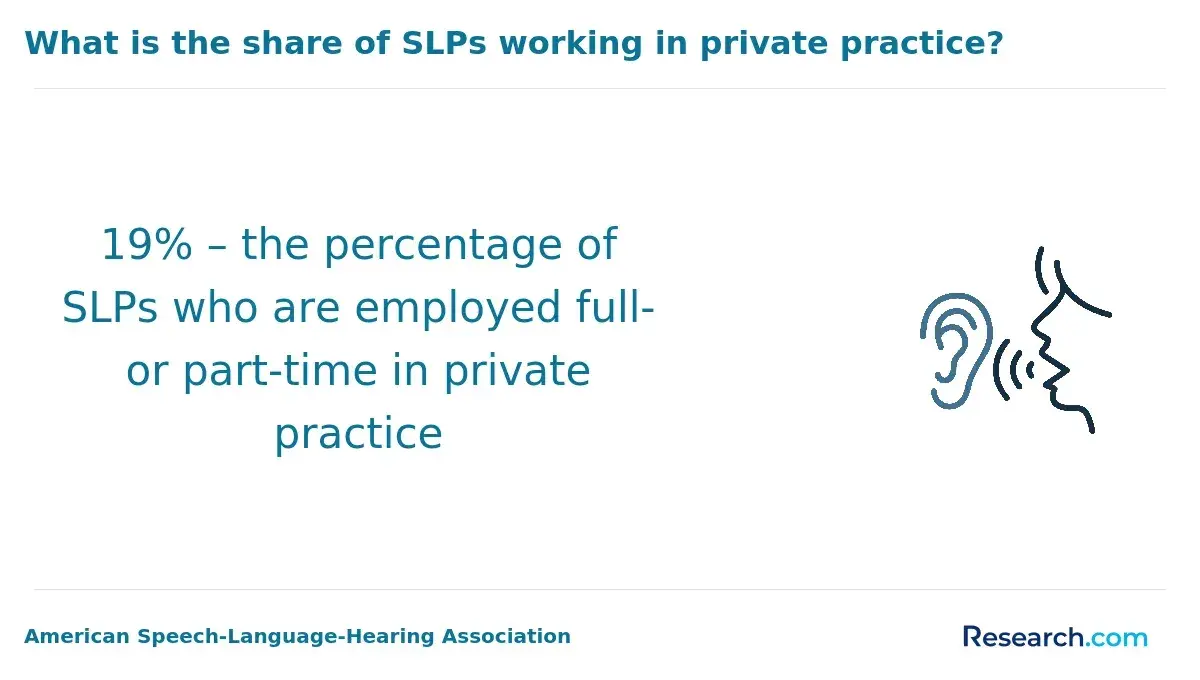
Career settings vary widely, from schools and hospitals to private practices and nursing care facilities. Higher demand is often seen in underserved rural and urban areas, which might offer more opportunities but could require relocation.
Prospective students should assess programs on their ability to support clinical placements and certification success, as these directly impact employability. Robust clinical experience combined with job market growth makes speech pathology a promising career path.
Speech-language pathologists' salaries vary widely based on employment settings and specialties. Medical settings like hospitals and rehab centers typically offer between $65,000 and $90,000 annually due to the need for acute care expertise. School-based positions generally range from $55,000 to $75,000, influenced by district budgets and state funding. Early intervention specialists often earn on the lower end of this scale but may supplement income through grant-funded programs.
Specializations such as swallowing disorders or neurogenic communication disorders can push earnings above $85,000, especially with advanced certifications and experience. In private pediatric practices, salaries usually range from $60,000 to $80,000, with urban areas providing higher earning potential due to demand. Geographic location also impacts pay, with metropolitan areas offering 10-20% higher salaries than rural regions.
The U.S. Bureau of Labor Statistics reports a median annual wage around $80,000 for speech-language pathologists, though individual results vary by setting and specialty. Additionally, over 40 graduate speech-language pathology programs require no prerequisites for master's applications, as shown in the admissions data. This provides greater access for non-traditional students aiming to enter diverse career paths that influence earning potential.
ASHA certification, state licensure, and specialized SLP credentials differ significantly in scope and professional use. The Certificate of Clinical Competence in Speech-Language Pathology (CCC-SLP) from ASHA represents a national standard validating a clinician's academic, clinical, and ethical competence.
Obtaining this requires finishing an accredited graduate program, completing a clinical fellowship, and passing the Praxis exam. Many employers prefer or require this credential because it ensures adherence to rigorous quality standards.
State licensure is a mandatory legal requirement to practice as a speech pathologist within a specific state. Each state board sets unique requirements, which often include additional exams such as jurisprudence tests or mandated continuing education, on top of ASHA's standards. For instance, renewal processes in California differ from those in Texas. Practicing without proper state licensure carries legal risks regardless of ASHA certification.
Specialized SLP credentials target niche practice areas like fluency disorders, augmentative communication, or swallowing disorders. These certifications, from organizations such as the American Board of Fluency and Fluency Disorders (ABFFD) or ASHA special interest groups, indicate advanced expertise beyond entry-level qualifications and can enhance career prospects.
The U.S. Bureau of Labor Statistics reports a median salary of $97,870 and 17% job growth for SLPs through 2035, driven by aging populations. Holding both ASHA certification and appropriate state licensure maximizes job eligibility, while specialized credentials may increase earning potential.
How should prospective students evaluate online SLP program quality and reputation?
When considering an online SLP program, verify its accreditation by the Council on Academic Accreditation in Audiology and Speech-Language Pathology (CAA). This ensures the curriculum aligns with national standards required for certification and licensure. Reputation matters as well; programs like Nova Southeastern University report an 86.60% Praxis exam pass rate from 2023 to 2025, outperforming many traditional options. This reflects strong preparation despite the online format.
Evaluate faculty credentials, focusing on instructors' clinical expertise and terminal degrees. Investigate available research opportunities and clinical practicum placements, ensuring supervised, in-person experiences are arranged across diverse settings. Flexibility is key for working professionals, so consider program schedules, part-time options, and the technology used for remote learning.
Gather firsthand insights by contacting alumni and current students about program quality, support services, and career placement success. Confirm the curriculum covers up-to-date competencies and offers paths beyond the CCC-SLP certification, such as specialized endorsements or training for multilingual service provision.
Financial factors are important; compare tuition costs and financial aid possibilities relative to graduate outcomes. Also, check program length and credit transfer policies to maximize prior education recognition. Following these evaluative steps helps align choices with professional and licensure goals.
Other Things You Should Know About Speech Pathology
To ensure an online SLP program is accredited in 2027, verify it holds accreditation from the Council on Academic Accreditation in Audiology and Speech-Language Pathology (CAA). Check state licensure requirements to confirm the program meets all necessary criteria, enabling you to practice as a licensed speech pathologist.
Many online speech pathology programs offer opportunities to specialize in areas such as pediatric speech disorders, adult neurogenic communication disorders, or swallowing disorders. These specializations often come in the form of elective coursework or focused clinical practicum experiences. Choosing a program with strong specialization options can help tailor your expertise to your career goals.
Yes, both online and campus-based speech pathology programs require clinical practicum hours as part of the curriculum. Online programs arrange supervised clinical experiences through approved local facilities close to the student's location. This hands-on training is mandatory to develop practical skills and meet certification board requirements.
Check whether the program uses live video classes, requires proctored exams, and provides remote access to library databases, tutoring, and simulation software. Also confirm whether any on-campus intensives are required; many SLP programs ask for one to three short residencies for labs, interviewing practice, or clinical skill checks.
- U.S. Bureau of Labor Statistics - Speech-Language Pathologists https://www.bls.gov/ooh/healthcare/speech-language-pathologists.htm
- ASHA EdFind - Accredited Speech-Language Pathology Programs https://find.asha.org/ed/
- O*NET OnLine - Speech-Language Pathologists https://www.onetonline.org/link/summary/29-1127.00
- Nova Southeastern University - SLP Program - Master of Science in Speech-Language Pathology https://osteopathic.nova.edu/degrees/masters/speech-language-pathology/index.html
- Maryville University - Master of Science in Speech-Language Pathology https://www.maryville.edu/masters/speech-language-pathology/
- Pennsylvania Western University - Master of Science in Speech-Language Pathology https://online.pennwest.edu/programs/speech-language-pathology-grad/index.php
- Baylor University - Master of Science in Speech-Language Pathology (Online) https://csd.robbins.baylor.edu/graduate/online-csd-graduate-program
- California State University-Northridge - Master of Science in Communicative Disorders (Online) https://tsengcollege.csun.edu/programs/CDS