2027 SLP Salary by Setting: Schools, Hospitals, Rehab, and Private Practice

Co-Founder and Chief Data Scientist

Reviewed by Rhea Paul, PhD
SLP Education & Research Expert
Choosing a career path in speech pathology often involves evaluating potential earnings across varied work settings.
Many aspiring professionals face uncertainty about which environment, schools, hospitals, rehab centers, or private practice, offers the most competitive salary and aligns best with their lifestyle and career goals. Such financial considerations are crucial when committing to further education or certification.
This article breaks down salary expectations by setting, highlighting key differences to aid informed decisions. It aims to clarify earning potential in each sector, helping readers select the optimal path for both personal fulfillment and financial stability in speech pathology.
Key Things You Should Know
- In 2026, salary for speech pathology professionals varies significantly by setting, with hospitals offering a median annual wage around $80,000, schools approximately $70,000, and private practices often exceeding $85,000.
- Rehabilitation centers typically provide salaries comparable to hospitals, though benefits and caseload diversity may differ, affecting overall job satisfaction and earning potential.
- Geographic location and demand strongly influence compensation, with urban areas and specialized roles in hospitals or private practice showing higher pay trends in 2025-2026 data.
What SLP salaries vary by work setting?
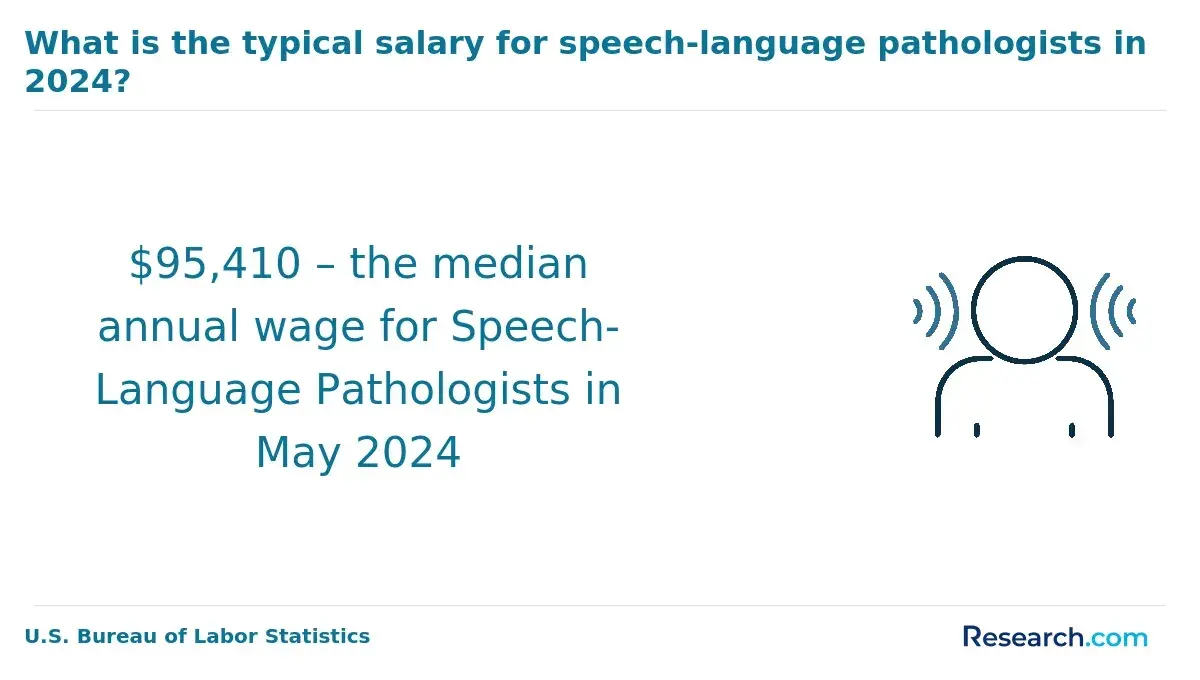
SLP salaries vary widely by work environment, reflecting differences in funding, job demands, and expertise. According to BLS 2024 data, the national median salary for speech language pathologists is $95,980, with top earners making over $137,620.
Schools generally pay less, often near or slightly below the median, due to public education budget limits, but offer more job stability and regular hours. Hospitals offer higher salaries, frequently exceeding $100,000, because SLPs there handle acute cases involving voice, swallowing, or neurological issues, requiring advanced certifications and fast decision-making.
Rehabilitation centers usually pay between schools and hospitals. SLPs in these settings assist patients recovering from strokes or injuries, requiring detailed therapy planning. Private practice presents the widest salary variation.
Those owning or working in private clinics may earn well above the median, especially if they specialize in areas like pediatric feeding therapy or accent modification, though income depends on client volume and reimbursement rates.
Prospective students should consider these average salaries for speech language pathologists in different settings alongside their career goals and workplace preferences. Exploring SLP programs online can help prepare for varied opportunities across these environments.
Which setting pays SLPs the highest salary?
The highest salaries for speech-language pathologists (SLPs) usually come from settings outside of schools.
School-based SLPs earn a mean salary of $86,320, the lowest among major work environments, despite benefits like an academic calendar. Schools often have heavy caseloads and limited salary growth. In contrast, hospitals, rehabilitation centers, and private practices offer higher pay rates for SLPs.
Hospitals tend to pay more because of the complexity and urgency of cases, with salaries frequently exceeding $95,000. Rehabilitation centers focusing on post-acute care for stroke or traumatic brain injury typically offer competitive pay near or above $90,000 annually.
Private practice salaries vary broadly. Experienced clinicians with strong client bases or specialized skills can earn well above $100,000. Other factors affecting SLP salary comparisons by workplace setting include geographic location, experience, and certifications.
Pediatric SLPs in outpatient clinics may earn less than those serving adult neurological populations in hospitals. Travel SLP roles in diverse clinical settings often come with pay premiums and incentives.
Prospective SLPs seeking the highest paying work environments for speech pathologists should weigh salary against workload, work-life balance, and benefits. High-paying hospital roles may demand irregular hours, while schools offer more predictable schedules but lower pay. More details on where do SLPs make the most money provide insight for informed career choices.
What factors influence SLP salary by setting?
SLP salary differences across work settings are influenced by environment, patient complexity, and funding sources.
Hospitals usually offer the highest salaries, averaging $100,990 annually, due to the complexity of cases such as neurological or cognitive disorders. VA and long-term acute care roles earn slightly less, around $93,378, reflecting specialized skill requirements.
School-based SLPs often face lower pay as salaries depend on public education budgets, which vary by region. Factors like caseload size and participation in Individualized Education Program (IEP) meetings affect compensation.
Urban or high-need districts may provide incentives, but overall pay remains limited compared to medical environments, highlighting regional factors affecting speech pathology pay.
Mid-range salaries are typical in rehabilitation centers and outpatient clinics, where private insurance reimbursement allows moderate wage flexibility. Experience in aphasia or pediatric specialties can boost earnings.
Private practice income varies widely based on client volume, location, and specialization. While entrepreneurs might earn more, administrative responsibilities and financial risks can reduce net income. Contract and per diem positions offer scheduling flexibility but less steady pay.
Prospective students interested in advancing their careers can explore an accelerated speech-language pathology program to quickly enter the field prepared for these diverse environments.
A master's degree in speech pathology or speech-language pathology is required by state licensure boards and employers for a career as a speech-language pathologist (SLP). The Council on Academic Accreditation in Audiology and Speech-Language Pathology (CAA) ensures that graduate programs meet accreditation standards to prepare competent professionals.
Entry-level SLP roles in schools, hospitals, and rehabilitation centers require this minimum degree, along with a supervised clinical fellowship of around 36 weeks to gain hands-on experience.
School-based SLPs must also comply with Individuals with Disabilities Education Act (IDEA) requirements, usually involving a master's degree plus state certification. In medical environments, where SLPs earn high average salaries such as $111,710 according to BLS data, practitioners often need deeper clinical knowledge in areas like medical terminology and dysphagia management to meet job demands.
Doctoral degrees (Ph.D. or Au.D.) are optional for clinical work but valuable for academic or specialized clinical roles. Certifications such as the Certificate of Clinical Competence in Speech-Language Pathology (CCC-SLP) from ASHA enhance career prospects, especially in hospitals and rehab centers.
Maintaining licensure requires ongoing continuing education credits to stay current with evidence-based practices. Those exploring educational options can also research online speech language pathology programs to find flexible graduate opportunities.
This approach helps fulfill SLP graduate degree requirements in the US, while supporting certification and licensing for speech pathology careers.
To become a licensed speech-language pathologist (SLP) in the US, candidates must first earn a master's degree in speech pathology from an ASHA-accredited program. This education combines coursework in anatomy, linguistics, and communication disorders with supervised clinical practicums.
Following graduation, completing a Clinical Fellowship Year (CFY) of at least 1,260 hours is mandatory. This mentored professional experience lets candidates apply their knowledge in settings such as schools, hospitals, or rehabilitation centers. According to ASHA data, rehabilitation hospital SLPs earn an average of $89,530 annually, with the top 25% reaching about $98,000.
After the CFY, passing the Praxis Examination in Speech-Language Pathology, administered by Educational Testing Service, is required to demonstrate clinical competence. Applicants then submit proof of education, CFY completion, and exam results to state licensure boards, sometimes alongside jurisprudence exams or continuing education credits.
Voluntary credentials like ASHA's Certificate of Clinical Competence (CCC) enhance job prospects in private practices and hospitals. Maintaining licensure usually requires ongoing education to stay current with evolving clinical practices and regulations.
Top speech pathology degree programs stand out for their accreditation by the Council on Academic Accreditation in Audiology and Speech-Language Pathology (CAA), ensuring they meet national licensure standards. Leading institutions like the University of Iowa, Vanderbilt University, and the University of Wisconsin-Madison are renowned for rigorous course work and diverse clinical practicum opportunities.
Programs with strong hospital affiliations offer extensive hands-on training in settings ranging from pediatric care to adult rehabilitation. For instance, Vanderbilt emphasizes interdisciplinary acute care experience.
Private practice exposure is equally important for those seeking independent careers. According to ZipRecruiter May 2026, private practice speech-language pathologists earn an average of $92,039 annually, with top salaries reaching $118,500 and hourly rates up to $56.
Key factors to consider when selecting a program include specialized tracks in neurogenic communication or pediatric speech therapy, research involvement, and faculty expertise demonstrated through publications. Clinical partnerships and post-graduation employment rates also indicate program quality.
Prospective students targeting school settings should seek programs emphasizing educational speech pathology and state licensure preparation. Those aiming for hospitals or rehabilitation centers benefit from training in medical terminology and interdisciplinary collaboration.
Online speech pathology programs provide unmatched flexibility, allowing students to manage work, family, or other commitments through asynchronous lectures and remote clinical practicum options. Conversely, campus programs offer direct hands-on training and in-person collaboration, which many find vital for skill development and networking.
Key considerations include clinical experience and practicum arrangements. Campus programs usually guarantee supervised placements in local schools or hospitals, giving students exposure to diverse patient populations. Online students often must find their own practicum sites, which may lead to delays or logistical challenges.
Both online and campus programs hold accreditation, but state licensure requirements vary. Online students should confirm that their program meets their state's approval to avoid licensure issues, as some states limit clinical hours completed outside their jurisdiction.
Cost differences also influence decisions: online programs can reduce commuting and housing costs but may have increased fees for technology or longer durations. Campus programs often charge higher tuition but include on-campus resources and immediate academic support.
Salary varies more by work setting than educational format. For instance, speech pathologists working in home health services earn an average of $121,410 annually, attracting those who value autonomy and strong compensation. Aligning program format with career goals and learning style is crucial for success.
Speech-language pathologist (SLP) roles vary widely depending on the work setting and populations served.
In schools, SLPs focus on children and adolescents, addressing speech articulation, language processing, and social communication. They frequently develop individualized education programs (IEPs) to support students with autism spectrum disorder, speech delays, or learning disabilities.
In hospitals, SLPs provide acute care for patients with swallowing disorders, aphasia, and cognitive-communication deficits caused by strokes, brain injuries, or surgeries. These settings often require rapid assessment and intervention, especially in intensive care units or neurology wards.
Rehabilitation centers emphasize long-term recovery, helping patients regain speech and swallowing functions after extended hospital stays, commonly following strokes or brain injuries. Therapy plans typically include muscle strengthening, language restoration, and compensatory strategies.
Private practice and outpatient clinics serve clients with chronic or developmental speech and language disorders, voice issues, and swallowing difficulties.
According to ASHA, outpatient SLPs earn an average of $87,885 per year, with the top 25% making $100,000 or more. Private practice offers autonomy over caseloads and specialized treatment options like accent modification or cognitive-communication therapy.
Choosing a career pathway in speech pathology involves considering patient populations, work pace, and specialization preferences to align with professional goals.
The employment outlook for speech-language pathologists (SLPs) is notably strong, with a projected growth of 17% from 2025 to 2035 according to the U.S. Bureau of Labor Statistics. This growth exceeds that of many other professions and is fueled by an aging population, greater awareness of communication disorders, and expanding roles in schools, hospitals, rehabilitation centers, and private practices.
School settings remain the largest employer, offering steady demand as districts address speech and language challenges in children. Hospitals and rehab centers see growth driven by the increasing need for therapies post-stroke and trauma recovery. Private practice offers flexibility, specialization opportunities, and potentially higher earnings but requires entrepreneurial skills.
Experience greatly influences salary, with median wages rising by approximately $24,000 between entry-level and those with 19-21 years of experience. Reports show a median salary of $97,870 for SLPs with nearly two decades of experience, reflecting advances in expertise, leadership, certifications, and complex case management.
Job seekers should consider environments that align with their career goals. For example:
- School-based roles provide job security and benefits but may offer lower starting pay.
- Hospitals and rehab centers feature varied caseloads and diverse patient populations.
- Private practice allows for flexible scheduling and higher income potential.
Focus on gaining clinical experience and certifications to improve employability. The broad demand ensures qualified candidates can find opportunities matching their skills and interests.
How to choose accredited SLP programs?
When selecting accredited speech pathology programs, confirming accreditation by the Council on Academic Accreditation in Audiology and Speech-Language Pathology (CAA) is essential. This ensures the curriculum complies with professional standards required for certification and licensure.
Look for programs offering a rigorous curriculum covering pediatric and adult speech disorders, neurogenic communication disorders, and augmentative and alternative communication. Clinical practicum hours should meet American Speech-Language-Hearing Association (ASHA) certification criteria.
Programs with strong clinical partnerships, such as those providing externships in locations like Honolulu, HI, where speech-language pathologists earn an average of $50.77 per hour, can provide valuable hands-on experience with diverse populations.
Key factors to consider include graduate employment and licensure exam pass rates. Faculty expertise and access to research opportunities often reflect the program's academic strength, especially those emphasizing evidence-based practice and emerging technologies.
Financial considerations are critical: compare tuition fees, available financial aid, and potential return on investment based on regional salary data. This approach helps align your educational choice with career objectives, whether in schools, hospitals, rehab centers, or private practice.
Other Things You Should Know About Speech Pathology
Yes. In nearly all states, SLPs must hold a state license to practice in hospitals or schools, and school jobs often also require a state education credential. Most clinical roles additionally expect the CCC-SLP from ASHA and a clinical fellowship, plus passing the Praxis exam.
In 2027, speech-language pathologists (SLPs) earn varying salaries based on their work settings. In schools, the average salary is around $70,000. Hospital-based SLPs typically earn about $82,000. Those in rehabilitation settings average $78,000, while private practice SLPs earn approximately $85,000 annually.
Yes, telepractice has become an established mode of service delivery for speech pathologists, especially after technological advancements and increased need for remote care. Teletherapy allows clinicians to provide assessments, treatments, and consultations via video conferencing, broadening access for clients in rural or underserved areas. Licensing requirements for remote practice vary by state.
The American Speech-Language-Hearing Association (ASHA) is the primary national organization supporting speech pathologists with resources, certification, advocacy, and continuing education. Other important groups include state-level associations and specialty interest groups that offer networking and professional development. Membership benefits help practitioners stay current with industry standards and research.
- U.S. Bureau of Labor Statistics - Speech-Language Pathologists https://www.bls.gov/ooh/healthcare/speech-language-pathologists.htm
- ASHA EdFind - Accredited Speech-Language Pathology Programs https://find.asha.org/ed/
- ETS Praxis - Speech-Language Pathology (5331) https://praxis.ets.org/test/speech-language-pathology-5331.html
- Baylor University - Master of Science in Speech-Language Pathology (Online) https://csd.robbins.baylor.edu/graduate/online-csd-graduate-program
- Auburn University, Montgomery - Master of Science in Speech-Language Pathology https://www.aum.edu/degree/ms-speech-language-pathology/
- Idaho State University - Master of Science in Speech-Language Pathology (Online/Distance Education) https://www.isu.edu/slp/programs-offered/slp-graduate-program/
- Pepperdine University - Master of Science in Speech-Language Pathology https://healthscience.pepperdine.edu/online-masters-in-speech-language-pathology/
- James Madison University - Master of Science (M.S.) in Speech-Language Pathology (Distance Education / Online) https://www.jmu.edu/chbs/csd/online_ms/index.shtml