2027 Working in Special Education Before Becoming a Speech-Language Pathologist

Co-Founder and Chief Data Scientist

Reviewed by Rhea Paul, PhD
SLP Education & Research Expert
If you work in special education and are considering speech-language pathology, the main question is not whether your experience is useful. It is. The bigger question is what you still need: prerequisite coursework, an accredited graduate degree, supervised clinical training, certification, and state licensure.
This guide explains how special education experience can support a move into speech-language pathology, where it does not replace formal SLP requirements, and how to compare programs without wasting time or money. It is written for special education teachers, paraprofessionals, behavior technicians, classroom aides, and career changers who want a realistic path into speech-language pathology.
You will learn which undergraduate backgrounds help, what admissions committees usually expect, how long graduate study may take, what licensing steps follow graduation, and how to choose an SLP program that fits your goals, schedule, and state requirements.
Key Things You Should Know
- Working in special education before becoming a speech-language pathologist provides valuable experience with diverse communication disorders, enhancing clinical skills and empathy.
- Many professionals enter speech pathology with backgrounds in education, supporting better collaboration between educators and therapists in schools.
- According to the U.S. Bureau of Labor Statistics, speech-language pathology employment is projected to grow 17% through 2035, reflecting strong demand for skilled practitioners with varied experience.
Can you work in special education before becoming a speech-language pathologist?
Yes. Working in special education can be one of the most practical ways to explore speech-language pathology before committing to graduate school. It gives you daily exposure to students with communication, learning, behavioral, and developmental needs, which helps you understand whether the SLP role fits your strengths and long-term goals.
Common entry points include special education paraprofessional, teaching assistant, behavior technician, classroom support aide, and support staff roles that involve helping students follow individualized education programs (IEPs). Many of these positions may require only a high school diploma, some college credits, training provided by the employer, or role-specific credentials, depending on the school district or agency.
This experience can strengthen an SLP graduate application because it shows direct service experience, comfort working with children or adults with disabilities, and familiarity with team-based support. It can also help you speak more clearly in application essays and interviews about why you want to become a speech-language pathologist.
However, special education work is not a substitute for SLP preparation. Speech-language pathologists need graduate-level coursework, supervised clinical education, and licensure. Your special education background can make you more prepared, but it does not waive the core professional requirements.
According to data from The Advocacy Institute via K12 Dive, increasing numbers of U.S. students qualify for special education. That trend underscores the need for professionals who understand communication challenges in school settings, including both special educators and SLPs.
Roles that can help you prepare
- Special education paraprofessional or teaching assistant.
- Behavioral interventionist or therapist assistant.
- Classroom support role focused on speech, language, social communication, or assistive technology needs.
- Volunteer or intern position in a clinic, school, or community program serving people with communication disorders.
If you decide to pursue graduate training, an SLP online masters program may be worth comparing if you need flexibility while continuing to work. Always verify accreditation, clinical placement support, and your state’s licensure requirements before enrolling.
What qualifications are needed for special education roles transitioning to SLP?
Special education professionals who want to become speech-language pathologists generally need a master’s degree in speech-language pathology from a program accredited by the Council on Academic Accreditation in Audiology and Speech-Language Pathology (CAA). This requirement is separate from special education teacher certification and reflects the clinical scope of SLP practice.
SLP graduate education covers communication and swallowing disorders, speech sound production, language development, fluency, voice, hearing, assessment, intervention planning, ethics, and clinical decision-making. It also includes supervised clinical experience with clients across age groups and communication needs.
After the degree, candidates typically complete a supervised clinical fellowship lasting about 36 weeks of full-time practice. Licensure is mandatory in every U.S. state and usually involves meeting education and clinical requirements, passing the Praxis Examination in Speech-Language Pathology, and completing continuing education for renewal.
Your special education background can still matter. Experience with IEPs, behavior supports, family communication, progress monitoring, accommodations, and multidisciplinary teams can make the transition smoother. It is especially relevant for those who want to work in schools, pediatric clinics, early intervention, or autism-related services.
What it usually does not do is replace missing SLP prerequisites or clinical requirements. If your undergraduate degree did not include communication sciences and disorders coursework, you may need leveling, bridge, or prerequisite courses before or during graduate study.
Typical qualification path
- Complete a bachelor’s degree and any missing SLP prerequisite courses.
- Enroll in a CAA-accredited master’s program in speech-language pathology.
- Complete required graduate coursework and supervised clinical training.
- Finish a clinical fellowship lasting about 36 weeks of full-time supervised practice.
- Pass the Praxis Examination in Speech-Language Pathology and apply for state licensure.
Due to a reported shortage of special education teachers during the 2022-23 school year, some educators explore part-time, hybrid, or bridge-style options that allow them to keep working while preparing for SLP licensure. Before making the switch, compare both responsibilities and compensation, including resources on medical SLP salary prospects if you are considering healthcare settings.
How does special education experience benefit aspiring speech-language pathologists?
Special education experience gives aspiring speech-language pathologists a stronger understanding of how communication affects learning, behavior, social participation, and access to instruction. That perspective is valuable because SLPs rarely work in isolation, especially in schools and pediatric settings.
Professionals from special education often bring practical skills that are directly useful in SLP training: observing student behavior, collecting data, adapting instruction, communicating with families, collaborating with teachers, and supporting students with varied cognitive, developmental, and communication profiles.
Many special education professionals also have experience with autism spectrum disorder, language delays, speech impairments, developmental disabilities, and assistive communication needs. These areas often overlap with SLP practice, although the SLP’s role requires specialized training in assessment, diagnosis, and treatment of communication disorders.
Where special education experience helps most
| Special education experience | How it supports SLP preparation |
| IEP participation | Builds familiarity with goals, accommodations, progress reporting, and team meetings. |
| Behavior and classroom support | Helps future clinicians manage attention, engagement, transitions, and participation during therapy. |
| Family and teacher collaboration | Prepares candidates for consultation, carryover planning, and interdisciplinary service delivery. |
| Data collection | Supports evidence-based monitoring of student progress and treatment response. |
| Experience with diverse learners | Improves awareness of how disability, language, culture, and environment affect communication. |
Knowledge of legal mandates such as the Individuals with Disabilities Education Act (IDEA) also provides useful context for school-based practice. Familiarity with IEP meetings, parent communication, service documentation, and progress reporting can help new SLPs adjust more quickly to school systems.
Despite a projected 1% decline in special education teacher employment between 2024 and 2034, approximately 37,800 annual openings due to replacement needs remain. For career changers, these roles can still provide meaningful experience before graduate study. If speed is a major factor, compare accredited options carefully, including accelerated speech pathology programs online, while confirming that any program can meet clinical and licensure requirements in your state.
The most direct undergraduate preparation for speech-language pathology is a degree in communication sciences and disorders, speech and hearing sciences, or a closely related field. These majors often include the prerequisite coursework graduate SLP programs expect.
A bachelor’s degree in special education can also be a strong foundation, especially for students interested in school-based SLP work. It typically develops skills in instructional planning, disability law, behavior support, assessment, accommodations, and collaboration with families and service providers.
The main difference is that special education degrees usually prepare students for teaching or classroom support roles, while communication sciences and disorders degrees are built more directly around speech, language, hearing, and swallowing foundations. If you choose special education first, you may need additional prerequisite courses before entering an SLP master’s program.
Common undergraduate options
| Bachelor’s degree | Best fit | Possible gap to check |
| Communication Sciences and Disorders or Speech and Hearing Sciences | Students who already plan to apply to SLP graduate programs. | Confirm the program includes required observation, science, and foundational CSD courses. |
| Special Education | Students who want classroom experience and may later move into school-based SLP practice. | May need anatomy, audiology, phonetics, linguistics, and speech-language development prerequisites. |
| Psychology | Students interested in development, cognition, behavior, and learning. | May need most communication sciences prerequisites. |
| Linguistics | Students interested in language structure, phonetics, syntax, and language analysis. | May need clinical, anatomy, hearing, and disorder-specific coursework. |
| Human Development | Students interested in child development, family systems, and lifespan development. | May need speech, hearing, and clinical prerequisites. |
Students who are still choosing a major should review admission requirements for several master’s programs before deciding. Graduate programs can vary in the prerequisites they require, so planning early can prevent extra semesters of leveling coursework.
The U.S. special education workforce includes over 667,000 teachers, mostly women with an average age of 42. That mature workforce profile highlights the continued need for well-prepared entrants who understand both disability support and communication development. For applicants comparing accessibility and admissions options, this guide to speech pathology graduate programs can help frame the next step.
Many accredited master’s programs in speech-language pathology consider applicants from special education backgrounds, especially when the applicant can show strong academic performance, relevant experience, and a clear understanding of the SLP role. A special education degree is not automatically a barrier, but missing prerequisites can affect admission timing.
Approximately 10.1% of U.S. students ages 6-21 receive special education services under IDEA Part B, which helps explain why programs may value applicants with school-based or disability-related experience. SLPs frequently collaborate with special educators, so applicants who already understand IEPs, accommodations, and learner variability can bring useful perspective to a cohort.
Applicants commonly need prerequisite courses in areas such as anatomy, linguistics, phonetics, audiology, speech and language development, and communication disorders. These courses may not be included in a typical special education curriculum. Some universities offer bridge, leveling, or conditional pathways so students can complete missing coursework before or alongside graduate study.
Institutions such as San Diego State University and the University of Minnesota recognize the value of special education professionals’ practical experience with students who have communication disorders. Still, every applicant should verify current admissions policies directly with the program because prerequisite rules, application review criteria, and clinical placement models can differ.
What to ask before applying
- Is the program accredited by the Council on Academic Accreditation in Audiology and Speech-Language Pathology?
- Which prerequisite courses are required before admission, and which can be completed after admission?
- Does the program offer leveling or bridge coursework for non-CSD majors?
- How are clinical placements arranged for online, hybrid, or working students?
- Does the program prepare graduates for certification and licensure in the state where you plan to work?
- Are school-based, pediatric, autism, or interdisciplinary placements available?
Direct contact with program advisors is essential. Send your transcript for an informal prerequisite review when possible, ask about timelines, and confirm whether your special education experience will be considered in admissions or only as professional background.
SLP graduate programs typically require a bachelor’s degree, prerequisite coursework, strong recommendations, a personal statement, and evidence that the applicant understands the profession. A background in special education can be an advantage, but admissions committees still need to see readiness for graduate-level clinical science and supervised practice.
Many programs expect at least a 3.0 GPA, though more competitive schools may look for stronger academic performance. GRE scores are still required by some programs, while others offer waivers or no longer use the GRE. Applicants should check each program’s current policy rather than assuming one standard applies everywhere.
Prerequisite courses often include anatomy and physiology of speech and hearing, linguistics, phonetics, developmental psychology, audiology, speech-language development, and introductory communication disorders. Candidates who did not complete these courses during a special education degree may need to take them before applying or through a leveling sequence.
Clinical observation experience is also common. Programs may ask for 25 to 50 hours working with or observing individuals with communication disorders. These hours help confirm that the applicant understands SLP practice beyond the classroom support role.
Application materials to prepare
- Transcripts: Show academic readiness and completed prerequisites.
- Prerequisite plan: Explain how you will finish missing coursework if your degree was not in communication sciences and disorders.
- Letters of recommendation: Choose faculty, supervisors, or clinicians who can speak to your academic ability, professionalism, communication skills, and work with people with disabilities.
- Personal statement: Connect your special education experience to a specific, informed reason for pursuing speech-language pathology.
- Observation or field experience: Document exposure to communication disorders in schools, clinics, hospitals, early intervention, or community settings.
- Interview preparation: Be ready to discuss ethical judgment, collaboration, cultural responsiveness, and the difference between teaching and clinical SLP practice.
Career and financial considerations also matter. Special education teachers earned a mean annual salary of $76,000, with management roles reaching $115,010, according to Bureau of Labor Statistics data. Use those figures as context when comparing the cost of graduate school, time away from full-time work, and the responsibilities of SLP roles in schools, healthcare, or private practice.
Most SLP master’s programs take two to three years for students who already have a bachelor’s degree. Prior special education experience can make the work more familiar, but it usually does not eliminate the required graduate coursework, supervised clinical training, or licensure preparation.
Students with a communication sciences and disorders background may be able to enter directly into a standard master’s sequence. Students with a special education degree but missing prerequisites may need additional leveling coursework, which can lengthen the timeline. Some programs integrate prerequisite work into the graduate plan, while others require it before admission.
Many working educators choose part-time, evening, online, or hybrid formats. These can make graduate study more manageable but may extend the timeline to three years. Accelerated formats may reduce time in school for qualified students, but they can be intensive and may leave less flexibility for work or family responsibilities.
Factors that affect program length
- Previous academic credits and whether they match SLP prerequisite requirements.
- State licensure requirements for speech-language pathologists.
- Availability and timing of clinical practicum placements.
- Program structure, including accelerated, traditional, online, hybrid, full-time, or part-time formats.
- Your ability to complete daytime clinical placements while working.
The American Speech-Language-Hearing Association (ASHA) mandates completion of around 400 clinical hours, which creates a practical minimum for professional preparation. Even with strong special education experience, SLP candidates must build supervised clinical competency across required areas of practice.
The Bureau of Labor Statistics’ May 2023 report notes 30,740 special education teachers employed in elementary and secondary schools, earning a mean annual wage of $74,450. If you are moving from that workforce into SLP training, plan not only for tuition but also for schedule changes, clinical placement hours, commuting, technology fees, and possible reductions in paid work time.
The average annual salary for speech-language pathologists in the United States was about $83,000, with entry-level positions starting near $60,000 and experienced professionals exceeding $100,000. Actual pay can vary widely by setting, state, district or employer, years of experience, specialty, and whether the role is school-based, healthcare-based, or private practice.
Hospitals and outpatient care centers often offer higher wages than schools or some private practice roles, but higher pay may come with different caseloads, productivity expectations, documentation requirements, schedules, and patient acuity. School-based roles may offer stronger alignment with special education experience, academic calendars, and IEP collaboration, but salaries are often tied to district pay scales.
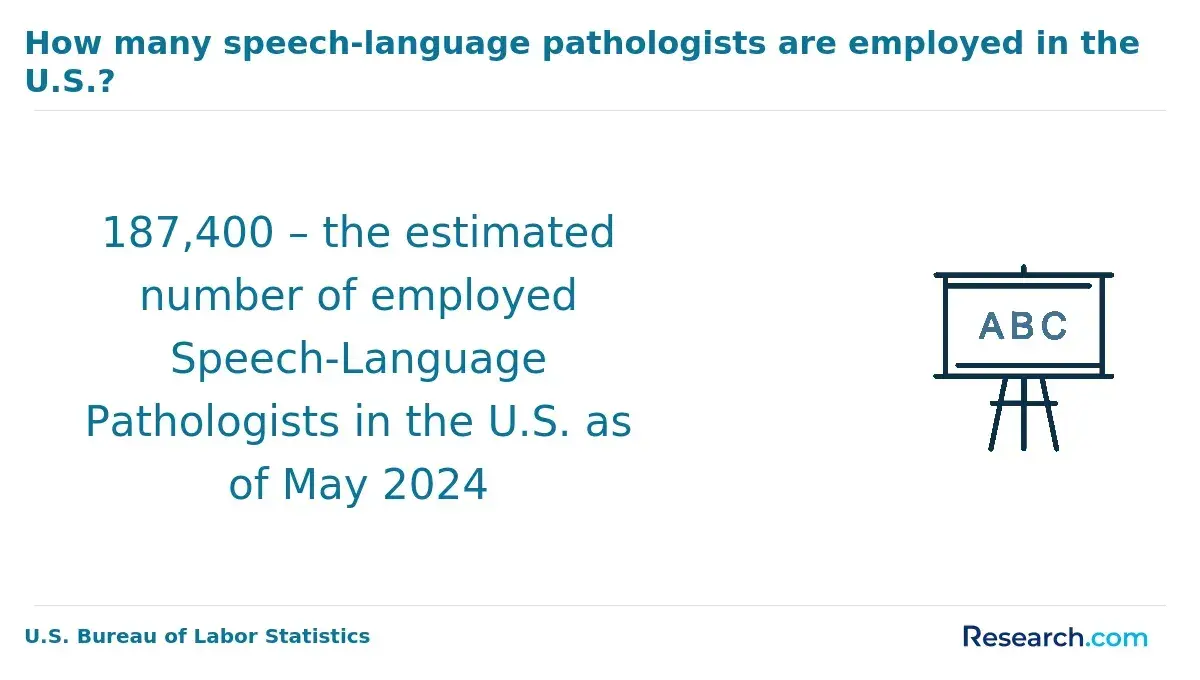
Employment prospects remain strong, with a projected growth rate of 17% through 2035 by the U.S. Bureau of Labor Statistics. Demand is linked to increased needs in aging populations and heightened awareness of speech and language disorders in children. Opportunities exist across schools, healthcare settings, early intervention, skilled nursing, outpatient clinics, telepractice, and private practice.
Many individuals begin in special education, where preschool special education teachers earn an average of $76,420 annually. The highest child care service salaries can reach $101,350. Those figures can help career changers compare current earnings with the cost and potential return of SLP graduate education.
Salary and outlook considerations
- Compare salaries by work setting, not only by job title.
- Research regional salary differences because local funding, cost of living, and demand can change compensation.
- Ask programs about Praxis pass rates, employment outcomes, and clinical placement settings.
- Consider whether you prefer school calendars, medical schedules, private practice flexibility, or specialized populations.
- Account for graduate tuition, fees, unpaid clinical hours, and the time needed to complete licensure steps.
Speech-language pathology can offer strong job growth and meaningful work, but the best choice depends on your preferred population, tolerance for documentation and caseload demands, financial situation, and willingness to complete graduate clinical training.
After completing an accredited speech-language pathology program, new graduates must satisfy certification and state licensure requirements before practicing independently. The exact sequence can vary by state, so students should review licensing board rules before graduation rather than waiting until they receive a job offer.
A common professional goal is the Certificate of Clinical Competence in Speech-Language Pathology (CCC-SLP) from the American Speech-Language-Hearing Association (ASHA). This credential indicates that the clinician has met ASHA’s academic, clinical, examination, and supervised practice standards.
Applicants need to show proof of a master’s or doctoral degree and document supervised clinical preparation. Programs commonly track requirements that include 400 supervised clinical hours, and applicants may encounter references to at least 325 hours in supervised clinical practice. Because hour categories and documentation rules matter, confirm the current requirements with ASHA, your graduate program, and your state licensing board.
Graduates also complete a mentored clinical fellowship, often described as a Clinical Fellowship Year (CFY), lasting about 36 weeks full-time. This period helps new clinicians move from supervised graduate practice to independent professional judgment.
State licensure is mandatory. Most states require graduation from an accredited program, supervised clinical experience, passing the Praxis Examination in Speech-Language Pathology, and an application with required documentation. Some states may also require background checks, jurisprudence exams, school credentials, or continuing education units for license renewal.
In school settings with significant special education demands, additional endorsements or education agency requirements may apply. According to the Annual Disability Statistics Compendium, 87.5% of over 6 million U.S. students under IDEA Part B spend considerable time in regular classrooms, which highlights the importance of SLPs who can collaborate effectively with general educators, special educators, families, and related service providers.
Typical post-graduation steps
- Graduate from an accredited SLP program.
- Document required supervised clinical hours, including requirements such as 400 clinical hours where applicable.
- Complete a mentored clinical fellowship lasting about 36 weeks full-time.
- Pass the Praxis Examination in Speech-Language Pathology.
- Apply for ASHA’s CCC-SLP certification if it aligns with your professional goals and state requirements.
- Apply for state licensure and complete any state-specific checks, forms, fees, or continuing education requirements.
Keep copies of transcripts, clinical hour records, Praxis scores, supervisor verification forms, and fellowship documentation. Missing paperwork is a common reason licensing timelines slow down.
How to choose the best SLP program after special education work?
The best SLP program after special education work is the one that is accredited, fits your prerequisite status, supports clinical placements, prepares you for licensure in your intended state, and matches your career goals. Do not choose based on convenience alone. A flexible format is useful only if the program can still provide the clinical training and licensure preparation you need.
Start with accreditation by the Council on Academic Accreditation in Audiology and Speech-Language Pathology. Accreditation helps confirm that the program meets national standards and is a key factor for certification and licensure eligibility.
Next, review prerequisite policies. If your bachelor’s degree is in special education, ask whether you need leveling courses before admission, whether conditional admission is available, and how long the full plan will take. A program that looks shorter on paper may take longer if prerequisites are separate.
Program features to compare
| Factor | Why it matters | Questions to ask |
| Accreditation | Supports certification and licensure eligibility. | Is the program CAA-accredited? |
| Prerequisite pathway | Determines whether special education graduates can start immediately or need leveling work. | Which courses am I missing, and when can I complete them? |
| Clinical placement support | Clinical hours are essential and can be difficult to arrange independently. | Does the program secure placements, or must students find them? |
| Format | Online, hybrid, and in-person models affect flexibility, travel, and access to supervisors. | Are any campus visits, daytime clinics, or local placement requirements mandatory? |
| Specialization | Your special education background may align with pediatric language, autism spectrum disorders, assistive communication, or school-based practice. | What electives, clinics, or faculty expertise match my goals? |
| Outcomes | Licensure exam performance and employment support affect your transition after graduation. | What are the Praxis pass rates, graduation rates, and job placement outcomes? |
| Cost and schedule | Tuition is only part of the total cost; clinical hours may reduce your ability to work. | What is the total program cost, and how many hours per week should I expect? |
Review the curriculum for electives or clinical experiences in pediatric speech disorders, autism spectrum disorders, augmentative and alternative communication, literacy, dysphagia, or medical speech-language pathology, depending on your goals. Special education professionals often transition naturally into school-based or pediatric roles, but graduate school can also open healthcare and adult-focused pathways.
Evaluate faculty expertise, advising, tutoring, career placement assistance, and support for students who are returning to school while working. Speak with current students and recent graduates to understand workload, clinical placement quality, responsiveness of faculty, and how the program supports licensure paperwork.
Data from Zippia shows the male share of U.S. special education teachers increased to 24.6% in 2021, with unemployment rates below 2% since 2016. For professionals moving from special education into speech pathology, that stability makes it especially important to compare the opportunity cost of leaving or reducing current work against the long-term fit of the SLP career.
Before enrolling, confirm three things in writing: the program is accredited, your planned course sequence can lead to licensure where you intend to practice, and clinical placements are realistic for your location and schedule.
Other Things You Should Know About Speech Pathology
No. Supervised clinical hours must be completed in an ASHA-accredited graduate program or an approved equivalent, under a licensed speech-language pathologist or qualified clinical supervisor. Special education classroom work can strengthen your application, but it does not replace the 400 required supervised hours for ASHA certification.
Yes, speech-language pathologists work in various environments beyond schools, including hospitals, rehabilitation centers, nursing homes, private practices, and research institutions. Their roles differ depending on the setting, with more medically focused treatment in healthcare and developmental or educational support in schools.
In 2027, aspiring speech-language pathologists must obtain a Certificate of Clinical Competence in Speech-Language Pathology (CCC-SLP) from the American Speech-Language-Hearing Association, after completing a master's program and a Clinical Fellowship of 1,260 hours. State-specific licensure may also be required.
- U.S. Bureau of Labor Statistics - Speech-Language Pathologists https://www.bls.gov/ooh/healthcare/speech-language-pathologists.htm
- ASHA EdFind - Accredited Speech-Language Pathology Programs https://find.asha.org/ed/
- ETS Praxis - Speech-Language Pathology (5331) https://praxis.ets.org/test/speech-language-pathology-5331.html
- University of Nebraska at Kearney - Speech-Language Pathology, Master of Science in Education (Online Track) https://www.unk.edu/online/degrees-programs/speech-language-pathology-online.php
- Idaho State University - Master of Science in Speech-Language Pathology (Online/Distance Education) https://www.isu.edu/slp/programs-offered/slp-graduate-program/
- Auburn University, Montgomery - Master of Science in Speech-Language Pathology https://www.aum.edu/degree/ms-speech-language-pathology/
- James Madison University - Master of Science (M.S.) in Speech-Language Pathology (Distance Education / Online) https://www.jmu.edu/chbs/csd/online_ms/index.shtml
- California State University-East Bay - Online Master of Science in Speech-Language Pathology https://ce.csueastbay.edu/programs/speech-language-pathology/