2027 Can You Work Full-Time While Earning an Online SLP Degree?

Co-Founder and Chief Data Scientist

Reviewed by Rhea Paul, PhD
SLP Education & Research Expert
Balancing full-time employment while pursuing an online SLP degree presents significant challenges. Many prospective students worry about managing coursework alongside job responsibilities and personal commitments. Time constraints and program rigor often lead to concerns about academic performance and burnout.
Additionally, online formats may vary in flexibility and support, impacting a student's ability to keep up. Understanding how to navigate these demands is crucial for success.
This article explores strategies for working full-time during an online SLP program, highlighting program features and time management techniques designed to help students achieve their goals without compromising their careers or education.
Key Things You Should Know
- Most accredited online SLP programs in 2026 offer flexible scheduling, enabling students to work full-time while completing coursework and clinical requirements.
- Completion times may extend beyond traditional timelines, with part-time pacing common due to clinical practicum demands and asynchronous class structures.
- The American Speech-Language-Hearing Association reports that over 70% of online SLP students maintain employment during study, balancing professional and academic responsibilities effectively.
Can You Work Full-Time with an Online SLP Degree?
You can work full-time while earning an online speech pathology degree by choosing programs designed with flexibility for busy professionals. Many accredited online options offer asynchronous lectures, allowing students to balance full-time work and online speech pathology studies by completing coursework during evenings or weekends.
Practical fieldwork remains a crucial part of speech pathology programs and often requires scheduled in-person or virtual clinical hours. Some schools coordinate with local clinics or schools to enable students to complete these hours nearby, which can help manage clinical demands alongside employment.
This might involve negotiating flexible work hours or shifting to part-time employment during clinical rotations.
Students juggling jobs and studies benefit from effective strategies such as fixed weekly schedules, employer support like tuition assistance or flexible hours, and prioritizing time for clinical practica. Those with family obligations may need additional support systems or to reduce work hours during intensive academic periods.
The strong job market reflects this balance, with the Bureau of Labor Statistics projecting a 15% increase in speech-language pathologist jobs over a decade, adding about 28,200 new positions annually.
For those exploring affordable pathways to advance their qualifications, consider reviewing online SLP master programs tailored to working adults' needs, which can help streamline career growth while managing full-time commitments.
What Are the Best Online SLP Degree Programs?
Top accredited online speech pathology degree programs in the US offer a blend of academic rigor and flexible scheduling suitable for working professionals.
Baylor University's online and residential communication sciences and disorders (CSD) master's program is notable, with an 89.63% Praxis pass rate and a 96.8% employment rate among graduates from 2020 to 2023.
These outcomes reflect strong alignment with licensure requirements and employer expectations.
Key features of the best online SLP degree programs include:
- Accreditation by the Council on Academic Accreditation in Audiology and Speech-Language Pathology (CAA) to ensure program quality and certification eligibility.
- Hybrid models combine on-campus practicums with comprehensive online coursework, accommodating professionals balancing full-time work.
- Experienced faculty engaged in clinical practice and research, offering mentorship and current training.
- Robust clinical placement support networks are essential for supervised experience and licensure preparation.
For individuals seeking flexibility, programs with asynchronous lectures and adaptable practicum scheduling are critical. Employers and students should carefully evaluate program formats in relation to career and lifestyle requirements.
Other respected institutions offering accredited online SLP degrees include the University of Cincinnati, the University of North Carolina Greensboro, and Nova Southeastern University. These options vary in cost, pacing, and clinical placement approaches, making personal assessment vital.
Prospective students should prioritize programs with proven high licensure exam pass rates, strong employment outcomes, and adaptable designs suited to full-time commitments. Considering a speech pathologist salary during career planning can also guide choices.
How Long Does an Online SLP Degree Take?
Most online speech pathology degree programs require about two to three years of study beyond a bachelor's degree. A master's in speech pathology, often the entry-level credential, typically takes 24 to 36 months full-time. Accelerated tracks can reduce this to roughly two years but usually involve a heavier course load.
For working professionals, part-time options are common, extending the program length to four or more years. This arrangement helps students balance studies alongside employment or family duties, which is key for those focused on online speech pathology degree duration for working professionals.
The clinical practicum and supervised fellowship hours necessary for certification add hands-on training, integrated into the timeline but requiring flexible scheduling to fit healthcare or educational placements.
Students aiming to earn a speech pathology degree while working full time should carefully evaluate whether they can manage coursework, clinical hours, and exams simultaneously, as this can be highly demanding.
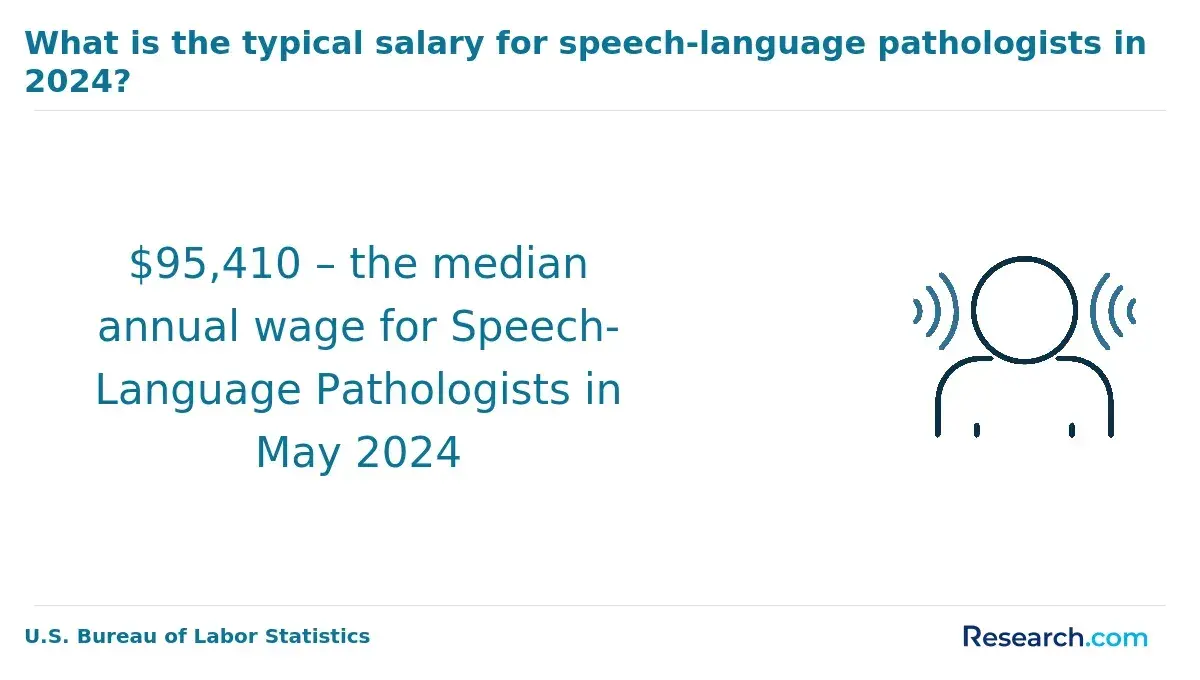
The U.S. Bureau of Labor Statistics reports a median salary of $97,870 annually for speech-language pathologists, highlighting the value of completing this rigorous training. For more insight into program options, consider exploring 5-year speech pathology programs, which may offer balanced pathways to certification for busy students.
Admission requirements for online SLP programs typically include a bachelor's degree from an accredited institution, preferably in communication sciences and disorders or a related field. A minimum GPA of around 3.0 is commonly expected, alongside prerequisite coursework in anatomy, physiology, linguistics, and psychology if the undergraduate degree is unrelated.
Standardized tests like the GRE may be required but are increasingly waived or optional due to evolving admission policies. Letters of recommendation, usually two or three from academic or professional sources, help demonstrate academic readiness and interpersonal skills.
Personal statements describing motivation, career goals, and relevant experiences are also standard.
Evidence of clinical observation or volunteer hours, typically between 25 and 50, is often required to confirm familiarity with the profession. Applicants must meet technical standards showing skills necessary for clinical practice, including communication and critical thinking.
Background checks and immunization records are frequently mandatory because of clinical placements in healthcare or educational settings.
Online programs often offer flexible start dates and part-time options for working professionals, though synchronous sessions or on-site practicums must be completed.
Meeting these requirements is essential for enrolling in an online speech pathology degree and aligning study with work commitments. For those interested in exploring easier pathways, some of the easiest SLP programs to get into can help simplify admission steps.
SLPs working in skilled nursing facilities earn the highest average salary at $113,630, exceeding figures in schools or hospitals.
CAA accreditation plays a critical role in ensuring an online slp degree is recognized by employers and licensure boards. The Council on Academic Accreditation (CAA) establishes rigorous standards that maintain clinical competence and academic quality in SLP education.
Graduating from a CAA-accredited program is generally required to pursue the clinical fellowship and obtain the Certificate of Clinical Competence (CCC) through ASHA, both essential for career advancement and professional practice.
Employers and state licensure agencies often require degrees from accredited programs. Without CAA accreditation, graduates may face restrictions on working full-time or part-time in many settings such as schools and telepractice.
School districts and telepractice providers typically require the CCC credential, which depends on graduation from an accredited program, ensuring standardized training and job readiness.
Employment data show that only 53.8% of SLPs in telepractice offices hold full-time roles compared to 87% in administrative offices, highlighting how accreditation influences job stability and opportunities in schools, hospitals, and clinics.
Accreditation status also impacts eligibility for federal financial aid and access to professional resources.
Prospective students should confirm the CAA accreditation of online programs before enrollment to avoid future licensure and employment barriers. Choosing a CAA-accredited program secures both professional certification pathways and greater career flexibility across clinical and educational environments.
The online SLP degree curriculum provides essential foundational knowledge, practical skills, and clinical training necessary for certification and professional success. Students study the anatomy and physiology of speech and hearing mechanisms, language development, phonetics, audiology, and the neurological bases of communication disorders.
Coursework emphasizes evidence-based treatment of speech, language, voice, fluency, and swallowing disorders throughout the lifespan.
Clinical experience is gained through supervised practicums or virtual simulations that adhere to American Speech-Language-Hearing Association (ASHA) standards. These experiences develop assessment, diagnosis, and intervention skills applicable in schools, hospitals, and clinics, addressing cases like pediatric speech delays or adult brain injury rehabilitation.
Research methods and professional ethics prepare students for ongoing learning and regulatory compliance. Advanced topics include augmentative and alternative communication (AAC), bilingual communication challenges, and counseling techniques.
Regional salary variations reflect the value of diverse clinical skills. California offers the highest median SLP salary at $116,000, over 20% above the national average. Flexible online programs accommodate working professionals with asynchronous content, though clinical hours require coordination with employers to maintain quality.
Online speech pathology programs generally cost between $20,000 and $60,000 in total tuition, varying by institution and format. Public universities typically offer lower rates for in-state students, often $400 to $700 per credit hour, while private schools can charge $800 to over $1,200.
For example, a 40-credit online master's program may cost around $25,000 at a public university but exceed $50,000 at a private one.
Additional costs include technology fees, course materials, and clinical placement coordination. Some programs require travel for practicum, adding transportation and lodging expenses. Students should also budget for books, software, and Praxis exam fees, necessary for certification.
Financial aid options like federal loans, grants, scholarships, and employer tuition reimbursement can help reduce these expenses. The flexible nature of online programs allows many to work full-time while studying.
The demand for qualified speech-language pathologists remains strong. Data from the 46th Annual Report to Congress shows 78,211 full-time equivalent SLPs employed in U.S. public schools, reflecting steady job prospects. When evaluating programs, consider accreditation, graduation rates, and job placement, as these factors impact certification eligibility.
Graduates with an online speech pathology degree often work as licensed speech-language pathologists in various settings such as schools, healthcare facilities, rehabilitation centers, and private practices. In schools, they primarily diagnose and treat children's communication disorders while collaborating with educators and families.
Within healthcare, speech pathologists address speech and swallowing difficulties linked to strokes, injuries, or neurological conditions, commonly working in hospitals, outpatient clinics, and nursing homes.
Specializations include early intervention for infants and toddlers, focusing on developmental delays and autism spectrum disorders. Some professionals advance into research, clinical education, or administrative roles within healthcare or educational institutions.
Most online programs require clinical hours for state licensure, with some, like CSU Northridge, offering flexible part-time schedules that allow working students to complete supervised internship hours over three years. This flexibility supports balancing career and licensure requirements.
Career progression often involves certification in specialty areas such as fluency disorders, augmentative alternative communication (AAC), or voice therapy. Preparing for licensure exams like the Praxis is essential to meet state regulations. Overall, online speech pathology degrees equip graduates with the practical experience and clinical skills necessary for these demanding career paths.
The salary of speech-language pathologists (SLPs) varies widely based on experience, setting, and location. According to the ASHA 2024 Schools Survey, full-time school-based SLPs working in combination settings earn an entry-level hourly wage at the 25th percentile of $45.41.
These figures reflect starting pay, with seasoned professionals, especially those in private practice or healthcare, often earning above $50 per hour.
Higher wages tend to be found in hospital or clinical settings compared to exclusively school-based roles. Advanced certifications and specializations—such as pediatric or neurogenic disorders—also contribute to increased earning potential. Factors influencing pay include geographic region, current demand, and work environment.
The job outlook for SLPs remains robust, with the U.S. Bureau of Labor Statistics projecting a growth rate of 17% through 2035, much faster than average. This demand is driven by aging populations requiring therapy and heightened awareness of early intervention for speech and language disorders.
Professionals pursuing full-time study while working should consider that entry-level wages usually start near $45 per hour. Many employers provide flexible scheduling and tuition assistance, supporting education without major income loss. Focus on careers in settings with stable demand and wage growth potential to maximize your investment.
- Entry-level hourly wage: approximately $45.41
- Experienced hourly wage: often over $50
- Projected job growth: 21% through 2031
What SLP Licensure Steps Are Required Post-Degree?
After earning an online slp degree, graduates must complete a clinical fellowship (CF) lasting about 36 weeks and totaling 1,260 hours under the supervision of a licensed speech-language pathologist. This hands-on training is essential for state licensure and American Speech-Language-Hearing Association (ASHA) certification.
Following the CF, passing the national Praxis Examination in speech-language pathology is required. This test evaluates the core competencies necessary for independent professional practice in the field.
Licensing requirements differ across states but typically include:
- Master's or doctoral degree from an accredited institution
- Completion of the clinical fellowship
- Passing the Praxis exam
- Additional state-specific mandates such as jurisprudence exams or fingerprint background checks
Those working full-time while studying should prepare for the demanding clinical fellowship phase after graduation, as online coursework alone does not meet licensure criteria. Employer support and careful planning can ease this transition.
A valid state license combined with ASHA certification broadens career opportunities and correlates with competitive salaries. The top 10% of speech-language pathologists earn over $137,620 annually, reflecting experience and employment in high-demand environments like hospitals and private clinics.
Other Things You Should Know About Speech Pathology
In 2027, balancing full-time work with an online SLP degree is feasible but challenging. Success typically requires excellent time management, strong organizational skills, and effective communication with both employers and academic advisors to ensure a flexible and accommodating schedule.
Yes, speech pathologists can work in a variety of environments beyond schools and hospitals, including rehabilitation centers, private clinics, nursing homes, and research facilities. Some also find roles in corporate settings, working on communication technology or counseling. The diversity in work settings allows professionals to specialize according to their interests and expertise.
Most SLP programs require about 400 supervised clinical hours, with at least 25 observation hours and roughly 375 direct practicum hours. Students must complete these placements in approved settings under qualified supervision before graduation and later follow the state licensing board and ASHA certification rules.
Speech pathologists diagnose and treat a wide range of communication and swallowing disorders. These include articulation difficulties, stuttering, voice disorders, language delays, aphasia, and dysphagia. They work with individuals who may have congenital conditions, injuries, or neurological disorders affecting speech and language function.
- U.S. Bureau of Labor Statistics - Speech-Language Pathologists https://www.bls.gov/ooh/healthcare/speech-language-pathologists.htm
- ASHA EdFind - Accredited Speech-Language Pathology Programs https://find.asha.org/ed/
- Audiology and Speech-Language Pathology Interstate Compact https://aslpcompact.com/compact-map/
- University of Scranton - Master of Science (M.S.) in Speech-Language Pathology https://www.scranton.edu/academics/pcps/health-and-human-performance/programs/speech-language-pathology/index.shtml
- University of North Carolina at Greensboro - Speech-Language Pathology, M.A. (Online) https://csd.uncg.edu/graduate/masters-of-arts-online/
- California State University-Northridge - Master of Science in Communicative Disorders (Online) https://tsengcollege.csun.edu/programs/CDS
- Pepperdine University - Master of Science in Speech-Language Pathology https://healthscience.pepperdine.edu/online-masters-in-speech-language-pathology/
- University of Nebraska at Kearney - Speech-Language Pathology, Master of Science in Education (Online Track) https://www.unk.edu/online/degrees-programs/speech-language-pathology-online.php