2027 Child and Adolescent Psychology Careers: Guide to Career Paths, Options & Salary

Co-Founder and Chief Data Scientist
A career in child and adolescent psychology can lead to work with children, teens, families, schools, courts, clinics, hospitals, research teams, and community programs. The challenge is that the path is not always straightforward: some roles require a doctorate and licensure, while others are available with an associate, bachelor’s, or master’s degree in psychology, counseling, social work, education, or a related field.
This guide explains what child and adolescent psychology careers involve, which degree paths match different goals, what jobs may be available at each education level, how licensing and certification work, and how to compare career options before investing years of study and training. It is designed for students, career changers, and working professionals who want a practical roadmap rather than a vague overview.
Quick answer: Is child and adolescent psychology a good career path?
Child and adolescent psychology can be a strong career path for people who want to support young people’s mental health, development, learning, and behavior. According to Bureau of Labor Statistics data cited for psychologists, employment opportunities are expected to grow by 6% through 2032, with about 12,800 job openings projected annually. Pay can also be competitive: child and adolescent psychologists can earn a median salary of $117,750 per year, while California is listed as the highest-paying state for psychologists, with an average annual salary of $134,360.
The best path depends on the role you want. Licensed psychologist roles usually require advanced graduate education, supervised clinical experience, exams, and state licensure. However, related careers in counseling, school support, behavioral health, social services, research, and youth programs may be available with lower levels of education, depending on state rules and employer requirements.
Key facts to know before choosing this field
- Psychology careers are projected to grow by 6% through 2032, which points to continued demand for trained professionals.
- About 12,800 psychology job openings are projected each year, creating opportunities across clinical, school, research, government, and community settings.
- Child and adolescent psychologists can earn a median salary of $117,750 per year, though earnings vary by role, state, licensure, employer, and experience.
- The federal, state, and local government sectors employ the largest number of psychologists, with around 8,360 professionals working in these areas.
- California is identified as the highest-paying state for psychologists, with an average annual salary of $134,360.
- Why choose child and adolescent psychology?
- What education do you need for child and adolescent psychology careers?
- What does the job market look like?
- What skills matter most in this field?
- How do you start a career in child and adolescent psychology?
- How can you move into advanced roles?
- What alternative career paths are available?
- How does interdisciplinary teamwork improve outcomes?
- Which professional organizations support networking?
- Why does mentorship matter?
- How do regulation and funding affect career options?
- What ethical issues are unique when working with minors?
- Can you enter the field through non-traditional routes?
- How does research shape child and adolescent psychology?
- Can forensic psychology training strengthen practice?
- How can you build a private practice?
- How important is further education?
- Can accelerated master’s programs shorten the timeline?
- What challenges should you expect?
- How do internships and fieldwork prepare you?
- How is technology changing this career?
What Graduates Often Say About Child and Adolescent Psychology Careers
Many graduates describe the field as meaningful because it connects developmental knowledge with direct support for children and families. They often report that coursework in child development, assessment, and intervention helps them understand how early experiences shape behavior and mental health. - Sandra
Others emphasize that the field helped them discover a clear professional purpose: helping young people manage stress, relationships, school pressures, trauma, and emotional challenges. Counseling and youth-focused roles can be especially rewarding for professionals who value long-term client progress. - Adam
Graduates who move into therapy or research roles often point to the importance of evidence-based practice. They learn to connect research findings with real-world treatment planning, which can make their work more precise and effective. - Lorena
Why pursue a child and adolescent psychology career?
Child and adolescent psychology focuses on the emotional, cognitive, social, behavioral, and developmental needs of young people. Professionals in this area may assess learning and behavioral concerns, support children experiencing anxiety or depression, help families manage conflict, design school-based interventions, contribute to research, or provide therapy under the appropriate license.
This career can be a good fit if you want work that combines human development, mental health, family systems, education, and advocacy. Children and adolescents often need support from several adults and systems at once, so psychologists and related professionals may work with parents, teachers, pediatricians, social workers, counselors, and community organizations. As UMass Global notes, child psychologists can play an important role in communities by supporting young people and the families around them.
Who is this career best for?
- Students who are interested in child development, behavior, learning, mental health, and family dynamics.
- Professionals who can communicate clearly with children, teens, parents, teachers, and clinical teams.
- People who are patient, emotionally steady, and comfortable working with complex family or school situations.
- Future clinicians who are willing to complete graduate education, supervised practice, licensure requirements, and continuing education.
- Research-oriented students who want to study youth mental health, developmental disorders, learning, prevention, or intervention methods.
Who may want to consider another path?
- People who want to become licensed quickly may find the psychologist pathway too long, especially if doctoral training is required for their target role.
- Students who prefer not to work with families, schools, or systems may be better suited to adult-focused psychology or another helping profession.
- Those who are uncomfortable with mandated reporting, child welfare concerns, trauma exposure, or high-stakes ethical decisions should carefully evaluate the emotional demands of the field.
- Applicants seeking guaranteed salary outcomes should remember that pay depends on education, licensure, location, employer type, and specialization.
What are the key educational requirements for pursuing a career in child and adolescent psychology?
The education path depends on whether you want to become a licensed psychologist, counselor, school-based professional, researcher, behavioral specialist, or social services practitioner. In general, the higher your desired level of clinical independence, the more education, supervised experience, and licensure you will need.
| Education level | What it can prepare you for | Important considerations |
| Associate degree | Entry-level childcare, youth support, behavioral health technician, or assistant roles. | Usually not enough for independent counseling or psychologist licensure, but it can be a lower-cost starting point. |
| Bachelor’s degree | Case management, youth services, behavioral support, research assistant roles, and preparation for graduate school. | Many clinical roles require graduate education, so students should plan early for prerequisites, internships, and strong references. |
| Master’s degree | School psychology, counseling, research, clinical supervision, or specialized behavioral roles, depending on program type and state rules. | Licensure titles and scopes of practice vary. Confirm whether the program meets your state’s requirements before enrolling. |
| Doctorate | Licensed psychologist roles, clinical leadership, university teaching, advanced assessment, research, and private practice. | Typically requires intensive coursework, supervised clinical training, examinations, and continuing education after licensure. |
- Bachelor’s degree in psychology or a related field. This is commonly the first step. Students usually study general psychology, child development, abnormal psychology, research methods, statistics, and behavioral science.
- Master’s degree in child and adolescent psychology or a related specialization. A graduate program can provide more focused training in assessment, development, intervention, counseling methods, and applied practice with children and teens.
- Clinical experience, practicum, or internship. Hands-on training matters because classroom knowledge alone is not enough. Fieldwork may take place in schools, clinics, community agencies, hospitals, or youth-serving organizations.
- Licensure or certification. Requirements vary by state and role. They often include an approved degree, supervised hours, an examination, background checks, and continuing education. Always verify requirements with your state licensing board before choosing a program.
How to choose the right degree path
- Decide whether you want to provide therapy, conduct assessments, work in schools, do research, manage programs, or support families through social services.
- Check the credential required in the state where you plan to work.
- Confirm that the program’s curriculum, practicum, and internship structure align with your target license or certification.
- Compare total cost, transfer credit policies, field placement support, faculty expertise, and student outcomes.
- If you need flexibility, review accredited online options such as the best online psychology degree programs, and compare state-specific options such as the best online psychology degree in Texas.
What is the job market for child and adolescent psychologists?
The broader psychology labor market is expected to grow by 6% through 2032, with around 12,800 job openings each year. Within child and adolescent psychology, demand is influenced by several factors: rising attention to youth mental health, school-based support needs, early intervention, family stressors, and the continuing effects of COVID-19 on children’s well-being.
Jobs are not limited to private therapy offices. Child and adolescent psychology training can be useful in schools, pediatric hospitals, behavioral health clinics, nonprofit agencies, universities, government programs, residential treatment centers, research organizations, and community mental health settings. Related roles in school counseling, career advising, home health, personal care, and behavioral health may also appeal to students who want youth-focused work but do not plan to become licensed psychologists.
Industries and settings that commonly hire youth-focused psychology professionals
- Schools and districts: assessment, learning support, intervention planning, crisis response, and collaboration with educators.
- Clinics and hospitals: therapy, diagnostic assessment, family support, interdisciplinary care, and treatment planning.
- Government agencies: child welfare, public health, juvenile justice, disability services, and community programs.
- Private practice: therapy, assessment, consultation, and parent support, usually after meeting licensure requirements.
- Research and universities: developmental studies, intervention research, teaching, data analysis, and publication.
- Nonprofits: outreach, prevention programs, crisis services, advocacy, and services for underserved families.
If you are comparing specializations, you may also want to explore adjacent fields such as sports psychology or legal-focused practice. For example, students often ask, Is forensic psychology in demand? The answer depends on the role, but understanding related fields can help you choose a specialization with the right mix of clinical, research, and systems work.
What skills are necessary for child and adolescent psychologists?
Child and adolescent psychology requires more than an interest in helping children. Professionals must combine technical assessment skills, clinical judgment, communication, cultural awareness, ethical decision-making, and the ability to work with multiple stakeholders.
| Skill area | Why it matters | How to build it |
| Assessment and evaluation | Professionals must understand behavior, emotion, development, cognition, and family or school context. | Take assessment courses, practice observation, learn validated tools, and seek supervised fieldwork. |
| Treatment planning | Children and teens need developmentally appropriate interventions tailored to symptoms, environment, and family needs. | Study evidence-based therapies, case formulation, family systems, and progress monitoring. |
| Research and data interpretation | Evidence-based practice depends on reading studies, evaluating outcomes, and applying current findings responsibly. | Build skills in research methods, statistics, literature review, and ethical research with minors. |
| Empathy and emotional regulation | Young clients may be anxious, guarded, impulsive, traumatized, or unable to explain their emotions clearly. | Use supervision, reflective practice, trauma-informed training, and self-care routines. |
| Communication | Psychologists must explain complex issues to children, parents, teachers, physicians, and agencies in clear language. | Practice writing reports, leading meetings, giving feedback, and adapting language by developmental stage. |
| Critical thinking | Symptoms may reflect mental health conditions, learning issues, family stress, trauma, medical concerns, or environmental pressures. | Use case consultation, differential diagnosis training, and structured decision-making models. |
Soft skills that can make or break your success
- Patience: Progress with children and teens may be slow, uneven, or affected by family and school conditions.
- Flexibility: A strategy that works for one child may fail with another, even when symptoms look similar.
- Professional boundaries: Youth-focused work often involves parents, teachers, and agencies, so clear roles are essential.
- Cultural humility: Family beliefs, language, identity, community context, and access to care all affect treatment.
- Resilience: The work can involve trauma, conflict, safety concerns, and emotionally difficult conversations.
How to start a career in child and adolescent psychology?
Start by matching your education plan to a specific career goal. “Child psychology” is not one single job. It can lead to clinical care, school services, counseling, social work, research, advocacy, human resources, behavioral intervention, or academic work. If you are choosing between bachelor’s programs, the distinction between a BA and BS can matter for course emphasis; Research.com’s guide to a BA vs BS degree in psychology can help you compare options.
| Career track | Clinical and counseling path | Research and academic path | Social work path | Human resource path |
| Main focus | Providing therapy and counseling services to patients. | Conducting research and teaching in the field of psychology. | Supporting children, families, and communities through social services and advocacy. | Using psychological principles to address workplace issues, especially employee well-being. |
| Entry Level Jobs | Mental Health Counselor ($49,471 per year) | Research Assistant ($42,896 per year) | Case Management Assistant ($39,145 per year) | Human Resource Specialist ($53,143 per year) |
| Junior Management Jobs | Clinical Supervisor ($61,615 per year) | Research Associate ($60,166 per year) | Case Worker ($41,459 per year) | Human Resource Manager ($80,442 per year) |
| Middle Management Jobs | Clinical Psychologist ($97,659 per year) | Senior Research Associate ($72,618 per year) | Social Work Supervisor ($62,939 per year) | Human Resource Director ($100,601 per year) |
| Senior Management Jobs | Director of Mental Health Services ($140,300 per year) | Senior Research manager ($105,259 per year) | Social Services Executive Director ($136,789 per year) | Human Resource Vice President ($278,003 per year) |
What can I do with an Associate’s Degree in Child and Adolescent Psychology?
Childcare Worker
Childcare workers support children in daycare centers, schools, homes, and similar settings. Their responsibilities may include supervising activities, helping create safe routines, supporting early learning, and assisting with meals or daily care.
Median salary: $31,869 per year
Youth Worker
Youth workers provide mentoring, basic support, advocacy, and programming for young people. They may help run after-school activities, coordinate recreational programs, connect youth with resources, and support teens facing personal or social challenges.
Median salary: $28,415 per year
Behavioral Health Technician
Behavioral health technicians assist licensed clinicians and treatment teams in settings such as hospitals, clinics, and residential programs. They may observe behavior, document progress, support treatment plans, and help clients follow structured routines.
Median salary: $39,200 per year
What can I do with a Bachelor’s Degree in Child and Adolescent Psychology?
A bachelor’s degree can open the door to youth services, school support, case management, behavioral health, and research assistant roles. It can also prepare you for graduate study if you want to become a counselor, school psychologist, clinical psychologist, or researcher.
School Guidance Counselor
School guidance counselors support students’ academic, social, and personal development. They may help students plan coursework, address school concerns, prepare for college applications, and connect with additional services when needed.
Median salary: $60,140 per year
Social Worker
Social workers help individuals and families address social, emotional, practical, and financial challenges. Their work may include counseling, advocacy, resource coordination, crisis support, and family services.
Median salary: $72,037 per year
Mental Health Counselor
Mental health counselors support people experiencing concerns such as anxiety, depression, addiction, stress, or emotional distress. Depending on state rules and employer requirements, roles may require graduate education and licensure.
Median salary: $49,471 per year
Practical steps for getting started
- Take introductory psychology, child development, statistics, and research methods early.
- Volunteer or work in youth-serving settings such as schools, camps, clinics, shelters, after-school programs, or crisis lines.
- Ask faculty about research assistant opportunities related to child development, education, trauma, neurodevelopment, or family systems.
- Keep a record of supervised hours, training, certifications, and field experiences.
- Before graduate school, confirm whether your target career requires counseling licensure, school psychology certification, social work licensure, or psychologist licensure.
How can I advance my career in child and adolescent psychology?
Advancement usually comes from a combination of graduate education, supervised experience, licensure, specialization, leadership experience, and professional reputation. A master’s degree may qualify you for some counseling, school, research, or supervisory roles, while a doctorate is often required for licensed psychologist positions, university teaching, advanced assessment, and higher-level clinical leadership.
If your goal is a specialized youth-focused career, compare programs at child psychology colleges and review flexible options such as online graduate degrees in psychology. Working professionals should look closely at practicum requirements, internship placement support, state licensure alignment, and whether online coursework fits their schedule.
What can I do with a Master’s in Child and Adolescent Psychology?
School Psychologist
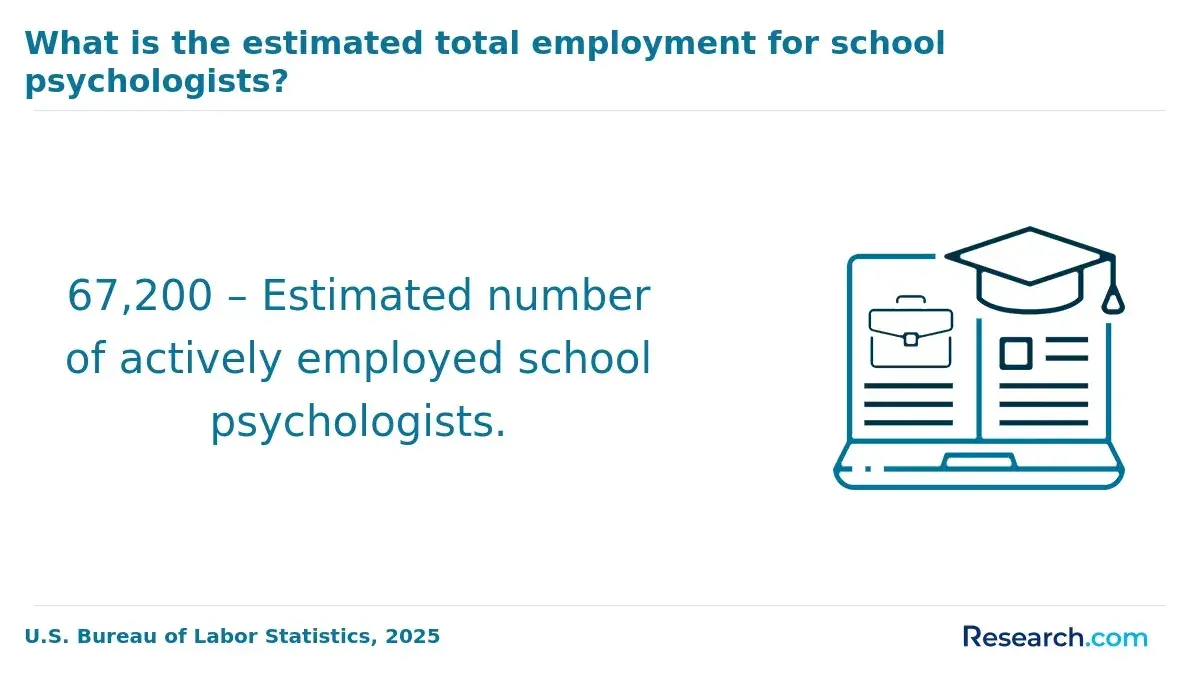
School psychologists support students with learning, behavioral, emotional, and social needs. They may conduct assessments, consult with teachers and parents, help design interventions, and respond to school-based crises.
Median Salary: $84,940 per year
Research Associate
Research associates help design, conduct, manage, and analyze studies in child and adolescent psychology. They may work in universities, government agencies, healthcare organizations, or private research settings.
Median Salary: $60,166 per year
Clinical Supervisor
Clinical supervisors guide the work of counselors, social workers, or other mental health professionals. They may review cases, support documentation, provide training, coordinate care, and monitor service quality.
Median Salary: $61,615 per year
What kind of job can I get with a Doctorate in Child and Adolescent Psychology?
University Professor
University professors teach psychology courses, conduct research, publish scholarly work, mentor students, and may supervise graduate trainees in research or applied settings.
Median Salary: $80,840 per year
Clinical Psychologist
Clinical psychologists assess, diagnose, and treat emotional, behavioral, and mental health disorders in children and adolescents using appropriate therapeutic and assessment methods.
Median Salary: $97,659 per year
Director of Mental Health Services
Directors of mental health services oversee programs, staff, budgets, clinical quality, and service delivery for youth-focused mental health programs in schools, hospitals, clinics, agencies, or community organizations.
Median Salary: $140,300 per year
Which certification is best for Child and Adolescent Psychology?
Certification is not a substitute for required state licensure, but it can signal additional training in a focused area. Certifications may be useful for professionals who want to specialize in trauma, counseling, autism support, psychiatric care, or advanced clinical practice. The American Board of Professional Psychology (ABPP) reports that about 4% (4,400) of licensed psychologists in the U.S. were board-certified, including clinical child and adolescent psychologists.
| Certification | Best suited for | Decision tip |
| Certified Child and Adolescent Trauma Professional (CCATP) | Professionals who work with trauma-exposed children or adolescents. | Choose this if trauma-informed care is central to your planned practice. |
| National Certified Counselor (NCC) | Counselors who want a recognized professional credential. | Confirm how it relates to your state counseling license and employer expectations. |
| Certified Autism Specialist (CAS) | Professionals who support autistic children, adolescents, and families. | Look for programs that include evidence-based practices and practical application. |
| Psychiatric Technician Certification | Behavioral health workers in clinical or residential settings. | Useful for gaining structured experience before or during further education. |
If you are comparing credentials, start with your desired job title. Then check whether employers require a license, board certification, state credential, or specialized continuing education. Research.com’s broader guide to a psychologist career can help you compare psychology specializations and advancement options.
What are the alternative career options for child and adolescent psychologists?
Not every student who studies child and adolescent psychology becomes a licensed psychologist. Some use the training in education, counseling, social work, research, advocacy, behavior analysis, nonprofit leadership, or consulting. These alternatives may require different credentials, but they can still involve meaningful work with children and families.
- School counseling. Professionals help students manage academic, emotional, social, and planning-related concerns in school environments.
- Behavioral therapy. Specialists support behavior change through structured interventions, reinforcement strategies, and skill-building plans.
- Research and academia. Researchers study development, mental health, learning, risk factors, resilience, intervention outcomes, and prevention strategies.
- Mental health advocacy. Advocates work to improve awareness, access, funding, policy, and resources for children and teens.
- Nonprofit work. Youth-serving organizations may hire professionals to deliver programs, coordinate services, support families, and reach underserved communities.
- Consultation and training. Experienced professionals may train educators, parents, agencies, or healthcare teams on youth mental health and development.
- Community outreach. Outreach roles may involve workshops, psychoeducation, support groups, and public awareness efforts.
- Crisis intervention. Crisis-focused professionals provide immediate support after traumatic events, safety concerns, disasters, or acute mental health episodes.
How to decide between clinical and non-clinical paths
| If you want... | Consider... | Why it may fit |
| Direct therapy with children and teens | Clinical psychology, counseling, social work, or marriage and family therapy | These paths focus on assessment, treatment, and ongoing client care. |
| School-based support | School psychology, school counseling, special education services | These roles connect mental health, learning, behavior, and academic success. |
| Data, studies, and evidence-building | Research assistant, research associate, doctoral research, university work | These paths influence practice through studies, evaluation, and publication. |
| Community-level impact | Nonprofit programs, advocacy, public health, youth services | These roles address access, prevention, education, and service coordination. |
| Legal or child safety contexts | Forensic psychology, child welfare, juvenile justice consulting | These roles may involve risk assessment, court-related work, and multidisciplinary teams. |
How does interdisciplinary collaboration enhance outcomes in child and adolescent psychology?
Children and teens do not live in clinical settings alone. Their mental health is shaped by home life, school experiences, physical health, peer relationships, culture, trauma history, community resources, and access to care. That is why youth-focused professionals often work across disciplines.
Collaboration with educators can help translate assessment findings into classroom supports. Work with social workers can address housing, family stress, child welfare, and resource access. Coordination with pediatricians or psychiatrists can clarify medical concerns, medication questions, developmental issues, or co-occurring conditions. When professionals share information ethically and appropriately, care becomes more consistent across the child’s life.
Interdisciplinary work also expands career options. A professional with child psychology training may contribute to school teams, pediatric care, social service agencies, forensic evaluations, or legal advocacy. Students who are interested in legal contexts may want to compare child-focused training with affordable forensic psychology masters programs online to understand how forensic coursework can complement youth mental health practice.
What professional organizations are beneficial for networking in child and adolescent psychology?
Professional organizations can help students and practitioners find conferences, journals, continuing education, job boards, mentoring, ethics resources, and specialty communities. They are especially useful in a field where licensing rules, evidence-based practices, and school or healthcare policies continue to evolve.
- American Psychological Association (APA). APA offers resources, publications, conferences, professional guidance, and networking opportunities for psychologists, including those focused on children and adolescents.
- Society of Clinical Child and Adolescent Psychology (SCCAP). SCCAP supports clinical science, practice, education, and professional development related to children, adolescents, and families.
- Association for Child and Adolescent Counseling (ACAC). ACAC supports counselors who work with young people through professional development, advocacy, and field-specific resources.
- National Association of School Psychologists (NASP). NASP provides resources, standards, advocacy, and networking for school psychologists and graduate students.
- American Academy of Child and Adolescent Psychiatry (AACAP). AACAP supports psychiatrists and trainees focused on child and adolescent mental health.
How to use professional organizations strategically
- Join as a student member if discounted memberships are available.
- Attend webinars or conferences tied to your intended specialty.
- Look for mentorship programs, listservs, and early-career communities.
- Use job boards to learn what employers actually require.
- Review ethics guidance and continuing education options before entering supervised practice.
What is the role of mentorship in child and adolescent psychology careers?
Mentorship can shorten the learning curve in a field where judgment matters. A strong mentor can help you choose graduate programs, prepare for licensure, handle complex cases appropriately, develop research interests, understand documentation standards, and avoid common career mistakes. Mentors may be faculty members, clinical supervisors, licensed psychologists, school-based professionals, researchers, or senior colleagues.
Mentorship is especially valuable when you are deciding between related child psychology careers. A mentor can explain what daily work is really like in schools, clinics, hospitals, private practice, research labs, or community agencies.
How do regulatory and financial factors influence career opportunities in child and adolescent psychology?
Regulation and funding shape what services can be offered, who can provide them, how they are billed, and which jobs employers can support. Licensing requirements, telehealth rules, insurance reimbursement, school funding, public mental health budgets, and documentation standards can all affect career options.
Before choosing a program or opening a practice, review your state licensing board, insurance requirements, supervised hour rules, and telehealth policies. Cost also matters. Graduate education can be expensive, so students should compare tuition, fees, field placement support, employer tuition assistance, transfer policies, and flexible options such as accelerated psychology masters programs.
What ethical considerations are unique to working with children and adolescents in a psychological context?
Ethics are more complex when the client is a minor. Children and teens have privacy interests, but parents or guardians often have legal rights and responsibilities. Professionals must also consider safety, mandatory reporting, developmental ability, cultural context, school involvement, and informed assent.
- Confidentiality and privacy. Professionals must protect the young person’s information while understanding when safety concerns require disclosure.
- Informed consent and assent. Parents or guardians may provide consent, but children and teens should still receive age-appropriate explanations and opportunities to participate in decisions.
- Boundaries and dual relationships. Clear professional boundaries are essential, especially in small communities, schools, or settings where families know providers personally.
- Cultural competence. Assessment and treatment should respect language, identity, family structure, beliefs, and community context.
- Child welfare responsibilities. Professionals must understand reporting obligations for suspected abuse, neglect, exploitation, or serious risk of harm.
- Developmental appropriateness. Interventions should match the child’s age, cognitive level, emotional maturity, and communication style.
- Professional competence. Practitioners should only use methods they are trained to provide and should seek supervision or referral when a case exceeds their expertise.
Common ethical mistakes to avoid
- Promising a child total secrecy without explaining safety limits.
- Failing to clarify who has access to records and treatment updates.
- Using adult-focused interventions without adapting them for developmental level.
- Ignoring cultural, language, disability, or family-system factors in treatment planning.
- Practicing outside your license, training, or supervised role.
Are there non-traditional routes to a career in child and adolescent psychology?
Some people enter youth mental health and behavioral support through related routes rather than a traditional psychology doctorate. Options may include counseling programs, social work, behavior analysis, psychiatric technician training, school support roles, youth work, specialized certificates, workshops, supervised employment, or research positions.
However, non-traditional does not mean unregulated. If your goal is to provide therapy or use a protected professional title, you still need to meet state requirements. If you are exploring alternative counseling pathways, review Research.com’s guide on can you become a therapist without a degree to understand what is and is not possible.
How does research contribute to advancements in child and adolescent psychology?
Research is the foundation for safer, more effective youth mental health care. It helps professionals understand development, identify risks, test interventions, evaluate outcomes, and improve services across schools, clinics, hospitals, and communities.
- It identifies which interventions are effective for specific mental health concerns in children and teens.
- It improves understanding of how young people develop, learn, regulate emotions, and interact with their environments.
- It clarifies risk factors and protective factors that influence mental health, resilience, and coping.
- It supports evidence-based practice by giving clinicians stronger reasons for choosing specific methods.
- It informs policies that shape youth mental health services, school supports, and prevention programs.
- It encourages collaboration among psychology, education, medicine, public health, social work, and community organizations.
- It helps professionals update their practice as new findings emerge.
Can forensic psychology training improve child and adolescent psychology outcomes?
Forensic psychology training can be useful when child and adolescent work intersects with courts, custody disputes, juvenile justice, abuse allegations, child safety, risk assessment, or legal advocacy. It can help professionals understand how psychological evaluation, documentation, testimony, and ethics function in legal settings.
This does not mean every child psychologist needs forensic training. It is most relevant for professionals who expect to work with court-involved families, child protection systems, juvenile justice programs, or complex risk evaluations. Students considering this route should compare curriculum, supervised experiences, licensure alignment, and whether forensic coursework strengthens or distracts from their primary clinical goals.
How can I build a thriving private practice in child and adolescent psychology?
A private practice requires both clinical skill and business planning. Licensed professionals must understand state rules, insurance or private-pay models, documentation, privacy laws, crisis procedures, referral relationships, marketing, scheduling systems, and financial management.
Child and adolescent practices also need family-centered systems. You may need policies for parent communication, custody documentation, school coordination, telehealth sessions with minors, missed appointments, emergency contact, and consent from guardians. Digital tools can help with scheduling, records, outcome tracking, and client communication, but privacy and security must be taken seriously.
Professionals considering private practice should evaluate local demand, referral sources, niche services, startup costs, and income variability. Research.com’s article on whether can a therapist in private practice earn six figures can help you think through business model, workload, and revenue expectations without assuming guaranteed earnings.
What role does further education play in advancing a career in child and adolescent psychology?
Further education can expand your scope of practice, increase eligibility for leadership roles, strengthen clinical competence, and keep your knowledge aligned with current research. A doctorate may be necessary for licensed psychologist roles, advanced assessment, university teaching, and some senior clinical positions. Specialized certificates or continuing education may help with trauma, autism, family therapy, assessment, supervision, or telehealth.
For working professionals, online and flexible formats can make further education more realistic. If a doctorate is part of your long-term plan, compare accredited options, dissertation expectations, internship requirements, funding, and licensure alignment before reviewing online PhD psychology programs.
Can accelerated masters programs fast-track success in child and adolescent psychology?
Accelerated master’s programs can reduce the time needed to complete graduate coursework, but speed should not be the only factor. In child and adolescent psychology, field placement quality, supervision, licensure alignment, and clinical preparation are just as important as program length.
An accelerated format may work well for students who have strong academic preparation, clear career goals, and the time to handle an intensive schedule. It may be less suitable for students who need extensive flexibility, want to explore multiple specializations, or require a slower pace because of work or family responsibilities. If a shorter timeline is a priority, compare options such as the fastest masters in psychology, but verify accreditation, practicum structure, and state requirements before applying.
What are the challenges and considerations in child and adolescent psychology careers?
This field can be deeply rewarding, but it is not easy work. Professionals may support children affected by trauma, family conflict, developmental challenges, bullying, grief, self-harm risk, school problems, or chronic stress. The work requires emotional discipline, careful documentation, ethical judgment, and ongoing learning.
- Emotional resilience: Working with children facing trauma, behavioral issues, or family instability can be emotionally demanding.
- Lengthy training: Licensure often requires advanced degrees, supervised experience, exams, and continuing education.
- Ethical complexity: Professionals must balance confidentiality, family involvement, safety, mandatory reporting, and the child’s best interests.
- Burnout risk: Heavy caseloads, crisis work, documentation, and emotional intensity can affect well-being if support systems are weak.
- Licensure variation: Requirements differ by state and role, so moving across state lines can create additional credentialing steps.
- Financial planning: Graduate education can require significant time and money, so students should evaluate costs and likely career outcomes carefully.
If you want broader healthcare-focused applications of psychology, you may also compare this path with health psychology careers.
Common mistakes students should avoid
| Mistake | Why it causes problems | Better approach |
| Choosing a program without checking accreditation or licensure alignment | You may graduate without meeting requirements for your intended credential. | Confirm requirements with the state licensing board before enrolling. |
| Focusing only on tuition | Fees, travel, internship costs, lost work time, and exam costs can change the real price. | Compare total cost of attendance and available financial support. |
| Assuming online programs automatically meet state requirements | Some online programs may not satisfy local fieldwork or licensing rules. | Ask the program for written licensure disclosures for your state. |
| Ignoring field placement quality | Weak practicum support can limit your experience and professional network. | Ask where students complete placements and how supervision is arranged. |
| Relying only on rankings | A highly ranked program may not fit your location, budget, schedule, or career goal. | Use rankings as one input, not the final decision. |
| Assuming salary outcomes are guaranteed | Pay varies by role, license, employer, state, and experience. | Compare local job postings and required credentials before committing. |
How do internships and practical experiences prepare you for a career in child and adolescent psychology?
Internships, practicums, field placements, and supervised work experiences help students move from theory to practice. They expose future professionals to real clients, documentation standards, multidisciplinary teams, ethical dilemmas, assessment procedures, intervention planning, and family or school collaboration.
Strong practical experience can also clarify your career direction. You may discover that you prefer school-based assessment, hospital work, outpatient therapy, research, community programs, behavior analysis, or crisis response. Students interested in behavioral intervention may also compare options such as cheap online BCBA degree programs to understand how behavior analysis training fits with child and adolescent work.
Questions to ask before accepting a field placement
- Will I work directly with children, adolescents, families, or school teams?
- Who provides supervision, and what credentials do they hold?
- What types of cases, assessments, or interventions will I observe or practice?
- How are safety, confidentiality, and mandated reporting handled?
- Will this placement help meet future licensure or certification requirements?
- Can the site provide strong references or networking opportunities?
How is technology impacting child and adolescent psychology?
Technology is changing how youth mental health services are delivered, documented, monitored, and accessed. Students researching how to become a child psychologist should expect telehealth, digital assessment tools, online resources, and data privacy issues to be part of modern practice.
Teletherapy and Online Counseling
Teletherapy allows clinicians to meet with clients through video, phone, or approved digital platforms. For children and families in rural, underserved, or time-constrained situations, remote care can reduce travel barriers and improve access. Adolescents who are comfortable with digital communication may also find online sessions less intimidating than traditional office visits.
- Access and convenience: Teletherapy can make care easier to reach for families who face transportation, scheduling, or geographic barriers.
- Engagement with technology-savvy youth: Some teens may communicate more openly through digital formats, though this varies by client and concern.
Teletherapy also creates challenges. Providers must protect privacy, verify location and emergency contacts, manage distractions, ensure a developmentally appropriate setting, and follow state telehealth rules.
Digital Tools for Assessment and Diagnosis
Digital assessment tools, mobile apps, and virtual environments can support monitoring, screening, and intervention when used appropriately. These tools should not replace professional judgment, but they may improve data collection and client engagement.
- Mobile apps for monitoring mental health: Mood, anxiety, behavior, or sleep tracking tools may help clinicians and families notice patterns between sessions.
- Virtual reality for exposure therapy: VR may be used in controlled ways to help some clients practice coping with fears, anxiety triggers, or traumatic reminders under professional guidance.
Before using technology with minors, professionals should consider validation, consent, privacy, data security, accessibility, and whether the tool is appropriate for the child’s developmental level.
Online Support Groups and Communities
Online communities can provide peer support, psychoeducation, and connection for young people and families. Professionally moderated spaces may help participants learn coping strategies and feel less isolated.
- Peer support networks: Online groups can help young people connect with others facing similar challenges when safeguards are in place.
- Psychoeducation through online platforms: Videos, webinars, worksheets, and guided resources can help families understand mental health concerns and practice skills at home.
Privacy, moderation, misinformation, and safety are major concerns. Professionals should be cautious when recommending online communities to minors and should review platform policies carefully.
References
- American Psychological Association. (2025). Society of Clinical Child and Adolescent Psychology. https://www.apa.org/about/division/div53
- American Psychological Association. (2025). Careers in clinical psychology. https://www.apa.org/education-career/guide/careers
- American Psychological Association. (2025). PsycCareers: Career resources for psychologists. https://pages.apa.org/psyccareers/
- American Psychological Association. (2025). Accredited programs in clinical child psychology. https://accreditation.apa.org/accredited-programs
- Centers for Disease Control and Prevention. (2025). Children’s mental health data and statistics. https://www.cdc.gov/childrensmentalhealth
- National Institute of Mental Health. (2025). Child and adolescent mental health research. https://www.nimh.nih.gov/research/research-funded-by-nimh/child-and-adolescent-mental-health
- National Institute of Child Health and Human Development. (2025). Child development and behavior research. https://www.nichd.nih.gov/health/topics/childdevelopment
- U.S. Department of Health and Human Services. (2025). Youth mental health and behavioral services workforce. https://www.hhs.gov/mental-health
- U.S. Bureau of Labor Statistics. (2025). Psychologists: Occupational outlook handbook. https://www.bls.gov/ooh/life-physical-and-social-science/psychologists.htm
- U.S. Bureau of Labor Statistics. (2025). Substance abuse, behavioral disorder, and mental health counselors. https://www.bls.gov/ooh/community-and-social-service/substance-abuse-behavioral-disorder-and-mental-health-counselors.htm
Key Insights
- Child and adolescent psychology is not one fixed career path. It can lead to clinical practice, school services, counseling, research, social services, advocacy, behavior support, or leadership.
- The education requirement depends on the role. Associate and bachelor’s degrees can support entry-level youth work, while licensed psychologist roles generally require advanced graduate training, supervised experience, exams, and state licensure.
- The field has a positive outlook, with psychology careers projected to grow by 6% through 2032 and about 12,800 openings expected annually.
- Salary potential can be strong, but it is not guaranteed. Earnings depend on degree level, license, employer, state, specialization, and experience.
- Before choosing a program, check accreditation, state licensure alignment, field placement support, total cost, and whether the curriculum fits your intended career.
- Practical experience matters. Internships, practicums, research roles, and supervised youth work often determine whether you are ready for graduate training or employment.
- Technology, teletherapy, digital tools, and online support communities are changing practice, but they also raise privacy, safety, and ethical concerns when working with minors.
- The strongest candidates combine child development knowledge with communication, assessment, cultural competence, ethical judgment, emotional resilience, and a clear plan for licensure or specialization.
Other Things You Should Know About Child and Adolescent Psychology Careers
To become a child and adolescent psychologist in 2027, a doctoral degree such as a Ph.D. or Psy.D. in psychology is typically required. Accreditation by bodies like the APA is essential, alongside supervised clinical experience and passing state licensing exams.
Most doctoral programs require a predoctoral internship of 1,500 to 2,000 supervised hours before graduation. After the degree, state licensing boards usually require additional postdoctoral supervised experience, often 1,500 to 6,000 hours, before candidates can sit for the EPPP.
Certifications such as Licensed Professional Counselor (LPC) and Registered Play Therapist (RPT) can enhance career prospects in child and adolescent psychology in 2027. These certifications demonstrate specialized skills and knowledge, potentially leading to increased job opportunities and higher salary potential.