
2027 How to Make a Six-Figure Salary as a Therapist

Co-Founder and Chief Data Scientist
Many therapists do not struggle because they lack clinical skill. They struggle because clinical training rarely teaches pricing, negotiation, cash flow, marketing, insurance strategy, or how to build income that does not depend entirely on one-on-one sessions. If you are trying to move from a modest agency salary or an unpredictable caseload toward a six-figure therapist income, the path usually involves more than seeing more clients.
This guide explains how therapists can increase earnings without ignoring ethics, client care, or burnout risk. You will learn what therapists earn, which specializations and credentials tend to support higher pay, how private practice economics work, when teletherapy helps, which side income options are realistic, and what business decisions can protect profit over time.
Quick answer: How can therapists reach a six-figure income?
A six-figure therapist salary is possible, but it usually requires a deliberate mix of higher-value credentials, a sustainable caseload, strong fee strategy, effective referrals, and sometimes additional income streams. The average salary for a mental health therapist in the U.S. is $78,534, while entry-level roles start at $44,914. Therapists who move into specialized roles, private practice, teaching, coaching, consulting, digital products, or advanced clinical paths can improve their earning potential, but no route guarantees a specific income.
Key things to know before pursuing a six-figure therapist income
- Pay varies widely. The average mental health therapist salary is $78,534, entry-level pay starts at $44,914, and top earners in specialized roles can make up to $148,500.
- Specialization matters. A Ph.D. in Clinical Psychology is associated with salaries of $109,894, which is 52.2% higher than the licensed clinical therapist salary of $72,203.
- Private practice can work, but it is not automatic. Therapists often need competitive rates, steady referrals, strong retention, and disciplined expense control.
- Multiple income streams reduce risk. Teaching, courses, coaching, workshops, speaking, and digital resources can supplement direct clinical work.
- Business skills affect take-home income. Negotiation, pricing, scheduling, niche positioning, and overhead management often determine whether higher gross revenue becomes real profit.
- Therapist salary overview for 2027
- High-earning therapy careers and specializations
- How to negotiate better pay in agencies and hospitals
- Can private practice therapists earn six figures?
- Income streams therapists can add beyond counseling sessions
- Teletherapy income compared with in-person therapy
- Advanced certifications that may raise earning potential
- Licensing, accreditation, and financial credibility
- How advanced licensure can affect therapist income and credential strategy
- When niche degree programs make business sense
- Advanced education and long-term financial growth
- Legal and risk management steps that protect a practice
- Specialized graduate degrees and profitability
- Affordable counseling degrees and career momentum
- Online income opportunities for therapists
- Business strategies that improve therapist income
- How to reduce expenses and improve profit margins
- Mindset shifts that support ethical financial growth
How much do therapists earn for 2027?
The average salary for a mental health therapist in the United States is $78,534 per year. Actual earnings depend on work setting, location, years of experience, license type, specialty, and whether the therapist is employed or self-employed. Entry-level therapists typically begin at $44,914, while therapists with over 20 years of experience can earn around $90,000. In specialized roles or well-run private practices, top earners can reach $148,500 annually.
Therapist salaries compared with related psychology careers
| Role | Reported salary range or average | What to consider |
| Clinical Psychologist | $91,667 | Often requires doctoral training and may involve testing, diagnosis, research, or advanced clinical work. |
| Counseling Psychologist | $80,000 | Typically focused on emotional, social, vocational, and developmental concerns. |
| Neuropsychologist | $92,640 | Usually requires advanced specialization in brain-behavior relationships and clinical assessment. |
| Psychiatrist | $250,000 | A medical career path that requires medical school and physician licensure. |
| School Psychologist | $63,000 to $100,000 | Commonly works in educational settings and may follow school-year schedules depending on the role. |
For many therapists, the first major income lever is credentialing. A lower-cost pathway, such as one of the affordable master's in counseling programs, may help reduce debt while meeting education requirements for licensure or advancement.
It is also important to choose the right license track early. Comparing LCPC and LCSW degree requirements can clarify which clinical, community, agency, or private practice opportunities fit your long-term income goals.
Which therapy careers and specializations lead to six-figure salaries?
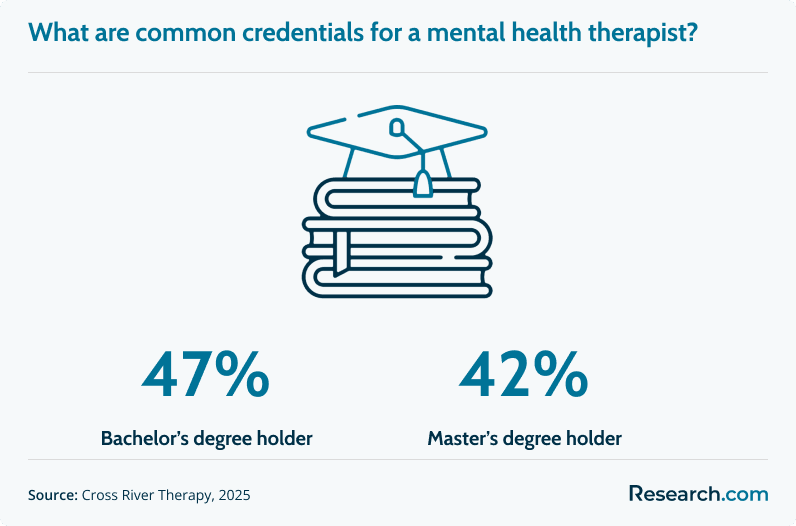
Therapists are more likely to approach a six-figure income when they combine clinical expertise with a specialty that clients, employers, healthcare systems, or courts are willing to pay for. Most therapy roles require a master’s degree, but some higher-paying psychology careers require doctoral education. A Ph.D. in Clinical Psychology can raise salaries to $109,894 per year, which is 52.2% higher than the licensed clinical therapist salary of $72,203.
Specializations that may support higher income
| Specialization | Typical focus | Why it may increase earning potential |
| Marriage and Family Therapist | Couples, families, relational conflict, communication, and family systems. | Couples and family services can support niche private practice positioning. |
| Clinical Psychologist | Assessment, diagnosis, and treatment of complex psychological conditions. | Doctoral training can open roles in healthcare, testing, leadership, and specialized clinical care. |
| Addiction Counselor | Substance use recovery, relapse prevention, and co-occurring concerns. | Demand can be strong in treatment centers, healthcare systems, and community programs. |
| Neuropsychologist | Brain-behavior relationships, testing, medical collaboration, and research. | Advanced assessment skills can support specialized clinical and consulting roles. |
If your goal is a clinical, academic, or research-focused career, doctoral training may be worth evaluating. Programs such as the best developmental psychology PhD programs can help you compare advanced study options tied to specialized practice and research pathways.
License type also shapes income strategy. Understanding LCSW vs LPC degree requirements and curriculum can help you choose between paths that may emphasize psychotherapy, social work systems, clinical practice, case management, or private practice preparation.
How to choose a specialization without overinvesting
- Match the specialty to a real client need. A niche is useful only if enough people or organizations will pay for the service.
- Check whether the credential changes your scope of practice. Some training improves marketing value, while other credentials are required for certain assessments or roles.
- Compare tuition, supervision, and time away from work. A higher-paying specialty may not be financially smart if the education cost is too high.
- Look at referral sources. Courts, physicians, schools, employee assistance programs, and specialty clinics may refer differently from general therapy directories.
How do therapists negotiate higher salaries in agency or hospital jobs?
Therapists in agencies, hospitals, residential programs, and community mental health settings often have less pricing control than private practice owners, but they can still negotiate. The strongest negotiations are specific: they connect your credentials, clinical experience, productivity, specialty training, documentation quality, and program impact to the employer’s needs.
Salary negotiation strategies for employed therapists
| Negotiation step | What to do | Why it helps |
| Research market pay | Compare salaries by role, location, license, setting, and experience level before discussing compensation. | Market evidence makes your request sound informed rather than personal. |
| Document your value | Prepare examples of specialized training, caseload management, program contributions, client outcomes, supervision responsibilities, or leadership duties. | Employers are more likely to respond when they see a clear business or clinical reason. |
| Negotiate the full package | If base pay is fixed, ask about bonuses, paid time off, flexible scheduling, tuition reimbursement, supervision support, or professional development funding. | Total compensation can improve even when salary bands are tight. |
| Practice the conversation | State your target calmly, express interest in the role, and explain the basis for your number. | Preparation reduces anxiety and prevents undercutting your own request. |
| Know your walk-away point | Decide in advance whether the offer supports your financial, clinical, and career goals. | A job that blocks licensure progress or creates burnout may cost more than it pays. |
Common negotiation mistakes
- Accepting the first offer without asking whether the salary band has room.
- Negotiating only salary while ignoring supervision, schedule flexibility, benefits, and professional development.
- Making a request without salary data or examples of measurable value.
- Waiting until frustration builds instead of discussing compensation during reviews or role changes.
- Assuming that a nonprofit, hospital, or agency cannot negotiate anything.
Can private practice therapists make six figures?
Yes. Private practice therapists can make six figures, but private practice income depends on business fundamentals: fees, caseload size, retention, payer mix, cancellations, overhead, documentation time, and unpaid administrative work. Around 20% of therapists work in private practice. A 2023 survey found that nearly 80% of therapists charge between $100 and $200 per session, with the most common fees falling between $125 to $175.
What determines private practice income?
| Factor | Income impact | Decision point |
| Session fee | Higher fees can raise gross revenue, but only if the market supports the price and clients continue to book. | Only 3% of therapists charge over $200 per session, so pricing should reflect specialty, demand, and local market conditions. |
| Client volume | A steady caseload is essential because cancellations and unpaid admin time reduce earnings. | Therapists seeing 20-25 clients per week at competitive rates have a better chance of reaching six figures. |
| Private pay vs. insurance | Private pay may produce higher per-session income, while insurance can increase client access and referral volume. | Decide whether your practice model prioritizes accessibility, reimbursement predictability, or premium positioning. |
| Service mix | Groups, workshops, intensives, consultation, and online therapy may expand income without relying only on individual sessions. | Add services that fit your license, ethics rules, competence, and audience. |
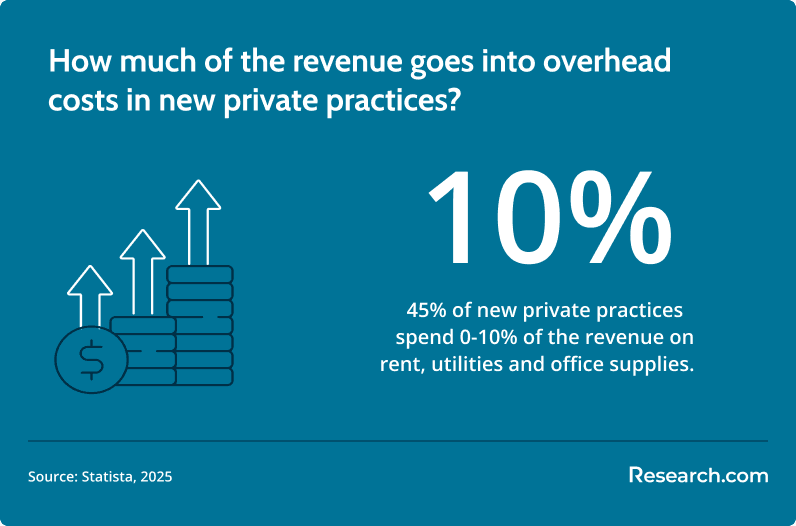
| Overhead | Rent, billing, software, marketing, taxes, supervision, and insurance affect take-home profit. | Gross revenue is not the same as income. |
Advanced credentials can also help therapists offer more specialized services. For clinicians considering doctoral-level practice or expanded clinical authority, online clinical psychology programs may be worth comparing carefully.
Who is private practice best for?
- Good fit: therapists who can tolerate income variability, enjoy building referral relationships, and are willing to learn business operations.
- Possible poor fit: therapists who need predictable pay immediately, dislike administrative work, or do not want to manage marketing, billing, and compliance.
- Hybrid option: therapists can keep part-time employment while building a practice gradually, reducing financial pressure during the transition.
How can therapists increase their income with multiple revenue streams?
Diversifying income can make a therapist’s finances more stable and reduce pressure to fill every hour with direct client sessions. The best added income streams use your existing expertise, protect clinical boundaries, and do not create ethical confusion between therapy, education, coaching, and public content.
Revenue streams therapists commonly consider
| Income stream | How it works | Best for | Risk or limitation |
| Digital products | Create ebooks, worksheets, recorded courses, or membership materials. | Therapists who can translate expertise into educational resources. | Requires marketing, content maintenance, and clear disclaimers that products are not therapy. |
| Online teaching | Teach mental health, counseling, wellness, or psychology-related topics. | Clinicians who enjoy education and structured content delivery. | Teaching averages $42 per hour or $86,938 per year, but opportunities vary by platform and role. |
| Coaching | Provide non-clinical guidance around goals, performance, or life transitions. | Therapists who can clearly separate coaching from psychotherapy. | In the U.S., life coach credentials often involve completing training and certification through groups such as the International Coach Federation or the International Association of Coaching; learn more through coaching certification resources. |
| Public speaking | Present at conferences, companies, schools, workshops, or community events. | Therapists with a clear niche and strong communication skills. | Early speaking opportunities may be unpaid, while experienced speakers can earn $49 per hour or more. |
Income diversification is one reason many clinicians compare the advantages and drawbacks of becoming a psychologist or counselor. The right mix can increase flexibility, but therapists should avoid adding revenue streams that compromise client care or create unsustainable workloads.
Does teletherapy pay as well as in-person therapy?
Teletherapy can pay similarly to in-person therapy in some situations, but reimbursement depends on payer rules, state regulations, provider networks, license mobility, and whether clients pay privately. Some therapists receive comparable payment for virtual and in-person sessions. Others face lower reimbursement, limited coverage, or state-specific restrictions.
Teletherapy income factors
- Payment parity: During the pandemic, many insurers temporarily matched telehealth and in-person rates, but some later reduced virtual reimbursement. Professional advocacy groups continue to monitor parity issues.
- Client demand: 50% of psychologists reported using teletherapy in 2021, compared with 33% in 2020. Virtual care can help therapists reach clients who need scheduling flexibility or live outside a convenient commuting radius.
- Cross-state practice: PSYPACT legislation, now enacted in 27 states, allows eligible licensed psychologists to provide teletherapy across state lines, expanding potential client reach.
- Overhead: Teletherapy can reduce office expenses, although therapists still need secure technology, documentation systems, privacy protections, and compliance procedures.
For therapists who want both virtual and in-person income options, credential planning still matters. If you are early in the profession, this overview of how to get a master's degree in counseling can help you understand the education foundation behind many counseling careers.
Teletherapy vs. in-person therapy: which model fits your goals?
| Model | Advantages | Potential drawbacks |
| Teletherapy | Lower office costs, broader client access, more scheduling flexibility, and easier continuation of care for some clients. | Reimbursement may vary, privacy must be managed carefully, and not every client or clinical issue is ideal for virtual care. |
| In-person therapy | Strong fit for clients who prefer face-to-face connection, certain assessments, or services that require a physical setting. | Rent, commute time, location constraints, and office management can reduce profit margins. |
| Hybrid practice | Offers flexibility while preserving in-person options for clients who need or prefer them. | Requires clear scheduling systems, separate workflow planning, and careful cost management. |
Which advanced certifications can further enhance a therapist's earning potential?
Advanced certifications can help therapists stand out when they support a clear specialty, referral pathway, or service expansion. The strongest credentials deepen clinical competence and make your services easier for clients, healthcare partners, schools, or agencies to understand. For therapists interested in behavioral intervention and assessment, programs such as online master's programs in applied behavior analysis may provide a structured route into an additional area of practice.
How to evaluate a certification before enrolling
- Does the credential match the clients or organizations you want to serve?
- Is it recognized by employers, insurers, referral partners, or licensing boards?
- Will it expand your legal scope of practice, or is it mainly a marketing differentiator?
- How much time, supervision, exam preparation, and renewal work does it require?
- Can you realistically recover the cost through higher demand, better roles, or new services?
What role do licensing and accreditation play in achieving financial success as a therapist?
Licensing and accreditation affect income because they shape credibility, employability, insurance participation, and client trust. A therapist who lacks the required license cannot legally provide many clinical services, and a degree from a poorly vetted program can delay or block licensure. If speed is a priority, review legitimate pathways such as the fastest way to become a therapist, but verify that any accelerated option still meets your state’s requirements.
Licensure and accreditation checklist
- Confirm that the school is properly accredited before applying.
- Check whether the program meets education requirements in the state where you plan to practice.
- Ask how practicum, internship, and supervised clinical hours are arranged.
- Review exam pass expectations, licensure support, and graduate outcomes when available.
- Do not assume an online program automatically qualifies you for licensure in every state.
Is advanced licensure a game changer for therapists?
Advanced licensure can change a therapist’s earning power when it expands independence, improves referral access, or qualifies the clinician for higher-responsibility roles. It can also signal deeper competence to clients and employers. If you are comparing counselor license paths, this explanation of what an LPC is can help you understand how licensure connects to job options and salary planning.
The financial value of advanced licensure depends on what you do with it. A credential alone will not build a full practice, but it can support stronger positioning when combined with a clear niche, ethical marketing, excellent client care, and a reliable referral system.
Should therapists pursue niche degree programs to differentiate their practice?
Niche degree programs can be useful when they align with a specific client population, clinical framework, or community need. For example, therapists who want to integrate faith-informed care may compare options such as a master's in Christian counseling online. The key is to determine whether the degree will meet licensing requirements, deepen your competence, and connect to clients who are actively seeking that specialty.
When a niche degree makes sense
- You already know the population you want to serve.
- The credential is recognized by relevant employers or referral sources.
- The program meets licensure or career requirements, not just personal interest.
- The cost is reasonable compared with expected professional benefit.
- You can clearly explain how the specialty improves client care.
Can advanced education drive financial growth for therapists?
Advanced education can support financial growth when it improves licensure eligibility, specialty competence, leadership opportunities, or practice differentiation. It can also become a financial burden if tuition is high and the degree does not change your role, scope, or market position. Cost-conscious options, including affordable online MFT programs, may help therapists pursue additional training while managing debt risk.
Questions to ask before paying for another degree
- Will this degree qualify me for a license, promotion, specialty role, or higher-fee service?
- Does the curriculum include clinical training, supervision, ethics, and practice management skills?
- How flexible is the program for working therapists?
- What are the total costs beyond tuition, including fees, books, travel, exams, and supervision?
- Will the program’s reputation help with referrals, employment, or doctoral admission?
What legal and risk management measures protect your practice’s financial stability?
A profitable therapy practice can be damaged quickly by poor documentation, privacy failures, unclear policies, unpaid balances, scope-of-practice problems, or inadequate insurance. Risk management is not separate from financial planning; it protects your ability to keep serving clients and earning consistently. Therapists still building credentials can review pathways such as how to become a counselor quickly, but speed should never replace compliance.
Risk management priorities for therapists
- Maintain appropriate professional liability insurance.
- Use clear informed consent, cancellation, payment, telehealth, and emergency policies.
- Keep documentation timely, accurate, and aligned with legal and payer standards.
- Consult legal, tax, and compliance professionals when building a practice.
- Separate therapy, coaching, consulting, and educational products clearly.
- Review state rules before offering teletherapy across jurisdictions.
Can specialized advanced degrees boost my practice’s profitability?
Specialized graduate study can improve profitability when it opens services with distinct demand, such as forensic assessment, legal consulting, expert-informed evaluation, or specialized risk work. Therapists exploring this direction may compare affordable forensic psychology master's programs to understand how the curriculum fits clinical, legal, and consulting career goals.
Before enrolling, confirm whether the degree is sufficient for the work you want to do. Some forensic, assessment, or expert roles may require additional licensure, supervised experience, doctoral training, or jurisdiction-specific qualifications.
Can affordable counseling degrees accelerate long-term success?
Affordable counseling degrees can support long-term success by reducing debt pressure and helping therapists reach licensure or advancement sooner. Lower cost should not be the only factor, however. The program must still be accredited, aligned with state requirements, and strong enough to prepare you for clinical work. Comparing options such as affordable online counseling colleges can help you balance cost, credibility, flexibility, and licensure preparation.
Do not choose a counseling program based on tuition alone
- Verify accreditation before comparing price.
- Confirm state licensure alignment in writing.
- Ask how the school supports practicum and internship placement.
- Compare completion time, transfer credit, supervision access, and exam preparation.
- Calculate total cost, not just advertised tuition.
What are the best online income opportunities for therapists?
Online income can help therapists reach more people and reduce dependence on a single practice model. The most realistic opportunities usually build from a therapist’s niche, audience, writing or teaching ability, and ethical clarity. Online visibility can also support a clinical practice by increasing trust and referrals.
Online income options for therapists
| Opportunity | How therapists use it | Important caution |
| SEO-focused website | Publish helpful pages that answer client questions and improve visibility in search results. | Content should be accurate, ethical, and clear about the difference between education and therapy. |
| Podcast | Discuss mental health topics, interview experts, and build authority with a specific audience. | Revenue may depend on sponsorships, ads, premium content, or indirect practice referrals. |
| Digital products | Sell ebooks, workbooks, recorded classes, or membership resources. | Products require ongoing updates, marketing, and careful disclaimers. |
| Affiliate marketing | Recommend books, tools, apps, or resources and earn commissions when appropriate. | Recommendations should be transparent and clinically responsible. |
| Social media content | Use Instagram, YouTube, TikTok, or similar platforms to educate and build a following. | Online popularity can create boundary, privacy, and misinformation risks; examples of therapists with strong online audiences show the potential, but results vary. |
Educational content can also help future students understand career pathways. For example, therapists who create career-oriented resources might explain topics such as the difference between an associate degree and a bachelor's degree for people considering psychology, counseling, or social service careers.
What business strategies help therapists maximize income?
Therapists who earn more usually do more than raise rates. They design a practice model that fits their clinical strengths, market demand, schedule limits, referral sources, and financial goals. A sustainable income strategy protects both the therapist and the client relationship.
Business strategies that can improve therapist income
- Clarify your niche. A clear specialty makes referrals easier and helps clients quickly understand whether you are the right fit.
- Build referral relationships. Physicians, attorneys, schools, other therapists, community leaders, and past professional contacts can become steady referral sources.
- Use pricing intentionally. Review rates regularly and adjust based on specialty, demand, market conditions, overhead, and access goals.
- Improve scheduling systems. Clear cancellation policies, waitlists, and consistent availability help reduce unpaid gaps.
- Invest in continuing education selectively. Training should support better care, better positioning, or a meaningful service expansion.
- Get business support when needed. A business coach, accountant, bookkeeper, or consultant can help therapists avoid expensive operational mistakes.
Clinical expertise can pair well with behavioral and organizational knowledge. Programs such as online applied behavior analysis master's programs may be relevant for therapists who want additional training in behavior-focused services.
Business model comparison
| Model | Income upside | Main challenge |
| Employed therapist | Stable pay, benefits, supervision, and structured work environment. | Less control over rates, schedule, and service mix. |
| Solo private practice | More control over fees, niche, schedule, and client experience. | Responsible for marketing, billing, compliance, taxes, and inconsistent demand. |
| Group practice | Shared infrastructure, referrals, and potential administrative support. | Fee splits, policies, and autonomy vary widely. |
| Hybrid career | Combines employment, private clients, teaching, consulting, or digital products. | Requires careful scheduling and boundary management to prevent burnout. |
How can therapists reduce expenses and increase profit margins?
Therapists can improve profit by reducing unnecessary overhead and making each work hour more productive. Office rent is often a major expense, so shared space, part-time office use, or teletherapy can lower fixed costs. Practice management software, electronic health records, and virtual administrative support can reduce time spent on scheduling, billing, forms, and documentation. Organic marketing, referral networks, useful website content, and search engine optimization can also reduce reliance on expensive advertising.
Expense control should not mean cutting corners on legal, ethical, or clinical quality. Professional liability insurance, secure records, compliant telehealth tools, consultation, supervision, and tax support can protect the practice from larger financial problems. The goal is not to spend as little as possible; it is to spend on systems that reduce risk, improve client service, and preserve therapist time.
Common expenses and smarter alternatives
| Cost area | Common mistake | Better approach |
| Office space | Signing a costly full-time lease before the caseload is stable. | Start with shared, part-time, hybrid, or teletherapy options when appropriate. |
| Marketing | Spending heavily on ads without a clear niche or conversion plan. | Build referrals, improve website content, and track which channels produce inquiries. |
| Administration | Doing every non-clinical task manually. | Automate scheduling, billing, reminders, and forms where possible. |
| Education | Buying every certification that sounds marketable. | Choose training tied to a specific service, referral source, or licensure goal. |
| Insurance billing | Ignoring claim delays, denials, and unpaid balances. | Use strong billing workflows or outsource claims support when it saves time and revenue. |
Income growth also requires revenue design. Group therapy, workshops, online courses, premium specialty services, private-pay options, and carefully timed rate increases can raise earnings without simply adding more individual sessions. The right approach depends on your license, ethics rules, clinical competence, client population, and local demand.
What mindset shifts help therapists achieve financial success?
Therapists often receive extensive training in care, ethics, empathy, and diagnosis, but far less training in business sustainability. A healthier financial mindset does not mean exploiting clients or abandoning access. It means recognizing that a therapist who cannot pay bills, manage burnout, or maintain a stable practice is less able to provide consistent care.
Mindset shifts that support ethical income growth
- See money as part of sustainability. Profit allows therapists to keep the practice open, invest in training, and serve clients consistently.
- Separate worth from affordability. Charging appropriately for expertise does not mean every client can afford every service; therapists can address access through sliding scale slots, groups, insurance, or community partnerships when feasible.
- Stop equating busyness with success. A packed schedule with low margins and high exhaustion is not a healthy business model.
- Think like a clinician and an owner. Clinical decisions and operational decisions both affect client care.
- Plan for growth without overextending. Courses, coaching, speaking, and consulting can help, but only if they fit your capacity and ethics.
References
- U.S. Bureau of Labor Statistics. (n.d.). Psychologists: Occupational outlook handbook. U.S. Department of Labor psychology career profile.
- PsychologyJobs. (n.d.). Mental health therapist salary data.
- Hardly Hustle. (n.d.). Side hustle ideas for therapists.
- The Ladders. (n.d.). Guide to becoming a therapist earning $100K per year.
- ZipRecruiter. (n.d.). Psychological therapist salary information.
- Behavioral Health Business. (2023, June 5). Report on private practice therapists increasing cash-pay rates.
- American Psychological Association. (2022, January). Telehealth proves its worth.
- Valant. (n.d.). Private practice operating budget guidance.
- Cross River Therapy. (n.d.). Therapist statistics overview.
Key Insights
- A six-figure therapist income is possible, but it usually requires more than clinical hours. Credentials, niche focus, pricing, referrals, service mix, and overhead all matter.
- The average mental health therapist salary is $78,534, while entry-level pay starts at $44,914. Therapists aiming higher should compare employment, private practice, and specialty paths carefully.
- Private practice can produce strong income, but gross revenue is not take-home pay. Rent, billing, taxes, software, marketing, cancellations, and administrative time reduce profit.
- Advanced education can improve earning potential when it leads to licensure, specialization, leadership, or premium services. It can also reduce ROI if the program is expensive or not aligned with state requirements.
- Teletherapy can expand reach and lower overhead, but reimbursement, state rules, privacy, and clinical fit must be reviewed before relying on it as the main income strategy.
- Diversified income streams such as teaching, workshops, coaching, speaking, digital products, and consulting can improve stability, but they require clear ethical boundaries.
- The best financial strategy is sustainable. Therapists should pursue higher income in ways that protect client care, legal compliance, professional integrity, and personal well-being.
Other Things You Should Know About Making Six Figures as a Therapist
Most therapists need professional liability insurance with at least $1 million per claim and $3 million aggregate coverage to work safely with private-pay clients. Many state boards and private practice landlords also require proof of coverage before a license is renewed, a contract is signed, or office space is leased.
Obtaining certifications like the Certified Clinical Trauma Professional (CCTP) or involvement in specialized fields like teletherapy can significantly increase earning potential for therapists aiming for a six-figure salary in 2027. These certifications are recognized and can provide a competitive edge.


