2027 Fastest Online Special Education Graduate Certificate Programs

Co-Founder and Chief Data Scientist
A special education graduate certificate can be a faster way for educators to add high-need expertise without committing immediately to a full master’s degree. For licensed teachers, aspiring special education teachers, and educators seeking an endorsement, the key question is not simply “Which program is fastest?” It is whether the program is accredited, fits your state’s licensure rules, works with your teaching schedule, and prepares you for the students you want to serve.
The need is substantial. Each year, public school districts report nearly 96,000 special education vacancies linked to retirements and turnover. That demand makes speed important, but speed should not come at the expense of accreditation, supervised practice, licensure alignment, or meaningful coursework in assessment, behavior support, IEPs, and inclusive instruction.
This guide reviews the fastest online special education graduate certificate programs for 2027 and explains how to compare them by completion time, cost, credits, accreditation, specialization, and career value. It is designed to help working educators choose a practical program that can strengthen classroom impact and support long-term career mobility.
Quick answer: Is an online special education graduate certificate worth it?
An online special education graduate certificate can be worth it if you already hold, or are working toward, teacher licensure and want a focused credential in special education. Most programs can be completed in 6 to 12 months, commonly require 12–21 credits, and may help you qualify for roles such as special education teacher, inclusion specialist, intervention specialist, or instructional support professional. However, the certificate is only valuable for licensure or endorsement if it meets your state’s requirements.
Key benefits of earning an online special education graduate certificate
- Career specialization: The credential can support roles such as special education teacher, inclusion specialist, intervention coordinator, or disability services educator in K–12 environments.
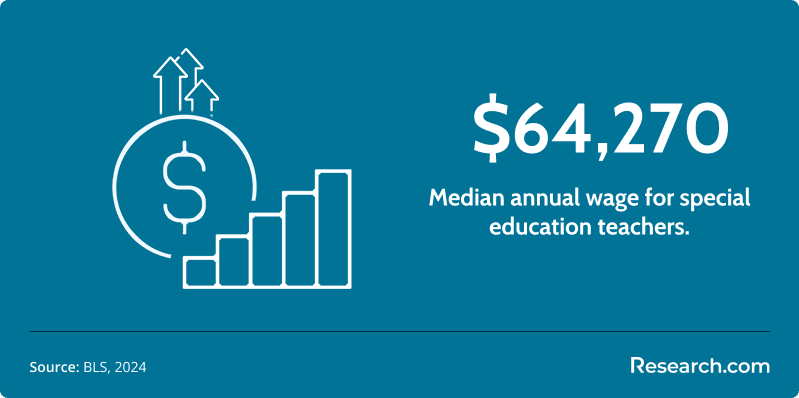
- Salary potential: The median annual salary for special education teachers is $64,270, with wages varying by grade level, district, state, experience, and licensure status.
- Flexible study format: Online coursework allows many teachers to continue working full time while completing graduate-level training.
- Faster credentialing path: Certificate programs are usually shorter than master’s degrees and may be useful for educators who need targeted preparation quickly.
- Practical classroom application: Strong programs focus on IEP development, assessment, differentiated instruction, behavior supports, legal compliance, and inclusive practices.
What can I expect from an online special education graduate certificate?
An online special education graduate certificate is a short graduate-level program focused on teaching students with disabilities and supporting inclusive learning environments. Coursework usually covers disability law, IEP planning, instructional adaptations, behavior management, assessment, collaboration with families, and evidence-based interventions. Some programs also require fieldwork, a practicum, supervised internship hours, or a capstone project.
Most programs are built for working educators. Many courses are asynchronous, meaning you can complete readings, discussions, assignments, and projects on your own weekly schedule. Some programs also include live online sessions, virtual advising, peer discussions, or required synchronous meetings for practicum preparation.
Total tuition commonly ranges from $5,000 to $12,000. Per-credit tuition often falls between $300 and $600, though the final cost depends on the number of credits, public or private status, residency rules, fees, books, and any field placement requirements.
| Program feature | What it usually means for students | Decision question to ask |
| Credits | Many certificates require 12–21 credits, though some programs require more. | Will the credit load fit your timeline and work schedule? |
| Format | Courses may be asynchronous, synchronous, or a mix of both. | Do you need maximum flexibility, or do you learn better with scheduled live sessions? |
| Field experience | Licensure-aligned programs may require supervised hours or a practicum. | Can you complete fieldwork in your current school or local area? |
| Licensure connection | Some certificates lead to endorsement; others provide professional development only. | Does the program meet your state’s special education licensure or endorsement rules? |
| Specialization | Options may include autism, learning disabilities, early childhood, or K–12 special education. | Which student population do you want to serve? |
Where can I work with an online special education graduate certificate?
A special education graduate certificate is most commonly used in K–12 schools, but it can also support work in early intervention programs, educational support organizations, government agencies, nonprofits, family service agencies, and disability-focused programs. The exact roles you can pursue depend on your state licensure status, prior teaching background, and whether the certificate is designed for endorsement.
According to the U.S. Bureau of Labor Statistics, as of May 2023, the industries with the highest levels of employment for special education teachers include:
- Pre-school to Secondary Schools: More than 505,900 special education teachers work in this setting, making it the primary employment pathway.
- Individual and Family Services: About 1,450 special education professionals work in areas such as early intervention, family support, and community-based services.
- Educational Support Services: Nearly 3,220 specialists work in organizations that provide services beyond the traditional classroom.
- Local Government, excluding schools and hospitals: More than 1,140 professionals work in training, administration, compliance, and related special education functions.
How much can I make with an online special education graduate certificate?
A graduate certificate does not guarantee a salary increase, but it can strengthen eligibility for special education roles, endorsements, and district pay incentives where applicable. Compensation depends on state salary schedules, school district contracts, years of experience, licensure, grade level, additional graduate credits, and local demand.
- Kindergarten and Elementary Special Education Teachers: $64,910 per year
- Middle School Special Education Teachers: $66,600 per year
- Secondary Special Education Teachers: $63,560 per year
When comparing programs, ask whether the certificate counts toward a district salary lane, state endorsement, continuing education requirement, or future master’s degree. Those details often matter more for return on investment than the certificate title alone.
- Best Online Special Education Graduate Certificate Programs for 2027
- How long does an online special education graduate certificate take?
- Online vs. on-campus special education graduate certificates
- Average cost of an online special education graduate certificate
- Financial aid options for online special education certificate students
- Admission requirements and prerequisites
- Common courses in a special education graduate certificate
- Specialization options in online special education certificates
- Using advanced degrees to move beyond classroom roles
- How a certificate can support education leadership goals
- Limitations of online special education certificates
- Complementary specializations to consider
- How to choose the right online special education graduate certificate
- Career paths after an online special education graduate certificate
- Job market for special education certificate graduates
Best Online Special Education Graduate Certificate Programs for 2027
The programs below were selected for educators seeking online graduate certificates that can be completed efficiently while building practical special education skills. If you are comparing multiple fast graduate education options, it may also be useful to review how accelerated formats work in related fields, such as accelerated counselor education online programs.
How do we rank schools?
Research.com rankings are designed to help students compare programs using credible education data and transparent criteria. For online special education graduate certificates, important factors include accreditation, program structure, affordability, completion requirements, and student-focused outcomes. Data sources may include the IPEDS database, Peterson's database, the College Scorecard database, and The National Center for Education Statistics.
For more detail on ranking criteria and data use, see Research.com's methodology page.
1. Walden University
The online Graduate Certificate in Special Education at Walden University is designed for educators who want targeted preparation in serving students with exceptionalities. The program emphasizes practical classroom strategies, special education law, inclusive instruction, behavior management, and instructional planning aligned with national expectations.
- Required Credits to Graduate: 20 quarter hours credit
- Cost: $385 per quarter hour / $8,060 (Total tuition cost + total program fee)
- Accreditation: Higher Learning Commission (HLC)
2. Eastern Washington University
The online Graduate Certificate in Special Education at Eastern Washington University prepares educators to support students with diverse learning needs through individualized instruction, inclusive practices, and research-based intervention strategies. The program is structured for current and future teachers who need applied skills aligned with state and national standards.
- Program Length: 8 months
- Required Credits to Graduate: 34
- Cost: $335 per credit hour / $11,390 (Total tuition)
- Accreditation: Northwest Commission on Colleges and Universities (NWCCU)
3. University of North Dakota
The online Special Education Graduate Certificate from the University of North Dakota focuses on practical strategies for working with students with disabilities in varied educational settings. Coursework includes behavior support, instructional design, collaborative intervention, and options to tailor study through endorsement areas such as autism or early childhood special education.
- Required Credits to Graduate: 15
- Cost: $552.57 per credit hour
- Accreditation: Higher Learning Commission (HLC)
4. University of Missouri
The online Graduate Certificate in Special Education at the University of Missouri is intended for educators who want to strengthen assessment, behavior support, and instructional planning skills for inclusive and specialized learning environments. Students may choose emphasis areas that match professional goals, including autism or learning disabilities.
- Required Credits to Graduate: 12
- Cost: $7,078.80 (Estimated total tuition cost)
- Accreditation: Higher Learning Commission (HLC)
5. Liberty University
The online Graduate Certificate in Special Education – General Curriculum from Liberty University is built for educators who want focused training in teaching students with mild to moderate disabilities. The program covers individualized instruction, classroom management, and the legal foundations that guide special education practice.
- Required Credits to Graduate: 15
- Cost: $580 per credit hour (Full-time) / $580 per credit hour (Part-time) / $290 (Military Graduate)
- Accreditation: Southern Association of Colleges and Schools Commission on Colleges (SACSCOC)
6. University of Central Florida
The online Graduate Certificate in Special Education from the University of Central Florida offers working educators flexible graduate coursework in inclusive teaching, assessment strategies, and evidence-based interventions. The program is suited for professionals seeking applied preparation across classroom and behavioral support contexts.
- Required Units to Graduate: 18
- Cost: $327.32 per credit hour (In-state) / $1,151.72 (Out-of-state)
- Accreditation: Southern Association of Colleges and Schools Commission on Colleges (SACSCOC)
7. Appalachian State University
The online Graduate Certificate in Special Education from Appalachian State University is designed for licensed teachers and candidates seeking certification. The curriculum emphasizes mild to moderate disabilities, behavior support, instructional design, and inclusive teaching for K–12 settings.
- Required Credits to Graduate: 21
- Cost: $337 per credit hour (In-state)
- Accreditation: Southern Association of Colleges and Schools Commission on Colleges (SACSCOC)
8. University of Massachusetts Dartmouth (Moderate Disabilities Certificate)
The online Graduate Certificate in Special Education—Moderate Disabilities at University of Massachusetts Dartmouth prepares educators to support students with learning and behavioral needs in inclusive classrooms, resource rooms, and related settings. The program addresses instructional planning, classroom management, legal foundations, and Massachusetts licensure standards.
- Required Credits to Graduate: 12
- Cost: $422 per credit hour
- Accreditation: New England Commission of Higher Education (NECHE)
9. University of North Carolina at Charlotte (K-12)
The online Graduate Certificate in Teaching Special Education (K–12) from the University of North Carolina at Charlotte is geared toward students pursuing initial licensure. Coursework blends instructional strategies, assessment, behavior management, and preparation to serve students with disabilities across grade levels.
- Required Credits to Graduate: 21
- Cost: $288.82 per credit hour (Resident) / $1,098.21 per credit hour (Nonresident)
- Accreditation: Southern Association of Colleges and Schools Commission on Colleges (SACSCOC)
10. Oral Roberts University
The online Graduate Certificate in Special Education from Oral Roberts University provides focused preparation for educators who want to support students with exceptional needs in inclusive settings. The program combines biblical principles with evidence-based practices in assessment, instructional planning, behavior management, leadership, and advocacy.
- Required Credits to Graduate: 18
- Cost: $550 per credit hour
- Accreditation: Higher Learning Commission (HLC)
How long does it take to complete an online special education graduate certificate program?
Most online special education graduate certificate programs take 6 to 12 months to complete. The shortest options usually use accelerated terms, year-round course availability, or compact credit requirements. Many programs, like other accelerated education pathways such as accelerated online master's in teacher leadership programs, may offer multiple start dates or rolling admissions.
Your timeline depends on credit load, course sequencing, practicum requirements, transfer credit policies, and whether you study full time or part time. If you already have approved graduate education credits, a school may allow you to transfer some credits and reduce your time to completion.
The demand context matters. The shortage of special education teachers remains a concern. In the 2022–23 school year, over 20% of schools reported at least one vacancy, and more than half said filling positions was difficult. Demand is rising, with job openings for special education teachers projected to grow by around 9.5% through 2031.
Alternative and accelerated teacher-preparation pathways have also gained traction. Enrollment in alternative, accelerated teacher-prep programs increased by around 20% from 2018–19 to 2020–21. For working educators, that trend reflects a practical need: shorter programs can help teachers respond to staffing shortages without leaving the workforce.
| Timeline | Best fit | Trade-off |
| 6–8 months | Educators who can handle intensive coursework and need a fast credential. | Less room for missed deadlines, heavy teaching seasons, or added practicum demands. |
| 9–12 months | Working teachers who want speed but need a manageable weekly workload. | May take longer than the most accelerated options. |
| More than 12 months | Students balancing full-time work, family responsibilities, or licensure fieldwork. | Slower completion may delay endorsement or role changes. |
How does an online special education graduate certificate program compare to an on-campus program?
Online and on-campus special education graduate certificates can be academically comparable when they are offered by accredited institutions and follow the same curriculum standards. The better choice depends on your schedule, learning style, local placement options, and need for in-person interaction. Educators who need flexibility may prefer online learning, similar to the convenience offered by an accelerated elementary education degree online.
| Factor | Online certificate | On-campus certificate |
| Flexibility | Often asynchronous or hybrid, making it easier to teach full time while studying. | Usually requires scheduled class meetings and commuting. |
| Student profile | Often serves working adults, including students in their mid-30s to early 40s. | May attract local students who prefer structured in-person learning. |
| Employer perception | In a 2025 survey, 83% of employers said online degrees from accredited schools are viewed as equal to traditional ones. | Still perceived strongly for in-person collaboration and networking. |
| Work-study balance | 87% of online students report that self-paced learning reduces stress and improves performance. | Built-in schedules can help students who need external structure. |
| Accreditation | Should meet the same institutional standards when offered by an accredited school. | Should meet the same institutional standards when offered by an accredited school. |
| Student outcomes | 88% of online students said the experience met or exceeded expectations, and completion rates for online graduate certificates have risen about 10% since 2020. | May provide more direct campus access to faculty, peers, and services. |
Online study is not automatically easier. Successful students are organized, comfortable with learning platforms, proactive about asking questions, and able to complete assignments without weekly in-person reminders.
What is the average cost of an online special education graduate certificate program?
The average cost of an online special education graduate certificate ranges from $5,000 to $12,000. Public universities often charge between $5,000 and $8,000 for a 12-credit certificate, while private institutions can exceed $10,000 and in some cases reach $27,000 for longer or part-time programs.
Online tuition per credit typically runs $337 at public schools and $516 at private schools. Because certificates usually require 12–21 credits, total tuition depends heavily on credit count and whether you qualify for in-state rates, employer tuition support, scholarships, or military benefits.
Cost comparisons should include more than tuition. Application fees, technology fees, books, background checks, practicum expenses, and possible certification testing fees can change the total amount you pay. The same cost logic applies when evaluating accelerated credentials in other fields, such as a fast track online master of health administration, where shorter timelines may reduce opportunity cost but do not always mean lower tuition.
| Cost item | Why it matters | What to ask before enrolling |
| Tuition per credit | This is usually the largest cost driver. | Is the rate different for in-state, out-of-state, part-time, or military students? |
| Required credits | A lower per-credit price can still be expensive if the program requires many credits. | How many credits are required for the certificate and for endorsement? |
| Fees | Technology, application, student services, and practicum fees can add up. | Can the school provide a full cost sheet? |
| Books and materials | Graduate education courses may require textbooks, assessment tools, or software. | Are digital materials included in tuition? |
| Licensure expenses | Endorsement programs may require exams, background checks, or state applications. | Which costs are paid to the school and which are paid separately? |
If your long-term interest is related to assessment, learning, and student support beyond classroom teaching, you may also want to understand distinctions such as educational psychologist vs school psychologist before choosing a program.
What are the financial aid options for students enrolling in an online special education graduate certificate program?
Financial aid for graduate certificates depends on accreditation, whether the program is credit-bearing, whether the school participates in federal aid programs, and whether the certificate is eligible under the institution’s aid rules. Students comparing education credentials may see similar aid considerations in programs such as accelerated online school counseling master's programs.
Federal aid and loans
Some accredited, credit-bearing online graduate certificate programs may qualify for federal aid. Common options include:
- Federal Direct Unsubsidized Loans
- Federal Work-Study, in some cases
- Important note: Pell Grants are generally not available for graduate certificate programs.
Scholarships and grants
Institutional, private, district-based, and professional association scholarships may help reduce certificate costs for current and aspiring special education teachers.
- Awards typically range from $500 to $4,000.
- The TEACH Grant offers up to $4,000 annually for students who commit to teaching in high-need fields and schools.
Employer, state, military, and payment plan options
Many school districts offer tuition reimbursement, especially for high-need licensure areas. Some students may also qualify for veterans' benefits, state-specific grants, school-based aid, or tuition payment plans. Before enrolling, confirm whether reimbursement requires a grade minimum, continued employment, or service in a shortage area.
Loan forgiveness options
Special education teachers may qualify for loan forgiveness programs if they meet service, employer, and loan-type requirements. Possible options include:
- Public Service Loan Forgiveness (PSLF)
- Teacher Loan Forgiveness, especially for teachers serving Title I or underserved schools
Roughly 70–80% of graduate certificate students receive some form of financial assistance. The average scholarship for education majors is around $2,000–$3,000, which can materially reduce out-of-pocket tuition when combined with employer or state support.
What are the prerequisites for enrolling in an online special education graduate certificate program?
Most online special education graduate certificate programs require a bachelor’s degree, a minimum GPA, and, for licensure-focused pathways, a current teaching license or proof that you are working toward licensure. Educators seeking a faster route into teaching or endorsement may also compare related pathways such as fast track alternative teacher certification online programs.
Common admission requirements
- A bachelor’s degree from an accredited institution; many programs accept applicants from different undergraduate majors.
- A minimum GPA, often 3.0 or higher, though some schools may consider applicants with a 2.5–2.75 GPA and relevant experience.
- A teaching license or progress toward licensure if the certificate is tied to state certification or endorsement.
- Official transcripts, application materials, and sometimes a statement of goals, résumé, or recommendation letters.
Some programs are designed for licensed teachers, while others are open to applicants seeking initial licensure or non-licensure professional development. This distinction is critical. A certificate that improves knowledge may not, by itself, qualify you to become a special education teacher.
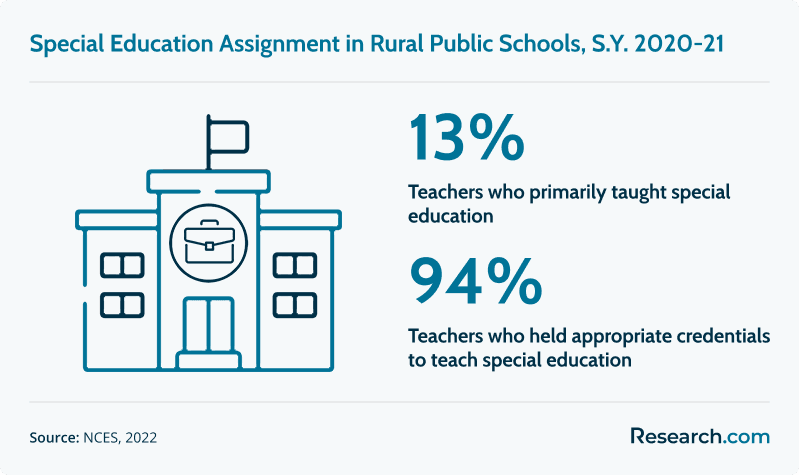
Data show that roughly half of public school teachers hold a graduate-level credential, and career advancement is common after adding specialized certification. Exact requirements vary, but 94% of special education teachers are licensed in their field, which underscores why state approval and endorsement alignment matter.
If you want to broaden your instructional expertise further, especially for advanced learners, a related path such as a low cost master's in gifted education online may be worth comparing after you clarify your special education licensure goals.
What courses are typically in an online special education graduate certificate program?
Most online special education graduate certificate programs include a focused sequence of graduate courses in special education foundations, behavior support, assessment, IEPs, and instructional methods. Some course themes overlap with inclusive early learning programs, including options such as the cheapest online early childhood development degree, especially when the focus is on young children with developmental or learning needs.
| Course area | What students usually learn | Why it matters in practice |
| Foundations of special education | History, laws, disability categories, IEP processes, and inclusive education principles. | Helps teachers understand legal obligations and service models. |
| Behavior management | Positive behavior supports, classroom systems, intervention planning, and de-escalation strategies. | Supports safer, more consistent learning environments. |
| Instructional strategies | Differentiated instruction, curriculum adaptation, co-teaching, and accessible lesson design. | Helps educators reach students with varied learning profiles. |
| Disability-specific coursework | Topics such as learning disabilities, autism spectrum disorders, or emotional and behavioral needs. | Builds specialized expertise for targeted student populations. |
| Assessment and progress monitoring | Evaluation methods, data interpretation, goal tracking, and student growth measurement. | Supports accurate IEP decisions and instructional adjustments. |
Programs usually require 12 to 21 credits, which often equals 4–7 courses depending on the school. Licensure-aligned programs may include additional fieldwork or practicum expectations.
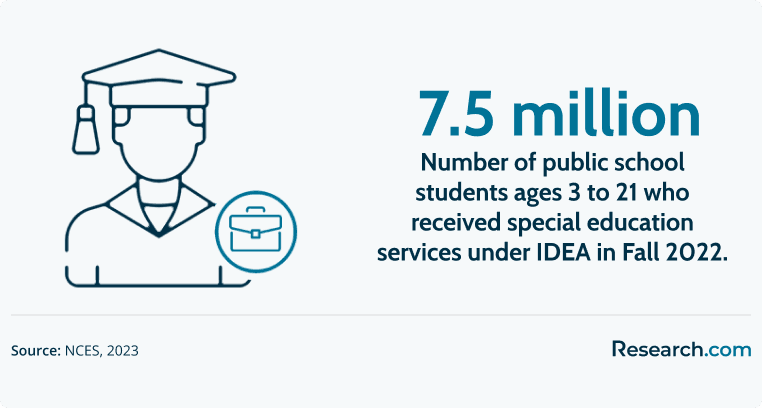
This training is increasingly relevant because the number of students receiving special education services continues to rise. About 15% of U.S. public school students had IEPs in 2022‑23, with forecasts projecting nearly 8 million IDEA‑eligible students by 2025.
What types of specializations are available in an online special education graduate certificate program?
Specializations allow educators to focus on specific student populations, instructional needs, or endorsement areas. The right option should match your state’s licensure structure, your district’s staffing needs, and the type of students you want to support. Reviewing core SPED teacher responsibilities can help you decide which specialization is most relevant.
Common specialization areas
- Autism Spectrum Disorder (ASD)
- Specific Learning Disabilities
- Early Childhood Special Education
- Secondary Special Education
Autism is a major area of district need. In Texas, public schools saw a 32% increase in students with autism from 2020 to 2023. Learning disabilities remain the most common category, with about 40% of students receiving special education services falling into this group.
Single specialization vs. dual focus
Some programs allow students to combine two areas, such as ASD and early childhood special education. This can expand your flexibility, but it may also increase credit requirements, tuition, and workload. Dual-certified educators often qualify for broader roles, though workload pressures can affect long-term retention in special education positions.
As of 2024, districts report the strongest demand in early childhood and autism-focused roles. If your goal is employment mobility, choose a specialization that aligns with both your interests and documented shortages in your state or district.
Can advanced degrees further accelerate your career in special education?
A graduate certificate can be a strong first step, but some career goals require a master’s degree, education specialist degree, or doctorate. If you want to move into district leadership, higher education, research, special education administration, policy work, or program evaluation, an advanced degree may be necessary. Educators who want a research or leadership pathway may compare options such as accelerated doctoral programs in education online.
The practical question is sequencing. A certificate may help you enter or specialize in special education faster. A master’s or doctorate may later support leadership, salary advancement, faculty roles, or administrative responsibilities. Before enrolling, ask whether certificate credits can transfer into a future graduate degree.
How can this certificate support educational leadership roles?
An online special education graduate certificate can strengthen leadership readiness by building expertise in IEP compliance, instructional adaptation, disability law, behavior systems, data-informed decision-making, and collaboration with families and multidisciplinary teams. These are useful skills for department chairs, inclusion leads, intervention coordinators, instructional coaches, and special education program coordinators.
However, a certificate alone may not qualify you for formal administrative positions. District leadership roles often require additional experience, administrator certification, or advanced graduate study. If your goal is district management, curriculum leadership, or executive-level education administration, you may eventually compare options such as cheap educational leadership doctoral programs online.
Are there limitations to online special education graduate certificate programs?
Online special education certificates are flexible, but they are not the right fit for every student. Some learners need in-person accountability, direct classroom modeling, or frequent face-to-face feedback. Others may struggle if a program requires them to secure their own practicum site or navigate state licensure rules without strong advising.
The biggest limitation is licensure uncertainty. A certificate may be academically valuable but still fail to meet your state’s endorsement requirements. You should also evaluate technology expectations, faculty access, field placement support, and how the program builds applied teaching practice. If you are comparing online learning formats outside licensure-driven teaching, you can also examine broader models such as an accelerated online philosophy degree, but special education credentials require much more careful attention to certification rules.
Can this certificate open doors to complementary specializations?
Yes. Special education overlaps with reading intervention, behavior support, early childhood development, assistive technology, speech and language support, educational psychology, counseling, and instructional design. A certificate can help you identify which student-support area you want to pursue next.
For example, educators interested in communication disorders may later explore online SLP graduate programs. That path typically requires additional graduate training and licensure, but special education experience can provide valuable context for serving students with communication, learning, and developmental needs.
How to Choose the Best Online Special Education Graduate Certificate Program
The best online special education graduate certificate is not always the fastest or cheapest. It is the one that fits your licensure goal, budget, schedule, preferred student population, and future career plan. Use the same careful comparison process you would use for other accelerated teaching credentials, such as a fast track TESOL master's degree online.
1. Verify accreditation first
Choose a program offered by an accredited institution. Accreditation affects financial aid eligibility, transfer credit, employer recognition, and confidence that the school meets accepted academic standards.
2. Confirm state licensure or endorsement alignment
Do not assume that an online certificate qualifies you for special education licensure in your state. Ask the program directly whether it meets your state’s coursework, practicum, testing, and endorsement requirements.
3. Match the curriculum to your career goal
Look for coursework in the areas you will actually use: autism, early childhood special education, behavior management, learning disabilities, assessment, inclusive teaching, or secondary transition. If you may later shift into counseling or therapy, it may help to understand pathways such as how long does it take to become a therapist.
4. Review completion and retention indicators
Strong programs should provide clear information about course sequencing, student support, and completion expectations. Online graduate certificate programs report an average 89.7% completion rate, close to on-campus averages of about 92.6%.
5. Compare total cost, not just tuition
Request the full program cost, including tuition, fees, materials, practicum costs, and licensure-related expenses. Ask whether tuition differs by residency status and whether certificate credits can count toward a future master’s degree.
6. Ask about field placement support
If a practicum or supervised experience is required, find out whether you can complete it at your current school, whether the university helps arrange placements, and whether your state accepts out-of-state online placements.
| Common mistake | Why it can hurt you | Better approach |
| Choosing the fastest program without checking licensure rules | You may finish quickly but still be ineligible for endorsement. | Confirm state approval in writing before enrolling. |
| Comparing only tuition per credit | A low rate can be offset by high credit requirements or fees. | Calculate total program cost. |
| Assuming all online programs include field placement help | You may be responsible for finding your own practicum site. | Ask how placements are arranged and approved. |
| Ignoring transfer credit policies | You may miss a chance to shorten the program or reduce cost. | Request a transcript review before committing. |
| Relying only on rankings | A highly ranked program may not fit your state, schedule, or specialization. | Use rankings as a starting point, then verify personal fit. |
What career paths are available for graduates of an online special education graduate certificate program?
Graduates of online special education graduate certificate programs may pursue classroom, support, coordination, and consulting roles, depending on licensure and experience. The certificate functions as a targeted credential, much like a fast track software engineering degree online can quickly add specialized skills for a different labor market.
Common classroom and school-based roles
- Special Education Teacher: Median salary of $64,270 (May 2024); about 35,900 job openings per year, mainly due to retirements.
- Intervention Specialist: Provides targeted academic and behavioral support and has an average salary of $59,441.
- Inclusion Specialist: Supports general education teachers in adapting instruction and improving access for students with disabilities.
- Transition Specialist: Helps students with disabilities prepare for postsecondary education, employment, and independent living.
Non-classroom and advanced pathways
With additional experience or credentials, certificate holders may move into broader education support roles, including:
- Reading Specialist
- Curriculum Coordinator
- Instructional Designer
- Educational Consultant
- Early Intervention Services
- Instructional Coordinator Positions – Average salary for this role is $63,740
These roles typically pay between $52,000 and $70,000 annually. With further graduate study or leadership experience, some educators advance into roles such as Program Director, Adjunct Faculty, or Special Education Consultant, with salaries ranging from $88,000 to $126,000 depending on location and district needs.
If you are considering a related clinical or communication-focused path, the question can a teacher become a speech pathologist is worth exploring. The transition is possible, but it requires additional graduate-level preparation and licensure.
What is the job market for graduates with an online special education graduate certificate program?
The job market for special education certificate holders is shaped by persistent shortages, increasing student service needs, and ongoing demand for licensed teachers who can support students with disabilities. A certificate can strengthen your qualifications, but the strongest employment outcomes typically go to candidates who also meet state licensure or endorsement requirements.
There is a widespread shortage of special education teachers. In 2024–25, 39 states plus Washington, D.C., report staffing gaps. States with the highest demand include California, Texas, Florida, Arizona, Utah, and Nevada.
Overall employment for special educators is expected to grow 3% from 2020 to 2030, matching the national average for all occupations. An estimated 33,500 openings will arise each year over the next decade. Public school districts report roughly 96,000 special education positions to fill annually because of retirements and turnover.
Accredited online credentials are increasingly accepted by employers, especially when they come from recognized institutions and align with licensure standards. Beyond K–12 schools, special education professionals may find opportunities in educational support services, healthcare-related settings, family service organizations, and agencies serving children with disabilities.
What graduates say about online special education graduate certificate programs
The online format allowed me to keep teaching while I completed the certificate. I could apply assignments directly to my classroom, which made the work feel useful instead of abstract. I’m now more confident modifying lessons, supporting different learning needs, and collaborating with paraprofessionals and related service providers. — Eloise
The strongest part of the program was how practical the coursework was. The sections on behavior strategies, differentiated instruction, and legal responsibilities helped me improve my IEP work and communicate more clearly with families. My principal has noticed the difference in my classroom management. — Thomas
I expected online coursework to feel isolated, but the discussions were valuable. Other teachers shared real classroom examples, and instructor feedback helped me make specific changes in my teaching. The program gave me strategies I could use immediately. — Sara
Questions to ask before enrolling
- Is the institution accredited, and by which accreditor?
- Does the certificate meet special education licensure or endorsement requirements in my state?
- Will I need a practicum, internship, or supervised field experience?
- Can I complete fieldwork in my current school or local district?
- How many credits are required, and can any prior graduate credits transfer?
- What is the total cost, including fees, materials, and licensure-related expenses?
- Are courses asynchronous, synchronous, or hybrid?
- Can certificate credits apply toward a future master’s degree?
- What student support is available for online learners?
- Does the program offer a specialization aligned with my career goals?
Key Insights
- Most online special education graduate certificate programs take 6 to 12 months to complete, with many accelerated options requiring 12–21 credits depending on school structure and state licensure rules.
- The credential is most valuable when it is accredited and aligned with your state’s endorsement or licensure requirements; a non-licensure certificate may improve skills but may not qualify you for a teaching role.
- Demand remains strong: over 20% of schools reported at least one special education vacancy in the 2022–23 school year, and public school districts report around 96,000 special education positions to fill annually because of retirements and turnover.
- Special education teaching roles are projected to grow by 9.5% through 2031, with an estimated 33,500 job openings per year.
- The average cost for an online graduate certificate ranges from $5,000 to $12,000, with tuition per credit averaging $337 at public and $516 at private institutions.
- Online graduate certificate programs can be effective for working educators, with completion rates rising about 10% since 2020 and reaching an average of 89.7%, close to on-campus program averages.
- The best program choice depends on more than speed. Compare accreditation, licensure fit, specialization, field placement support, total cost, transfer credit, and whether credits can stack into a future degree.
References:
- Is there a demand for special education teachers? (2023, June 22). Regis College. https://www.regiscollege.edu/blog/education/demand-for-special-education-teachers
- Will, M. (2023, August 30). What Teacher-Preparation enrollment looks like, in charts. Education Week. https://www.edweek.org/teaching-learning/what-teacher-preparation-enrollment-looks-like-in-charts/2023/08
- Jordan, E., EdD. (n.d.). The benefits of online graduate education for working professionals and recent graduates. News. https://www.lincolnu.edu/news/2024/10/benefits-online-graduate-education.html
- Austin, L. (2025, June 13). Online Learning Statistics 2025 Report: Trends, Growth, ROI & Costs. Entrepreneurs HQ. https://entrepreneurshq.com/online-learning-statistics
- Online MS Statistics: Reports 2025. (2025, June 1). WifiTalents. https://wifitalents.com/online-ms-statistics
- Jpiersol. (2024, October 15). Tuition and financial Aid | American University School of Education. School of Education Online. https://soeonline.american.edu/admissions/tuition-overview/
- Hanson, M. (2025b, February 22). Average cost of online college [2025]: Yearly tuition + fees. Education Data Initiative. https://educationdata.org/average-cost-of-online-college
- Union, S. (2025, March 11). Scholarships for special education teachers | Funding Future. Scholarship Union. https://scholarshipunion.com/scholarships-for-special-education-teachers
- Aldeman, C. (2024, December 19). Where are All the Special Educators? Education Next. https://www.educationnext.org/where-are-all-the-special-educators-teacher-shortage
- Arundel, K. (2025, February 25). Special education enrollment climbs to nearly 8M. K-12 Dive. https://www.k12dive.com/news/number-of-special-education-students-climbs-to-near-8-million/740413
- Blad, E. (2024, December 12). Retention is the missing ingredient in special education staffing. Education Week. https://www.edweek.org/leadership/retention-is-the-missing-ingredient-in-special-education-staffing/2024/05
- Persistence & Retention | National Student Clearinghouse Research Center. (n.d.). https://nscresearchcenter.org/persistence-retention
- Special education teachers. (2025, April 18). Bureau of Labor Statistics. https://www.bls.gov/ooh/education-training-and-library/special-education-teachers.htm
- 9 Careers You Can Pursue with a Master’s in Special Education. (2025, April 23). Point Loma Nazarene University. https://www.pointloma.edu/resources/education/9-careers-you-can-pursue-masters-special-education
- Supplemental Health Care. (2024, August 8). The future Career outlook for special education Teachers - Supplemental health care. Supplemental Health Care. https://shccares.com/blog/schools/the-future-career-outlook-for-special-education-teachers
- As school year begins, special education teacher shortages remain a challenge. (n.d.). Council for Exceptional Children. https://exceptionalchildren.org/blog/school-year-begins-special-education-teacher-shortages-remain-challenge
- Special education teacher job outlook: Industry trends and opportunities. (2001, May 9). KU SOE. https://educationonline.ku.edu/community/special-education-teacher-job-outlook
Other Things You Should Know About Online Special Education Graduate Certificate Programs
Typical credit hour requirements for the fastest online special education graduate certificate programs in 2027 range from 12 to 18 credit hours. These programs are designed to be completed quickly, often within six months to a year, depending on the institution's curriculum and scheduling.
Most online special education graduate certificates require 20 to 40 supervised fieldwork hours, and some programs require a practicum or internship in a K–12 setting. Programs tied to licensure often require placement approval from the state education department or licensing board before fieldwork begins.