2027 Accredited Online Corrections Degree Programs for Working Adults: Flexible, Part-Time, and Self-Paced Options

Co-Founder and Chief Data Scientist
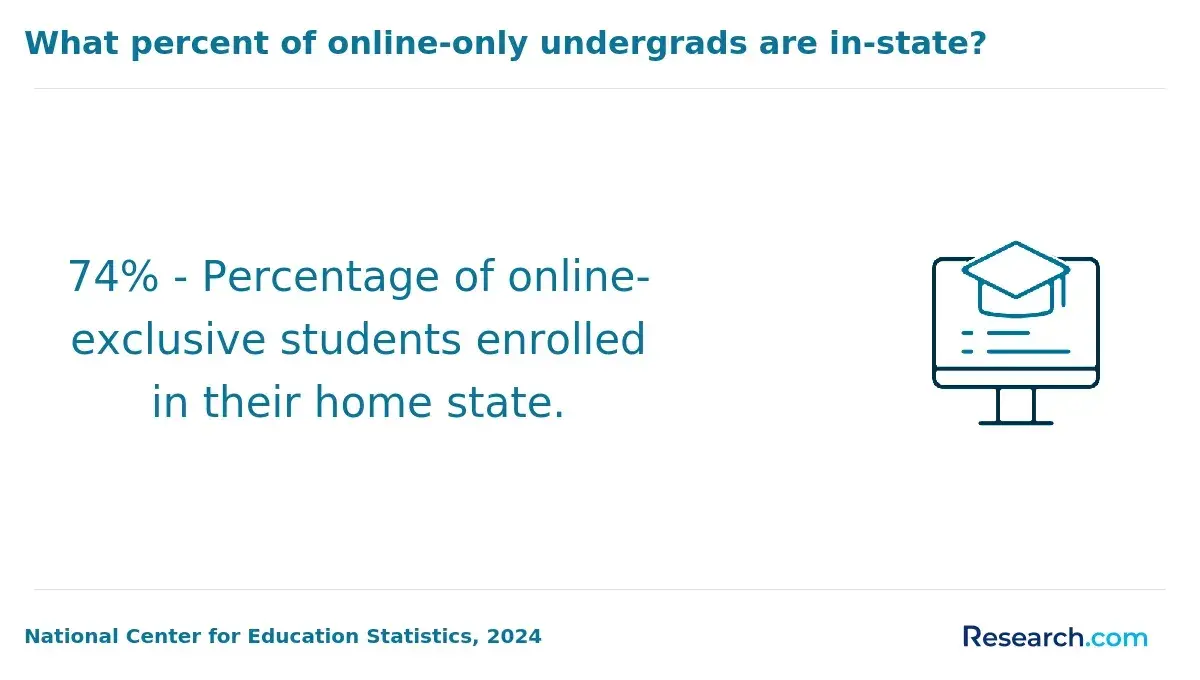
Choosing an online corrections degree while working full time usually comes down to four questions: Is it accredited, will the schedule fit, can you afford it, and will it support your career goal? NCES data released in 2024 showed that more than half of U.S. undergraduates took at least one distance education course, making online flexibility a mainstream option rather than a backup plan.
This guide is for working adults comparing accredited online corrections programs, including part-time and self-paced formats, so you can judge workload, cost, transfer credit, and career value before enrolling.
Key Things You Should Know
- Accreditation is the first filter. Choose a school recognized by a U.S. Department of Education-approved accreditor, then confirm whether the corrections, criminal justice, or public safety curriculum matches your target role.
- Flexible online corrections degrees often require about 10 to 15 hours of study per week for a full-time course load, while part-time plans may reduce the weekly load but extend completion to 4 to 6 years for a bachelor's degree.
- Transfer credit can materially change cost and timeline; adult-friendly programs may accept prior college credits, military training, academy coursework, or documented professional learning, but limits vary by school.
What Is an Accredited Online Corrections Degree Program and Why Does Accreditation Matter?
An accredited online corrections degree program is a college program delivered mostly or fully online by an institution that has been reviewed by a recognized accrediting agency. Corrections-focused programs are often offered as concentrations within criminal justice, criminology, public safety, justice administration, or human services degrees. Coursework commonly covers correctional systems, offender rehabilitation, ethics, law, case management, institutional security, reentry, probation and parole, and criminal procedure.
Accreditation matters because it affects transfer credit, federal financial aid eligibility, employer recognition, graduate school admission, and the basic credibility of the degree. For working adults, this is especially important because you may be investing several years of part-time study while relying on employer tuition assistance, federal aid, or transfer credits to control cost.
When comparing programs, separate institutional accreditation from program features. A corrections degree does not usually have a single national programmatic accreditor in the way nursing, social work, business, or teacher education programs may. That means your main verification step is confirming the institution's accreditation and then reviewing whether the curriculum, faculty background, fieldwork options, and career services align with corrections work.
The table below summarizes common online corrections-related degree levels. It can help you decide whether you need an entry-level credential, a bachelor's degree for advancement, or a graduate option for leadership and policy roles.
| Degree level | Typical credits | Best fit for working adults | Common outcomes |
| Associate degree | About 60 credits | Adults seeking an entry-level credential or a transfer pathway into a bachelor's program | Correctional officer, detention officer, security roles, bachelor's transfer |
| Bachelor's degree | About 120 credits | Adults seeking advancement, supervisory eligibility, probation-related pathways, or broader criminal justice options | Corrections, probation support, case management, reentry services, public safety administration |
| Graduate certificate | Varies by school | Professionals who already have a degree and want targeted study in corrections, leadership, or public safety | Specialized professional development or preparation for graduate study |
| Master's degree | Often 30 to 36 credits | Experienced professionals pursuing leadership, policy, research, or administrative roles | Corrections administration, criminal justice leadership, policy analysis, training coordination |
One practical caution: an online corrections degree is not the same as state academy training, peace officer certification, or agency-specific hiring requirements. If your target job is in law enforcement, probation, parole, juvenile justice, or federal corrections, check the exact agency requirements before assuming a degree will satisfy them.
Which Flexible Corrections Degree Formats Are Best for Working Adults: Part-Time, Full-Time, or Self-Paced?
The best format depends on your work schedule, family responsibilities, financial aid status, transfer credits, and tolerance for deadlines. "Online" does not automatically mean self-paced, and "flexible" can mean anything from recorded lectures with weekly due dates to competency-based courses that let you move faster if you already know the material.
The table below compares the most common formats for accredited online corrections degrees. Use it to match the delivery model to your real weekly availability rather than the fastest advertised completion time.
| Format | How it usually works | Best for | Trade-off |
| Full-time asynchronous | Courses are online with weekly modules and deadlines, but no required live class time | Adults with predictable evening or weekend study blocks | Faster progress, but workload can be heavy during busy work weeks |
| Part-time asynchronous | Students take fewer courses per term, usually with the same weekly deadline structure | Full-time workers, parents, shift workers, and military-affiliated learners | Lower weekly pressure, but a longer time to graduation |
| Synchronous online | Students attend live virtual classes at scheduled times | Learners who want real-time discussion and a set routine | Less convenient for rotating shifts or overtime-heavy jobs |
| Self-paced or competency-based | Students move through material at variable speed within school-defined term or subscription limits | Motivated adults with prior knowledge, strong time management, or transfer credit | More independence, but less external structure and possible completion limits |
| Cohort-based online | Students progress with the same group through a set sequence | Learners who value peer connection and predictable course sequencing | May offer fewer start dates and less room to pause |
Part-time study is usually the safest fit for adults working 40 or more hours per week, especially in correctional environments where overtime, emergencies, mandatory shifts, and rotating schedules are common. Full-time online study can work if your job has predictable hours or if you can temporarily reduce outside commitments.
Self-paced programs can be excellent for disciplined learners, but they are not automatically easier. Before choosing that format, ask specific questions about pacing rules and academic expectations:
- How many weeks or months do I have to complete each course or competency block?
- Are there minimum weekly activity requirements, proctored exams, or required live sessions?
- What happens if I fall behind because of overtime, family illness, or schedule changes?
- Can I accelerate through courses if I already have corrections, military, or law enforcement experience?
- Does the school charge by credit, term, subscription period, or flat tuition block?
If you are comparing corrections with other online public-service pathways, note that programs serving working adults can differ widely by field. For example, a master's in social work online may have more formal practicum requirements than many corrections-focused criminal justice programs, which can make scheduling a bigger factor.
What Are the Admission Requirements for Accredited Online Corrections Degree Programs?
Admission requirements depend on the degree level and the selectivity of the school. Most online associate and bachelor's programs in corrections or criminal justice are designed for broad access, while master's programs typically require a completed bachelor's degree and may expect professional goals tied to justice, public safety, social services, or administration.
For undergraduate programs, admissions teams commonly review basic academic readiness rather than corrections work experience. Adult learners should still gather documents early because transcript delays are one of the most common reasons enrollment gets pushed to a later term.
- High school diploma, GED, or equivalent credential for first-time undergraduate admission
- Official transcripts from all colleges previously attended, even if credits are old or incomplete
- Minimum GPA requirements, which vary by institution and may be flexible for adult learners
- Placement testing or prior coursework in writing, math, or general education at some schools
- Technology access requirements, including reliable internet, webcam, and learning management system compatibility
Graduate corrections, criminal justice, or public safety programs usually add more selective requirements. These may include a bachelor's degree from an accredited institution, a statement of purpose, references, a resume, professional experience, or prerequisite coursework in research methods or criminal justice.
Applicants with military, law enforcement, corrections, or public safety backgrounds should ask whether the school evaluates prior learning. Some institutions award credit for academy training, American Council on Education-reviewed military learning, professional certifications, or portfolio-assessed experience, but policies vary. If you are also considering adjacent human-service careers, a MSW degree will typically involve different admissions and field placement expectations than a corrections degree.
One important admissions red flag is a school that downplays transcripts, accreditation, or academic requirements too aggressively. Adult-friendly admissions should be supportive and efficient, but not vague about standards, cost, transfer credit, or graduation requirements.
How Much Does an Online Corrections Degree Cost, and What Financial Aid Options Are Available?
The cost of an online corrections degree depends on tuition type, residency rules, transfer credits, fees, books, technology, and how long you stay enrolled. College Board's 2024 tuition data showed published tuition and fees of about $11,610 for in-state students at public four-year institutions and $4,050 for public two-year colleges, which helps explain why many working adults start with community college credits before transferring into a bachelor's program.
Current cost benchmarks can help you frame the budget before you compare individual schools. These are not program guarantees, but they show why residency, institution type, and transfer strategy matter.
- Public two-year colleges: about $4,050 in published tuition and fees for in-district students
- Public four-year colleges: about $11,610 in published tuition and fees for in-state students
- Public four-year out-of-state colleges: often substantially higher than in-state tuition unless the online program offers a flat distance-learning rate
- Private nonprofit colleges: usually have higher published tuition, though institutional grants may reduce the net price
The table below explains the cost factors that matter most for online corrections students. This is especially useful if you are comparing a lower sticker price against a program that accepts more transfer credit or offers stronger employer-aligned scheduling.
| Cost factor | Why it matters for working adults | What to verify |
| Per-credit tuition | Determines the base cost of remaining credits | Whether online students pay in-state, out-of-state, or flat-rate tuition |
| Transfer credit | Can reduce both tuition and time in school | Maximum accepted credits and minimum credits required in residence |
| Fees | Online programs may charge technology, distance learning, graduation, or proctoring fees | Total program cost, not just tuition |
| Books and materials | Criminal justice textbooks, legal references, and digital platforms can add costs | Whether courses use open educational resources or inclusive-access materials |
| Enrollment intensity | Part-time study can fit work better but may extend fee exposure over more terms | How aid, payment plans, and tuition locks work for part-time students |
Financial aid starts with the FAFSA if the school participates in federal student aid programs. The maximum Federal Pell Grant for the 2024-2025 award year was $7,395, which can be meaningful for eligible undergraduates, but it may not cover the full cost of attendance. Working adults should also compare employer tuition assistance, union education benefits, veteran and military benefits, state grants, scholarships for public safety personnel, and payment plans.
Do not choose solely by the lowest tuition line. A slightly higher-cost program may be better value if it accepts more of your prior credit, offers courses every term, provides strong advising, and lets you keep working. If your broader search includes graduate study in other fields, comparing an affordable master degree can also help you understand how tuition, fees, and online delivery models vary across disciplines.
How Long Does It Take to Complete an Online Corrections Degree, and Can Transfer Credits Help You Graduate Faster?
An online corrections associate degree commonly takes about 2 years of full-time study, while a bachelor's degree typically requires about 4 years for first-time full-time students. Working adults often take longer because they enroll part time, pause during demanding work periods, or spread difficult courses across multiple terms. That is not a failure; it can be the right strategy if it keeps you from withdrawing or taking on unmanageable debt.
The table below gives a realistic view of timelines and weekly workload. Exact expectations vary by school and course design, but the comparison can help you avoid choosing a pace that does not match your work life.
| Enrollment pattern | Typical course load | Common bachelor's completion pattern | Workload fit |
| Full-time, no transfer credit | About 12 to 15 credits per term | About 4 years | Best for students with predictable schedules and strong weekly study time |
| Part-time, no transfer credit | About 6 to 9 credits per term | Often 5 to 6 years | Better for full-time workers and caregivers |
| Full-time with associate transfer | Upper-division credits remaining | Often about 2 years after transfer | Strong option for adults who completed community college first |
| Part-time with significant transfer credit | Fewer remaining credits spread over terms | Often 2 to 4 years, depending on remaining requirements | Good balance of flexibility and progress |
| Self-paced or competency-based | Variable | Can be faster or slower depending on prior learning and discipline | Best for self-directed learners who can plan consistently |
Transfer credit can be one of the biggest advantages for adult learners. A transfer-friendly corrections program may evaluate prior college coursework, general education credits, police or corrections academy training, military learning, professional certifications, and portfolio-based learning. The key is to request an official transfer evaluation before committing.
Use a clear sequence when evaluating transfer policies so you can compare programs on remaining cost and time, not just advertised tuition:
- Send unofficial transcripts to admissions for an early estimate, then request an official evaluation before enrollment.
- Ask how many credits can transfer into the degree and how many must be completed at the institution.
- Confirm whether criminal justice, corrections, military, or academy credits count toward major requirements or only electives.
- Ask whether transfer credits affect eligibility for scholarships, honors, accelerated pathways, or financial aid pacing.
- Compare the number of remaining credits across schools, then calculate the real cost to finish.
A common mistake is assuming that "90 transfer credits accepted" means 90 credits will apply directly to your degree. Some credits may transfer as electives but not satisfy core, major, or upper-division requirements, which can leave you with more courses than expected.
What Should You Look for When Comparing Accredited Online Corrections Degree Programs?
A strong online corrections program should combine recognized accreditation, relevant curriculum, flexible delivery, transparent pricing, transfer-friendly policies, and credible student support. For working adults, the best program is rarely the one with the fastest completion claim; it is the one you can complete without sacrificing job stability or long-term career fit.
The table below highlights the comparison criteria that matter most. It is designed to help you separate meaningful quality signals from marketing language.
| Comparison factor | Strong sign | Red flag |
| Accreditation | Institution is accredited by a recognized U.S. accreditor | Accreditation is vague, unfamiliar, or difficult to verify |
| Schedule flexibility | Clear information on asynchronous, synchronous, part-time, and self-paced rules | Program says "flexible" but does not explain deadlines or live requirements |
| Curriculum relevance | Courses cover corrections, reentry, law, ethics, case management, and justice administration | Program has a generic criminal justice label with few corrections-specific courses |
| Faculty background | Faculty include researchers and practitioners with justice or public safety experience | No faculty bios or limited evidence of subject expertise |
| Transfer policy | Written maximums, residency rules, and prior-learning options | Admissions gives verbal estimates without a formal evaluation |
| Career alignment | Program explains pathways and limitations for corrections, probation, parole, and public safety roles | Marketing suggests guaranteed jobs or promotions |
Before you apply, ask schools direct questions that reveal how the program actually works for adults with jobs. Admissions advisors should be able to answer these clearly or connect you with academic advising.
- Are courses fully asynchronous, or are there required live sessions?
- Can I enroll part time every term without losing access to required courses?
- How often are major courses offered, and what happens if I need to skip a term?
- What is the average class size in upper-division corrections or criminal justice courses?
- Does the program offer credit for academy, military, or professional training?
- What career services are available to online students in corrections, probation, parole, or reentry fields?
- Will the degree meet requirements for my target agency, state, or promotion track?
Specialized accreditation is less common in corrections than in some other fields, so institutional accreditation and curriculum fit carry extra weight. If you have compared programs in business, for example, resources on the best AACSB online MBA programs show how programmatic accreditation can function differently depending on the discipline.
The biggest red flags are unverifiable accreditation, unclear total cost, pressure to enroll immediately, no formal transfer review, unrealistic promises about career outcomes, and "self-paced" language without stated completion limits. A credible school will be transparent about both flexibility and constraints.
What Career Opportunities and Salary Potential Can You Expect With a Corrections Degree?
A corrections degree can support entry, advancement, or career change within correctional institutions, community supervision, reentry services, juvenile justice, public safety administration, and adjacent human-service roles. It is most useful when paired with agency experience, state or employer-required training, communication skills, report writing, conflict management, ethical judgment, and knowledge of correctional policy.
BLS May 2024 wage data reported a median annual wage of $64,520 for probation officers and correctional treatment specialists. That figure should be used as context, not a promise: pay varies by state, agency, union contract, degree level, experience, overtime, and whether the role is local, state, or federal.
The table below connects common roles to responsibilities and education fit. Use it to decide whether a corrections-focused degree, a broader criminal justice degree, or a human-services path better matches your goal.
| Career path | Typical responsibilities | How a corrections degree may help |
| Correctional officer or jail officer | Maintain safety, supervise incarcerated individuals, enforce rules, document incidents | Can strengthen understanding of law, ethics, communication, and institutional operations |
| Probation or parole pathway | Monitor compliance, prepare reports, support rehabilitation plans, coordinate services | Bachelor's-level study may support eligibility, though agency requirements vary |
| Correctional treatment or reentry support | Help individuals prepare for release, connect clients with programs, document progress | Relevant coursework in rehabilitation, case management, and community corrections can be valuable |
| Juvenile justice roles | Work with youth in detention, supervision, diversion, or community programs | Courses in juvenile justice, trauma-informed practice, and ethics can be useful |
| Corrections administration or supervisory roles | Manage staff, policy, training, compliance, operations, or facility programs | A bachelor's or master's degree may support advancement when paired with experience |
Some corrections students eventually move toward counseling, social services, victim advocacy, or reentry casework. If you want a clinical or licensed social-service route, research the education path carefully because it may require social work accreditation and supervised field hours rather than a corrections degree alone. Online learners comparing justice and human-service options may also want to review paths outside corrections, such as a graphic design bachelor degree, only if they are reassessing career fit more broadly and want a fully different online career direction.
A corrections degree may be worth it if it helps you meet a promotion requirement, qualify for a bachelor's-preferred role, move into community supervision, or build a foundation for graduate study. It may not be the best investment if your target agency does not require a degree, your current employer offers no pay differential, or you choose a costly program without transfer credit or clear career alignment.
How Can Working Adults Balance a Corrections Degree With Full-Time Work and Family Responsibilities?
Balancing an online corrections degree with full-time work is possible, but it requires choosing the right course load and building a realistic weekly routine. Corrections work can be physically and emotionally demanding, and many roles involve overtime, shift bids, weekends, holidays, or mandatory coverage. Your academic plan should account for that reality.
Start by estimating your available study time before choosing full-time or part-time enrollment. A three-credit online course can require several hours each week for readings, discussions, assignments, quizzes, and exams, and writing-heavy criminal justice courses may demand extra time near deadlines.
These steps can help you build a sustainable plan instead of relying on motivation alone:
- Choose part-time enrollment for the first term if you are unsure how online coursework will fit your work and family schedule.
- Block recurring study sessions on days when your energy is highest, not only when your calendar is empty.
- Tell family members or household partners which nights are school nights and what support you need.
- Use the syllabus during week one to identify exams, major papers, and discussion deadlines.
- Ask your supervisor early about tuition assistance, schedule flexibility, or predictable days off during finals.
- Keep one emergency buffer each week for overtime, child care disruptions, or unexpected work demands.
- Contact instructors before deadlines if a documented work or family emergency may affect your submission.
The most common mistake is starting with too many courses because the program is online. Online learning removes the commute, but it does not remove reading, writing, group work, exams, or deadlines. For many working adults, a slower plan that leads to completion is better than an overloaded first term that leads to withdrawal.
Self-paced students need an even stronger system because there may be fewer weekly reminders. Set your own mini-deadlines, track progress by module, and schedule exam preparation early. If you need external accountability, a structured asynchronous program may be a better fit than a fully self-paced one.
What Student Support Services and Online Learning Resources Should You Expect From a Corrections Degree Program?
Student support can determine whether a flexible program is actually workable. For adult learners, the most valuable services are not just general campus resources; they are online-accessible services available during evenings, weekends, or by appointment.
Look for support services that match the realities of online learning and corrections-related career planning. A strong program should make these services easy to find before you enroll.
- Academic advising that helps part-time students plan course sequences without unnecessarily delaying graduation
- Transfer-credit advising that explains how prior coursework, military learning, or academy training applies to the degree
- Online tutoring and writing support for research papers, legal analysis, and discussion-based assignments
- Library access with criminal justice databases, citation tools, and remote research help
- Career services for resumes, interview preparation, agency applications, and public-sector hiring timelines
- Technical support during evenings or weekends, especially for exams, proctoring, and learning platform problems
- Accessibility services for students who need accommodations in online courses
- Mental health or wellness resources, which can be especially important for students already working in high-stress public safety settings
Ask whether online students receive the same advising priority as campus students. Also ask whether career services understand corrections hiring, civil-service exams, background checks, physical requirements, and agency-specific application timelines.
A good online program should also provide orientation to the learning platform before classes begin. If you are returning to school after several years, orientation, sample assignments, and early advising can reduce avoidable stress during the first term.
Do Online Corrections Degree Programs Include Internships, Practicums, or Other Hands-On Learning Requirements?
Some online corrections degree programs include internships, practicums, capstone projects, service learning, simulations, or field-based assignments, but requirements vary widely. Many bachelor's programs in criminal justice or corrections are fully online academically, while others strongly encourage or require a local internship in a correctional facility, court service agency, probation office, reentry organization, nonprofit, or public safety department.
Hands-on learning can be valuable because corrections careers require judgment, communication, documentation, and ethical decision-making in real settings. However, it can also complicate scheduling for adults who already work full time or who are employed by an agency with confidentiality, shift, or conflict-of-interest rules.
Before enrolling in a program with a field requirement, clarify the practical details. These questions are especially important if you work rotating shifts or live far from the school's main campus.
- Is the internship required, optional, or replaceable with a capstone project?
- Can I complete field hours at my current workplace, or must the placement be with a different agency?
- Who finds the placement: the student, the school, or both?
- Are evening, weekend, remote, or project-based placements allowed?
- How many hours are required, and over how many weeks?
- Are background checks, drug screens, immunizations, liability insurance, or agency approvals required?
- Will a prior corrections, military, or public safety role satisfy any experiential requirement?
If you already work in corrections, a capstone or applied project may be more practical than an unpaid internship. For career changers, an internship can provide exposure, references, and clearer insight into whether institutional corrections, community supervision, juvenile justice, or reentry work is the best fit.
Do not assume a fully online program has no in-person obligations. Review the catalog, internship handbook, and state authorization information before enrolling, especially if you live outside the state where the school is located.
Other Things You Should Know About Corrections
Yes, many correctional officer roles require a high school diploma or equivalent plus agency training, background checks, and physical or psychological screening. A degree may still help with advancement, specialized roles, probation-related pathways, or long-term public safety leadership goals.
Not exactly. Corrections is usually a focused area within the broader criminal justice field. A criminal justice degree may cover policing, courts, law, criminology, and corrections, while a corrections concentration usually goes deeper into incarceration, supervision, rehabilitation, reentry, and institutional policy.
In most cases, diplomas from accredited institutions do not state that the degree was completed online, but policies vary by school. The transcript may list course formats or campus codes, so ask the registrar if this matters to you.
They can be useful if you want a shorter, lower-commitment credential or need targeted knowledge in corrections, reentry, juvenile justice, or public safety. Before enrolling, confirm whether certificate credits can stack into an associate, bachelor's, or master's program later.
References
- Full-time, part-time, online - which study mode is right for you? https://www.studentspace.pl/en/blog/post/studia-stacjonarne-zaoczne-wieczorowe---ktory-tryb-wybrac
- 15 Best Online Bachelor's In Criminal Justice https://www.criminaljusticedegreeschools.com/rankings/best-online-bachelors/
- Flexible online colleges https://www.gatewayunj.org/student-stories/flexible-college-programs-making-it-possible-to-earn-your-degree-on-your-schedule
- Preparing Instructors to Support Students in Prison https://www.jff.org/idea/preparing-instructors-to-support-students-in-prison/
- How Hybrid Learning Is Unlocking Real Rehabilitation https://thelastmile.org/hybrid-prison-education/
- Most Affordable Online Criminal Justice Programs: Find a School https://www.degreesforgood.org/online-degrees/criminal-justice-programs/most-affordable/
- Types of Financial Aid for Online Colleges https://www.umassglobal.edu/blog-news/types-financial-aid-online-colleges
- Online, Hybrid, and More: Flexible Learning Options in College - ReUp Education https://reupeducation.com/blog/online-hybrid-and-more-flexible-learning-options-in-college/