
2027 How to Become a Nurse Midwife in Arkansas – Midwife Schooling Requirements

Co-Founder and Chief Data Scientist
Becoming a certified nurse midwife in Arkansas is a graduate-level nursing pathway for registered nurses who want to provide pregnancy, birth, postpartum, newborn, gynecologic, and reproductive health care. The decision matters because midwifery requires a specific sequence of education, national certification, state authorization, supervised clinical training, and ongoing renewal. Choosing the wrong program or misunderstanding Arkansas practice rules can delay licensure or limit where you can work.
This guide explains the education route, admissions expectations, clinical training, timeline, costs, financial aid, accreditation, career outlook, and common mistakes to avoid. It is written for current RNs considering advanced practice, BSN students planning ahead, and career changers comparing nursing and midwifery options in Arkansas.
Quick answer: How do you become a nurse midwife in Arkansas?
To become a certified nurse midwife in Arkansas, you generally need to earn an accredited nursing degree, obtain RN licensure by passing the NCLEX-RN, complete an ACME-accredited graduate nurse-midwifery program, pass the American Midwifery Certification Board exam, and apply for authorization through the Arkansas State Board of Nursing. The full process commonly takes six to eight years from the start of a BSN program, depending on whether you study full time, attend part time, or already hold an RN license.
- Start with RN licensure: Complete an accredited nursing program and pass the NCLEX-RN before moving into advanced practice training.
- Choose an ACME-accredited graduate program: A nurse-midwifery MSN, DNP, or eligible post-graduate certificate must meet Accreditation Commission for Midwifery Education standards.
- Complete supervised clinical training: Programs require extensive hands-on experience in prenatal care, labor and birth, postpartum care, newborn assessment, gynecologic care, and women’s primary care.
- Pass national certification: Graduates must pass the AMCB certification exam before seeking state authorization to practice as a CNM.
- Confirm Arkansas rules before enrolling: Program approval, clinical placement availability, prescriptive authority requirements, and collaborative practice expectations can affect your path.
- Minimum degree needed to become a nurse midwife in Arkansas
- Admission requirements for Arkansas nurse-midwifery programs
- Courses included in nurse-midwifery programs
- Clinical training requirements for nurse-midwifery students
- How long it takes to become a CNM in Arkansas
- Estimated cost of nurse-midwifery school in Arkansas
- Financial aid options for nurse-midwifery students
- Accredited nurse-midwifery school options for Arkansas students
- Continuing education and recertification requirements
- How early nursing credentials can support midwifery preparation
- Advanced degrees that can expand CNM career options
- Accreditation organizations for nurse-midwifery programs
- Job outlook for nurse midwives in Arkansas
- Common mistakes to avoid when choosing a CNM pathway
- What Arkansas CNMs should expect from the career
- Can you be a midwife in Arkansas without a nursing degree?
- Nurse midwife vs. midwife in Arkansas
- Is a midwife higher than an RN?
- Is becoming a nurse midwife difficult?
- References
What is the minimum degree requirement to become a nurse midwife in Arkansas?
The usual minimum graduate credential for becoming a certified nurse midwife in Arkansas is a Master of Science in Nursing with a nurse-midwifery focus. Some students choose a Doctor of Nursing Practice instead, but the key requirement is not simply the degree title. The program must prepare graduates for national nurse-midwifery certification and meet recognized accreditation standards.
A graduate nurse-midwifery program builds on RN-level practice and adds advanced training in pregnancy care, labor and birth, postpartum care, newborn care, reproductive health, gynecology, pharmacology, primary care for women, and clinical decision-making. Students also learn how to recognize complications, collaborate with physicians and other clinicians, and provide evidence-based care across hospital, clinic, birth center, and community settings.
The degree is also the gateway to the AMCB certification exam. Without completing an eligible accredited graduate program, you generally cannot move forward to national certification or Arkansas advanced practice authorization as a CNM.
| Credential | Best for | How it fits the CNM pathway |
| BSN | Students who need RN preparation before graduate study | Provides the nursing foundation and RN eligibility needed for most CNM programs |
| MSN in Nurse Midwifery | RNs who want the standard graduate route into CNM practice | Meets the graduate education expectation when the program is properly accredited |
| DNP with Nurse-Midwifery Focus | RNs seeking advanced clinical leadership preparation | Can support CNM eligibility while adding systems leadership, policy, and practice improvement training |
| Post-Graduate Certificate | Advanced practice nurses who already hold a graduate nursing degree | May provide nurse-midwifery specialization if the certificate meets certification requirements |
If you are still comparing nursing specialties, reviewing the best specialty career choices for nurses can help you decide whether midwifery, nurse practitioner practice, education, administration, or another advanced nursing path fits your goals.
What are the admission requirements for nurse midwife programs in Arkansas?
Admission requirements vary by school, but nurse-midwifery programs generally look for applicants who are academically prepared, licensed as RNs, and ready for graduate-level clinical responsibility. Arkansas students should also confirm whether an online or out-of-state program can support local clinical placements before applying.
| Requirement | What schools commonly expect | Why it matters |
| Prior nursing degree | A BSN from an accredited institution is commonly required | Graduate midwifery coursework assumes a strong nursing foundation |
| RN license | A current RN license in Arkansas or eligibility for licensure | CNM training is an advanced practice nursing pathway |
| GPA | Many programs expect at least a 2.5 overall GPA, though competitive programs may prefer stronger academic records | Graduate coursework is intensive and clinically demanding |
| Recommendations | Usually two or three references from supervisors, faculty, or clinicians | Programs want evidence of clinical judgment, professionalism, and readiness |
| Clinical experience | One to two years of recent nursing work is often preferred, especially in maternal, women’s health, or acute care settings | Experience can make graduate clinical training more manageable |
| Personal statement | A written explanation of your interest in midwifery, background, and career goals | Schools use this to assess motivation and fit |
| Interview | Some programs interview finalists | Faculty may evaluate communication skills, maturity, and commitment to midwifery care |
| International applicant materials | English proficiency scores and transcript evaluation may be required | Schools must verify academic equivalency and readiness for clinical education |
| Arkansas practice considerations | Applicants should understand AMCB certification expectations and possible collaborative practice requirements for prescriptive authority | State rules can affect clinical practice after graduation |
Before submitting applications, ask each program three practical questions: Can Arkansas students enroll? Can the school help approve clinical sites in Arkansas? Do graduates meet eligibility requirements for AMCB certification and Arkansas advanced practice licensure?
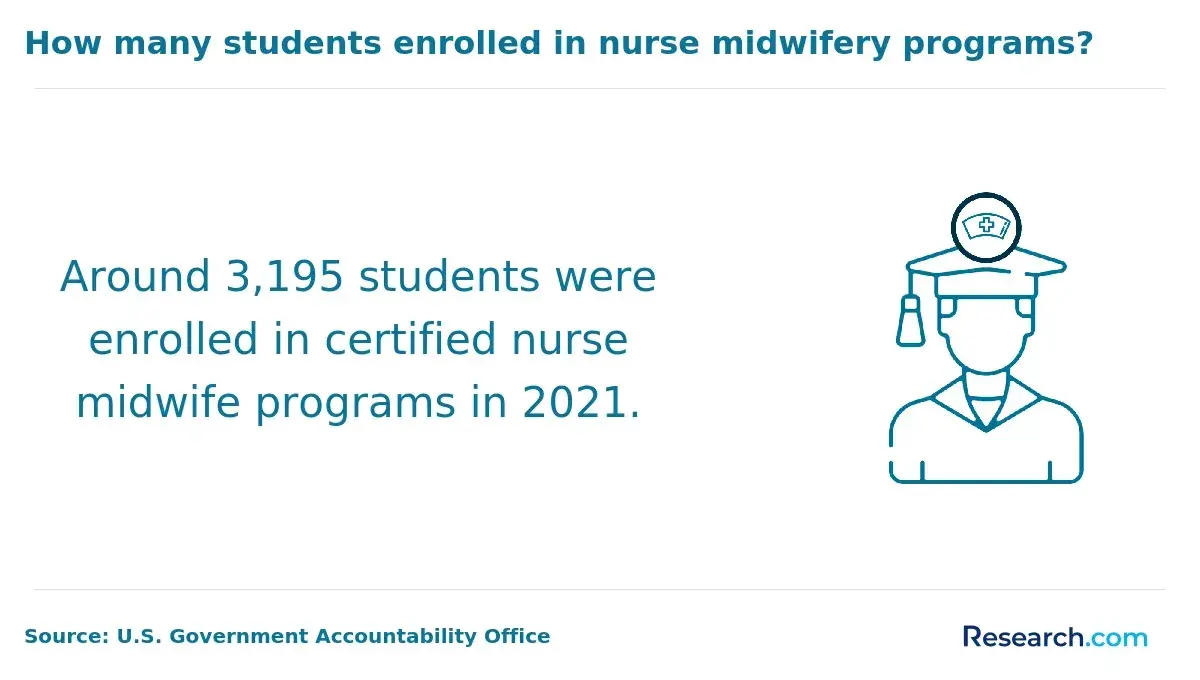
What courses are included in nurse midwife programs in Arkansas?
Nurse-midwifery curricula combine advanced nursing science, women’s health, birth care, newborn care, prescribing, research, and supervised practice. The exact course names differ by university, but most accredited programs cover the same core competencies because graduates must be ready for national certification and safe clinical practice.
- Advanced health assessment: Students learn to evaluate physical, psychosocial, reproductive, and family health needs across clinical settings.
- Reproductive health and gynecologic care: Coursework covers contraception, preventive care, screening, menstrual concerns, sexual health, and routine gynecologic management.
- Advanced pharmacology: Students study medication selection, safety, dosing, contraindications, and prescribing considerations for women, pregnant patients, postpartum patients, and newborns.
- Maternal and newborn care: Courses address pregnancy, labor, birth, postpartum recovery, newborn transition, risk recognition, and appropriate consultation or referral.
- Evidence-based practice and research: Students learn to evaluate clinical studies and apply current evidence to patient care decisions.
- Primary care of women: Training includes health promotion, preventive care, chronic condition awareness, and lifespan care for women and gender-diverse patients seeking reproductive or gynecologic services.
- Advanced pathophysiology: Students study disease processes that affect pregnancy, newborn health, reproductive systems, and general health assessment.
- Leadership and systems improvement: Programs prepare students to work in interprofessional teams, improve care quality, and understand health system barriers.
- Clinical practicum or residency: Students complete supervised care in approved settings such as hospitals, clinics, birth centers, and community health organizations.
If you are comparing CNM training with nurse practitioner pathways, this guide on how many years it takes to become a family nurse practitioner can help you compare timelines and role preparation.
What are the clinical training requirements for nurse midwife programs in Arkansas?
Nurse-midwifery students in Arkansas should expect to complete more than 1,000 hours of supervised clinical training. These hours are usually distributed across several care settings so students can practice prenatal care, labor support, birth management, postpartum visits, newborn assessment, gynecologic exams, family planning, and women’s primary care under qualified supervision.
Common clinical sites include hospital labor and delivery units, maternity wards, newborn nurseries, birthing centers, OB/GYN practices, community health centers, and family practice clinics. Rural and underserved placements can be especially valuable for Arkansas students because they expose future CNMs to access challenges, referral limitations, and broader community health needs.
Clinical preceptors may include certified nurse midwives, OB/GYN physicians, and other approved clinicians. Their role is to evaluate student progress, supervise patient care, document competency development, and help students learn when to manage care independently and when to consult or refer. Arkansas also requires nurse midwives attending births to have a collaborative agreement with a consulting physician, so students should become comfortable working in team-based care models.
| Clinical area | Skills students develop | Why it matters in practice |
| Prenatal care | Risk screening, patient education, routine assessments, care planning | Strong prenatal care helps identify concerns before labor and birth |
| Labor and birth | Monitoring labor progress, supporting physiologic birth, recognizing complications | CNMs must provide safe care while knowing when consultation is needed |
| Postpartum care | Recovery assessment, lactation support, mental health screening, follow-up planning | Postpartum care affects both maternal and newborn outcomes |
| Newborn care | Initial assessment, transition monitoring, feeding support, referral awareness | CNMs often evaluate newborn wellness immediately after birth |
| Gynecologic and reproductive health | Preventive visits, contraception counseling, screening, common concerns | Midwifery practice extends beyond pregnancy and birth |
The image below illustrates the average tenure of CNMs, offering context for long-term career stability in the profession.
How long does it take to become a certified nurse midwife in Arkansas?
The full route from the beginning of nursing school to licensed CNM practice usually takes six to eight years. The timeline can be shorter for someone who already holds a BSN and RN license, and longer for students who study part time, need bridge coursework, or wait for clinical placement availability.
| Stage | Typical time involved | Main milestone |
| BSN education | About four years of full-time study | Complete nursing education needed for RN eligibility |
| NCLEX-RN and RN licensure | Varies by testing and application timing | Become licensed as a registered nurse |
| RN experience | Not always fixed, but many applicants build clinical experience first | Strengthen patient care judgment before graduate study |
| Graduate nurse-midwifery program | Usually two to three years, depending on enrollment status and degree type | Complete advanced coursework and supervised clinical training |
| AMCB certification and Arkansas authorization | Often a few weeks or more, depending on exam scheduling, background checks, and board processing | Become eligible to practice as a CNM in Arkansas |
Arkansas is launching its own two-year certified nurse midwifery program at the University of Arkansas for Medical Sciences starting in 2026, which may make in-state preparation more accessible for future students. Until then, many Arkansas students consider online, hybrid, or nearby out-of-state programs that can approve local clinical sites.
The chart below shows the types of companies and organizations that commonly employ nurse midwives.
How much does it cost to attend nurse midwife school in Arkansas?
The cost of becoming a CNM in Arkansas depends on whether you attend a public university, private university, online program, or out-of-state school. Public options such as the University of Arkansas for Medical Sciences are often less expensive for residents than private programs, but students should calculate the total cost, not tuition alone.
For the 2024-2025 year, in-state students at public options such as UAMS pay around $510 per credit hour, while non-residents are charged about $888 per credit hour. Since many nurse-midwifery programs require 40 to 60 credit hours, tuition can total roughly $20,400 to $30,600 for residents and $35,520 to $53,280 for out-of-state students. Private schools, which are less common in Arkansas for nurse-midwifery, may cost $65,000 to $85,000 overall.
| Expense category | Estimated amount stated | Planning note |
| Resident public tuition | About $510 per credit hour | In-state status can substantially reduce tuition |
| Nonresident public tuition | About $888 per credit hour | Ask whether regional tuition agreements apply |
| Total public tuition estimate | Roughly $20,400 to $30,600 for residents and $35,520 to $53,280 for out-of-state students | Based on programs requiring 40 to 60 credit hours |
| Private school tuition | $65,000 to $85,000 overall | Compare clinical placement support and graduation outcomes before paying more |
| University fees | $1,000 to $3,000 | Fees can include technology, campus, laboratory, or program charges |
| Books and learning materials | $1,000 to $2,000 | Digital resources and exam preparation materials may add cost |
| Clinical supplies | $300 to $700 | Common costs include scrubs, equipment, and required supplies |
| Background checks and immunizations | $100 to $300 | Clinical sites often require documentation before placement |
| Certification and licensure expenses | $600 to $700, including the $500 American Midwifery Certification Board exam | Budget for post-graduation costs before your final term |
These figures do not include housing, transportation to clinical sites, childcare, lost work hours, or relocation. For a broader look at expenses and the overall CNM pathway, see Research.com’s guide to the cost and career path for becoming a certified nurse midwife.
What financial aid options are available for nurse midwife students in Arkansas?
Nurse-midwifery students should build a funding plan before enrolling because graduate nursing programs can be expensive and clinical schedules may reduce work hours. The best approach is to combine school-based aid, federal loans, scholarships, employer tuition support, and service-based repayment programs when available.
- Federal Pell Grants: Need-based grants that do not require repayment, offering up to $7,495 yearly for eligible students in certain nurse midwife programs.
- Direct Unsubsidized Loans: Federal loans that allow graduate nursing students to borrow up to $20,500 annually, with repayment required and no need-based eligibility requirement.
- Arkansas Nurses Foundation Scholarships: Awards such as the Dorothea Funk scholarship may support Arkansas RNs who are advancing their nursing practice, particularly in community health nursing.
- Faith A. Fields Scholarship: Provides up to $10,000 per year for full-time study with a work-back requirement in Arkansas healthcare settings.
- Loan repayment programs: Graduates who work in rural or underserved areas in Arkansas may qualify for programs that help repay educational debt in exchange for service.
- Federal Work-Study: Eligible students with financial need may access part-time employment, offering between $4,000 and $8,000 annually to help cover expenses.
| Funding option | Best fit | Question to ask before relying on it |
| Scholarships | Students with strong applications, service goals, or Arkansas ties | Is the scholarship renewable, and does it require work in a specific setting? |
| Federal loans | Graduate students who need predictable funding | What will repayment look like if I study full time and reduce work hours? |
| Employer tuition support | RNs working for hospitals or health systems | Do I need to remain employed for a set period after graduation? |
| Loan repayment | Graduates willing to work in shortage or underserved areas | Which locations, employers, or roles qualify? |
| Work-study | Students who can balance part-time work with clinical training | Will the job schedule conflict with clinical rotations? |
One practical strategy is to create a deadline calendar for the FAFSA, school aid applications, scholarship renewals, and service-obligation programs. Missing one deadline can cost more than choosing a slightly cheaper program.
What are the top accredited nurse midwife schools in Arkansas?
For Arkansas students, the best nurse-midwifery program is the one that is accredited, leads to AMCB exam eligibility, supports Arkansas clinical placement, fits your schedule, and is financially realistic. A well-known university is not enough if the program cannot verify that its graduates qualify for certification and Arkansas licensure.
- University of Arkansas for Medical Sciences – Nurse Midwifery Specialty Track: UAMS is important for Arkansas students because it is launching a two-year certified nurse midwifery program starting in 2026. Students should confirm current admission dates, accreditation status, clinical site expectations, and eligibility outcomes directly with the university.
- Frontier Nursing University – Online Nurse Midwifery Program: Arkansas residents may consider Frontier because of its distance-learning model and potential for local clinical rotations. Applicants should confirm ACME accreditation, preceptor responsibilities, and Arkansas licensure compatibility.
- Baylor University College of Nursing – Nurse Midwifery/DNP Program: This Texas-based option may appeal to students seeking DNP-level preparation and possible Arkansas clinical sites. Before applying, confirm whether Arkansas placements are available and whether the program meets AMCB and state requirements.
- Vanderbilt University School of Nursing – Nurse Midwifery MSN Program: Vanderbilt may be an option for Arkansas students who want a nationally recognized curriculum with potential local clinical arrangements. Students should verify clinical placement support and state authorization details.
- Georgetown University – Online Nurse Midwifery MSN Program: Georgetown’s online format may work for students who need distance learning while completing approved clinical experiences near home. Confirm accreditation, placement procedures, and Arkansas eligibility before enrolling.
| Selection factor | Why it matters | What to verify |
| ACME accreditation | Required for certification eligibility | Current accreditation status, not only historical approval |
| Arkansas clinical placement | Clinical access can delay graduation | Who finds preceptors: the school or the student? |
| State authorization | Online programs must be allowed to enroll Arkansas students | Written confirmation from the program |
| AMCB exam outcomes | Certification is required for CNM practice | Ask about first-time pass rates and graduate support |
| Total cost | Tuition is only part of the expense | Fees, travel, residency requirements, supplies, and certification costs |
| Schedule format | Clinical training can be difficult while working full time | Full-time, part-time, synchronous, asynchronous, and campus visit requirements |
Students planning for leadership, faculty, or doctoral-level roles may also want to explore career options with a doctorate in nursing before deciding between an MSN and DNP route.
What are the continuing education and recertification requirements for nurse midwives in Arkansas?
CNMs in Arkansas must keep their credentials active through ongoing renewal, continuing education, and certification maintenance. Requirements can involve both national recertification through AMCB and state renewal through Arkansas nursing authorities. Because renewal rules can change, practicing CNMs should track deadlines, approved continuing education topics, documentation requirements, and any state-specific practice updates.
Continuing education is not just a paperwork requirement. It helps CNMs stay current on maternal safety, newborn care, prescribing, emergency recognition, legal responsibilities, ethics, health equity, and changes in clinical guidelines. CNMs who also hold RN or APRN authorization should make sure all related credentials remain active. For a broader view of state nursing expectations, review the requirements to become and remain a nurse in Arkansas.
How can foundational nursing credentials support your advanced midwifery practice in Arkansas?
CNM practice is advanced, but the habits built in earlier nursing roles still matter. Patient observation, communication, infection control, documentation, teamwork, and basic comfort care all support safer advanced practice later. Students who begin in entry-level healthcare roles often gain early exposure to patient needs, shift work, interdisciplinary care, and the realities of healthcare delivery.
A Certified Nursing Assistant role will not replace RN education or graduate midwifery training, but it can help beginners confirm whether they enjoy direct patient care before committing to years of nursing education. If you are starting at the entry level, this overview of CNA requirements in Arkansas can help you understand an early healthcare credential before moving toward RN and CNM preparation.
Which advanced degrees support career advancement for CNMs in Arkansas?
After becoming a CNM, additional education can support specialized clinical work, leadership, teaching, policy involvement, or program management. The best degree depends on whether your goal is direct patient care, academic teaching, executive leadership, quality improvement, or broader women’s health practice.
| Advanced option | Best for | Career value |
| MSN in Nurse Midwifery | RNs seeking the core CNM credential | Prepares graduates for AMCB certification and APRN licensure when the program meets requirements |
| Dual Nurse-Midwifery/Women’s Health Nurse Practitioner program | Students who want broader women’s health preparation | Can expand practice preparation in gynecologic, reproductive, and complex women’s health care |
| Doctor of Nursing Practice | CNMs interested in leadership, clinical systems improvement, or faculty roles | Emphasizes health policy, evidence translation, quality improvement, and advanced practice leadership |
| Post-master’s certificates and specialized training | CNMs adding education, administration, public health, or quality expertise | Can support movement into management, teaching, program development, or specialized services |
If you are unsure how CNM education compares with other nursing credentials, Research.com’s guide to the different types of nursing degrees and levels can help you map the broader nursing education ladder.
What organizations accredit nurse midwife programs in Arkansas?
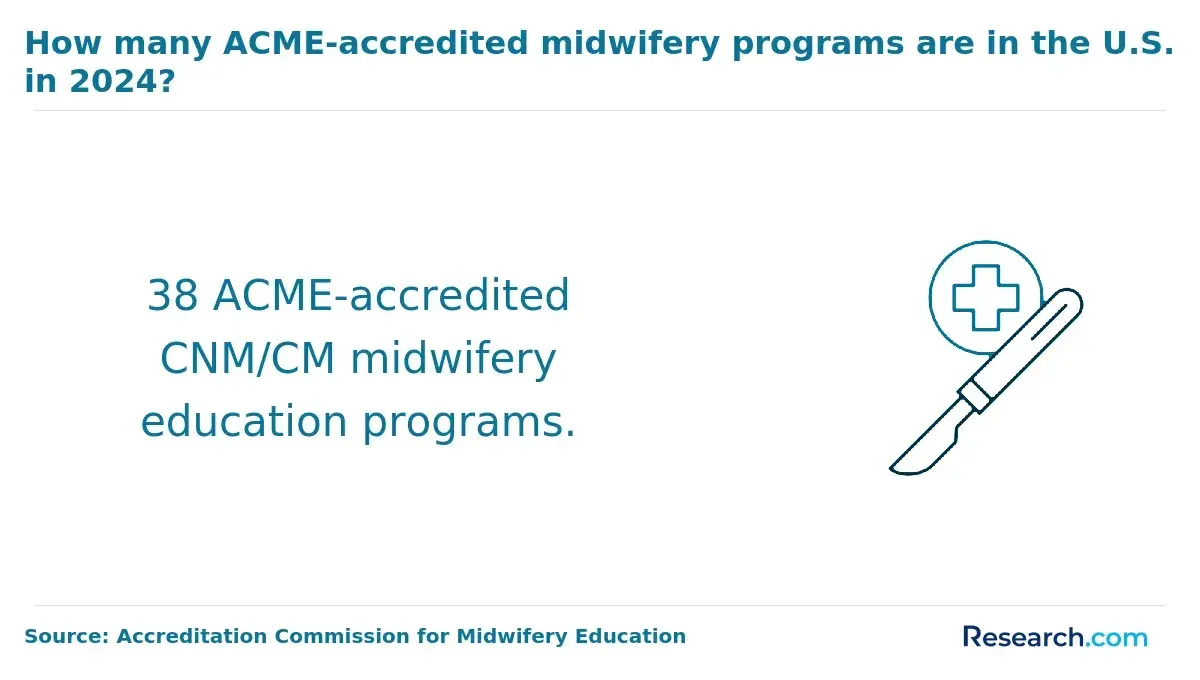
The key accreditor for nurse-midwifery education is the Accreditation Commission for Midwifery Education. ACME is the nationally recognized accrediting body for nurse-midwifery and midwifery education programs and is central to certification eligibility. For students, ACME accreditation is one of the most important details to verify before enrolling.
Graduating from an eligible ACME-accredited program is necessary for the AMCB certification exam. Without that pathway, you may spend time and money on education that does not lead to CNM practice in Arkansas. ACME may identify programs by accreditation stage, including preaccreditation, initial accreditation, and continued accreditation, so students should review the program’s current status rather than relying on outdated marketing materials.
Because Arkansas students may consider online or out-of-state schools, accreditation should be checked alongside state authorization, clinical placement policies, and Arkansas Board of Nursing requirements. Ask for written confirmation that the program accepts Arkansas students, supports clinical learning in or near Arkansas, and prepares graduates for AMCB certification.
What should nurse midwives in Arkansas expect from their careers?
CNM work in Arkansas can be professionally meaningful, but it is not an easy or narrow role. Nurse midwives may care for patients across pregnancy, birth, postpartum recovery, newborn transition, reproductive health, and preventive gynecologic care. They often work in hospitals, clinics, community health settings, birth-related services, and interdisciplinary teams.
Arkansas practice can also involve rural access challenges. CNMs may serve communities where maternity care options are limited, transportation is difficult, and patients need coordinated support from multiple providers. This makes communication, referral judgment, cultural humility, and community awareness especially important.
Students should expect a career that combines hands-on clinical care with emotional labor, unpredictable schedules, documentation, ongoing education, and collaboration. Those who enjoy long-term patient relationships, reproductive health, birth care, and patient education may find the role especially rewarding.
What is the job outlook for nurse midwives in Arkansas?
The job outlook for nurse midwives in Arkansas is shaped by women’s health needs, maternity care access, rural healthcare gaps, hospital staffing models, and the broader use of advanced practice nurses. CNMs may find opportunities in hospitals, OB/GYN clinics, community health centers, birthing-related services, and integrated care teams. However, availability can vary by region, employer, clinical privileges, and local practice arrangements.
Current healthcare trends favor clinicians who can provide comprehensive reproductive and maternal health care, collaborate across disciplines, use telehealth appropriately, and support patients in underserved areas. CNMs who maintain strong clinical competencies, understand state practice requirements, and build experience in both birth and women’s health may be better positioned for stable opportunities.
Students who are comparing CNM preparation with other advanced practice pathways can also review the top nurse practitioner programs in Arkansas to understand related graduate nursing options in the state.
Related Articles for Nearby States
- 2027 How to Become a Nurse Midwife in Missouri – Midwife Schooling Requirements
- 2027 How to Become a Nurse Midwife in Oklahoma – Midwife Schooling Requirements
- 2027 How to Become a Nurse Midwife in Tennessee – Midwife Schooling Requirements
- 2027 How to Become a Nurse Midwife in Mississippi - Midwife Schooling Requirements
- 2027 How to Become a Nurse Midwife in Louisiana – Midwife Schooling Requirements
- 2027 How to Become a Nurse Midwife in Texas – Midwife Schooling Requirements
- 2027 How to Become a Nurse Midwife in Kentucky – Midwife Schooling Requirements
- 2027 How to Become a Nurse Midwife in Kansas – Midwife Schooling Requirements
- 2027 How to Become a Nurse Midwife in Alabama – Midwife Schooling Requirements
- 2027 How to Become a Nurse Midwife in Illinois – Midwife Schooling Requirements
Common mistakes to avoid when becoming a nurse midwife in Arkansas
- Choosing a program before checking ACME accreditation: Accreditation affects certification eligibility. Verify the current status directly, not just through advertising copy.
- Assuming every online program works for Arkansas students: Online programs may have state authorization limits or clinical placement restrictions.
- Underestimating clinical placement challenges: Ask whether the school finds preceptors or expects you to secure your own sites.
- Budgeting only for tuition: Fees, supplies, background checks, immunizations, travel, certification, and licensure costs can add up.
- Ignoring work schedule conflicts: Graduate clinical rotations may not fit around full-time employment.
- Assuming salary outcomes are guaranteed: Compensation varies by employer, experience, region, setting, schedule, and scope of responsibilities.
- Waiting until graduation to study licensure rules: Arkansas practice requirements should be reviewed before enrollment, during clinical training, and before applying for authorization.
Can I be a midwife without a nursing degree in Arkansas?
If your goal is to become a certified nurse midwife, you need a nursing pathway because CNM practice is an advanced practice nursing role. That means RN licensure and graduate nurse-midwifery education are central requirements. Other midwifery-related pathways may use different terminology, but they are not the same as becoming a CNM. Before choosing any non-nursing route, confirm whether it is legally recognized in Arkansas, what services it permits, and whether it leads to the career you actually want.
What is the difference between a nurse midwife and a midwife in Arkansas?
A certified nurse midwife is a registered nurse with graduate-level midwifery education and national certification. CNMs are trained in advanced nursing practice, women’s health, pregnancy, birth, postpartum care, newborn care, and related primary care services. The word “midwife” can refer to different types of providers depending on the state and credential. Because titles and legal scopes can vary, Arkansas students should look closely at credential names, state recognition, certification requirements, and permitted practice settings.
Is a midwife in Arkansas higher than an RN?
A certified nurse midwife is not simply “higher” than an RN in a general hierarchy; it is a different level and type of nursing practice. CNMs first become RNs and then complete graduate education and national certification for advanced practice. An RN provides essential nursing care, while a CNM has additional preparation for midwifery and women’s health services. The roles overlap in some patient care skills but differ in education level, clinical authority, and responsibilities.
Is becoming a nurse midwife in Arkansas hard?
Yes, becoming a CNM is challenging. Students must complete nursing school, pass the NCLEX-RN, gain graduate admission, handle advanced science and clinical courses, complete extensive supervised practice, pass the AMCB exam, and meet Arkansas licensing requirements. The difficulty is manageable for students who plan carefully, choose an accredited program, secure clinical support, budget realistically, and build strong RN-level experience before graduate study.
References:
- American College of Nurse-Midwives. ACNM Advocacy: Advancing the Practice of Midwifery. ACNM
- Arkansas State University. Nursing: Master of Science in Nursing. ASU MSN nursing information
- Gamboa, A. Certified Nurse-Midwife Career Overview. NursingEducation
- Guzzetti, J. Best Online MSN Programs in Arkansas. RegisteredNursing.org
- Gyfted. Become a certified midwife in Arkansas. Gyfted
- Harris, M. How to Become a Nurse-Midwife. NurseJournal
- MidwifeSchooling.com. How to Become a Nurse Midwife in Arkansas. MidwifeSchooling.com
- Nursing Colleges. Become a Certified Nurse Midwife: Education, Licensure, and Salary. Nursing Colleges
- YourSchoolMatch. How To Become A Certified Nurse Midwife. YourSchoolMatch.com
- Zippia. Certified Nurse Midwife Demographics and Statistics in the US. Zippia
Key Insights
- The CNM pathway in Arkansas starts with nursing. You need RN preparation first, followed by graduate nurse-midwifery education and national certification.
- Accreditation is non-negotiable. Choose an ACME-accredited program that clearly leads to AMCB exam eligibility and Arkansas practice authorization.
- The realistic timeline is long but predictable. From BSN enrollment to CNM authorization, many students should plan for six to eight years.
- Clinical placement can make or break your plan. Before enrolling in an online or out-of-state program, confirm how Arkansas clinical sites and preceptors are approved.
- Total cost is more than tuition. Budget for fees, supplies, background checks, immunizations, travel, certification, licensure, and reduced work hours during clinical training.
- Arkansas CNMs need both clinical skill and collaboration skills. Rural access issues, team-based care, and state practice requirements make communication and referral judgment essential.
Other Things You Need to Know About Becoming a Nurse Midwife in Arkansas
The Arkansas State Board of Nursing licenses certified nurse midwives in Arkansas. Candidates must hold an active registered nurse license, complete an ACME-accredited nurse-midwifery graduate program, and obtain national certification from the American Midwifery Certification Board before applying for state licensure.
Before enrolling in a nurse midwife program in Arkansas, candidates must hold a Bachelor of Science in Nursing (BSN) degree and have an active RN license. Additionally, most programs require a minimum of one year of clinical experience in relevant fields.


