2027 Best Online Psychology Graduate Programs with No GRE Requirement

Co-Founder and Chief Data Scientist
With nearly 58 million American adults experiencing mental illness and a need for professionals to fill 12,900 job openings each year, the path to a psychology career is more critical than ever. For many qualified professionals and recent graduates, however, the GRE has long stood as a significant barrier to entry. A growing number of respected universities recognize this, now offering rigorous online graduate psychology programs no GRE required.
Based on over a decade of experience in career planning, our team has created this guide not just to list schools, but to give you a clear framework for choosing a legitimate, accredited program that aligns with your professional goals.
What are the benefits of getting an online psychology graduate degree with no GRE requirements?
- This path provides a direct route into a high-demand career field, offering you strong job security and the chance to make a real impact.
- The degree unlocks significant earning potential, with the median salary for licensed psychologists reaching $94,310 annually.
- You gain the flexibility to earn a respected graduate degree while balancing your current professional and personal life, a major advantage for working adults.
What can I expect from an online psychology graduate program with no GRE requirements?
You should expect a rigorous and highly interactive academic experience. The curriculum in a quality online program is identical to its on-campus counterpart, designed to meet the same high standards set by accrediting bodies.
Many people picture online learning as a solo activity, but modern programs are built around a cohort model where you progress with the same group of peers. You'll engage in a mix of self-paced coursework and live, synchronous class sessions that allow for real-time discussion with professors and classmates.
Most importantly, a reputable online graduate psychology programs no GRE required provides active, hands-on support for your clinical placements. You won’t be left on your own; a dedicated coordinator will work with you to secure a supervised internship or practicum site in your local community.
Where can I work with a degree from an online psychology graduate program with no GRE requirements?
A degree from a quality online program qualifies you for the same professional roles as one from an on-campus program. Depending on whether you earn a master's or a doctorate, you can work as a licensed professional counselor (LPC), a marriage and family therapist (MFT), or a licensed clinical psychologist.
These roles are found in settings like hospitals, community mental health clinics, schools, and private practice. The most important factor is that your specific job title and ability to practice are determined by your professional license.
State licensing boards and employers are focused on whether your program has the proper accreditation to make you eligible for that license. The fact that you earned the degree online is not the issue. With the right credentials, all the same doors are open.
How much can I make with a psychology degree?
Earning potential in this field is strong, and it's directly tied to the degree you earn and the license you obtain.
For those who pursue a doctorate (a PhD or PsyD) and become licensed psychologists, the median salary is $94,310. This reflects the advanced training and scope of practice at the doctoral level.
If you earn a master's degree and become a licensed professional, such as a mental health counselor, the median wage is around $59,190. This path offers a faster route to entering the field and building a fulfilling, financially stable career.
At both levels, the key that unlocks this professional earning potential is achieving full licensure in your state.
- List of the Best Online Psychology Graduate Program with No GRE Requirements for 2027 List of Programs
- How long does it take to complete an online psychology graduate program with no GRE requirements? Completion Time
- How does an online psychology graduate program compare to an on-campus program? How does an online psychology graduate program compare to an on-campus program?
- What is the average cost of an online psychology graduate program with no GRE requirements? Program Cost
- What are the financial aid options for students enrolling in online psychology graduate programs with no GRE requirements? Financial Aid
- What are the prerequisites for enrolling in online psychology graduate programs with no GRE requirements? Requirements
- What courses are typically in online psychology graduate programs with no GRE requirements? What courses are typically in online psychology graduate programs with no GRE requirements?
- What types of specializations are available in online psychology graduate programs with no GRE requirements? Specializations
- How to Choose the Best Online Psychology Graduate Program With No GRE Requirements How to Choose the Best Online Psychology Graduate Program With No GRE Requirements
- What career paths are available for graduates of online psychology graduate programs with no GRE requirements? Career Paths
- What is the job market for graduates of online psychology graduate programs with no GRE requirements? Job Market
- How can supplementary certifications advance your psychology career? How can supplementary certifications advance your psychology career?
Best Online Psychology Graduate Programs with No GRE Requirements for 2026
Choosing an online psychology graduate program without a GRE requirement can save time, reduce application stress, and open the door to graduate study for applicants whose strengths are better shown through coursework, work experience, recommendations, and a clear career plan. The bigger decision, however, is not simply whether a school waives the GRE. It is whether the program matches your licensing goals, budget, schedule, state requirements, and preferred psychology specialization.
This guide is for students comparing no-GRE online master’s programs in psychology, counseling-related pathways, applied psychology, and research-focused psychology degrees. You will learn which programs are available, how long they take, what they cost, how online study compares with campus-based study, which specializations matter, and how to avoid choosing a program that does not support your intended career.
Quick answer: Are no-GRE online psychology graduate programs legitimate?
Yes, no-GRE online psychology graduate programs can be legitimate when they are offered by accredited institutions and clearly align with your goals. A GRE waiver does not automatically make a program easier or lower quality. Many schools now use holistic admissions, which may place more weight on undergraduate performance, prerequisite coursework, professional experience, recommendations, and the personal statement.
The most important distinction is licensure. Many online MA or MS psychology programs are non-licensure degrees designed for research, human services, business, education, or doctoral preparation. If your goal is to become a licensed counselor, school psychologist, clinical psychologist, or another regulated professional, confirm the program’s licensure pathway with your state licensing board before enrolling.
How do we rank schools?
Research.com evaluates schools with a focus on transparency, affordability, academic quality, and usefulness for prospective students. Because graduate school is a major financial and professional commitment, our ranking process draws from established education data sources, including the IPEDS database, Peterson's database, the College Scorecard database, and the National Center for Education Statistics.
These sources help provide a consistent basis for reviewing online psychology graduate programs with no GRE requirements. To understand how Research.com evaluates programs and institutions, visit our methodology page.
How to use this ranking
Use this list as a starting point, not as the final answer. First, identify whether you need a licensure-track or non-licensure program. Then compare accreditation, total credits, tuition, concentrations, fieldwork expectations, transfer policies, and whether the curriculum satisfies requirements in the state where you plan to work.
| Program | Best fit | Credits | Published cost per credit |
| Fayetteville State University - MA in Psychology | Students seeking a general, non-licensure psychology degree with low in-state tuition | 36 semester hours | $191 (in-state); $805.75 (out-of-state); $477.50 (outside NC) |
| North Carolina Central University - MA in Psychology | Students comparing general psychology and clinical psychology concentration options | 30 (General); 49 (Clinical) | $297.62 (in-state); $1,036.95 (out-of-state) |
| Pepperdine University - MA in Psychology | Students who want a clinically oriented psychology curriculum for future study or human services roles | 36-48 credits | $2,030 |
| The Chicago School of Professional Psychology - MA in Applied Psychology | Students who want applied concentrations and a project-based graduate experience | 36 credits | $1,458 |
| Southern New Hampshire University - MS in Psychology | Working adults seeking a practical non-licensure psychology master’s degree | 36 credits | $659 |
| Grand Canyon University - MS in Psychology (General Psychology) | Students who want multiple emphasis areas in a non-clinical psychology program | 36 credits | $600 |
| Capella University - MS in Psychology (General Psychology) | Self-directed learners interested in a competency-based FlexPath option | 48 quarter credits | $525 per quarter credit |
| University of Arizona Global Campus - MA in Psychology | Students focused on applying psychological research to professional settings | 36 credits | $600 |
1. Fayetteville State University - MA in Psychology
Fayetteville State University offers a fully online MA in Psychology for students who want graduate-level training in human behavior without pursuing a clinical licensure track. The program can support careers in human resources, research support, social services, and related professional settings, and it may also help students prepare for future doctoral study.
- Program Length: Approximately 3 years
- Required Credits to Graduate: 36 semester hours
- Cost per Credit: $191 (in-state); $805.75 (out-of-state); $477.50 (outside NC)
- Accreditation: Southern Association of Colleges and Schools Commission on Colleges (SACSCOC)
2. North Carolina Central University - MA in Psychology
North Carolina Central University offers an MA in Psychology with concentration choices that allow students to focus on either general psychology or clinical psychology. The curriculum emphasizes research preparation and gives students exposure to qualitative and quantitative methods, which can be useful for doctoral preparation, teaching-related goals, or research-oriented work.
- Program Length: Approximately 3 years
- Concentrations: General Psychology; and Clinical Psychology
- Required Credits to Graduate: 30 (General); 49 (Clinical)
- Cost per Credit: $297.62 (in-state); $1,036.95 (out-of-state)
- Accreditation: Southern Association of Colleges and Schools Commission on Colleges (SACSCOC)
3. Pepperdine University - MA in Psychology
Pepperdine University provides an MA in Psychology with a strong focus on psychological theory, human behavior, and clinically relevant concepts. Students may use the program as preparation for doctoral study or for roles where understanding diagnosis, prevention, treatment, and human services systems is valuable.
- Program Length: 18 months
- Required Credits to Graduate: 36-48 credits
- Cost per Credit: $2,030
- Accreditation: Western Association of Schools and Colleges Senior College and University Commission (WSCUC)
4. The Chicago School of Professional Psychology - MA in Applied Psychology
The Chicago School of Professional Psychology offers an MA in Applied Psychology built around practical use of psychological principles. Its Applied Research Project is connected to the student’s chosen concentration, making the program a fit for learners who want to translate psychology into leadership, organizational, educational, behavioral, or human services settings.
- Program Length: 12-16 months
- Concentrations: Applied Behavior Analysis; Child and Adolescent Psychology; Forensic Psychology; Generalist Psychology; Mental Health and Wellness; Organizational Leadership; and Suicide and Cyberbullying Prevention
- Required Credits to Graduate: 36 credits
- Cost per Credit: $1,458
- Accreditation: Western Association of Schools and Colleges Senior College and University Commission (WSCUC)
5. Southern New Hampshire University - MS in Psychology
Southern New Hampshire University offers a non-licensure MS in Psychology designed for students who want to apply psychology in professional environments rather than prepare directly for clinical practice. The program emphasizes research, ethical reasoning, psychological theory, and practical understanding of behavior.
- Program Length: 1-2 years
- Specializations: Child and Development Psychology; Forensic Psychology; and Industrial Organizational Psychology
- Required Credits to Graduate: 36 credits
- Cost per Credit: $659
- Accreditation: New England Commission of Higher Education (NECHE)
6. Grand Canyon University - MS in Psychology (General Psychology)
Grand Canyon University offers an MS in Psychology with several emphasis areas for students who want to study psychological research and theory through a specialized lens. The program may be useful for learners considering doctoral study or non-clinical careers that benefit from advanced knowledge of behavior and cognition.
- Program Length: Approximately 1-2 years
- Emphases: General Psychology; Forensic Psychology; Life Coaching; Industrial and Organizational Psychology; Health Psychology; Geropsychology; and Human Factors Psychology
- Required Credits to Graduate: 36 credits
- Cost per Credit: $600
- Accreditation: Higher Learning Commission (HLC)
7. Capella University - MS in Psychology (General Psychology)
Capella University offers an MS in Psychology with a FlexPath option for students who prefer a self-paced, competency-based format. The program is designed to help learners interpret psychological concepts and apply them in professional contexts that require empathy, resilience, communication, and behavioral insight.
- Program Length: Approximately 1-3 years
- Specializations: Child and Adolescent Development; Educational Psychology; and Industrial/Organizational Psychology
- Required Quarter Credits to Graduate: 48 credits
- Cost per Quarter Credit: $525
- Accreditation: Higher Learning Commission (HLC)
8. University of Arizona Global Campus (UAGC) - MA in Psychology
The University of Arizona Global Campus offers an MA in Psychology that focuses on using psychological research in practical settings. Students study theory, scientific literature, and professional applications, making the program relevant for learners who want to bring psychology-informed decision-making into varied career fields.
- Program Length: 2 years
- Required Credits to Graduate: 36 credits
- Cost per Credit: $600
- Accreditation: Western Association of Schools and Colleges Senior College and University Commission (WSCUC)
How long does it take to complete an online psychology graduate program with no GRE requirements?
Most online master’s programs in psychology, counseling, or closely related fields take two to three years of full-time study. Some programs can be completed faster, while part-time formats for working adults may take about four years. Doctoral psychology programs, such as a PhD or PsyD, usually require four to seven years because they include advanced research, clinical training, practicum experiences, internships, and dissertation or doctoral project requirements.
Program length depends on credit requirements, course load, field placement expectations, and whether the degree is designed for licensure. A no-GRE admissions policy does not shorten the academic or clinical preparation required for regulated psychology or counseling careers. Students comparing adjacent helping-profession options may also want to review online MSW programs no GRE pathways if social work licensure better fits their goals.
| Path | Typical timeline stated in this guide | What affects completion time |
| Online master’s in psychology or counseling | Two to three years full time | Credits, practicum or internship requirements, course availability, and full-time or part-time enrollment |
| Part-time online graduate study | About four years | Work schedule, family responsibilities, maximum credits per term, and fieldwork scheduling |
| Doctoral psychology program | Four to seven years | Research milestones, clinical hours, dissertation or project requirements, and internship placement |
Where high salaries are found
Longer training can be worthwhile when it leads to eligibility for advanced practice, clinical responsibility, leadership roles, or specialized work. For example, clinical and counseling psychologists in ambulatory health care services can earn a median wage of over $121,340. That figure does not guarantee individual earnings, but it shows why students should weigh program cost against the roles a degree can realistically unlock.
The chart below highlights industries where psychology-related compensation can be strongest.
How does an online psychology graduate program compare to an on-campus program?
An accredited online psychology graduate program can be academically comparable to an on-campus program when it uses the same curriculum standards, qualified faculty, learning outcomes, and assessment expectations. The delivery format changes; the academic responsibility does not. Students should still expect graduate-level reading, research, writing, exams, group work, and, when relevant, supervised field experience.
The main difference is flexibility. Online formats can be better for working professionals, parents, military-connected students, and people who cannot relocate. Campus programs may be better for students who want in-person networking, local faculty access, campus clinics, or a more structured weekly schedule. Students comparing public administration or policy-related online pathways may notice similar delivery questions in NASPAA accredited online MPA programs.
| Factor | Online psychology graduate program | On-campus psychology graduate program |
| Schedule | Often more flexible, especially for working adults | Usually more fixed around campus meeting times |
| Interaction | Uses video meetings, discussion boards, email, online advising, and virtual collaboration | Relies more on face-to-face classes, labs, office hours, and campus activities |
| Fieldwork | May require approved local placements if the program includes practicum or internship work | May use campus-affiliated clinics, local agencies, or school partnerships |
| Quality signal | Accreditation, curriculum, faculty, outcomes, and state approval matter most | Accreditation, curriculum, faculty, outcomes, and state approval matter most |
| Best for | Students needing geographic flexibility | Students who prefer in-person structure and local campus resources |
Admissions philosophy: why some programs dropped the GRE
Many universities have moved away from standardized testing because they want to evaluate applicants more broadly. A no-GRE policy allows admissions teams to consider academic performance, prerequisite readiness, work history, service experience, writing ability, recommendations, and alignment with the program’s goals.
This shift does not mean admissions are automatic. Strong applicants still need to show they can handle graduate-level reading, research, statistics, ethics, and writing. Understanding the difference between GRE and GMAT requirements can also help applicants see why different graduate fields use different admissions tools.
What is the average cost of an online psychology graduate program with no GRE requirements?
The cost of an online psychology graduate program varies substantially by institution type, residency status, number of credits, fees, and whether the degree includes fieldwork or residency requirements. Many public university programs may fall between $30,000 and $35,000 in total tuition. On average, in-state students pay around $795 per credit, while out-of-state students pay about $964 per credit.
Private universities can cost more, and doctoral programs such as a PhD or PsyD may exceed $100,000 for the full program. Students should also budget for technology fees, books, background checks, liability insurance, travel to placements, and any required campus visits. For comparison across graduate-level online study, students sometimes review tuition structures in fields such as online PhD cybersecurity programs, where total cost can also be affected by program length and research expectations.
How to evaluate whether the investment is worth it
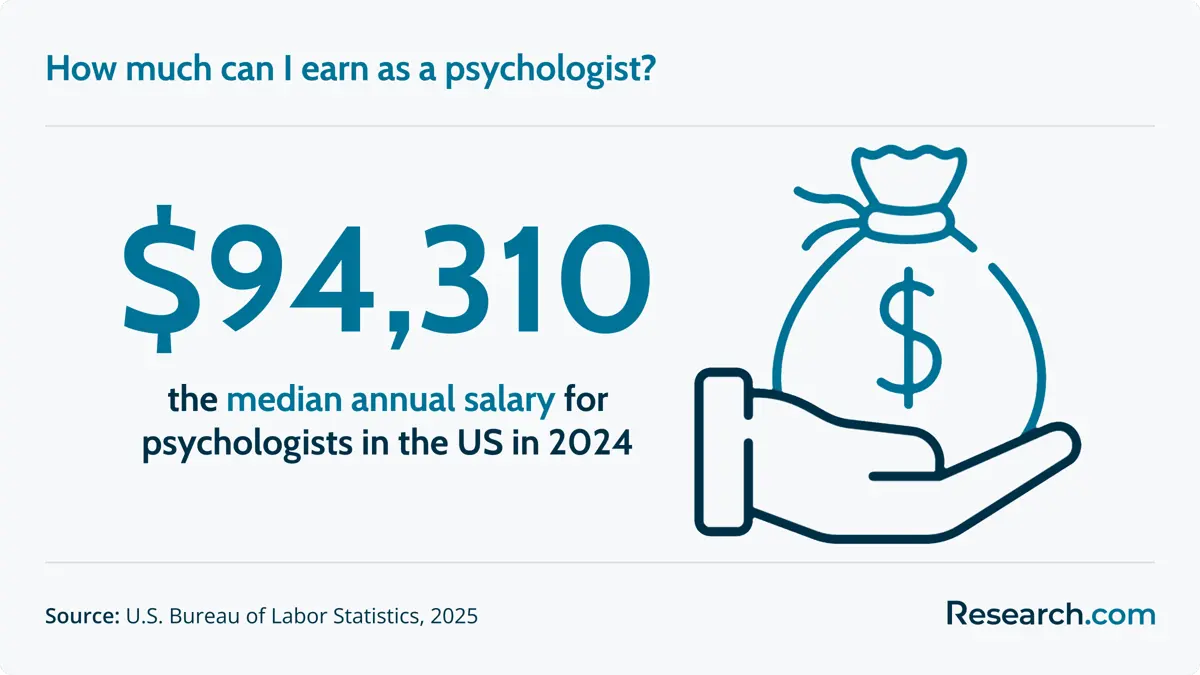
The value of the degree depends on whether it leads to the career outcome you want. The median annual salary for psychologists is $94,310, but salaries vary by role, license, region, employer, and specialization. A non-licensure master’s degree may support advancement in human services, business, education, or research support, but it may not qualify you for independent clinical practice.
Before enrolling, compare total program cost with your target role, expected credential, state requirements, and the amount of debt you would need to take on. A lower-cost program that does not meet your licensing goal can be more expensive in the long run than a higher-cost program that properly qualifies you for the next step.
What are the financial aid options for students enrolling in online psychology graduate programs with no GRE requirements?
Students in accredited online graduate programs may qualify for many of the same financial aid options available to campus-based students. Accreditation is essential because it affects eligibility for federal student aid and can also matter for employer tuition benefits, transfer credit, licensure review, and doctoral admissions.
The first step is completing the Free Application for Federal Student Aid. The FAFSA is used to determine eligibility for federal student loans and other aid options. Students should also look for institutional scholarships, graduate assistantships if available, employer tuition reimbursement, military-connected benefits, professional association scholarships, and payment plans.
A strategic path to loan forgiveness
The Public Service Loan Forgiveness (PSLF) program may be important for graduates who plan to work for qualifying nonprofit or government employers. Under PSLF, remaining eligible federal student loan balances may be forgiven after 120 qualifying monthly payments, provided all program rules are met.
Because loan forgiveness rules are specific, students should verify eligibility directly through federal student aid resources and keep careful records of employment and payments. Students who want a lower-cost way to add targeted expertise may also compare the benefits of earning a graduate certificate before committing to a full additional degree.
Ways to reduce the cost of a no-GRE online psychology graduate program
- Choose an accredited public university when it fits your goals. Residency-based tuition can make a major difference.
- Ask about transfer credits. Some schools accept a limited number of graduate credits from prior study.
- Confirm fees before comparing programs. Tuition is only one part of total cost.
- Use employer benefits when available. Human services, education, healthcare, and government employers may offer tuition support.
- Avoid unnecessary credentials. Do not pay for a non-licensure degree if your actual goal requires a licensure-track counseling, school psychology, or doctoral program.
What are the prerequisites for enrolling in online psychology graduate programs with no GRE requirements?
Most programs require a bachelor’s degree from an accredited institution. Some prefer or require previous psychology coursework, while others admit students from other majors if they can show readiness for graduate study. A minimum GPA of 3.0 is often expected, although requirements vary by school.
| Application item | Why it matters | How to strengthen it |
| Bachelor's degree | Shows completion of undergraduate-level academic preparation | Submit official transcripts from accredited institutions |
| Prerequisite coursework | Helps prove readiness for graduate psychology content | Complete courses such as Introduction to Psychology, Abnormal Psychology, and Statistics if required |
| Letters of recommendation | Provides third-party evidence of academic or professional readiness | Choose references who can discuss writing, ethics, maturity, research ability, or human services experience |
| Personal statement | Explains your goals and fit with the program | Connect your background, target career, and reason for choosing that specific program |
| Resume or CV | Shows work, volunteer, research, or service experience | Highlight relevant responsibilities, populations served, research tasks, and leadership |
Bridging the gap from a non-psychology background
You do not always need an undergraduate psychology major to apply. Students from education, sociology, anthropology, social work, criminal justice, healthcare, business, and other fields may be considered if they can show academic readiness and a clear reason for graduate psychology study.
The safest approach is to review each target program’s prerequisites, complete missing courses as a non-degree student if needed, and earn strong grades. For example, someone who completed an anthropology degree online may strengthen an application by adding psychology and statistics coursework before applying.
What courses are typically in online psychology graduate programs with no GRE requirements?
Coursework depends on whether the program is general psychology, applied psychology, counseling-oriented, school-based, industrial-organizational, or doctoral preparation. Students comparing online graduate programs should not assume that a psychology degree and a counseling degree lead to the same credentials. Program title, curriculum, supervised practice, and state approval all matter.
In many accredited online graduate programs, the core curriculum covers several recurring areas:
- Psychological theory: Human development, cognition, learning, behavior, personality, and social psychology.
- Research and statistics: Quantitative methods, qualitative methods, data interpretation, research design, and evidence evaluation.
- Ethics and professional standards: Confidentiality, informed consent, boundaries, documentation, cultural competence, and responsible practice.
- Assessment and intervention concepts: Diagnosis, treatment models, prevention, and behavioral change strategies when relevant to the program.
- Applied or supervised practice: Practicum, internship, fieldwork, or applied projects in programs that require hands-on experience.
Students comparing other accredited online professional degrees, including online MPA NASPAA-accredited programs, should use the same principle: look beyond delivery format and verify whether the curriculum supports the credential or career outcome you want.
The role of research and statistics courses
Research and statistics are central because psychology depends on evidence. These courses teach students how to evaluate studies, interpret findings, recognize weak claims, and apply research responsibly in professional settings. Even students who do not plan to become researchers benefit from knowing how to judge whether an intervention, assessment, or workplace recommendation is supported by evidence.
Research training can also support roles outside traditional clinical practice, including careers in clinical research. Earnings vary by specialization and role: an industrial-organizational psychologist earns a median salary of $109,840, compared to $95,830 for clinical and counseling psychologists.
What types of specializations are available in online psychology graduate programs with no GRE requirements?
Specialization choice is one of the most important decisions in graduate psychology education. It can shape your coursework, practicum requirements, licensure eligibility, employment options, and long-term advancement. The same “psychology” label can describe very different programs.
| Specialization | Typical focus | Best for students who want to |
| Clinical Mental Health Counseling | Counseling skills, diagnosis, treatment planning, ethics, and supervised practice | Work toward Licensed Professional Counselor (LPC) or related counseling credentials, depending on state rules |
| School Counseling | Academic, social, emotional, and developmental support for K-12 students | Work in school settings after meeting state education and credential requirements |
| Industrial-Organizational Psychology | Workplace behavior, employee performance, assessment, leadership, and organizational systems | Apply psychology in business, consulting, human resources, or workforce analytics |
| Forensic Psychology | Psychology in legal, correctional, public safety, and justice-related contexts | Work in settings connected to courts, corrections, victim services, or law enforcement support |
| General Psychology | Broad study of behavior, theory, research, and human development | Prepare for doctoral study or non-licensure roles in human services, research, education, or business |
Be careful with degree titles. A Master of Science in Clinical Mental Health Counseling is often built around counseling licensure preparation. A Master of Arts in General Psychology is frequently non-licensure and may be better suited for research, teaching support, doctoral preparation, or applied professional roles.
Future-proof your choice: job growth by specialization
Career demand should not be the only reason to choose a specialization, but it should be part of the decision. Clinical and counseling psychologists are projected to grow by 11% over the next decade, suggesting continued need for qualified professionals in mental health-related roles.
Use labor market data as a reality check. If two specializations interest you equally, compare licensing barriers, local employer demand, supervised hour requirements, and likely job settings before choosing.
How to Choose the Best Online Psychology Graduate Program with No GRE Requirements
The best no-GRE online psychology graduate program is not simply the highest-ranked or most recognizable school. It is the accredited program that fits your career goal, state requirements, budget, learning style, and timeline. This is especially important if you plan to pursue licensure, because state boards decide whether your education meets credentialing requirements.
- Define your end goal first. Decide whether you want licensure, doctoral preparation, research experience, career advancement, or applied psychology skills.
- Check institutional accreditation. Make sure the university is accredited by a recognized accreditor.
- Verify programmatic accreditation or approval when relevant. Counseling, school psychology, and clinical pathways may require specific recognition depending on your state and profession.
- Read your state licensing board rules. Do not rely only on marketing language from the school.
- Ask admissions for written confirmation. Request a clear answer about whether the curriculum meets requirements in your intended state of practice.
- Compare total cost, not just tuition. Include fees, travel, field placement costs, books, and lost work time.
- Review field placement support. Ask whether the school helps locate practicum or internship sites in your area.
- Talk to current students or alumni if possible. Ask about faculty access, workload, placement support, and career outcomes.
Questions to ask before enrolling
| Question | Why it matters |
| Is this program licensure-track or non-licensure? | This determines whether the degree can support clinical or counseling credential goals. |
| Does the program meet requirements in my state? | Licensing rules vary, and online students may live outside the school’s state. |
| Who helps secure practicum or internship placements? | Field placement problems can delay graduation or licensure. |
| What is the total estimated cost? | Fees and placement-related expenses can change the real price. |
| Can I study part time? | Working students need to know whether the schedule is sustainable. |
| What jobs do graduates actually get? | Career outcomes should match the program’s claims and your goals. |
What career paths are available for graduates of online psychology graduate programs with no GRE requirements?
Career options depend heavily on the type of degree and whether it leads to licensure. A no-GRE admissions policy does not determine your career path; the curriculum, supervised experience, state approval, and credential requirements do.
| Degree direction | Possible career paths | Important limitation |
| Licensure-track counseling or psychology-related pathway | Licensed Professional Counselor (LPC), Marriage and Family Therapist (MFT), school-based roles, or other regulated positions depending on the program and state | You must meet state education, exam, supervised hours, and application requirements |
| Non-licensure general psychology master’s | Human resources specialist, research assistant, program coordinator, case management-related roles, nonprofit program manager, or education support roles | Usually does not qualify graduates for independent clinical practice |
| Industrial-organizational or applied psychology focus | Organizational development, employee training, workforce research, talent management, consulting support, or people analytics roles | Employers may prefer experience, analytics skills, or doctoral training for advanced I-O roles |
| Doctoral preparation track | PhD or PsyD preparation, research roles, academic pathways, or advanced clinical training | Admission to doctoral study is competitive and not guaranteed |
Understanding the scale of opportunity
Psychology-related employment includes both licensed and non-licensed roles. There are over 72,000 clinical and counseling psychologists and nearly 64,000 school psychologists currently employed in the U.S., showing a sizable workforce in major practice areas. Students considering non-clinical options should also compare the typical applied psychology salary for roles outside traditional therapy or assessment.
What is the job market for graduates of online psychology graduate programs with no GRE requirements?
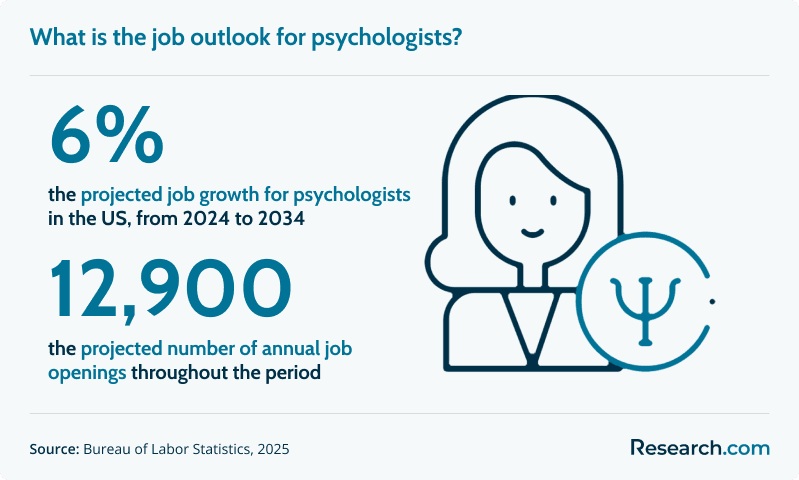
The U.S. Bureau of Labor Statistics projects employment for psychologists to grow by 6% over the next decade, with approximately 12,900 job openings each year. Demand is strongest for graduates whose education, supervised experience, and credentials match employer and state requirements.
The market is also influenced by growing awareness of mental health needs, increased use of behavioral health services, demand for school-based support, workplace interest in employee well-being, and the use of data-informed decision-making in organizations. Mental Health America and other organizations continue to track national mental health needs, reinforcing why well-prepared professionals remain important across clinical, educational, nonprofit, and organizational settings.
How AI and technology are changing psychology careers
Technology is affecting psychology education and practice, but it is not replacing the need for ethical, well-trained professionals. Online programs now use virtual classrooms, digital case materials, telehealth-oriented discussions, electronic assessment tools, and remote collaboration. In the workplace, psychologists and psychology-trained professionals may need to understand data privacy, telebehavioral health expectations, AI-assisted documentation tools, and the limits of automated screening.
Students should look for programs that teach ethical reasoning, evidence evaluation, cultural competence, and technology-aware practice. These skills help graduates adapt as tools change while still protecting client, student, employee, or research participant welfare.
How can supplementary certifications advance your psychology career?
Supplementary certifications can help graduates build targeted skills, but they should not be treated as substitutes for required degrees or licenses. A certificate may be useful when it matches a specific career direction, such as behavior analysis, trauma-informed practice, organizational consulting, research methods, or program evaluation.
For example, students interested in behavior analysis may compare cheap BCBA masters programs online as part of a broader credentialing plan. Before paying for any certification, confirm whether it is recognized by employers, whether it supports state requirements, and whether it adds value beyond your graduate degree.
Common mistakes to avoid when choosing a no-GRE online psychology graduate program
| Mistake | Why it can hurt you | Better approach |
| Choosing a program only because it does not require the GRE | You may overlook accreditation, licensure alignment, cost, or field placement quality | Use GRE waiver status as one factor, not the deciding factor |
| Assuming every psychology master’s degree leads to licensure | Many MA and MS psychology programs are non-licensure degrees | Check the program title, curriculum, supervised hours, and state board rules |
| Comparing only cost per credit | Total cost depends on credits, fees, books, travel, and time to completion | Calculate total program cost before applying |
| Ignoring state requirements | An online program may not satisfy licensure rules where you live | Verify directly with the state licensing board before enrolling |
| Relying only on rankings | A highly ranked program may not fit your career target or schedule | Match the program to your credential goal, learning style, and budget |
| Waiting too long to plan fieldwork | Practicum and internship placement issues can delay graduation | Ask about placement support before accepting admission |
What graduates say about online graduate psychology programs with no GRE requirements
- : "I was anxious about standardized testing, so finding a program that reviewed my full background made a real difference. My grades, volunteer experience, and essay mattered more than a single exam score, and that gave me a fairer chance to show I was ready for graduate study. —Danielle"
- : "My biggest concern was completing clinical hours while studying online. The placement team helped me identify approved sites near where I lived, and the process was much more structured than I expected. —Benjamin"
- : "I treated graduate school as a major investment and wanted to see a practical payoff. Within six months of graduating and getting my license, I accepted a position with a salary that was 30% higher than my old job. —Valerie"
Key Insights
- No GRE does not mean no standards. Strong programs still evaluate transcripts, recommendations, writing, experience, and readiness for graduate-level psychology coursework.
- Licensure is the biggest decision point. Many online MA and MS psychology programs are non-licensure degrees. If you want to practice clinically, verify state requirements before enrolling.
- Accreditation protects your investment. Institutional accreditation affects federal aid eligibility, transferability, employer recognition, and future education options.
- Cost comparisons must include the full price. Look beyond per-credit tuition and account for fees, books, travel, field placement expenses, and total credits.
- Online and campus programs can be academically comparable. The real differences are delivery format, schedule flexibility, networking style, and placement logistics.
- Specialization shapes outcomes. Clinical mental health counseling, school counseling, I-O psychology, forensic psychology, and general psychology can lead to very different careers.
- Verify before you commit. The safest final step is to ask your state licensing board whether the specific program you are considering meets education requirements for your intended credential.
References:
- Bureau of Labor Statistics. (2025). Occupational employment and wage statistics (OEWS) - May 2024 OEWS profiles. Retrieved October 26, 2023, from BLS.
- Bureau of Labor Statistics. (2025). Psychologists. Retrieved October 26, 2023, from BLS.
- Data USA. (2025). Psychology. Retrieved October 26, 2023, from Data USA.
- Mental Health America. (2025). Quick facts and statistics about mental health. Retrieved October 26, 2023, from MHA.
Other Things You Should Know About Online Psychology Graduate Programs with No GRE Requirements
It should hold regional accreditation, and psychology programs should also be reviewed by the APA Commission on Accreditation when the degree leads to licensure-focused doctoral study. For master’s programs, regional accreditation is the main quality standard, and state licensing boards often require it for later credential review.
To identify a reputable program, research accreditation status, faculty credentials, curriculum relevance, and student support services. Additionally, check graduation rates, alumni success, and reviews from current students to assess the program's legitimacy and effectiveness.
Graduates of a 2027 online psychology program with no GRE requirement can pursue roles such as school psychologist, clinical therapist, or counseling psychologist. Specific job availability may depend on local licensure laws and completion of requisite supervised clinical hours post-graduation.