2027 What Can You Do With an Industrial Organizational Psychology Degree?

Co-Founder and Chief Data Scientist
An industrial organizational psychology degree is for students who want to use psychology, research, and data to improve how people work inside organizations. It can lead to roles in human resources, consulting, training, workforce analytics, leadership development, employee assessment, organizational change, and academic research. The key decision is not only whether I-O psychology is interesting, but which degree level, program format, cost, and career path make sense for your goals.
This guide explains what to expect from industrial organizational psychology programs, how long they take, what they cost, which courses and specializations are common, and how online programs compare with campus-based options. It also covers salaries, job outlook, program selection factors, common mistakes, and practical steps for choosing a program that fits your career plans and budget.
Quick Answer: Is an Industrial Organizational Psychology Degree Worth It?
An industrial organizational psychology degree can be worthwhile if you want a career focused on workplace behavior, talent systems, organizational performance, leadership, employee well-being, or applied research. The degree is most useful when paired with strong research, statistics, communication, and business skills. A bachelor’s degree can support entry-level roles in HR, project coordination, training, or analytics, while a master’s or doctorate is often more relevant for specialized I-O psychology, consulting, research, and academic roles.
What are the main benefits of earning an industrial organizational psychology degree?
- Graduates can apply their training in corporate settings, consulting firms, government agencies, universities, research organizations, and non-profit workplaces.
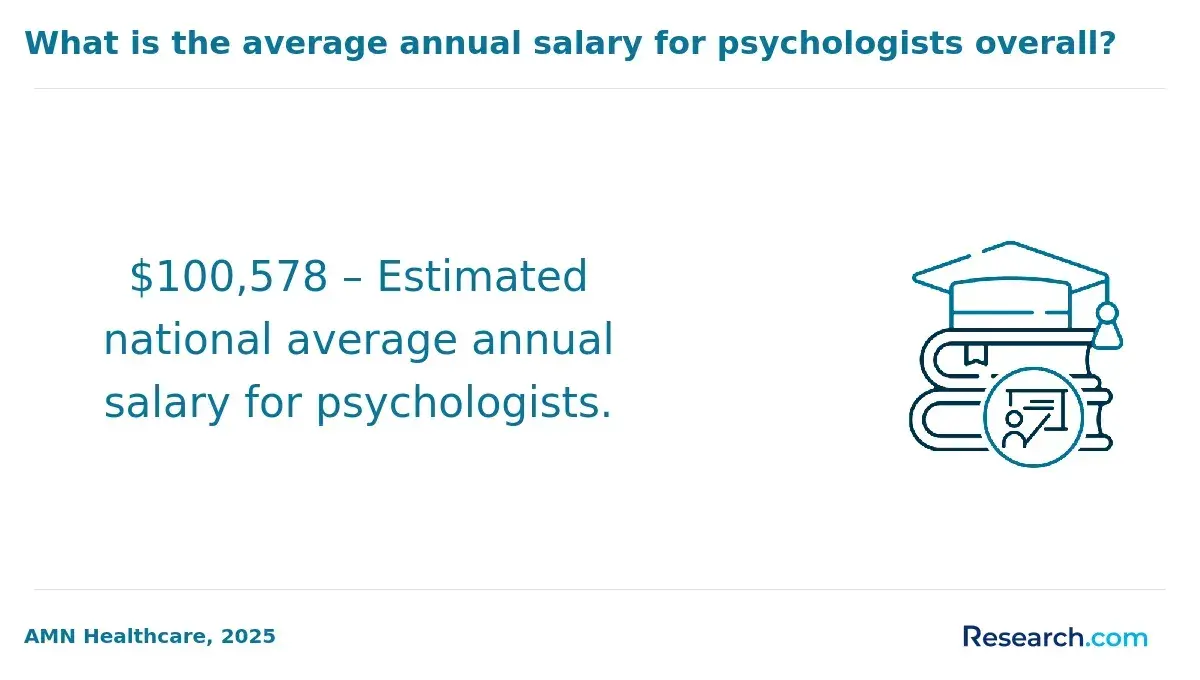
- Industrial organizational psychologists report an annual median salary of $109,840, with higher earnings possible in some states, industries, and advanced roles.
- Online I-O psychology programs can make the degree more accessible for working adults, career changers, and students who need flexible scheduling.
What can I expect from an industrial organizational psychology degree?
An industrial organizational psychology degree teaches students how psychological research applies to real workplace problems. Instead of focusing mainly on clinical diagnosis or therapy, I-O psychology looks at hiring, assessment, training, motivation, leadership, employee engagement, team performance, organizational culture, workplace health, and change management.
A bachelor’s degree in industrial organizational psychology usually takes four years and includes courses such as leadership, statistics, organizational behavior, research methods, and applied psychology. Bachelor’s programs often cost from $20,000 to $50,000 per year, though total expenses depend on the school, residency status, format, and fees.
A master’s program typically takes 1.5 to 2 years and usually goes deeper into personnel psychology, psychometrics, training and development, organizational development, and advanced research. Many master’s programs include an internship, applied project, or thesis. Costs vary widely, with average annual costs often falling between $30,000 and $60,000 per year.
| Degree level | Typical length | Common focus | Best fit |
| Bachelor’s degree | Four years, often around 120 credits | Psychology foundations, statistics, organizational behavior, leadership, and research basics | Students seeking entry-level HR, training, project coordination, or business roles |
| Master’s degree | 1.5 to 2 years, often around 30-40 credits | Personnel selection, workplace assessment, organizational development, psychometrics, and applied research | Students who want specialized I-O roles, consulting work, analytics positions, or stronger advancement options |
| Doctoral degree | 3 to 5 years | Advanced research, teaching, consulting, assessment design, and leadership in the field | Students targeting academic, high-level research, or senior consulting roles |
Where can I work with an industrial organizational psychology degree?
Industrial organizational psychology graduates work wherever organizations need to understand people, performance, and systems. Common employers include corporations, consulting firms, government agencies, colleges and universities, research organizations, healthcare systems, technology companies, and non-profit organizations.
Typical roles include human resources specialist, talent management associate, organizational consultant, training coordinator, workforce analyst, employee engagement specialist, leadership development coordinator, and research assistant. With graduate education and experience, professionals may move into senior consulting, assessment, management, research, or faculty positions.
According to data published in 2025, the industries with the highest levels of employment for industrial organizational psychologists are:
- Management, Scientific, and Technical Consulting Services
- Scientific Research and Development Services
- Management of Companies and Enterprises
- Colleges, Universities, and Professional Schools
How much can I make with an industrial organizational psychology degree?
Industrial organizational psychologists can earn an annual median salary of $109,840. Reported earnings can reach as much as $224,590 annually, while many entry-level roles may fall around $50,000 to $70,000 depending on job title, location, degree level, employer, and experience. Salary outcomes are not guaranteed, so students should compare program cost against realistic career paths, not only top-end salary figures.
The BLS ranks the following top-paying states for industrial organizational psychologists by annual mean wage:
- California: $137,540
- Texas: $115,960
- Oregon: $100,180
- Best industrial organizational psychology programs for 2027
- How long does an industrial organizational psychology program take?
- Online vs. on-campus industrial organizational psychology programs
- Average cost of an industrial organizational psychology program
- Financial aid options for I-O psychology students
- Admissions requirements and prerequisites
- Common industrial organizational psychology courses
- Specializations in industrial organizational psychology
- How to choose the right I-O psychology program
- Career paths for industrial organizational psychology graduates
- How do I become an IO psychologist?
- Workplace trends shaping industrial organizational psychology
- Do affordable online advanced psychology programs offer quality education?
- How interdisciplinary study can strengthen an I-O psychology career
- Why continuous professional development matters
- How to balance program quality and cost
- Job market for industrial organizational psychology graduates
- What can you do with a master’s in industrial organizational psychology?
- Benefits of combining I-O psychology with another degree
- Is a doctorate in industrial organizational psychology worth it?
- How mental health counseling connects with I-O psychology
- Why consider health psychology as a related path?
2027 List of the Best Industrial Organizational Psychology Programs
How do we rank our schools?
Choosing a degree program is a major financial and professional decision, so program rankings should be reviewed with clear context. Research.com uses established education data sources, including the IPEDS database, Peterson’s database, the College Scorecard database, and the National Center for Education Statistics. These sources help evaluate institutional data, program information, and school-level indicators. Research.com also reviews program credibility and quality factors to support students comparing industrial organizational psychology options. For a fuller explanation of the process, see Research.com’s methodology page.
1. University of Phoenix
The University of Phoenix offers industrial organizational psychology programs designed to align with guidance from the American Psychological Association (APA) and the Society for Industrial-Organizational Psychology (SIOP). The program was built with input from labor market researchers so students can connect academic work with workplace skills. Students in Phoenix may have access to a blended option, completing general education courses at the Phoenix campus before moving into remote coursework for major requirements.
- Cost per Credit: $398
- Required Credits to Graduate: 120
- Accreditation: Higher Learning Commission (HLC)
2. Louisiana State University
Louisiana State University offers an industrial organizational psychology program with a strong research orientation. Faculty and students examine topics such as occupational health, recruitment, diversity, leadership, work stress, and organizational decision-making. Research from the program is often presented through major professional groups and conferences, including APA, SIOP, Academy of Management (AOM), Work and Family Researchers Network (WFRN), Society of Judgement and Decision-Making (SJDM), and Work Stress and Health (WSH).
- Cost per Credit: $649.70 for undergraduate students, $655.70 for graduate students
- Required Credits to Graduate: 120
- Accreditation: Commission on Accreditation of the American Psychological Association
3. San Diego State University
San Diego State University’s industrial organizational psychology degree includes a four-course sequence intended to strengthen employment readiness and graduate school preparation. Students study I-O psychology theory, research, and workplace applications, while advanced courses may include applied projects. The major includes 31 upper-division units and covers areas such as research methods, personnel psychology, and industrial psychology. The program also includes language competency expectations and meets the graduation writing assessment requirement.
- Cost per Credit: $396
- Required Credits to Graduate: 120
- Accreditation: Western Association of Schools and Colleges Senior College and University Commission
4. Colorado State University Fort Collins
Colorado State University’s industrial organizational psychology concentration is designed for psychology majors who want to understand behavior in work settings. Coursework addresses leadership, work-life balance, motivation, training, research design, and organizational psychology. The program encourages internships and research assistant roles because practical experience can improve employability. Students complete psychology, statistics, and related coursework across a four-year curriculum and may use senior electives to prepare for employment, counseling-related study, or further psychology education.
- Cost per Credit: $583.80 for in-state students, $1,552.70 for out-of-state students
- Required Credits to Graduate: 120
- Accreditation: HLC
5. CUNY Bernard M. Baruch College
CUNY Bernard M. Baruch College’s industrial organizational psychology major is offered through the Zicklin School of Business as part of the BBA structure. The curriculum blends psychology and business coursework, making it relevant for students interested in human resource management, sales, advertising, marketing, and other organizational roles. Students complete core, flexible core, and business requirements while developing a foundation in industrial and organizational psychology.
- Cost per Credit: $305 for in-state students, $620 for out-of-state students
- Required Credits to Graduate: 124
- Accreditation: Middle States Commission on Higher Education (MSCHE)
What graduates say about studying industrial organizational psychology
“Industrial organizational psychology helped me connect theory with real business problems. The program gave me practical tools for building healthier work environments and improving both employee experience and organizational results.” Gemma
“My degree strengthened my analytical thinking and gave me a deeper understanding of workplace behavior. Internships and applied projects helped me see how team dynamics, leadership, and motivation affect everyday HR decisions.” Charles
“Choosing I-O psychology changed the direction of my career. Research methods and data analysis became the foundation for my consulting work, where I now help organizations improve processes, structure, and decision-making.” Greg
Key Findings
- Industrial organizational psychology bachelor’s programs typically take four years and around 120 credits. Master’s programs often take 1.5 to 2 years and around 30-40 credits. Doctoral programs can take 3 to 5 years.
- Average tuition for an industrial organizational psychology bachelor’s program ranges from $15,000 to $60,000, while master’s program tuition ranges from $20,000 to $80,000. Actual cost depends on institution type, location, delivery format, fees, and student residency status.
- Common courses include Statistics for Psychology, Organizational Behavior, Industrial Psychology, Leadership and Management, Research Methods, Personnel Psychology, and Social Psychology.
- Career options include psychology professor, HR research specialist, analyst, director or manager, organizational consultant, and project coordinator.
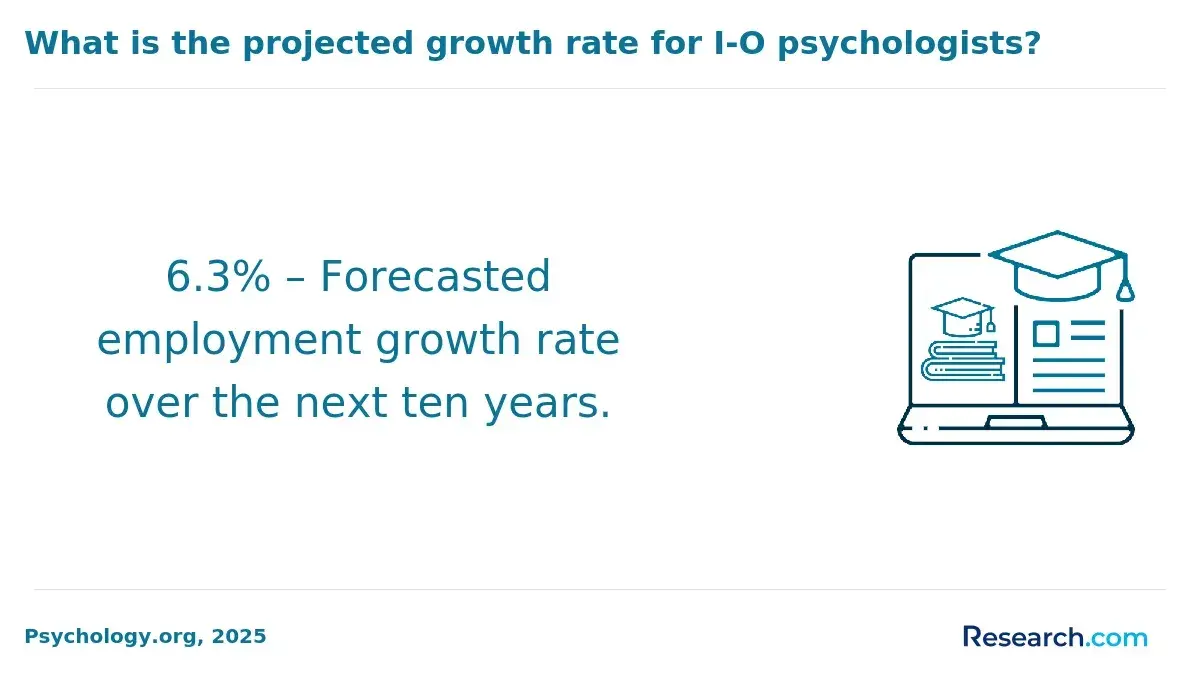
- The job outlook for industrial organizational psychologists is positive, with projected 6% growth through 2034.
How long does it take to complete an industrial organizational psychology program?
A bachelor’s degree in industrial organizational psychology generally takes four years and includes around 120 credits. A master’s degree usually takes 1.5 to 2 years and includes about 30-40 credits. A doctoral degree can be completed in 3 to 5 years.
Your actual timeline may be shorter or longer depending on enrollment status, transfer credits, prerequisites, course availability, internship requirements, thesis expectations, and whether you choose an accelerated or part-time format. Students with prior credits should review each school’s transfer credit policy before enrolling, because generous transfer rules can reduce both time and cost.
How does an online industrial organizational psychology program compare to an on-campus program?
The biggest difference between online and on-campus industrial organizational psychology programs is flexibility. Online programs usually work better for students who need to balance school with employment, family responsibilities, or location limits. Campus programs may be a better fit for students who want in-person networking, structured schedules, lab access, and easier participation in local internships or faculty research.
| Factor | Online I-O psychology program | On-campus I-O psychology program |
| Flexibility | Often better for working adults and students who need location-independent study | Usually follows a fixed class schedule and campus calendar |
| Interaction | Uses discussion boards, video meetings, virtual teams, and online office hours | Offers face-to-face access to classmates, faculty, seminars, and campus events |
| Networking | May require more intentional outreach through virtual events, alumni groups, and professional associations | Can provide more spontaneous networking through campus activities and local employer connections |
| Internships and applied work | Students may need to arrange local or remote placements more independently | Schools may have established employer relationships near campus |
| Learning style | Best for self-directed students who manage deadlines well | Best for students who prefer structured routines and in-person accountability |
| Technology needs | Requires reliable internet access and comfort with digital platforms | May use technology, but less of the program depends on remote access |
What is the average cost of an industrial organizational psychology program?
The average tuition for a bachelor’s program ranges from $15,000 to $60,000. A master’s program typically costs between $20,000 and $80,000. These ranges reflect differences in public and private institutions, in-state and out-of-state tuition, online and campus formats, and program structure.
Tuition is only one part of the total cost. Students should also calculate fees, books, technology, transportation, housing, food, lost income if reducing work hours, and any travel needed for residencies, internships, or campus requirements.
Cost factors to compare before enrolling
- Tuition structure: Check whether the school charges by credit, term, semester, or program.
- Residency status: Public universities may charge different rates for in-state and out-of-state students.
- Program length: More credits usually mean higher total cost unless transfer credits reduce the requirement.
- Online fees: Some online programs add technology or distance-learning fees.
- Internship expenses: Applied placements may create transportation, background check, or schedule-related costs.
- Opportunity cost: Full-time study may limit earnings during the program.
What are the financial aid options for students enrolling in an industrial organizational psychology program?
Students can reduce out-of-pocket costs by combining federal aid, school-based aid, scholarships, assistantships, employer support, and careful borrowing. The best approach is to apply early, compare total net cost, and ask each school for a written financial aid estimate.
- Federal Student Aid (FAFSA). Completing the FAFSA may qualify students for federal grants, loans, and work-study opportunities.
- Scholarships and Grants. Universities, private organizations, and psychology associations may offer awards based on academic performance, financial need, research interests, or professional goals. The APA and SIOP provide grants and awards such as the Adverse Impact Reduction Research Initiative and Action (AIRRIA) Research Grant, APA Distinguished Scientific Awards for an Early Career Contribution to Psychology, APA Society Convention Research Awards, and the APA Student Travel Award.
- Work-Study Programs. Federal Work-Study (FWS) provides part-time employment that can help students cover education-related expenses.
- Assistantships and Fellowships. Graduate students may qualify for assistantships or fellowships that combine financial support with teaching, research, or administrative experience.
- Employer Tuition Assistance. Working students should ask whether their employer offers tuition benefits, especially if the degree supports HR, training, analytics, or leadership responsibilities.
- Student Loans. Federal loan options include Direct Subsidized Loans, Direct Unsubsidized Loans, and Grad PLUS Loans. Students should understand interest, repayment terms, and borrowing limits before accepting loans.
- Professional Organizations and Foundations. The APA and the SIOP offer more than 600 grants, scholarships, and financial aid options, including the AIRRIA Research Grant, Distinguished Scientific Awards, Society Convention Research Awards, and Student Travel Award.
- State-Based Aid Programs. Some states offer aid to residents attending eligible institutions.
- University or College-Specific Aid. Schools may provide institutional grants, scholarships, tuition discounts, and departmental awards. Contact the financial aid office and the psychology department before applying.
What are the prerequisites for enrolling in industrial organizational psychology programs?
Admission requirements vary by school and degree level, but applicants should be prepared to show academic readiness, communication ability, and interest in research-based study. Undergraduate programs usually focus on high school preparation and standardized testing policies, while graduate programs may place more emphasis on prior psychology coursework, research experience, statements of purpose, and recommendations.
- Proof of Graduation. Undergraduate applicants typically need a high school diploma, General Educational Development (GED) transcript, certificate of completion, or certificate of proficiency accepted by the institution.
- Transcript. Schools often review GPA, and a minimum of 2.5 is a common benchmark. Applicants below the stated GPA should contact admissions to ask about conditional admission or alternative review options.
- Coursework. Some colleges require completed college-level coursework before admission, while others may accept six hours of coursework or transferable credits.
- SAT or ACT score. Testing expectations depend on the institution. A minimum SAT score is typically 1200, though selective universities may expect more. A minimum ACT score is usually between 25-35.
- Other Requirements. Schools may request letters of recommendation, personal statements, TOEFL or IELTS scores, or proof of English-medium instruction for students whose first language is not English.
- Comprehension Skills. I-O psychology students read research articles, theory, case studies, and statistical material. Srisang and Everatt emphasize that regular comprehension practice helps students maintain and build these skills.
- Listening Skills. Active listening matters because I-O work often involves interviews, surveys, stakeholder meetings, and organizational diagnosis.
- Communication Skills. Students need to explain findings clearly in presentations, reports, surveys, and group projects.
- Research Skills. Psychology programs often require research assignments, applied studies, or longer projects, so students should be comfortable asking research questions and evaluating evidence.
Recent BLS data found that 3% of the psychology workforce are I-Os, with the majority of them working in Management, Scientific, and Technical Consulting Services.
What courses are typically in an industrial organizational psychology program?
Industrial organizational psychology programs combine psychology theory, research methods, statistics, and business-focused applications. Bachelor’s programs usually introduce the field and build research foundations, while master’s programs tend to involve more advanced assessment, analytics, and applied organizational work.
| Course | What students learn |
| Statistics for Psychology | How to use statistical methods to interpret psychological and workplace data |
| Organizational Behavior | How individuals and groups behave inside organizations |
| Industrial Psychology | How psychological principles apply to employee selection, performance, and work systems |
| Leadership and Management | Leadership theories, management approaches, and organizational decision-making |
| Research Methods in Psychology | How to design, evaluate, and interpret psychological research |
| Personnel Psychology | Employee selection, performance appraisal, training, and talent systems |
| Social Psychology | How social influence, group behavior, and interpersonal processes affect work |
| Advanced Research Methods | More rigorous research design and analysis methods for applied and academic projects |
| Organizational Development | How organizations improve systems, culture, processes, and effectiveness |
| Psychometrics | How assessments and psychological measures are designed, tested, and interpreted |
| Training and Development | How to create, deliver, and evaluate employee learning programs |
| Advanced Personnel Psychology | More detailed study of selection systems, evaluation methods, and workforce assessment |
| Occupational Health Psychology | How work conditions affect stress, well-being, safety, and mental health |
| Leadership in Organizations | Advanced leadership concepts and practical approaches to leading change |
| Thesis or Internship | A final research or applied experience that connects coursework to real workplace problems |
What types of specializations are available in industrial organizational psychology programs?
Specializations help students align their degree with a specific career direction. Before choosing one, review job postings for roles you want and compare the required skills with the courses, projects, and faculty expertise available in each program.
- Personnel Psychology. Best for students interested in hiring, employee assessment, performance appraisal, and talent management.
- Organizational Development. Useful for students who want to improve organizational structure, culture, systems, and change processes.
- Training and Development. Relevant for careers designing employee learning, leadership programs, onboarding, and skill development.
- Leadership and Management. A strong fit for students interested in executive coaching, team leadership, and organizational management.
- Occupational Health Psychology. Focuses on stress, burnout, well-being, safety, and the relationship between work environments and mental health.
- Psychometrics. Best for students who want to develop, validate, or interpret workplace assessments and psychological measures.
- Work-Life Balance. Applies to careers focused on employee support, retention, flexibility, and organizational policy.
- Diversity and Inclusion. Prepares students to address equity, inclusion, representation, and workplace culture.
- Consumer Behavior and Marketing Psychology. Connects psychological insight with marketing strategy, customer behavior, and business decision-making.
- Research and Data Analysis. Best for students targeting analytics, consulting, academic research, or evidence-based HR strategy.
How to choose the best industrial organizational psychology program?
The best industrial organizational psychology program is the one that matches your career goal, budget, preferred learning format, and desired level of research or applied experience. A highly ranked school is not automatically the best option if it lacks the specialization, internship support, faculty expertise, or affordability you need.
- Accreditation. Confirm that the institution is properly accredited by organizations such as the APA, HLC, or another relevant accrediting body. Master’s students should review the SIOP guidebook on Industrial and Organizational Psychology and Related Fields, which is used in Graduate Training Programs of APA-accredited institutions as a reference for education and training standards.
- Faculty Expertise. Review faculty research, consulting experience, and professional backgrounds to see whether they align with your interests.
- Curriculum and Specializations. Look for coursework that supports your target area, such as talent development, organizational management, psychometrics, or workforce analytics.
- Research Opportunities. Prioritize programs with applied projects, internships, labs, thesis options, or faculty-led research if you want graduate school or research-based work.
- Networking Opportunities. Consider whether the program offers employer connections, alumni access, guest speakers, conferences, or professional association involvement.
- Facilities and Resources. Check library access, research software, data tools, assessment resources, and career services.
- Flexibility. Compare full-time, part-time, online, evening, and hybrid options.
- Location and Environment. For campus programs, consider nearby employers, internship markets, housing, transportation, and local cost of living.
- Cost and Financial Aid. Compare net price, not just tuition. Include scholarships, grants, fees, housing, technology, and lost wages.
- Job Placement Rates. Ask for employment outcomes by program, not only schoolwide averages.
- Diversity and Inclusion. Review whether the program supports an inclusive academic environment and teaches diversity-related workplace issues seriously.
- Licensure and Certification. Ask whether the program supports any professional credentialing goals relevant to your intended career path.
- Student-to-Teacher Ratio. Review class size and faculty access, including considerations described in the SIOP guidebook.
Questions to ask before applying
- Is the school institutionally accredited?
- Does the curriculum match my preferred career path: HR, consulting, analytics, training, research, or academia?
- Are internships, applied projects, or research assistant roles available?
- What is the total cost after fees, books, travel, and financial aid?
- Can I transfer credits or use prior coursework to reduce time to completion?
- What jobs do recent graduates obtain, and how does the school verify those outcomes?
- Will the online or campus format fit my work schedule and learning style?
What career paths are available for graduates of industrial organizational psychology programs?
I-O psychology graduates can move into several career paths because the field connects psychology, data, people operations, and organizational strategy. If you are comparing broader options, Research.com’s guide to what you can do with a psychology degree can help you understand how I-O psychology differs from other psychology pathways.
| Career path | Typical work | Possible advancement |
| Psychology professor | Teaches psychology, conducts research, mentors students, and contributes to academic service | Associate professor, full professor, department chair, dean, or university leadership roles |
| HR research specialist | Studies workforce issues, evaluates HR programs, supports policy development, and translates data into recommendations | Chief scientist, HR operations director, or vice-presidential roles |
| Analyst | Uses data to assess programs, improve processes, evaluate policies, and support leadership decisions | Senior consultant, analytics manager, or executive-level strategy roles |
| Director or manager | Leads talent, training, organizational development, people analytics, or workplace effectiveness initiatives | Senior director, executive, or consulting leadership roles |
| Project coordinator | Supports workplace initiatives, manages schedules, tracks deliverables, and assists with organizational projects | Project manager, program manager, or operations leader |
Some psychology graduates also explore adjacent fields. For example, students comparing specialized psychology paths may review forensic psychology degree jobs to understand how workplace psychology differs from legal and investigative psychology careers.
The BLS recorded that many I/O psychologists are self-employed, with 80.5% of them being independent. However, they also work in various industries, as illustrated below.
How do I become an IO psychologist?
To become an IO psychologist, start by choosing an accredited psychology or industrial organizational psychology program that matches your career target. Build a strong base in statistics, research methods, organizational behavior, and workplace assessment. Then add applied experience through internships, research projects, consulting projects, HR work, or assistantships. Graduate education is often important for specialized I-O roles, especially in consulting, assessment, research, and higher-level organizational development.
A practical roadmap includes: complete the appropriate degree, gain supervised or applied experience, build evidence-based research skills, develop communication and consulting ability, and continue learning as workplace technology and labor market expectations evolve. For a more detailed path, read Research.com’s guide on how to become an IO psychologist.
How are emerging workplace trends influencing industrial organizational psychology practices?
Industrial organizational psychology is changing as employers adjust to remote work, hybrid teams, digital collaboration, AI-supported recruitment, employee monitoring tools, and data-driven workforce planning. These shifts increase the need for professionals who can evaluate selection systems, reduce bias, measure engagement, protect employee well-being, and help leaders make evidence-based decisions.
AI and automation are especially important. I-O professionals may be asked to assess whether hiring tools are fair, whether performance metrics are valid, and whether digital systems improve or harm employee outcomes. Students should look for programs that teach research design, ethics, statistics, psychometrics, and responsible use of workplace data.
Cost and access are also shaping the field. Many working professionals compare flexible graduate options before committing to a program. Research.com’s resource on masters in psychology cost can help students think through affordability in advanced psychology education.
Do Affordable Online Advanced Psychology Programs Deliver Quality Education?
Affordable online advanced psychology programs can offer solid academic value, but only when students verify accreditation, curriculum quality, faculty credentials, student support, and outcomes. A low price is not enough. The program should still provide rigorous coursework, meaningful feedback, research or applied learning opportunities, and access to career support.
When comparing low-cost options, review the total price, not just tuition. Also ask whether online students can access the same library resources, advising, faculty support, and professional development as campus students. Students exploring doctoral-level affordability can use Research.com’s guide to the cheapest online PsyD programs as one reference point for comparing price and quality indicators.
How can interdisciplinary studies enhance your industrial organizational psychology career?
Interdisciplinary study can make an I-O psychology graduate more valuable because workplace problems rarely fit into one academic category. Employers may need someone who understands psychology, business, data, ethics, communication, technology, and organizational systems at the same time.
Useful combinations include I-O psychology with business administration, data analytics, public administration, human resources, health psychology, counseling, or forensic psychology. For example, students interested in investigative reasoning, evidence evaluation, and behavioral analysis may compare options such as a cheap master's in forensic psychology to see whether a related specialization supports their goals.
How can continuous professional development shape your industrial organizational psychology career?
I-O psychology careers reward professionals who keep updating their skills. Workplace expectations change as organizations adopt new technologies, revise hiring practices, expand remote work, and rely more heavily on workforce data. Continuous development can include certifications, workshops, conference participation, advanced coursework, analytics training, leadership development, and professional association involvement.
For students or professionals who want a faster academic path, Research.com’s guide to the best accelerated online psychology degree can help compare options that may shorten the time needed to build or update psychology credentials.
How can I balance quality education with cost-effectiveness in psychology programs?
Balancing quality and cost means looking beyond the sticker price. A cheaper program may be a good choice if it is accredited, academically rigorous, well supported, and aligned with your career goals. A more expensive program may be reasonable if it offers stronger applied experience, faculty mentorship, employer networks, or research opportunities that directly support your intended path.
Compare programs using net cost, completion time, transfer credit policy, course relevance, student services, faculty access, and career outcomes. Students considering advanced clinical or applied psychology pathways can also review affordable online PsyD programs to understand how cost-conscious program comparison works at the doctoral level.
What is the job market for graduates with an industrial organizational psychology degree?
According to the BLS, the job outlook for industrial organizational psychologists is projected to have a 6% growth through 2034. Growth may be strongest in professional, scientific, and technical services, self-employment, and colleges and universities. Demand is supported by employer interest in hiring quality, employee engagement, leadership development, workplace analytics, productivity, and organizational change.
Technology is also shaping the job market. Organizations are using job automation and artificial intelligence (AI) in hiring, workforce planning, and performance analysis. That creates opportunities for I-O professionals who can evaluate whether tools are accurate, ethical, fair, and useful. It also means students should strengthen data literacy, assessment design, communication, and ethical reasoning before entering the field.
What can you do with a master’s in industrial organizational psychology?
A master’s degree in industrial organizational psychology can qualify graduates for more specialized roles than a bachelor’s degree alone. It is especially useful for students who want to work in consulting, people analytics, leadership development, organizational development, training, assessment, or applied workplace research. If you are comparing advanced psychology options more broadly, Research.com’s guide to what you can do with a masters in psychology explains additional career directions.
- Organizational Consultant: Helps employers improve effectiveness, leadership, team dynamics, engagement, selection systems, and organizational change using research-based methods.
- Human Resources Specialist: Supports recruiting, employee relations, training, performance systems, and workforce planning with a stronger understanding of behavior and motivation.
- Corporate Trainer: Designs and delivers learning programs on communication, leadership, teamwork, conflict resolution, and problem-solving.
- Research Analyst: Studies workplace behavior, engagement, job satisfaction, employee well-being, and organizational policies to support evidence-based decisions.
- Higher Education and Further Specialization: Uses the master’s degree as preparation for doctoral study, advanced research, academic work, or specialized professional credentials.
Advantages of Pursuing a Dual Degree with Industrial Organizational Psychology
A dual degree can be useful when your target career sits at the intersection of psychology and another field. For example, pairing I-O psychology with business, analytics, technology, public administration, or counseling can make sense if you want to solve organizational problems from multiple angles.
- Broader Skill Set: Combining psychology with another discipline, such as business administration, can make you more adaptable in organizational roles.
- Increased Career Opportunities: Two fields of preparation may open paths in HR management, consulting, organizational leadership, analytics, or operations.
- Enhanced Problem-Solving Abilities: Interdisciplinary training helps professionals evaluate workplace challenges through more than one lens.
- Higher Earning Potential: Dual-degree holders may pursue roles that value specialized and cross-functional expertise.
- Time Efficiency: Some schools offer accelerated pathways that allow students to finish combined credentials more quickly, similar to the appeal of a quick college degree.
- Interdisciplinary Insights: Pairing psychology with business, technology, or analytics can support modern organizational decision-making.
- Networking Opportunities: Dual-degree students may gain access to two academic and professional communities.
A dual degree is not automatically better than a single degree. It makes the most sense when both fields clearly support your career target and the added cost and time are justified.
Is a Doctorate in Industrial Organizational Psychology Worth the Investment?
A doctorate in industrial organizational psychology can be worth the investment for students who want advanced research roles, faculty positions, senior consulting work, assessment development, or leadership in the field. Doctoral training can provide deeper expertise in research design, statistics, psychometrics, organizational theory, and evidence-based intervention.
However, a doctorate is a long and demanding path. Before applying, compare your career goal with the credential required. If you want to teach at the university level, conduct original research, or lead high-level applied research, doctoral study may be appropriate. If your goal is HR management, training, or general organizational development, a master’s degree may be sufficient. Students exploring this route can compare colleges for doctorate in psychology to identify programs aligned with their research and career objectives.
How Does Mental Health Counseling Complement Industrial Organizational Psychology?
Mental health counseling and industrial organizational psychology overlap in areas such as stress, burnout, resilience, communication, conflict, and employee well-being. I-O psychology focuses on systems, assessment, and organizational performance, while counseling brings deeper preparation in individual and group support. Together, these perspectives can strengthen workplace wellness initiatives and leadership development programs.
This combination may be useful for professionals interested in employee assistance programs, burnout prevention, workplace mental health strategy, coaching, or organizational wellness. Students considering this direction can review the best mental health counseling graduate programs to understand related graduate training options.
Why Consider a Career in Health Psychology
Health psychology can be a related path for I-O psychology students who are interested in employee well-being, burnout prevention, stress reduction, workplace health programs, and behavior change. I-O graduates already build skills in data analysis, organizational interventions, employee motivation, and behavior-focused program design, all of which can support workplace health initiatives.
The connection between I-O psychology and health psychology
Organizations increasingly need professionals who understand how work conditions affect health, engagement, retention, and performance. A background that combines I-O psychology and health psychology can help professionals design healthier work environments, evaluate wellness programs, and support sustainable employee performance.
For more information about related roles, review Research.com’s guide to health psychology careers.
Common mistakes to avoid when choosing an industrial organizational psychology program
- Choosing only by ranking. Rankings can be useful, but they should not replace a review of accreditation, curriculum, cost, faculty, and outcomes.
- Ignoring accreditation. Always verify institutional accreditation before enrolling, especially for online programs.
- Looking only at tuition. Fees, books, technology, travel, housing, and lost work time can change the true cost.
- Assuming online means easier. Online programs can be rigorous and require strong time management.
- Skipping applied experience. Internships, research projects, and consulting-style assignments can be critical for employability.
- Overlooking data and statistics. I-O psychology relies heavily on research and measurement, so weak quantitative preparation can limit career options.
- Assuming salary outcomes are guaranteed. Pay depends on degree level, role, industry, location, experience, and employer demand.
- Not matching degree level to career goal. A bachelor’s degree, master’s degree, and doctorate lead to different opportunities and costs.
Key Insights
- An industrial organizational psychology degree is best for students who want to improve workplaces through research, data, behavior science, talent systems, leadership development, and organizational change.
- A bachelor’s degree can support entry-level roles, but a master’s degree is often more useful for specialized I-O psychology, consulting, analytics, and organizational development work.
- Program format matters. Online study offers flexibility, while campus programs may provide stronger in-person networking, structure, and local internship access.
- Cost should be judged by total net price, not tuition alone. Compare financial aid, fees, transfer credit, program length, and realistic career outcomes.
- Accreditation, applied experience, faculty expertise, research training, and specialization options are among the most important program selection factors.
- The field is being shaped by AI, automation, hybrid work, employee well-being concerns, and growing demand for evidence-based workforce decisions.
- Students who build strong skills in statistics, psychometrics, communication, ethics, and organizational consulting will be better positioned for long-term career growth.
References:
- American Psychological Association. (n.d.). Industrial and Organizational Psychology. APA.
- AMN Healthcare. (2025). Psychologist Salary Guide 2025. AMN Healthcare.
- Psychology.org. (2025). Fastest Growing Careers In Psychology. Psychology.org.
- Srisang, P., & Everatt, J. (2021). Lower and higher level comprehension skills of undergraduate EFL learners and their reading comprehension. LEARN Journal: Language Education and Acquisition Research Network, 14(1), 427-454. LEARN.
- U.S. Bureau of Labor Statistics. (2025). Psychologists: Occupational Outlook Handbook. BLS.
Other Things You Should Know About Industrial Organizational Psychology Degrees
Yes, industrial-organizational psychology is a promising career choice. With a focus on optimizing workplace dynamics, I-O psychologists contribute to organizational success, employee satisfaction, and efficiency. The field offers diverse career paths in human resources, organizational development, and consulting, providing competitive salaries and growth opportunities. As workplace psychology gains recognition, the demand for I-O psychologists is increasing, leading to positive job prospects. The global applicability of I-O psychology principles allows for international career opportunities. With the ongoing fourth industrial revolution, industrial organizational psychologists are more important than ever.
In 2027, IO psychologists help U.S. organizations by developing employee assessment methods, enhancing training programs, and improving workplace morale. Their analysis of data-driven strategies leads to increased productivity and supports effective organizational change, thereby contributing to the competitive edge of companies in the job market.
Industrial-organizational psychology plays a crucial role in enhancing workplace dynamics. By applying psychological principles, it helps organizations optimize productivity, foster positive work environments, and improve employee well-being. This field delves into topics such as employee motivation, job satisfaction, leadership effectiveness, team dynamics, and organizational culture. Through research, assessments, and interventions, industrial-organizational psychologists develop strategies to address issues like employee turnover, conflict resolution, and performance management. Ultimately, their work contributes to creating healthier and more productive workplaces that benefit both employees and organizations.