2027 How to Become an Art Teacher in Virginia: Requirements & Certification

Co-Founder and Chief Data Scientist
Becoming an art teacher in Virginia means preparing for two connected responsibilities: teaching visual arts well and meeting the state’s licensing rules for public school educators. The path is manageable, but it is not something to approach casually. You need the right degree or approved preparation route, required assessments, supervised classroom experience, a licensure application, and a plan for professional development after you are hired.
This guide is for aspiring K-12 art teachers, career changers with an art background, college students comparing teacher preparation programs, and current educators who want to add art-related skills or endorsements. It explains the Virginia requirements, common pathways, salary expectations, classroom realities, professional growth options, and practical questions to ask before choosing a program or applying for jobs.
Quick answer: How do you become an art teacher in Virginia?
To become an art teacher in Virginia, most candidates complete a bachelor’s degree in art education or a closely related field through an accredited teacher preparation program, pass required assessments such as the Virginia Communication and Literacy Assessment and Praxis Subject Assessments, complete supervised student teaching, clear background checks, and apply for a Virginia teaching license through the Virginia Department of Education. Public school art teachers also need to maintain licensure through ongoing professional development.
| Decision point | What it means for aspiring art teachers in Virginia |
| Minimum education | A bachelor’s degree is the usual entry point, ideally in art education or a related field with approved teacher preparation. |
| Testing | Candidates should expect state-required literacy and subject-area assessments, including the VCLA and Praxis assessments relevant to art education. |
| Classroom preparation | Student teaching or another supervised clinical experience is critical because art classrooms require strong planning, safety routines, critique facilitation, and materials management. |
| Licensure | Virginia public school teachers need a valid state teaching license, commonly the Collegiate Professional License for new educators who meet standard requirements. |
| Long-term requirement | Licensed teachers must complete 180 professional development points every five years to renew and remain current in their practice. |
Key things you should know before choosing this career
- Art teacher salaries in Virginia vary by district, experience, and region. Recent data places typical annual earnings between $50,000 and $70,000, with Northern Virginia often on the higher end because of the region’s cost of living and competitive hiring market.
- The employment outlook is generally favorable, with job openings shaped by retirements, district staffing needs, and continued support for well-rounded arts programs in schools.
- Location matters. Housing costs in Northern Virginia can exceed the national average by 30%, so candidates should compare salary schedules, commute costs, benefits, and local living expenses before accepting an offer.
- Steps to become an art teacher in Virginia
- Education requirements for Virginia art teachers
- Certification and licensing process
- Student teaching, internships, and classroom experience
- Virginia art standards and curriculum expectations
- Job market, salary, and benefits
- Professional development and continuing education
- Networking and mentorship for new art teachers
- Recommended career path
- Technology in the art classroom
- Interdisciplinary communication skills
- Classroom management and teaching methods
- Creative writing and visual arts instruction
- Career advancement and specialization options
- Resources for new art teachers
- Music integration in art education
- Interdisciplinary training options
- Financial aid and scholarships
- Inclusive practices and supplementary certifications
- Historical perspectives in the art curriculum
- Early childhood development principles in art instruction
- Classroom funding and resource strategies
How can you become an art teacher in Virginia?
The most direct route is to complete an approved educator preparation program in art education, pass Virginia’s required assessments, finish student teaching, and apply for licensure. Career changers may have additional options, but they still need to prove content knowledge, teaching readiness, and eligibility for a Virginia teaching license.
- Choose a licensure-focused degree path. A bachelor’s degree from an accredited institution is the standard starting point. Programs that combine studio art, art history, education courses, and supervised teaching are usually the most efficient because they are designed around licensure requirements. Virginia Commonwealth University, James Madison University, and George Mason University are examples of institutions recognized for art education preparation.
- Complete required art and education coursework. Strong programs should build both artistic range and teaching competence. Look for courses in drawing, design, painting, sculpture, digital media, art history, curriculum design, assessment, classroom management, and teaching diverse learners.
- Prepare for required exams early. Candidates commonly need the Praxis Core Academic Skills for Educators tests or other required assessments, along with Praxis Subject Assessments in art education. Waiting until the end of a program to study can delay licensure and hiring.
- Complete student teaching. Art teaching is highly practical. You need experience planning lessons, handling supplies, managing studios, leading critiques, adapting assignments, and assessing student work.
- Apply for Virginia licensure. After meeting degree, testing, clinical experience, and background check requirements, candidates apply through the Virginia Department of Education.
- Build a teaching portfolio. Your portfolio should show more than your personal artwork. Include lesson plans, student work samples when permitted, assessment examples, classroom management routines, reflective teaching notes, and evidence of your ability to teach different media and grade levels.
- Apply strategically. Use district job boards, teacher recruitment fairs, university placement offices, professional associations, and local arts networks. A strong resume should connect your artistic skills to student learning, standards-based instruction, and classroom readiness.
Students still exploring education-related careers may want to compare art teaching with other education career options before committing to a licensure pathway.
The broader arts economy also gives useful context for students who are weighing art education against other creative careers. Although the global art market value declined from $64.4 billion in 2019 to $50.3 billion in 2020, it rose to $65.9 billion in 2021 and $67.8 billion in 2022 before moving to $65 billion in 2023. The chart below shows that recovery pattern.
What are the educational requirements for becoming an art teacher in Virginia?
Virginia art teachers generally need formal preparation in both visual art and teaching. A strong degree program should not treat art and pedagogy as separate tracks; the best preparation shows candidates how to turn artistic knowledge into developmentally appropriate classroom instruction.
- Bachelor’s degree: A bachelor’s degree is the minimum academic requirement for most aspiring K-12 art teachers. Art education is the most targeted major, but related art degrees may work if paired with an approved teacher preparation route. A master’s degree can improve qualifications and may support future leadership or salary growth, while a PhD is associated with the highest licensure level, the Postgraduate Professional License.
- Art content coursework: Candidates should expect studio and content courses such as drawing, painting, ceramics, sculpture, design, photography, digital art, art criticism, and art history.
- Education coursework: Teacher preparation should include learning theory, instructional planning, assessment, classroom management, differentiated instruction, special education foundations, and methods for teaching visual arts.
- Approved teacher preparation: Enrolling in a licensure-aligned program reduces the risk of completing a degree that does not meet Virginia requirements. Before enrolling, confirm whether the program leads to the endorsement and grade levels you want.
- Recognized accreditation: Candidates should verify that the institution and teacher preparation program are recognized for licensure purposes. Useful starting points include the Virginia Department of Education and accreditation information from bodies such as the National Council for Accreditation of Teacher Education.
- Subject matter competency: Virginia requires candidates to demonstrate readiness through state-required assessments, including Praxis exams that measure art content knowledge and teaching-related skills.
- Virginia program examples: Old Dominion University and MarymountUniversity are among the institutions noted for art education programs that combine art preparation with practical teaching experience.
| Program feature to check | Why it matters | Question to ask before enrolling |
| Licensure alignment | Not every art degree prepares students for public school teaching. | Does this program lead to Virginia art teacher licensure or endorsement eligibility? |
| Clinical placements | Student teaching is where candidates learn to manage real art classrooms. | Where are placements typically located, and are they available at elementary, middle, and high school levels? |
| Praxis preparation | Testing delays can postpone licensure and hiring. | How does the program prepare students for the Praxis Subject Assessments? |
| Studio breadth | Art teachers often teach multiple media, not only their personal specialty. | Will I gain experience across traditional, digital, two-dimensional, and three-dimensional media? |
| Accreditation and approval | Licensure depends on meeting state-recognized standards. | Is the institution accredited and is the educator preparation program accepted by Virginia? |
What is the certification and licensing process for an art teacher in Virginia?
Virginia’s licensing process is designed to confirm that a teacher can communicate effectively, teach the subject, manage a classroom, and work safely with students. Requirements can change, so candidates should verify details with the Virginia Department of Education before applying.
- Virginia teaching license: Public school art teachers need a Virginia teaching license. New educators who meet standard preparation requirements commonly pursue the Collegiate Professional License.
- Degree completion: Candidates usually complete a bachelor’s degree in art education or a related area from an accredited institution, including both art coursework and professional education coursework.
- Virginia Communication and Literacy Assessment: Candidates must pass the Virginia Communication and Literacy Assessment, which measures reading and writing skills needed for teaching.
- Praxis Subject Assessments: Art teacher candidates also need Praxis assessments tied to art education content and pedagogy.
- Background checks: Fingerprinting and criminal background checks through the Virginia Department of Education and the Federal Bureau of Investigation are required to support student safety.
- Licensure application: Candidates submit the application through the Virginia Department of Education’s online system and provide documentation such as transcripts, test scores, and background check results.
- Application costs: The initial application fee for a Virginia teaching license is approximately $100, and candidates should also budget for testing and background check expenses.
- Renewal expectations: Once licensed, teachers must complete 180 professional development points every five years to maintain their license.
How important is teaching experience and what are the internship opportunities for art teachers in Virginia?
Teaching experience is essential because art classrooms are active, materials-heavy learning spaces. A candidate may be an excellent artist and still need practice teaching procedures, pacing lessons, supporting different skill levels, and maintaining safe use of tools and supplies.
- Supervised classroom experience: Student teaching usually places candidates with a licensed mentor teacher for a sustained classroom placement. This is where candidates translate theory into daily instruction.
- Minimum supervised hours: Virginia certification pathways commonly include a minimum of 300 hours of supervised teaching, often completed through student teaching.
- Internship sources: Candidates can look for experiences through universities, local school districts, community arts organizations, museums, summer programs, and after-school programs.
- Volunteer and part-time roles: Art camps, youth workshops, museum education programs, and community classes can help candidates build confidence before full-time teaching.
- Maximizing student teaching: Ask for frequent feedback, keep a reflection journal, collect evidence for your portfolio, teach multiple media when possible, and practice routines for cleanup, materials distribution, and critique.
- Alternative experience: Some candidates discover that they prefer museum education, community arts programming, or arts administration, which can connect to alternative careers in education.
- Networking value: Mentor teachers, university supervisors, district arts coordinators, and local art educators can become references and sources of job leads.
| Experience type | Best for | What to document |
| Student teaching | Licensure candidates preparing for full classroom responsibility | Lesson plans, assessments, mentor feedback, classroom routines, and reflections |
| Art camp instruction | Building confidence with youth and project-based lessons | Age groups taught, media used, safety procedures, and sample projects |
| Museum or community workshops | Learning informal education and public engagement | Workshop plans, audience adaptations, and collaboration examples |
| After-school programs | Practicing classroom management in smaller or mixed-age groups | Behavior routines, attendance patterns, project outcomes, and family communication |
What are the standards and curriculum requirements for teaching art in Virginia?
Virginia art instruction is standards-based. Teachers are expected to teach creative production, visual literacy, historical and cultural understanding, analysis, and reflection rather than only craft completion or free studio time.
- Standards-based instruction: Virginia’s visual arts expectations are organized around the Virginia Visual Arts Standards of Learning, which emphasize creativity, critical thinking, communication, and understanding of visual culture.
- Sequential curriculum: Art learning should build over time. Students should develop skills, vocabulary, media control, interpretation, and critique abilities across grade levels.
- Interdisciplinary connections: Art can connect meaningfully with history, language arts, science, technology, music, and cultural studies, but those connections should support clear visual arts objectives.
- Licensure connection: Art teachers need both content knowledge and instructional skill because they must align activities to state standards while adapting lessons for different students.
- Professional learning: Workshops, conferences, online courses, and graduate study help teachers stay current with instructional strategies. Educators considering advanced preparation may compare options such as online doctorate degrees in education.
- Lesson alignment: Strong lesson plans connect standards, learning objectives, media processes, vocabulary, assessment criteria, and reflection prompts.
- Curriculum focus: Virginia art instruction commonly includes design principles, skill development in varied media, art history, contemporary practices, cultural context, and student experimentation.
- Critique and reflection: Students should learn to discuss their own work and the work of others using appropriate vocabulary and respectful feedback.
- Instruction time and class size context: Virginia mandates a minimum of 140 hours of instruction for each Carnegie unit of credit, and class size guidance includes a recommended teacher-to-student ratio of 1:150.
What is the job market like and what are the salary expectations for art teachers in Virginia?
The Virginia market for art teachers is generally stable, but opportunities vary sharply by region, grade level, school budget, and turnover. Applicants should research individual district salary schedules rather than relying only on statewide averages.
- Average salary: As of 2023, the average salary for an art teacher in Virginia is around $54,000 per year.
- Urban and rural differences: Art teachers in Northern Virginia and other urban areas may earn upwards of $60,000, while educators in some rural areas may see salaries closer to $48,000.
- Broader salary range: Depending on experience and location, recent data indicates that many Virginia art teachers fall within the $50,000 to $70,000 annual range.
- Competition: Metro-area openings can attract more applicants, especially in districts with higher pay scales or stronger arts programs.
- Benefits: Compensation should be evaluated alongside health insurance, retirement plans, paid leave, professional development support, and tuition reimbursement when available.
| Job factor | Why it affects your decision |
| District salary schedule | Teacher pay is often determined by degree level, years of experience, and district rules rather than individual negotiation alone. |
| Cost of living | A higher salary in Northern Virginia may not stretch as far because housing and transportation costs can be higher. |
| Teaching load | Some art teachers serve multiple grade levels, multiple schools, or large student counts, which affects planning and assessment time. |
| Facilities and supplies | A well-equipped studio, budget for materials, storage, and technology access can make a major difference in daily teaching quality. |
| Administrative support | Schools that value arts education are more likely to support exhibitions, field trips, professional learning, and interdisciplinary projects. |
A Virginia teacher described the trade-off this way: after graduating from James Madison University, she weighed her excitement about teaching art against local living costs. In Richmond, she found that the salary was workable, but the benefits package made the offer more attractive. Her experience underscores an important point: salary matters, but so do benefits, location, workload, and the opportunity to do meaningful work.
Students comparing teaching with other creative careers should also understand the larger arts and design labor market. According to the Bureau of Labor Statistics, the highest-earning arts and design occupations in 2024 were Special Effects Artists and Animators, with a median annual pay of $106,500. Fashion Designers followed at $99,060, Industrial Designers at $79,290, Interior Designers at $76,250, Set and Exhibit Designers at $62,510, and Graphic Designers at $58,910. These figures help explain why some students compare teacher licensure with online graphic design degree programs before choosing a path.
What professional development and continuing education opportunities are available for art teachers in Virginia?
Professional development is not optional for Virginia teachers. It is part of license renewal, but it also helps art educators keep lessons relevant as digital media, inclusive practices, and standards-based assessment continue to shape K-12 classrooms.
- Required renewal activity: Virginia art teachers must complete 180 professional development points every five years to maintain licensure.
- Virginia Department of Education resources: The state provides professional learning information, instructional resources, and updates that help teachers track changing expectations.
- Arts for Learning Virginia: This organization connects educators with artists and arts-based programming that can support classroom integration and creative learning.
- Virginia Museum of Contemporary Art: Museum-based professional learning can expose teachers to contemporary practices and exhibition-based instruction.
- TeacherDirect: Teachers can use TeacherDirect to monitor resources, grant information, training opportunities, and instructional updates.
- District workshops: Local school systems often provide sessions on curriculum, technology, assessment, special education, safety, and classroom management.
- Virginia Art Education Association: The VAEA supports educators through conferences, workshops, advocacy, and peer connections.
- Online courses: Universities and colleges may offer flexible coursework in studio practice, art history, educational psychology, assessment, and curriculum design.
- Professional learning communities: Peer observation, shared lesson planning, and critique of student work can be especially useful for new teachers.
- National organizations: The National Art Education Association gives teachers access to broader professional networks, publications, webinars, and research-informed practice.
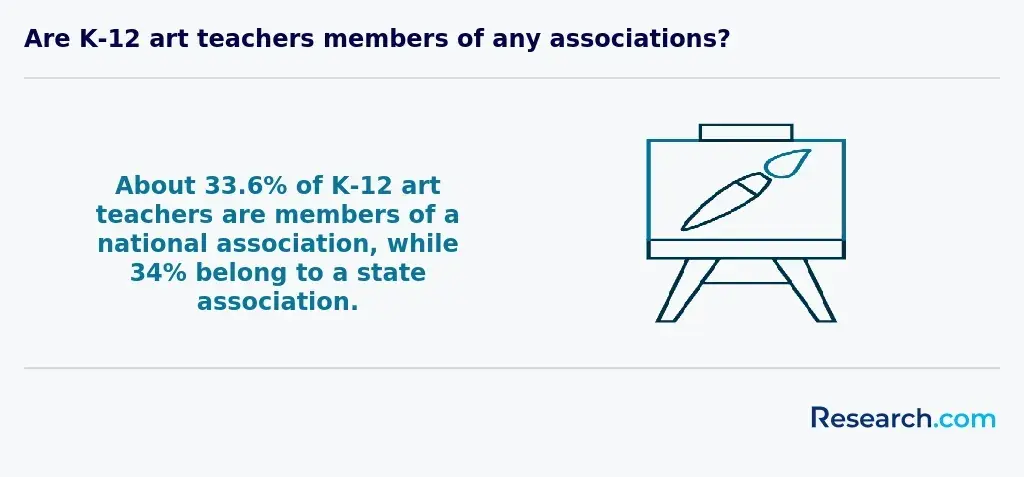
Association membership is one sign of professional engagement. Around 33.6% of K-12 art teachers are members of a national association, while 34% belong to a state association.
What is the importance of networking and mentorship for art teachers in Virginia?
Networking helps art teachers find jobs, share lesson ideas, locate exhibition opportunities, and understand district expectations. Mentorship helps new teachers handle the day-to-day challenges that do not always appear in college coursework, such as ordering supplies, adapting lessons for mixed-ability classes, handling wet media cleanup, and balancing creativity with standards-based grading.
Good mentorship should be practical. New teachers should ask mentors to review lesson plans, observe classroom routines, discuss student behavior patterns, and provide feedback on assessment rubrics. Professional associations, school-based induction programs, university alumni networks, and regional arts organizations can all help candidates find mentors.
Art teachers who expect to work with younger students should also understand how elementary certification and child development expectations may overlap with visual arts instruction. Research.com’s guide on becoming an elementary school teacher in Virginia can help candidates compare those requirements.
What career path should I pursue to become an art teacher in Virginia?
The best path depends on where you are starting. High school students and first-time college students should usually choose an art education program that is already aligned with Virginia licensure. Students who already hold an art degree should speak with a Virginia-approved teacher preparation provider about post-baccalaureate or alternative licensure options. Working artists who want to enter public education should expect to complete pedagogy, testing, and supervised teaching requirements before leading a classroom independently.
| Starting point | Most practical next step | Watch out for |
| High school student | Apply to art education programs with Virginia licensure pathways. | Do not choose a general fine arts degree unless you understand what extra teacher preparation will be required. |
| College student in studio art | Meet with an education advisor early to add licensure coursework if possible. | Late switching can add semesters, testing delays, or extra tuition. |
| Graduate with an art degree | Compare approved post-baccalaureate, master’s, or alternative preparation routes. | Content expertise alone is not the same as teacher licensure. |
| Licensed teacher in another subject | Ask the Virginia Department of Education or your district about adding an art endorsement. | Additional exams, coursework, or evidence of content competency may be required. |
Candidates who want a broader view of teacher preparation in the state can review Research.com’s guide on how to become a teacher in Virginia.
How can art teachers effectively integrate technology into their art classrooms in Virginia?
Technology should expand artistic learning rather than replace hands-on making. In Virginia art classrooms, digital tools can support design, animation, photography, portfolio development, critique, research, accessibility, and collaboration.
- Use digital portfolios so students can document process work, revisions, reflections, and final pieces over time.
- Introduce graphic design software when it supports standards and age-appropriate design thinking.
- Use virtual galleries and museum collections to expose students to works they cannot see in person.
- Teach responsible image use, copyright awareness, and digital citizenship as part of creative production.
- Balance screen-based work with drawing, painting, sculpture, ceramics, and tactile media.
Teachers who want to strengthen cross-disciplinary communication around digital projects may also find useful ideas in Research.com’s guide on becoming an English teacher in Virginia, especially when planning critique, reflection, and written artist statements.
How can art teachers in Virginia enhance their interdisciplinary communication skills?
Art teachers often collaborate with English, history, science, music, technology, and special education colleagues. Strong interdisciplinary communication means explaining the visual arts objective clearly while connecting it to another subject in a way that strengthens both areas.
- Create shared vocabulary lists when projects combine art with writing, history, science, or music.
- Use planning templates that identify each subject’s standard, product, process, and assessment criteria.
- Agree on feedback language before students begin the project.
- Clarify whether the final grade measures art skills, content knowledge from another subject, collaboration, or multiple outcomes.
Educators who want formal training in communication strategy may compare options such as an accelerated online communications degree, particularly if they are interested in curriculum leadership or arts advocacy.
What are effective classroom management strategies and teaching methods for art teachers in Virginia?
Art classroom management is different from management in a lecture-based classroom. Students move, use materials, share tools, clean workspaces, and make subjective creative choices. Strong routines protect learning time and reduce frustration.
- Set procedures before problems happen: Teach how to enter, gather materials, use tools, store work, clean up, and transition between demonstrations and studio time.
- Model every process: Demonstrations help students understand technique, safety, timing, and expectations before they begin.
- Use visible criteria: Rubrics, exemplars, and process checklists make assessment less mysterious and help students revise.
- Plan engaging projects: Hands-on work, meaningful themes, and student choice reduce off-task behavior.
- Differentiate instruction: Offer different entry points, media options, support tools, and challenge extensions so all students can participate.
- Use positive reinforcement: Recognize persistence, craftsmanship, risk-taking, collaboration, and cleanup habits—not only finished artwork.
- Build critique norms: Students need clear language for giving respectful, useful feedback.
- Reflect regularly: Use sketchbook checks, informal conferences, and exit reflections to understand what students need next.
- Keep safety central: Teach safe use of cutting tools, adhesives, clay, paint, printmaking materials, and digital equipment.
Teachers who want deeper preparation in pedagogy and classroom leadership can compare programs such as an online master’s in teaching.
| Common mistake | Better approach |
| Starting projects before teaching cleanup and storage routines | Practice routines with low-stakes materials before launching complex projects. |
| Grading only final products | Assess process, experimentation, reflection, craftsmanship, and revision. |
| Assuming student choice means no structure | Provide controlled choices tied to clear objectives and criteria. |
| Using technology because it is available | Use digital tools only when they strengthen the learning goal. |
| Choosing a program without confirming licensure alignment | Verify state approval, accreditation, endorsement outcomes, and testing requirements before enrolling. |
How can art teachers integrate creative writing techniques to enhance art education?
Creative writing can help students explain meaning, build narratives, and reflect on artistic choices. This is especially useful when students struggle to talk about their work or when teachers want to connect visual art with literacy goals.
- Ask students to write artist statements that explain theme, media, process, and intention.
- Use short poems or narrative prompts as starting points for visual compositions.
- Have students create character sketches before designing portraits, masks, or illustrations.
- Pair critique with written reflection so students practice evidence-based interpretation.
- Use visual journaling to combine sketching, observation, personal response, and written notes.
Educators interested in deeper literary study that can complement visual arts instruction may explore Research.com’s guide to online creative writing degree programs.
What are the career advancement opportunities and specializations for art teachers in Virginia?
Art teaching can lead to multiple forms of advancement. Some teachers stay in the classroom and develop expertise in a medium or grade band, while others move toward leadership, curriculum design, museum education, or district-level arts coordination.
- Specialized media: Teachers may focus on digital media, ceramics, photography, printmaking, animation, art history, or portfolio preparation.
- Leadership roles: Experienced teachers can become department chairs, mentor teachers, curriculum coordinators, arts supervisors, or administrators.
- Additional endorsements: Credentials in special education, gifted education, educational technology, or administration can expand professional options.
- Curriculum development: Teachers with strong standards knowledge may help design district pacing guides, assessments, exhibitions, or interdisciplinary arts initiatives.
- Adjacent education careers: Art teachers interested in information access, research, and school resources may compare related paths such as library science degree jobs.
More than 51% of K-12 art teachers cite financial benefits as the main reason for pursuing an advanced degree, as shown in the graphic below.

One Virginia educator described starting as a high school art teacher in Harrisonburg after graduating from James Madison University. Her focus on digital media led to workshops on technology integration, and her interest in curriculum eventually moved her into a coordinator role supporting art programs across multiple schools. Her path shows how classroom expertise can grow into broader instructional leadership.
What resources and support are available for new art teachers in Virginia?
New art teachers should build a support system before the first day of school. The first year often brings unexpected challenges: budgeting supplies, managing large numbers of students, displaying work, differentiating projects, and maintaining a safe studio environment.
- Virginia Department of Education: Use state guidance to verify licensure requirements, professional learning options, and instructional expectations.
- Virginia Art Education Association: VAEA offers networking, advocacy, workshops, conference opportunities, and access to experienced educators.
- District mentorship programs: Many school systems pair new teachers with mentors who can help with pacing, grading, classroom systems, and school culture.
- Teachers Pay Teachers and Artsonia: Online platforms can provide lesson ideas, display inspiration, and classroom examples, but teachers should adapt materials to Virginia standards and their students’ needs.
- Virginia Museum of Fine Arts: Museum resources, exhibitions, and teacher programs can enrich lessons and expose students to significant works of art.
- Social media communities: Virginia-focused art teacher groups can be useful for quick advice, but teachers should verify policy-related information with official sources.
- National Art Education Association: NAEA resources can support lesson planning, advocacy, research awareness, and professional development.
- University workshops: Continuing education options can help teachers strengthen studio practice, assessment, inclusion, and technology integration.
- Local art supply stores: Some stores offer educator discounts or workshops that can help teachers stretch limited classroom budgets.
How can art teachers integrate music into their art curriculum to enhance interdisciplinary learning?
Music integration works best when students investigate real connections between sound and visual form. Art teachers can collaborate with music specialists to explore rhythm, repetition, movement, mood, cultural traditions, pattern, and composition.
- Ask students to create abstract compositions based on rhythm, tempo, or dynamics.
- Pair music history with visual art from the same time period or culture.
- Use soundscapes as prompts for color, texture, and mark-making.
- Collaborate on performances, exhibitions, or multimedia projects.
Teachers planning sustained arts collaboration may find helpful context in Research.com’s guide on how to become a music teacher in Virginia.
What do graduates have to say about becoming an art teacher in Virginia?
Teaching art in Virginia changed how I think about creativity and community. I have seen students gain confidence when they realize their ideas matter and their artwork can communicate something personal. Ella
Virginia classrooms bring together many cultural influences, and that makes art teaching especially meaningful. The strongest moments happen when students begin to recognize their own visual voice. Jimmy
The professional relationships I built with other educators helped me survive the early years and improve my teaching. Collaboration has been one of the most valuable parts of my career. Sol
How can art teachers diversify their skill sets through interdisciplinary training?
Interdisciplinary training can make art teachers more adaptable and open doors to leadership, curriculum design, community programming, and school resource roles. Useful areas include digital media, museum education, literacy, special education, arts integration, information management, and educational technology.
For example, teachers who want to improve research instruction, resource curation, and community engagement may benefit from understanding how to become a librarian in Virginia. The connection is practical: both librarians and art teachers help students interpret information, organize ideas, and communicate meaning.
What financial aid and scholarship opportunities exist for aspiring art teachers in Virginia?
Aspiring art teachers should compare the full cost of preparation, not just tuition. Testing fees, background checks, art supplies, portfolio materials, transportation to student teaching, and lost work hours during clinical placement can all affect affordability.
- Check institutional scholarships for art education, teacher preparation, and financial need.
- Ask whether the education department offers grants or emergency funds for student teachers.
- Look for local arts foundation scholarships and community education awards.
- Compare loan forgiveness or service-based support options for educators when available.
- Ask whether graduate coursework can increase salary placement before borrowing for an advanced degree.
Funding rules may vary by teaching area. Candidates can compare broader teacher preparation costs and aid considerations by reviewing Research.com’s guide on how to become a middle school math teacher in Virginia.
How can art teachers enhance inclusive practices with supplementary certifications?
Inclusive art teaching means designing lessons that allow students with different abilities, language backgrounds, sensory needs, and confidence levels to participate meaningfully. Supplementary training can help teachers adapt materials, provide alternative processes, use assistive technology, and assess growth fairly.
Teachers who want stronger preparation for students with disabilities may consider the requirements described in Research.com’s guide to special education teacher certification in Virginia. Even when art teachers do not pursue a full special education role, understanding individualized supports can improve classroom access.
How can art teachers integrate historical perspectives into their art curriculum?
Art history gives students context for why artworks look the way they do and how artists respond to culture, politics, religion, technology, identity, and place. The strongest lessons connect historical analysis with hands-on creation rather than treating art history as a separate lecture.
- Pair an artistic movement with a studio problem using similar materials or design questions.
- Compare works from different cultures without reducing them to stereotypes or isolated craft activities.
- Use primary sources, museum collections, and artist statements when available.
- Ask students to analyze how historical context changes interpretation.
Teachers who want deeper curriculum strategies for historical inquiry may find useful parallels in Research.com’s guide on becoming a history teacher in Virginia.
How can art teachers integrate early childhood development principles into their art curriculum?
Young children learn through exploration, movement, sensory experience, and play. Art teachers working with early grades should prioritize process, motor development, language building, observation, and confidence rather than polished final products.
- Use large movements and tactile materials to support fine and gross motor development.
- Offer open-ended prompts instead of copying-based projects.
- Build vocabulary through color, shape, texture, line, pattern, and storytelling.
- Keep directions short, visual, and repeated through demonstration.
- Assess growth through participation, experimentation, and explanation rather than adult-like craftsmanship.
For educators focused on early learners, Research.com’s guide on how to become a kindergarten teacher in Virginia offers useful context on child development and classroom expectations.
How can art teachers secure additional classroom funding and resources in Virginia?
Art programs often need more materials than standard classroom budgets cover. Teachers should treat funding as an ongoing planning task rather than a last-minute scramble before a major project.
- Ask administrators about annual supply budgets, purchase deadlines, approved vendors, and reimbursement rules.
- Apply for school foundation grants, local arts council support, and community education grants when available.
- Partner with museums, libraries, local artists, businesses, and parent organizations for exhibitions, donations, or workshops.
- Use donation requests carefully and follow district policies for accepted materials.
- Design projects that use durable tools, reusable materials, and low-cost media without lowering instructional quality.
Funding patterns can differ between public and private schools. Teachers comparing school settings may find useful context in Research.com’s guide on how to become a private school teacher in Virginia.
Key Insights
- Virginia art teachers typically need a bachelor’s degree, approved teacher preparation, required assessments, supervised teaching experience, background checks, and state licensure.
- Do not choose an art program based only on reputation. Confirm that it is accredited, licensure-aligned, and accepted for Virginia teacher preparation.
- Student teaching matters because art classrooms require specialized management skills, including studio routines, supply systems, safety procedures, critique norms, and differentiated project design.
- As of 2023, Virginia had approximately 1,200 art teachers employed in public schools, showing a defined workforce for candidates to research by district and region.
- The average salary for an art teacher in Virginia is around $56,000 annually, but pay varies by experience, location, and district; urban areas often pay more than rural areas.
- Salary should be evaluated with benefits, cost of living, commute, teaching load, facilities, and materials budget. A higher salary may not automatically mean a better job offer.
- Virginia candidates must pass Praxis exams, and the 2023 pass rate for the Praxis II Art Content Knowledge exam was reported at 85%.
- Technology is increasingly important in art education. About 70% of art teachers report incorporating digital tools into their curriculum, but the best use of technology supports artistic goals rather than replacing hands-on work.
- The highest-earning arts and design occupations in 2024 included Special Effects Artists and Animators at $106,500, Fashion Designers at $99,060, Industrial Designers at $79,290, Interior Designers at $76,250, Set and Exhibit Designers at $62,510, and Graphic Designers at $58,910.
- The global art market dropped from $64.4 billion in 2019 to $50.3 billion in 2020, then rebounded to $65.9 billion in 2021 and $67.8 billion in 2022 before moving to $65 billion in 2023.
- Professional networks matter. Around 33.6% of K-12 art teachers belong to a national association, while 34% belong to a state association.
- The main reason more than 51% of K-12 art teachers pursue an advanced degree is to increase earning potential.
Related Articles for Nearby States
- 2027 How to Become an Art Teacher in West Virginia: Requirements & Certification
- 2027 How to Become an Art Teacher in Maryland: Requirements & Certification
- 2027 How to Become an Art Teacher in North Carolina: Requirements & Certification
- 2027 How to Become an Art Teacher in Tennessee: Requirements & Certification
- 2027 How to Become an Art Teacher in Kentucky: Requirements & Certification
- 2027 How to Become an Art Teacher in Pennsylvania: Requirements & Certification
- 2027 How to Become an Art Teacher in South Carolina: Requirements & Certification
- 2027 How to Become an Art Teacher in Ohio: Requirements & Certification
- 2027 How to Become an Art Teacher in Delaware: Requirements & Certification
- 2027 How to Become an Art Teacher in New Jersey: Requirements & Certification
References:
- Arts for Learning Virginia. (2020, August 21). PROGRAMS. Arts for Learning Virginia.
- Art Teacher Education. (2011, December 7). Becoming an Art Teacher. Art Teacher Education.
- Marymount University. (2021, February 24). Art Education with K-12 Teaching Licensure (B.A. in Art). Marymount University.
- Old Dominion University. (2022, August 1). Art Education (BFA). Old Dominion University.
- Virginia Art Education Association. (2024). Guiding Principles for High School Visual Arts Programs. Virginia Art Education Association.
- Virginia Commonwealth University. (2019, December 18). Art Education. Virginia Commonwealth University.
- Virginia Department of Education. (2024). Art Teacher. Virginia Department of Education.
- Virginia Department of Education. (2024). Professional Learning & Development. Virginia Department of Education.
- Virginia General Assembly. (2024, September 17). Article 3. Prek-12 Endorsements, Special Education, Secondary Grades 6-12 Endorsements, and Adult Education. Virginia General Assembly.
- Virginia Museum of Contemporary Art. (2024). Virginia Museum of Contemporary Art. Virginia Museum of Contemporary Art.
Other Things You Should Know About Becoming an Art Teacher in Virginia
To become certified as an art teacher in Virginia in 2027, you must pass the Praxis II Art Content Knowledge test. This exam assesses your understanding of art concepts and teaching methods, ensuring you're well-prepared for Virginia's education standards.
The Virginia Board of Education issues Virginia teaching licenses through the Virginia Department of Education. Art teachers apply for a Collegiate Professional or Postgraduate Professional license after meeting degree, coursework, and testing requirements, and school districts verify eligibility during the hiring process.
To become an art teacher in Virginia in 2027, a bachelor's degree in Art Education or a related field is required. A teaching license obtained through an approved teacher preparation program is also essential. Advanced degrees like a master’s are not mandatory for entry-level positions but may enhance career opportunities. 1. **Question** What are the key steps for becoming an art teacher in Virginia in 2027? **Answer** To become an art teacher in Virginia in 2027, first obtain a bachelor's degree in Art Education, complete a state-approved teacher preparation program, pass the Praxis exams for your subject, and apply for a Virginia teaching license. Continuous professional development may be required to maintain licensure. 2. **Question** What steps do you need to take to become an art teacher in Virginia in 2027? **Answer** In 2027, start by earning a bachelor’s degree in Art Education, undergo a state-credentialed teacher preparation program, and successfully pass the subject-specific Praxis exams. Lastly, apply for licensure with the Virginia Department of Education to finalize the certification process. 3. **Question** What alternate paths exist for becoming an art teacher in Virginia in 2027? **Answer** If you already have a bachelor's degree, consider enrolling in a alternative certification program or completing a Master of Arts in Teaching (MAT). These pathways offer a structured route to teacher licensure without a traditional degree in education.