2027 How to Become a Preschool Teacher Assistant in Wisconsin: Requirements & Certification

Co-Founder and Chief Data Scientist
Becoming a preschool teacher assistant in Wisconsin is a practical entry point into early childhood education, but the requirements can be hard to interpret because they vary by employer, program type, and long-term career goal. Some roles may only require a high school diploma or equivalent, while stronger candidates often bring early childhood coursework, a Child Development Associate credential, CPR and First Aid training, and supervised experience with young children.
This guide explains how to qualify for preschool teacher assistant jobs in Wisconsin, what the role involves, how long training may take, what it can cost, which credentials matter, and how this experience can lead to teaching, special education, childcare leadership, or other education careers. It is designed for career changers, recent high school graduates, childcare workers, and anyone deciding whether this is the right first step toward working with young children.
Quick answer: How do you become a preschool teacher assistant in Wisconsin?
To become a preschool teacher assistant in Wisconsin, you generally need a high school diploma or equivalent, a completed background check, and the ability to support young children safely in a supervised classroom. Many employers prefer candidates with early childhood education coursework, a Child Development Associate credential, CPR and First Aid certification, or experience in a childcare or preschool setting. Candidates who plan to advance into lead teaching roles should choose training that can transfer into an associate or bachelor’s degree in early childhood education.
Key facts to know before you start
- A Child Development Associate credential or similar early childhood qualification can take approximately 6 months to 2 years, depending on the program format and course load.
- The estimated cost of earning a CDA credential can range from $1,000 to $2,500, including training, application, and assessment expenses; books, workshops, and study materials may add to the total.
- Wisconsin preschool workers must complete background checks, which may take several weeks and generally cost around $20 to $50.
- The CDA is a nationally recognized credential and is often useful for employment in preschool and childcare settings.
- Community colleges and technical schools in Wisconsin offer early childhood programs that may take one semester to two years, depending on whether you study full time, part time, online, or in person.
| Decision point | Best option if you want a job quickly | Best option if you want to advance later |
| Education | High school diploma or GED plus employer-required training | Early childhood education certificate, CDA, or associate degree pathway |
| Credential | CPR, First Aid, and required background clearance | CDA credential and transferable college credits |
| Experience | Volunteer, substitute, aide, or childcare assistant experience | Documented supervised experience that may support future licensure or degree requirements |
| Long-term goal | Assistant role in preschool or childcare | Lead preschool teacher, kindergarten teacher, special education teacher, or childcare director |
- What do preschool teacher assistants do in Wisconsin?
- What education do you need for Wisconsin preschool assistant jobs?
- Which certifications help preschool teacher assistants get hired?
- How do you keep your preschool assistant credential current?
- How long does it take to qualify for preschool assistant roles?
- How much does training for this career usually cost?
- What related education careers can Wisconsin preschool assistants pursue?
- Which additional credentials can strengthen your career options?
- Can more education help you move beyond assistant roles?
- How can preschool assistants move toward middle school teaching?
- Do dual certifications improve education career flexibility?
- Can networking and advanced training support career growth?
- Can assistant experience lead to specialized teaching positions?
- How does special education certification expand career options?
- How can you find lower-cost teaching credential pathways?
- Can preschool assistants move into private school teaching?
- What career paths are available after preschool assistant experience?
- What does the job market look like for preschool teacher assistants?
- How much do preschool teacher assistants earn in Wisconsin?
- What are the advantages of becoming a preschool teacher assistant?
- Can preschool assistants move into online education roles?
What does a preschool teacher assistant do in Wisconsin?
A preschool teacher assistant works under the direction of a lead teacher to help young children learn routines, build social skills, participate in age-appropriate activities, and stay safe throughout the day. In Wisconsin, assistants may work in public preschool programs, private childcare centers, Head Start settings, faith-based programs, and community-based early learning centers.
- Support daily classroom routines: Assistants prepare materials, organize learning centers, help children transition between activities, support meals and rest time, and keep the classroom safe and orderly.
- Help carry out lesson activities: They guide children through stories, songs, art, sensory play, early literacy tasks, counting activities, and social-emotional learning exercises planned by the lead teacher.
- Provide individual attention: Some children need extra help with communication, sharing, fine motor tasks, early reading, or classroom expectations. Assistants often give that close support while the teacher leads the larger group. This is especially important in a state where approximately 60% of children aged 3 to 5 are enrolled in preschool programs.
- Reinforce positive behavior: Preschool assistants help children practice turn-taking, express feelings, resolve conflicts, and follow classroom routines using age-appropriate guidance.
- Communicate observations: Assistants may share notes with the lead teacher about a child’s participation, behavior, developmental progress, or need for additional support.
What makes the role challenging?
- High turnover in early childhood settings: Staff changes can make consistency harder for children and coworkers.
- Limited classroom resources: Some programs operate with tight budgets, so assistants may need to be resourceful with materials and activities.
- Emotional and physical demands: The work requires patience, stamina, calm communication, and the ability to respond to children’s needs throughout a busy day.
| Typical responsibility | Why it matters | Skill it builds |
| Helping children follow routines | Predictable routines reduce stress and support independence | Classroom management |
| Assisting with play-based learning | Play supports language, problem-solving, and social growth | Early childhood instruction |
| Supporting individual children | Extra help can improve participation and confidence | Observation and differentiated support |
| Maintaining safety | Young children need close supervision and quick response | Risk awareness and professional judgment |
What educational qualifications are needed to become a preschool teacher assistant in Wisconsin?
The minimum education requirement for many preschool teacher assistant roles in Wisconsin is a high school diploma or equivalent, such as a GED. However, the strongest path depends on where you want to work and whether you plan to stay in assistant roles or move into lead teaching later.
- High school diploma or equivalent: This is the basic entry requirement for many assistant positions and is commonly expected before you work in a licensed childcare or preschool environment.
- Early childhood education coursework: Although not always required for every job, employers often prefer applicants who have taken courses in child development, early learning environments, curriculum planning, behavior guidance, or family engagement. A minimum of 12 credits in early childhood education or a related field is often recommended.
- Certificate or technical college training: Wisconsin technical colleges and community colleges may offer certificates, diplomas, and associate-level coursework designed for childcare and preschool workers.
- Child Development Associate credential: A CDA can make an applicant more competitive because it combines formal training with direct experience working with children.
- Background check clearance: Anyone working with young children should expect criminal history and child safety screening, and some employers may also require fingerprinting.
- Ongoing professional learning: After hire, assistants may be asked to complete workshops or training in mandated reporting, health and safety, child development, inclusion, or classroom behavior support.
Which education path should you choose?
| Path | Who it fits best | Main trade-off |
| Employer-provided entry training | Applicants who want to start quickly in an assistant or aide role | May not transfer into a degree program |
| CDA credential | Childcare workers who want a recognized early childhood credential | Requires training, experience, and assessment |
| Early childhood certificate | Students who want college-level preparation without a full degree at first | May need more coursework for lead teacher roles |
| Associate degree | People planning to pursue higher responsibility in childcare or preschool settings | Costs more and takes longer than short-term training |
| Bachelor’s degree pathway | Future licensed teachers or professionals seeking broader education careers | Requires a larger time and financial commitment |
What certifications are required to be a preschool teacher assistant in Wisconsin?
Wisconsin does not require one single statewide certification for every preschool teacher assistant job. Requirements can differ by employer, funding source, and classroom setting. Still, several credentials and clearances are commonly expected or strongly preferred.
- Minimum education: A high school diploma or equivalent is the baseline for many jobs. Applicants with early childhood coursework, an associate degree, or child development training may have better options.
- Child Development Associate credential: The CDA is widely recognized in early childhood education. To earn it, candidates must complete 120 hours of formal training and 480 hours of experience working with children.
- Background check: Wisconsin requires people who work with children to complete background screening, which may include criminal history, child abuse record checks, fingerprints, and identity information.
- First Aid and CPR certification: These credentials are not always listed as universal statewide requirements for every assistant role, but many employers prefer or require them because assistants help supervise young children throughout the school day.
- Health and safety training: Employers may require training in child supervision, emergency procedures, safe sleep, medication policies, food safety, and mandated reporting.
Certification comparison for Wisconsin preschool assistants
| Credential or requirement | Is it commonly needed? | Why it matters |
| High school diploma or GED | Yes, as a basic requirement | Establishes eligibility for entry-level education support roles |
| Background check | Yes | Required to help protect children in care and school settings |
| CDA credential | Often preferred | Shows formal early childhood training and supervised experience |
| CPR and First Aid | Often preferred or required by employers | Prepares assistants to respond to common classroom emergencies |
| Early childhood college credits | Helpful for advancement | Can support future certificate, associate degree, or teaching pathway plans |
How do you maintain your preschool teacher assistant certification in Wisconsin?
Credential maintenance depends on the credential you hold and the employer or program where you work. If your role, center, or credential follows Wisconsin Department of Public Instruction or employer renewal expectations, you should track professional development carefully and confirm requirements before your renewal window closes.
- Complete continuing education: Wisconsin requires preschool teacher assistants to complete a minimum of 15 hours of professional development every five years. Training may include early childhood education workshops, seminars, college courses, or employer-approved sessions.
- Track documentation: Keep certificates, transcripts, workshop confirmations, and employer training records in one place. You may need them for renewal, promotion, or future school applications.
- Renew credentials on time: Certification renewal must be completed every five years. If a DPI renewal applies to your credential, submit the renewal application through the DPI online system and make sure your professional development hours are documented.
- Update background checks: Wisconsin requires a criminal background check every five years. Employers may have additional screening timelines or procedures.
- Stay connected to the field: Professional groups such as the Wisconsin Early Childhood Association can help you find training, policy updates, and local networking opportunities.
Simple renewal checklist
- Confirm which credential or employer requirement applies to your position.
- Complete eligible training before the renewal deadline.
- Save proof of all professional development hours.
- Complete the required background check process.
- Submit renewal materials early enough to avoid employment delays.
How long does it take to become a preschool teacher assistant in Wisconsin?
The timeline can be short if you already meet the basic education requirement and an employer is willing to train you. It can take longer if you choose a CDA, college certificate, or associate degree to improve your job prospects.
- Training or study: 6 months to 2 years: Early childhood education options range from short-term noncredit training to associate degree programs. Many community colleges offer part-time, evening, hybrid, or online formats for working adults.
- Hands-on experience: at least 80 full days: Practical classroom experience helps candidates understand child development, supervision, behavior guidance, and daily preschool routines. This experience may come from internships, volunteer work, childcare employment, or supervised field placements.
- Certification application: 1-2 weeks: After completing the required education and experience, candidates may apply through the Wisconsin Department of Public Instruction if their credential or pathway requires DPI processing. Correct documentation can help avoid delays.
- Assessments: varies: Not every assistant job requires a formal exam, but some programs or credentials include assessments. Plan extra time if your training provider requires written work, observations, portfolio review, or testing.
If you are comparing requirements across states, it helps to review each state’s rules early. For example, candidates considering a move can compare Wisconsin requirements with Nevada educator certification expectations before choosing a training pathway.
The chart below shows that most preschool and kindergarten teachers in the United States have a bachelor's degree.
What is the average cost of becoming a preschool teacher assistant in Wisconsin?
The cost depends on whether you pursue employer training, a CDA, a technical college certificate, or a degree program. The least expensive route is usually employer-supported training while working. The most expensive route is full-time college study with living expenses.
- Tuition: Community college or vocational early childhood education programs typically cost $3,000 to $10,000 per year, depending on the school, enrollment status, and whether you pay in-state or out-of-state rates.
- Room and board: Students who live away from home may need to budget $8,000 to $12,000 annually. Living at home can significantly lower total cost.
- Books and materials: Early childhood education textbooks, supplies, and digital materials may cost $300 to $1,000 per year.
- Credentialing fees: Certification or credential-related fees may range from $100 to $500, depending on the course, provider, and credential process.
Based on these categories, prospective preschool teacher assistants in Wisconsin should plan for an estimated annual investment of approximately $11,400 to $22,100 if they enroll in a program with tuition, materials, credentialing, and living costs. Your actual cost may be much lower if you work while training, attend part time, live at home, receive employer support, or qualify for financial aid.
Ways to reduce the cost
- Ask employers whether they reimburse CDA training, CPR certification, background checks, or college courses.
- Choose transferable credits if you may pursue an associate or bachelor’s degree later.
- Compare total program cost, not just tuition.
- Look for used textbooks, digital materials, and open educational resources when allowed.
- Consider technical college programs with part-time scheduling so you can keep working.
Students who want to specialize in language learning may also compare early childhood pathways with English language teaching programs, especially if they plan to support multilingual learners later in their education career.
What other education-related careers can preschool teacher assistants in Wisconsin pursue?
Preschool assistant experience can be a strong foundation for other education roles because it builds classroom awareness, child development knowledge, communication skills, and experience working with families. One common next step is elementary education, although candidates must meet the elementary school teacher requirements in Wisconsin before becoming licensed for that level. Other possible directions include special education, childcare administration, family support, and instructional support roles.
What additional certifications or professional development opportunities can boost your career in Wisconsin?
The most useful professional development is training that connects directly to the children you serve or the role you want next. Good options include behavior guidance, trauma-informed care, early literacy, developmental screening, inclusive classrooms, autism support, family engagement, and early intervention practices. Those interested in communication disorders or language development may explore what is required for an SLP license in Wisconsin, although that path requires substantially more education than a preschool assistant role.
Can further education advance your career as a preschool teacher assistant in Wisconsin?
Yes. Additional education can move you from classroom support into lead teaching, program coordination, licensing-compliant childcare leadership, or specialized student support. The best next credential depends on your goal. If you want to remain in early childhood, choose early childhood education credits. If you want to teach older children, compare programs that lead to teacher licensure. Flexible programs, including options similar to the best online elementary school pathways, may help working assistants continue their education without leaving the workforce.
How can I transition from a preschool teacher assistant to a middle school teaching role in Wisconsin?
Moving from preschool support to middle school teaching is possible, but it is not a direct credential upgrade. You would need preparation in the subject and grade level you want to teach, plus any required Wisconsin licensure steps. For example, a preschool assistant interested in math instruction would need to build content knowledge, complete an approved teacher preparation route, and document classroom readiness for older learners. A focused guide on how to become a middle school math teacher in Wisconsin can help you compare that pathway with early childhood advancement.
Can dual certifications enhance career opportunities for preschool teacher assistants in Wisconsin?
Dual credentials can help if they match a realistic career plan. For example, an early childhood worker who also develops expertise in physical education, special education, English language learning, or family support may qualify for a wider set of roles after completing the required education and licensure. Before investing in a second credential, compare job postings and state requirements. If you are considering a movement or wellness-focused route, review the requirements for physical education teacher certification to understand how different that pathway may be from preschool assistance.
Can advanced training and networking propel my career forward?
Advanced training helps most when it gives you skills your current workplace needs, such as inclusive classroom strategies, early literacy instruction, behavior supports, or parent communication. Networking can also matter because many early childhood opportunities are local and relationship-based. Attend workshops, connect with lead teachers, ask supervisors about advancement requirements, and join early childhood associations. If your next goal is kindergarten teaching, study the requirements to become a kindergarten teacher in Wisconsin so your coursework supports that transition.
Can preschool teacher assistant experience lead to specialized teaching roles?
Yes, but specialized teaching usually requires additional education, supervised preparation, and state-approved credentials. Preschool assistant experience can help you understand classroom routines, developmental needs, and child behavior, but it does not replace subject-area preparation. For example, an assistant interested in arts education would need music training and the appropriate credential pathway. A useful starting point is learning how to become a music teacher in Wisconsin before choosing electives or a degree plan.
How can obtaining a special education teacher certification in Wisconsin boost my career?
Special education training can expand your ability to support children with disabilities, developmental delays, communication needs, behavioral challenges, or individualized learning plans. For preschool assistants, this can be a meaningful next step because early childhood classrooms increasingly emphasize inclusion and early support. To move into a licensed special education teaching role, review the requirements for special education teacher certification in Wisconsin and choose coursework that aligns with that goal.
How can I access affordable teaching credentials in Wisconsin?
To keep credential costs manageable, compare public colleges, technical colleges, online programs, transfer policies, employer tuition support, and scholarship options before enrolling. The lowest-cost option is not always the best value if credits do not transfer or the program does not meet your career goal. For a broader cost-saving strategy, see the guide to the cheapest way to become a teacher in Wisconsin.
Can I Transition from a Preschool Teacher Assistant Role to Private School Teaching?
Preschool assistant experience can help you move toward private school teaching, especially if you have strong classroom references, child development knowledge, and relevant coursework. However, private schools set their own hiring expectations, and some still prefer or require degree-level preparation, subject expertise, or teaching credentials. Before applying, compare the qualifications schools request and review the steps for how to become a private school teacher in Wisconsin.
What career paths are available for preschool teacher assistants in Wisconsin?
A preschool assistant role can be either a long-term support position or the first step toward higher responsibility in education. The best path depends on how much additional education you are willing to complete and whether you want to remain with young children or work in a different setting.
- Lead Preschool Teacher: With additional education, such as a bachelor’s degree in early childhood education and a Wisconsin Department of Public Instruction teaching license, an assistant can move into a lead teacher role. This position typically offers a median salary of around $24,150, with higher earnings possible as experience increases.
- Special Education Teacher: Assistants who enjoy individualized support may pursue special education certification. Preschool special education teachers in Wisconsin earn a median salary of approximately $49,770.
- Child Care Center Director: Experienced assistants who develop management and compliance skills may move into childcare administration. This role involves supervising staff, managing operations, and meeting state regulations, with a median salary of about $36,370.
- Curriculum Developer: Workers who enjoy planning activities may eventually help create age-appropriate lessons, classroom materials, and learning resources aligned with early childhood standards.
- Family Support Specialist: This role connects families with educational, developmental, and community resources. It requires strong communication and knowledge of local support systems.
- Professional Development Trainer: Experienced early childhood professionals may train new educators in classroom routines, child development, safety practices, or curriculum implementation.
If your goal is to move into advanced instructional or leadership roles, a traditional or online master's degree in education may eventually be useful, especially after you complete the undergraduate preparation required for your target role.
What is the job market for preschool teacher assistants in Wisconsin?
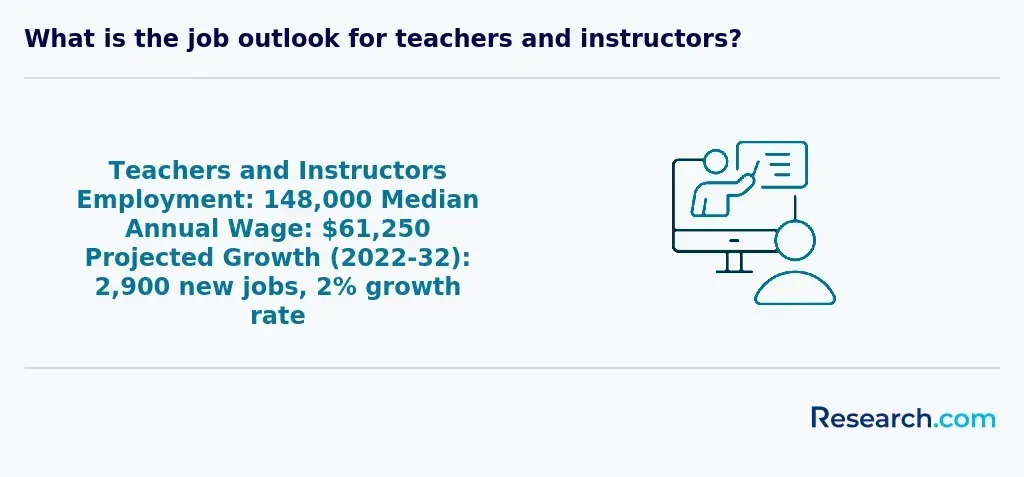
The national labor market shows mixed signals for early childhood and assistant roles. According to the United States Bureau of Labor Statistics, employment of preschool teachers from 2023 to 2033 is projected to grow by 4%, which is as fast as the national average. Employment of teaching assistants is projected to decline by 1% over the same period.
Even with modest projected growth or slight decline, openings still occur because workers retire, change careers, or move to other education roles. The BLS reports 161,900 annual openings for teaching assistants and 61,400 annual openings for preschool teachers during the period. For Wisconsin candidates, the strongest applicants are likely to be those with early childhood training, clean background checks, reliable references, and experience in licensed childcare or preschool settings.
Current trends affecting preschool assistant jobs
- More emphasis on credentials: Employers may prefer assistants who already have a CDA, early childhood credits, or health and safety training.
- Technology in classrooms: Assistants may use digital tools for attendance, family communication, progress notes, or classroom documentation, but the core work remains hands-on and child-centered.
- Inclusion and early intervention: Assistants with training in developmental delays, behavior support, and inclusive classrooms may be more competitive.
- Career ladder expectations: Many workers use assistant roles as stepping stones toward lead teacher, kindergarten, special education, or childcare leadership roles.
Preschool assistants who continue their education may also explore broader education and information service roles, including library science job opportunities, if they want to support learning outside a traditional classroom.
How much do preschool teacher assistants make in Wisconsin?
Pay varies by employer, location, funding source, experience, and credential level. According to 2024 data from ZipRecruiter, preschool teacher assistants in Wisconsin earn an average annual salary of $31,339. Indeed.com reports that teaching assistants in Wisconsin earn $33,984 annually.
For national context, the BLS reports that preschool teachers earn an average annual salary of $41,410 and a median annual salary of $37,130. Teaching assistants earn an average annual salary of $36,430 and a median annual salary of $35,550.
| Role or source | Reported pay figure | How to interpret it |
| Wisconsin preschool teacher assistants, ZipRecruiter | $31,339 average annual salary | Useful for state-specific assistant pay comparison |
| Wisconsin teaching assistants, Indeed.com | $33,984 annually | Reflects reported teaching assistant wages in the state |
| U.S. preschool teachers, BLS | $41,410 average annual salary; $37,130 median annual salary | Broader national benchmark for preschool teachers |
| U.S. teaching assistants, BLS | $36,430 average annual salary; $35,550 median annual salary | National context for assistant-level roles |
To improve long-term earning potential, preschool assistants can add early childhood credits, pursue lead teacher qualifications, specialize in special education, or eventually consider graduate study. Cost-conscious learners may compare options such as the most affordable online master's degrees in teaching after completing the necessary undergraduate preparation.
Recent data in the chart below shows that the District of Columbia is the top-paying state for preschool teachers in the country.
What are the benefits of becoming a preschool teacher assistant in Wisconsin?
The main benefit of becoming a preschool teacher assistant is that you can enter the education field relatively quickly while gaining direct experience with children. The role can help you decide whether early childhood education is the right long-term career before you invest in a degree or teaching license.
- Direct impact: Assistants help children build early language, social, emotional, and school-readiness skills.
- Career testing: The job lets you experience classroom life before committing to a longer teacher preparation program.
- Transferable skills: Communication, teamwork, patience, observation, behavior guidance, and problem-solving apply to many education and human service roles.
- Advancement potential: With more education, assistants may move toward lead teaching, childcare administration, special education, or kindergarten teaching.
- Community connection: The role involves working closely with children, families, teachers, and local early childhood programs.
If you already know that you want to lead a classroom, compare assistant requirements with the steps for how to become a preschool teacher in Wisconsin so you can choose training that moves you in the right direction.
Can preschool teacher assistants transition to online teaching roles in Wisconsin?
Some preschool assistants can move into online education support, but virtual work with very young children is different from in-person preschool assistance. Online roles may involve tutoring, family support, digital learning activities, curriculum assistance, or remote classroom support rather than full preschool classroom management. To prepare, build skills in digital communication, online safety, virtual classroom routines, and developmentally appropriate technology use. For a broader pathway, review how to be an online teacher in Wisconsin.
Common mistakes to avoid before choosing this career path
- Assuming every preschool assistant job has the same requirements: Public schools, private centers, Head Start programs, and childcare centers may have different hiring standards.
- Choosing the cheapest program without checking transfer value: Low-cost training may be fine for entry-level work, but it may not count toward a future degree.
- Ignoring background check timelines: Background screening can take several weeks, so start early when applying for jobs or field placements.
- Skipping CPR and First Aid: Even when not listed as mandatory, these credentials can make you more employable and better prepared.
- Assuming salary outcomes are guaranteed: Pay depends on employer, location, credentials, hours, and experience.
- Waiting too long to plan your next step: If your goal is lead teaching or licensure, choose coursework that supports that pathway from the beginning.
Questions to ask before enrolling in a preschool assistant training program
- Is the program recognized by employers in my part of Wisconsin?
- Will the credits transfer into an associate or bachelor’s degree?
- Does the program prepare students for a CDA credential or other recognized early childhood qualification?
- Are field experience hours included, and do they help satisfy experience expectations?
- What is the full cost, including books, fees, background checks, and assessments?
- Does the program offer evening, weekend, online, or part-time options?
- What jobs have recent students obtained after completing the program?
- Will the training support my long-term goal, such as preschool teacher, kindergarten teacher, or special education teacher?
Related Articles for Nearby States
- 2027 How to Become a Preschool Teacher Assistant in Minnesota: Requirements & Certification
- 2027 How to Become a Preschool Teacher Assistant in Iowa: Requirements & Certification
- 2027 How to Become a Preschool Teacher Assistant in Illinois: Requirements & Certification
- 2027 How to Become a Preschool Teacher Assistant in Michigan: Requirements & Certification
- 2027 How to Become a Preschool Teacher Assistant in Indiana: Requirements & Certification
- 2027 How to Become a Preschool Teacher Assistant in Missouri: Requirements & Certification
- 2027 How to Become a Preschool Teacher Assistant in Ohio: Requirements & Certification
- 2027 How to Become a Preschool Teacher Assistant in South Dakota: Requirements & Certification
- 2027 How to Become a Preschool Teacher Assistant in Nebraska: Requirements & Certification
- 2027 How to Become a Preschool Teacher Assistant in Kentucky: Requirements & Certification
Key Insights
- Preschool teacher assistant roles in Wisconsin usually start with a high school diploma or equivalent, but early childhood coursework, a CDA credential, CPR and First Aid, and classroom experience can make you a stronger applicant.
- There is no single certification required for every preschool assistant job in Wisconsin, so always verify requirements with the employer, program type, and credentialing authority.
- A CDA or early childhood certificate can be a smart middle path if you want better job prospects without committing immediately to a full degree.
- Training costs vary widely. Compare total cost, transferability, field experience, and employer reimbursement before choosing a program.
- The role can lead to lead preschool teaching, special education, childcare administration, kindergarten teaching, private school teaching, or other education careers, but most advancement paths require additional education or licensure.
- The best strategy is to choose a first credential that helps you get hired now while also keeping future teaching options open.
References:
- BLS (2024, April 3). 25-2011 Preschool Teachers, Except Special Education. BLS occupational employment data for preschool teachers
- BLS (2024, April 3). 25-9045 Teaching Assistants, Except Postsecondary. BLS occupational employment data for teaching assistants
- BLS (2024, August 29). Preschool Teachers. BLS Occupational Outlook Handbook for preschool teachers
- BLS (2024, August 29). Teacher Assistants. BLS Occupational Outlook Handbook for teacher assistants
- Zippia (2024, April 5). Preschool Teacher's Assistant Education Requirements. Zippia education requirements overview
Other Things You Should Know About Becoming a Preschool Teacher Assistant in Wisconsin
In 2027, to become a preschool teacher assistant in Wisconsin, individuals typically need at least a high school diploma or equivalent. Some employers may prefer candidates with prior experience in childcare or early education. Certification in CPR and first aid is often recommended.
Yes, you can become a preschool teacher assistant in Wisconsin with just a high school diploma. Here’s a practical guide to help you navigate the process:
- Research Job Requirements: Many preschools prefer candidates with some experience or education in early childhood education. Familiarize yourself with local job postings to understand specific requirements.
- Gain Experience: Volunteer or work part-time in childcare settings. This hands-on experience is invaluable and can enhance your resume.
- Complete Required Training: While a diploma is sufficient, completing a short training program in early childhood education can make you more competitive. Look for local community colleges or online courses.
- Obtain CPR and First Aid Certification: Many employers require these certifications. Check with local organizations for training sessions.
- Apply for Positions: Once you have experience and any necessary certifications, start applying. Tailor your resume to highlight relevant skills and experiences.