2027 How to Become a Middle School Math Teacher in Wisconsin: Requirements & Certification

Co-Founder and Chief Data Scientist
Becoming a middle school math teacher in Wisconsin requires more than enjoying math or wanting to work with young adolescents. You need the right degree, a state-approved educator preparation program, supervised classroom experience, required testing, a background check, and a Wisconsin teaching license issued through the state’s educator licensing system. This guide explains the full pathway for future teachers, career changers, substitute teachers, and current educators who want to add middle school mathematics to their credentials. You will learn how Wisconsin licensure works, what coursework and exams to expect, how to compare preparation programs, what salary information to review, and how to build a stronger job application for math teaching roles.
Quick answer: How do you become a middle school math teacher in Wisconsin?
To become a middle school math teacher in Wisconsin, you typically earn a bachelor’s degree, complete a Wisconsin-approved educator preparation program with mathematics coursework and supervised teaching, pass required assessments such as the Praxis Core Academic Skills for Educators and the appropriate mathematics subject assessment, complete fingerprinting and a background check, and apply for licensure through the Wisconsin Department of Public Instruction. After beginning in the classroom, teachers continue building experience and completing professional development to maintain and advance their license.
Fast facts for future Wisconsin middle school math teachers
- Wisconsin districts need qualified middle school math educators, and many schools face difficulty filling mathematics teaching positions, which can create opportunities for well-prepared applicants.
- The average salary for middle school math teachers in Wisconsin is approximately $55,000 per year, although pay depends on the district, years of experience, education level, local salary schedules, and negotiated benefits.
- The employment outlook is positive, with projected growth of about 5% over the next decade, supported by continued attention to STEM education and the need for teachers with strong mathematics preparation.
- Wisconsin’s overall cost of living is moderate compared with national averages, and housing costs in many communities may make teacher salaries stretch further than in higher-cost states.
- New teachers should investigate district incentives, high-need school programs, grants, and loan forgiveness options because these can reduce the long-term cost of entering the profession.
- Steps to become a middle school math teacher in Wisconsin
- Education requirements for Wisconsin middle school math teachers
- Wisconsin certification and licensing process
- Student teaching, internships, and classroom experience
- Wisconsin middle school math standards and curriculum expectations
- Praxis exam preparation for Wisconsin math teacher candidates
- Job market and salary expectations in Wisconsin
- Professional development and continuing education options
- Classroom management and teaching methods for middle school math
- Career advancement and specialization paths
- Legal and ethical duties for Wisconsin teachers
- Resources and support for new math teachers
- Ways to strengthen your job prospects
- How a master’s degree can support career growth
- How added subject certifications can expand opportunities
- Financing options for further education
- Policy changes and interdisciplinary credentials
- Mentorship and networking for Wisconsin math teachers
- Transitioning from middle school to high school math teaching
- Building a teaching portfolio for advancement
- Moving into another age group, including preschool
- Future trends in Wisconsin middle school math education
- Cost-effective routes to a Wisconsin teaching credential
- Ongoing requirements to keep a Wisconsin teaching license active
- Common challenges and practical solutions
Steps to become a Wisconsin middle school math teacher
The most reliable route is to plan backward from licensure. Wisconsin schools need teachers who have both mathematics knowledge and the classroom preparation to teach early adolescents, so your path should combine degree planning, state-approved teacher preparation, testing, and supervised experience.
| Step | What you need to do | Why it matters |
| 1. Earn a bachelor’s degree | Complete an education, mathematics, or closely related degree from an accredited institution. | Licensure requires college-level preparation and documented subject knowledge. |
| 2. Complete educator preparation | Enroll in a state-approved teacher preparation program that includes methods courses and fieldwork. | Wisconsin requires preparation that connects theory, standards, assessment, and student teaching. |
| 3. Meet testing requirements | Prepare for and pass required exams, including Praxis Core Academic Skills for Educators and the relevant mathematics assessment when required. | Testing verifies basic academic skills and mathematics content readiness. |
| 4. Finish student teaching | Complete supervised classroom practice under an experienced educator. | Districts want evidence that you can plan lessons, manage students, and teach math effectively. |
| 5. Complete background requirements | Submit to fingerprinting and a background check as part of the licensing process. | Schools must verify professional suitability and student safety requirements. |
| 6. Apply through DPI | Submit transcripts, program verification, exam documentation, and fees to the Wisconsin Department of Public Instruction. | DPI issues the license that allows you to teach in Wisconsin public schools. |
- Start with degree fit: Choose a program that clearly prepares candidates for middle school or mathematics licensure in Wisconsin rather than assuming any math-related major will qualify.
- Confirm state approval before enrolling: A program may be accredited but still not match your intended Wisconsin license area, so ask admissions staff and the education department for written confirmation.
- Build testing time into your schedule: Praxis preparation should not be left until the final semester because test retakes can delay licensure applications.
- Budget for application costs: Candidates should prepare for licensing expenses, including application fees that may vary; the teaching license application fee is approximately $100.
- Keep every document: Save syllabi, transcripts, fieldwork verification, test reports, background check confirmation, and student teaching evaluations because districts and licensing offices may request them.
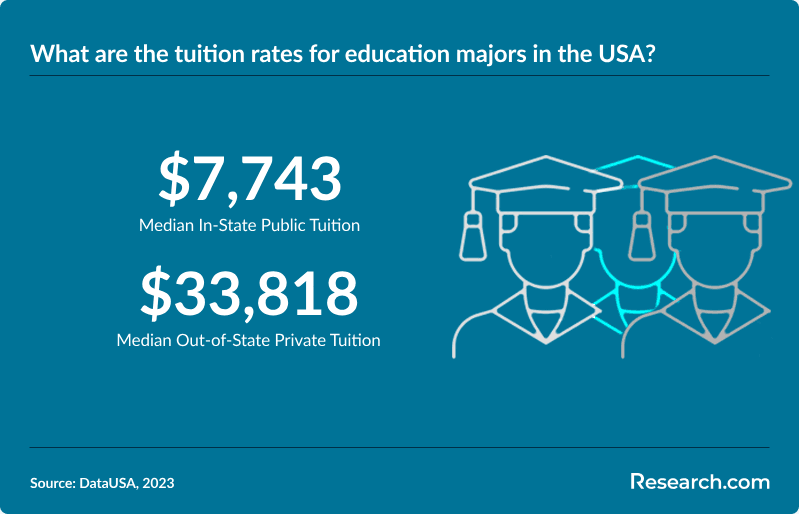
Education majors should compare total cost, not just tuition. Across the United States, the median in-state public tuition is approximately $7,743, while the median out-of-state private tuition is about $33,818. The difference can affect borrowing, repayment pressure, and whether a teacher can comfortably accept a first job in a lower-paying district.
For Wisconsin residents, public universities and transfer-friendly pathways may reduce the cost of becoming licensed, but affordability should always be balanced with program approval, completion rates, advising quality, and placement support.
Education requirements for becoming a middle school math teacher in Wisconsin
Wisconsin middle school math teachers need two kinds of preparation: college-level mathematics knowledge and professional teaching preparation. The strongest programs help candidates understand math content deeply enough to explain it in multiple ways, identify misconceptions, and adapt instruction for students who enter middle school with very different skill levels.
- Bachelor’s degree: A bachelor’s degree is the standard academic foundation. Many candidates major in education with a mathematics concentration, mathematics education, mathematics, or another approved pathway aligned with Wisconsin licensure.
- State-approved teacher preparation: Your program should include coursework in adolescent development, instructional design, assessment, classroom management, literacy across the curriculum, and math-specific teaching methods.
- Mathematics coursework: Expect preparation in areas such as number systems, algebraic reasoning, geometry, statistics, probability, and mathematical modeling, along with methods for helping middle school learners build conceptual understanding.
- Field experiences: Early classroom observations, tutoring, practicum work, and student teaching help you apply what you learn before you become the teacher of record.
- Accreditation and approval checks: Before committing to a school, verify institutional accreditation and ask whether the educator preparation program is approved for your intended Wisconsin license.
- Subject matter competency: Candidates must demonstrate readiness to teach mathematics, which can include passing the Praxis II: Subject Area Tests or other state-required measures.
| Pathway | Best for | Important caution |
| Traditional undergraduate education degree | Students beginning college who know they want to teach math. | Make sure the license level matches middle school mathematics, not only elementary education. |
| Mathematics major plus teacher preparation | Students who want deeper math content preparation and may later teach higher-level math. | You still need approved pedagogy, fieldwork, and licensure preparation. |
| Post-baccalaureate teacher preparation | Career changers who already have a bachelor’s degree. | Program length and fieldwork requirements vary, so confirm cost, timeline, and testing support. |
| Online or hybrid education program | Working adults or students who need schedule flexibility. | Confirm that student teaching can be arranged in Wisconsin and that the program meets state requirements. |
If you are changing fields and need a flexible starting point, an online elementary education degree can be worth comparing, but you should verify whether it leads to the specific middle school math credential you want rather than assuming all education degrees have the same licensure outcome.
Wisconsin certification and licensing process for middle school math teachers
Wisconsin uses a structured licensure system to make sure teachers meet academic, professional, and safety requirements before entering the classroom. Your educator preparation program is usually your best first source for license-specific guidance, but candidates should also review DPI instructions directly because forms, deadlines, and required documents can change.
- Complete the required education: Earn a bachelor’s degree and finish an approved educator preparation program that aligns with mathematics teaching. The program should verify your eligibility to apply for licensure.
- Understand Wisconsin license tiers: After meeting preparation requirements, new teachers commonly begin with a Provisional Educator License (Tier II). This license is valid for three years and allows candidates to teach while gaining professional experience.
- Complete the background check: Candidates must satisfy required background screening, including fingerprinting, before licensure can be granted.
- Move toward long-term licensure: After at least six semesters of teaching experience under the Provisional Educator License, an educator may qualify for a Lifetime Educator License (Tier III).
- Consider advanced recognition: Teachers seeking additional professional distinction may pursue a Master Educator License (Tier IV), which requires National Board Certification or completion of the Wisconsin Master Educator Assessment Process.
- Watch application timing: License applications must be submitted by June 30 of the school year in which you plan to begin teaching. Fees may differ by license type and application situation.
| License stage | When it applies | What to prepare |
| Provisional Educator License (Tier II) | After completing approved preparation and meeting initial requirements. | Program verification, transcripts, test records, background materials, and application fee. |
| Lifetime Educator License (Tier III) | After at least six semesters of qualifying teaching experience. | Evidence of experience and continued compliance with state requirements. |
| Master Educator License (Tier IV) | For educators pursuing advanced professional recognition. | National Board Certification or the Wisconsin Master Educator Assessment Process. |
Before applying, confirm your license area, grade span, and mathematics designation with the Wisconsin Department of Public Instruction. A small mismatch between your program and your intended teaching assignment can create hiring delays.
Student teaching, internships, and practical classroom experience
Classroom experience is not a formality. It is where future middle school math teachers learn how to explain abstract concepts, manage active learners, respond to frustration, and adjust instruction when a lesson does not land. In Wisconsin, student teaching is a required part of the certification process, and candidates typically complete a full-semester placement under supervision.
Teacher preparation programs often coordinate placements through partner districts. Candidates can also strengthen their applications by tutoring, substitute teaching, volunteering in after-school programs, working as classroom aides, or helping with math clubs and STEM activities. These experiences give you examples to discuss in interviews and evidence to include in a teaching portfolio.
Wisconsin candidates must complete a teacher preparation program that includes at least 1,000 hours of supervised teaching experience. Because this requirement can include multiple types of fieldwork, ask each program how hours are counted, documented, and verified for licensure.
- Ask for specific feedback: Request comments on pacing, questioning techniques, student engagement, assessment design, and classroom routines rather than asking only whether a lesson “went well.”
- Track your growth: Keep a reflection log that records what you tried, what students understood, what confused them, and what you changed in response.
- Work with different learners: Seek experience with students who need remediation, enrichment, English language support, or accommodations so you can demonstrate inclusive teaching practice.
- Collect portfolio evidence: Save lesson plans, student work samples where permitted, assessment rubrics, feedback from cooperating teachers, and examples of differentiated instruction.
Strong student teaching can lead directly to references, interviews, and district connections. Treat every placement as both a learning opportunity and an extended professional audition.
Wisconsin middle school math standards and curriculum expectations
Wisconsin math teachers are expected to align instruction with state standards while helping students develop confidence, reasoning, and problem-solving ability. Middle school is a critical bridge: students move from arithmetic-heavy work toward algebraic thinking, proportional reasoning, data interpretation, and the habits needed for high school math.
- State standards: The Wisconsin Standards for Mathematics combine content expectations with mathematical practices, encouraging students to reason, model, communicate, and view themselves as capable mathematical thinkers.
- Curriculum progression: Wisconsin’s framework supports a coherent learning sequence from kindergarten through eighth grade, helping teachers connect current lessons to prior knowledge and future coursework.
- Mathematical modeling: Teachers are encouraged to connect math to real situations so students can see why formulas, graphs, rates, and statistics matter beyond worksheets.
- Core middle school topics: Important strands include the number system, expressions and equations, geometry, and statistics, all of which prepare students for high school algebra and more advanced study.
- Instructional resources: The Wisconsin Department of Public Instruction offers standards documents, guidance, professional learning materials, and educator networks that can support curriculum planning.
| Curriculum area | What students need to learn | Teaching strategy that helps |
| Number system | Operations, rational numbers, and flexible number reasoning. | Use visual models, number lines, and error analysis to uncover misconceptions. |
| Expressions and equations | Variables, equivalence, expressions, and equation solving. | Connect symbols to verbal explanations and real-world patterns. |
| Geometry | Shapes, measurement, spatial reasoning, and formulas. | Use diagrams, manipulatives, and design tasks. |
| Statistics | Data displays, variability, interpretation, and evidence-based conclusions. | Analyze classroom, community, or sports data to make lessons concrete. |
| Mathematical practice | Reasoning, argumentation, modeling, precision, and perseverance. | Ask students to explain strategies and compare multiple solution paths. |
Teachers who want to strengthen their ability to locate and organize instructional materials may also compare education-adjacent credentials, such as an online library science certificate, especially if they are interested in curriculum resources, school media, or information literacy.
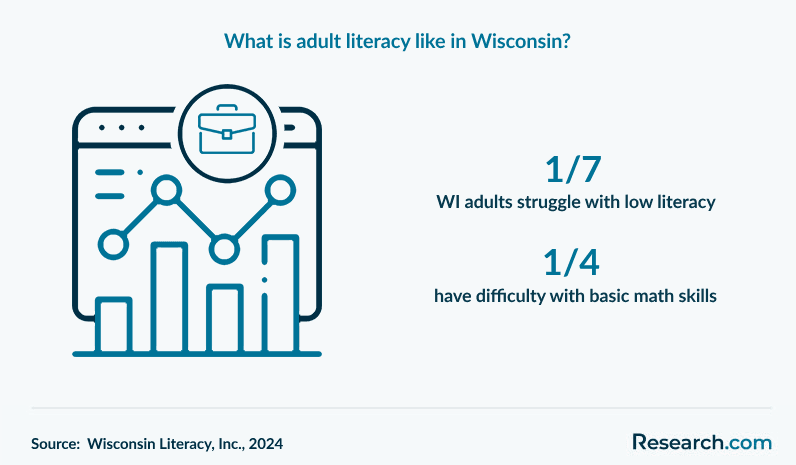
Wisconsin’s math and literacy needs give this work broader significance. One in seven Wisconsin adults struggle with low literacy, unable to understand simple sentences and perform basic tasks, and one in four can perform basic arithmetic but struggle with percentages and multi-step math problems. Middle school teachers play a direct role in reducing these gaps before students reach high school, college, or the workforce.
Praxis preparation for aspiring Wisconsin middle school math teachers
Praxis exams can affect when you become eligible for licensure, so preparation should begin early in your teacher preparation program. The goal is not simply to pass; it is to identify content gaps before you are responsible for teaching that material to students.
Confirm which exams apply to your pathway
Wisconsin candidates may be required to take the Praxis Core Academic Skills for Educators and the Praxis Subject Assessment for Middle School Mathematics. The Core exam measures reading, writing, and mathematics skills, while the subject assessment focuses on math knowledge and readiness for classroom instruction.
Use official test specifications first
Begin with Praxis test guides, sample questions, and official content categories. These show how much weight each topic receives and help you avoid spending too much time on areas that are not central to the exam.
Create a topic-by-topic study calendar
Break your study plan into algebra, geometry, data analysis, number sense, and test-taking practice. Schedule review sessions over several weeks instead of relying on a short cram period.
Practice under timed conditions
Timed practice helps you build pacing, reduce test-day anxiety, and identify whether errors are caused by content gaps, misread questions, or slow calculations.
Study with other teacher candidates
A study group can help you explain concepts out loud, compare solution methods, and stay accountable. Teaching a concept to a peer is also useful practice for your future classroom.
Use free and paid resources selectively
Khan Academy, Quizlet, Mometrix Test Preparation, university review sessions, and official Praxis materials can all be useful. Choose resources that match the current exam structure and avoid relying only on generic math drills.
Protect your health while preparing
Sleep, breaks, nutrition, and exercise matter. A tired candidate may know the content but still make avoidable mistakes under testing pressure.
Ask your program about built-in support
If you are considering a bachelor of education online program, ask whether Praxis preparation is included, whether practice exams are available, and how the program supports students who need to retest.
Wisconsin job market and salary expectations for middle school math teachers
Wisconsin’s job market is favorable for qualified middle school math teachers because mathematics is a core subject and districts need educators who can support STEM readiness. Still, job quality, pay, workload, and benefits differ by district, so applicants should compare total compensation and working conditions before accepting an offer.
- Salary range: Middle school math teachers in Wisconsin earn between $54,248 and $83,057 annually, with a median salary of around $66,799. Entry-level teachers may begin closer to the lower end, while experienced educators or those in higher-paying districts may earn more.
- Location differences: Milwaukee, Madison, and other larger districts often pay more than smaller communities. Urban salaries frequently exceed $60,000, while rural areas may offer salaries ranging from $50,000 to $54,000.
- Benefits: Compensation typically includes more than salary. Health insurance, retirement plans, paid time off, tuition support, mentoring, and professional development can substantially affect the real value of an offer.
- Professional growth: Districts that fund workshops, graduate coursework, instructional coaching, or leadership pathways may help teachers increase their effectiveness and long-term earnings.
| Factor | Why it affects your decision | Question to ask before accepting a job |
| Salary schedule | Pay often depends on years of experience and education level. | How are bachelor’s, master’s, and additional credits recognized? |
| District location | Cost of living, commute, class sizes, and resources vary widely. | What is the average class size for middle school math? |
| Mentoring | New teachers need support with curriculum, grading, and classroom routines. | Is there a formal induction or mentor program? |
| Planning time | Middle school math requires assessment review, differentiation, and parent communication. | How much daily or weekly planning time is protected? |
| Benefits | Health insurance and retirement can change total compensation significantly. | What is the employee contribution for insurance and retirement? |
A Wisconsin teacher described the market this way: “I learned quickly that pay can look very different from one district to another. The salary mattered, but the mentoring, benefits, and chances to grow professionally mattered just as much.” For teachers interested in leadership roles later, comparing affordable online educational leadership programs can help clarify the cost of moving into department chair, coaching, or administrative pathways.
National compensation data also shows variation by industry for secondary school teachers, excluding special and career/technical education. According to the U.S. Bureau of Labor Statistics, state government roles report an average annual salary of approximately $99,120. Elementary and secondary schools report $73,890, educational support services report $71,500, colleges, universities, and professional schools report $68,070, and psychiatric and substance abuse hospitals report $67,230.
These national figures do not guarantee individual earnings, but they show why teachers should evaluate both school-based roles and education-adjacent opportunities when thinking about long-term career development.
Professional development and continuing education for Wisconsin middle school math teachers
Effective math teaching changes as standards, assessment tools, technology, and student needs change. Continuing education helps teachers maintain licensure, improve instruction, and stay competitive for advanced roles.
- Mathematics-focused professional learning: The Mathematics Institute of Wisconsin offers professional development for K–12 educators that supports deeper content understanding and stronger explanations of mathematical ideas.
- Workshops and seminars: Training sessions can introduce inquiry-based learning, project-based instruction, formative assessment strategies, and ways to make math more accessible to diverse learners.
- Professional learning communities: Collaboration with grade-level teams and other math educators helps teachers review student data, share lesson materials, and solve classroom problems together.
- Coaching and follow-up: The most useful professional development often includes practice, feedback, and implementation support rather than a one-time presentation.
- Continuing education credits: Wisconsin teachers may need continuing education, approved training, or other professional learning documentation to maintain licensure and demonstrate ongoing growth.
- Data-informed instruction: Teachers can use assessment results to identify learning gaps, group students strategically, and revise lessons before misunderstandings become long-term barriers.
If cost is a concern, compare district-funded training, employer reimbursement, public university options, and the cheapest online bachelor’s degree in education pathways before taking on additional debt for career advancement.
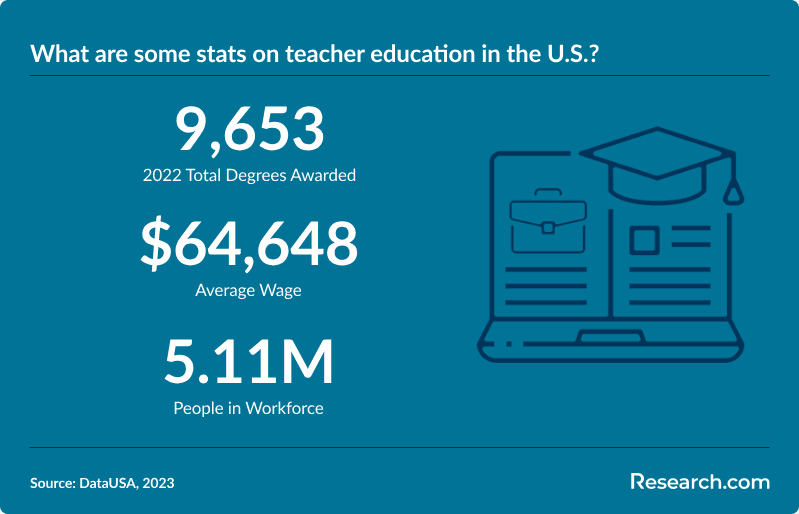
In 2022, 9,653 degrees in teacher education were awarded across the United States. DataUSA reports an average wage for teachers of $64,648 and an education workforce of approximately 5.11 million individuals, underscoring the scale of teacher preparation and employment in the U.S.
For individual teachers, the practical takeaway is clear: credentials open the door, but continuing education, mentorship, and evidence of classroom impact help sustain a career.
Classroom management and teaching methods that work in middle school math
Middle school math classrooms require structure, patience, and strong instructional design. Students at this age are developing independence but still need clear expectations, routines, and frequent feedback. Math anxiety, uneven prerequisite skills, and social dynamics can all affect learning.
- Set routines early: Teach students how to enter the room, access materials, ask for help, work in groups, use technology, and submit assignments. Clear routines reduce wasted time and confusion.
- Use positive reinforcement: Acknowledge effort, strategy use, collaboration, and perseverance, not only correct answers. This helps students build a healthier relationship with math.
- Make math relevant: Budgeting tasks, local data, sports statistics, maps, recipes, and design challenges can help students see why proportional reasoning, graphing, and equations matter.
- Vary instruction: Combine direct instruction, guided practice, group work, discussion, manipulatives, visual models, and technology-supported practice.
- Differentiate intentionally: Provide scaffolds for students who need support and enrichment for those ready for more complex applications.
- Check understanding often: Exit tickets, quick polls, whiteboard responses, and short error-analysis tasks help you adjust before a full assessment reveals problems.
| Common classroom issue | What it may look like | Better response |
| Math anxiety | Students avoid work, shut down, or say they are “bad at math.” | Use low-stakes practice, growth-focused feedback, and multiple ways to show reasoning. |
| Wide skill gaps | Some students are ready for extension while others lack prerequisites. | Use small-group instruction, tiered tasks, and targeted review. |
| Off-task group work | Students socialize instead of solving problems. | Assign roles, provide clear deliverables, and use short collaboration windows. |
| Overreliance on procedures | Students memorize steps without understanding why they work. | Ask students to explain, model, draw, and compare methods. |
| Technology distraction | Devices pull attention away from the task. | Use tools with defined learning goals and visible accountability. |
Wisconsin’s 2022 Mathematics State Snapshot Report shows both progress and unfinished work. Among grade 8 students in public schools, 30% of Wisconsin students scored below the NAEP Basic level, compared with 40% nationally. In Wisconsin, 37% reached at least the NAEP Basic level, compared with 35% nationally. These results suggest Wisconsin outperformed the national average on this measure, but nearly one-third of eighth graders still scored below NAEP Basic, leaving substantial room for instructional improvement.
Career advancement and specialization options for Wisconsin middle school math teachers
A middle school math license can lead to more than one classroom assignment. Teachers who document strong results, pursue continuing education, and build leadership experience can move into specialized instruction, coaching, curriculum design, department leadership, or administration.
- Department or grade-level leadership: Experienced teachers may lead math teams, coordinate assessments, support curriculum alignment, or mentor new teachers.
- Instructional coaching: Coaches help colleagues improve lesson design, use student data, and implement effective math strategies.
- Special education or gifted education specialization: Additional credentials can prepare teachers to serve students with different learning needs and broaden district hiring options.
- Technology integration: Teachers who can use adaptive tools, digital assessments, and interactive platforms effectively may become valuable leaders in instructional technology.
- Administration: Teachers interested in principal or district leadership roles often pursue a master’s degree in educational leadership or administration.
- Curriculum and policy work: Some educators contribute to district curriculum committees, state initiatives, or assessment development. A doctoral pathway, including options among the cheapest online doctoral programs, may support long-term goals in research, leadership, or policy.
One Wisconsin educator summarized the shift into leadership this way: “At first, I thought leadership meant leaving the classroom. Workshops and mentoring helped me see that I could influence curriculum, support other teachers, and still stay connected to students.”
Legal and ethical responsibilities for Wisconsin middle school math teachers
Teachers work with minors, confidential information, public resources, and state learning expectations. That makes legal and ethical compliance a core part of professional practice, not an afterthought.
- Valid licensure: Wisconsin teachers must hold an appropriate teaching license issued by the Wisconsin Department of Public Instruction (DPI). Licensure requires approved preparation, testing or competency documentation when required, and background screening.
- Professional ethics: Teachers are expected to act with integrity, respect student confidentiality, avoid conflicts of interest, and treat students fairly.
- Mandatory reporting: Wisconsin educators must report suspected child abuse or neglect through the appropriate channels. Teachers should know their district’s reporting procedures before a concern arises.
- Inclusive classrooms: Math teachers must support students across abilities, backgrounds, languages, and identities while preventing harassment, bullying, and discrimination.
- Assessment integrity: Teachers should grade consistently, protect assessment materials, avoid misrepresenting student performance, and use data responsibly.
When unsure about a legal or ethical issue, ask a supervisor, union representative, licensing advisor, or district administrator promptly. Waiting can turn a manageable question into a professional risk.
Resources and support for new Wisconsin middle school math teachers
New teachers should not try to solve every classroom challenge alone. Wisconsin educators can draw on district mentoring, state resources, professional organizations, online lesson banks, and peer networks.
- DPI guidance: The Wisconsin Department of Public Instruction provides standards, licensing information, and instructional resources for educators.
- District induction programs: Many districts pair beginning teachers with experienced mentors who can help with routines, parent communication, grading, and curriculum pacing.
- Wisconsin Math Council: Professional organizations can offer workshops, networking, conferences, and math-specific support.
- National Council of Teachers of Mathematics: NCTM resources can help teachers strengthen lesson design, mathematical discourse, and assessment practices.
- Local education agencies: County and regional agencies may provide training, curriculum support, and collaboration opportunities.
- Online lesson resources: Platforms such as Teachers Pay Teachers can save planning time, but teachers should always check alignment with Wisconsin standards before using downloaded materials.
| Support need | Where to look | How to use it wisely |
| Licensure questions | DPI and your teacher preparation program | Verify requirements directly rather than relying on informal advice. |
| First-year classroom support | District mentor or instructional coach | Ask for observation feedback tied to specific skills. |
| Math lesson planning | Wisconsin standards, NCTM, department teams | Adapt materials to your students instead of using them unchanged. |
| Professional network | Wisconsin Math Council and local teacher groups | Attend events with a clear goal, such as assessment ideas or classroom routines. |
| Career planning | Advisors, principals, graduate programs | Connect added credentials to a specific role or salary benefit. |
How to improve your job prospects as a Wisconsin middle school math teacher
A teaching license makes you eligible. A strong record of preparation makes you competitive. Districts often look for candidates who can teach standards-based math, manage a middle school classroom, work with diverse learners, communicate with families, and collaborate with colleagues.
- Gain experience before applying: Tutoring, substitute teaching, volunteering, summer school support, or after-school STEM work can strengthen your resume and help you talk concretely about student learning.
- Add high-need skills: Credentials or experience in special education, gifted education, English as a Second Language, or intervention support can make you more valuable to districts serving varied student populations.
- Show technology competence: Districts value teachers who can use digital tools for instruction, practice, assessment, and feedback without letting technology replace conceptual teaching. If you want a structured foundation in technology or a related area, compare easy associate degrees online carefully for relevance and transfer value.
- Network professionally: Join math educator groups, attend conferences, and maintain relationships from student teaching because many job leads come through professional connections.
- Keep learning visible: Document workshops, coursework, certifications, lesson improvements, assessment results, and leadership activities so employers can see continued growth.
- Prepare for interviews with evidence: Be ready to explain how you would teach proportional reasoning, respond to math anxiety, differentiate a lesson, and use assessment data to reteach a concept.
How a master’s degree can help Wisconsin middle school math teachers advance
A master’s degree can deepen instructional expertise, expand leadership options, and help teachers qualify for roles beyond standard classroom teaching. Graduate programs may focus on curriculum design, mathematics education, educational leadership, assessment, special education, or instructional technology. The best choice depends on your goal: higher-level classroom practice, department leadership, coaching, administration, or policy work. Before enrolling, ask whether the degree affects your district salary schedule, whether credits are recognized for licensure or advancement, and whether the program’s workload is realistic while teaching full time. Teachers exploring graduate-level options can also review potential masters in education jobs to connect degree choice with practical career outcomes.
Can additional subject certifications improve your teaching career?
Adding another subject license can make you more flexible, especially in smaller districts where schools may prefer teachers who can cover more than one content area. Additional certification can also help you move into interdisciplinary courses, summer school assignments, intervention roles, or another grade band. The key is to choose an added credential that fits your interests and district demand rather than collecting certifications without a plan. For example, reviewing the pathway to become a high school history teacher in Wisconsin can help you understand how another subject area may differ in coursework, testing, and classroom expectations.
Financing options for continuing education and career advancement
Teachers should evaluate the cost of added credentials with the same care they use when choosing an initial degree. Scholarships, grants, employer tuition assistance, public university tuition, installment plans, and teacher-specific loan forgiveness programs may reduce out-of-pocket costs. Before borrowing, compare the likely career benefit with the total price of tuition, fees, books, travel, testing, and lost work time. Educators exploring affordable graduate options in another discipline can review models such as the cheapest online history masters degree to understand how program structure, transfer credit, and online delivery can affect cost.
How state policy changes and interdisciplinary certifications may affect Wisconsin math teachers
State policy can influence licensing rules, curriculum expectations, assessment requirements, teacher evaluation, funding priorities, and professional development. Middle school math teachers should monitor DPI updates, district communications, and professional organization alerts so they can adjust instruction and licensure planning before changes become urgent.
Interdisciplinary certifications can also affect a teacher’s role. A math teacher with added preparation in music, special education, technology, or another field may be better positioned for team teaching, enrichment programs, project-based learning, or cross-curricular initiatives. Reviewing music teacher education requirements in Wisconsin can show how certification expectations differ by subject and why each added credential should be evaluated carefully.
How mentorship and networking support long-term career growth
Mentorship can shorten the learning curve for new teachers, while networking can uncover job openings, leadership roles, conference opportunities, and practical classroom ideas. A strong mentor helps you interpret district expectations, improve lessons, manage difficult situations, and plan next steps. Professional networks connect you with educators beyond your building, which is especially useful when you are considering another grade level or license area. Teachers comparing broader elementary pathways may find it useful to review how to become an elementary teacher in Wisconsin and discuss grade-span differences with experienced mentors.
What graduates say about becoming a middle school math teacher in Wisconsin
- “Teaching middle school math in Wisconsin has been deeply meaningful. I have benefited from supportive colleagues, practical professional development, and the chance to watch students gain confidence as math begins to make sense.” -Shiela
- “I appreciate that Wisconsin takes education seriously. The curriculum challenges students, but it also gives teachers room to design lessons that make math approachable and engaging.” -Mark
- “I chose Wisconsin because of the attention to STEM learning and the openness to creative instruction. The professional community has made the work feel collaborative rather than isolating.” -Greg
How to transition from middle school to high school math teaching in Wisconsin
Moving from middle school to high school math usually requires stronger preparation in advanced topics, different assessment expectations, and a shift in classroom routines. High school teachers may teach algebra, geometry, precalculus, statistics, or other upper-level courses depending on their credential and district needs. If you want to make this transition, review your current license, identify content gaps, seek mentorship from high school math teachers, and complete any required coursework or testing. For a role-specific roadmap, see how to become a high school math teacher in Wisconsin.
How to build a teaching portfolio that supports advancement
A strong portfolio gives hiring committees and supervisors evidence of how you teach, not just a list of where you have worked. Include standards-aligned lesson plans, examples of differentiated instruction, assessment tools, student growth evidence where permitted, classroom management routines, professional development records, and reflection statements that explain what you learned from your practice. Organize the portfolio so reviewers can quickly see your strengths in math instruction, collaboration, and responsiveness to student needs. Reviewing another subject’s expectations, such as Wisconsin English teacher certification requirements, can also help you think about cross-disciplinary literacy skills that strengthen math teaching.
Options for moving into another age group, including preschool
Changing age groups may require additional coursework, field experience, and a different license. Preschool teaching, for example, involves early childhood development, play-based learning, family engagement, and foundational social-emotional skills, which differ substantially from middle school math instruction. If you are considering a move into early childhood education, review how to become a preschool teacher in Wisconsin and compare the required credential, practicum expectations, and job responsibilities with your current background.
Common challenges Wisconsin middle school math teachers face and how to address them
Middle school math teaching is rewarding, but the work can be demanding. Teachers often manage wide skill gaps, student anxiety about math, curriculum pacing pressures, behavior challenges, and frequent changes in technology or assessment expectations.
| Challenge | Why it happens | Practical response |
| Students enter with uneven skills | Prior learning gaps can become more visible in middle school. | Use diagnostic checks, small groups, and targeted review before new units. |
| Students believe they are not “math people” | Repeated frustration can damage confidence. | Normalize mistakes, praise reasoning, and provide tasks with multiple entry points. |
| Large or complex classes | Teachers may have many students with different needs. | Use routines, seating plans, group roles, and predictable transitions. |
| Curriculum changes | Districts may update materials, pacing, or assessment systems. | Collaborate with colleagues and map new resources to Wisconsin standards. |
| Limited planning time | Teaching, grading, communication, and meetings compete for time. | Create reusable templates, share materials with teams, and prioritize high-impact assessments. |
Teachers can strengthen their practice by differentiating instruction, using technology selectively, collaborating through professional learning communities, and addressing emotional barriers to learning. Looking at how other states structure teacher expectations, such as elementary school teacher requirements in Wyoming, can provide comparison points, but Wisconsin teachers should always follow Wisconsin licensure and curriculum rules.
Future trends shaping middle school math education in Wisconsin
Technology, data use, and interdisciplinary instruction are changing how math is taught. Adaptive learning platforms, digital formative assessments, real-time performance data, and collaborative STEM projects can help teachers personalize instruction, but they also require careful professional judgment. Technology should support reasoning and feedback, not replace direct teaching or mathematical discussion. Teachers who add expertise in learning differences may be especially valuable as schools work to support a wider range of students; one related pathway is how to become a special education teacher in Wisconsin.
Most cost-effective pathway to a Wisconsin teaching credential
The lowest-cost route is the one that leads to the correct license without unnecessary credits, delays, or retesting. For many candidates, that means starting at an affordable public institution, using transfer credits strategically, choosing an approved Wisconsin preparation program, and confirming licensure alignment before enrolling. Career changers should compare post-baccalaureate programs, alternative certification options, online coursework, and district partnerships. A detailed cost-focused overview is available in the guide to the cheapest way to get a teaching credential in Wisconsin.
Ongoing requirements to maintain Wisconsin teaching certification
Licensure does not end after the first teaching job. Wisconsin educators must stay current with renewal or advancement requirements, professional development expectations, subject-area updates, and any changes issued by state authorities. Teachers should keep records of training, continuing education, leadership work, and classroom practice because documentation can matter for license maintenance and career advancement. For a broader explanation of license categories and requirements, review teaching certificate requirements in Wisconsin.
Key Insights
- Wisconsin middle school math teachers need a bachelor’s degree, a state-approved educator preparation program, supervised teaching experience, required assessments, background screening, and a DPI-issued teaching license.
- Program choice matters. Before enrolling, confirm accreditation, Wisconsin approval, grade-span alignment, math licensure preparation, student teaching placement support, and Praxis preparation resources.
- The average salary for a middle school math teacher in Wisconsin is approximately $55,000 annually, while other reported Wisconsin salary figures range from $54,248 to $83,057, with a median salary of around $66,799.
- Public tuition can be substantially more affordable than private out-of-state options. The median in-state public tuition is approximately $7,743, compared with about $33,818 for out-of-state private tuition.
- Testing can delay licensure if ignored. Candidates should prepare early for Praxis Core Academic Skills for Educators and the required mathematics subject assessment.
- Wisconsin’s math education needs are significant. One in seven Wisconsin adults struggle with low literacy, and one in four struggle with percentages and multi-step math problems, making middle school math instruction important for long-term academic and workforce readiness.
- Wisconsin eighth graders performed better than the national average on the NAEP Basic level measure, but 30% still scored below NAEP Basic, showing that teachers have meaningful work ahead.
- Career growth can come through mentoring, graduate education, instructional coaching, department leadership, added certifications, curriculum work, or administration, but each option should be weighed against cost and required time.
- Common mistakes include choosing a program without checking Wisconsin approval, focusing only on tuition, assuming online programs automatically meet licensure rules, waiting too long to prepare for exams, and accepting a job without reviewing benefits, mentoring, and workload.
- In 2022, 9,653 teacher education degrees were awarded, approximately 5.11 million individuals worked in the education workforce, and the average teacher salary was $64,648, according to DataUSA.
Related Articles for Nearby States
- 2027 How to Become a Middle School Math Teacher in Minnesota: Requirements & Certification
- 2027 How to Become a Middle School Math Teacher in Iowa: Requirements & Certification
- 2027 How to Become a Middle School Math Teacher in Illinois: Requirements & Certification
- 2027 How to Become a Middle School Math Teacher in Michigan: Requirements & Certification
- 2027 How to Become a Middle School Math Teacher in Indiana: Requirements & Certification
- 2027 How to Become a Middle School Math Teacher in Missouri: Requirements & Certification
- 2027 How to Become a Middle School Math Teacher in Ohio: Requirements & Certification
- 2027 How to Become a Middle School Math Teacher in South Dakota: Requirements & Certification
- 2027 How to Become a Middle School Math Teacher in Nebraska: Requirements & Certification
- 2027 How to Become a Middle School Math Teacher in Kentucky: Requirements & Certification
References:
- Bureau of Labor Statistics. (2023). Occupational employment and wages, May 2023: Secondary school teachers, except special and career/technical education. Bureau of Labor Statistics.
- DataUSA. (2024). Teacher education. DataUSA.
- National Center for Education Statistics. (2023). Wisconsin state snapshot report: Grade 8 mathematics. National Center for Education Statistics.
- Salary.com. (2024). Middle school teacher salary in Wisconsin. Salary.com.
- Wisconsin Department of Public Instruction. (2021). Mathematics standards. Wisconsin Department of Public Instruction.
- Wisconsin Literacy. (2024). Literacy statistics. Wisconsin Literacy.
- Wisconsin Mathematics Education Foundation. (2024). Professional development for mathematics educators. Wisconsin Mathematics Education Foundation.
- Wisconsin Teaching. (2024). Become a math teacher in Wisconsin: Research certification options & salaries. Wisconsin Teaching.
Other Things You Should Know About Becoming a Middle School Math Teacher in Wisconsin
In 2027, aspiring middle school math teachers in Wisconsin need a bachelor's degree, typically in education or a math-related field, combined with a state-approved teacher preparation program. Candidates must also pass the Praxis Core and Mathematics Content Knowledge exams to earn certification.
The Wisconsin Department of Public Instruction (DPI) issues and regulates teaching licenses for middle school math teachers. Applicants apply through the Educator Licensing Online system and must meet state requirements before receiving a Wisconsin teaching license.