2027 How to Become an Elementary School Teacher in Rhode Island

Co-Founder and Chief Data Scientist
Becoming an elementary school teacher in Rhode Island is a structured process: you need the right degree, an approved teacher preparation pathway, classroom experience, required exams, a background check, and a state teaching license. The decision is worth planning carefully because Rhode Island offers competitive teacher pay, but job growth is modest. Elementary school teaching in Rhode Island is projected to grow by 1.1% from 2022 to 2032, below the state’s overall job growth rate of 6.2%. Elementary school teachers earn an average annual salary of $79,790, and about 300 openings are expected each year. With nearly 4,000 elementary school teachers currently employed in the state, the field remains stable even though expansion is slower than in many other occupations.
This guide explains the education, licensure, program choices, costs, timelines, specializations, career options, job market, and financial aid considerations for aspiring elementary educators in Rhode Island. It is designed for high school students, college students, career changers, paraprofessionals, and current educators deciding whether elementary teaching is the right next step.
Quick Answer: How do you become an elementary school teacher in Rhode Island?
To become an elementary school teacher in Rhode Island, you typically earn a bachelor’s degree, complete a Rhode Island Department of Education-approved teacher preparation program, finish supervised student teaching, pass required Praxis exams, complete a background check, and apply for state licensure. Online programs may be accepted if they meet accreditation and Rhode Island licensure requirements. Most candidates should expect the process to take at least four years, though career changers may use alternative certification routes if they already hold a bachelor’s degree.
Key Things You Should Know About Becoming an Elementary School Teacher in Rhode Island
- Licensure processing takes time: The initial application for an elementary school teaching license in Rhode Island typically takes about 6 to 8 weeks to process, though timing can vary depending on application volume and whether all documents are complete.
- New licenses continue to be issued: As of 2023, Rhode Island issued approximately 1,200 new elementary teaching licenses, showing continued demand for qualified educators.
- The application fee matters: The cost associated with applying for an elementary school teaching license in Rhode Island is $150. Because the fee is non-refundable, applicants should verify that all documents, tests, and program requirements are complete before submitting.
- Renewal is part of the career: Teachers must renew their license every five years and complete 30 professional development hours, reinforcing the expectation that educators continue improving their practice.
- Applications are handled online: Rhode Island’s Department of Education uses an online portal that allows applicants to submit materials and monitor application status more easily.
- Educational requirements for elementary teachers in Rhode Island
- Licensure application and renewal process Review the education requirements first
- Traditional vs. alternative certification programs
- Timeline to become an elementary school teacher Compare certification routes
- Online program acceptance for Rhode Island licensure
- Online vs. on-campus elementary education programs
- Average cost of elementary education programs
- How to choose the best program
- Elementary education specializations
- Becoming a special education teacher
- Advanced degrees for classroom support
- Career paths for elementary school teachers
- Benefits of advanced degrees
- Specialized support services in schools
- Preschool teaching vs. elementary education
- Private elementary school teaching
- Cost-effective credential routes
- Rhode Island job market for elementary teachers
- Current teacher certification requirements
- Professional development and mentorship
- Teaching at higher grade levels
- Transitioning to high school math teaching
- Using arts integration in elementary classrooms
- Financial aid for aspiring teachers Consider job market before borrowing Review final takeaways
What are the educational requirements for elementary school teachers in Rhode Island?
Rhode Island elementary teacher candidates usually need a bachelor’s degree, completion of an approved educator preparation program, supervised classroom practice, passing scores on required exams, and a background check. The goal is to show that you understand child development, elementary subject matter, instructional planning, assessment, classroom management, and professional ethics.
| Requirement | What it means for aspiring teachers | Why it matters |
| Bachelor’s degree | Most candidates complete a bachelor’s degree in elementary education or a related field. | It provides the academic foundation needed for teacher preparation and state licensure. |
| Approved educator preparation program | Candidates complete a state-approved program that includes pedagogy, child development, methods courses, and fieldwork. | Rhode Island uses approved preparation programs to verify that candidates are ready for elementary classrooms. |
| Accreditation review | As of 2023, Rhode Island mandates that aspiring teachers complete a program accredited by the Council for the Accreditation of Educator Preparation (CAEP). | Accreditation helps confirm that the program meets recognized educator preparation standards. |
| Praxis exams | Candidates must earn passing scores on the Praxis Core Academic Skills for Educators and Praxis Subject Assessments required for licensure. | These exams measure academic readiness, content knowledge, and teaching-related competencies. |
| Background check | Applicants complete a background review before being cleared for teaching. | Schools must protect student safety and verify candidate suitability for classroom work. |
Rhode Island has reported a need for over 1,000 new educators in the coming years. That does not mean every candidate is guaranteed a job, but it does mean qualified applicants who complete the correct preparation pathway can enter a field with steady openings. Before enrolling, confirm that your program aligns with Rhode Island licensure rather than assuming that any education degree will qualify.
What is the licensure application and renewal process for elementary school teachers in Rhode Island?
The Rhode Island elementary teaching license process begins before you submit an application. Your degree, preparation program, clinical experience, exams, and background check must be in order. Incomplete applications can delay approval, so candidates should keep copies of transcripts, test score reports, program completion verification, and identification materials.
- Complete the required degree and preparation program. Most applicants finish a bachelor’s degree connected to elementary education and an approved teacher preparation program that includes student teaching.
- Pass the required assessments. Rhode Island candidates are expected to meet Praxis testing requirements for academic skills and elementary content knowledge.
- Submit official documentation. This commonly includes transcripts, program completion confirmation, exam results, and any other materials requested through the state process.
- Complete the background check. Applicants should address this early because clearance is required before working with students.
- Apply through the online licensure portal. Rhode Island’s online system helps candidates upload documents, pay the application fee, and track progress.
- Plan for processing time. Routine processing is often described as about 6 to 8 weeks, but candidates should allow extra time; application processing has also been described as approximately 14 to 16 weeks in some contexts.
- Renew on schedule. Teachers must renew every five years and complete 30 professional development hours to maintain licensure.
If cost is a concern, compare total program expenses before enrolling. Students looking for lower-cost routes into the field may also want to review affordable online education degrees, but Rhode Island licensure alignment should always be verified before choosing a program.
Career changers comparing state requirements may notice that licensure rules vary widely. For example, a pathway described for becoming a teacher in Louisiana should not be used as a substitute for Rhode Island’s certification rules.
What is the difference between traditional and alternative teacher certification programs in Rhode Island?
Rhode Island offers more than one path into elementary teaching. The traditional route usually fits first-time college students who want to major in education. Alternative certification may work better for adults who already have a bachelor’s degree and want to move into teaching without completing a second full undergraduate program.
| Pathway | Best for | Typical features | Trade-offs |
| Traditional certification | Students beginning college or undergraduates who know they want to teach elementary school | Includes a bachelor’s degree, state-approved preparation, education coursework, and student teaching | Structured and comprehensive, but usually requires a multi-year commitment |
| Alternative certification | Career changers or graduates with a non-education bachelor’s degree | Often emphasizes accelerated coursework, mentoring, field-based training, and classroom placement | Can be faster, but may be intense because candidates are learning pedagogy while transitioning into teaching |
Traditional teacher certification programs
Traditional preparation is the most straightforward route for candidates who are still completing their first degree. These programs normally combine content courses, teaching methods, classroom observation, supervised teaching, and faculty support.
- Bachelor’s degree: Candidates usually complete a degree in education or a closely related field.
- Teacher preparation program: The program must align with Rhode Island requirements and include coursework in pedagogy, assessment, child development, and classroom practice.
- Student teaching: Candidates teach under supervision before becoming fully responsible for their own classroom.
Examples of traditional options named in Rhode Island include Rhode Island College, which offers a Bachelor of Arts in Elementary Education, and the University of Rhode Island, which provides a Master of Arts in Teaching for candidates who may already hold an undergraduate degree in another field.
Alternative teacher certification programs
Alternative certification is designed for candidates who already bring college-level preparation or professional experience. These pathways can be appealing if you want to enter the classroom sooner, but they still require evidence that you can teach effectively and meet state standards.
- Flexibility: Some routes are built for candidates who need to keep working while completing requirements.
- Accelerated structure: Many alternative pathways can be completed in a year or less, depending on the program and candidate background.
- Mentoring: Candidates often receive guidance from experienced educators while building classroom competence.
Examples previously identified in Rhode Island include Teach for America and Rhode Island’s Teacher Residency Program, which pairs candidates with mentor teachers during a year-long residency.
How long does it take to become an elementary school teacher in Rhode Island?
Most candidates should plan for at least four years to become an elementary school teacher in Rhode Island. The exact timeline depends on whether you are entering college for the first time, already have a bachelor’s degree, need to complete prerequisites, or choose an alternative certification route.
| Stage | Typical time | What happens during this stage |
| Bachelor’s degree | 4 years | You complete general education, elementary education coursework, and required field experiences. |
| Teacher preparation program | Varies | You study instructional methods, assessment, child development, and classroom management. This may be embedded in the degree. |
| Student teaching | Varies | You work in a real classroom under supervision and demonstrate readiness for independent teaching. |
| Licensure exams | Varies | You prepare for and pass the required Praxis exams. |
| Licensure application | 1-2 months | You submit materials to the state. Processing can take about 6 to 8 weeks, and applicants should plan for possible delays. |
The fastest route is not always the best route. A shorter program may help you enter the workforce sooner, but weak field placement, poor advising, or uncertain licensure alignment can cost you time later. Choose a pathway that matches both your schedule and Rhode Island’s requirements.
Are online education programs accepted for teacher licensure in Rhode Island?
Online elementary education programs can be accepted for Rhode Island teacher licensure when they meet the state’s preparation, accreditation, student teaching, and testing requirements. The key point is that “online” is not the deciding factor. State approval, accreditation, field experience, and licensure alignment are.
- Confirm accreditation before enrolling. Rhode Island expects candidates to complete an appropriate accredited preparation pathway, including programs connected to CAEP standards.
- Make sure the degree fits elementary licensure. A general education degree, child studies degree, or online teaching degree may not automatically qualify you for elementary certification.
- Ask where student teaching will happen. Online programs still need supervised fieldwork. Confirm that the program can place or approve you in a Rhode Island school setting.
- Check Praxis preparation support. Strong programs clearly explain which exams are required and how candidates prepare.
- Verify state authorization and licensure disclosures. If the online school is outside Rhode Island, ask whether graduates are eligible for Rhode Island licensure or whether additional steps are needed.
- Use online learning strategically after licensure. Online coursework can also help licensed teachers complete professional development hours for renewal.
Before committing tuition dollars, ask the program in writing whether it prepares graduates for Rhode Island elementary teacher licensure. Save the response with your admissions materials.
How does an online elementary education program in Rhode Island compare to an on-campus program?
Online and on-campus elementary education programs can both lead to teaching careers, but they serve different students. The best choice depends on your schedule, learning style, need for local networking, access to field placements, and budget.
| Factor | Online program | On-campus program |
| Flexibility | Often better for students balancing work, caregiving, or commuting limits | Better for students who prefer scheduled classes and face-to-face routines |
| Access | Can reduce travel barriers, especially for students outside major campus areas | May provide easier access to campus resources, faculty offices, and peer groups |
| Field experience | Must still include approved student teaching or clinical practice | Often has established school partnerships near campus |
| Technology preparation | Frequently uses digital learning tools that may translate into classroom technology skills | May include technology training but usually with more in-person practice |
| Cost comparison | Online programs in Rhode Island can average around $12,000 per year | On-campus options have been described as averaging $15,000 |
| Licensure risk | Requires careful verification if the provider is out of state | May be easier to verify if the program is already approved for Rhode Island candidates |
Both formats require serious classroom preparation. A fully online course schedule does not remove the need for supervised student teaching, background checks, exams, or state licensure approval.
What is the average cost of elementary education programs in Rhode Island?
The cost of becoming an elementary school teacher in Rhode Island depends on the institution, degree level, delivery format, housing choice, transfer credits, and how quickly you complete the program. Tuition is only one part of the total cost.
| Cost category | Typical amount stated | Decision tip |
| Tuition for the Master of Arts in Teaching in Elementary Education at Rhode Island College | Generally around $15,000 to $20,000 for the entire program | Ask whether tuition includes fees, field placement costs, and required course materials. |
| Room and board | Approximately $12,000 to $15,000 annually | Living off campus, commuting, or studying online may reduce this cost, depending on your situation. |
| Textbooks and course materials | Between $500 and $1,000 per year | Ask whether used, digital, library, or open educational resources are available. |
| Credentialing fees | Can range from $100 to $200 | Budget for fees after graduation so the licensure application does not become a surprise expense. |
| Total planning estimate | Can exceed $30,000 when tuition, living expenses, textbooks, and certification fees are combined | Compare net cost after grants, scholarships, work-study, and transfer credits—not only published tuition. |
Students should avoid choosing a program solely because it has the lowest advertised tuition. A program that does not meet licensure requirements, lacks student teaching support, or delays completion can become more expensive in the long run. If you are comparing education-related graduate options beyond classroom teaching, you may also review the best online library science programs.
How to choose the best elementary education program in Rhode Island?
The best elementary education program is not simply the cheapest or most convenient. It is the program that prepares you for Rhode Island licensure, gives you meaningful classroom experience, supports Praxis preparation, fits your finances, and helps you become employable in the districts where you want to teach.
Questions to ask before enrolling
- Is the program approved for Rhode Island elementary teacher preparation? Do not rely on assumptions. Ask admissions or the education department directly.
- Is the program accredited by the Council for the Accreditation of Educator Preparation (CAEP)? Accreditation can affect licensure eligibility and employer confidence.
- How many hours of fieldwork and student teaching are included? Rhode Island requires a minimum of 300 hours of student teaching, so placement quality matters.
- Where are student teaching placements located? Strong school partnerships can improve your classroom readiness and hiring network.
- What Praxis exams do candidates take, and what support is available? Ask about pass-rate support, tutoring, workshops, and retake planning.
- What is the full cost after fees, materials, transportation, and housing? Rhode Island’s average tuition for public colleges is around $12,000 per year, but your actual cost may differ.
- What support exists for working adults? If you need evening, hybrid, or online courses, confirm the schedule before enrolling.
- What happens if you move states? Licensure reciprocity can be complicated. Ask how portable the credential is.
Common mistakes when choosing a teaching program
| Mistake | Why it can hurt you | Better approach |
| Choosing without checking licensure alignment | You may graduate without meeting Rhode Island certification requirements. | Get written confirmation that the program prepares candidates for Rhode Island elementary licensure. |
| Looking only at tuition | Fees, housing, books, exam costs, and extra semesters can change the true cost. | Compare total cost of attendance and likely completion time. |
| Assuming all online programs qualify | Some online programs may prepare students for another state’s requirements. | Check accreditation, state authorization, student teaching placement, and licensure disclosures. |
| Ignoring field placement quality | Weak student teaching support can leave you underprepared for hiring and classroom management. | Ask about partner districts, mentor teacher selection, and supervision. |
| Relying only on rankings | A highly visible program may not be the right fit for your schedule, budget, or certification goals. | Use rankings as one input, not the final decision. |
What types of specializations are available within elementary education in Rhode Island?
Specializations can help elementary teachers serve specific student populations, strengthen subject expertise, and qualify for related roles. They are especially useful if you already know the type of classroom, school, or learner group you want to support.
| Specialization | What it focuses on | Who should consider it |
| Special Education | Inclusive teaching, individualized education plans, adaptive instruction, and intervention strategies | Teachers who want to support students with disabilities or diverse learning needs |
| Early Childhood Education | Preschool, kindergarten readiness, play-based learning, and early developmental milestones | Educators drawn to the youngest learners and foundational skill-building |
| STEM Education | Science, technology, engineering, mathematics, inquiry, and problem-solving | Teachers who want to build curiosity and analytical thinking in elementary students |
| Literacy and Language Arts | Reading, writing, comprehension, language development, and literacy intervention | Teachers interested in reading support, literacy coaching, or advanced study through online literacy education programs |
| Bilingual Education | Instruction across languages, culturally responsive teaching, and support for multilingual learners | Educators who want to work in linguistically diverse classrooms |
Rhode Island has over 30 institutions offering teacher preparation programs. According to the National Center for Education Statistics, approximately 10% of teachers in the U.S. are in elementary education. Specialization can improve your fit for particular classrooms, but it should not be chosen casually. Consider whether the endorsement, coursework, and clinical experience match your long-term goals.
Specialization can also help educators determine whether they prefer public schools, private schools, support roles, or a different education-related path. Retention should be part of that decision. In the 2020-2022 academic year, 8% of public and 12% of private school teachers left the education field completely.
How can I become a special education teacher in Rhode Island?
Elementary teachers who want to work more deeply with students who have disabilities may pursue special education licensure or endorsements. This route generally adds focused preparation in individualized education plans, adaptive instruction, assessment, intervention, collaboration with families, and legal responsibilities. Because special education requirements can be more specific than general elementary licensure, candidates should review the complete pathway in how to become a special education teacher in Rhode Island.
Should elementary school teachers pursue advanced degrees for enhanced classroom support?
An advanced degree can be useful when it builds skills you will actually use with students, families, and school teams. Some elementary educators pursue graduate study to strengthen knowledge in behavior support, trauma-informed practice, social-emotional development, family engagement, or interdisciplinary student services. Teachers interested in connecting education with mental health and community support may compare options such as online MSW programs, especially if their long-term goals include student advocacy or support services beyond standard classroom teaching.
What career paths are available for elementary school teachers in Rhode Island?
Elementary teaching can lead to several career paths in Rhode Island. Some educators stay in the classroom for their entire careers, while others move into special education, coaching, curriculum, administration, consulting, or higher education.
| Career path | Main responsibilities | Additional preparation to consider |
| Classroom Teacher | Teach reading, math, science, social studies, and foundational skills to elementary students | Elementary licensure, classroom management training, and ongoing professional development |
| Special Education Teacher | Support students with diverse learning needs and collaborate on individualized education plans | Additional special education certification or endorsement |
| Curriculum Developer | Create instructional materials, curriculum maps, assessments, and learning resources | Graduate coursework, curriculum design experience, and strong instructional knowledge |
| Educational Administrator | Lead schools or district programs, supervise staff, and guide policy implementation | Advanced leadership preparation and administrative credentials |
| Instructional Coach | Mentor teachers, model lessons, analyze instruction, and support professional learning | Successful classroom experience and coaching or leadership training |
| Education Consultant | Advise schools, districts, or organizations on teaching practices and improvement strategies | Specialized expertise, strong outcomes record, and often advanced credentials |
| Higher Education Instructor | Prepare future educators in college or university settings | Advanced degrees and experience in teacher preparation or research |
Because Rhode Island’s local control system allows each of the 36 school districts to manage hiring, candidates should research district-level needs rather than relying only on statewide trends. Teachers who want to deepen expertise in learning and development may also explore the best child development degrees online.
Elementary and middle school teaching remains a common destination for education majors. More than 15% of education graduates find their calling in those areas.
What benefits do advanced degrees offer for elementary educators in Rhode Island?
Advanced degrees can help Rhode Island elementary educators move into leadership, curriculum, coaching, or administrative roles. They may also deepen instructional skill in literacy, special education, child development, assessment, or educational leadership. The value depends on cost, district salary policies, career goals, and whether the degree leads to a credential or role you actually want. Teachers seeking a lower-cost leadership pathway can compare the cheapest masters in educational leadership before committing to a program.
How can specialized support services enhance classroom success in Rhode Island?
Elementary classrooms rarely succeed through one teacher working alone. Students may need academic intervention, speech and language services, occupational therapy, counseling, family support, or behavior planning. Strong collaboration with specialists can help teachers design better interventions, reduce classroom disruptions, and support students more consistently. Educators who want to understand allied school-based roles can review how to be a speech therapist in Rhode Island.
How does preschool teaching differ from elementary education in Rhode Island?
Preschool teaching and elementary teaching overlap, but they are not the same role. Preschool teachers focus heavily on early development, socialization, play-based learning, routines, and foundational readiness. Elementary teachers usually work with broader academic standards, structured subject instruction, assessment expectations, and grade-level progression. If you are more interested in early childhood settings than elementary classrooms, review How to become a preschool teacher in Rhode Island?.
Is private elementary school teaching a viable alternative in Rhode Island?
Private elementary schools can offer another route into teaching, especially for candidates with subject strengths, independent school experience, or interest in a specific educational philosophy. However, private schools may set different hiring standards from public schools. Some may not require the same state licensure, while others may prefer or expect it. Candidates should compare salary, benefits, job security, curriculum autonomy, class size, and professional expectations before choosing this path. For more detail, read how to become a private school teacher in Rhode Island.
Is there a cost-effective route to obtaining a teaching credential in Rhode Island?
A cost-effective teaching credential route is one that minimizes unnecessary credits, uses transfer work wisely, meets licensure requirements the first time, and includes strong field placement support. Accelerated or alternative pathways may reduce time and cost for some candidates, especially those who already hold a bachelor’s degree. Still, cheaper is not automatically better if the program lacks approval, advising, or student teaching access. Candidates comparing affordability strategies can review the cheapest way to get a teaching credential in Rhode Island.
What is the job market for elementary school teachers in Rhode Island?
The Rhode Island elementary teacher job market is steady but not fast-growing. Current projections show 1.1% growth from 2022 to 2032, compared with the state’s overall job growth rate of 6.2%. The state also reports about 300 expected openings each year and nearly 4,000 elementary teachers currently employed. This suggests replacement hiring and turnover may matter more than rapid expansion.
Earlier labor market figures also describe the field as stable. One set of figures reported projected employment growth of 2.8%, slower than the national average of 7.4%. From 2017 to 2018, Rhode Island added 70 teaching jobs, bringing the total to approximately 3,520 teachers. The Bureau of Labor Statistics anticipated around 240 job openings annually for elementary school teachers in Rhode Island. In 2018, salaries ranged from $44,320 to $97,530, with a median annual salary of $74,400.
| Job market factor | What the data suggests | How candidates should respond |
| Growth | Projected growth is modest at 1.1% from 2022 to 2032. | Do not assume rapid expansion; build a strong application and consider high-need districts or specializations. |
| Openings | About 300 openings are expected each year, with another figure citing around 240 annual openings. | Expect opportunities, but apply early and monitor district hiring calendars. |
| Salary | Average annual salary is $79,790; 2018 data showed a median annual salary of $74,400. | Compare district salary schedules, benefits, and cost of living before deciding where to work. |
| Local hiring | Each of Rhode Island’s 36 school districts manages its own hiring. | Research districts individually rather than relying only on statewide averages. |
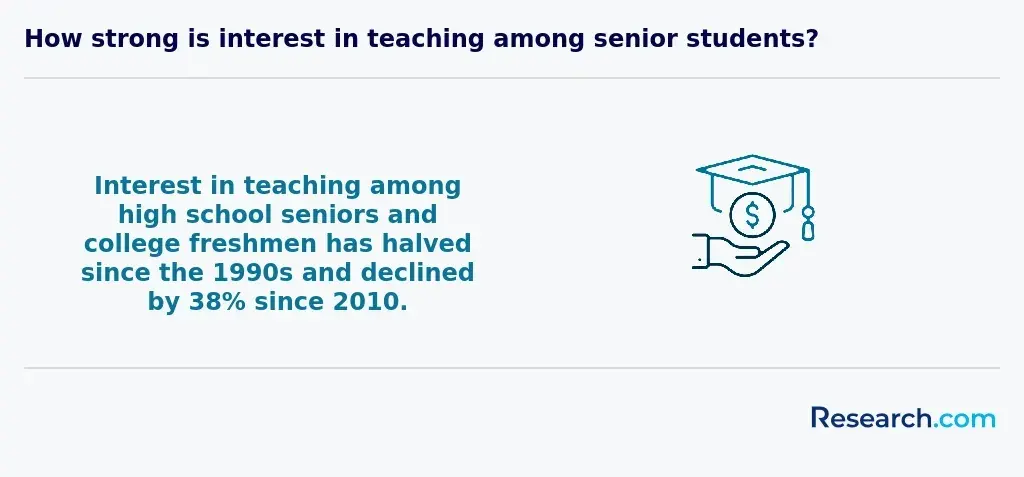
Long-term interest in teaching is also a concern. Since the 1990s, interest in teaching among high school seniors and college freshmen has halved. By 2010, that had declined by 38%. For motivated candidates, this creates both a challenge and an opportunity: schools need teachers who are prepared, committed, and realistic about the profession.
What are the current teacher certification requirements in Rhode Island?
Rhode Island teacher certification generally requires a bachelor’s degree from an accredited institution, completion of an approved teacher preparation program, supervised student teaching, required exams, and any applicable endorsements or state updates. Because certification policies can change, applicants should confirm requirements before applying or enrolling in a program. A detailed overview is available in the guide to teaching certificate requirements in Rhode Island.
How can ongoing professional development and mentorship boost your teaching career in Rhode Island?
Professional development and mentorship can make the difference between surviving the first few years of teaching and building a sustainable career. Rhode Island elementary educators may participate in district training, state-coordinated workshops, school-based mentorship, online webinars, conferences, and certification courses. Useful professional development should connect directly to classroom needs, such as literacy instruction, classroom management, special education inclusion, culturally responsive teaching, technology integration, and assessment. Candidates who want to understand the full preparation timeline can review how long does it take to become a teacher in Rhode Island.
Are there opportunities to teach at higher grade levels?
Yes. Elementary teachers who want to move into middle school or high school teaching may be able to do so, but they usually need additional subject-specific preparation and certification. The transition is most realistic when the teacher has strong content knowledge in the target subject and understands the developmental differences between elementary and older students. Educators interested in mathematics can start by reviewing how to become a middle school math teacher in Rhode Island.
What additional steps are required to transition to high school math teaching in Rhode Island?
High school math teaching requires deeper subject expertise than elementary generalist teaching. Candidates may need additional mathematics coursework, subject-specific exams, and secondary teaching preparation. Before switching tracks, compare the requirements, job expectations, and student age group carefully. For a more focused explanation, see the guide to high school math teacher qualifications in Rhode Island.
Can integrating arts into elementary education enrich student learning in Rhode Island?
Arts integration can help elementary teachers build lessons that support creativity, communication, observation, and student engagement. It can be especially useful when connecting literacy, social studies, science, and social-emotional learning. Teachers who want a more specialized arts pathway can explore how to become an art teacher in Rhode Island while considering whether they want to remain a general elementary teacher or pursue art-specific instruction.
What financial aid options are available for aspiring elementary school teachers in Rhode Island?
Future teachers should build a financial plan before enrolling. The right aid package may combine scholarships, grants, work-study, loan forgiveness, employer support, and lower-cost program choices. Because teaching salaries are stable but not unlimited, borrowing should be based on realistic repayment expectations.
Scholarships for future teachers
Teacher candidates in Rhode Island may find scholarships connected to education majors, local foundations, colleges, or service commitments. The Rhode Island Foundation offers scholarships such as the Anna Tucker Memorial Scholarship for students pursuing careers in education. National options such as the TEACH Grant can provide up to $4,000 annually to students who plan to become teachers in high-need fields or underserved areas. Recipients must commit to teaching in low-income schools for at least four years after graduation.
State and federal grants
Rhode Island residents should explore state-funded grant opportunities such as the Rhode Island College Access Challenge Grant. Federal options may include the Federal Pell Grant and the Supplemental Educational Opportunity Grant (SEOG) for eligible low-income undergraduate students. Grants are especially valuable because they do not require repayment.
Loan forgiveness programs
Loan forgiveness can help some teachers manage debt, but it comes with strict rules. The federal Teacher Loan Forgiveness Program offers up to $17,500 in loan forgiveness for eligible educators who teach for five consecutive years in designated low-income schools. Rhode Island also participates in the Public Service Loan Forgiveness (PSLF) program, which forgives the remaining balance on Direct Loans after 10 years of qualifying payments made by eligible teachers working in the public sector.
Work-study opportunities
Work-study can help education students earn income while gaining relevant experience. Campus tutoring, teaching assistant roles, and school-related placements may strengthen both finances and classroom readiness.
Tuition reimbursement programs
Some Rhode Island school districts may offer tuition reimbursement to employees in educational roles. This can be useful for paraprofessionals, teaching assistants, or current educators pursuing additional credentials. Always confirm eligibility rules before counting on reimbursement.
Financial aid strategy
- Submit financial aid forms early and track deadlines carefully.
- Apply for multiple scholarships rather than relying on one award.
- Ask each school for a full cost estimate, including fees, books, testing, and transportation.
- Compare loan forgiveness rules before borrowing, not after graduation.
- Choose a licensure-aligned program so financial aid is not wasted on credits that do not move you toward certification.
Students mapping the full route into teaching can pair this financial planning with a broader guide on how to become a teacher in Rhode Island.
Here’s What Graduates Have to Say About Becoming an Elementary School Teacher in Rhode Island
Teaching elementary school in Rhode Island has been deeply meaningful for me. I found a close professional community and colleagues who care about children’s growth. On my first day, the students’ excitement reminded me why I wanted this career. Working with a diverse group of learners has challenged me, strengthened my practice, and made me proud to contribute to my community. Clarisse
One of the strongest parts of starting my teaching career in Rhode Island has been the access to professional learning. Workshops, training sessions, and collaboration with experienced educators helped me improve quickly. Mentorship made the transition into the classroom much more manageable, especially during the first year. Ben
What stands out most to me is the sense of connection. Smaller classroom environments have helped me build real relationships with students and families. The work is demanding, but watching children gain confidence and understand new ideas makes the challenges worthwhile. Tory
Key Insights
- Rhode Island elementary teaching is a stable career path, but growth is modest: projected growth is 1.1% from 2022 to 2032, compared with 6.2% overall state job growth.
- The typical route requires a bachelor’s degree, an approved teacher preparation program, student teaching, Praxis exams, a background check, and state licensure.
- Online programs can work, but only if they meet Rhode Island licensure, accreditation, student teaching, and testing requirements.
- Cost planning should include tuition, housing, books, credentialing fees, exam costs, and the possibility of extra semesters—not just advertised tuition.
- Alternative certification may help career changers enter teaching faster, but candidates should verify mentoring, field placement, and approval status before enrolling.
- Specializations such as special education, literacy, STEM, bilingual education, and early childhood can improve fit for specific roles and student needs.
- Do not choose a program based only on convenience or price. The best program is the one that is approved, affordable, well-supported, and aligned with your intended license.
- Financial aid, grants, work-study, loan forgiveness, and tuition reimbursement can reduce costs, but each option has eligibility rules that should be reviewed early.
Related Articles for Nearby States
- 2027 How to Become an Elementary School Teacher in Massachusetts: Requirements & Certification
- 2027 How to Become an Elementary School Teacher in Connecticut: Requirements & Certification
- 2027 How to Become an Elementary School Teacher in New York: Requirements & Certification
- 2027 How to Become an Elementary School Teacher in New Jersey: Requirements & Certification
- 2027 How to Become an Elementary School Teacher in Vermont
- 2027 How to Become an Elementary School Teacher in New Hampshire: Requirements & Certification
- 2027 How to Become an Elementary School Teacher in Pennsylvania: Requirements & Certification
- 2027 How to Become an Elementary School Teacher in Delaware: Requirements & Certification
- 2027 How to Become an Elementary School Teacher in Maine: Requirements & Certification
- 2027 How to Become an Elementary School Teacher in Maryland: Requirements & Certification
References:
- ride.ri.gov (24 Jan 2023). Education jobs in RI. ride.ri.gov
- ric.edu (n.d.). Elementary Education M.A.T. ric.edu
- Sacharczyk, T. (22 Aug 2024). Rhode Island schools face teacher shortages as new academic year approaches. turnto10.com
- Providence Schools. (2024). Educator of Color Loan Forgiveness Program. providenceschools.org related coverage
Other Things You Should Know About Becoming an Elementary School Teacher in Rhode Island
The Rhode Island Department of Education (RIDE) issues elementary teaching licenses. Applicants apply through RIDE’s educator certification process and must meet state-approved preparation, testing, and background-check requirements before a license is granted.
To become an elementary school teacher in Rhode Island, candidates must pass the Praxis Core Academic Skills for Educators and Praxis II exams. These assessments evaluate basic skills in reading, writing, mathematics, and specific teaching knowledge, essential for licensure.