2027 Cheapest Way to Get a Teaching Credential in Georgia: Requirements & Certification

Co-Founder and Chief Data Scientist
The cheapest way to get a teaching credential in Georgia depends on what you already have: a bachelor’s degree, prior educator preparation, an out-of-state certificate, international coursework, or no college degree yet. For many career changers, the lowest-cost route is an approved alternative pathway such as the Georgia Teacher Academy for Preparation and Pedagogy (GaTAPP), because it may let you work in a school while completing certification requirements. For students who have not earned a bachelor’s degree, starting at a community college and transferring to an affordable public university can reduce the total cost of becoming certified.
This guide explains the main Georgia teacher certification pathways, the costs you should plan for, online and alternative options, out-of-state and international credential rules, salary expectations, renewal requirements, and practical ways to avoid paying for the wrong program. It is designed for aspiring teachers, career changers, recent graduates, international educators, and current school employees who want the most affordable path to a Georgia teaching credential without sacrificing eligibility or long-term career options.
Quick answer: What is the cheapest way to get a teaching credential in Georgia?
If you already have a bachelor’s degree, the most affordable route is usually a state-approved alternative certification pathway, certification-only program, or GaTAPP-style pathway that leads to Georgia certification without requiring a second full bachelor’s degree. If you do not yet have a degree, the lower-cost approach is typically to complete transferable credits at a community college, finish a bachelor’s degree through an approved educator preparation program, pass the required Georgia Assessments for the Certification of Educators (GACE), complete background checks, and apply through the Georgia Professional Standards Commission (GaPSC).
| Starting point | Likely lowest-cost route | Best fit | Cost issues to check |
| You already have a bachelor’s degree | Alternative certification, certification-only program, or GaTAPP | Career changers and degree holders in non-education fields | Program tuition, GACE exams, background check, and certification transaction fees |
| You do not have a bachelor’s degree | Community college credits followed by transfer to a public university educator preparation program | Students trying to lower total tuition before entering teacher preparation | Transfer rules, major requirements, fees, books, and student teaching placement costs |
| You hold an out-of-state certificate | Georgia reciprocity review through GaPSC | Licensed teachers relocating to Georgia | Application requirements and any additional assessment requirements |
| You trained outside the United States | Foreign credential evaluation followed by GaPSC review | International educators seeking Georgia certification | Credential evaluation, translation, additional coursework, testing, and background checks |
Key things to know before choosing the cheapest Georgia teacher credential route
- A bachelor’s degree is usually required: The degree does not always need to be in education, which is helpful for career changers who already completed college in another field.
- Program approval matters more than price: A low-cost program is only useful if it is accepted by the Georgia Professional Standards Commission for the certificate you want.
- Alternative pathways can reduce opportunity cost: GaTAPP and similar routes may be practical for eligible candidates who want to move into teaching without completing another full undergraduate degree.
- Testing adds to the budget: The Georgia Assessments for the Certification of Educators (GACE) are required for many certification fields, and exam fees should be included in your plan.
- Background checks are not optional: Fingerprinting and background checks are required and typically cost around $50 to $75.
- The cheapest option is not always the best option: Compare completion timeline, clinical placement support, transfer credit policies, and whether the program leads to the exact certificate you need.
- Cost to become a certified teacher in Georgia
- Georgia teaching licenses for international educators
- Online teacher certification options in Georgia
- Using an out-of-state teaching credential in Georgia
- Teaching years and retirement planning in Georgia
- What to do if your Georgia teaching credential expires
- Credit hours and units for Georgia teacher preparation
- Teacher salaries in Georgia
- Other education careers in Georgia
- How to become a preschool teacher in Georgia
- Georgia teacher job outlook
- Choosing a subject-area certification path
- Teacher career progression in Georgia
- Public school vs. private school teaching in Georgia
- Middle school math teaching in Georgia Public and private school comparison
- High school subject-specific credential planning
- How to compare Georgia credential programs
- ESL certification and Georgia teaching opportunities
- Steps to become a music teacher in Georgia
- Affordable route to kindergarten teaching in Georgia
- Mistakes to avoid when pursuing Georgia certification
- Professional development and support networks Avoid credential mistakes Kindergarten path Music education path ESL certification Program comparison School setting comparison Additional credential planning
How much does it cost to become a teacher in Georgia?
The total cost of becoming a teacher in Georgia varies by pathway. The major expenses are tuition, educator preparation fees, GACE assessments, background checks, certification application transactions, books or materials, and any unpaid time spent completing fieldwork or student teaching. The most affordable path is usually the one that uses credits and qualifications you already have while still meeting GaPSC requirements.
- Start with the right degree strategy: If you have not earned a bachelor’s degree, compare in-state public universities, transfer-friendly community colleges, and approved education majors before enrolling. Lower tuition is useful only if the credits transfer and the program leads to the certification field you want.
- Use your existing bachelor’s degree if possible: If you already hold a bachelor’s degree, avoid paying for another full undergraduate program unless it is truly required. A certification-only, master’s-with-certification, or alternative route may be more cost-effective.
- Confirm educator preparation approval: Before paying tuition, verify that the program is state-approved for Georgia certification. A program that is inexpensive but not accepted for your intended certificate can become the most expensive mistake.
- Plan for GACE costs: GACE exams are part of the certification process for many teaching fields. The exact testing burden depends on your subject area and pathway, so ask the program and GaPSC which assessments apply before you enroll.
- Include GaPSC transaction fees: The Georgia Professional Standards Commission charges a $20 fee for each certification transaction, including initial applications and renewals.
- Budget for required screening: Fingerprinting and background checks are mandatory and typically cost around $50 to $75.
- Look for education-specific aid: Scholarships, grants, employer support, and district-based pathways can reduce out-of-pocket costs. If you are considering special education or support roles first, school-based experience can also help you decide whether teaching is the right investment.
| Expense category | What it covers | How to keep it lower |
| Tuition | Degree, certification-only, master’s, or alternative preparation coursework | Use transfer credits, public institutions, employer partnerships, and approved online options |
| GACE assessments | Required content or certification exams for many fields | Take only the exams required for your certificate and prepare before paying to retest |
| Certification transactions | GaPSC application, renewal, or related processing | Submit complete documents the first time to avoid delays or repeat transactions |
| Background check | Fingerprinting and criminal history review | Ask your school, district, or program which process is required before paying |
| Field experience | Practicum, clinical practice, or student teaching | Choose a program that helps coordinate placements close to where you live or work |
Can a foreigner get a Georgia teaching license?
Yes. Internationally educated teachers can pursue Georgia certification, but they must document that their education meets Georgia’s standards. The process usually begins with a foreign credential evaluation and may also require translated coursework, additional classes, GACE assessments, ethics requirements, and a background check.
- Request a foreign credential report: Your academic record must be evaluated so Georgia can compare your studies with U.S. degree requirements. If your documents are not in English, translation may also be required.
- Compare evaluation providers before paying: Credential evaluations can be a meaningful expense. Review GaPSC instructions first so you do not purchase a report that will not be accepted.
- Identify missing Georgia requirements early: International training may not automatically satisfy every Georgia certification rule. Ask whether you need additional pedagogy, content, ethics, or field-experience requirements.
- Use online coursework carefully: Online classes can be flexible and may reduce travel costs, but they must meet the certification requirement you are trying to satisfy. Advanced academic options, including online education degree programs, should be evaluated for fit before enrollment.
- Watch deadlines and temporary requirements: Some candidates may receive an initial certificate with conditions that must be completed within a defined period. Missing those requirements can create extra costs or employment problems.
Can I get my teaching credential online in Georgia?
You can complete many Georgia teacher credential requirements through online or hybrid programs, but teacher preparation is not usually 100% online in practice. Approved programs still require fieldwork, practicum experiences, clinical practice, or student teaching in a real classroom. The key is to choose an online program accepted by GaPSC for the certificate you want.
- Choose a GaPSC-recognized pathway: If your bachelor’s degree did not include educator preparation, look for an approved certification-only program, alternative route, or master’s program that leads to initial certification.
- Ask how field placement works: A strong online program should explain where you will complete classroom hours, who supervises you, and whether placements can be arranged near your location.
- Verify assessment requirements: After coursework, candidates commonly need the relevant GACE assessments. As of July 2024, there are 51 different assessments available.
- Complete the application requirements: Certification generally involves an online application, ethics examination, background check, and official documentation of education and assessments.
- Compare total cost, not just tuition: Online programs may be cheaper, but fees, textbooks, travel to field sites, and testing costs still matter. For broader comparisons, review Research.com’s online education programs ranking.
| Online program advantage | Possible drawback | Question to ask before enrolling |
| Flexible coursework for working adults | Fieldwork still requires in-person classroom experience | Will the program arrange placements in Georgia or near my district? |
| May reduce commuting and housing costs | Not every online education program leads to Georgia certification | Is this program approved for my specific certificate field? |
| Can fit career changers and school employees | Testing, application, and background check fees still apply | Which GACE assessments will I need? |
Can I teach in Georgia without a teaching certificate?
Some people work in Georgia schools before earning full certification, but long-term public school teaching generally requires the appropriate certificate. Districts may use temporary, provisional, alternative, or employer-connected routes when candidates meet specific conditions, especially in shortage or high-need areas.
- Alternative certification may be available: Programs such as Teach for America or state-approved alternative pathways can help eligible candidates move into classrooms while completing requirements.
- Temporary options are limited: A district may be able to hire certain candidates under a temporary or non-renewable pathway, but this is not the same as holding a full professional certificate.
- Certification affects mobility and advancement: Earning the appropriate credential generally improves your eligibility for more public school roles, district opportunities, and long-term career stability.
Can I teach in Georgia with an out-of-state credential?
Yes, teachers with valid out-of-state professional certificates may be able to use Georgia’s reciprocity process. Reciprocity does not always mean automatic certification; GaPSC reviews your certificate, preparation, assessments, and teaching field to decide what Georgia requirements have been met and what remains.
- Check that your certificate is current: Your out-of-state credential should be valid and aligned with the Georgia field you want to teach.
- Apply through GaPSC: Submit the required documentation so the Georgia Professional Standards Commission can evaluate your eligibility.
- Prepare for possible assessment requirements: If your prior testing does not satisfy Georgia’s content assessment standards, GaPSC may require an approved assessment.
- Consider alternative certification if you are not licensed elsewhere: If you have a bachelor’s degree but no teaching certificate, an educator preparation or alternative certification pathway may be more appropriate.
- Understand temporary certificate limits: An Induction Pathway 4 Certificate is valid for three years and requires employment in a Georgia school while you satisfy specific requirements.
Teachers relocating to Georgia should compare reciprocity with graduate or certification-only options before enrolling in another program. If you need additional credentials, Research.com’s guide to affordable online teaching master’s degrees can help you evaluate lower-cost options.
How many years do you have to teach in Georgia before retiring?
Retirement eligibility for Georgia teachers is handled through the Teachers Retirement System of Georgia and depends on service credit, age, employment status, and the rules that apply to your membership. There is not one cost-planning answer that fits every teacher, so verify your own eligibility directly with the retirement system before making career or financial decisions.
For aspiring teachers, retirement should still be part of the affordability conversation. Public school teaching may include access to state benefits and retirement systems, while private school roles may have different benefit structures. If your goal is long-term public school employment, make sure your certification pathway leads to the type of role that qualifies under the employment system you intend to use.
- Do not choose a credential path based only on speed: A faster route is helpful only if it leads to the public school role and benefit structure you want.
- Ask districts about benefit eligibility: Retirement, health benefits, and leave policies may influence the true value of a teaching job.
- Review retirement rules before major decisions: Career breaks, part-time roles, and changes between school types may affect long-term planning.
What happens if my Georgia teaching credential expires?
An expired Georgia teaching credential can interrupt employment eligibility, delay hiring, and create extra paperwork. The best low-cost strategy is to track renewal dates early and complete professional learning before your certificate lapses.
- Know the renewal cycle: A Clear Renewable Certificate in Georgia is valid for five years.
- Complete renewal learning requirements: Renewal may involve one of several options, including 6 semester hours from accredited institutions in Georgia, 10 credits through Georgia Professional Learning Units, 10 credits of U.S. Department of Education Teacher-to-Teacher Workshops, or 10 credits of continuing education units recognized by the International Association for Continuing Education Units.
- Follow your professional development plan: If you work in a Georgia public school, your individual professional development plan should align with school and district goals.
- Complete the required background check: Renewal may require an FBI background check or, in some cases, a Georgia criminal history check if the FBI check has already been completed through your current school employment.
- Submit documents before the deadline: Educators who are not employed by a Georgia school may submit a paper renewal application up to six months before expiration, with official transcripts and any required fees.
- Ask about a Non-Renewable certificate if needed: If your credential has already expired, you may be able to apply for a Non-Renewable certificate in the same field while completing Clear Certificate requirements.
How many units is a Georgia teaching credential?
Georgia teacher certification is usually built on a bachelor’s degree and an approved educator preparation pathway. A bachelor’s degree generally requires a minimum of 120 semester credit hours. An associate’s degree generally requires at least 60 credit hours and does not by itself qualify someone for most teacher certification roles, but it can be a lower-cost starting point if credits transfer into a bachelor’s program.
- Use community college strategically: Completing the first 60 credit hours at a lower-cost institution can reduce tuition if those credits transfer into an approved bachelor’s program.
- Confirm transferability in writing: Ask both the community college and the receiving university how credits will apply to your major, not just whether they transfer as electives.
- Choose the right major for certification: If you want elementary, early childhood, special education, or a subject-specific credential, make sure your degree plan includes the required educator preparation components.
- Account for non-tuition costs: Books, testing, background checks, transportation to field placements, and program fees can change the real cost of the path.
Students interested in early grades can compare options such as affordable online elementary education programs as part of a broader cost and certification review.
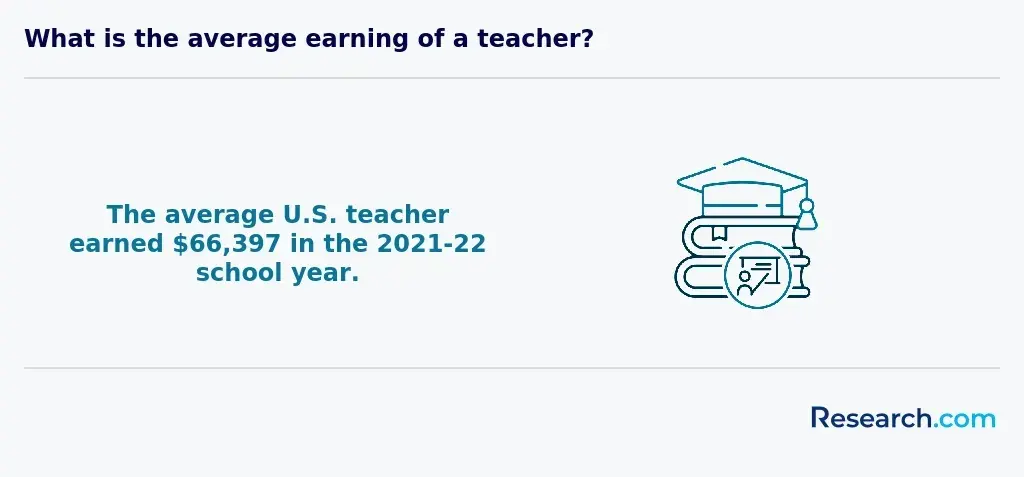
How much do teachers in Georgia make?
Georgia teacher pay varies by district, degree level, years of experience, school type, and role. Salary should be considered alongside certification cost because a cheaper pathway is only worthwhile if it leads to the type of teaching position you want.
- Starting salaries: New teachers typically earn between $39,623 and $47,957 annually, depending on district and qualifications. Entry-level positions for those with a bachelor’s degree often start around $34,092, while those with a master’s degree may begin at approximately $36,308.
- Experience-based growth: A teacher with ten years of experience can earn about $47,183, and a teacher with twenty years may earn around $71,825.
- Average and experienced pay: Teachers in Georgia earn about $60,152 after several years, while experienced educators often exceed $73,980.
- Degree decisions affect both cost and pay: A master’s degree may increase earning potential in some settings, but it also adds tuition. Compare the cost of the program with the salary schedule of the districts where you want to work.
| Career stage or qualification | Salary figure stated | Decision point |
| New teachers | $39,623 to $47,957 annually | District choice and credential field can affect starting pay |
| Entry-level teacher with bachelor’s degree | Around $34,092 | A bachelor’s-only path may reduce education costs |
| Entry-level teacher with master’s degree | Approximately $36,308 | Compare tuition cost with salary schedule benefits |
| Teacher with ten years of experience | About $47,183 | Experience can increase pay over time |
| Teacher with twenty years of experience | Around $71,825 | Long-term retention can affect total earnings |
| Experienced educators | Often exceed $73,980 | Advanced roles, experience, and district policies matter |
What other education careers are available in Georgia?
Teaching is not the only education-related career in Georgia. Some professionals prefer student support, therapy, administration, curriculum, library services, or specialized intervention roles. If you are interested in communication disorders and school-based services, Research.com’s guide to earning an SLP license in Georgia explains a different education career path that focuses on speech and language assessment and treatment.
Alternative education careers may require different degrees, licenses, supervision hours, or graduate training. Before changing direction, compare the total cost, required credentials, job setting, and whether the role fits your preferred daily work with students.
How can I become a preschool teacher in Georgia?
Preschool teaching in Georgia generally requires preparation focused on early childhood development, age-appropriate instruction, classroom routines, family communication, and early learning standards. The best program choice depends on whether you want to work in a public school pre-K setting, private preschool, childcare center, or another early learning environment.
If your goal is early childhood education, use Research.com’s guide on how to become a preschool teacher in Georgia to compare credential expectations, program options, and the steps that apply to preschool roles specifically.
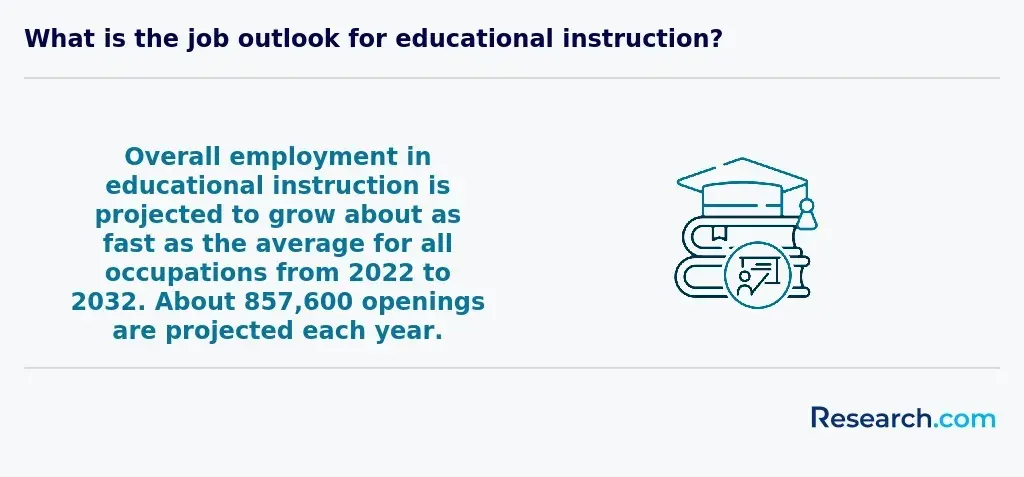
What is the job outlook of teachers in Georgia?
The job outlook for teachers in Georgia varies by grade level, subject area, region, and school staffing needs. Candidates who are flexible about location, shortage areas, special education, math, science, bilingual support, or high-need schools may find more opportunities than candidates with a narrow geographic or subject preference.
- Early childhood education: Preschool educator demand is expected to grow by 8%, while kindergarten and elementary school teaching positions are projected to increase by 9%.
- Middle and high school roles: Demand for middle school teachers is expected to rise by 7%, and high school roles are projected to see similar growth.
- Special education: Special education teaching roles are projected to grow by 8%, reflecting continued need for educators prepared to support diverse learners.
- Adult education: Adult education instructors, including literacy and high school equivalency educators, are projected to see 7% growth.
Job outlook should influence your credential decision. A low-cost program that leads to a saturated or geographically limited field may not serve you as well as a slightly more targeted pathway in a higher-need certification area.
How can I specialize in a subject while obtaining a teaching credential in Georgia?
Subject specialization matters because Georgia teaching certificates are tied to grade bands and content fields. A future history teacher, math teacher, music teacher, or ESL teacher should not choose a general program without confirming that it leads to the exact certification field needed for hiring.
- Match your degree and certificate field: Ask whether your coursework supports the subject and grade level you want to teach.
- Check required assessments: Different subject areas may require different GACE exams.
- Look for subject-specific fieldwork: Practicum and student teaching should place you in classrooms similar to the ones where you want to work.
- Use targeted guides when planning: If you are considering history education, review Research.com’s guide on how to become a history teacher in Georgia.
What is the career path of a teacher in Georgia?
A Georgia teacher’s career path often begins with an initial certification route, entry-level classroom teaching, continued professional development, certificate renewal, and possible movement into specialized or leadership roles. The path can differ depending on whether you enter through a traditional educator preparation program, alternative certification, reciprocity, or an online program with field placements.
- Complete the right preparation route: Choose an approved program that matches your existing degree status and intended teaching field.
- Finish required coursework and field experience: Pedagogy, child development, classroom management, subject methods, and supervised practice are central to preparation.
- Pass required assessments: Complete the GACE exams and other requirements tied to your certificate field.
- Apply for certification: Submit documentation through GaPSC after satisfying education, testing, ethics, and background check requirements.
- Start in a classroom role: Many educators begin as classroom teachers before pursuing lead teacher, mentor, instructional coach, department chair, assistant principal, or district-level roles.
- Renew and build credentials: Continuing education, graduate study, endorsements, and specialized certifications can support advancement.
| Stage | What you do | Cost-smart move |
| Before enrollment | Choose a certification field and approved pathway | Verify GaPSC acceptance before paying tuition |
| Preparation | Complete coursework and fieldwork | Use transfer credits and local placements when possible |
| Certification | Pass assessments and apply | Budget for GACE, background checks, and the $20 transaction fee |
| Early career | Teach, receive mentoring, and build classroom skills | Seek district support and professional learning opportunities |
| Advancement | Pursue leadership, specialization, or graduate study | Compare tuition cost with salary schedule and career goals |
What are the differences between public and private school teaching in Georgia?
Public and private school teaching in Georgia can differ in certification expectations, salary structures, benefits, curriculum flexibility, class size, and long-term career mobility. Public schools are regulated through state systems and generally require the appropriate Georgia teaching certificate. Private schools may set their own hiring standards, although many still prefer or require certified teachers.
| Factor | Public schools in Georgia | Private schools in Georgia |
| Certification | Typically requires GaPSC certification for teaching roles | Requirements may vary by school |
| Curriculum | More closely tied to state standards and district policies | May allow more school-level curriculum flexibility |
| Benefits | May include state-linked benefits and retirement structures | Benefits depend on the individual school |
| Classroom environment | Can include larger schools and broader accountability requirements | May offer smaller settings, depending on the institution |
| Best for | Teachers who want state-certified roles and public system mobility | Teachers who prefer mission-driven, independent, or specialized school environments |
If you are considering independent schools, review private school teacher requirements in Georgia and contact schools directly about their preferred credentials before investing in a certification pathway.
How can I excel as a middle school math teacher in Georgia?
Middle school math teachers need both content knowledge and strong instructional skill. Success depends on explaining abstract ideas clearly, using formative assessment, identifying learning gaps, managing active classrooms, and aligning instruction with state expectations. If you want this path, choose a preparation program with math-specific methods, supervised middle grades experience, and assessment preparation.
For a focused breakdown of requirements, see Research.com’s guide to middle school math teacher requirements in Georgia.
How can I tailor my teaching credential for subject-specific high school roles in Georgia?
High school certification is usually more subject-specific than elementary preparation. Before enrolling, identify the exact subject you want to teach, review the related GACE requirements, and choose coursework and field placements that support that subject. A future high school history teacher, for example, should look for preparation that develops both historical content knowledge and adolescent teaching methods.
If history is your target subject, use Research.com’s guide on how to become a high school history teacher in Georgia to map your pathway.
What factors should I consider when choosing a teaching credential program in Georgia?
The right Georgia teaching credential program should be affordable, approved, practical, and aligned with your intended teaching field. Do not choose based on tuition alone. A program that delays certification, lacks placement support, or does not match your certificate field can cost more in the long run.
| Factor | Why it matters | Question to ask |
| GaPSC approval | Determines whether the program can lead to Georgia certification | Is this pathway approved for my exact certificate field? |
| Total cost | Tuition is only one part of the price | What are the fees, testing costs, books, and field placement expenses? |
| Format | Online, hybrid, and campus formats affect flexibility | Can I complete coursework while working? |
| Field placement support | Student teaching and practicum are essential | Who arranges my classroom placement? |
| Transfer credit | Accepted credits can reduce time and cost | How many credits will apply to the program requirements? |
| Subject alignment | Certification fields have different expectations | Does this prepare me for the grade level and subject I want? |
| Career support | Hiring connections can matter after certification | Does the program work with Georgia districts or schools? |
Teachers planning to specialize in STEM may also compare advanced options such as an online math education degree if it aligns with their certification and salary goals.
Can ESL certification expand my career opportunities in Georgia?
ESL certification can strengthen a teacher’s ability to serve English language learners and may make a candidate more competitive in schools with multilingual student populations. ESL training typically focuses on language acquisition, culturally responsive instruction, assessment, academic vocabulary, and strategies for supporting students who are learning English while studying grade-level content.
Before adding ESL training, confirm whether you need an endorsement, certification, or graduate-level coursework for your goal. Research.com’s guide to ESL teaching certification online and requirements explains online and certification pathways in more detail.
What are the specialized steps to become a music teacher in Georgia?
Music teachers need preparation that combines teaching methods, performance or musicianship expectations, classroom management, ensemble or general music instruction, and field experience in appropriate school settings. The cheapest path is not simply the shortest program; it is the one that prepares you for the required certification field without unnecessary coursework.
For a focused planning resource, review Research.com’s guide to music teacher education requirements in Georgia.
What is the most affordable path to become a kindergarten teacher in Georgia?
The most affordable route to kindergarten teaching usually depends on whether you already have a bachelor’s degree. New students can reduce costs through transfer-friendly community college credits and an approved early childhood or elementary preparation program. Degree holders may be able to use a certification-only, master’s-with-certification, or alternative pathway if it leads to the correct Georgia credential.
Because kindergarten teaching is closely tied to early childhood development and foundational literacy and numeracy instruction, choose a program with strong early grades fieldwork. For a role-specific guide, see how to become a kindergarten teacher in Georgia.
What common pitfalls should I avoid when pursuing my teaching credential in Georgia?
The biggest mistakes usually happen before a candidate enrolls. Many aspiring teachers focus on the advertised tuition price and fail to check whether the program actually leads to the certification field they need.
- Choosing an unapproved program: Always verify GaPSC acceptance before paying deposits or tuition.
- Ignoring the exact certificate field: Elementary, middle grades, high school, special education, music, ESL, and early childhood pathways can have different requirements.
- Assuming online means fully remote: Most teacher preparation still requires in-person fieldwork or student teaching.
- Forgetting testing and background check costs: GACE exams, ethics requirements, fingerprinting, and background checks can add to the total price.
- Not checking transfer credits: Credits that transfer as electives may not reduce your certification timeline.
- Relying only on rankings: Rankings can be useful, but approval, placement support, cost, and fit matter more.
- Missing renewal requirements: Certification is not a one-time task. Plan for professional development and renewal before your credential expires.
If you want a broader step-by-step overview, Research.com’s guide on how to become a teacher in Georgia can help you compare online and traditional pathways.
How can I access ongoing professional development and support networks in Georgia?
Professional development helps Georgia teachers renew credentials, improve instruction, adapt to curriculum changes, and prepare for leadership or specialization. Support may come through districts, school mentors, state-sponsored learning, professional associations, workshops, conferences, online training, and graduate coursework.
- Start with your district: Public school systems often provide professional learning aligned with school goals and renewal expectations.
- Use mentor networks: New teachers benefit from experienced colleagues who can help with classroom management, lesson planning, and assessment practices.
- Track renewal documentation: Save transcripts, certificates, and professional learning records before renewal season.
- Choose development that supports your next role: ESL, special education, math, literacy, leadership, and technology training can all support different career goals.
For current credential rules and certification categories, review Research.com’s overview of Georgia teacher certification requirements.
Key Insights
- The cheapest Georgia teacher credential route depends on your starting point. Degree holders often save money through alternative certification, certification-only programs, or GaTAPP, while students without a degree can reduce tuition through community college transfer planning.
- Never choose a program on price alone. The program must be accepted by GaPSC and must lead to the exact grade level and subject-area certificate you need.
- Budget beyond tuition. GACE exams, the $20 GaPSC certification transaction fee, fingerprinting, background checks that typically cost around $50 to $75, books, and field placement logistics can all affect total cost.
- Online teacher certification can be flexible, but approved educator preparation still requires supervised classroom experience. Ask how field placements are arranged before enrolling.
- Out-of-state and international educators may have lower-cost routes if their existing credentials are accepted, but they should expect documentation review and possible additional assessment or coursework requirements.
- Long-term affordability includes salary, benefits, retirement planning, renewal requirements, and career mobility—not just the initial cost of getting certified.
Related Articles for Nearby States
- 2027 Cheapest Way to Get a Teaching Credential in South Carolina: Requirements & Certification
- 2027 Cheapest Way to Get a Teaching Credential in Florida: Requirements & Certification
- 2027 Cheapest Way to Get a Teaching Credential in Alabama: Requirements & Certification
- 2027 Cheapest Way to Get a Teaching Credential in Tennessee: Requirements & Certification
- 2027 Cheapest Way to Get a Teaching Credential in North Carolina: Requirements & Certification
- 2027 Cheapest Way to Get a Teaching Credential in Mississippi: Requirements & Certification
- 2027 Cheapest Way to Get a Teaching Credential in Kentucky: Requirements & Certification
- 2027 Cheapest Way to Get a Teaching Credential in Virginia: Requirements & Certification
- 2027 Cheapest Way to Get a Teaching Credential in Louisiana: Requirements & Certification
- 2027 Cheapest Way to Get a Teaching Credential in West Virginia: Requirements & Certification
References:
- Accredited Schools Online. How to Become a Teacher in Georgia. https://www.accreditedschoolsonline.org/education/certification/georgia
- LangCred. Foreign Credentials Approach (Out-Of-Country) (GA). https://langcred.org/tracks/foreign-credentials-approach-out-of-country-ga
- Georgia Department of Education. Georgia Annual/Monthly Salary Schedule for 10 Months Employment. https://www.gadoe.org/Finance-and-Business-Operations/Budget-Services/Documents/FY18-TeacherSalaryScheduleReport.pdf
- Teachers Retirement System of Georgia. Eligibility for Retirement. https://www.trsga.com/active-member/eligibility-for-retirement
- Teaching-Certification.com. Georgia Teacher Certification Renewal. https://teaching-certification.com/teaching/georgia-teacher-certification-renewal
- Georgia Professional Standards Commission. 505-2-.02 Classification. https://www.gapsc.com/Rules/Current/Certification/505-2-.02.pdf
- South Georgia State College. Job Outlook. https://www.sgsc.edu/academics/job-outlook-ele-sped
- TEACH.org. Find Your Teacher Career Path. https://www.teach.org/explore/career-paths
Other Things You Should Know About Getting a Teaching Credential in Georgia
In 2027, aspiring teachers in Georgia can obtain a teaching credential without a master's degree by pursuing alternative certification programs. These programs, such as those offered by Teach for Georgia, provide affordable routes to licensure, emphasizing practical experience and professional development.
Georgia requires a criminal background check and fingerprint-based screening through the Georgia Professional Standards Commission and the state-approved vendor before certification. School districts may also require additional local checks before placement. The clearance must show no disqualifying offenses under Georgia educator ethics and licensing rules.
To earn a teaching credential in Georgia in 2027, passing the Georgia Assessments for the Certification of Educators (GACE) is typically required. These exams assess knowledge and skills in specific subject areas and teaching practices essential for educators in the state.