
2027 How to Become a Substitute Teacher in New York

Co-Founder and Chief Data Scientist
If you want classroom experience in New York without committing immediately to a full-time teaching job, substitute teaching can be a practical entry point. The role is flexible, schools continue to need qualified coverage, and New York serves over 1.2 million public school students statewide. But the process is not the same everywhere: New York City has its own nomination and licensing steps, while other districts may use local applications, BOCES systems, and district-specific screening.
This guide explains how to become a substitute teacher in New York, including eligibility rules, required training, application steps, pay expectations, renewal requirements, classroom duties, legal considerations, and pathways into full-time teaching. It is designed for aspiring teachers, career changers, education majors, paraprofessionals, retired educators, and professionals who want to test whether teaching is the right long-term career move.
Quick answer: how to become a substitute teacher in New York
To become a substitute teacher in New York, you generally need a bachelor’s degree, authorization to work in the United States, English proficiency, fingerprinting, a background check, and completion of required school safety and student protection training. In New York City, candidates must also be nominated by a school principal and complete the NYC Department of Education substitute licensing process. Outside NYC, districts usually manage substitute applications through local school district or BOCES procedures.
- Typical education requirement: A bachelor’s degree is required in New York City and most districts, though some areas may accept 60 college credits or an associate’s degree for certain teaching assistant or paraprofessional roles.
- Mandatory screening: Applicants must complete employment eligibility verification, fingerprinting, and criminal background clearance before working with students.
- Training requirements: First-time substitutes must complete required workshops such as child abuse identification, school violence prevention, and DASA training.
- Pay expectations: Substitute teachers can earn about $22–$25 per hour, with higher potential for long-term assignments, specialized roles, and consistent work.
- Career value: Substitute teaching can lead to full certification, full-time teaching, paraprofessional advancement, and stronger district hiring connections.
- What are the basic requirements to become a substitute teacher in New York?
- What training is required for first-time substitute teachers in New York?
- How do you apply to become a substitute teacher in New York?
- How much do substitute teachers in New York make?
- How do you renew or maintain a substitute teaching certificate in New York?
- What are the responsibilities of a substitute teacher in New York?
- How flexible is a substitute teacher’s schedule in New York?
- What challenges do substitute teachers commonly encounter in New York?
- What are the benefits received by a substitute teacher in New York?
- What legal rights do substitute teachers have in New York?
- What certification pathways can boost a substitute teacher's career in New York?
- What are the career advancement opportunities for substitute teachers in New York?
- How Can Substitute Teachers Transition into Full-Time Teaching Positions in New York?
What are the basic requirements to become a substitute teacher in New York?
New York substitute teacher requirements depend on where you want to work. New York City uses a more formal nomination and substitute license process, while many districts outside NYC rely on local district approval. Before applying, confirm the rules with the district or BOCES office where you plan to accept assignments.
The most common requirements include the following:
- College education: New York City and most districts require a bachelor’s degree for substitute teaching. Some districts may accept 60 college credits or an associate’s degree for teaching assistant, substitute paraprofessional, or related school support roles.
- English communication skills: Substitutes must be able to read instructions, explain lessons, manage classroom communication, and document incidents clearly in English, especially in New York City public schools.
- Legal work authorization: Applicants must be legally allowed to work in the United States and must complete employment eligibility verification before being cleared.
- Principal nomination in NYC: In New York City, a school principal must nominate you before you can move forward with the Department of Education’s online substitute application process.
- NYC substitute license: NYC candidates need a substitute teaching license after nomination. Many districts outside NYC do not use the same licensing process, but they still require approval and clearance.
- Service limits for uncertified substitutes: Uncertified substitutes can work up to 40 days per year within the same district, which is one reason many long-term substitutes pursue full teacher certification.
If you are still building your education credentials, an associate degree in education may be useful for support roles or as a stepping stone toward a bachelor’s degree, depending on district policy.
| Requirement | Why it matters | What to verify before applying |
| Bachelor’s degree | Often required for substitute teaching eligibility, especially in NYC. | Ask whether your target district requires a completed bachelor’s degree or accepts other credentials for specific roles. |
| Fingerprinting and background check | Protects student safety and is required before classroom placement. | Confirm whether prior fingerprint clearance can be transferred or must be updated. |
| Mandatory workshops | Prepares substitutes to meet state expectations around safety, reporting, and student rights. | Check which workshops must be completed before approval and which can be completed during onboarding. |
| NYC nomination | Required for New York City substitute teacher candidates. | Contact principals or schools directly if you plan to work in NYC. |
| District approval | Outside NYC, the local district or BOCES usually controls hiring and assignment access. | Review the district’s substitute application packet and renewal calendar. |
What training is required for first-time substitute teachers in New York?
First-time substitute teachers in New York must complete training that focuses on student safety, mandated reporting, bullying prevention, and professional conduct. These workshops are not just paperwork; they prepare substitutes to recognize serious issues, respond appropriately, and follow state and district rules.
- Child Abuse Identification and Reporting: This required two-hour workshop is available free online through the New York State Office of Children and Family Services. It trains school personnel to identify possible abuse and understand reporting obligations.
- School Violence Intervention and Prevention: This required two-hour online course, often offered through NYC Public Schools for about $10, covers prevention, response, and school safety expectations.
- Dignity for All Students Act training: The DASA workshop is a six-hour training that addresses harassment, bullying, discrimination, and respectful school environments. Through NYC Public Schools, it usually costs around $60.
- Paraprofessional-related requirements: Substitutes who also work as paraprofessionals may need to complete 20 full service days and pass the NYS Assessment of Teaching Assistant Skills (ATAS) exam.
- District orientation: Many districts require onboarding sessions that explain local procedures, emergency protocols, attendance systems, behavior expectations, and assignment technology.
Training requirements can change by district and role, so keep copies of certificates and completion confirmations. If you want to expand into school media, research support, or library-focused education work, an online master’s in library science may also be worth exploring as a longer-term credential.
| Training | Time or cost stated | Best reason to complete it early |
| Child Abuse Identification and Reporting | Two-hour workshop; offered free online by the New York State Office of Children and Family Services | You may need proof of completion before final clearance. |
| School Violence Intervention and Prevention | Two-hour online course; typically about $10 through NYC Public Schools | It prepares you for safety expectations in unfamiliar classrooms. |
| DASA | Six-hour workshop; usually around $60 through NYC Public Schools | It is central to bullying, harassment, and discrimination prevention. |
| District orientation | Varies by district | Local procedures can differ significantly from one school system to another. |
| ATAS exam for applicable paraprofessional pathways | Required for substitutes also serving in certain paraprofessional roles | It may support advancement into permanent school support positions. |
How do you apply to become a substitute teacher in New York?
The substitute teacher application process in New York is straightforward once you know whether you are applying in New York City or in another district. The biggest difference is that NYC requires principal nomination before the online application, while other districts usually start with a local district or BOCES application.
Use this sequence to stay organized:
- Choose your target district or school system. Decide whether you want to work in NYC public schools, a specific suburban or upstate district, BOCES, charter schools, or multiple districts if allowed.
- Start with the correct application route. In NYC, first secure a school principal nomination. Outside NYC, download forms or apply through the local district or BOCES website.
- Submit required documents. Provide transcripts, identification, employment forms, proof of training, and any district-specific documents through the requested online portal or email process.
- Complete I-9 employment verification. You must show acceptable identification and confirm your legal authorization to work in the United States.
- Finish fingerprinting and background clearance. Complete fingerprinting through the approved process, or provide valid proof of prior clearance if the district accepts it.
- Attend required onboarding or processing events. NYC candidates may need to attend a Processing Event to finalize paperwork and confirm eligibility. Other districts may require orientation before giving assignment access.
- Wait for final clearance before accepting jobs. Do not assume you can work as soon as you apply. You need formal district approval before entering classrooms.
- Track annual renewal deadlines. Many districts require yearly renewal, updated documentation, or new training confirmations before the next school year.
| Application path | How it usually starts | Who should use it |
| New York City public schools | Principal nomination, then NYC Department of Education online process | Applicants who want access to NYC substitute teaching assignments |
| Districts outside NYC | Local district or BOCES application forms | Applicants targeting suburban, regional, or upstate schools |
| Teaching assistant or paraprofessional route | District-specific support staff application | Applicants with fewer credentials or those interested in school support roles |
| Long-term substitute route | District placement after approval and demonstrated fit | Substitutes seeking steady schedules, higher responsibility, and stronger hiring visibility |
How much do substitute teachers in New York make?
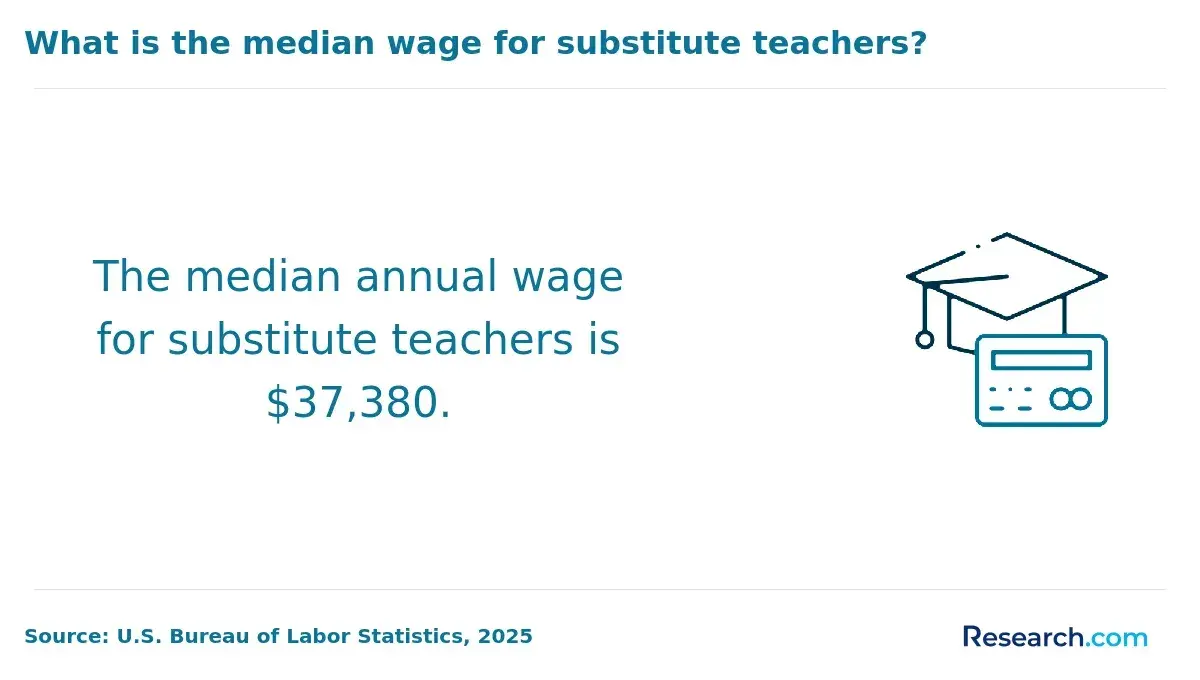
Substitute teacher pay in New York varies by district, assignment type, certification status, and consistency of work. The average hourly rate is $22.70. In New York City, the rate is about $25.60 per hour. Substitutes who work regularly may earn between $44,000 and $47,000 annually, although income is not guaranteed because per diem work depends on available assignments and the days you choose or are able to work.
The pay range can be wide. Entry-level roles may pay as low as $20,787 annually, while experienced substitutes or those in high-demand areas such as STEM or special education can make $75,000 or more. Long-term substitute assignments may pay more because they often involve planning, grading, communication with staff, and extended responsibility for one class or subject area.
Pay should be evaluated alongside schedule control, benefits eligibility, commute time, and advancement potential. If you plan to move from substitute teaching into a certified teaching career, comparing affordable education options, including low-cost online education degrees, can help you manage credential costs while building eligibility for higher-paying roles.
| Pay factor | How it can affect earnings | What to ask before accepting assignments |
| District location | Rates differ across New York, and NYC pay reflects local cost and demand. | What is the daily or hourly rate for per diem substitutes? |
| Assignment length | Long-term assignments may pay more and provide steadier income. | When does a short-term assignment become long-term under district policy? |
| Certification status | Certified substitutes may qualify for broader assignment options. | Does certification change pay, assignment priority, or service limits? |
| Subject area | High-demand areas such as STEM or special education may increase opportunities. | Are certain subjects or grade levels harder to staff? |
| Work availability | Per diem earnings depend on how often you work and whether assignments are available. | How many substitute days are typically available each month? |
How do you renew or maintain a substitute teaching certificate in New York?
Substitute eligibility is not something to set once and forget. Districts and New York City public schools may require annual renewal, updated paperwork, proof of completed training, and minimum service documentation. Missing a deadline can delay your access to assignments at the start of the school year.
- Renew each school year: You may need to renew eligibility annually, often by showing that you completed at least 20 days of substitute service during the school year.
- Submit renewal forms online: Renewal requests are commonly filed through an official online system, with deadlines often in late August for the upcoming school year.
- Complete required training updates: Annual modules may cover mandated reporting, school safety, student privacy, or other district compliance topics.
- Keep employment records current: Districts may request updated tax forms, direct deposit details, contact information, or identification documents.
- Monitor certificate timelines: If you hold an initial or other limited certificate, you may need extensions or reissuance while continuing toward full certification.
- Request service verification: Maintain records of paid substitute days, especially if you plan to use service history for certification, salary placement, or full-time applications.
- Use union or district support when needed: In New York City, the United Federation of Teachers can be a useful resource for questions about per diem service, renewal, and employment rights.
| Maintenance task | Why it matters | Common mistake to avoid |
| Track service days | Service history may affect renewal, advancement, or certification documentation. | Waiting until the deadline to request verification. |
| Save training certificates | Districts may require proof before clearing you for the next year. | Assuming the system automatically records every workshop. |
| Update contact and payroll information | Old records can delay assignments or payment. | Ignoring renewal emails over the summer. |
| Review certification status | Uncertified substitutes face assignment limits and may need a long-term plan. | Assuming per diem work automatically leads to certification. |
What are the responsibilities of a substitute teacher in New York?
A substitute teacher’s main job is to keep learning moving while the regular teacher is absent. Some days are simple coverage assignments with clear plans. Others require quick decision-making, behavior management, and communication with administrators or support staff.
Core responsibilities usually include:
- Following lesson plans: Teach the assigned material, distribute activities, and keep students on task according to the teacher’s instructions.
- Adapting when plans are limited: Use appropriate backup activities or ask school staff for guidance if lesson materials are missing or unclear.
- Managing the classroom: Set expectations early, maintain order, redirect disruptive behavior, and support a respectful classroom climate.
- Delivering instruction: Work across grade levels and subjects, adjusting explanations for the age and ability level of the class.
- Handling daily administration: Take attendance, collect work, document absences, note behavior issues, and leave a clear report for the returning teacher.
- Maintaining safety: Follow emergency procedures, supervision rules, hallway or lunch duties, and district safety protocols.
- Protecting confidentiality: Treat student records, behavior issues, health information, and family details as private information.
- Communicating professionally: Work with office staff, administrators, paraprofessionals, and other teachers when student needs or classroom issues arise.
- Following district limits and rules: Uncertified substitutes must observe the 40-day limit unless an exception applies, while certified substitutes may have broader placement options.
- Maintaining required clearance: Fingerprinting, background checks, renewal steps, and required training must remain current.
How flexible is a substitute teacher’s schedule in New York?
Substitute teaching can be highly flexible, especially for per diem substitutes who select assignments based on availability, location, grade level, and personal schedule. This makes the role attractive for graduate students, parents, retirees, career changers, and aspiring teachers who want classroom experience before applying for permanent positions.
The trade-off is income stability. Per diem substitutes may enjoy control over workdays, but the number of available assignments can fluctuate during the school year. Long-term assignments offer more predictability and stronger school relationships, but they reduce schedule flexibility because you are usually expected to report consistently for the duration of the placement.
| Schedule type | Best for | Main trade-off |
| Per diem substitute teaching | People who want control over workdays, school locations, and assignment frequency | Income and assignment availability may vary. |
| Long-term substitute teaching | Aspiring full-time teachers who want deeper classroom experience | Less flexibility and more responsibility. |
| Substitute paraprofessional work | Candidates interested in student support, special education assistance, or school operations | Requirements and pay may differ from teacher substitute roles. |
| Multiple-district substituting | Substitutes who want more assignment options outside NYC | You may need separate applications, onboarding, and renewals. |
What challenges do substitute teachers commonly encounter in New York?
Substitute teaching is flexible, but it can also be unpredictable. A substitute may enter a new building with little context, teach unfamiliar students, and manage a classroom using lesson plans prepared by someone else. Strong substitutes learn how to establish authority quickly while staying calm, respectful, and organized.
Common challenges include:
- Unpredictable assignments: You may not know the grade, subject, room location, or classroom dynamics until shortly before the school day begins.
- Classroom management pressure: Students may test boundaries when their regular teacher is absent, so clear expectations matter from the first minute.
- Incomplete lesson plans: Some assignments come with detailed instructions; others require substitutes to improvise within school policy.
- Limited staff connection: Per diem substitutes may feel isolated if they do not know the school’s routines, staff members, or support systems.
- Different school cultures: Rules, technology, student behavior norms, and administrative expectations can vary by building.
- Inconsistent income: Flexible scheduling can mean fewer paid days during breaks, testing periods, or low-demand weeks.
Substitutes who want to diversify their teaching experience may also explore remote instructional roles. Research.com’s guide on how to become an online teacher in New York explains another pathway for educators interested in virtual or hybrid instruction.
| Challenge | Better approach | Why it helps |
| Students test limits | Open with simple expectations, a seating check, and a clear task. | Structure reduces confusion and prevents avoidable disruptions. |
| No lesson plan is available | Ask the office, grade team, or department chair for approved materials. | It keeps instruction aligned with school expectations. |
| You do not know the school routine | Arrive early and ask about attendance, passes, lunch duty, and emergency procedures. | Small procedural details prevent major problems later. |
| You want more repeat assignments | Leave detailed notes, be reliable, and introduce yourself to administrators. | Professional follow-through makes schools more likely to request you again. |
What are the benefits received by a substitute teacher in New York?
Benefits for substitute teachers in New York depend heavily on district rules, assignment type, and whether the role is per diem or long-term. Day-to-day substitutes usually receive pay for completed assignments, while long-term substitutes may qualify for additional benefits or status-based advantages.
- Per diem pay: Substitutes are generally paid by the day or assignment, with long-term placements often offering higher compensation because responsibilities are greater.
- Health benefits for eligible long-term roles: Long-term substitutes who reach Q-status may qualify for health insurance coverage, which is a major distinction from many short-term per diem roles.
- Vacation and seniority credits: Some experienced substitutes can accumulate limited vacation pay or seniority-related credits that may support future advancement.
- Pathway into full-time teaching: Substitute experience can strengthen applications, help candidates build references, and provide classroom evidence for certification planning.
- Professional networking: Working in multiple schools gives substitutes a chance to meet principals, department leaders, teachers, and hiring teams.
- Career testing: Substituting lets candidates compare grade levels, subjects, school types, and student populations before committing to a permanent role.
If you are interested in early childhood classrooms, review what you can do with an online bachelor’s degree in early childhood education to understand how additional credentials may expand your teaching options.
What legal rights do substitute teachers have in New York?
Substitute teachers in New York work under a mix of state regulations, district policies, employment rules, and, in some locations, union agreements. Rights and protections are not identical across every district, so substitutes should review local policies before assuming they have the same benefits or procedural protections as full-time teachers.
- Eligibility and training rules: Substitutes must complete required workshops, assessments, and renewals to remain eligible for school assignments.
- Employment protections vary: Many substitutes are at-will or per diem employees, but district rules or union agreements may provide procedures for specific disputes or removals.
- Union representation may be available: Organizations such as the United Federation of Teachers can help eligible substitutes understand grievance options, pay questions, and workplace concerns.
- Credit toward probationary periods: Substitutes with satisfactory service may earn up to two years of credit toward probationary periods when moving into full-time roles.
- Fair access to assignments: Districts should administer substitute opportunities according to their policies, though assignment availability can still depend on need, qualifications, and school requests.
- Remote or hybrid teaching considerations: As schools use online tools, substitutes may need clarity about expectations, technology access, student privacy, and supervision in virtual settings.
If a school removes you from an assignment list, denies pay, or blocks future work, ask for the district policy in writing and contact the appropriate human resources office or union representative if eligible.
What certification pathways can boost a substitute teacher's career in New York?
Substitute teaching can be a short-term job, but it can also become the first stage of a teaching career. The best certification pathway depends on your current education, subject area, classroom experience, and whether you want to teach general education, special education, early childhood, secondary subjects, or another specialty.
Understanding New York teacher certification requirements is essential before investing in coursework or exams. Certification rules affect which grades and subjects you can teach, how long the process may take, and whether your substitute service can support advancement.
| Pathway | Who it fits | Decision point |
| Initial teacher certification | Substitutes with a bachelor’s degree who want to become full-time classroom teachers | Confirm required coursework, exams, student teaching, and subject area requirements. |
| Teaching assistant or paraprofessional advancement | Substitutes who want school-based experience while completing additional credentials | Check whether service days, ATAS, or district requirements apply. |
| Special education pathway | Substitutes interested in high-need student support roles | Ask districts what certifications or training they prefer for special education assignments. |
| Graduate education route | Career changers or bachelor’s degree holders seeking structured preparation | Compare cost, accreditation, field placement support, and certification alignment. |
| Subject-area certification | Applicants with academic strength in areas such as STEM or secondary education | Verify subject-specific exam and coursework expectations before enrolling. |
What are the career advancement opportunities for substitute teachers in New York?
Substitute teaching gives candidates something employers value: direct evidence of classroom reliability. If you arrive on time, manage students well, communicate clearly, and build relationships with schools, substitute experience can lead to stronger references, repeat assignments, and full-time interviews.
- Move into full teacher certification: Long-term substitute experience can support your transition into a permanent teaching role when paired with the required state certification steps.
- Advance from paraprofessional to permanent school roles: Substitute paraprofessionals who meet service and assessment requirements may pursue permanent jobs with stronger benefits.
- Build seniority and longevity value: Regular substitute service may contribute to salary step placement or seniority considerations under applicable district rules.
- Use union guidance: Unions such as the United Federation of Teachers can help substitutes understand rights, service credit, and full-time hiring pathways.
- Strengthen instructional skills: Classroom exposure, mandated workshops, district professional development, and feedback from staff can improve your teaching practice.
- Target high-need areas: Experience in special education, bilingual settings, STEM, or hard-to-staff schools may improve your competitiveness for future roles.
If you are considering graduate study as part of your advancement plan, compare programs carefully. Research.com’s guide to online master’s in education cost can help you evaluate affordability before committing.
What do substitute teachers in New York say about their careers?
- My substitute teacher preparation at Brooklyn Technical High School helped me feel ready for the range of classrooms I would encounter in New York. I appreciate the flexible schedule, the daily interaction with students, and the opportunity to serve my community while continuing to pursue a long-term future in education. Jerry
- After completing training at LaGuardia Community College, I began accepting substitute assignments in local schools. The pace was demanding, but it sharpened my classroom management, communication, and adaptability. I also value the professional development options that help me work toward a permanent teaching position. Monica
- My experience at the City College of New York helped lead me into substitute teaching across Manhattan. Working with students from many cultural backgrounds has made the role meaningful. It has strengthened my instructional confidence and deepened my commitment to inclusive, supportive classrooms. Ronnel
How Can Substitute Teachers Transition into Full-Time Teaching Positions in New York?
The best way to turn substitute teaching into a full-time teaching career is to treat every assignment as both paid work and professional evidence. Schools notice substitutes who are dependable, calm under pressure, respectful with students, and clear in their communication with staff.
- Choose a certification goal. Decide which grade level and subject you want to teach before enrolling in additional coursework or exams.
- Review state certification requirements. Requirements vary by certification area, so confirm the exact steps before spending money on a program.
- Track your substitute service. Keep records of paid days, long-term assignments, grade levels, subjects, and administrator feedback.
- Request feedback and references. Principals and department chairs are more likely to recommend substitutes they have seen perform well.
- Take long-term assignments strategically. These roles provide deeper experience and may help you demonstrate readiness for full-time responsibilities.
- Complete required coursework and assessments. If you need a teaching certificate, build a realistic timeline around program admissions, exams, fieldwork, and state review.
- Apply where you are already known. Schools that have repeatedly used you as a substitute may be more willing to consider you for permanent openings.
If you are planning a full certification timeline, start with the question covered in Research.com’s guide: How long does it take to get a teaching certificate in New York?
Common mistakes to avoid when becoming a substitute teacher in New York
- Assuming NYC and non-NYC rules are the same: New York City requires principal nomination and a substitute license process, while other districts may use different application systems.
- Waiting too long to complete workshops: Required training can delay your clearance if you postpone it until after submitting an application.
- Ignoring the 40-day limit: Uncertified substitutes must understand service restrictions and plan for certification if they want broader opportunities.
- Looking only at hourly pay: Commute time, assignment availability, benefits eligibility, renewal rules, and advancement potential matter just as much.
- Not saving documentation: Keep copies of transcripts, training certificates, fingerprinting clearance, service days, and renewal confirmations.
- Accepting every assignment without strategy: If your goal is full-time teaching, prioritize schools, grade levels, and subjects aligned with your certification plan.
- Assuming substitute work guarantees a permanent job: Substitute teaching can help, but full-time employment still depends on certification, openings, performance, references, and district hiring needs.
Questions to ask before applying as a substitute teacher in New York
| Question | Why it matters |
| Does this district require a bachelor’s degree for substitute teaching? | Eligibility standards vary, especially for teaching assistant or paraprofessional roles. |
| What is the exact per diem or hourly pay rate? | The average hourly rate is $22.70, while NYC is about $25.60 per hour, but local rates can differ. |
| How often are assignments available? | High pay is less useful if workdays are inconsistent. |
| Are long-term substitutes paid differently? | Long-term work may offer stronger income and career visibility. |
| What training must be completed before clearance? | Missing workshops can delay your start date. |
| Can prior fingerprinting clearance be used? | This can affect cost, processing time, and documentation requirements. |
| Do substitute days count toward advancement or certification documentation? | Service records may support future teacher certification or full-time applications. |
| What benefits, if any, are available to long-term substitutes? | Q-status and other district-specific rules can affect health benefits and employment value. |
Current trends affecting substitute teachers in New York
Several forces are shaping substitute teaching in New York. Districts continue to depend on substitute educators to maintain classroom continuity, especially when full-time teachers are absent or vacancies occur. At the same time, schools are placing more emphasis on safety training, inclusive classroom practices, mandated reporting, and technology readiness.
Remote and hybrid instruction have also changed expectations. Even when classes are in person, substitutes may need to use learning management systems, digital attendance tools, online assignments, and classroom technology with little notice. Candidates who are comfortable with educational technology, flexible classroom routines, and diverse student needs are better positioned for repeat assignments.
Another important trend is credential-based advancement. Substitute teaching may open doors, but candidates who want stable, full-time teaching jobs usually need a clear certification plan. That means comparing program cost, accreditation, field placement support, certification alignment, and how quickly a program can move you toward state eligibility.
Key Insights
- New York substitute teaching is local. NYC candidates need principal nomination and a substitute license process, while other districts typically use local or BOCES applications.
- Clearance comes before classroom work. Expect to complete employment verification, fingerprinting, background checks, and required training before you can accept assignments.
- Pay can be competitive but variable. The average hourly rate is $22.70, NYC is about $25.60 per hour, and consistent annual earnings depend on assignment availability and work frequency.
- Long-term assignments offer stronger career value. They may bring higher responsibility, steadier schedules, stronger references, and better visibility for permanent openings.
- Certification planning matters early. Uncertified substitutes face limits, including the 40-day rule within the same district, so aspiring full-time teachers should map out certification requirements as soon as possible.
- Documentation protects your progress. Save training certificates, clearance records, service-day verification, and renewal confirmations to avoid delays and support future applications.
- The role is best for flexible, adaptable educators. Substitute teachers succeed when they can manage unfamiliar classrooms, follow school procedures quickly, communicate professionally, and stay calm under pressure.
Related Articles for Nearby States
- 2027 How to Become a Substitute Teacher in New Jersey
- 2027 How to Become a Substitute Teacher in Pennsylvania
- 2027 How to Become a Substitute Teacher in Connecticut
- 2027 How to Become a Substitute Teacher in Massachusetts
- 2027 How to Become a Substitute Teacher in Vermont
- 2027 How to Become a Substitute Teacher in Rhode Island
- 2027 How to Become a Substitute Teacher in Delaware
- 2027 How to Become a Substitute Teacher in Maryland
- 2027 How to Become a Substitute Teacher in New Hampshire
- 2027 How to Become a Substitute Teacher in Ohio
References:
- Elevate K12. (n.d.). Do substitute teachers get benefits? Retrieved from Elevate K12
- JustAnswer. (n.d.). Substitute teacher rights and legal advice. Retrieved from JustAnswer
- Law Cornell University. (n.d.). N.Y. Comp. Codes R. & Regs. Tit. 8 §§ 80-5.4 - Substitute teachers. Retrieved from LII
- New York City Department of Education. (n.d.). Substitute teaching. Retrieved from NYC DOE
- New York City Focus. (2024, January 29). New York City subs systematically denied sick pay. Retrieved from NY Focus
- NYSED. (n.d.). Substitute teaching: OTI. Retrieved from NYSED
- TeachNYC. (n.d.). Salary & benefits | Apply to teach in New York City public schools. Retrieved from TeachNYC
- Swing Education. (n.d.). How to become a substitute teacher in New York. Retrieved from Swing Education
- UFT. (n.d.). Per diem service. Retrieved from UFT
- New York Department of Labor. (n.d.). Unemployment insurance benefit rules for teachers and other school workers. Retrieved from NY DOL
Other Things You Need to Know About Substitute Teachers in New York
Substitute teachers in New York must have a minimum of a bachelor's degree and must pass a fingerprint-based criminal background check conducted by the New York State Education Department. Certification is optional, but preferred by many school districts in the state.
The New York State Education Department, through the Office of Teaching Initiatives, approves substitute teaching certificates. Applicants must meet the district’s minimum hiring rules and submit the required certification paperwork, including identity and education records, before a district can place them in a classroom.
In 2027, to become a substitute teacher in New York, you need at least a high school diploma or equivalent. Fingerprinting and background checks are mandatory. Some school districts may require additional training or certification. Specific requirements can vary, so check with the local district where you want to work.


