2027 Online Cybersecurity Degrees With Strong Technical and Policy Training

Co-Founder and Chief Data Scientist
Choosing an online cybersecurity degree is no longer just a technical decision; employers increasingly need people who can secure systems and interpret risk, regulation, and governance. The U. S. Bureau of Labor Statistics reports that information security analysts had median pay of $124,910 in its latest May 2024 wage data, signaling strong market value for advanced cyber skills.
This guide is for students, career changers, veterans, and working IT professionals comparing programs. You will learn how to evaluate curriculum, accreditation, cost, online format, career fit, and return on investment before enrolling.
Key Things You Should Know
- Strong online cybersecurity degrees should combine labs in networking, cloud security, digital forensics, secure coding, and incident response with policy courses in governance, privacy, risk, compliance, cyber law, and national security.
- The BLS projects information security analyst employment to grow 29% from 2024 to 2034, much faster than average, but outcomes still depend on prior experience, certifications, location, clearance eligibility, and the program's employer connections.
- Before applying, verify institutional accreditation, review whether the school has NSA National Centers of Academic Excellence recognition, compare total program cost rather than tuition alone, and confirm the curriculum matches your target role.
What is an online cybersecurity degree that blends technical skills with policy training?
An online cybersecurity degree with technical and policy training prepares students to protect systems while understanding the legal, organizational, and strategic rules that shape security decisions. The technical side focuses on how attacks happen and how defenses are built. The policy side focuses on why security controls are required, how risk is governed, and how organizations respond to laws, audits, national security priorities, and stakeholder expectations.
This blend matters because many cyber failures are not purely technical. A vulnerability may involve weak identity controls, but the solution often requires budget approval, compliance mapping, staff training, vendor oversight, and incident reporting. Graduates who understand both sides are better prepared for roles that sit between engineering teams, executives, regulators, and legal departments.
Students comparing cyber programs should understand the main degree levels before choosing a path. The right level depends on your current education, technical background, and desired career outcome.
| Degree type | Best fit | Technical emphasis | Policy emphasis | Typical outcome |
| Associate degree | New students seeking entry-level IT support or security technician roles | Networking, operating systems, scripting basics | Introductory security standards and ethics | Help desk, junior SOC support, transfer to bachelor's |
| Bachelor's degree | Students seeking broad preparation for cybersecurity careers | Network defense, systems security, forensics, cloud basics | Risk management, privacy, cyber law, organizational security | SOC analyst, security analyst, GRC analyst, junior forensic analyst |
| Master's degree | Working professionals or advanced students targeting leadership or specialized roles | Advanced security architecture, applied cryptography, malware, cloud, AI security | Cyber policy, governance, strategy, compliance, national security | Security engineer, cyber risk manager, security architect, cyber policy analyst |
| Graduate certificate | Professionals who already hold a degree and need focused upskilling | Varies by certificate track | Often strong in compliance, privacy, risk, or leadership | Career pivot, promotion support, certification preparation |
For students who want a broader computing foundation before specializing, online degrees in computer science may be a better starting point. Computer science typically provides deeper preparation in algorithms, software engineering, and systems design, while cybersecurity degrees move faster into applied defense, risk, and security operations.
A blended cyber degree is usually worth considering if you want to work in security operations, cloud defense, digital forensics, compliance, privacy, threat intelligence, or security leadership. It may be less suitable if you want a purely theoretical research path in cryptography, a general IT degree with minimal security depth, or a short non-degree credential for one very specific tool.
How do online cybersecurity degrees compare with campus-based programs for U.S. students?
Online cybersecurity degrees can be academically comparable to campus programs when they are offered by institutionally accredited schools, use the same faculty or academic standards, and include rigorous virtual labs. The biggest differences are not always academic; they are usually about schedule flexibility, networking, access to physical labs, internship support, and student accountability.
The table below summarizes the practical trade-offs U.S. students should consider before deciding between online and campus study. Use it to match the format to your work schedule, learning style, and career goals.
| Factor | Online cybersecurity degree | Campus-based cybersecurity degree | Best choice when |
| Flexibility | Often asynchronous or evening-friendly | Fixed class times and on-campus attendance | Online is better for working adults, military students, caregivers, and career changers |
| Hands-on labs | Usually delivered through cloud labs, virtual machines, cyber ranges, and remote tools | May include physical lab spaces and in-person equipment access | Campus can help students who need structured lab supervision |
| Networking | Requires intentional participation in online events, student groups, and faculty office hours | More spontaneous peer and faculty interaction | Campus may help traditional students seeking daily community |
| Internships | Depends heavily on the school's career services and employer partnerships | May benefit from local employer pipelines | Either can work if the school has strong placement support |
| Cost structure | May reduce relocation and commuting costs, but technology and distance-learning fees vary | May include housing, transportation, and campus fees | Online can be cheaper for students who keep working and avoid relocation |
Online study makes the most sense if you are disciplined, comfortable troubleshooting technology, and able to set aside weekly lab time. Campus study may be stronger if you need in-person structure, want a residential college experience, or plan to pursue research with a specific faculty lab.
To evaluate online quality, do not rely only on whether a program says it is "flexible." Ask specific questions before applying:
- Are labs browser-based, cloud-based, or installed locally, and are they available after class ends?
- Does the program include team-based incident response, policy writing, or capstone projects with real-world scenarios?
- Are career services available to online students in the same way they are to campus students?
- Does the school help students access internships, apprenticeships, federal pathways, or employer-sponsored projects?
- Will the diploma or transcript distinguish online study from campus study, and does that matter to your target employers?
A common mistake is assuming online programs are easier. Strong cybersecurity programs can be demanding because students must complete labs, write risk assessments, learn technical tools, and keep up with fast-changing threats without the structure of daily campus attendance.
Which U.S. schools offer accredited online cybersecurity degrees with strong technical and policy focus?
Many U.S. institutions offer online cybersecurity degrees, but not all combine deep technical practice with cyber policy, governance, or risk management. Start with institutional accreditation, then look for curriculum balance, faculty experience, lab access, NSA National Centers of Academic Excellence recognition, and career support for online students.
The examples below are not a ranking. They represent U.S. schools with online cybersecurity options that commonly include both applied security and policy, risk, governance, or management content. Always verify current accreditation, tuition, transfer rules, and curriculum directly with the school before applying.
| School | Example online program | Technical strengths | Policy or governance strengths | Good fit |
| Georgia Institute of Technology | Online Master of Science in Cybersecurity | Information security, cyber-physical systems, computing depth | Policy track includes privacy, public policy, and cyber governance themes | Professionals seeking a rigorous, affordable graduate option |
| University of Maryland Global Campus | Online bachelor's and master's cybersecurity programs | Network security, digital forensics, cloud, cyber operations | Cybersecurity management, policy, risk, and compliance options | Working adults, military-affiliated students, transfer students |
| Penn State World Campus | Online Bachelor of Science in Cybersecurity Analytics and Operations | Security analytics, cyber defense, intelligence-oriented coursework | Law, policy, ethics, and security risk context | Students seeking an interdisciplinary bachelor's degree |
| Arizona State University | Online cybersecurity-related bachelor's and graduate options | Networking, systems, software, and applied security topics depending on program | Organizational risk, privacy, and policy context in selected tracks | Students wanting a large public university with multiple online pathways |
| Dakota State University | Online cybersecurity and cyber operations programs | Cyber operations, system security, offensive and defensive skills | Security management and policy context varies by degree | Students prioritizing technical depth and cyber operations |
| Syracuse University | Online graduate cybersecurity programs | Network security, computer security, assurance, applied systems work | Risk, policy, and organizational security themes through electives and projects | Graduate students seeking a private research university option |
| Utica University | Online cybersecurity bachelor's and master's options | Cybercrime, forensics, intelligence, and incident investigation | Policy, investigations, fraud, and compliance-oriented perspectives | Students interested in cybercrime, intelligence, and investigations |
Veterans and active-duty students should pay special attention to transfer credit, military tuition rates, Yellow Ribbon participation, and credit for prior technical training. A focused guide to online cybersecurity degrees for veterans can help military-affiliated applicants compare benefits and support services more carefully.
Red flags include unclear accreditation language, no meaningful lab descriptions, very broad "cyber" course titles with little technical content, limited faculty information, aggressive enrollment pressure, and no transparent tuition breakdown. If a program cannot explain how students practice incident response, secure cloud systems, analyze risk, and write policy documents, keep looking.
What core courses and specializations cover both cybersecurity engineering and cyber policy?
A strong online cybersecurity curriculum should move from foundations to applied defense, then into governance and advanced specialization. The best programs do not treat policy as an afterthought; they connect policy decisions to technical controls, incident response, privacy obligations, and business risk.
The table below shows common course areas and why each matters. Use it to evaluate whether a program is balanced or tilted too heavily toward only management or only tools.
| Course area | What students learn | Why it matters for technical and policy training |
| Networking and systems security | TCP/IP, firewalls, endpoint security, operating systems, identity controls | Builds the technical foundation needed to understand risk and enforce policy |
| Secure coding and application security | Common vulnerabilities, software testing, DevSecOps, secure design | Connects engineering decisions to compliance, privacy, and product risk |
| Cloud and infrastructure security | Cloud identity, logging, encryption, configuration, container security | Prepares students for modern enterprise environments where shared responsibility matters |
| Digital forensics and incident response | Evidence handling, log analysis, malware triage, response planning | Links technical investigation to reporting, legal defensibility, and organizational continuity |
| Cryptography and data protection | Encryption concepts, key management, authentication, data security | Supports privacy, regulatory, and architecture decisions |
| Governance, risk, and compliance | Security frameworks, audit controls, risk registers, third-party risk | Teaches students how organizations prioritize security investments and prove due diligence |
| Cyber law, ethics, and policy | Privacy law concepts, breach response, surveillance issues, cyber conflict, ethics | Prepares graduates to communicate with legal, executive, and public-sector stakeholders |
| Capstone or practicum | Integrated project, simulated breach, security assessment, policy proposal | Shows whether students can turn classroom knowledge into practical decisions |
Specializations can shape your career direction. Students aiming for engineering should prioritize cloud security, application security, malware analysis, or security architecture. Students aiming for governance should prioritize risk management, privacy, compliance, cyber law, and security leadership. Students interested in national security should look for cyber policy, intelligence, critical infrastructure, and geopolitical risk content.
AI is also changing cybersecurity education. Programs are beginning to cover AI-assisted threat detection, adversarial machine learning, model security, automated phishing, and governance of AI systems. Students who want a deeper technical path in machine learning security may also compare cybersecurity programs with the best online master's in artificial intelligence, especially if they are targeting security roles in AI-enabled products or data-heavy environments.
Before choosing a specialization, map three target job postings to the curriculum. If the postings ask for SIEM, cloud, Python, NIST, risk assessments, or incident response, the degree should include those topics through required courses, labs, electives, or capstone work.
What admission requirements and prior experience are needed for online cybersecurity degrees?
Admission requirements vary by degree level and school, but most online cybersecurity programs look for evidence that students can handle technical coursework. Prior IT experience helps, but it is not always required for bachelor's programs. Graduate programs are more likely to expect a computing, engineering, math, or technical background, though some offer bridge courses.
The table below gives a practical overview of common expectations. It should help you decide whether you are ready to apply now or should strengthen your background first.
| Program level | Common admission requirements | Helpful prior experience | When to prepare before applying |
| Associate degree | High school diploma or GED, placement tests at some colleges | Basic computer literacy, interest in IT support or networking | If you have little experience with operating systems, math, or troubleshooting |
| Bachelor's degree | High school transcript or transfer credits, minimum GPA rules, sometimes math readiness | Intro programming, networking, help desk work, military technical training | If the program assumes calculus, coding, or networking knowledge you do not have |
| Master's degree | Bachelor's degree, transcripts, resume, statement of purpose, sometimes prerequisites | IT, computer science, engineering, data, risk, compliance, or security experience | If you lack programming, networking, discrete math, or systems fundamentals |
| Graduate certificate | Bachelor's degree or professional experience depending on school | Focused experience in IT, audit, risk, legal, privacy, or operations | If you need a full degree for your target role rather than a narrow credential |
Applicants without a technical background can still enter the field, but they should be strategic. A policy-only interest is not enough for many cybersecurity roles; even governance professionals need to understand systems, controls, threats, and evidence. Start by building baseline skills before taking advanced security courses.
A sensible preparation sequence includes the following steps:
- Learn basic networking, including IP addressing, ports, protocols, DNS, routing, and firewalls.
- Practice Linux and Windows administration in a safe virtual lab environment.
- Take an introductory programming or scripting course, preferably Python or PowerShell.
- Study security fundamentals through a beginner certification course or open lab platform.
- Review job postings for your target role and list the tools, frameworks, and credentials they repeatedly mention.
Do not overstate your experience in applications. Admissions teams and employers value honesty, especially in cybersecurity. It is better to explain a clear learning plan than to claim expertise in tools or frameworks you have only briefly encountered.
How long do online cybersecurity programs take, and what tuition and fees can students expect?
Program length depends on degree level, transfer credits, course load, and whether the school uses traditional semesters or accelerated terms. A full-time bachelor's degree usually takes about four years from the beginning, while transfer students may finish faster. Master's programs commonly require 30 to 36 credits and may take one to three years depending on pace.
Cost is more variable than timeline. College Board's 2024 pricing report placed average published tuition and fees for in-state students at public four-year institutions at $11,610 for one academic year, which is useful context but not a direct quote for online cybersecurity programs. Online students should compare total cost, because fees, course materials, lab platforms, proctoring, and transfer-credit policies can change the real price.
Common published price patterns include the following:
- Community college associate programs: Often the lowest-cost entry point, especially for in-district students who plan to transfer later.
- Public online bachelor's programs: Commonly priced by credit hour, with total cost strongly affected by transfer credits and residency rules.
- Private online bachelor's programs: May offer generous transfer credit or adult-learner schedules, but published tuition can be higher before grants or employer aid.
- Public online master's programs: Some highly scaled programs publish total tuition below many private options, with Georgia Tech's online cybersecurity master's often cited as a lower-cost example.
- Private online master's programs: May exceed public options substantially, but some offer smaller cohorts, specialized advising, or employer-aligned tracks.
To estimate your true cost, ask each school for a written breakdown before you enroll. The breakdown should include tuition, mandatory fees, technology fees, books, software, lab access, residency requirements, graduation fees, and whether tuition is locked for the full program.
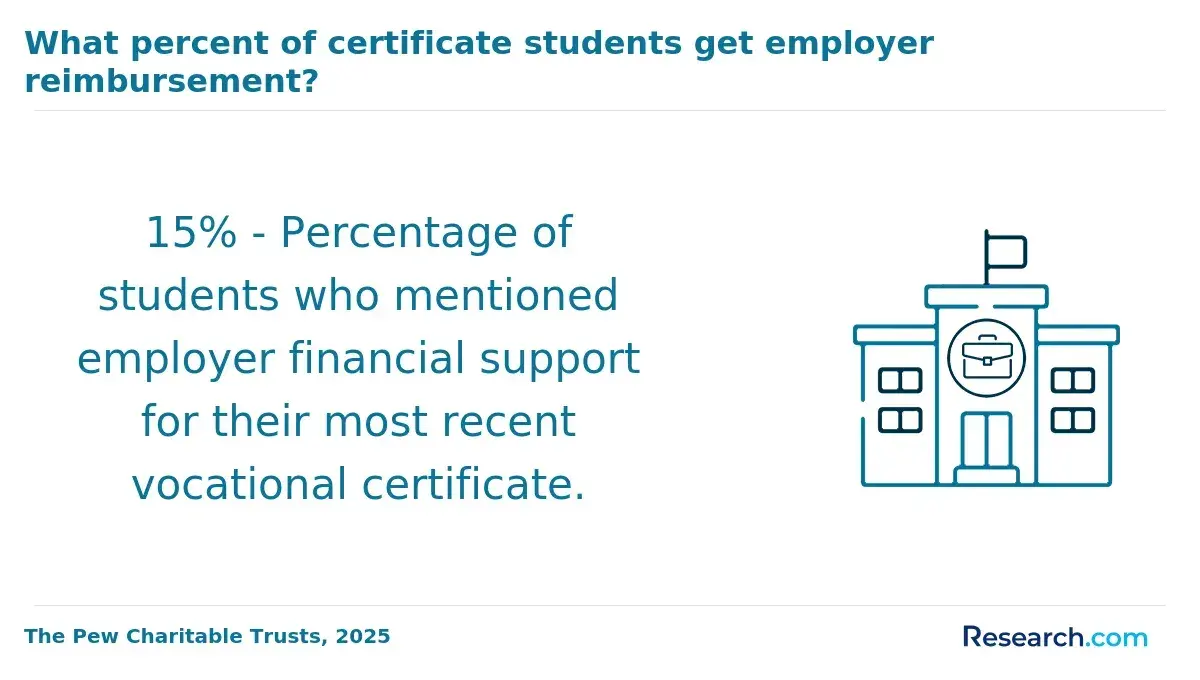
Students can reduce cost by taking transferable general education courses at a community college, using employer tuition assistance, applying military education benefits, choosing an in-state public option, or starting with a certificate that stacks into a degree. However, the cheapest program is not always the best value if it lacks labs, career support, or the policy and technical balance required for your target role.
A common mistake is comparing only cost per credit. A program with a lower per-credit rate may cost more if it accepts fewer transfer credits, requires more total credits, or charges high mandatory fees.
What cybersecurity careers can graduates pursue, from technical roles to policy and governance?
Graduates can pursue technical, hybrid, and policy-oriented cybersecurity roles. Entry depends on experience: a bachelor's graduate with internships and labs may qualify for junior analyst roles, while a master's graduate with IT experience may move toward engineering, architecture, risk, or leadership.
The table below connects career paths to responsibilities and the type of degree preparation that helps most. Use it to avoid choosing a program that does not match your intended role.
| Career path | Typical responsibilities | Best degree emphasis | Entry considerations |
| Security operations center analyst | Monitor alerts, investigate events, escalate incidents, tune detection rules | Networking, SIEM, incident response, scripting | Often accessible with bachelor's-level preparation, labs, and internships |
| Cybersecurity analyst | Assess vulnerabilities, review controls, support security projects, document risk | Technical foundations plus governance and risk | Good fit for students who want a hybrid technical-business role |
| Security engineer | Design and maintain security tools, cloud controls, identity systems, and defenses | Systems, cloud, secure coding, architecture | Usually requires stronger technical experience than entry-level analyst roles |
| Digital forensics analyst | Collect evidence, analyze devices and logs, support investigations | Forensics, law, evidence handling, incident response | May require specialized labs and careful attention to legal process |
| GRC analyst | Map controls to frameworks, prepare audits, manage risk registers, support compliance | Risk, policy, privacy, audit, security fundamentals | Strong option for students with business, audit, legal, or operations experience |
| Cyber policy analyst | Analyze laws, national security issues, privacy rules, and organizational policy | Cyber law, policy, governance, strategy, technical literacy | Often benefits from writing ability, public-sector interest, or legal/policy background |
| Security manager | Lead teams, manage budgets, communicate risk, oversee security programs | Leadership, governance, risk, architecture awareness | Usually requires experience beyond the degree |
Cybersecurity is not the only online education path for students interested in regulated data, healthcare systems, and compliance. If you are more interested in healthcare documentation, billing compliance, and administrative coding than threat detection or security engineering, comparing best medical coding programs may lead to a better fit.
To improve employability while enrolled, build evidence of skill. Employers often want more than course titles, especially for technical roles. A portfolio can include lab write-ups, sanitized incident response exercises, cloud security projects, policy memos, risk assessments, GitHub scripts, capture-the-flag participation, or a capstone project.
The strongest candidates can explain both what they did and why it mattered. For example, documenting how you hardened a cloud environment is useful, but explaining the control objective, logging decision, access policy, and residual risk shows the technical-policy blend employers increasingly value.
What are typical salaries and earning potential for cybersecurity and cyber policy professionals?
Cybersecurity salaries vary widely by role, region, clearance requirements, industry, experience, and technical depth. The best national benchmark is the U.S. Bureau of Labor Statistics, which reported median pay of $124,910 for information security analysts in May 2024. That figure is not a guarantee for new graduates; it represents a national occupational median across experience levels and employers.
The table below shows salary context for common cyber-adjacent roles using BLS occupational categories where available. Use these figures as broad benchmarks, not promises of individual outcomes.
| Role category | Relevant BLS occupation | Median pay context | What can raise earning potential |
| Security analyst | Information security analysts | $124,910 median annual pay in May 2024 | Cloud security, incident response, detection engineering, certifications, experience |
| Security manager or director | Computer and information systems managers | Often higher than analyst roles, especially with leadership responsibility | Management experience, budget ownership, risk communication, security architecture |
| Cyber policy or GRC analyst | Often mapped to information security, compliance, or management analyst categories | Varies because employers classify these roles differently | Framework expertise, audit experience, privacy knowledge, strong writing |
| Digital forensics specialist | May align with information security or forensic science categories depending on employer | Varies by public sector, consulting, law enforcement, and corporate investigations | Forensics tools, evidence handling, expert reporting, incident response experience |
Salary outcomes tend to be strongest when a degree is combined with experience. A student who already works in networking, cloud administration, software development, audit, or military cyber operations may see faster advancement than someone entering technology for the first time. Location also matters; federal contractors, finance, technology, defense, and cloud-heavy employers often compete for specialized skills.
When evaluating return on investment, compare the cost of the program with realistic next-step roles, not dream roles five promotions away. A master's degree may make sense if it helps you move from IT into security engineering or from compliance into cyber risk leadership. A bachelor's degree may be the better investment if you still need broad technical foundations.
What is the job outlook for cybersecurity roles and cyber policy specialists in the United States?
The U.S. job outlook for cybersecurity remains strong, especially for roles tied to cloud migration, ransomware defense, identity security, privacy, critical infrastructure, and regulatory pressure. The BLS projects employment for information security analysts to grow 29% from 2024 to 2034, which is much faster than the average for all occupations. For students, this means demand is real, but competition can still be intense for entry-level jobs.
Cyber policy and governance roles are growing alongside technical roles because organizations need to prove that security controls work, comply with privacy and reporting rules, manage third-party risk, and communicate cyber risk to executives. These jobs may not always carry "cyber policy" in the title; they can appear as GRC analyst, IT risk analyst, privacy analyst, security compliance analyst, cyber strategy associate, or technology risk consultant.
Several trends affect how students should prepare:
- AI is increasing both attacker capability and defender productivity, so students should understand AI-enabled phishing, automated detection, model risk, and responsible use of security automation.
- Cloud and identity security remain central because many breaches involve misconfiguration, credential abuse, weak access controls, or poor logging.
- Regulatory and insurance pressure is making documentation, risk assessment, incident reporting, and board-level communication more important.
- Employers increasingly value proof of hands-on ability, so labs, projects, internships, and certifications can matter as much as degree titles for early-career applicants.
Students should avoid assuming that a degree alone will unlock a security role immediately. Cybersecurity is often not a true entry-level field. Many people enter through help desk, systems administration, networking, audit, software development, military IT, or compliance work before specializing.
A practical entry strategy is to target stepping-stone roles while finishing the degree. Look for IT support with security responsibilities, junior SOC work, vulnerability management internships, compliance assistant roles, cloud support, or identity and access management support. These roles help you turn coursework into credible experience.
Which industry certifications align with online cybersecurity degrees and enhance employability?
Certifications can strengthen an online cybersecurity degree by validating specific skills employers recognize. They are not a substitute for a rigorous degree, but they can help students pass resume screens, prepare for technical interviews, and show commitment to a specialty.
The table below groups certifications by career stage and focus. Choose certifications that match your target role rather than collecting credentials randomly.
| Certification | Best for | Career stage | How it complements a degree |
| CompTIA Security+ | Security fundamentals | Entry level | Validates baseline concepts in threats, controls, identity, cryptography, and risk |
| CompTIA Network+ | Networking foundations | Entry level | Helps students without networking experience prepare for security coursework |
| Certified Ethical Hacker | Offensive security concepts | Early to mid-career | Supports penetration testing awareness, though hands-on practice is still essential |
| GIAC certifications | Forensics, incident response, cloud, penetration testing, security operations | Specialized | Provides role-specific validation for technical tracks |
| CISSP | Security leadership and broad professional knowledge | Experienced professionals | Aligns well with master's-level governance, architecture, and risk content |
| CISM | Security management | Experienced professionals | Supports management, governance, and program leadership roles |
| CRISC | IT risk and control | Mid-career and experienced professionals | Useful for GRC, audit, enterprise risk, and compliance-oriented cyber paths |
| CCSP | Cloud security | Mid-career and experienced professionals | Complements cloud security, architecture, and governance coursework |
A smart certification plan starts with the job you want next. For a first security role, Security+ plus labs and a bachelor's program may be enough to begin competing. For cloud security, combine cloud coursework with vendor cloud credentials or CCSP later. For governance, risk, and compliance, build toward CISSP, CISM, CRISC, or privacy credentials after you have relevant experience.
Do not spend thousands on advanced certifications before you meet experience requirements or know your specialization. The better sequence is degree coursework, hands-on labs, one entry-level credential, internship or related job experience, then specialized certifications as your career direction becomes clearer.
Other Things You Should Know About Cybersecurity
Yes, many online programs are designed for working adults, especially those with asynchronous courses or evening deadlines. The challenge is lab time. Plan for consistent weekly study blocks, because cybersecurity assignments often require troubleshooting, documentation, and repeated testing.
2027 online cybersecurity degrees emphasize key technical skills such as network security, ethical hacking, cryptography, and secure programming. These programs often integrate real-world scenarios and tools like firewalls and intrusion detection systems to ensure students are prepared for complex cybersecurity challenges.
A bootcamp can help with focused skill building, but it may not replace a degree for employers that require formal education or broad technical foundations. Bootcamps can be useful for career changers when paired with labs, certifications, projects, and prior IT experience.
Yes. Many 2027 online cybersecurity degrees with strong technical and policy training include coursework in federal privacy, risk, and compliance frameworks such as NIST, HIPAA, and the FTC Safeguards Rule. Programs often pair this with incident response, secure systems, and governance training.
References
- Should I Get My Bachelor’s Degree in Cybersecurity Online? | CSU Global https://csuglobal.edu/blog/should-i-get-my-bachelors-degree-cybersecurity-online
- Online Cybersecurity Degree – Bachelor's Program | University of Phoenix https://www.phoenix.edu/online-information-technology-degrees/cybersecurity-bachelors-degree.html
- 25 Best Online Cybersecurity Bachelor’s Degree Programs https://programs.com/programs/online-bs-cybersecurity/
- Certifications in the field of cyber security - Canadian Centre for Cyber Security https://www.cyber.gc.ca/en/guidance/certifications-field-cyber-security
- Steps for becoming a cybersecurity engineer | edX https://www.edx.org/become/how-to-become-a-cybersecurity-engineer
- Cyber Security Engineering Syllabus & Scope | Geeta University https://geetauniversity.edu.in/blog/cyber-security-engineering-scope/
- Cybersecurity Supply And Demand Heat Map https://www.cyberseek.org/heatmap.html
- 7 Online Schools with Strong Cybersecurity & Tech Degrees https://www.euroeducation.net/articles/7-online-schools-with-strong-cybersecurity-and-tech-degrees.htm
- What to Expect During an Online BS in Cybersecurity Program https://www.umassglobal.edu/blog-news/expect-during-online-bs-cybersecurity-program
- Top 10 Highest-Paid Cybersecurity Jobs (With Salaries) https://destcert.com/resources/highest-paid-cybersecurity-jobs/