
2027 Best Online Counselor Education Degree Programs

Co-Founder and Chief Data Scientist
With more than one in five U.S. adults experiencing mental illness, demand for counselors is rising nationwide. Online counselor education programs offer flexible training, preparing professionals to support individuals and families in schools, healthcare, and communities.
In this article, I will highlight the best online counselor education degree programs available today. I will also share the admission requirements, specialization options, career paths, salary expectations, and the skills you’ll gain to help meet the rising demand for mental health support.
What are the benefits of getting into an online counselor education degree?
- Online counselor programs offer flexible learning, balancing studies with work, family, and life commitments.
- Students can immediately apply counseling theories, ethical practices, and intervention strategies in real-world environments such as schools, clinics, or community centers.
- Graduates with an online counselor education degree may qualify for roles that pay between $49,500 and $71,915 annually or more, depending on the role, experience level, and geographic location.
What can I expect from an online counselor education degree?
An online counselor education degree helps you support others through mental health, school, or supervisory counseling. It offers flexible training for both new and experienced professionals to build skills and meet licensure needs.
Students can expect the following:
- Coursework typically includes counseling theory, ethics, human development, assessment, and multicultural competency.
- Many programs are CACREP-accredited and designed to prepare students for state licensure exams.
- Students complete supervised practicum and internship experiences in their local communities.
- Online platforms support interactive learning through recorded lectures, peer discussion, role-play simulations, and virtual supervision.
- Some programs offer specializations such as clinical mental health, school counseling, or military and veteran counseling.
Where can I work with an online counselor education degree?
Graduates of online counselor education programs support individuals, families, and groups with mental health, academic, or emotional needs. They work in healthcare, education, community services, and private practice across diverse roles.
Common workplaces include:
- Mental Health Clinics and Hospitals: They provide therapy and support for individuals facing mental health or behavioral challenges
- K–12 School: They support students with academic, social, and emotional development
- Colleges and Universities: They offer academic advising and career counseling
- Nonprofits and Community Organizations: They help underserved populations access mental health services
- Military or VA Support Centers: Counseling veterans and active-duty service members and their families
How much can I make with an online counselor education degree?
Earnings for graduates with an online counselor education degree vary based on specialization, licensure, and experience:
- Substance abuse, behavioral disorder, and mental health counselors earn an average annual salary of $59,190.
- Counselors, social workers, and community/social service specialists average $57,480 per year.
- The overall average salary across all counselor occupations is approximately $49,500 annually.
Advanced roles offer higher earning potential:
- Licensed professional counselors (LPCs) in private practice earn about $71,915 annually.
- Counselor educators with a master’s or MBA typically earn between $62,469 and $67,570, depending on experience and location.
Other key factors that influence salary outcomes include:
- Geographic region (e.g., California, New York, and Texas offer higher pay).
- Licensure status and professional certifications.
- Work setting, such as private practice, schools, or hospitals.
- Specialization within the counseling field.
An online counseling degree supports long-term career growth as demand for mental health professionals continues to rise nationwide.
- Best Online Counselor Education Degree Programs for 2027 List of Programs
- How long does it take to complete an online counselor education degree program? Completion Time
- How does an online counselor education degree compare to an on-campus program? How does an online counselor education degree compare to an on-campus program?
- What is the average cost of an online counselor education degree program? Program Cost
- What are the financial aid options for students enrolling in an online counselor education degree program? What are the financial aid options for students enrolling in an online counselor education degree program?
- What are the prerequisites for enrolling in an online counselor education degree program? What are the prerequisites for enrolling in an online counselor education degree program?
- What courses are included in an online counselor education degree program? What courses are included in an online counselor education degree program?
- What types of specializations are available in counselor education degree programs? What types of specializations are available in counselor education degree programs?
- How to choose the best online counselor education degree program? How to choose the best online counselor education degree program?
- What challenges can students expect in an online counselor education program? What challenges can students expect in an online counselor education program?
- What career paths are available to graduates of an online counselor education degree program? Career Paths
- What is the job market for graduates with an online counselor education degree program? Job Outlook
- What licensure support is available in online counselor education programs? What licensure support is available in online counselor education programs?
- What emerging trends are shaping online counselor education degree programs? What emerging trends are shaping online counselor education degree programs?
Best Online Counselor Education Degree Programs for 2027
Choosing an online counselor education degree is not just about finding a flexible graduate program. It is about selecting a program that can prepare you for supervised practice, state licensure, ethical client care, and a counseling role that fits your long-term goals. For many students, online counseling programs make graduate study possible while they continue working, caring for family, or staying in their local community for fieldwork.
This guide is designed for prospective counseling students comparing accredited online master’s programs, specialization options, costs, licensure preparation, and career outcomes. You will learn how online counselor education works, what to look for in a program, how long completion may take, what fieldwork involves, and how to evaluate whether a specific program is a good fit for your state and career path. Students who are still building an undergraduate foundation may also consider related pathways such as the shortest online bachelor's in sociology degree before applying to graduate counseling programs.
Quick Answer: What Is the Best Online Counselor Education Degree?
The best online counselor education degree is typically a regionally accredited master’s program that aligns with the licensure requirements in the state where you plan to practice. For clinical mental health counseling, many students prioritize CACREP accreditation because it is widely recognized in counselor preparation and may simplify licensure mobility in some states. For school counseling, students should verify that the program meets state educator credential or pupil personnel requirements.
A strong program should offer supervised practicum and internship experiences, clear licensure advising, faculty with counseling expertise, transparent tuition, and specializations that match your intended setting, such as clinical mental health, school counseling, substance abuse counseling, or marriage and family counseling.
How Research.com ranks schools
Graduate counseling programs require a serious investment, so our rankings are built to help readers compare options using consistent, research-informed criteria. Research.com applies a structured methodology that considers academic quality, program availability, institutional data, and factors relevant to online learners.
To support data-based decision-making, Research.com draws from sources such as the Integrated Postsecondary Education Data System and Peterson’s database, including Peterson’s Distance Learning Licensed Data Set, as well as College Scorecard and the National Center for Education Statistics (NCES). Prospective students should still confirm current tuition, accreditation, fieldwork rules, and licensure alignment directly with each university before enrolling.
Online Counselor Education Programs at a Glance
| School | Program focus | Program length | Credits | Cost per credit hour | Accreditation listed |
| Lamar University | Clinical Mental Health Counseling, LPC preparation | 30 months | 60 | $360 | SACSCOC |
| Lindsey Wilson University | Counseling with Substance Abuse Counseling option | 8 weeks | 60 | $520 | SACSCOC, CACREP |
| Walsh University | Clinical Mental Health, School Counseling, Chemical Dependency Certificate | Two to three years | 60 | $745 | CACREP |
| National University | Educational Counseling and California PPS Credential | 18 to 24 months | 72 | $442 | WSCUC |
| Northwestern University | Counseling with Child and Adolescent Specialization | 18 months | 24 | $5,005 | CACREP |
| Wake Forest University | Clinical Mental Health Counseling or School Counseling | Three years | 60 | $1,700 | SACSCOC, CACREP |
| University of Southern California Rossier | School Counseling | 20 to 21 months | 49 | $2,467 | CAEP |
| Messiah University | Clinical Mental Health, Marriage, Couple, & Family, School Counseling | Two years | 60 | $800 | MSCHE, CACREP |
| North Carolina Central University | Clinical Mental Health Counseling and LPC preparation | Two years | 60 | $299.23 in-state; $1,038.57 out of state | CACREP |
| Commonwealth University of Pennsylvania | Clinical Mental Health Counseling | Two and a half to three years | 60 | $780 | MSCHE, CACREP |
1. Lamar University
Lamar University offers an online Master of Education (M.Ed.) in Clinical Mental Health Counseling for students who want flexible graduate coursework combined with structured clinical preparation. The program includes two in-person residencies, giving students opportunities to practice counseling skills, meet faculty, and connect with peers.
The curriculum is designed around supervised practicum and internship experiences that help students develop core counseling competencies. It is built to meet Texas LPC licensure requirements and includes training in evidence-based interventions for both face-to-face and telehealth counseling environments.
- Program Length: 30 months
- Tracks/Concentrations: Licensed Professional Counselor (LPC)
- Cost per Credit Hour: $360
- Required Credits to Graduate: 60
- Accreditation: Southern Association of Colleges and Schools Commission on Colleges (SACSCOC)
2. Lindsey Wilson University
Lindsey Wilson University provides an online Master of Education in Counseling for learners preparing to serve clients with ethical judgment, cultural awareness, and practical counseling skills. Its online structure can be appealing to working adults who need a program organized around intensive, focused coursework.
Students study counseling theories, helping relationships, and professional practice while also gaining applied experience. The program includes a Certificate in Substance Abuse Counseling, which may be useful for students interested in addiction treatment, community agencies, or integrated behavioral health settings.
- Program Length: 8 weeks
- Tracks/Concentrations: Substance Abuse Counseling
- Cost per Credit Hour: $520
- Required Credits to Graduate: 60
- Accreditation: SACSCOC, Council for Accreditation of Counseling and Related Educational Programs (CACREP)
3. Walsh University
Walsh University offers an online M.A. in Counseling and Human Development for students seeking preparation for professional counseling licensure. The program includes three specialization options and does not require campus visits, which may benefit students who need a fully online academic format.
Students complete a 100-hour practicum and 600-hour internship in approved local settings. Through these experiences, they practice assessment, intervention, ethical decision-making, and culturally responsive counseling with real clients under supervision.
- Program Length: Two to three years
- Tracks/Concentrations: Clinical Mental Health Counseling, School Counseling, Chemical Dependency Certificate
- Cost per Credit Hour: $745
- Required Credits to Graduate: 60
- Accreditation: CACREP
4. National University
National University offers an online Master of Science in Educational Counseling for students who want to work in school-based student support roles. The curriculum is aligned with ASCA standards and includes practicum and fieldwork focused on PK–14 student development and success.
Coursework covers trauma-informed support, college and career counseling, and culturally responsive school counseling services. Graduates earn the master’s degree along with the California Pupil Personnel Services Credential, including Child Welfare and Attendance (CWA) authorization.
- Program Length: 18 to 24 months
- Tracks/Concentrations: Pupil Personnel Services (PPS) Credential in School Counseling, Emphasis in Community College Counseling
- Cost per Credit Hour: $442
- Required Credits to Graduate: 72
- Accreditation: WASC Senior College and University Commission (WSCUC)
5. Northwestern University
Northwestern University offers an online Master of Arts in Counseling that combines CACREP-accredited coursework, evidence-based counseling training, in-person immersion experiences, and clinical field placement. The program is designed for students who want a rigorous online format with structured experiential learning.
Students may pursue a child and adolescent specialization while developing skills in ethics, group counseling, self-reflection, communication, and culturally aware practice. Graduates are prepared to pursue licensure pathways and counseling roles in settings such as schools, clinics, agencies, and private practice.
- Program Length: 18 months
- Tracks/Concentrations: Child and Adolescent Specialization
- Cost per Credit Hour: $5,005
- Required Credits to Graduate: 24
- Accreditation: CACREP
6. Wake Forest University
Wake Forest University offers an online master’s in counseling with tracks in Clinical Mental Health Counseling and School Counseling. The program is fully online and structured for students who need flexibility while completing graduate-level preparation under faculty guidance.
Students study ethical practice, evidence-based intervention, cultural sensitivity, and clinical communication while completing field experiences that support licensure preparation. The two-track structure allows students to choose a path based on whether they want to work primarily in mental health settings or schools.
- Program Length: Three years
- Tracks/Concentrations: Clinical Mental Health Counseling, School Counseling
- Cost per Credit Hour: $1,700
- Required Credits to Graduate: 60
- Accreditation: SACSCOC, CACREP
7. University of Southern California Rossier
The University of Southern California Rossier online Master of Education in School Counseling prepares future K–12 school counselors to support students’ academic planning, social-emotional development, and overall well-being through trauma-informed and equity-centered practice.
The program combines live online instruction, self-paced learning, and local fieldwork. Students learn to provide student support services, coordinate counseling programs, and work with diverse school communities.
- Program Length: 20 to 21 months
- Tracks/Concentrations: School Counseling
- Cost per Credit Hour: $2,467
- Required Credits to Graduate: 49
- Accreditation: Council for the Accreditation of Educator Preparation (CAEP)
8. Messiah University
Messiah University offers an online Master of Arts in Counseling with specializations in clinical mental health counseling, marriage, couple, and family counseling, and school counseling. The program is primarily online and includes short on-campus intensives in Pennsylvania.
Students study counseling theory, ethics, cultural responsiveness, and Christian-integrated care. The program is designed to help graduates build the clinical and relational skills needed to support individuals, couples, families, schools, and communities.
- Program Length: Two years
- Tracks/Concentrations: Clinical Mental Health Counseling, Marriage, Couple, & Family Counseling, School Counseling
- Cost per Credit Hour: $800
- Required Credits to Graduate: 60
- Accreditation: Middle States Commission on Higher Education (MSCHE), CACREP
9. North Carolina Central University
North Carolina Central University offers an online Clinical Mental Health Counseling program for students preparing to work in private, nonprofit, community-based, and related counseling settings. The 60-credit curriculum is aligned with North Carolina LPC licensure requirements and is structured for students who need online flexibility.
Students receive preparation in counseling practice, diagnosis, ethical standards, and culturally responsive client care. Additional coursework may also help students pursue Clinical Addictions Specialist (LCAS) licensure.
- Program Length: Two years
- Tracks/Concentrations: Licensed Professional Counselors
- Cost per Credit Hour: $299.23 (In-state), $1,038.57 (Out of State)
- Required Credits to Graduate: 60
- Accreditation: CACREP
10. Commonwealth University of Pennsylvania
Commonwealth University of Pennsylvania offers an online Master of Arts in Counseling focused on preparation for licensed clinical mental health counseling. Flexible pacing and multiple start options may appeal to working professionals planning a career transition or advancement.
Students complete local practicum and internship placements while developing skills in assessment, diagnosis, counseling ethics, and evidence-based treatment. Graduates are prepared to serve diverse client populations and qualify to take the National Counselor Examination (NCE).
- Program Length: Two and a half to three years
- Tracks/Concentrations: Clinical Mental Health Counseling
- Cost per Credit Hour: $780
- Required Credits to Graduate: 60
- Accreditation: MSCHE, CACREP
How long does it take to complete an online counselor education degree program?
Most online master’s programs in counselor education take two to three years for full-time students. Part-time learners often need three to four years, especially when they are working, completing field hours, or managing family responsibilities. The exact timeline depends on credit requirements, course pacing, practicum scheduling, internship availability, and whether the program runs year-round.
Doctoral programs, such as a Ph.D. or Ed.D. in Counselor Education and Supervision, usually take three to five years and often include advanced clinical preparation, research, teaching experience, supervision training, and a dissertation or major scholarly project.
Students looking for the quickest way to become a therapist or counselor should remember that faster is not always better. Counseling licensure requires supervised training, documented fieldwork, and state-specific approvals. Accelerated online coursework can shorten the academic portion, but practicum, internship, and post-degree supervised experience may still determine how quickly you can become licensed.
| Program level | Typical completion time | Best for | Important consideration |
| Master’s degree | Two to three years full-time; three to four years part-time | Students seeking counseling licensure or school counseling credentials | Field placement scheduling can affect the timeline |
| Doctoral degree | Three to five years | Counselors interested in teaching, supervision, research, or leadership | Dissertation and advanced clinical requirements may extend completion |
| Certificate or added specialization | Varies by program | Licensed or enrolled students adding expertise such as substance abuse counseling | May not replace the degree required for licensure |
How does an online counselor education degree compare to an on-campus program?
An online counselor education degree can provide the same core academic preparation as an on-campus program when it is properly accredited, licensure-aligned, and supported by supervised fieldwork. Students study counseling theories, human development, ethics, assessment, diagnosis, research, multicultural counseling, and intervention techniques while completing practicum and internship experiences in approved settings.
Many online programs are built around standards used by CACREP accredited online masters counseling programs, which can help students compare curriculum quality and licensure preparation. However, online delivery does not automatically mean a program will meet every state’s licensing requirements, so students must verify requirements before enrolling.
The biggest differences are format, access, and student experience. Online programs may offer asynchronous coursework, live virtual classes, digital case simulations, and local field placements. Campus-based programs may offer more face-to-face interaction, easier access to on-campus clinics, and local networking. Both can be strong options if they meet your professional goals.
| Factor | Online counselor education | On-campus counselor education | Decision tip |
| Flexibility | Often better for working adults, caregivers, and students far from campus | Usually follows set class meeting times and campus schedules | Choose online if location and scheduling are major barriers |
| Fieldwork | Usually completed locally with approved supervisors | May use campus partnerships or nearby placement sites | Ask how the school helps students secure placements |
| Interaction | May include live video classes, discussion boards, and virtual advising | Offers in-person classroom and informal peer contact | Choose based on how you learn and build professional relationships |
| Licensure fit | Can meet licensure standards, but state verification is essential | Often designed around the school’s home-state requirements | Confirm requirements in the state where you plan to practice |
| Career preparation | Can prepare students for counseling roles if accredited and fieldwork is strong | Can provide similar preparation with more local networking | Prioritize outcomes, faculty support, and supervision quality over format alone |
Online learning may also benefit students who are exploring flexible programs in adjacent fields, including options such as the shortest online christian leadership programs, but counseling degrees require extra attention to practicum, internship, and licensure rules because they lead to regulated helping professions.
What is the average cost of an online counselor education degree program?
The average cost of an online counselor education master’s degree program can range between $18,000 and $50,000. The final amount depends on the school type, tuition model, residency status, required credits, fees, books, travel for residencies, and practicum or internship-related expenses.
Among the programs listed in this guide, tuition ranges from $299.23 to $5,005 per credit hour, and most programs require between 49 and 60 credit hours to graduate. Public universities often provide lower in-state tuition, while private institutions may charge higher tuition but offer institutional aid, scholarships, or other funding opportunities.
Students comparing costs should look beyond tuition. Technology fees, textbooks, residency travel, liability insurance, background checks, supervision-related costs, licensure exam preparation, and application fees can all affect total cost. If affordability is your top priority, compare schools against the most affordable online counseling degrees and ask each program for a full cost breakdown before applying.
| Cost factor | Why it matters | Question to ask |
| Tuition per credit | This is usually the largest direct cost | Is tuition different for in-state, out-of-state, or online students? |
| Required credits | More credits can raise total tuition even if the per-credit rate is lower | How many credits are required for my intended track? |
| Residencies | Travel, lodging, and missed work can add costs | Are any in-person intensives required? |
| Fieldwork expenses | Students may pay for background checks, liability insurance, or site-related requirements | What costs are associated with practicum and internship? |
| Licensure preparation | Exam preparation and application fees may come after graduation | Does the program include NCE or state exam preparation? |
What are the financial aid options for students enrolling in a degree program?
Students in counseling degree programs may use several funding sources to reduce out-of-pocket costs. Availability depends on degree level, enrollment status, citizenship or residency eligibility, school policies, employer benefits, and military or veteran status.
- Federal Financial Aid: Eligible students may use federal aid options. Pell Grants apply to eligible undergraduate students, while graduate students commonly rely on federal loans and work-study when available.
- State Aid: Some states offer grants, scholarships, tuition waivers, or workforce-related funding for students entering high-need service fields.
- Institutional Scholarships: Universities may award merit-based, need-based, diversity-focused, program-specific, or graduate scholarships.
- Employer Tuition Assistance: Some employers reimburse tuition or pay a portion of education costs for employees pursuing job-related degrees.
- Private Loans: Banks and credit unions may offer education loans, though these often require a credit check or co-signer and may have different borrower protections than federal loans.
- Military and Veteran Benefits: GI Bill and related military education benefits may cover some or all eligible education expenses.
Cost-conscious students sometimes compare counseling programs with related mental health or education options, including the shortest accredited online school psychology programs, but the right choice should depend on licensure goals as well as cost.
What are the prerequisites for enrolling in a degree program?
Admission requirements vary by institution and degree level. Graduate counselor education programs usually expect applicants to show academic readiness, communication skills, professional maturity, and a clear reason for entering the counseling field.
- Educational Background: Undergraduate programs require a high school diploma or equivalent, while graduate counselor education programs require a bachelor’s degree.
- Transcripts: Applicants must submit official transcripts from previously attended colleges or schools.
- Minimum GPA: Many programs require a GPA of 2.5 or higher, and more competitive programs may set a higher standard.
- Letters of Recommendation: Schools may request references from faculty, supervisors, employers, or counseling professionals who can speak to the applicant’s readiness.
- Personal Statement or Essay: Applicants usually explain their academic goals, counseling interests, and motivation for entering the profession. This is also a place to discuss relevant experience, including skills such as crisis intervention, which 11.8% of counselors list among their core competencies.
- Standardized Test Scores: Some programs may require GRE, SAT, or ACT scores, depending on the institution and degree level.
Applicants with backgrounds in psychology, human services, social work, sociology, education, or special education may already have useful preparation. Students interested in school-based support roles may also compare counseling programs with related options such as an Eds in special education online.
What courses are included in an online counselor education degree program?
Online counselor education programs combine theory, ethics, research, assessment, and supervised practice. The goal is to prepare students to understand client needs, apply appropriate interventions, work within legal and ethical boundaries, and develop a professional counseling identity.
- Foundations of Counseling: Introduces the counseling profession, ethical standards, professional roles, historical development, and the settings where counselors work.
- Human Growth and Development: Examines emotional, cognitive, social, and psychological development across the lifespan and how development affects counseling needs.
- Theories of Counseling: Covers major approaches such as cognitive behavioral, psychodynamic, person-centered, and related theories, with attention to how counselors apply theory in practice.
- Group Counseling: Teaches group development, leadership skills, facilitation methods, member dynamics, and ethical concerns in group settings.
- Multicultural Counseling: Builds awareness of culture, identity, bias, privilege, inclusion, and adaptation of counseling practices for diverse client populations.
- Ethics and Legal Issues in Counseling: Reviews confidentiality, informed consent, mandated reporting, professional boundaries, documentation, and guidance from organizations such as ACA and NBCC.
- Assessment and Diagnosis: Trains students to use assessment tools, interpret findings, understand DSM-5-TR diagnostic concepts, and connect assessment data to treatment planning.
- Research Methods in Counseling: Helps students evaluate research, understand data, and apply evidence-based findings to improve counseling practice.
- Practicum and Internship: Requires supervised client-facing experience in approved settings such as schools, clinics, hospitals, community agencies, or counseling centers.
Practicum and internship are especially important because counseling is a skill-based profession. Students should ask each program how sites are approved, who supervises fieldwork, how many direct client hours are required, and whether placements can be completed near where they live.
What types of specializations are available in online counselor education degree programs?
Specializations help students prepare for specific client populations, work settings, and licensure or credentialing paths. The right specialization affects coursework, field placement type, supervised experience, and the jobs graduates can realistically pursue.
Demand for mental health professionals remains a serious issue. Mental Health America reports approximately 340 individuals for every one mental health provider in the U.S. Choosing a focused counseling path can help students prepare for areas where access to care and specialized support are needed.
| Specialization | Typical clients or setting | Best for students who want to | Licensure note |
| Clinical Mental Health Counseling | Adults, adolescents, families, community agencies, clinics, hospitals, private practice | Assess and treat mental health concerns such as anxiety, trauma, depression, and relationship challenges | Usually leads toward LPC, LMHC, or similar state counseling licensure |
| School Counseling | K–12 schools and student support offices | Help students with academic planning, behavior, social-emotional development, and college or career readiness | May require state educator credentialing or pupil personnel certification |
| College or Career Counseling | Universities, career centers, workforce programs, private organizations | Guide students and adults through academic choices, career planning, job searches, and transitions | Requirements vary by employer and state |
| Counselor Education or Supervision | Universities, training programs, clinical supervision settings | Teach graduate students, supervise counselors-in-training, conduct research, or lead programs | Usually requires a Ph.D. or comparable doctoral preparation |
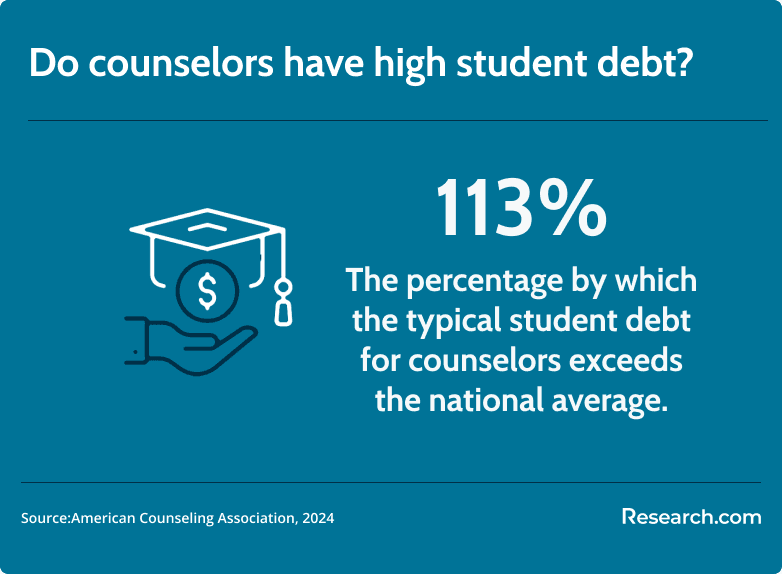
Before selecting a specialization, consider the population you want to serve, your tolerance for crisis work, your preferred schedule, the level of documentation involved, and whether your state requires a specific degree title or accreditation type. Financial planning also matters because counselors face student loan debt that is 113% higher than the national average, making scholarships, employer support, graduate assistantships, and American Counseling Association (ACA) opportunities worth exploring.
How to Choose the Best Online Counselor Education Program
The best online counselor education program is the one that fits your licensure state, career goal, learning style, budget, and fieldwork needs. Rankings can help you create a shortlist, but they should not replace direct verification with the university and your state licensing board.
- Check accreditation first: Confirm institutional accreditation and, when relevant, programmatic accreditation. CACREP accreditation is an important benchmark for many counseling students. In 2023, 445 institutions across the U.S. offered 951 CACREP-accredited counseling degree programs, supported by 3,725 full-time faculty members.
- Verify state licensure alignment: Ask whether the program meets requirements in the state where you intend to become licensed, not only the state where the university is located.
- Match the specialization to the job: Clinical mental health, school counseling, rehabilitation, marriage and family, and substance abuse counseling can lead to different requirements and workplaces.
- Evaluate format and support: Compare synchronous classes, asynchronous work, part-time options, full-time pacing, advising quality, and practicum placement assistance.
- Compare total cost, not just tuition: Include fees, residencies, exam preparation, books, travel, and lost work time when estimating affordability.
Questions to Ask Before Enrolling
| Question | Why it matters |
| Does this program meet licensure requirements in my state? | Licensure rules are state-specific, and completing the wrong program can delay or prevent licensure. |
| Is the counseling program CACREP-accredited or otherwise accepted by my licensing board? | Programmatic accreditation can affect licensing, portability, and employer recognition. |
| How are practicum and internship placements arranged? | Fieldwork is required, and students need to know whether the school provides placement help or expects them to find sites independently. |
| Are there in-person residencies? | Residencies can improve skill development but add travel costs and scheduling demands. |
| What exam preparation and licensure advising are included? | Strong advising can help students prepare documentation, exams, and supervised experience plans. |
| What is the total expected cost? | Tuition alone may not reflect the full financial commitment. |
What challenges can students expect in an online counselor education program?
Online counselor education can be convenient, but it is not easy. Students must manage graduate reading, writing, skills practice, group projects, live sessions, recordings, practicum paperwork, and internship hours without the daily structure of a campus schedule.
Common challenges include staying engaged in asynchronous courses, finding approved field sites, building peer relationships online, handling technology issues, and balancing client-facing training with work or family responsibilities. Students should compare advising, virtual mentoring, technical support, faculty accessibility, and peer collaboration opportunities before committing. Those still comparing lower-cost entry points into behavioral science may also review an affordable psychology degree online, though psychology and counseling lead to different professional outcomes.
Common Mistakes to Avoid
| Mistake | Why it can hurt you | Better approach |
| Choosing a program only because it is online | Flexibility does not guarantee licensure alignment or strong field training | Confirm accreditation, licensure fit, and practicum support first |
| Looking only at tuition per credit | Fees, residencies, books, and fieldwork costs can change affordability | Request a complete cost estimate from each school |
| Assuming every online program works in every state | State counseling boards may require specific coursework, accreditation, or supervised hours | Contact your state licensing board before enrolling |
| Waiting too long to plan fieldwork | Practicum and internship sites may have limited openings | Ask about placement timelines as soon as you are admitted |
| Relying only on rankings | A highly ranked program may not match your specialization, budget, or state requirements | Use rankings as a starting point, then evaluate fit |
| Assuming salary outcomes are guaranteed | Earnings vary by state, employer, license level, specialization, and experience | Review local job postings and licensure requirements before borrowing heavily |
What career paths are available to graduates of an online counselor education degree program?
Graduates of online counselor education programs can pursue roles in clinical, school, community, nonprofit, higher education, and organizational settings. The exact path depends on specialization, state licensure, supervised experience, and whether the graduate completes required exams or credentials.
Common careers in counseling include:
- Licensed Mental Health Counselor (LMHC): Provides therapy to individuals, groups, couples, or families in private practices, community health centers, hospitals, agencies, and nonprofit organizations. These counselors may address anxiety, depression, trauma, grief, relationship concerns, and other mental health needs.
- School Counselor: Works with elementary, middle, or high school students on academic progress, behavior, social-emotional growth, and college or career planning. School counselors also collaborate with families, teachers, administrators, and community providers.
- Substance Abuse Counselor: Supports clients dealing with addiction and recovery. A substance abuse counselor may create treatment plans, lead counseling sessions, coordinate care, and work in rehabilitation centers, outpatient programs, correctional facilities, or community agencies.
- College or Career Counselor: Helps students and adults make academic, career, internship, and employment decisions. These counselors may work in universities, career centers, workforce development programs, or private advising organizations.
- Clinical Supervisor or Program Director: Experienced counselors with additional licensure, supervision credentials, leadership experience, or doctoral education may oversee clinical teams, manage programs, mentor new counselors, and monitor compliance.
Because each career path may require a specific license or credential, students should map their intended role before enrolling. LPC, LMHC, NCC, school counseling credentials, and related licenses may require additional supervised hours, exams, background checks, and continuing education.
In this chart from US BLS, the wage data for the roles discussed above is summarized.
What is the job market for graduates with an online counselor education degree program?
The job market for counseling graduates is supported by continued demand for mental health, behavioral health, substance use, school-based, and community support services. Employment conditions vary by state and setting, but national projections point to continued opportunities for qualified professionals.
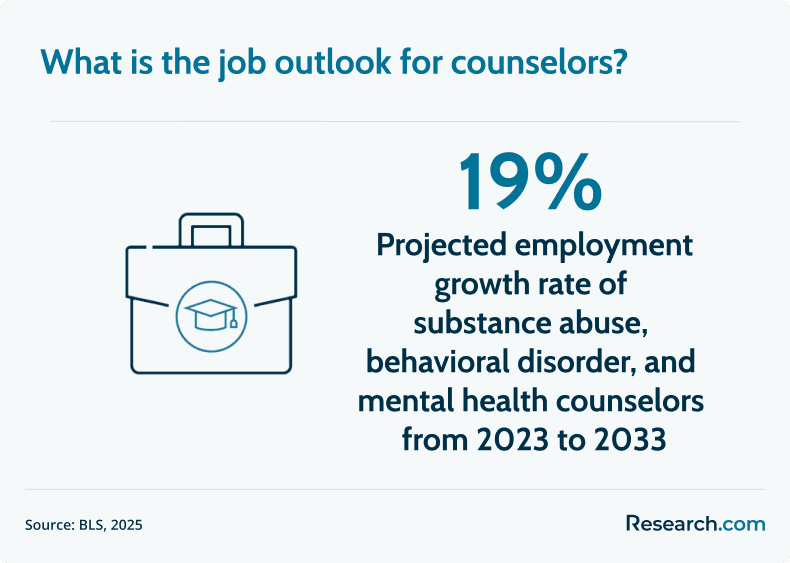
Employment for substance abuse, behavioral disorder, and mental health counselors is projected to grow by 19% from 2023 to 2033. Counselors, social workers, and other community and social service specialists have a projected 9% growth rate.
These projections reflect broader demand for mental health care, substance use treatment, school support services, and wellness-focused services. Students pursuing an online substance abuse counseling degree or a graduate counselor education degree should still research local employer requirements, state licensure rules, and field placement availability.
Opportunities may be especially important in underserved communities, rural areas, and school systems with limited access to licensed mental health providers. Graduates who are open to high-need settings, bilingual service delivery, telehealth, or integrated behavioral health may find more options, but job availability and pay are never guaranteed.
What licensure support is available in online counselor education programs?
Strong online counselor education programs usually build licensure preparation into advising, curriculum planning, and fieldwork documentation. This may include state-specific guidance, practicum and internship tracking, exam preparation resources, faculty advising, and help understanding supervised experience requirements after graduation.
Students should ask whether the program provides written confirmation of licensure alignment for their state, whether faculty understand out-of-state requirements, and whether graduates have successfully pursued licensure in the student’s intended location. Learners interested in broader behavioral science pathways may also compare counseling programs with the cheapest forensic psychology master's programs, but forensic psychology and counseling may lead to different licenses and job functions.
What emerging trends are shaping online counselor education degree programs?
Online counselor education is changing as counseling practice changes. Programs increasingly use teletherapy simulations, video-based skills assessments, virtual supervision tools, interactive case studies, and learning platforms that support real-time feedback. These tools can help students practice digital communication skills that are now relevant in many counseling settings.
Curricula are also placing more emphasis on trauma-informed care, culturally responsive counseling, ethical telehealth practice, interdisciplinary collaboration, and data-informed student support. Some students compare counseling with adjacent behavior-focused programs such as affordable BCBA masters programs online, but they should carefully distinguish counseling licensure from behavior analyst certification and related career requirements.
What Graduates Say About Online Counselor Education Programs
- : "Earning my counselor education degree online helped me keep my family responsibilities in place while moving toward licensure as a mental health counselor. The online format did not weaken the experience; it made me more comfortable using digital communication tools that I now rely on in teletherapy. — Jessica"
- : "I expected online learning to feel isolated, but my program included active discussions, strong peer interaction, and practical assignments. The field training helped me feel prepared to support school-age children with more confidence. — Marco"
- : "My online counseling program allowed me to remain in my community while learning from experienced instructors and classmates from different backgrounds. I valued the focus on ethics, cultural humility, and supervised clinical practice. — Rina"
Key Insights
- Licensure fit is the most important factor. Before enrolling, confirm that the program meets the requirements in the state where you plan to practice.
- Accreditation matters. Regional accreditation is essential, and CACREP accreditation can be especially important for many clinical mental health counseling pathways.
- Online does not mean fully remote. Most programs still require supervised practicum and internship hours, and some include in-person residencies.
- Costs vary widely. Programs in this guide list tuition from $299.23 to $5,005 per credit hour, so total cost depends heavily on credits, fees, residency travel, and financial aid.
- Specialization drives career direction. Clinical mental health counseling, school counseling, substance abuse counseling, and counselor education can lead to different licenses, settings, and responsibilities.
- Field placement support can make or break the experience. Ask how the school approves sites, supports out-of-state students, and helps resolve placement problems.
- Job demand is favorable but not automatic. Employment for substance abuse, behavioral disorder, and mental health counselors is projected to grow by 19% from 2023 to 2033, but outcomes depend on location, licensure, experience, and employer needs.
- Do not rely on rankings alone. Use rankings to identify options, then compare accreditation, state licensure alignment, faculty support, fieldwork requirements, and total cost.
References:
- American Counseling Association (2024). Counseling Workforce Report. Retrieved from https://www.counseling.org/resources/research-reports/counseling-workforce-report#
- National Institute of Mental Health (n.d.). Mental Illness. Retrieved from https://www.nimh.nih.gov/health/statistics/mental-illness
- Salary.com (2025). Salaries for Counselor Educator with a Master's Degree or MBA. Retrieved from https://www1.salary.com/Salaries-for-counselor-educator-with-a-Masters-Degree-or-MBA
- US BLS (2025). Substance Abuse, Behavioral Disorder, and Mental Health Counselors. Retrieved from https://www.bls.gov/ooh/community-and-social-service/substance-abuse-behavioral-disorder-and-mental-health-counselors.htm#tab-5
- Zippia (2025). Counselor skills for your resume and career. Retrieved from https://www.zippia.com/counselor-jobs/skills/
- Ziprecruiter (2025). Licensed Professional Counselor Salary. Retrieved from https://www.ziprecruiter.com/Salaries/Licensed-Professional-Counselor-Salary
Other Things You Should Know About the Best Online Counselor Education Degree Programs
CACREP-accredited online counselor education programs require at least 100 clock hours of practicum and 600 clock hours of internship. Students must complete direct client-contact experiences under qualified supervision, and some states add extra supervised fieldwork before licensure.
In 2027, online counselor education degree programs may offer specializations such as school counseling, clinical mental health counseling, marriage and family therapy, and substance abuse counseling. These specializations are designed to equip students with the skills needed for various professional counseling roles.


